




🏛️ How People Lived in a Svan House: The Machubi, the Hearth and the Margiani Tower in Mestia
🏛️ Not a museum in a building, but the building itself
The Margiani house museum is a clan dwelling with a tower, where the structure is the exhibit. There are fewer labelled display cases here than walls that explain themselves.
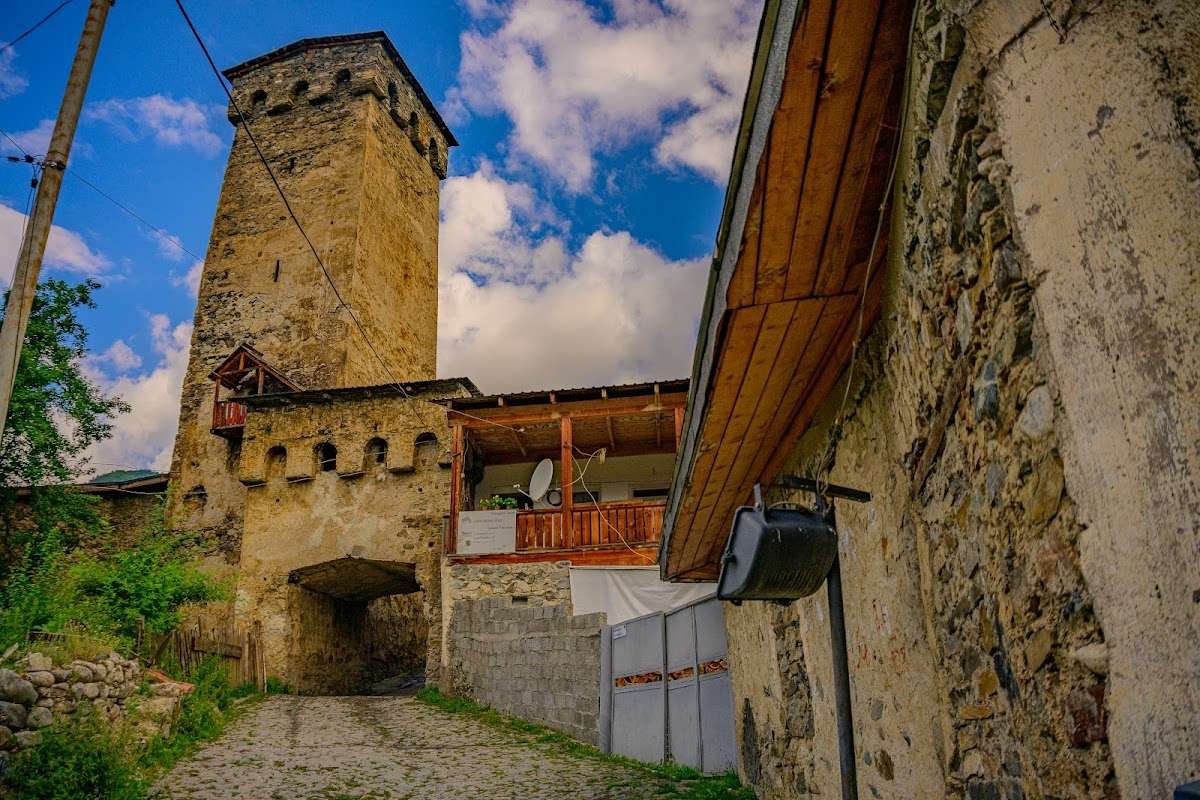
The Margiani house museum is one of the few chances to see a Svan dwelling from the inside rather than the outside. Towers stand all over Mestia, but visitors usually go into one, and most often it is this one.
The Mestia municipality website describes the site briefly and precisely: a machubi. That is the key word, and it is where to start.
Map point and reviews: Svan house museum of the Margiani.
🏠 What a machubi is
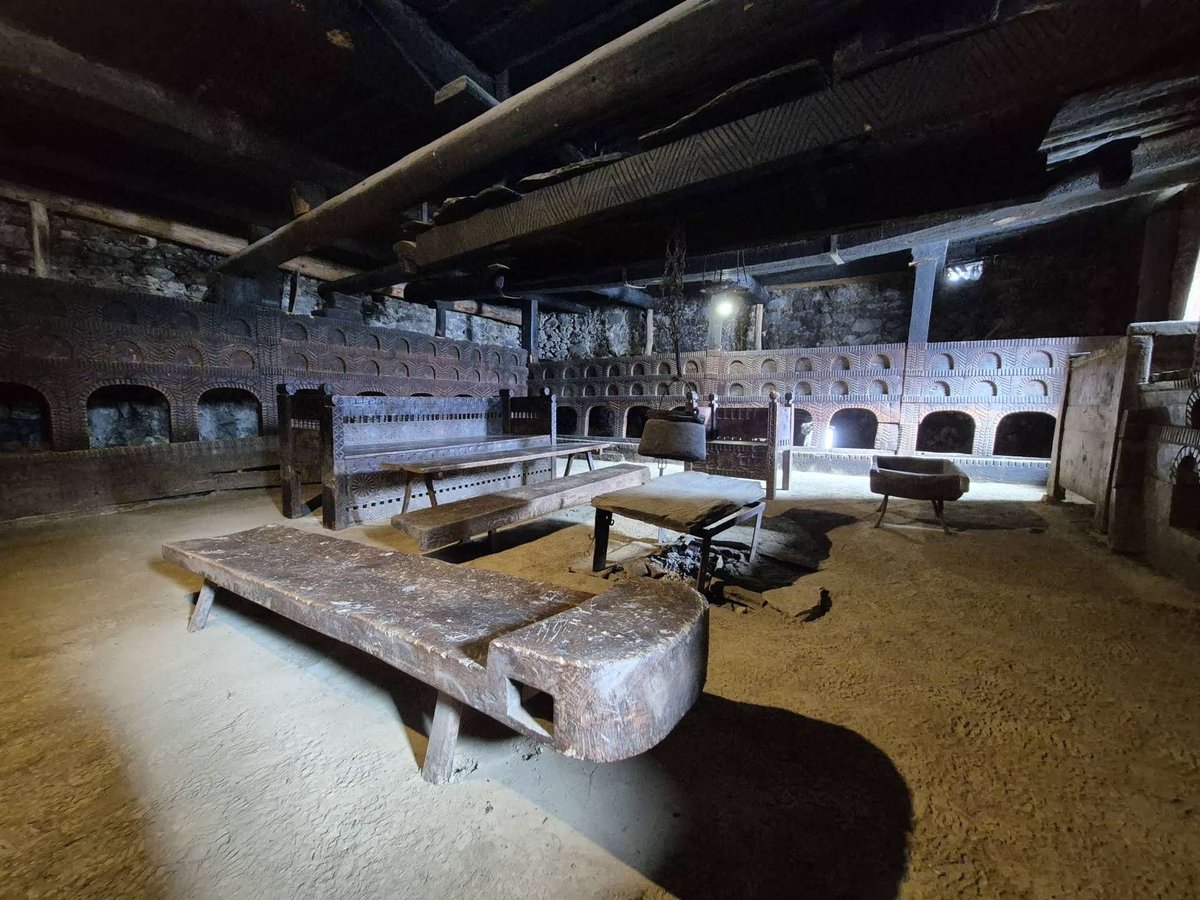
The machubi is the ground floor of an old Svan house and the family's winter dwelling.
'Dwelling' should be taken literally here: people were not the only ones who wintered in the machubi. Livestock was kept in the same room, partitioned off by stalls. In mountains where the winter is long and fodder has to be carried, this was the only sensible arrangement: the animals warmed the house and the people looked after the animals.
Hence the proportions: a machubi is spacious, high-ceilinged and almost windowless.
🔥 The hearth: why everyone had their own place
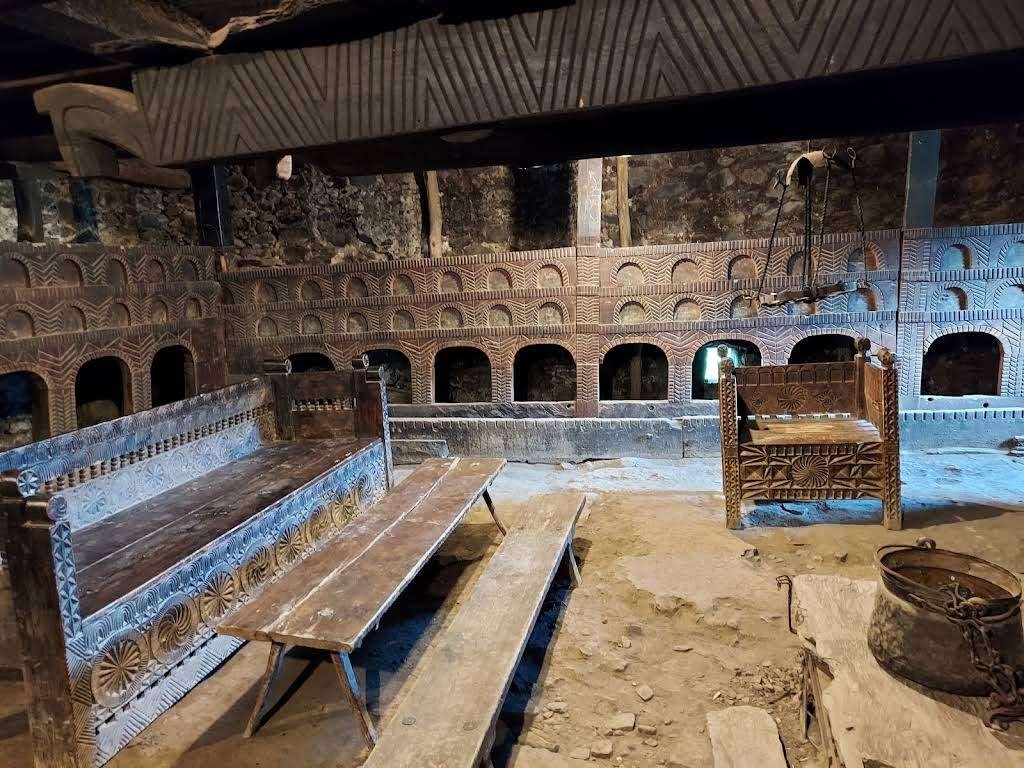
Here is the detail worth going inside for.
The position of the hearth determined the layout of the whole house. Its front side faced the entrance, and the door itself was placed mainly in the northern corner of the eastern wall. The house, in other words, was built out from the fire rather than in from the walls.
Then comes something European dwellings have no equivalent for.
Behind the hearth was the women's side, in front of it the men's. And this was not a habit but a firmly established rule: family members sat around the hearth according to sex and age.
Put another way, stepping into a machubi you could see at once who was who in the family. A place by the fire worked like a line in a family tree.
🗼 The tower: why every clan needed one
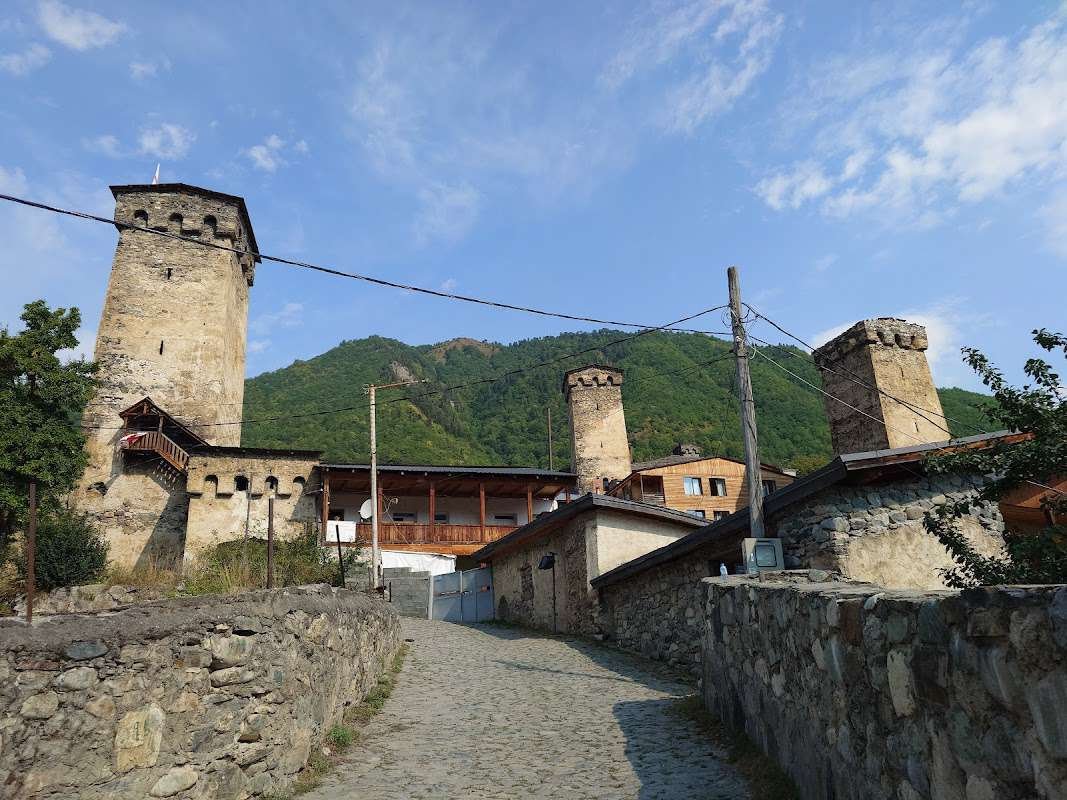
The Margiani house stands with a tower, and it is not decoration.
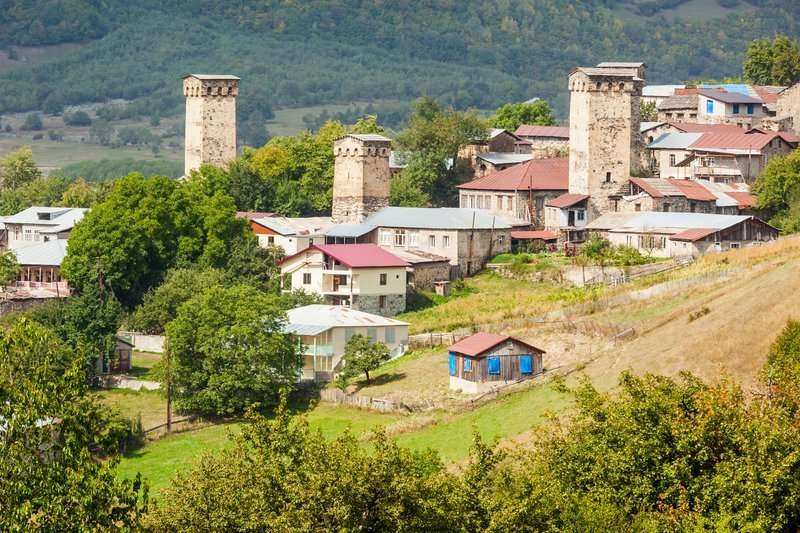
Svaneti counts around two hundred towers, and every clan had its own. The function was twofold: residential and defensive.
Towers are built the same way throughout Svaneti, and the logic behind them is purely military.
The Svan tower in figures
The dimensions are the same across Svaneti, and every one of them is dictated by defence rather than by looks.
🪜 The floors are linked by movable wooden ladders rather than fixed stairs. The reasoning is simple: the ladder was pulled up, and the attackers stayed below.
How the tower worked under attack
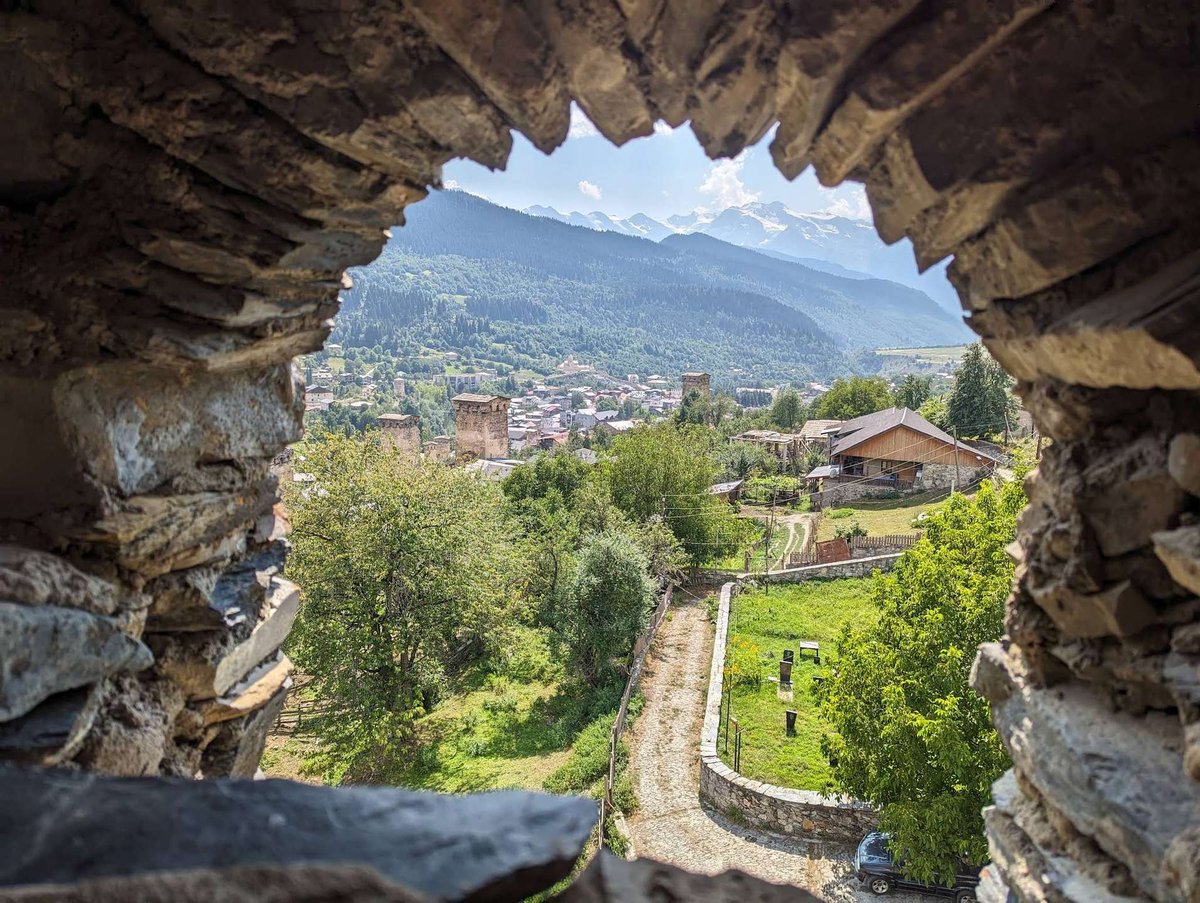
Three features of its design explain everything else.
The entrance at second-floor level. The lowest storey, with walls up to a metre and a half thick, is largely blind; there is no way in from the ground.
Movable ladders between floors. They were pulled up, and each successive storey had to be taken all over again.
The taper towards the top. The tower stands firm on its massive base, while higher up the walls thin to seventy or eighty centimetres: what is needed there is a view, not thickness.
The tower finishes in a crown, from which watch was kept.
There is more on this building type in the separate piece on Svan towers.
🧭 Three museums in Mestia and how they differ
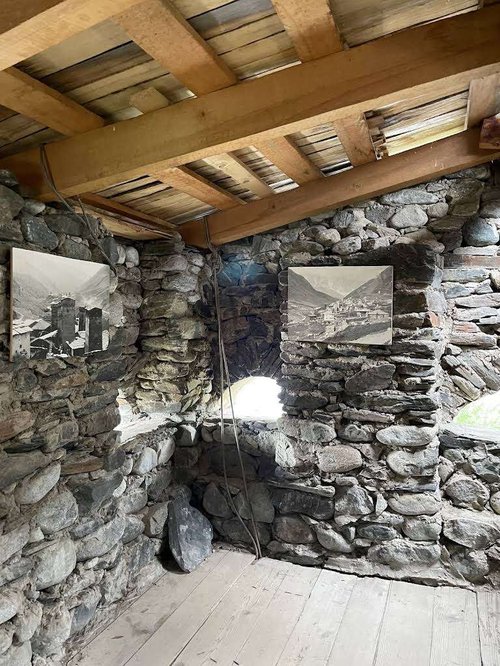
Since you are in the town, it helps to know the difference: the museums complement one another rather than repeat.
The Margiani house museum is the dwelling itself. About daily life, the layout of the house, the routine of a clan.
The Museum of History and Ethnography in Svaneti, the largest in the region. Its rehabilitation finished in 2013, with six halls of permanent display, a restoration laboratory and storage facilities. Icons, manuscripts and metalwork.
The Mikheil Khergiani house museum, dedicated to the celebrated Svan mountaineer.
The logic is simple: Margiani answers 'how did they live', the history museum 'what did they make', Khergiani 'who are they proud of'.
For the museum's exact coordinates see the site page: Mestia has several clan houses, and a search by name is not always precise.
🚗 Getting to Mestia
The town sits at 1,500 metres, on the banks of the Mestiachala and the Mulkhura, 128 kilometres from Zugdidi and 456 from Tbilisi.
From Zugdidi, about three hours on a mountain road, with marshrutkas from the station. Trains from Tbilisi and Batumi arrive there too.
By air. Mestia has had Queen Tamar airport since 2010, with flights in season.
From Batumi and Kutaisi the road goes through Zugdidi. If you are driving up from the coast, our piece on getting from Batumi to Svaneti by car will help.
Everything within the town is walkable.
🧭 What else is in Mestia and nearby
Chalaadi Glacier, the most accessible trek from town, about six kilometres from the bridge.
The Koruldi lakes, a harder route with real ascent.
Ushguli, three hours away, the highest mountain village in Europe, with even more towers.
The Christian churches of Svaneti, a layer of their own: the murals survive precisely where nobody reached for centuries.
🧭 Where to stay
The base is Mestia itself, a town since 1968 and the centre of Upper Svaneti. Guesthouses, hotels, gear hire and a tourist office are all here.
Staying near the centre makes sense: the museums are a few minutes' walk away and the trailheads are closer.
On how many days. Half a day covers the museums, but there is no point coming here for them alone. Three or four days is the usual allowance: the museums, Chalaadi, Koruldi, Ushguli.
🗣️ Over to you
Been to the Margiani house museum? Tell us whether they let you into the tower, whether there was a keeper willing to explain the hearth, and which month you visited. Leave a review on Madloba: museums like this change their hours with the season, and visitors' notes are the most useful thing there is.
Information is current as of August 2026. Opening hours, admission and access to the tower all change, so check on site.
📚 Read next
❓ Frequently asked questions
💬 In the town of Mestia, the centre of Upper Svaneti, within walking distance of the centre. See the site page for exact coordinates: Mestia has several clan houses.
💬 The ground floor of an old Svan house and the family's winter dwelling. People wintered there together with their livestock: the animals warmed the room and the people looked after them. This is how the Mestia municipality officially describes the Margiani museum.
💬 The position of the hearth determined the layout of the whole machubi: its front side faced the entrance, and the door was placed mainly in the northern corner of the eastern wall. Behind the hearth was the women's side and in front of it the men's, and people sat around it by sex and age.
💬 Usually twenty to twenty-five metres, with four or five floors, rarely six. At the base the walls are up to a metre and a half thick; the tower tapers upwards and the walls thin to seventy or eighty centimetres.
💬 For defence. The lowest storey is largely blind, and the floors are linked by movable wooden ladders that were pulled up. Each successive floor had to be taken all over again.
💬 Around two hundred. Every clan had its own, and the function was twofold: residential and defensive.
💬 About an hour, longer if you climb the tower. Half a day covers all three museums in Mestia.
💬 The Museum of History and Ethnography in Svaneti, the largest in the region: its rehabilitation was completed in 2013, with six halls of permanent display. And the Mikheil Khergiani house museum, dedicated to the celebrated Svan mountaineer.
💬 About three hours from Zugdidi by marshrutka, a distance of 128 kilometres. From Tbilisi it is 456 kilometres, and small aircraft fly in season to Queen Tamar airport, opened in 2010.

0 comments
Log in to leave a comment