




Christian Churches of Svaneti: Ancient Frescoes and Lagurka
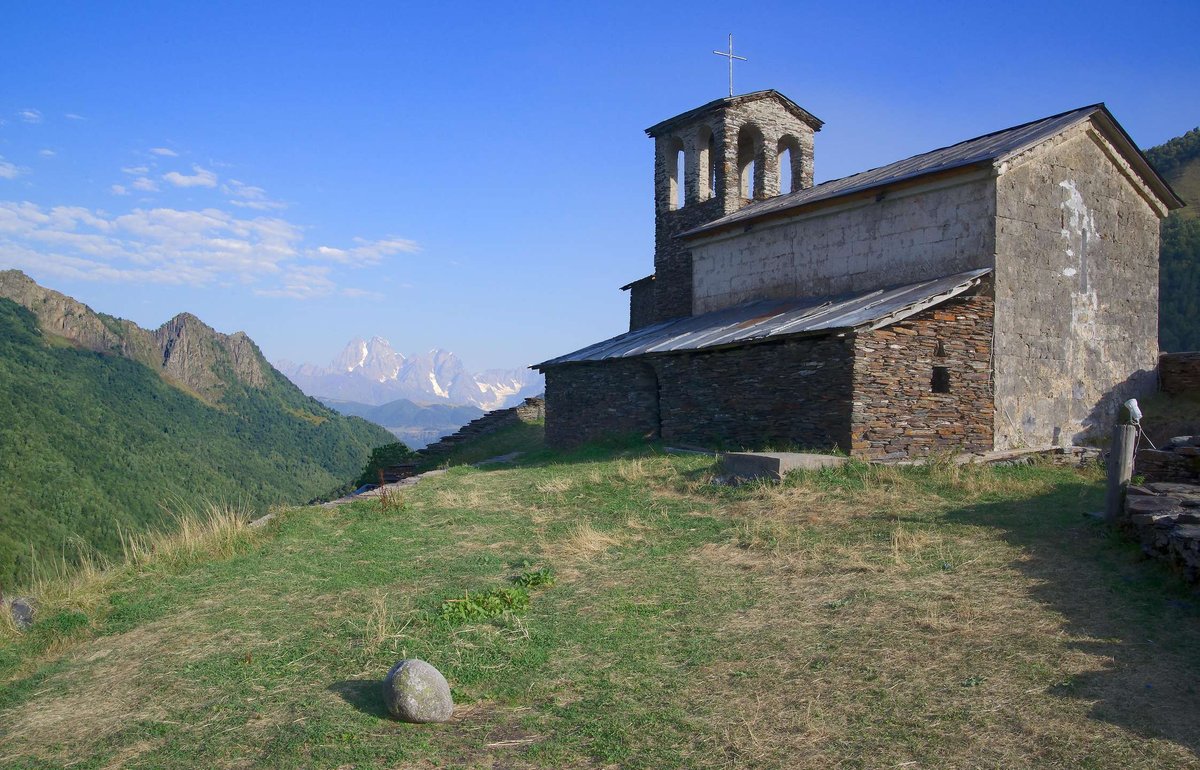
Lagurka is the most significant church for the Svans. For centuries, treasures from the churches of the Kala community were kept here. Every year, on July 28th, the feast day of the martyrdom of Saints Kvirike and Ivlita, the religious festival "Kvirikoba" is held in Kala, known in Svaneti as "Lagurka."
Svaneti's ecclesiastical architectural heritage includes over 70 churches and religious buildings, most of them small, single-nave churches built in the 8th-14th centuries from tufa or stone, typically without relief decoration.
Svan churches retain the name of the "royal painter" Tevdore, who lived and worked in the late 11th and early 12th centuries. The title "royal painter" indicates that Tevdore worked at court and for the king. However, it is presumed that he was originally from Svaneti, as indicated by the distinctive artistic style of his murals.
Tevdore's earliest work is a fresco in the Church of the Archangel in the village of Iprari (Iprali), in the Kala community. This small hall church dates back to the 10th century. The church's frescoes have been preserved almost in their original form.
Near the village of Khe in the Kala community, on a high mountain covered with pine forests, stands the Church of Saints Kvirike and Ivlita (called "Lagurka" in Svan). This was formerly a convent, attended by nuns from all over Georgia. An inscription on the fresco states that Tevdore painted the church in 1112, commissioned by local feudal lords.
In the Ipari community, in the village of Nakipiri, stands a relatively large hall church from the 10th century. The church's eastern façade is distinguished by its distinctive design, with Svan towers on the upper façade. Tevdore painted this church in 1130, as evidenced by an inscription on the iconostasis. Svan churches are distinguished by another distinctive feature: they feature paintings not only in the interior but also on the façade. This tradition is unique to the churches here. Remarkably, in addition to traditional religious themes, the façades also depicted stories from secular life or scenes from literary works.

40 comments
Log in to leave a comment
Lagurka sounds fascinating, but honestly, is it meaningful to the locals or more of a tourism gimmick now? I mean, I get that customs evolve, but does the essence of the holiday still resonate with the Svan people? Sometimes I feel like we only scratch the surface of what these traditions truly represent.
Maybe I’m just sceptical, but can these ancient customs hold any real relevance for us outsiders peeking into their world?
Особенно впечатлили фрески и уникальные архитектурные решения, которые сохранились почти в первозданном виде. Эта статья не просто рассказывает о достопримечательностях, но и подсказывает, как лучше добраться до удалённых точек, где можно остаться на закат и почувствовать настоящую духоту древности.
После насыщенного дня я заглянул в одно из ресторанов в Местии, где пробовал местное сванское пиво и домашний хачапури — сочетание впечатлений было просто фантастическим 🍷🥟.
А вы уже видели сванские церкви своими глазами — что больше всего поразило: легенды, архитектура или атмосфера горных селений?
царского живописца Тевдоре,который жил в 11-12 веках и был родом из Сванетии.В статье интересно написано о церкви Лагурка-это самая зна-
чимая церковь для сванов.О религиозном празднике"Кверикоба"который любят и чтят местные жители.Много интересного вы узнаете побывав в
этих живописных местах.
Сванские церкви сохранили имя «царского живописца» Тевдоре, работавшего ради царя.
Самая ранняя его работа - роспись в Архангельской церкви, сохранившаяся в первоначальном виде.
Церковь святых Квирике и Ивлит («Лагурка»). 28 июля, день их мученичества– религиозный праздник.
Раньше здесь был женский монастырь, в который со всей Грузии приходили монахини.
Отличительная черта Сванских храмов –росписи имеются не только в интерьере, но и на фасаде. Такая традиция характерно только для здешних церквей. Примечательно, что на фасадах помимо традиционных религиозных сюжетов изображали также истории из мирской жизни или сцены из литературных произведений.