



💻 Working Remotely from Georgia: What a Digital Nomad Needs to Know
Rules for foreigners changed several times in 2026. Check official sources before you travel.

A couple of years ago the recipe was simple: land in Tbilisi, buy a SIM card, sit down with a laptop in a café or one of the coworking spaces in Tbilisi, and live for a year without a single piece of paper. A warm climate, fairly cheap food and easy entry made Georgia one of the main destinations for remote workers. In 2026 almost all of that remains, but there are now rules you never had to think about before: mandatory insurance, serious fines for overstaying and a separate right to work for foreigners. Let's go through what changed and how to settle in without problems.
🛂 Can you live in Georgia visa-free for a year in 2026
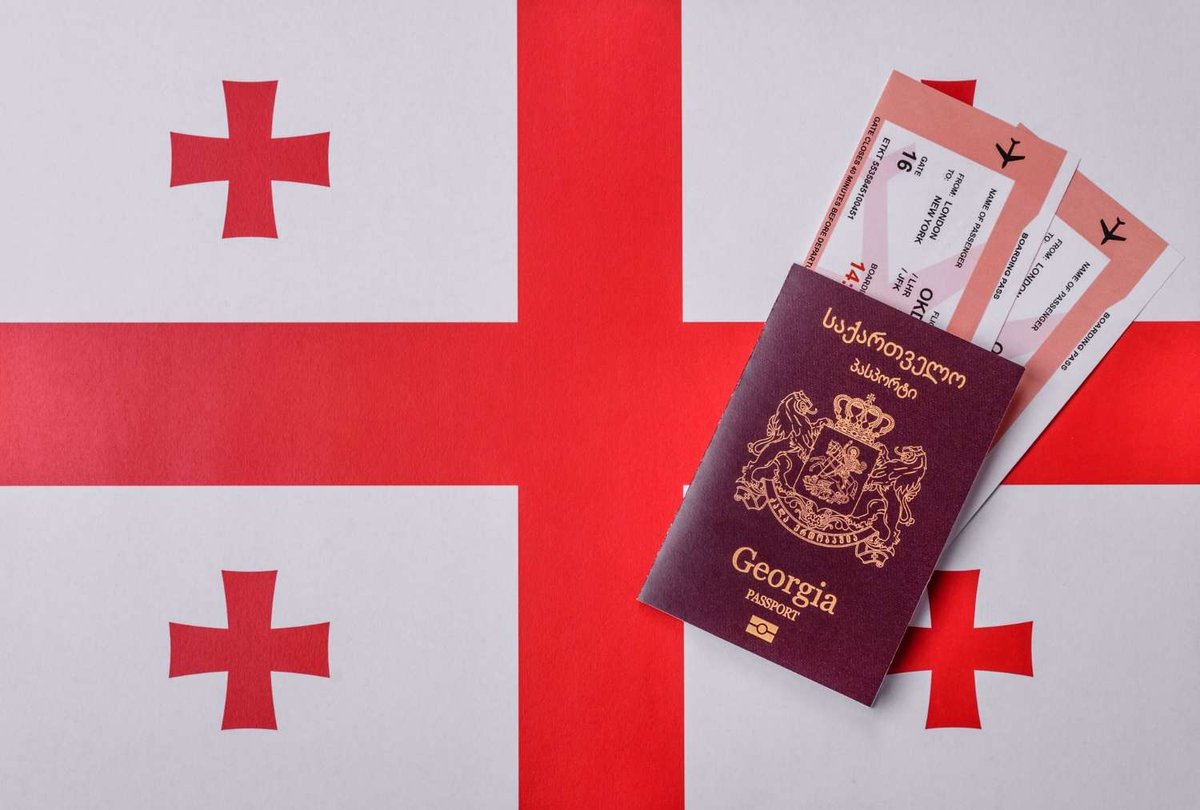
Yes, this rule has not gone anywhere. Citizens of more than 90 countries enter Georgia without a visa and can stay for up to one year in a row. You don't need to extend anything or register at an address. The full list of countries and the exceptions are published by the consular service of Georgia's Ministry of Foreign Affairs at geoconsul.gov.ge, and we gather the general picture in our guide to entry rules for Georgia.
What's new is insurance. Since the start of 2026, border officers may ask for a policy that covers health and accidents for the whole trip, including the days of arrival and departure. It must be in Georgian or English, on paper or on your phone. For a nomad this means one thing: a two-week tourist policy won't do, you need an annual one or one you can extend. We covered the options in our guide to insurance in Georgia.
The second change concerns people who were used to not watching the calendar. An overstay used to be closed with a small fine on departure. Now the fine comes with an entry ban:
| Overstay | Fine | Entry ban |
|---|---|---|
| Up to 3 months | 1,000 GEL | 6 months |
| 3 months to 1 year | 2,000 GEL | 2 years |
| More than 1 year | 3,000 GEL | 3 years |
The amounts are current as of October 2026. Since the end of August 2026, appealing a fine no longer suspends its enforcement, and with an unpaid fine you will not be issued a visa or permission to enter Georgia.
Whether the year resets if you leave and come back is a separate question. For years many people did exactly that with a trip to Turkey or Armenia, and the route for such a trip is described in our visa run guide from Batumi. We could not find official confirmation that the scheme works without caveats in 2026. Don't build a multi-year plan on it: the decision to admit you is made by the border officer.
💻 Is there a digital nomad visa in Georgia
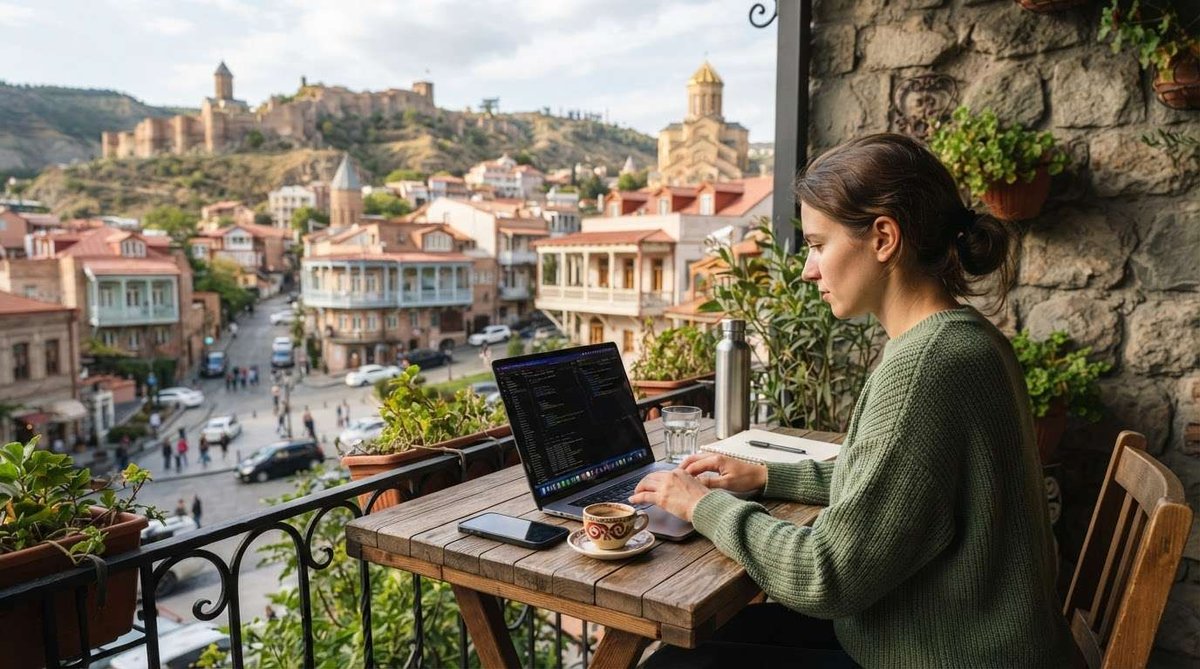
No. The Remotely from Georgia programme, launched in 2020, has long been closed, and there is currently no separate visa for remote workers. Those who qualify for visa-free entry don't need one anyway. Citizens of countries that require a visa have to apply under the general rules.
If you plan to stay longer than a year or run a business here, the next step is a residence permit. IT specialists have a separate permit with experience and income requirements, and for everyone else there are work, investment and other grounds. We break them down in our overview of residence permits in Georgia.
⚖️ Does a remote worker need the right to labour activity

This is the main question of 2026, and it has made many "how I lived in Georgia" stories outdated. Since 1 March 2026, visa-free entry by itself does not give you the right to work. A foreigner without permanent residence who works or runs a business in Georgia needs a separate permit: the right to labour activity, RLA for short.
For the first weeks nobody understood whether the rule applied to a person sitting with a laptop in Batumi and working for a company in Berlin. Clarity came in April: amendments in force from 15 April 2026 took foreigners who provide services to non-residents, that is foreign employers and clients, out of the scope of the law. Put simply, a classic nomad usually does not need an RLA. But the line is thin and easy to cross:
The most disputed case is in the middle: a sole proprietor registered in Georgia whose clients are all abroad. Lawyers read the rule differently, and there is no single practice yet. Only a written answer from the State Employment Support Agency will help here. Verbal advice over the phone is not considered an official position.
If you do need the permit, here is what to know in advance:
| Who issues it | The State Employment Support Agency, applications through the labour migration portal |
| Fee | 200 GEL for a 30-calendar-day review, 400 GEL for 10 working days |
| Validity of the first permit | 6 months to a year, up to 3 years for IT specialists |
| What comes next | A work residence permit, with 10 days to apply. People abroad need a D1 visa |
| Fine for working without an RLA | 2,000 GEL, 4,000 for a repeat offence, then 12,000. Both the worker and the employer pay |
| Closed fields | Courier delivery, passenger transport, working as a guide |
| IT residence permit | At least 2 years of experience and verified income of at least 25,000 US dollars a year |
Data as of October 2026. We described the procedure itself, with documents and the video interview, in our guide to working in Georgia as a foreigner, so we won't repeat it here.
🧾 What taxes does a digital nomad pay in Georgia

Nomads have more myths about taxes than about visas. The most persistent one goes: "I work for a foreign company, so I owe Georgia nothing." In reality two circumstances decide the matter.
The first is time. If you spend more than 183 days in the country within any twelve months in a row, you become a Georgian tax resident. A visa-free year passes that mark automatically. What this gives you and what it risks, read in our breakdown of tax residency in Georgia.
The second is the source of income. Income tax in Georgia is flat, one rate for residents and non-residents, and it is charged on income from a Georgian source. The nuance is that the tax service may treat pay for work you physically perform on Georgian territory as Georgian-source income, even if a foreign firm pays you. In practice short visits interest nobody, but for those who live here for years, it is better to pay a consultant once than to explain yourself to the tax office later.
A legal and popular route for those who stay long term is a sole proprietorship with small business status: a turnover tax of 1% within the annual limit. The conditions are described in our guide to small business in Georgia. Just remember that from 2026 a foreigner with a sole proprietorship usually needs an RLA as well, so opening one "just in case" is no longer worth it.
📶 What the internet in Georgia is like for remote work

Internet in Georgia is arranged unusually: mobile is faster than home broadband. Operators invested in new-generation networks, while wired infrastructure in older buildings is updated slowly.
| Connection type | Download speed | What it means |
|---|---|---|
| Mobile internet | 140.76 Mbps | 10th in the world at the end of 2024 |
| Wired internet | 44.91 Mbps | Second hundred of the world ranking, 2025 data |
The figures come from the international internet speed ranking, the Speedtest Global Index. For video calls and ordinary work both options are enough. If you move heavy files or stream, choose your plan and your building carefully.
The practical conclusion is simple: keep two channels. Home internet from one operator and a SIM card with a big data package from another. The 5G network already works in the country, and Magti has the widest coverage. In the mountains and villages there is signal almost everywhere, but don't expect big-city speeds there.
Before renting a flat, ask the landlord to show you a speed test. At the same time find out who the provider is and whether you can change the plan. How to connect yourself and what to do in a rented flat is covered in our guide to home internet. If you are arriving for a short time, our overview of eSIM in Georgia will help. Find providers by city in the catalog: Tbilisi and Batumi.
🏢 Where to work: coworkings and cafés in Tbilisi and Batumi

Working from home in Georgia is not always comfortable: older buildings can be noisy, and in winter they are cool. So a workspace outside your flat is not a luxury here.
Coworking spaces come in every taste. Large spaces in former factories and printing houses suit those who value events and new contacts. Small quiet rooms in residential areas are for those who simply want a desk, a power socket and stable Wi-Fi. Almost everywhere sells a day pass, and it is the best way to try a place before buying a membership. The full list with addresses and photos is in the catalog: Tbilisi, Batumi and Kutaisi.
Coffee shops in Tbilisi got used to people with laptops long ago. Specialty places usually have sockets and decent internet. At peak hours the owners may ask you to free up a large table, and that is normal. In Batumi it is harder to find a seat in summer: in season the seafront lives for tourists, and it is calmer to work a few blocks from the sea.
There is a third option people rarely remember: libraries and media libraries. It is quiet, free, and nobody expects you to order a third cappuccino.
🏦 How a foreigner can open a bank account in Georgia
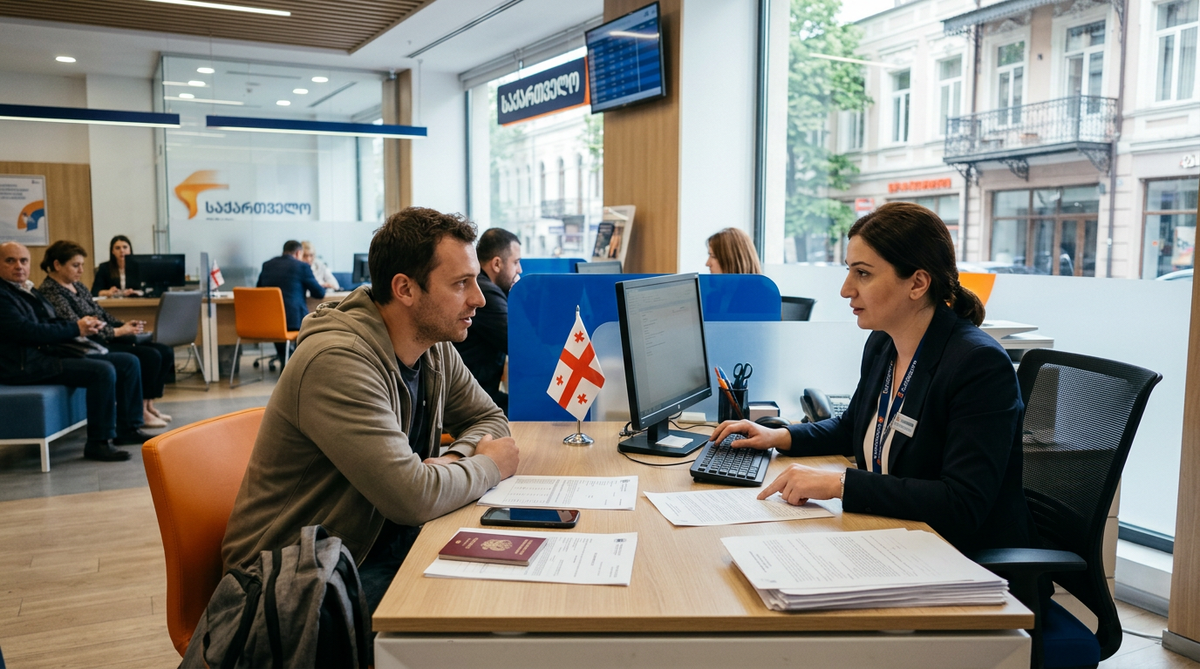
A non-resident can open an account with a passport, and no residence permit is needed. But the procedure has three features that surprise newcomers.
First, you have to come in person. You can start the application in the app, but it is finished at a branch. Second, the bank will ask about the origin of your money. Bring something that confirms income: a contract with an employer or clients, a statement, a tax return. Third, the bank may refuse without explanation, and it happens. Applying to another bank or another branch usually helps.
For daily life a Georgian bank card is very convenient. You pay utilities, transport and delivery with it, and transfers by phone number replace cash here. Which banks work with foreigners, how much the application costs and how to fill in the questionnaire, read in our instructions on opening an account as an individual. Branches in Batumi are collected in the bank catalog.
🤝 Where to find a community of remote workers

In Georgia it is easy to live alone and just as easy to find your people. The shortest road goes through the workplace. Large coworking spaces regularly host meetups, pitches, breakfasts and board game nights, and they let in not only residents.
Then interests take over. Tbilisi has professional meetings of developers, designers and marketers, Georgian and English conversation clubs, and running and hiking groups that head to the mountains on weekends. In Batumi the community is smaller and tighter: in winter, when tourists leave, those who remain get to know each other quickly.
It is convenient to ask practical questions on the forum sarafan.ge. People discuss rent, sole proprietorships, doctors and schools there, and answers come from those who went through it themselves. And don't shut yourself in a circle of newcomers. Neighbours, your landlord and the shopkeeper by your house will tell you more about the city than any chat, and a few phrases from a phrasebook for beginners will open more doors than you'd think.
🏙️ Tbilisi, Batumi or Kutaisi: which city to choose
There is no universal answer, but there are clear differences.
Many end up combining them: they spend winter and the off-season in Tbilisi and move to the sea or the mountains for summer. With a visa-free year, nothing limits this.
💸 How much a month of living in Georgia costs

Georgia is no longer as cheap as the stories from five years ago, but it remains comfortable for someone with foreign income. In September 2026 we estimated a calm budget for one person in Tbilisi at 1,400 to 2,100 US dollars a month, including rent in the centre. With a modest lifestyle and a flat in a residential district it comes out clearly lower.
The main expense is housing: it takes from a third to a half of the budget. The full breakdown of rent, food and transport is in our analysis of the cost of living in Georgia. To see how your income looks against the local background, take a look at the overview of salaries in Georgia.
✅ Where to start: your first week in Georgia
- Before the flight: insuranceA policy for the whole stay, in English or Georgian, saved on your phone.
- On day one: a SIM cardA local number is needed for the bank, delivery apps and taxis.
- In the first days: a flat for a monthDon't sign a year-long lease until you've checked the internet, heating and noise.
- In the first week: a bank accountGo with your passport and income documents, and leave a spare day.
- Right away: your calendarWrite down your entry date and set a reminder a month before your time runs out.
- If you plan a sole proprietorship or local clients: the RLA questionSettle it before your first invoice, not after.
Tell us on Madloba how your remote work from Georgia is set up: which city you live in, where you work, how opening an account went. Stories like these help those who are only now packing their suitcase.
How current this is. This guide was checked in October 2026. The rules on the right to labour activity have applied since 1 March 2026, with the amendments of 15 April and 25 June 2026. Rules and practice keep changing, so check official sources.
❓ Frequently asked questions
💬 No. The Remotely from Georgia programme is closed, and there is no separate visa for remote workers. Citizens of more than 90 countries enter without a visa and can stay for up to a year.
💬 Up to one year in a row, if your country is on the visa-free list. You don't need to extend your stay or register. The list of countries is published by the consular service of Georgia's Ministry of Foreign Affairs.
💬 If you serve a foreign employer or foreign clients and receive no income in Georgia, you usually don't need the right to labour activity: since 15 April 2026 the law does not cover those who provide services to non-residents. With local clients or employment in a Georgian company, a permit is mandatory.
💬 As a rule, yes. A foreign sole proprietor is considered self-employed and must obtain the right to labour activity. Lawyers interpret the case where all of a sole proprietor's clients are abroad differently, so request a written answer from the employment support agency.
💬 Since 1 January 2026 you need a health and accident policy with coverage of at least 30,000 GEL for the whole stay. It must be in Georgian or English, on paper or in electronic form.
💬 A fine and an entry ban. For an overstay of up to 3 months it is 1,000 GEL and 6 months, from 3 months to a year 2,000 GEL and 2 years, over a year 3,000 GEL and 3 years. Data as of October 2026.
💬 After 183 days in the country within twelve months you become a tax resident. Income tax is 20% on income from a Georgian source. For a sole proprietor with small business status a rate of 1% of turnover applies within the annual limit. Discuss your own case with a consultant.
💬 Yes. Mobile internet is one of the fastest in the world: about 140 Mbps at the end of 2024. Wired is slower, about 45 Mbps on average. For reliability, keep home internet and a SIM card from different operators.
💬 Yes, a passport and a local phone number are enough. You cannot open an account remotely, a personal visit to a branch is required. The bank will ask about the origin of your income and may refuse without explaining why.
💬 Tbilisi suits those who value coworking spaces, events and professional networking. People choose Batumi for the sea, accepting the busy summer and rainy winter. Kutaisi is cheaper and calmer, with a low-cost airline airport nearby.

Read also

🐾 Traveling to Georgia with a Dog: Where to Go, Stay and Walk
🐕 Vacation in Georgia with a dog: beaches that allow pets, hotels and rentals, cafes, parks, transport and the main rules for 2026.

🤝 How to Help in Georgia: Animals, People, Nature and Projects for Foreigners
🐾 Where to volunteer in Georgia: dog and cat shelters in Tbilisi and Batumi, helping people, trails and eco projects, plus the rules for foreigners.

👵 Retiring in Georgia: State Pension, Russian Pension and Budget
🧓 Which foreigners get a pension in Georgia, how much it pays in 2026, how to receive a Russian pension and what retirement costs.

🚚 Moving Belongings to Georgia: Cargo, Parcels and Relocation Without Overpaying
📦 How to send belongings and parcels to Georgia from Russia, Europe, the US and Turkey: cargo, CDEK, post, the 300 GEL limit and prices per kg in 2026.

👶 How to Find a Nanny in Tbilisi: Where to Look, What to Pay, What to Check
👶 How much a nanny costs in Tbilisi in 2026: hourly and monthly rates, agencies and apps, a criminal record certificate and a trial day

🏛️ Consulates and Embassies in Tbilisi and Batumi: How to Book an Appointment and Where to Go
🏛️ Where the embassies are in Tbilisi, which consulates work in Batumi and how to book an appointment: addresses and booking rules for 2026.
0 comments
Log in to leave a comment