



🏦 Opening an Account at a Georgian Bank: TBC, Bank of Georgia and Rejections
🏦 Three things to understand before you go
You cannot open an account remotely: a personal visit is required, and Bank of Georgia and TBC both state this outright. The application fee is paid upfront and is not refunded on rejection. The bank can say no without giving a reason.
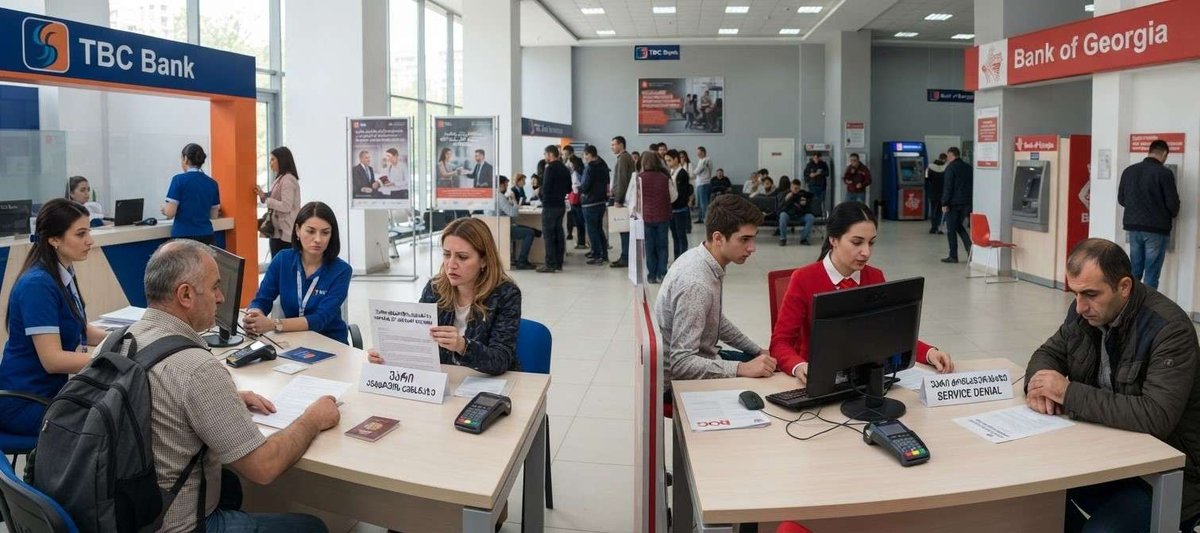
An account at a Georgian bank is genuinely useful: a multi-currency account, a card that works, international transfers that actually go through. That is exactly why thousands of people have gone after one in recent years.
But the requirements have tightened over the same period. Banks scrutinise applications more closely, processing takes longer, and rejections have become noticeably more common. Here is what is actually happening now, what to prepare, and how not to waste money along the way.
🏛️ Which banks work with foreigners

Among the major players, five open accounts for non-residents.
TBC Bank, the country's largest, and by the account of expat communities the most predictable for foreigners. It opens multi-currency accounts, with a fee of around 50 GEL for non-residents and a service plan, Plan Ten, running roughly 10 GEL a month.
Bank of Georgia, the second largest. It charges around 150 GEL to review an application, and does not refund it if the answer is no.
Credo Bank. Often described as easier to get into, but its terms and limitations are worth checking separately; it has its own specifics.
Liberty Bank. The application review fee is also around 150 GEL and non-refundable. It opens accounts for both individuals and sole traders.
Basis Bank. Less talked about than the others, but it does work with foreigners.
One distinction worth understanding about fees. At TBC, the fifty GEL is the cost of opening the account, so you are paying for a result. At Bank of Georgia and Liberty, the hundred and fifty is a review fee, charged regardless of outcome.
📄 What documents to bring
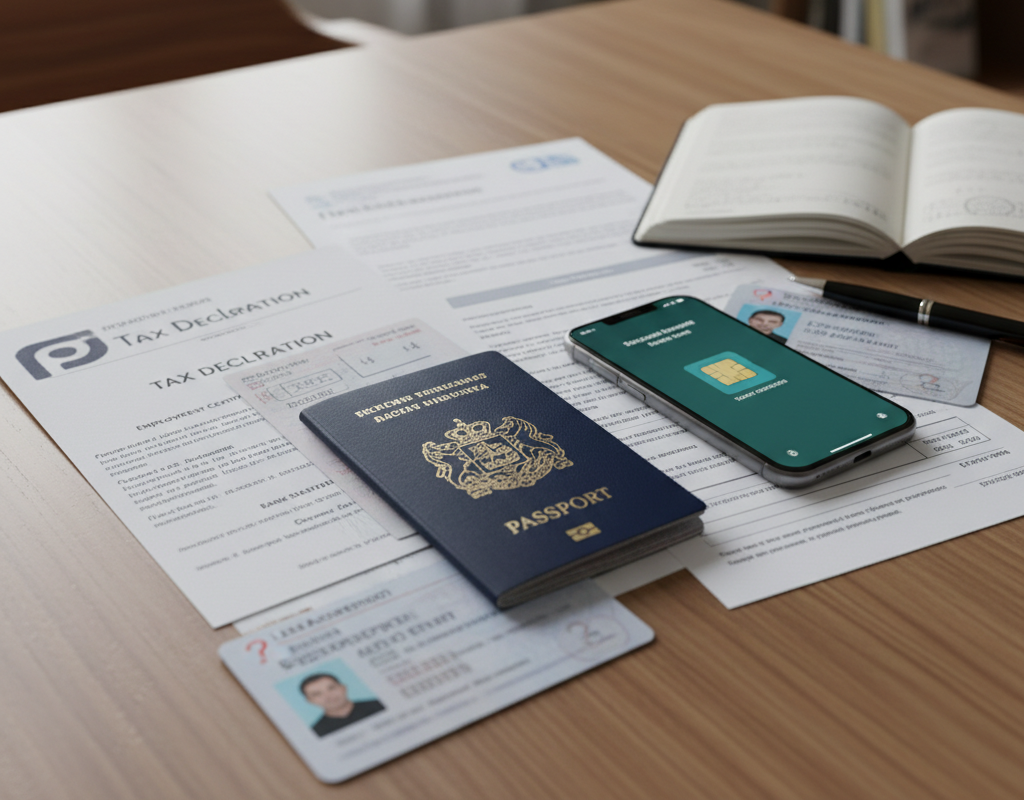
There is no universal list; each bank's requirements are its own and shift over time. But the set most commonly asked for looks like this.
The non-negotiable minimum. A passport. A local SIM card, without which notifications and mobile banking cannot be set up.
Almost certainly asked for. Proof of income. This can be a letter from an employer, a tax return, statements from accounts abroad, or contracts with clients for freelancers.
Sometimes asked for. A rental agreement for accommodation in Georgia. A residence permit, if you have one. Documents relating to tax residency. Confirmation of the purpose of the account.
The KYC questionnaire. It is filled in on the spot, and it is not a formality; it is the core of the decision on your application. What is actually asked, and what separates a strong answer from a weak one, is below.
What noticeably improves your odds. Holding a residence permit and Georgian tax residency, meaning 183 days or more spent in the country.
❌ Rejections: why they happen, and what to do
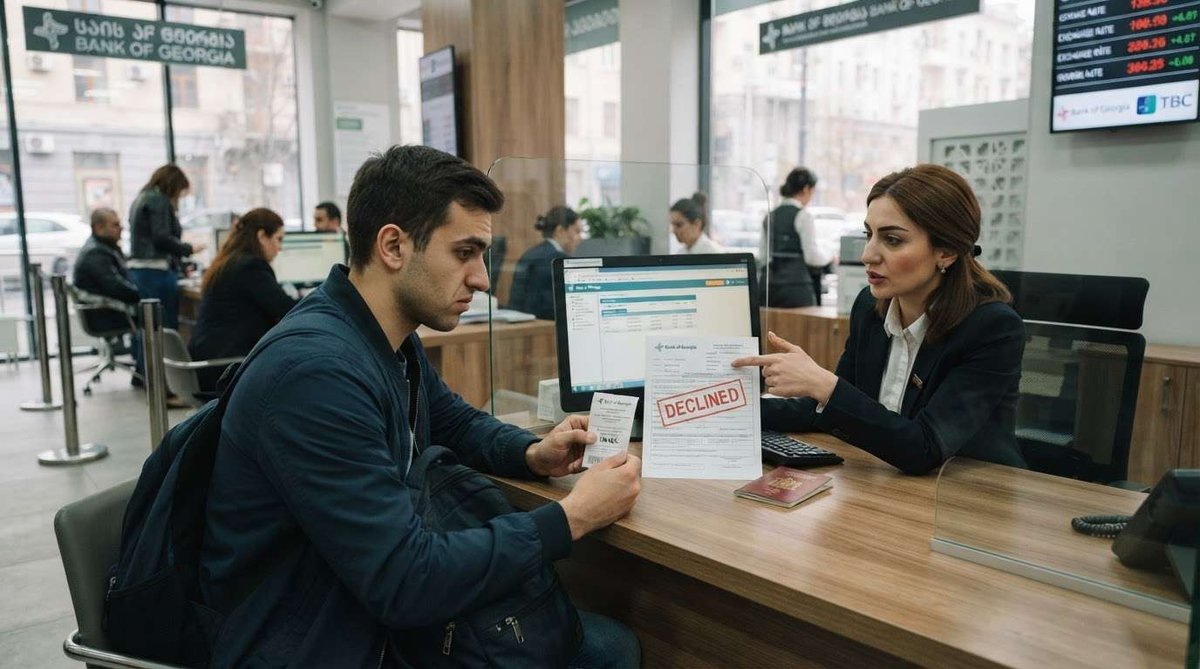
Here the answers are uncomfortable but honest.
The bank can refuse without giving a reason. This is standard KYC and AML compliance practice: the bank is not obligated to explain its refusal to the applicant. There is no appeal in the usual sense.
And the fee is not refunded. At Bank of Georgia and Liberty that is 150 GEL, paid for the privilege of hearing no.
How often rejections happen. Banks do not publish reliable statistics. Across expat communities and dedicated chat groups, people report that Bank of Georgia turns down non-residents more often than the others, and some individual accounts put the failure rate very high. But that is anecdotal, drawn from chat participants, not bank data, and should be weighed accordingly.
What is known more reliably. Requirements tightened after a surge in arrivals: banks began scrutinising applications more closely, processing slowed, and rejections increased. This also affects Georgian citizens holding a second, Russian citizenship.
The bigger risk is not rejection but a freeze afterwards. Transit transactions, money arriving and leaving immediately, are watched closely and dealt with firmly. An account can be frozen or closed.
What genuinely improves your chances.

- Prepare proof of income in advance rather than looking for it at the branch.
- Give an honest, specific reason for opening the account. Not "personal use," but concretely: receiving payment from clients, covering living costs in Georgia, holding savings.
- Do not understate expected turnover. Compliance compares what you declared against what actually happens, and a mismatch is worse than a large number stated upfront.
- Agree large international transfers with the bank in advance.
- Go in person, with a complete folder, and not at the end of the working day.
🛡️ The upside: deposit insurance
One thing that works in your favour, and few people know about it.
Funds held at licensed Georgian banks are insured up to 30,000 GEL per depositor at each bank. The guarantee applies regardless of the depositor's nationality.
In other words, a non-resident is protected on the same terms as a Georgian citizen. For anyone keeping savings here, that is a meaningful point in the bank's favour.
🏙️ Where to go
Major bank branches are in every city, and you generally do not need to book ahead, though central branches see queues in the high season.
Addresses, phone numbers and opening hours are gathered in the directory: banks in Tbilisi, banks in Batumi and banks in Kutaisi.
On the banks themselves there are separate pieces: Bank of Georgia, TBC Bank, Liberty Bank and an overview of reliable banks.
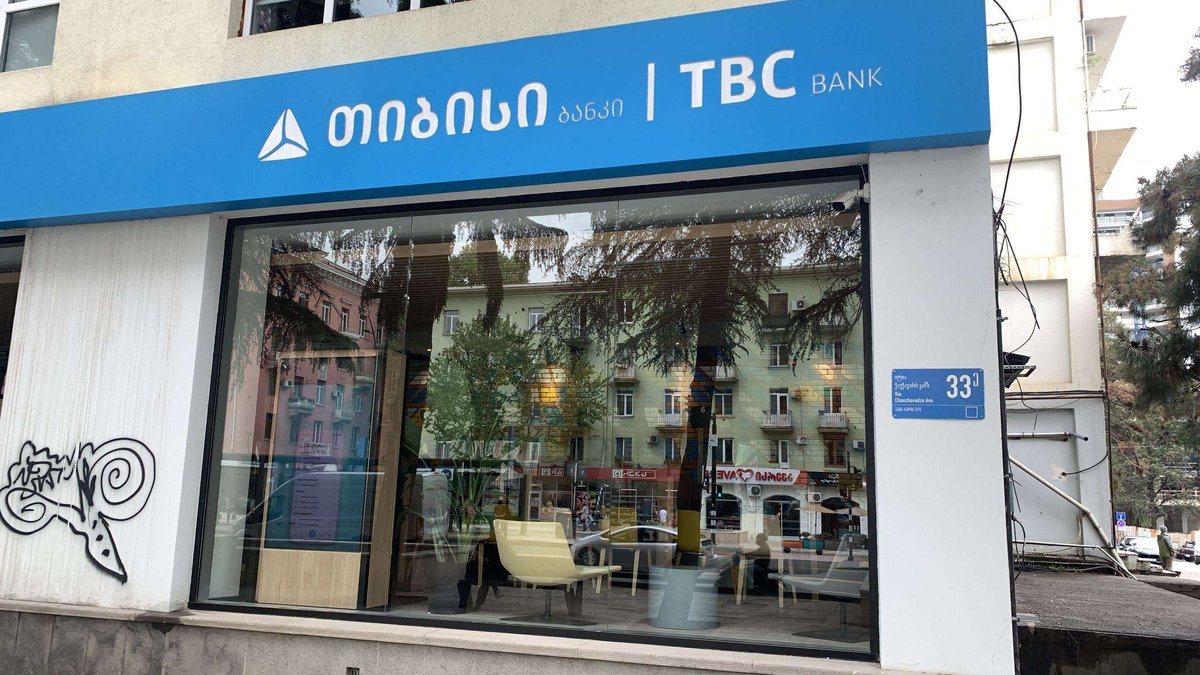
If this is your first attempt, start with TBC. The logic is simple: the fifty GEL there is the price of the account, not the price of an answer. If you are turned down, you lose time, not money.
The hundred and fifty at Bank of Georgia is worth paying once you already have a residence permit, a rental agreement and clear proof of income, in other words when the odds are genuinely in your favour rather than when you are trying your luck.
Opened an account at a Georgian bank? Leave a review on Madloba: tell us which bank, what documents they asked for, how long it took, and whether you were turned down.
Information is current as of September 2026 and is provided for general guidance. Fees, document requirements and application review practices differ by bank and change over time. Check current terms on the bank's website or at the branch before your visit. Estimates of rejection rates are drawn from observations shared in expat communities and are not official statistics.
❓ Frequently asked questions
💬 No. Major banks do not open accounts for individuals remotely, a personal visit is required, and Bank of Georgia and TBC both state this outright. In most cases it cannot be done by power of attorney either. Offers to open an account "remotely, turnkey" are worth treating with suspicion.
💬 A passport and a local SIM card are essential. You will almost certainly be asked for proof of income: a letter from an employer, a tax return, account statements, or client contracts. You may also be asked for a rental agreement, a residence permit, and documents relating to tax residency.
💬 At TBC, around 50 GEL to open a multi-currency account, plus a service plan running roughly 10 GEL a month. At Bank of Georgia and Liberty, around 150 GEL to review the application, and that money is not refunded even if you are turned down.
💬 The bank can refuse without giving a reason; this is standard KYC and AML compliance practice. The most common causes are an unclear source of income, a vague stated purpose, understated turnover, or a perceived risk of transit transactions.
💬 Prepare proof of income in advance, give an honest and specific reason for the account, and do not understate expected turnover. Holding a residence permit and Georgian tax residency, meaning 183 days or more in the country, noticeably improves your position.
💬 TBC makes more sense for a first attempt: you pay for the account being opened, not for the application being reviewed, so a rejection costs you time rather than money. Bank of Georgia's non-refundable 150 GEL is worth paying once your documents are in order and your odds are genuinely good.
💬 Yes, and the main risk here is transit activity: money arriving and leaving right away. Banks monitor this closely and respond firmly. Large international transfers are best agreed with the bank in advance.
💬 Yes. Funds at licensed Georgian banks are insured up to 30,000 GEL per depositor at each bank, and the guarantee applies regardless of nationality.
💬 With a complete set of documents, the process usually fits into a single visit, and the card is often issued the same day or within a few days. But since checks tightened, processing has slowed, and review can take longer.

0 comments
Log in to leave a comment