




⚖️ Getting a Power of Attorney Notarised in Georgia and What It Costs
⚖️ What a notary costs in Georgia: official fee vs. an agency
The same power of attorney in Georgia can carry two very different prices, sometimes decades apart. Both are honest, you're just paying for different things: one covers the notary's signature and seal, the other covers someone handling everything else for you.
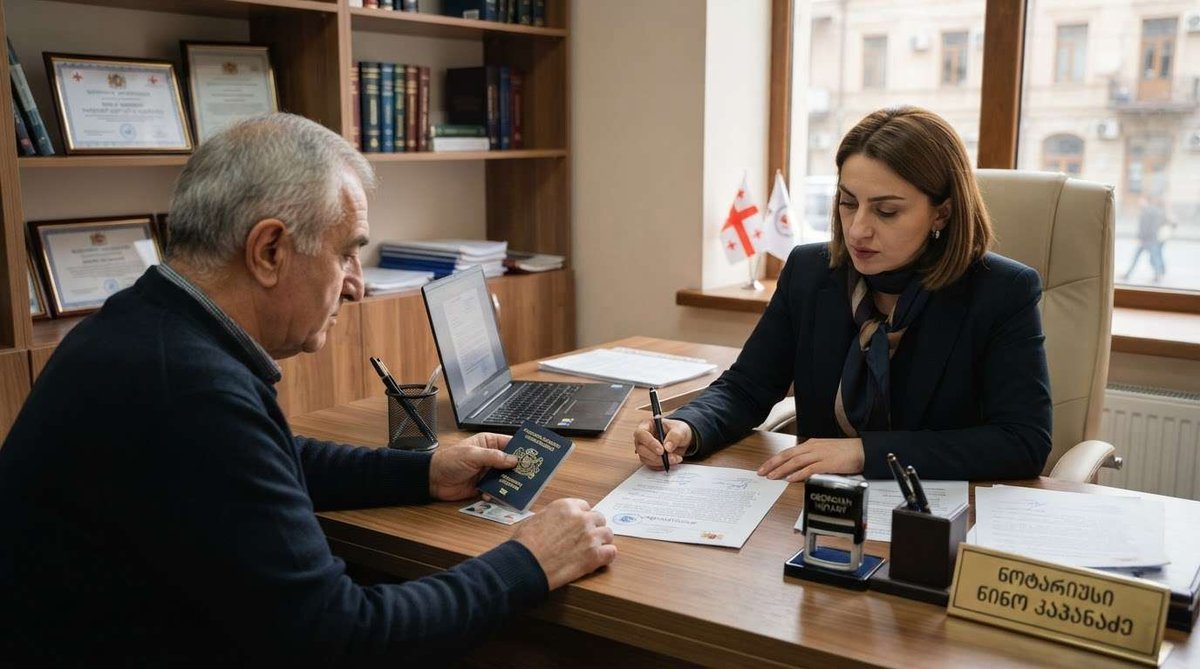
A notary in Georgia is someone you'll end up dealing with sooner or later if you live here. A power of attorney for a relative back home, a property deal, a certified translation for a bank or the House of Justice, consent for a child to travel. And almost every first visit starts the same way: not knowing what it should cost, and worrying about being overcharged.
Here's how the notary system works here, what you can get done, and where the line sits between a fair price and overpaying.
⚖️ What a notary does in Georgia and how that differs from the House of Justice
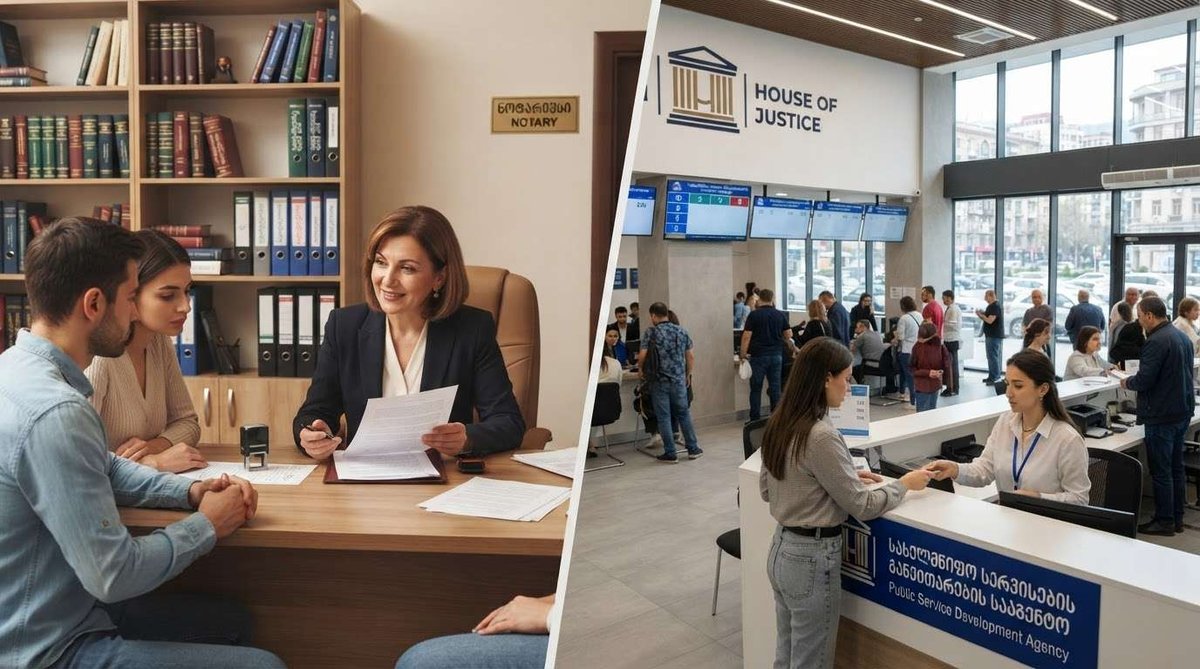
The confusion is understandable; both certify documents. But they're different things.
A notary in Georgia runs a private practice. Notaries work out of their own offices and answer to the Notary Chamber's oversight, and as we've covered, the state, not the notary, sets what they charge.
The House of Justice is a government centre bundling hundreds of services, including the Public Registry, where property and companies get registered. It offers notary services too, but that's just one line on a long list.
In practice the difference plays out like this. Registering a deal, getting a registry extract, or filing for residency, that's the House of Justice. Drafting and certifying a document, a power of attorney or a contract, people more often go straight to a notary: faster, no half-day queue, and you can actually talk through the wording.
We've covered the House of Justice and its services in a separate, detailed guide.
📝 How a foreigner gets a power of attorney notarised in Georgia
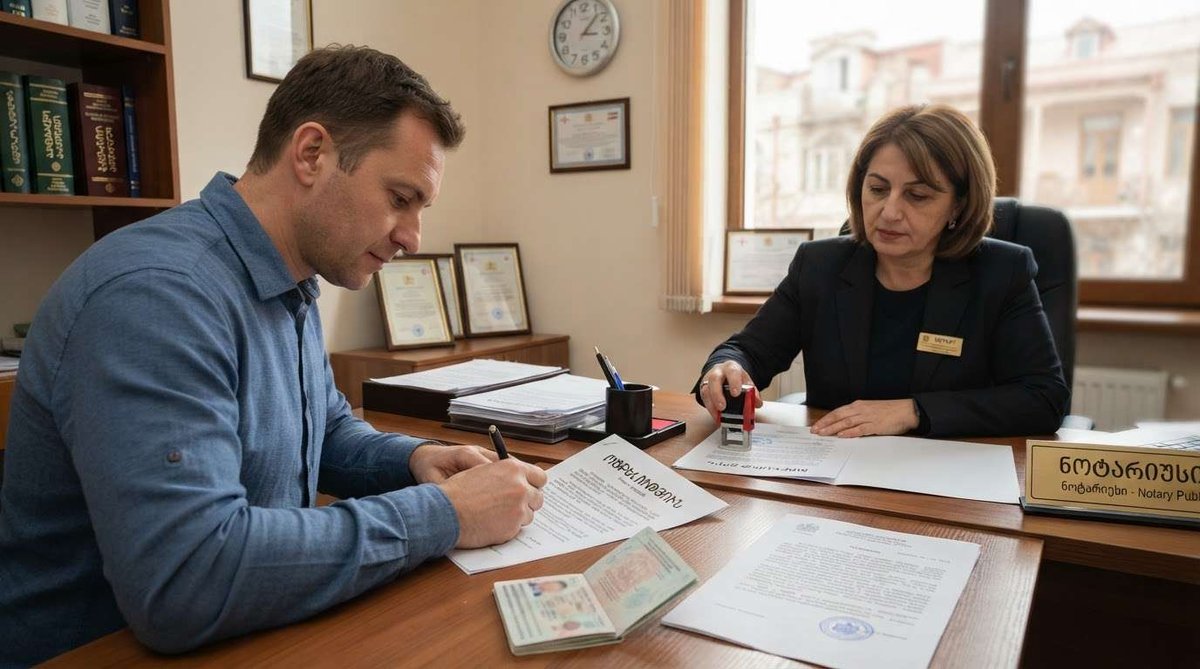
Good news: neither residency nor Georgian citizenship is required.
What to bring. Your passport and the details of the person you're authorising: full name, passport number, ideally a scan. If the power of attorney covers property or an account, bring the paperwork for that too.
Language. The notary drafts the document in Georgian, usually alongside a translation into whatever language you need. In Tbilisi and Batumi, plenty of offices work in Russian, Ukrainian, Belarusian and English, often with their own translators on hand.
The process itself. The notary verifies your identity, walks through the text with you, you sign, they certify it. For a straightforward power of attorney, that takes about an hour if the wording is agreed in advance.
Revoking it. A power of attorney is revoked through a notary too. If you issued one covering property and changed your mind, don't put off the revocation; until it's formally processed, your representative keeps their authority.
🌍 How to make a power of attorney valid for use in another country

This is where most mistakes happen, and where people usually pay for it with a second visit.
The golden rule: ask the people who'll actually accept it, first. A bank, notary, or government office abroad may have its own requirements for wording, language and format. Find these out before your visit to the Georgian notary and draft the document to match. It's the most common advice from people who've been through this, and the most consistently ignored.
Apostille. Georgia is party to the Hague Convention, so a power of attorney made here gets apostilled for most countries. If the destination country isn't a signatory, you'll need consular legalisation instead.
Translation. The document is made bilingual or translated into the destination country's language. A certified translation is also arranged through a notary.
The reverse case: a power of attorney from abroad for use in Georgia. It's drawn up at a notary in your home country, apostilled or legalised, then translated into Georgian with the translation certified here in Georgia. But if this involves a property transaction, read the next section carefully.
🏠 Do you need a notary to buy property in Georgia
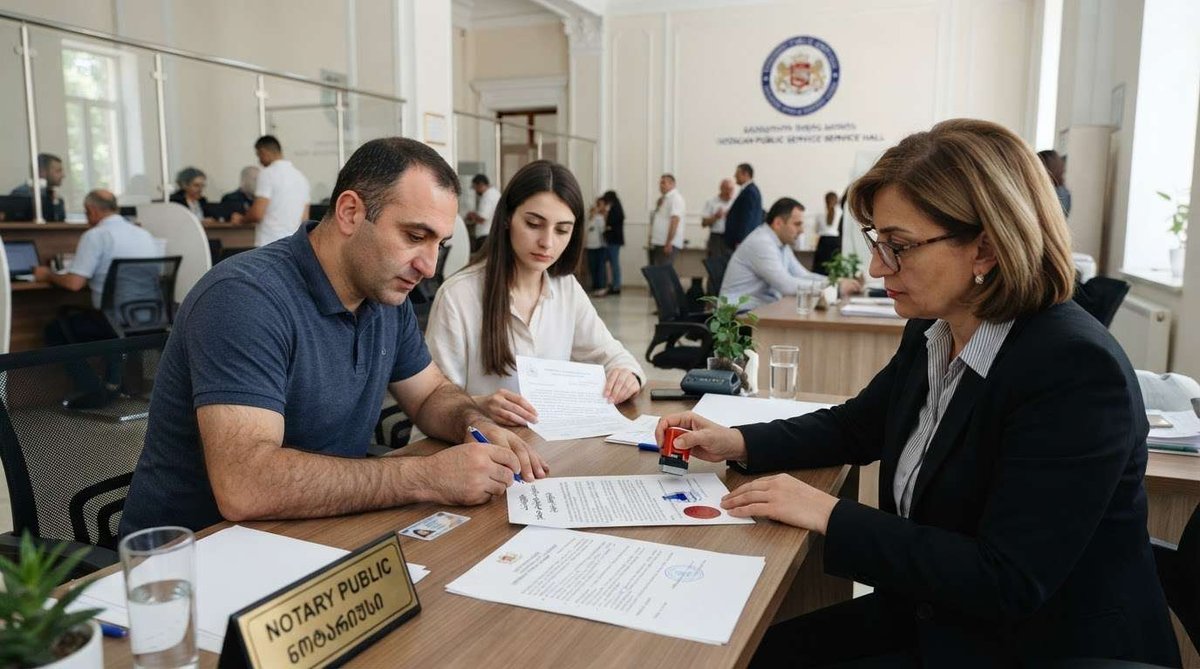
If you're buying or selling a property in person, the contract can be signed and registered through the Public Registry at the House of Justice, no notary required.
But if a representative acting on a power of attorney issued abroad is handling it for you, a notary is mandatory. Since 20 October 2023, such deals only get registered based on a contract that a Georgian notary drafted and certified. The rule came in through Justice Ministry amendments to the Public Registry instructions and the notarial actions procedure, and several legal practices report on it independently.
What this means in practice. Buying and selling through a representative is common in Georgia; plenty of people purchase or sell property in Tbilisi and Batumi without ever visiting. But there's now an extra, mandatory link in that chain, the notary, and it's worth factoring into your timeline and budget.
If you're still at the planning stage, our pieces on real estate agencies and what to check when renting cover much of the same document-checking logic.
💰 How much do notary services cost in Georgia
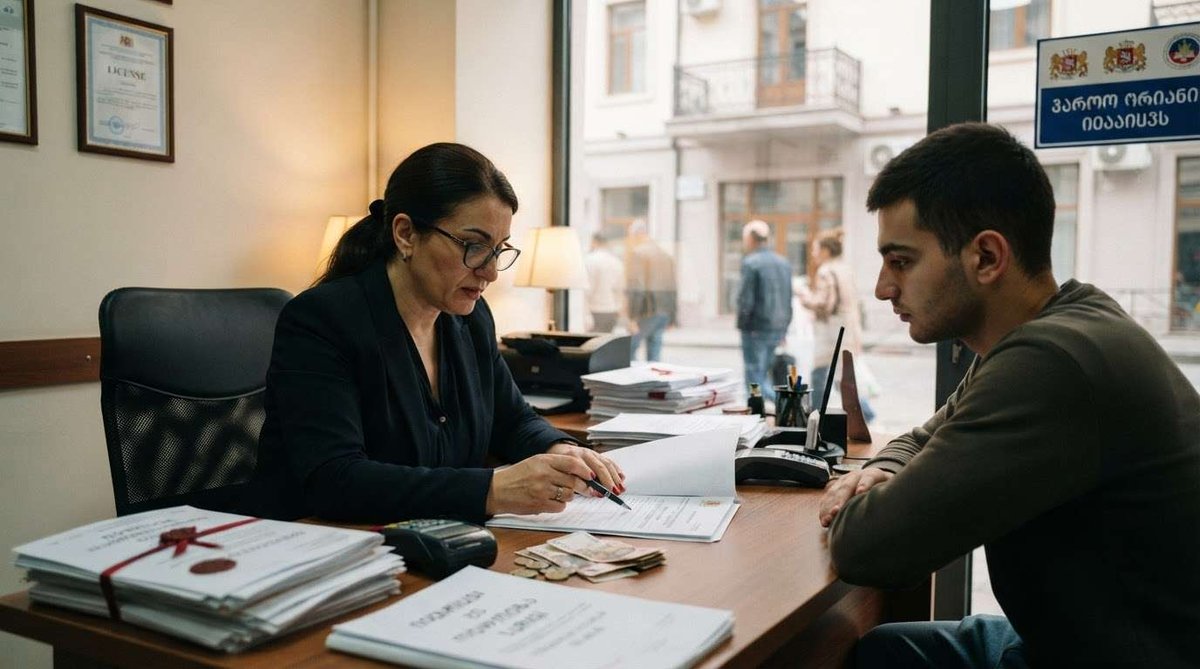
The most surprising thing for newcomers: the notary doesn't set the price. Fees for notarial acts are set by government decree.
According to one open guide, rough figures look like this: notarising a power of attorney around 18 GEL, certifying a will around 16 GEL, certifying a translation from 2 GEL per page. The translation itself is billed separately, usually from 10 GEL per page, depending on the language and who's doing it. These numbers may have shifted since, so treat them as an order of magnitude rather than a price list.
So where does "from 450 GEL" come from? That's what an agency charges for handling everything: drafting the text, a bilingual version, translation, working out the destination country's requirements, sometimes starting the process remotely. It's not a scam, it's a different service entirely.
How to know which one you need. A simple power of attorney for a relative in Georgia, certifying a copy, translating a passport: go straight to a notary. A complex power of attorney bound for another country, a property deal, a document you can't afford to redo: this is where paying for legal help pays off.
One more thing: ask the notary to name the price before they start. Since the fee is fixed by law, that's a perfectly normal question to ask.
🗣️ Are there Russian-speaking notaries, and do any work weekends
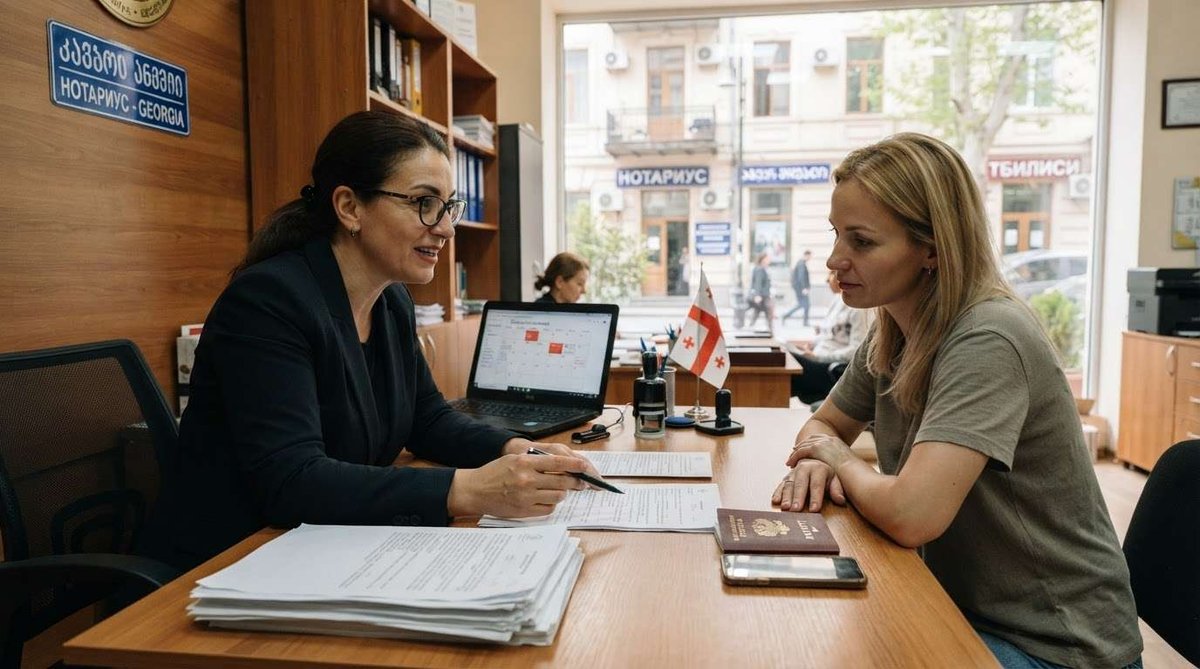
Language usually isn't an issue. Tbilisi and Batumi have plenty of offices where staff speak Russian or keep a translator on hand. Judging by search patterns, this is one of the most common questions from readers, which is exactly why the directory lets you filter by language.
On hours. Most notaries work weekdays until evening, roughly five or six o'clock. But some offices advertise weekend hours, even round-the-clock service; worth knowing about when a document is needed urgently, say before a flight.
Addresses, hours and reviews are all in the directory: notaries in Tbilisi, notaries in Batumi, notaries in Rustavi and notaries in Kutaisi. If you only need a certified translation, see translation agencies in Tbilisi and Batumi.
If the power of attorney is headed to another country, contact whoever will be receiving it first and ask for a sample. A bank in Minsk, a notary in Moscow, or an agency in Kyiv often wants specific wording, and a power of attorney drafted "in general terms" can get rejected outright. One email in advance saves you a second visit, a second apostille, and courier shipping.
And don't grant broader authority than you need to. If a representative is meant to sell one apartment, the document should say one apartment, not "any property." You can always revoke a power of attorney, but it's simpler not to hand over more authority than necessary in the first place.
Had documents notarised in Georgia? Leave a review on Madloba: tell us what exactly, which city, how much you paid, and whether you needed a translator. Real prices from reviews help other people see where the official fee ends and overpaying begins.
Information is current as of September 2026 and is intended as general guidance. Fees for notarial acts are set by the Georgian government and revised periodically; the figures here come from open sources and may have changed. The requirement for notarial certification of deals made under a foreign power of attorney was introduced by Justice Ministry amendments dated 20 October 2023. For property transactions and complex powers of attorney, consult a lawyer.
❓Frequently Asked Questions
💬 Yes, neither citizenship nor residency is required. You just need your passport and the details of the person you're authorising. The notary drafts it in Georgian, usually with a translation into your language alongside it.
💬 Fees for notarial acts are set by the government. Per one open guide, notarising a power of attorney runs around 18 GEL. Agencies charge from 450 GEL for a full-service power of attorney, but that covers drafting and translation too.
💬 Most countries require an apostille, since Georgia is party to the Hague Convention. If the destination country isn't a signatory, you'll need consular legalisation instead. Check the wording requirements with whoever will receive it before you draft it.
💬 If you're buying in person, the contract can be signed and registered through the Public Registry at the House of Justice. If a representative is acting on a foreign power of attorney, since 20 October 2023 a Georgian notary must draft and certify the contract.
💬 It's drawn up at a notary in your home country, apostilled or legalised, then translated into Georgian with the translation certified here in Georgia. For property deals, you'll also need a contract drafted by a Georgian notary.
💬 Yes, especially in Tbilisi and Batumi. Many offices work in Russian, Ukrainian, Belarusian and English, or keep their own translator. The easiest approach is filtering by language in the city notary directories.
💬 Most work weekdays until roughly five or six in the evening. Some offices advertise weekend hours or even round-the-clock service; worth searching out in advance if you need a document urgently.
💬 Through a notary. Until the revocation is formally processed, the representative keeps their authority, so it's worth not putting it off, especially if property or an account is involved.
💬 Notaries in Georgia run private practices under the Notary Chamber's oversight and certify documents. The House of Justice is a government centre that, among other things, registers deals in the Public Registry. Drafting a document is usually faster at a notary; registering it happens at the House of Justice.

0 comments
Log in to leave a comment