


🏙️ What to See in Rustavi in One Day and How to Get There
Rustavi is easy to see in a single day: arrive by bus in the morning, walk around the Old Town, cross the park to the fortress and head back to Tbilisi in the evening.
Rustavi is a city rarely mentioned in tourist guides, but it certainly deserves a visit. It's a place with character: an industrial past, modern transformations, green parks, and a car market renowned throughout Georgia. If you're looking for something unusual, this is the place to be.
🏙️ Getting to know the city
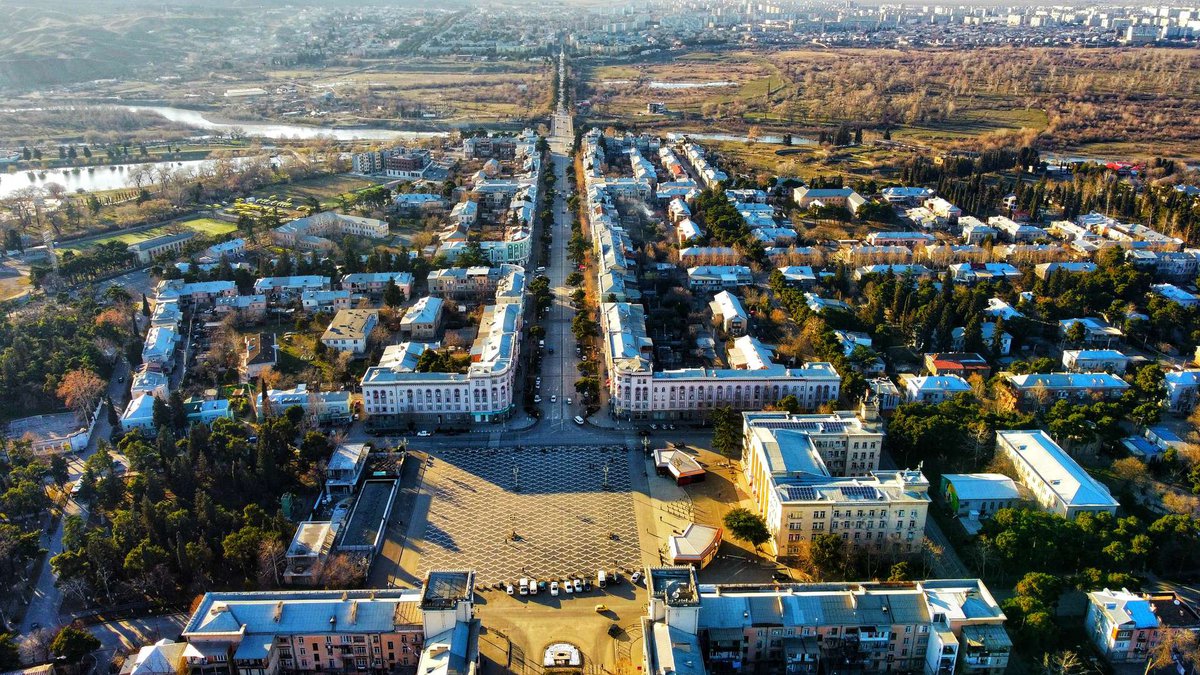
Rustavi is one of Georgia's most unusual cities. It doesn't pretend to be a cozy, old-world haven, isn't overwhelmed by tourist banners, and doesn't offer postcard-perfect mountain views. But that's precisely its charm. It's a city with character, where its industrial past meets cultural initiatives, and Soviet architecture coexists with green parks, street art, and contemporary projects.
Located just 25 kilometers from Tbilisi, this automobile capital often remains in the capital's shadow—but in vain. Tourists seeking a different side of Georgia are increasingly including it in their itineraries. Rustavi is surprising: some come for the cars, some for the street art, and still others simply to stroll along the waterfront and soak up the atmosphere of a city unspoiled by mass tourism.
Useful and important information for tourists in Rustavi
☎️ Emergency services (single number - works throughout Georgia):
- 112: 🚑 Ambulance, 🚓 Police, 🚒 Fire Department
📍No local SIM card required, you can call even without balance.
✈️ Nearest airport:
- Tbilisi International Airport
- 📍 Located approximately 25 km from Rustavi
- 🚕 By taxi or car - about 30 minutes travel time
- 📞 Information phone number: +995 32 231 04 21
- 🌐 Website: tbilisiairport.com
💡 From Rustavi, you can get to the airport by taxi, transfer, or minibus via Tbilisi.
🚖 Taxis in Rustavi:
- Maxim Taxi — a budget option, bookable via app
- Yandex Taxi — convenient for Russian tourists
- Taxi by phone: 📞 +995 322 100 100 — private taxi service
💡 We recommend using apps: the price is fixed in advance, payment is by cash or card.
🚌 Rustavi Bus Station:
- 📍Address: Kostava Street, next to the central market
- 📞 Phone: +995 595 99 69 45
- 🚍 Regular minibuses and buses to Tbilisi, Kutaisi, Batumi, and other cities
- ⏱ Hours: 7:00 AM to 8:00 PM
- ℹ️ Schedules and up-to-date information are only available on-site or by phone. There is no website, but staff often speak Russian.
🏛️ Russian Embassy in Georgia:
There is no official Russian embassy in Georgia.
📍The nearest consular office is in Armenia or Russia.
❗For assistance, please contact the consular online services or the Russian Ministry of Foreign Affairs hotline.
☎️ Russian Ministry of Foreign Affairs hotline.
+7 (495) 695-45-45.
📞 24/7, calls from abroad possible.
📌 You can call for emergency assistance, lost documents, emergencies, and other matters.
🌐 Free Wi-Fi:
- 🏞️ Central Park
- ☕ Cafes and restaurants (almost all have Wi-Fi, ask the staff)
- 📚 Library and City Cultural Center
- 🚌 Bus Station - Waiting Area (limited speed)
💡 Tip: Download an offline Google Maps map of the Rustavi district in advance.
For more details, read the article below ⬇️ There you'll find tips, routes, attractions, and personal impressions.
📍 General Information
- Founded: approximately 4th century (Old Rustavi); New Rustavi – in 1948
- Region: Kvemo Kartli
- Coordinates: 41.5411° N, 44.9874° E
- Population: approximately 120,000
- Area: approximately 59 km²
- Altitude: approximately 350 m
- Climate: dry subtropical
- Average summer temperature: +26…+30°C
- Average winter temperature: +2…+6°C
- Time zone: GMT+4
- River: Kura (Mtkvari)
- Distance to Tbilisi: approximately 25 km
The city is located in southeastern Georgia, in the Kvemo Kartli region, just half an hour's drive from Tbilisi. It stretches across both banks of the Kura River and is divided into Old and New Parts—a reflection not only of its geography but also of the contrast between its ancient history and its Soviet industrial legacy.
🗺️ Terrain:
The city is located on flat terrain along the Kura River:
- there are no significant elevation changes,
- suitable for walking and cycling
In terms of population, it is one of the five largest cities in the country, with approximately 120,000 residents. Despite its industrial image, the city is actively developing: new residential neighborhoods are appearing, public spaces are being renovated, and cultural centers and parks are opening.
📈 Population dynamics:
- 1948: Construction of a new industrial city begins; the population is insignificant.
- 1959: According to the census, the city has a population of 41,465.
- 1970: The population increases to 92,000, due to industrial development and an influx of workers.
- 1979: The population reaches 116,200.
- 1989: The population peaks at 158,661.
- 2002: Following the collapse of the USSR and economic difficulties, the population declines to 116,384.
- 2014: Slight increase to 125,103.
- 2020: As of January 1, the population is 128,680.
The climate is typically eastern Georgian: dry and warm, with hot summers and mild winters. Thanks to its proximity to the capital and convenient transportation, people increasingly come here not only for business, but also for weekend getaways or as part of a regional trip.
🌡️ Temperatures by season:
- Spring: from +10°C to +22°C
- Summer: from +20°C to +34°C
- Fall: from +12°C to +24°C
- Winter: from 0°C to +8°C
🏛️ Historical Path
The city's history dates back to ancient times. The first settlements in this area existed as early as the 1st millennium BC. Archaeological finds confirm the strategic importance of the site: trade routes passed nearby, and the Kura River provided water and easy access to other regions.
Old Rustavi was first mentioned in Georgian chronicles around the 4th century as a khargar fortress on the eastern border of the ancient Iberian Kingdom. Over the centuries, the city suffered devastation during raids, and in the 13th century, it was almost completely destroyed by the Mongols and fell into a long decline.
🏺 Ancient Rustavi: From Antiquity to the Middle Ages
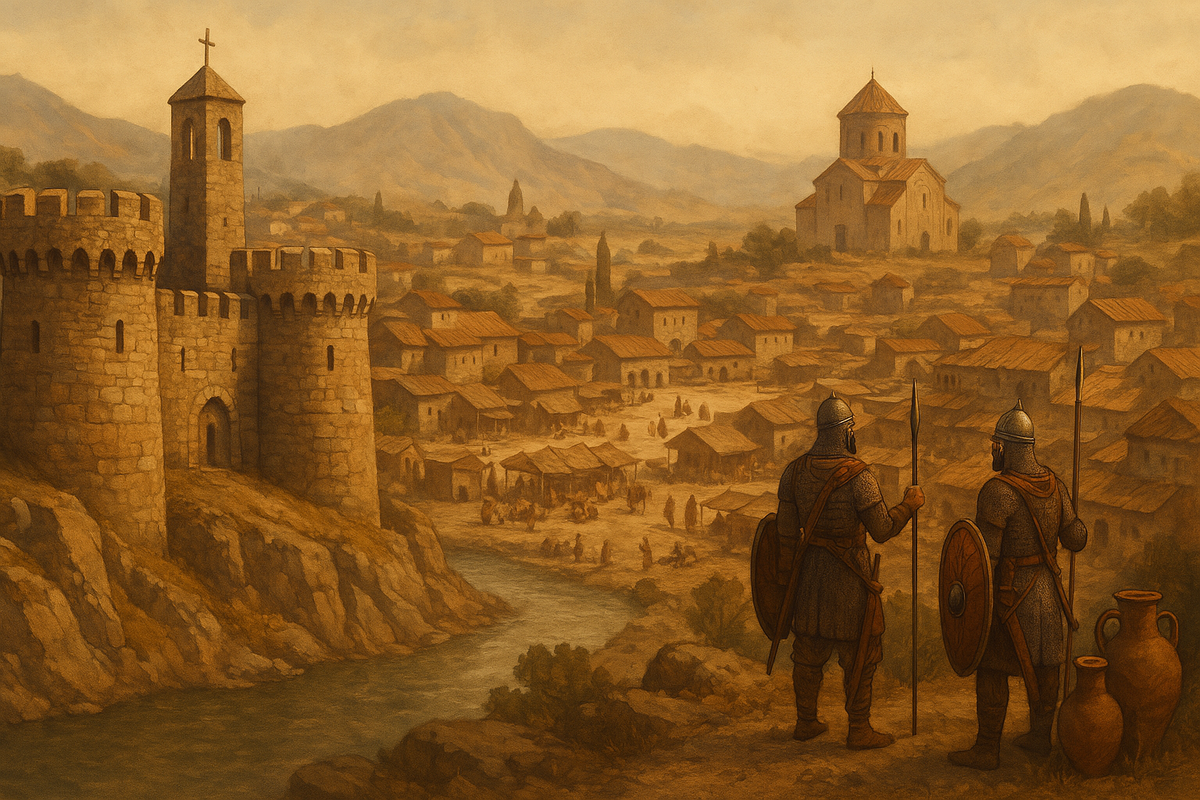
The territory of the modern city has been inhabited since ancient times. Archaeological finds indicate the existence of settlements here as early as the Bronze Age.
In ancient times, a city known as Bostan-Kalaki existed on the site of the present-day city. The remains of this ancient settlement were discovered by archaeologists during excavations, confirming its significance in regional history.
In the 5th century CE, a fortress was built on the territory of Rustavi, which was expanded and strengthened over time. Initially, these were signal towers, but by the 12th and 13th centuries, the fortress had evolved into a powerful defensive structure with semicircular towers and tunnel passages for mobile castling during sieges.
In the 470s, the Rustavi Diocese was established, emphasizing the religious and cultural significance of the city during this period.
⚔️ Destruction and Abandonment
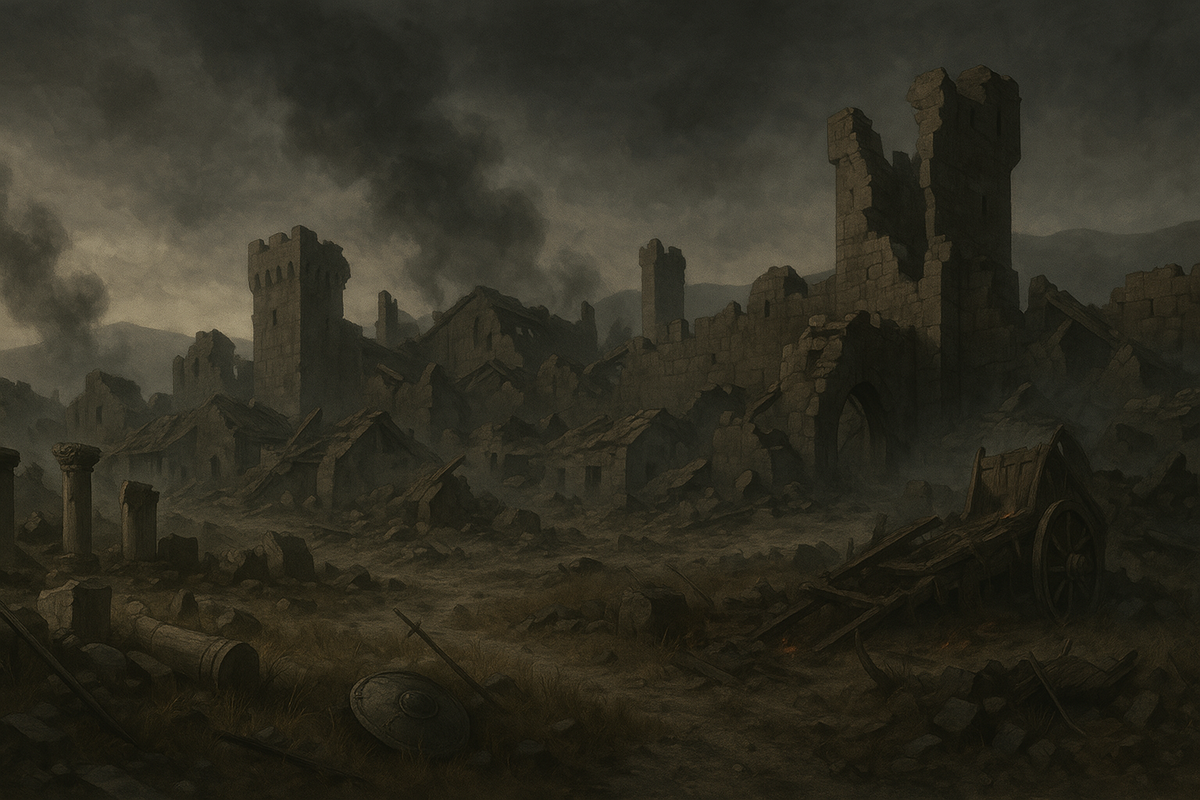
In the 13th century, the city was devastated by the Mongol invasions. After these events, it remained in ruins for a long time and was not restored until the 20th century.
Thus, until 1948, the area had a rich and complex history, punctuated by periods of prosperity and decline. The modern city, founded in the mid-20th century, was reborn on the site of an ancient settlement, bearing the imprint of centuries of history.
True revival only began in the 20th century, when in 1948, by decision of the Soviet government, construction of a new city began here. Rustavi became an industrial center with a focus on metallurgy. Alongside the factories, a modern city was built: wide avenues, standardized architecture, residential areas, cultural institutions—all in accordance with the socialist urban development plan.
During the Soviet years, the population grew rapidly, and the city reached its peak in the late 1980s.
🏛️ 20th-Century Revival: Industrial Growth and Urban Development
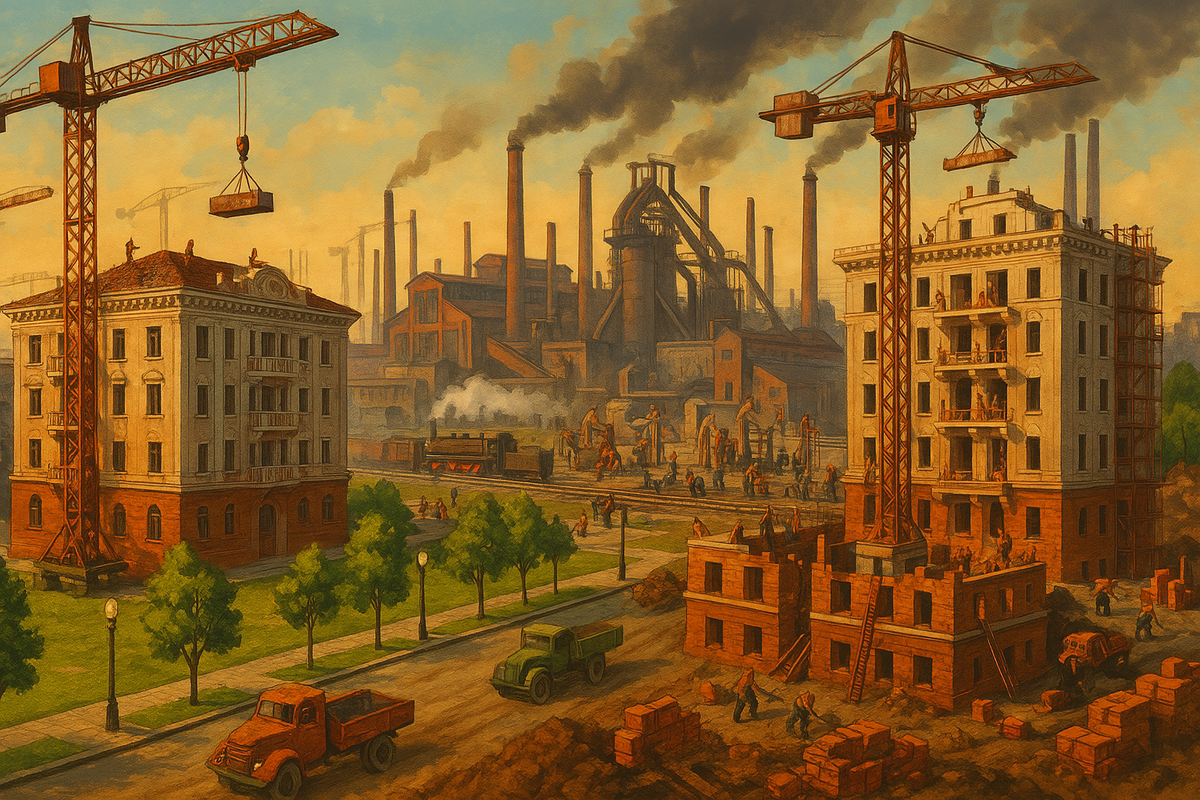
In 1948, large-scale construction of a new industrial center began in Georgia. This project was part of the post-war industrialization of the Soviet Union and envisioned the creation of a powerful industrial complex comprising approximately 90 large and medium-sized industrial enterprises.
Rustavi Metallurgical Plant: The town's main enterprise, construction began in 1944, with the first steel produced in 1950. The plant specialized in the production of cast iron, steel, and steel pipes.
Nitrogen Fertilizer Plant: Built in the 1950s, it produced nitrogen fertilizers, ammonia, and nitric acid, meeting the needs of the region's agriculture.
Synthetic Fiber Plant: Opened in the 1950s, it specialized in the production of chemical fibers for the textile industry.
Cement Plant: Provided high-quality cement for construction projects in the region.
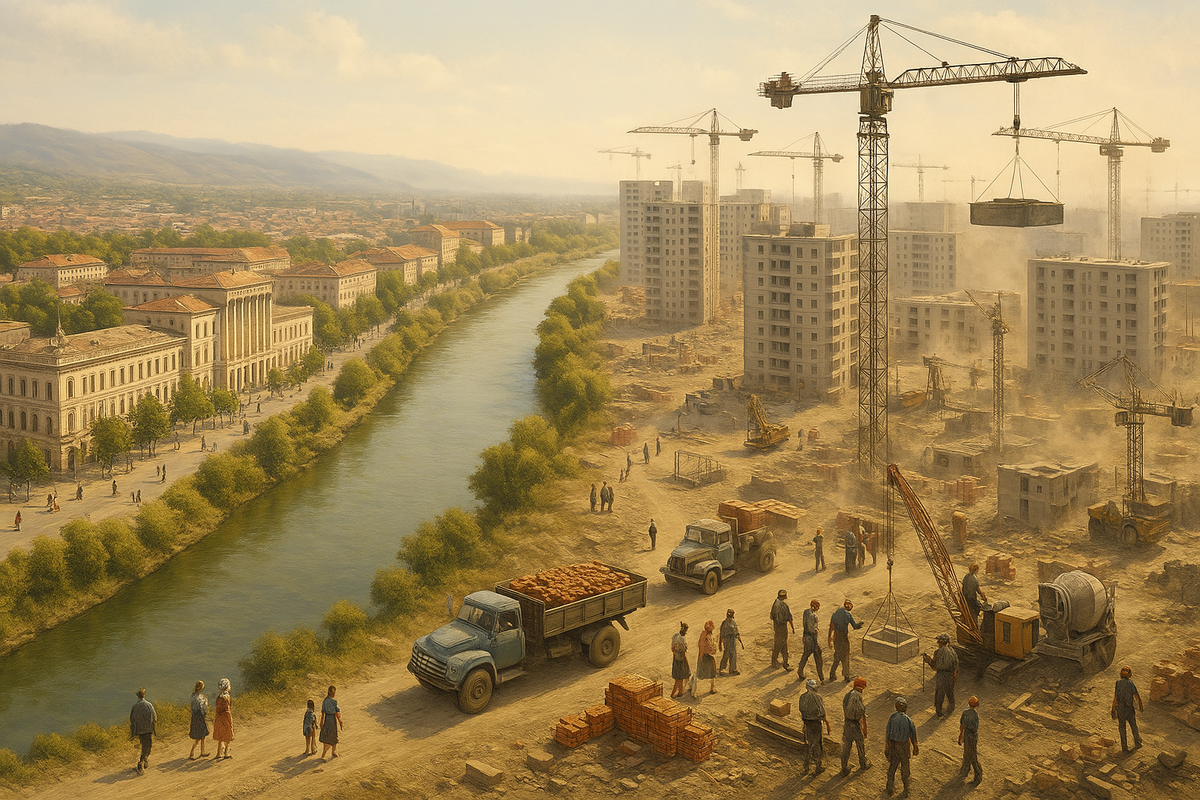
Alongside industrial development, active housing construction was underway. The city was divided into two parts:
- Old Rustavi (Dzveli Rustavi): developed in the 1940s and early 1950s, it is characterized by Stalinist Empire-style architecture with wide avenues and monumental buildings.
- New Rustavi (Akhali Rustavi): construction began in the mid-1950s and is dominated by typical panel buildings, reflecting the principles of mass industrial housing construction of the time.
Exact data on the number of residential buildings constructed or the total living space during this period is limited. However, it is known that the city was designed to accommodate tens of thousands of workers and their families, which entailed the construction of a significant amount of residential and social facilities.
🏭 Industrial Giants: History, Products, and Transformations
Rustavi Metallurgical Plant
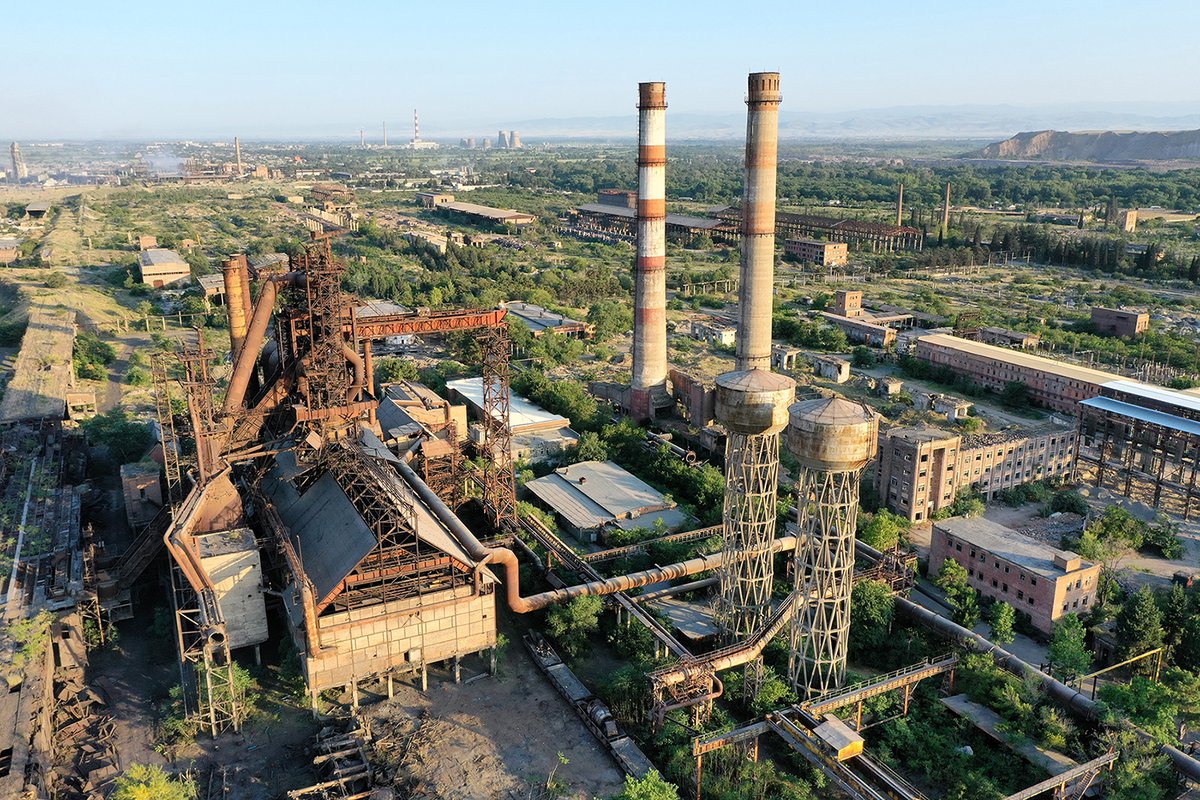
Founding and Products:
- Year of Founding: 1948
- Products: Coke, sinter, cast iron, steel, hot-rolled and cold-rolled products, seamless steel pipes.
Soviet period:
Peak production figures:
- Coke: 620,000 tons per year.
- Sinter: 1,200,000 tons per year.
- Pig iron: 700,000 tons per year.
- Steel: 1,450,000 tons per year.
- Seamless pipes: 500,000 tons per year.
Post-Soviet period:
- 1990s: Following the collapse of the USSR, production declined significantly, and by 1999 the plant had virtually ceased operations.
- 1999: The enterprise was acquired by businessman Badri Patarkatsishvili.
- 2006: An Anglo-Georgian private company acquired a full stake in the plant, and restoration began.
- 2009: Induction heaters were installed, and valve production resumed.
- 2012: By court order, the plant was returned to the Patarkatsishvili family.
- 2018: The plant was on the verge of closure due to the dumping of Iranian valves on the market.
Rustavi Nitrogen Fertilizer Plant
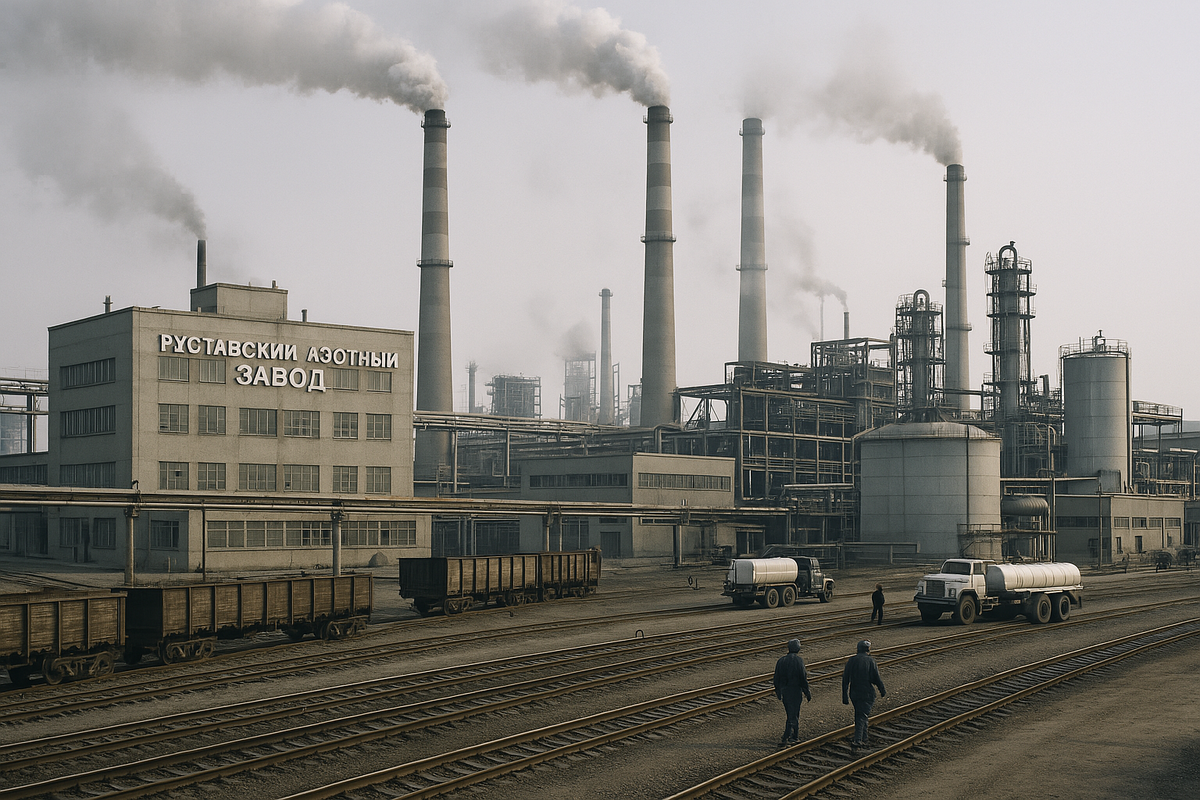
Founding and Products:
- Year of Founding: 1950s
- Products: Ammonia, nitric acid, nitrogen fertilizers
Soviet Period:
- The plant met the needs of the region's agriculture and was the only one in the Caucasus in this industry.
Post-Soviet Period:
- After the collapse of the USSR, the plant faced economic difficulties, and production declined.
- In recent years, attempts have been made to modernize and restore production.
Synthetic Fiber Plant
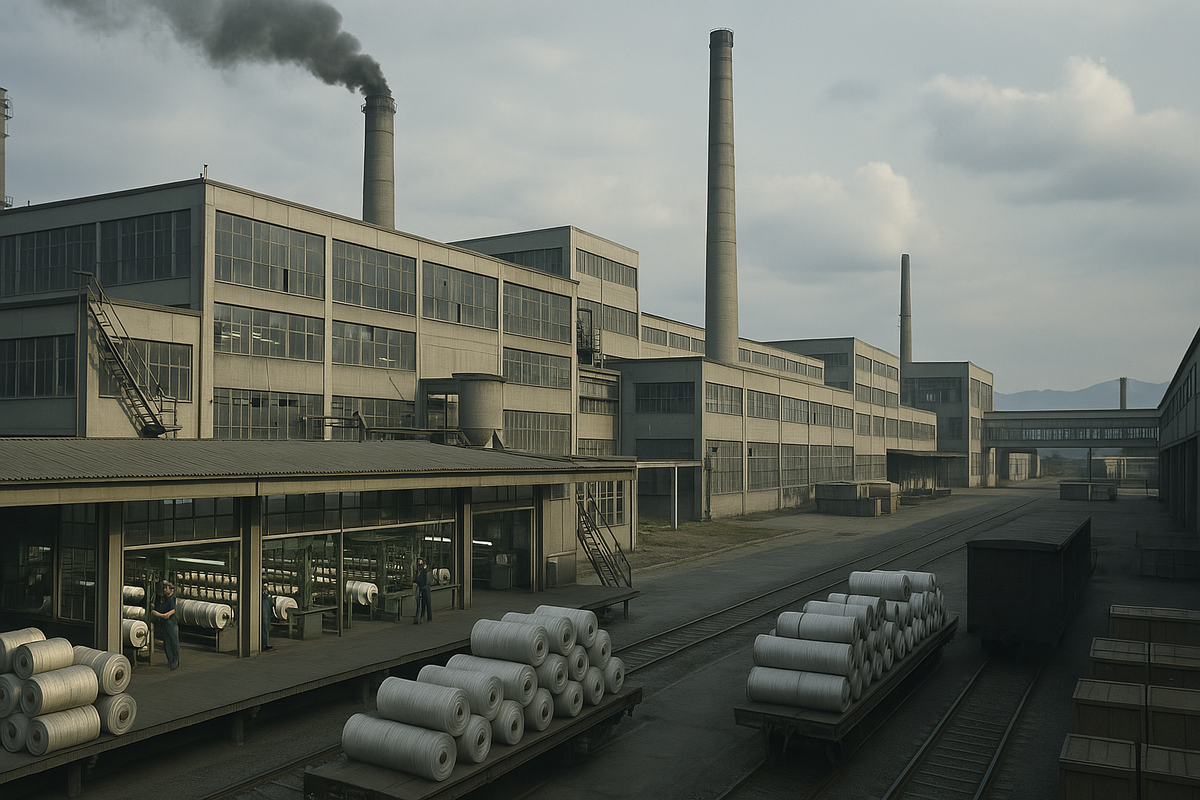
Founding and Products:
- Year of Founding: 1950s
- Products: Synthetic fibers for the textile industry
Soviet Period:
- The plant was an important supplier of synthetic materials for the USSR textile industry.
Post-Soviet Period:
- After 1991, production declined, and the plant ceased operations.
Cement Plant
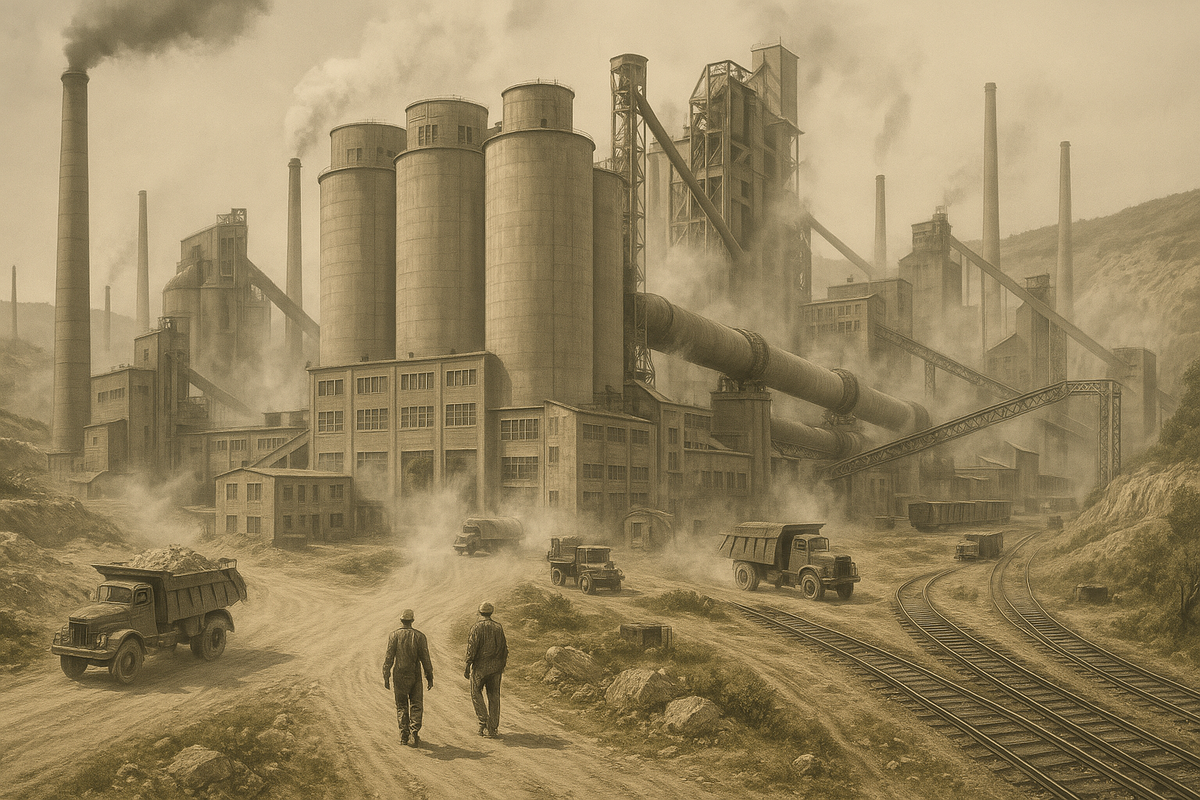
Founding and Products:
- Year of Founding: 1950s
- Products: Cement for regional construction needs
Soviet Period:
- The plant supplied high-quality cement to Georgian construction projects.
Post-Soviet Period:
- After the collapse of the USSR, production declined, and the plant ceased operations.
These enterprises played a key role in the industrial development of the city and Georgia as a whole. However, after the collapse of the USSR, most of them faced serious difficulties, with many ceasing operations or significantly reducing production. In recent years, attempts have been made to revive the city's industrial potential, but progress has been slow and faces numerous challenges.
After the collapse of the USSR, economic activity plummeted, some businesses closed, and many residents left. However, in recent decades, Rustavi has gradually regained its role, becoming a more multifunctional and vibrant city.
🏙️ The Post-Soviet Period: Challenges and Revival
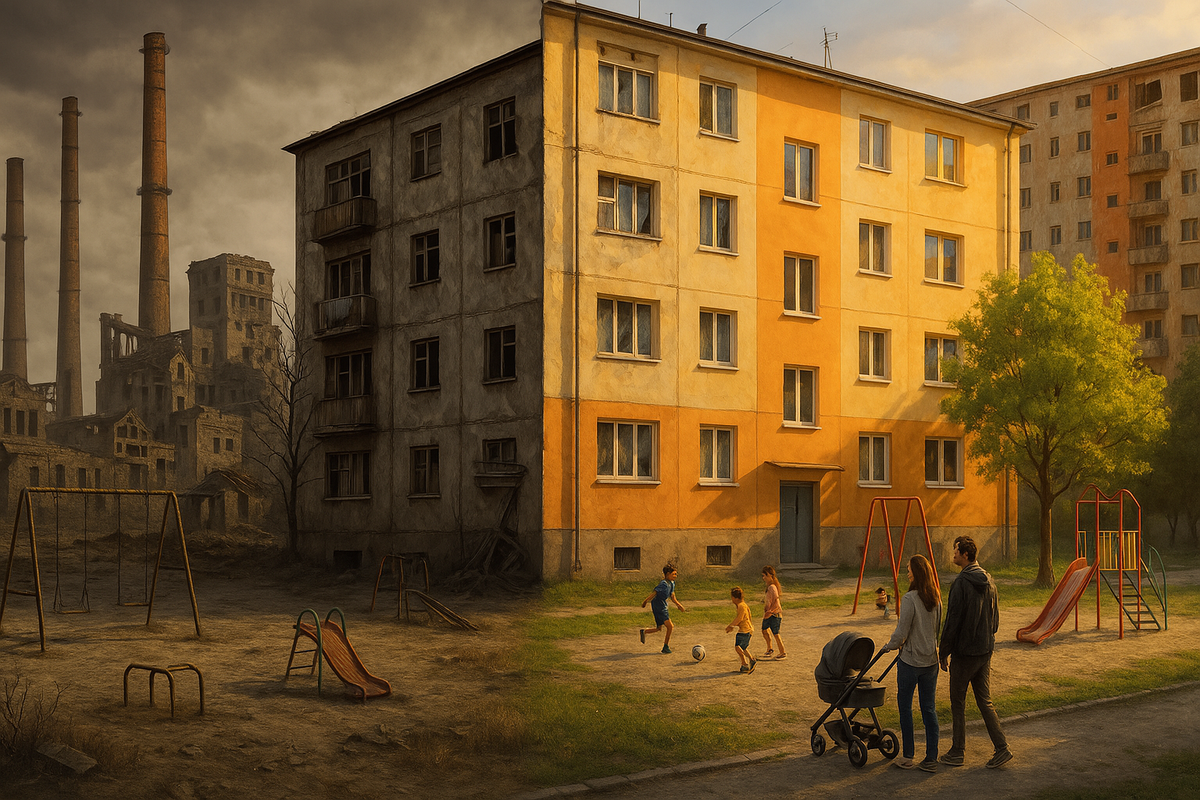
Following the collapse of the Soviet Union in 1991, Rustavi, like many industrial centers of the former USSR, faced severe economic difficulties. Most of the approximately 90 large and medium-sized industrial enterprises built during the Soviet era suspended or ceased operations. This resulted in 65% of the city's population losing their jobs, causing significant socioeconomic tension.
Industry: Decline and Attempts at Recovery
- The Rustavi Metallurgical Plant, a flagship industry during the Soviet era, producing coke, sinter, cast iron, steel, and seamless pipes, virtually ceased production in the early 1990s. In 1999, the enterprise was acquired by businessman Badri Patarkatsishvili, and efforts to revive it began. By 2009, induction heaters had been installed and rebar production had resumed. However, periodic worker strikes over low wages and poor working conditions continued to complicate the situation.
- Other enterprises, including chemical plants and machine-building complexes, also experienced a significant decline. Many were closed, and their infrastructure fell into disrepair.
Housing Construction and Urban Infrastructure
Despite economic difficulties, efforts were made to improve urban infrastructure in the post-Soviet period:
- Housing Construction: Although the mass construction of new residential areas slowed, repairs and modernization of existing housing were carried out, especially in areas built during the Soviet era.
- Public Spaces: Steps were taken to improve parks, squares, and central streets. New cafes, restaurants, and shops opened, contributing to the revitalization of city life.
🌇 Modern Rustavi: The Path of Renewal
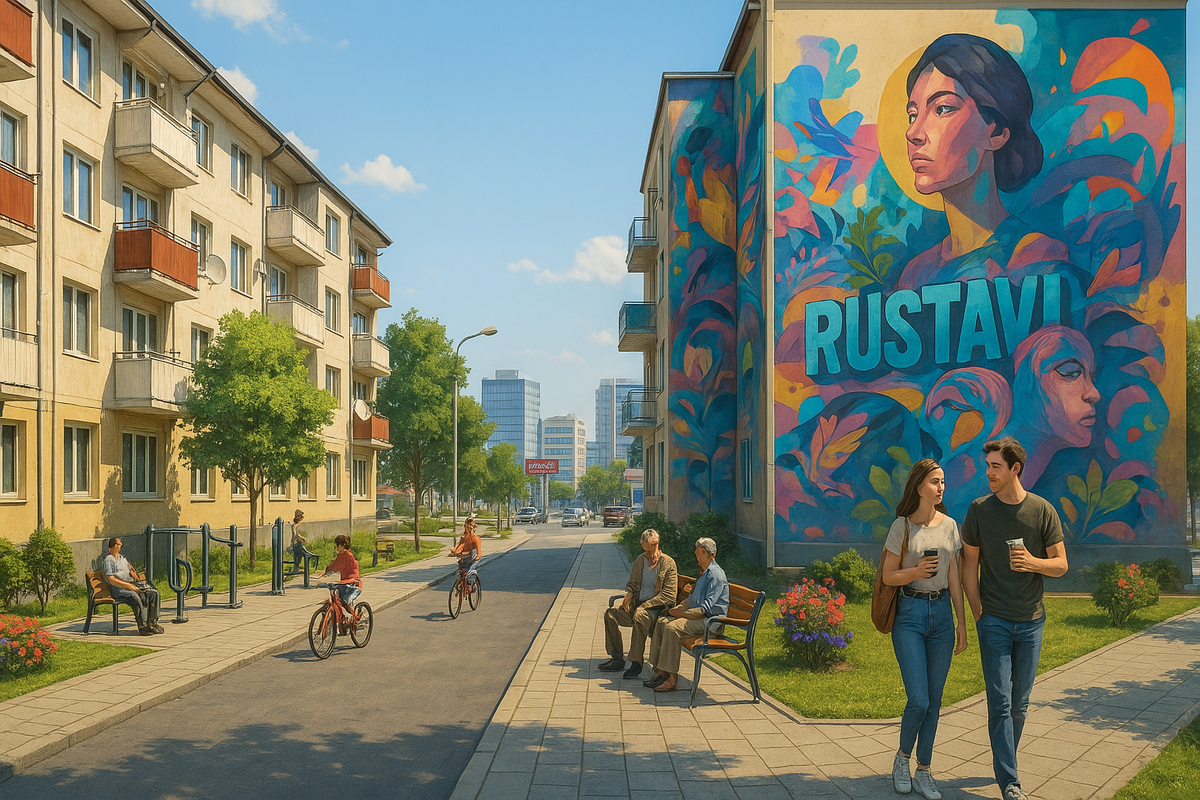
After the difficult 1990s, when the city faced economic decline, unemployment, and population decline, the area gradually began to revive. Although large-scale industrial facilities never reached full capacity, the city began to seek new avenues for development—not just through industry, but also through culture, infrastructure, and business.
- 💼 Economy and Entrepreneurship
Today, Rustavi is becoming increasingly attractive to small and medium-sized businesses. Car dealerships, shops, cafes, and service stations are opening here, and service and trade are developing. The automobile market, one of the largest in Georgia, is particularly important. People come here to buy cars from all over the country and even from abroad.
- 🏙️ Infrastructure and Urban Environment
The city is actively improving streets, renovating residential buildings, and creating new public spaces. The central area is coming alive with renovated squares, pedestrian areas, and playgrounds. Work is underway to create green spaces and improve the urban environment.
- 🎭 Culture and Street Art
A modern municipality is not just factories and cars. Culture is actively developing here: the city hosts theater productions, musical evenings, and festivals. Street art has become its new calling card—building facades are decorated with vibrant graffiti, often with social or patriotic overtones.
- 🧑🤝🧑 Youth and New Generations
The city is seeing a noticeable increase in youth activity. Creative spaces are being created, coworking spaces are opening, and educational and cultural events are being held. All this suggests that the automobile capital is gradually becoming not only an industrial city, but also a modern, vibrant city with a human face.
🚗 Why Rustavi is called the automobile capital
If you've ever looked for a car in Georgia, chances are your path has led to Rustavi. This city is rightfully considered the country's main auto hub, as it's home to one of the largest car markets in the entire South Caucasus.
🏪 Car Market (Avtopapa)
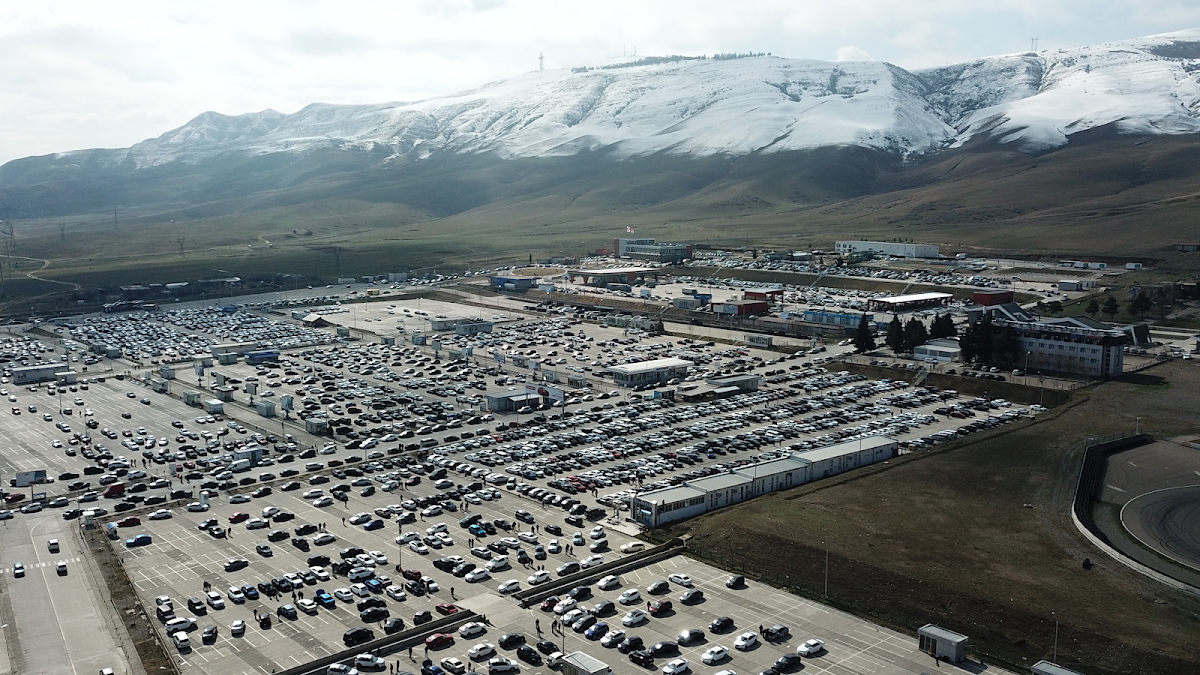
- Hundreds of cars enter the market daily, most of which are imported from the USA, South Korea, Germany, and Japan.
- Here you can find cars to suit every taste and budget—from budget models to premium ones, including commuter cars.
- The area boasts numerous car dealerships, service stations, registration and document processing centers, and custom car delivery services.
📈 Why has the car market become so large?
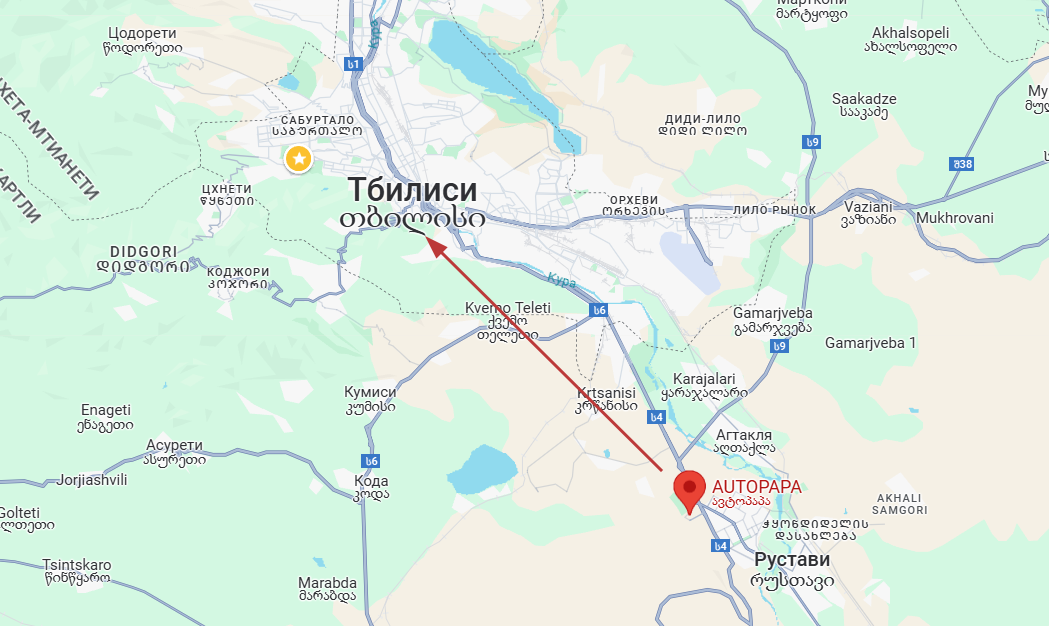
Following the vehicle registration reform in Georgia and the simplification of vehicle import conditions, the market quickly found a niche for convenient and quick car purchases.
Its advantages:
- Convenient location close to Tbilisi
- Large open space and infrastructure
- Access to certified services and Georgian customs
- Experienced intermediaries and companies assisting with selection and registration
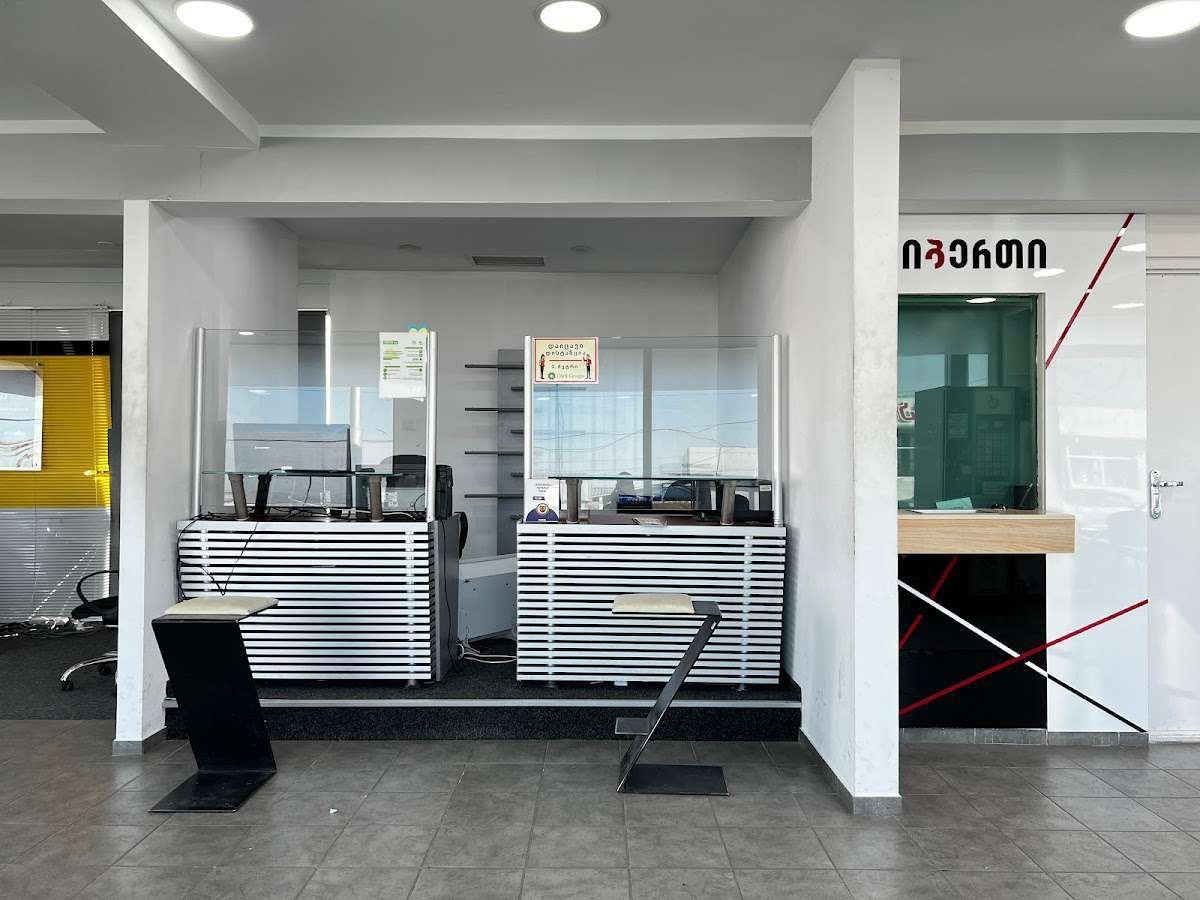
🛠️ What else is important to know
Paperwork and registration here take 1 to 2 days.
It's possible to order car delivery to other regions of the country.
Many buyers combine their car purchase with a short city tour—a way to combine business with pleasure.
🌆 What to see
Rustavi isn't a city where a 10th-century church or Gothic street hides around every corner. It's a city with an industrial past, Soviet urban planning, modern street culture, and cozy natural areas. It's a fascinating place to stroll, observe, and discover—even if you're not here for tourism. Below are the most significant landmarks and interesting spots.
🏛️ Architecture and Interesting Buildings
📍 Old Rustavi (Dzveli Rustavi)
- Built in the late 1940s – early 1950s.
- The predominant style is Stalinist Empire: massive buildings, colonnades, and a symmetrical layout.
- Distinctive avenues, wide streets, and typical buildings typical of the early USSR.
- Particularly striking streets are Kostava and Shartava, where the architecture has been preserved almost in its original form.
📍 New Rustavi (Akhali Rustavi)
- Development began in 1955.
- It is composed primarily of panel residential buildings, arranged in open-plan neighborhoods with green spaces.
- The urban grid is noteworthy, with pedestrian paths, parks, and spacious courtyards.
🏰 Rustavi Fortress
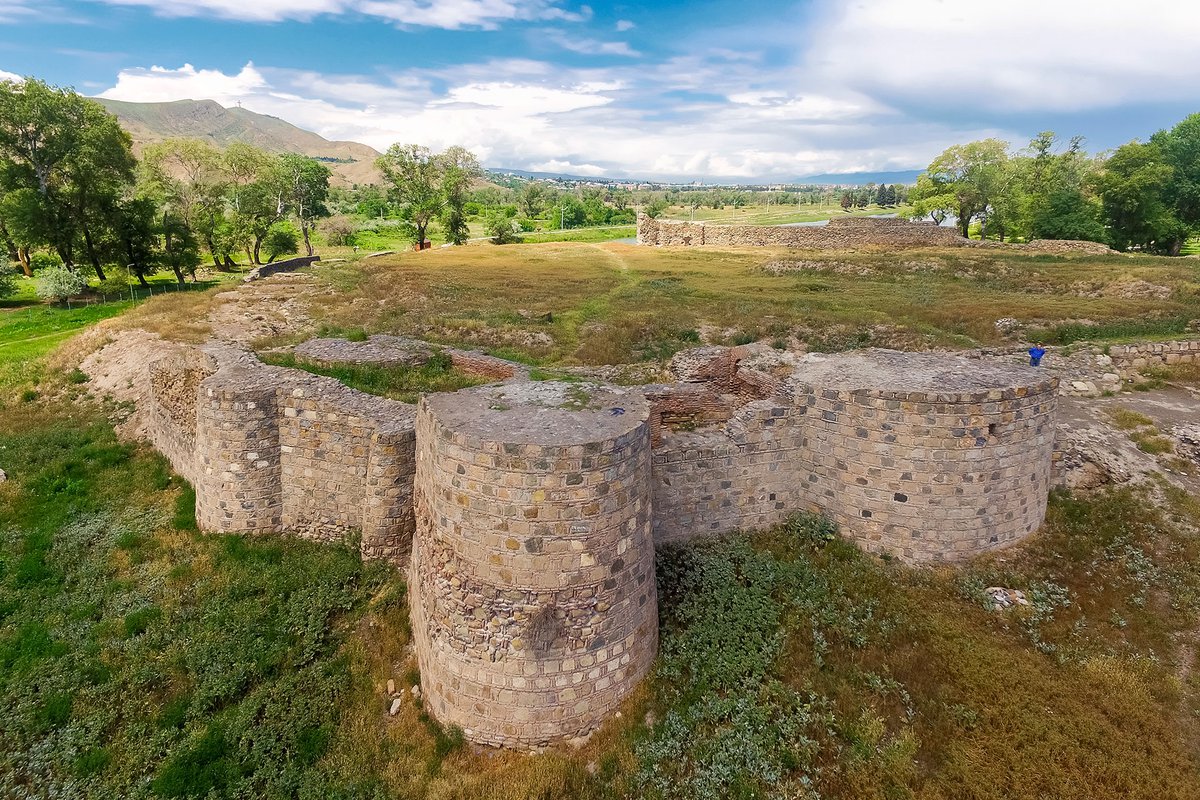
- One of the city's oldest architectural monuments, located near the city center and park.
- Built in the 5th century, it served as a signal and defensive structure.
- In the 12th and 13th centuries, the fortress was significantly expanded: semicircular towers, fortified walls, tunnels, and hidden passages were added for defense.
- It was destroyed during the Mongol invasions, but was partially preserved and restored.
- Today, the fortress is included in the historical and cultural walking tour.
⛪ Rustavi Sioni Cathedral
The main church of modern Rustavi is formally the Cathedral of the Dormition of the Mother of God, but in town it is simply called Rustavi Sioni. It was built from 2000 to 2011, and most of the work was done by local residents themselves: the stone was cut by hand, using the techniques of Georgian churches of the 11th and 12th centuries. That is why the new cathedral does not look like a modern copy. A bell tower is still being built next to it.
The church stands in New Rustavi, on Meskhishvili Street. Details and photos are in our listing for the Rustavi Sioni, the Church of the Assumption of the Blessed Virgin Mary. The usual dress code applies at the entrance: shoulders and knees covered, and women need a headscarf.
🏞️ Rustavi Park of Culture and Recreation
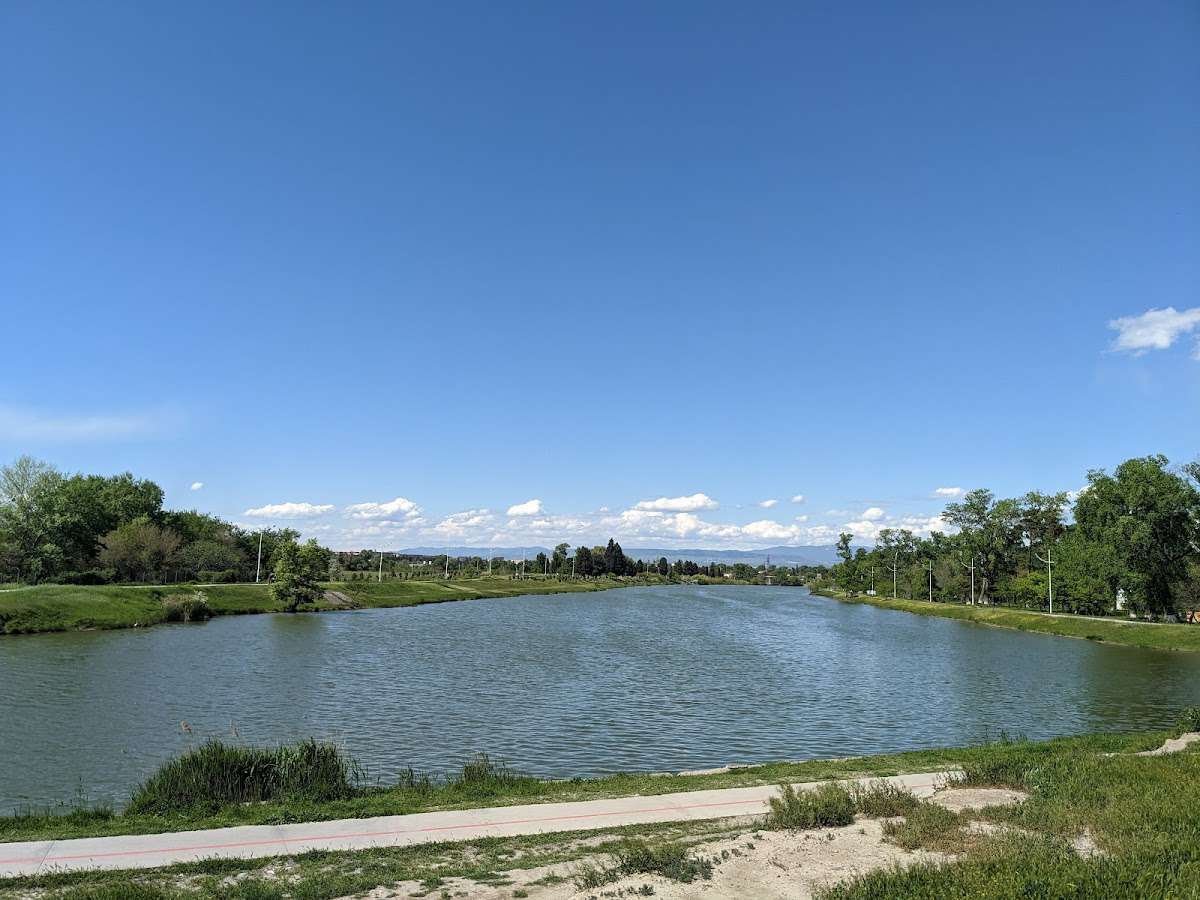
- Located in the city center, between the Old and New Districts, next to the Kura River.
- This large, well-maintained area features an artificial lake, walking paths, and recreational areas.
- There is a skate park, playgrounds, outdoor exercise equipment, and sports fields for basketball, football, and volleyball.
- There is an amphitheater, a concert stage, a cafe, and picnic areas.
- The park is especially popular with locals on weekends and in the summer.
- The entrance to the Rustavi Fortress, a convenient starting point for a tour, is also located here.
🏎️ Rustavi International Motopark
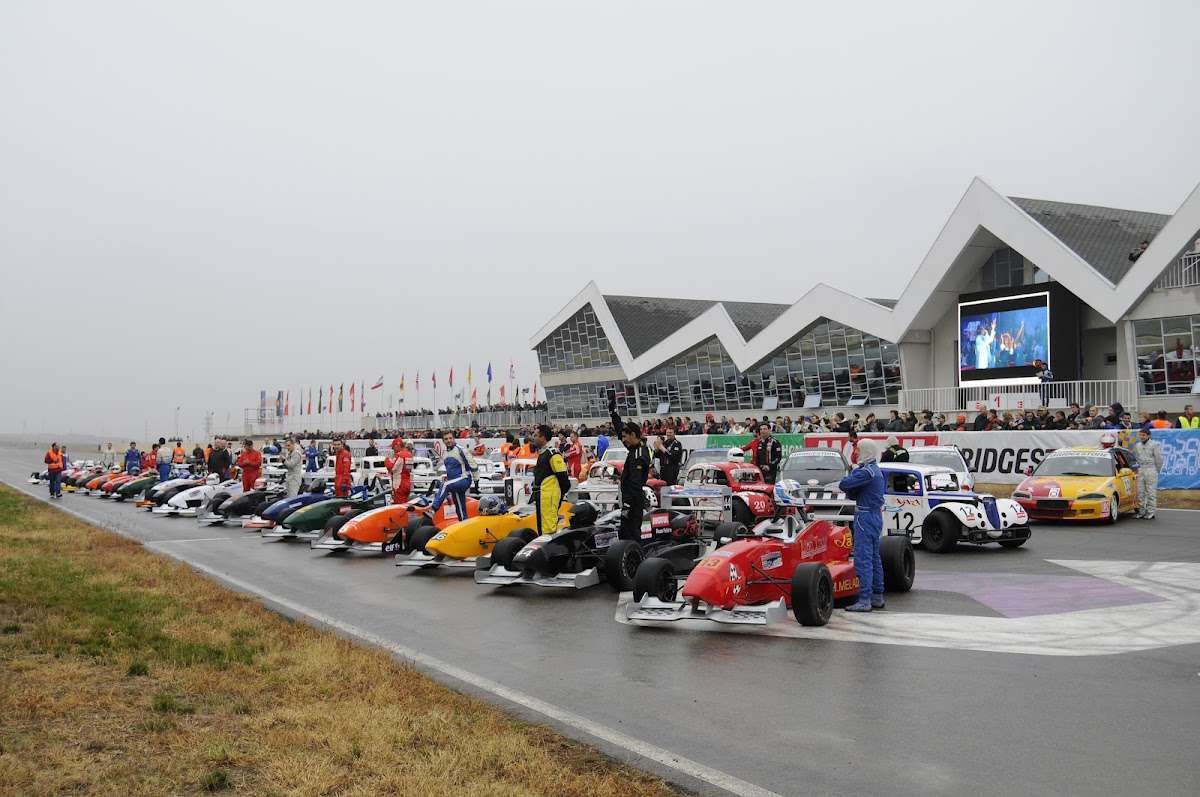
- A modern, international-class race track located on the outskirts of the city.
- It hosts motorsport competitions, test drives, events, and more.
- It is frequently visited not only by car enthusiasts but also by tourists interested in Georgia's more informal side.
- You can watch the races, rent a section of the track, or simply stroll around the grounds.
The track opened in 1978. The first races of the Soviet championship were held here in 1979, and after reconstruction the motor park reopened in 2012. The main circuit is 4.14 km long, and in 2017 it hosted a round of the international TCR series. Besides the main circuit there are karting, autocross and motorcycle tracks. On race days the 2,000-seat grandstand fills up. The schedule and contact details are in our listing for the International car-karting park in Rustavi.
🐎 Rustavi Hippodrome
Despite the name, horse races are not held at the Rustavi hippodrome at the moment. It is an equestrian club where people come to see the horses and go riding. Walking around the grounds is free, and 20 minutes of riding with an instructor costs about 20 GEL. Children especially like the ponies.
At weekends there are many visitors, so it is best to book a ride in advance by phone. The number and details are in our listing for the Equestrian club and hippodrome in Rustavi. The club is closed on Mondays.
🎭 Rustavi Drama Theater named after Giga Lordkipanidze
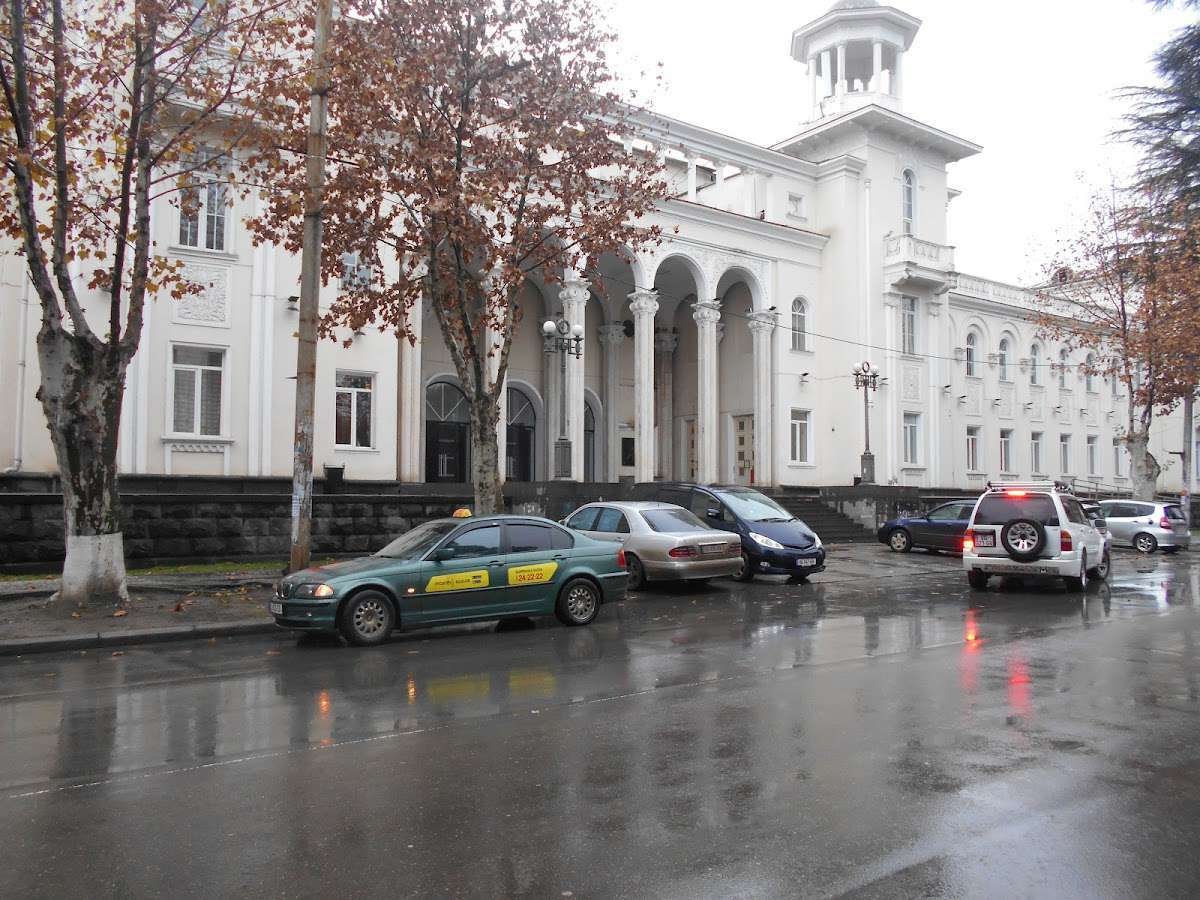
- One of the city's main cultural centers, opened in 1967.
- The first director and artistic director was Giga Lordkipanidze.
- Actors include Otar Meghvinetukhutsesi, Tengiz Archvadze, Revaz Khobua, and others.
- Both Georgian classical plays and contemporary productions are staged.
- The theater participates in international festivals and tours abroad.
- The building itself is an example of Soviet modernism in architecture.
🏛️ Freedom Square, the Town Hall and Soviet Mosaics
Freedom Square in Old Rustavi is the best place to understand how the city was conceived in the 1940s and 1950s. It is surrounded by Stalinist Empire buildings: the town hall, the theatre and the music school. The paving on the square is laid in a fan pattern, and in front of the town hall stand bronze figures of orchestra musicians, a favourite photo spot.
Kostava Avenue, the main street of the Old Town, starts at the square. Walk along it: Soviet bas-reliefs and mosaics survive on the facades and in the courtyards. Another mosaic is on the walls of the indoor swimming pool next to the history museum. You are let in through the front desk, and sometimes asked to put on shoe covers.
If you like Soviet modernism, also look in at the Hotel Rustavi. It opened in 1989 and still has stained glass and reliefs in the lobby. The numbered microdistricts of New Rustavi, from the 1st to the 21st, were built to one Soviet plan: each has its own schools, kindergartens and shops. Many buildings have new facades, but the plan itself can still be read today.
🏺 Rustavi History Museum
The museum was founded in 1950, at the same time as the plant. It was set up by the archaeologist Giorgi Lomtatidze, who was the first to excavate Rustavi Fortress. Today the collection holds almost 29,000 items: bronze and gold jewellery, carnelian seals, weapons, coins, ceramics and glass. The upper floor shows the industrial history of the city.
The museum is at 17 Mshenebelta Street, with the entrance on the side of the building. It is closed on Mondays and open Tuesday to Sunday from 10:00 until about 17:30–18:00. A ticket costs around 5 GEL, and an English-language guide can be booked for an extra fee. For more on the halls and exhibits, read our article Rustavi History Museum: Archaeology, Weapons and Coins.
🎨 Street art and graffiti
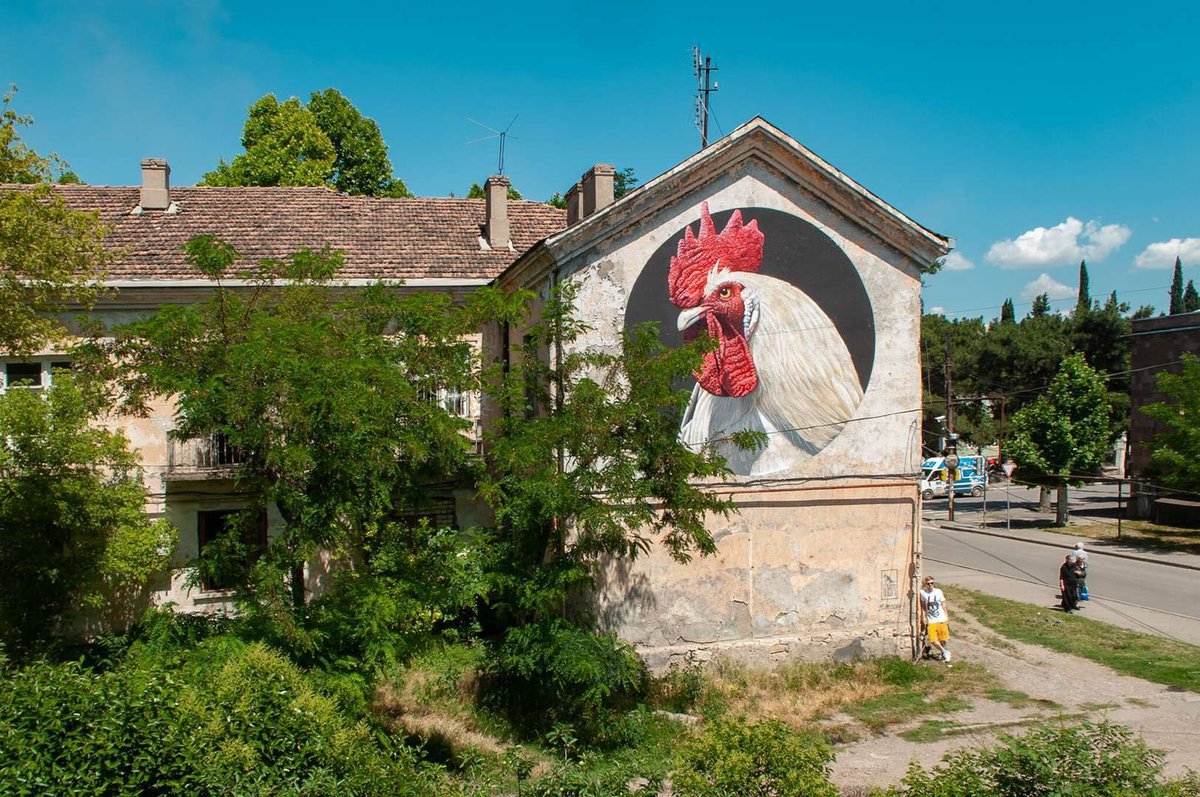
- It is considered one of the centers of street art in Georgia.
- Graffiti, murals, patriotic drawings, abstract compositions, and social themes can be seen throughout the city.
- Murals can be found on transformer boxes, building facades, fences, and abandoned buildings.
- The city supports the development of street art, hosting festivals, open workshops, and mural tours.
🌿 Embankment and green spaces
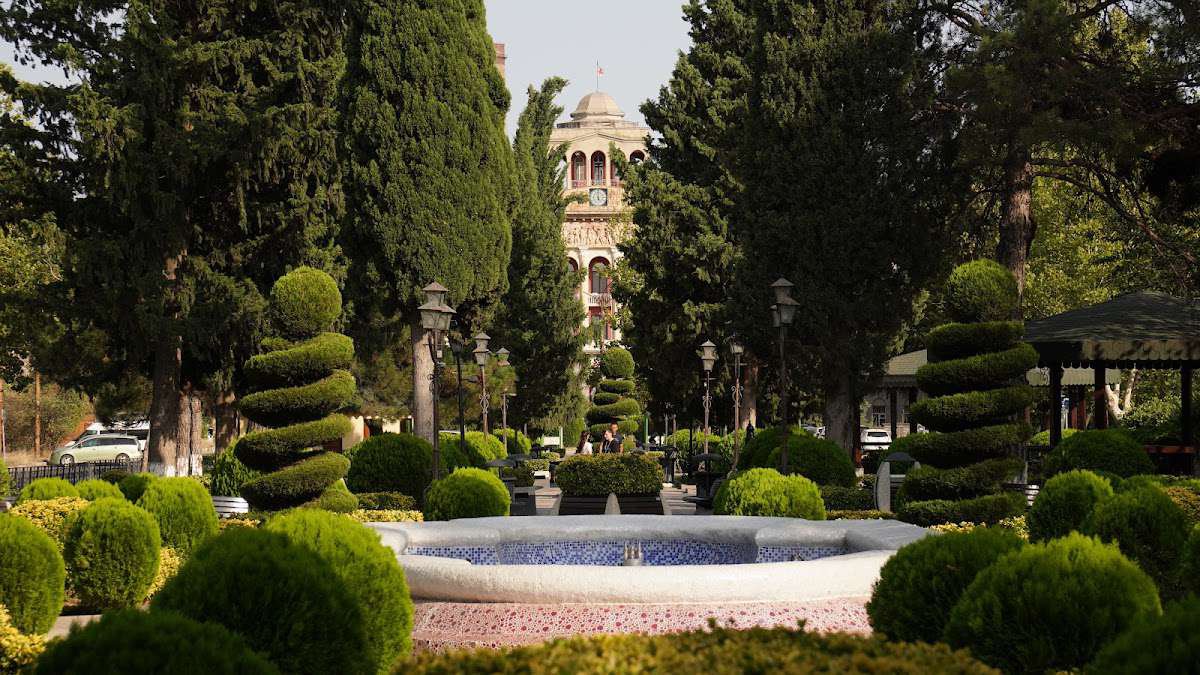
- Along the Kura River, there are walking trails, bike paths, and observation points.
- It's a great place for a morning jog, an evening stroll, or a romantic stop by the water.
- Inside the neighborhoods, there are landscaped courtyards with trees, benches, playgrounds, and mini-parks. These spaces are especially prized for their cleanliness and spaciousness.
📍 A selection of all attractions
📌 Want to learn more?
👉 You can find more information about all the attractions in Rustavi in our selection in the catalog, which contains the city's most interesting places, addresses, photos, and visiting tips.
🗺️ Nearby Attractions
If you've already explored the town itself, don't rush to leave. The surrounding area also offers plenty of interesting sights, from ancient monasteries and natural landscapes to hidden gems rarely featured in tourist brochures. All of this is easily accessible by car or public transport.
The most interesting places near Rustavi lie not towards Tbilisi but to the south-east, where the Gareja semi-desert begins. Without a car it is almost impossible to get there, but for these landscapes it is worth hiring a taxi or joining a group.
The viewpoint closest to the city. From Mount Yagludzha you can see all of Rustavi, and the sunsets here are especially good. An ordinary car can manage the first two kilometres from the highway, but after that the road is broken up. It is almost always windy at the top, so take a jacket.
Striped hills in yellow, red, grey and white by the Mravaltskaro Reservoir. Tarmac leads to the village of Udabno, after which there are about 14 km of dirt track that only a 4x4 can handle. From the reservoir to the brightest summits it is another 2–4 km on foot. There is no shade at all, so bring water and a hat.
Floodplain forests along the Kura to the south-east of Rustavi. People come here for peace and quiet, birdwatching and forest walks, which Rustavi itself lacks.
The David Gareja monastery complex lies in the same semi-desert, beyond Udabno. If you are driving to the colorful mountains, the monastery is easy to add to the same day.
💡 The easiest way to see all these places is in one day: Mravaltskaro and David Gareja in the morning, and the cross on Yagludzha above Rustavi at sunset.
🕍 Shiomghvime Monastery
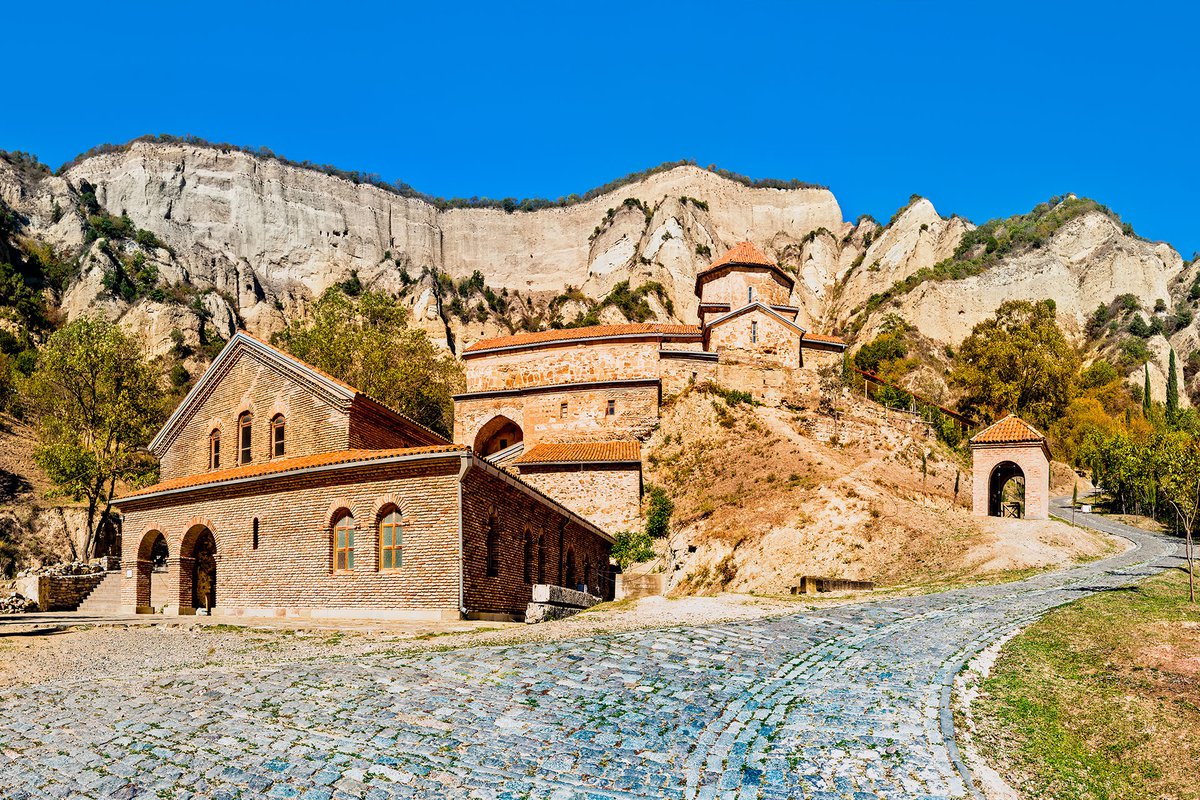
- 📍 Distance from the city center: about 40 km
- 📜 One of the oldest monasteries in Eastern Georgia, founded in the 6th century by one of the Assyrian Fathers, Shio.
- 🏞️ Situated in a picturesque gorge on the banks of the Mtkvari River, surrounded by cliffs and forest.
- 💫 A peaceful atmosphere reigns here—an excellent place for spiritual relaxation and those seeking peace.
🏞️ Rustavi Forest
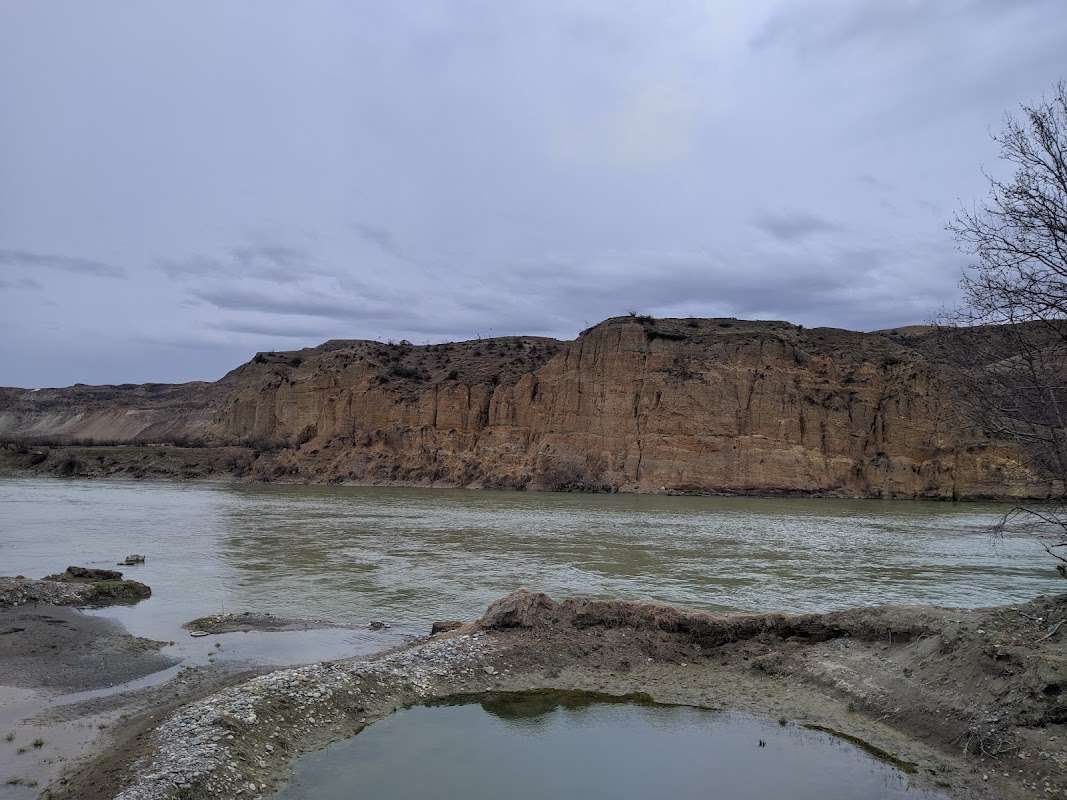
- 📍 Distance: approximately 20 km south of the city center
- 🌿 A small natural area with picturesque hills, pastures, and views of the Armenian-Georgian border.
- 🦅 Ideal for picnics, birdwatching, and walks away from the bustle of the city.
🏛️ Khojavank Armenian Monastery Complex
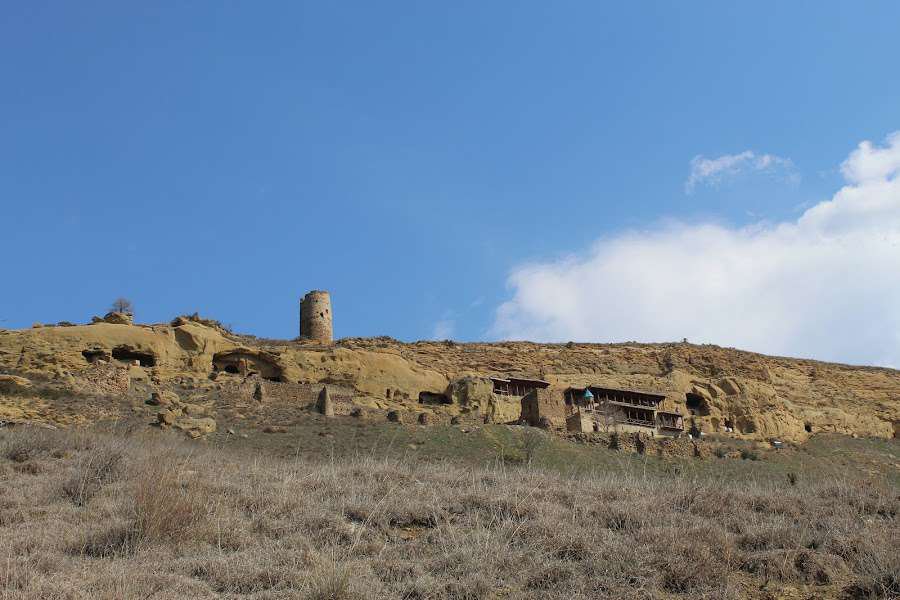
- 📍 Located on the border with Armenia, 45 km from the city
- ⛪ An abandoned but atmospheric monastery with a history dating back to the 10th century
- 🎞️ A great place for an "abandoned Georgia" photo shoot
🌾 The village of Manglisi and the Manglisi Cathedral
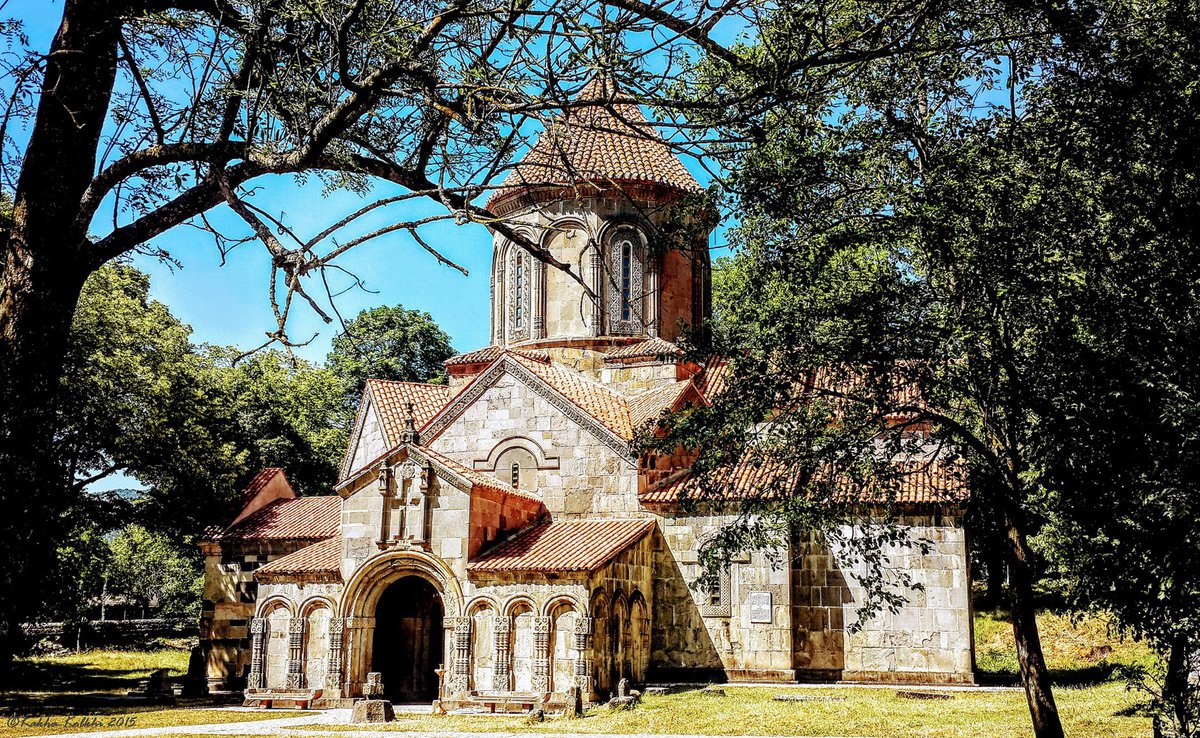
- 📍 35–40 km from the center
- 🏰 One of the most important religious monuments in Eastern Georgia is the Manglisi Cathedral, built in the 6th century.
- 🏕️ Nearby are green mountain landscapes, ideal for a short hike or picnic.
🐎 Sagarejo (wineries + steppes)
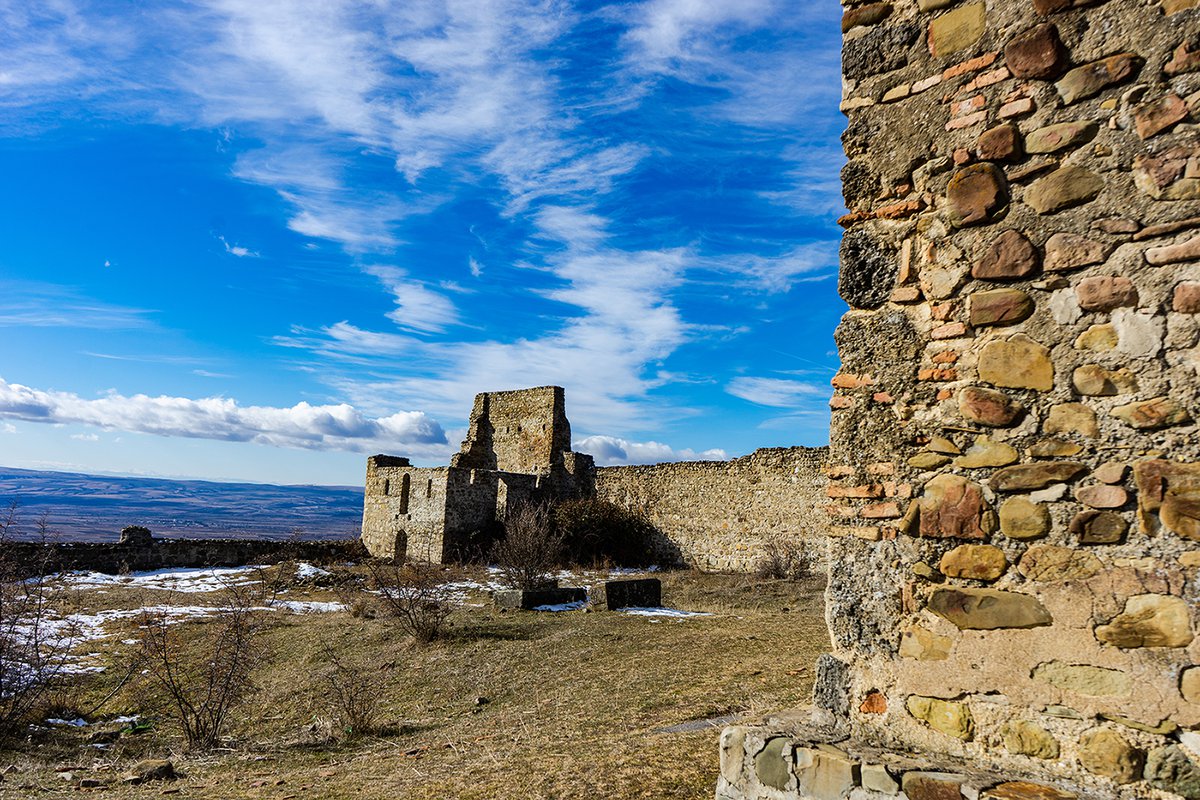
- 📍 45–50 km from the town
- 🍷 Kakheti region: you can combine a nature visit with a local wine tasting at small family-run wineries
- 🏞️ The landscape abruptly changes to the steppe—a great change of scenery after the industrial city
🚗 Bonus: a route following the footsteps of industrial Georgia
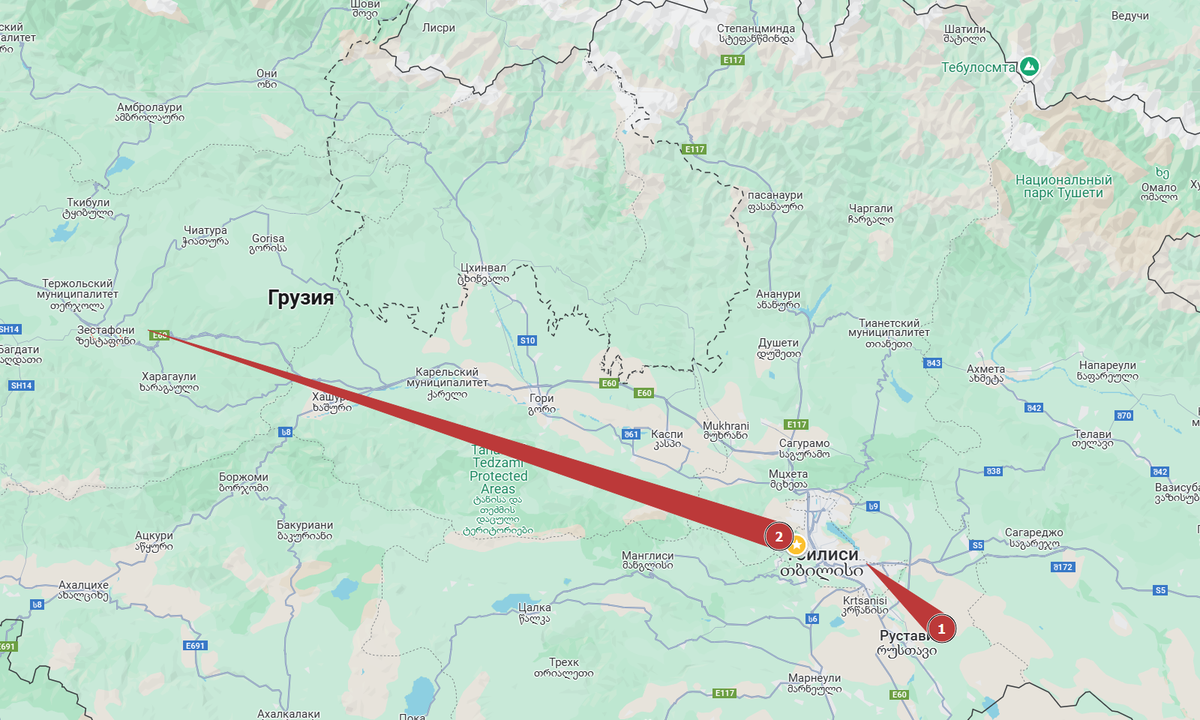
- If you're interested in Soviet architecture and the industrial spirit, consider a route from Rustavi to Tbilisi (Didube and Saburtalo districts) to Zestafoni (the industrial center).
- This route explores a "forgotten" side of Georgia, and it's increasingly attracting interest from Western tourists and explorers.
📍 Tip: Rent a car or use a minibus/taxi—all the sights are within a 1–1.5-hour drive and are very easy to get to.
🚶♂️ Where to go and what to do
A city that's a pleasure to explore on foot. There are no strenuous climbs like in Tbilisi; the city is located on a flat surface, and its streets are perfect for leisurely strolls, morning jogs, or active recreation. Here are the best ideas for spending the day:
🏞️ Stroll through the Central Park
The city's main green heart is the Rustavi Park of Culture and Recreation. It stretches between Old and New Rustavi, right along the river. Here you can:
- Walk along long tree-shaded paths
- Have a picnic by the artificial lake
- Visit the amphitheater or simply listen to street musicians
- Play volleyball, basketball, or skateboard in a designated area
- Ride a bike – there are bike paths
🌿 Suitable for relaxing with children, strolls with coffee, romantic meetings and privacy in silence.
🌉 Kura River Embankment
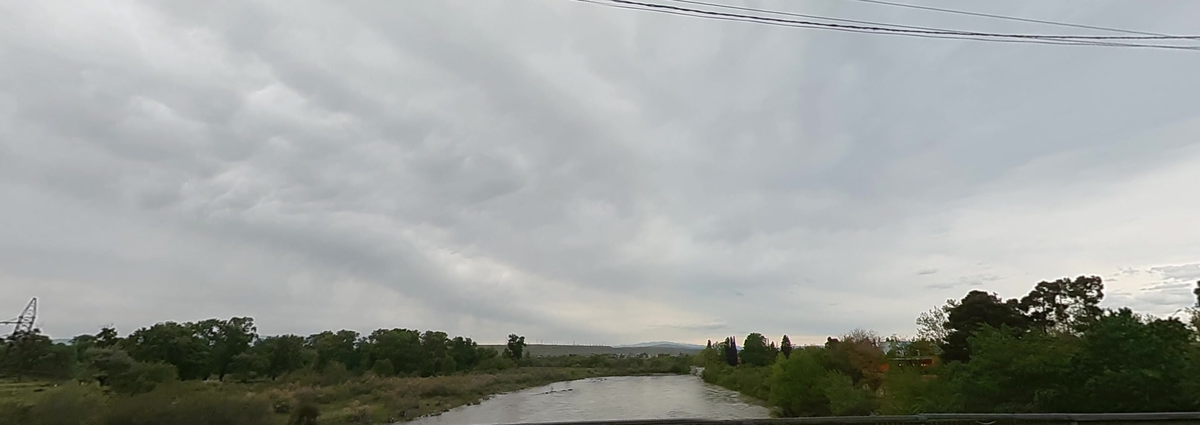
If you're looking for something quiet, head to the Kura River (Mtkvari) embankment. It's especially beautiful here near sunset—the water, the reflections, the soft light. On the embankment:
- Pedestrian paths and benches
- Morning exercise areas
- Excellent views of Old and New Rustavi from both sides
📸 We recommend taking a camera with you – the sunsets here are mesmerizing.
🎨 Street Art and Graffiti Hunting
A paradise for street art lovers. A stroll through the New Rustavi district turns into a real adventure:
- Dozens of murals and graffiti can be found on facades, fences, and even transformer boxes.
- Some murals are large-scale and carry deep social or philosophical meanings.
- You can organize your own mini-tour of street art simply by walking and taking photos.
👟 Tip: Wear comfortable shoes and charge your phone for photos—you'll have something to show off in your stories!
🏛️ Architectural Walking Tour of the Old Town
In the western part of the city, there are residential areas from the 1940s and 1950s, built in the Stalinist Empire style. A stroll along these streets is like stepping back in time:
- Look at the facades with their stucco, columns, and arches.
- Enter the courtyards—they're filled with green spaces and cozy benches.
- Note the street layout—thoughtful and harmonious.
🏛️ This is a great place for those who enjoy the atmosphere of the old town without the hustle and bustle.
🏎️ Motor Park and Adrenaline
If you're looking for a thrill, head to Rustavi International Motor Park:
- You can watch races or sign up for a test drive.
- Sometimes, there are open-access events, auto festivals, and drift shows.
- A great option for lovers of technology and speed.
🔥 An unusual and exciting activity—especially for traveling with friends.
🎭 Cultural Events
Evening is the perfect time to visit the drama theater. Even if you don't speak Georgian, the atmosphere, acting, and interior design will definitely leave an impression.
- The theater is open year-round.
- Contemporary productions, premieres, and tours are often held there.
- Tickets can be ordered online or purchased at the entrance.
🛍️ And also...
- Stroll through the city market—there you can find seasonal fruits, local cheeses, homemade spices, and souvenirs.
- Visit small cafes where homemade khinkali and lobiani are made.
- Wander the streets of the New District—even the panel neighborhoods hide small coffee shops and photogenic graffiti.
📌 Rustavi is a city not of museums, but of atmosphere. People stroll here not for the sake of checkmarks, but to experience a different, less touristy Georgia. Allow yourself to relax, slow down, and simply be.
🗺️ Rustavi in One Day: A Ready-Made Route
This route is planned for a bus trip without a car. Start in the morning, and by sunset you will be at the cross on Yagludzha or already back in Tbilisi.
If you came with children, go to the hippodrome instead of the museum. On a race day, be sure to look in at the motor park too.
🚌 How to get there
Rustavi is conveniently located just 25 km from Tbilisi, making it easy and quick to get there. You can take minibuses, buses, taxis, or a rental car. You can also get there from other cities, such as Kutaisi and Batumi, but this will take longer.
🚌 How to Get to Rustavi from Tbilisi
Rustavi is about 27 km from Tbilisi. The easiest way is a municipal bus: they are new, air-conditioned and accept bank cards. Since 2025, five routes, N20 to N24, run from Rustavi to different parts of Tbilisi. Pick the one closest to you.
| Transport | From in Tbilisi | Price | Journey |
|---|---|---|---|
| Bus N20 | Isani metro | 1.50 GEL | about 40 min |
| Bus N21 | Sports Palace | 2.50 GEL | about 50–60 min |
| Bus N22 | Didube bus station | 2.50 GEL | about 60 min |
| Bus N23 | TSU high-rise building | 2.50 GEL | about 60 min |
| Bus N24 | Central railway station | 2.50 GEL | about 50 min |
| Minibus | Station Square, Isani, Didube, Sports Palace | 3 GEL | 40–50 min |
| Commuter train | Central station, 06:50 and 18:50 | 0.50 GEL | about 50 min |
| Taxi | Any district, via an app | 25–35 GEL | 30–40 min |
Buses. You can pay by bank card right on board. It is handy to check the route in Google Maps, where the Rustavi buses are already marked. The last bus from Tbilisi depends on the route, so leave yourself some time to spare for the return trip at weekends.
Minibuses leave every 10–15 minutes, from early morning until late evening. The windscreen sign reads "რუსთავი" (Rustavi). If you board near the railway station, look for the sign with a metro icon and the word "სადგურის". On 20 September 2026 the fare rose from 2.50 to 3 GEL.
Where to get off. The most convenient stops are the big roundabout with the Shota Rustaveli monument or the town hall in Old Rustavi. Going back, buses and minibuses to Tbilisi pick up passengers at the stops on Megobroba Avenue.
The Tbilisi–Gardabani commuter train calls at Rustavi twice a day, at 06:50 and 18:50, and costs 50 tetri. The carriages are basic, and Rustavi Central station is about 1.5 km from the centre. The return train passes Rustavi in the evening, at 20:37. Tickets are not sold online, only at the station.
Around town, a municipal bus costs 50 tetri and a private minibus 80 tetri. The centre of Old Rustavi is easy to cover on foot.
🚌 From Kutaisi
- Distance: ~220 km
- Travel time: 3.5–4.5 hours
💡 Options:
- Minibus:
– Departs from the main bus station in Kutaisi
– To Tbilisi, then transfer to Rustavi
– Total cost: ~20–25 GEL
– Travel time: 3.5–4 hours to Tbilisi + 30 minutes to Rustavi
- Bus:
– Georgian Bus, Metro Georgia, and other companies
– Comfortable intercity routes
– Price: ~20–25 GEL
– Scheduled departures
- Taxi or BlaBlaCar:
– You can find rideshare partners
– Cost: 40 to 60 GEL
– Travel time: 3.5–4 hours
🚌 From Batumi
- Distance: ~370 km
- Travel time: 5.5–6.5 hours
💡 Options:
- Shuttle:
– To Tbilisi (from the central bus station), then transfer
– Travel time: about 6 hours
– Cost: 30–35 GEL
- Bus:
– Comfortable intercity transport
– Departs 2–3 times a day
– Cost: 30–40 GEL
– Travel time: 5.5–6 hours to Tbilisi, then 30 minutes
- Train:
– To Tbilisi, then by shuttle
– Time: 5 hours by train + transfer
– Beautiful views along the way
- Taxi:
– Only suitable for groups or individual travelers seeking comfort
– Price: from 200 GEL
– Duration: about 6 hours
🚗 Car rental
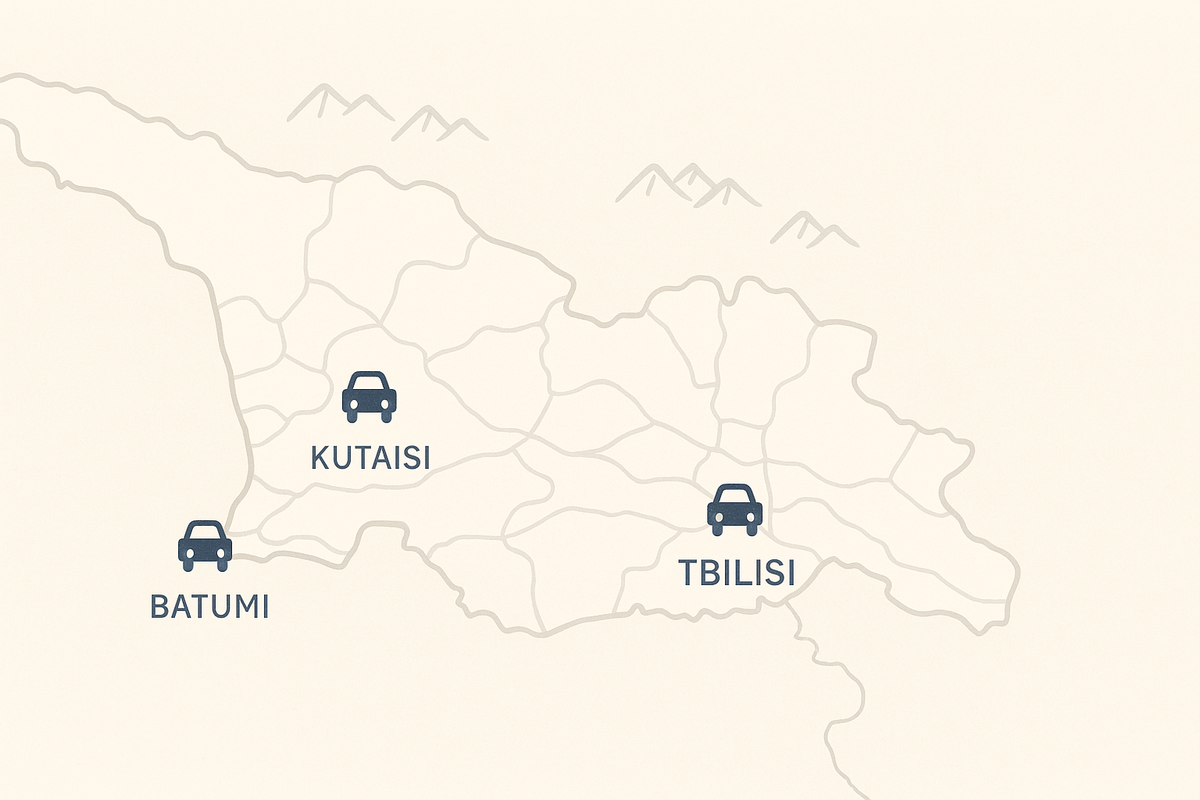
- If you're traveling around the country and want more freedom, this place is a convenient addition to your itinerary.
- From Tbilisi - 30 minutes
- From Kutaisi - 3.5 hours
- From Batumi - about 6 hours
- The city is easy to navigate, the streets are wide, and there's plenty of parking.
📌 Tip: If you're planning a day trip to Rustavi, it's best to travel from Tbilisi: it's quick, cheap, and convenient. And if you're traveling by car, you can combine the trip with a visit to the surrounding area.
🍽️ Where to eat and relax
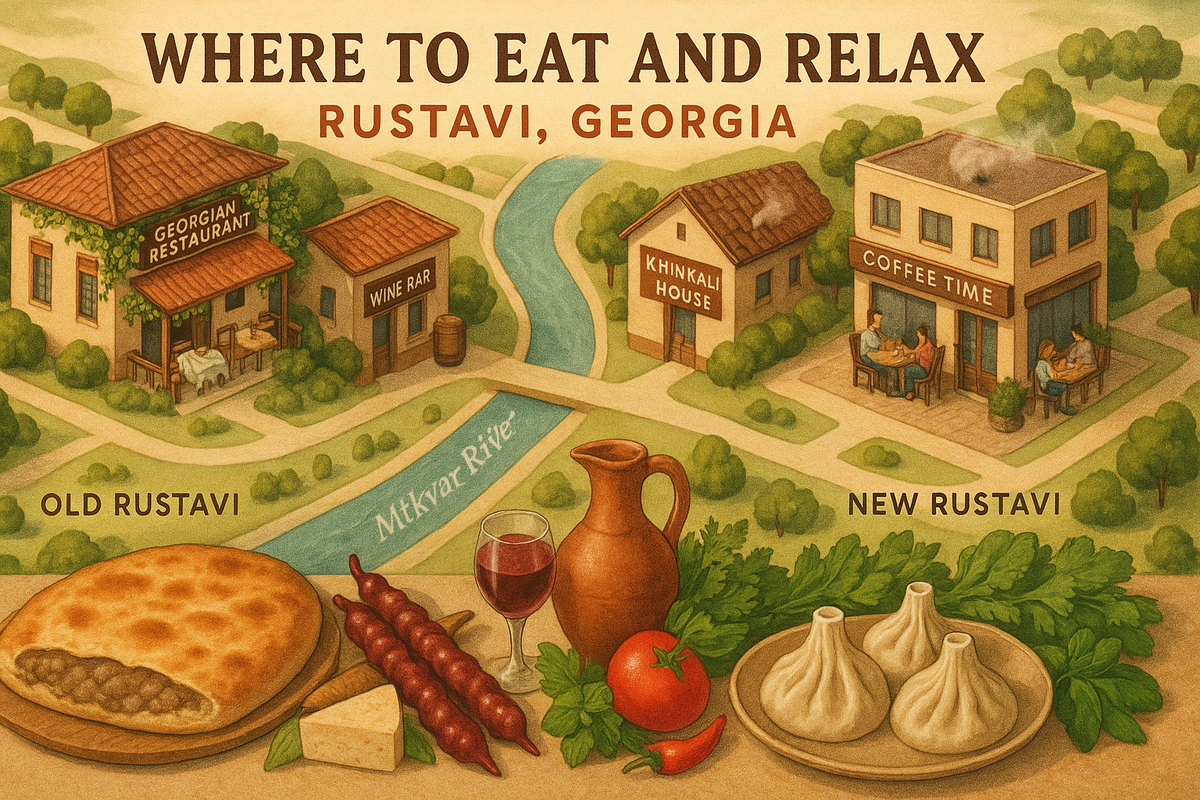
Rustavi doesn't have the huge number of tourist restaurants found in Tbilisi, but that's precisely what makes the dining experience here authentic. You eat like a local: simple, delicious, and authentic.
🍽️ Restaurants
All the city's restaurants are collected in our selection.
The city's restaurants are perfect for a hearty family dinner or a get-together with friends.
The menu often features Georgian and European cuisine, and the atmosphere ranges from cozy, home-style to modern and stylish.
Some establishments are open until late, accept reservations, and host musical evenings.
☕ Coffee Shops
Find a cozy coffee shop in Rustavi here.
The city offers coffee shops with a cozy atmosphere, soft sofas, and fresh pastries.
A great place to relax after a walk, work on your laptop, or simply enjoy a cup of aromatic coffee.
🧁 Cafes and Canteens
Look here for a quick, inexpensive, yet delicious meal.
This is the perfect option if you want a quick, tasty, and affordable meal.
The menu features popular Georgian and home-style dishes, soups, side dishes, and pastries. Perfect for a lunch on the go or a snack between excursions.
🍷 Bars
After a busy city walk, you'll crave a glass of wine—take your pick!
Rustavi's bars are places with character. Here you can try homemade wine, cocktails, Georgian chacha, and simply have a great evening.
Some offer a lounge setting, while others feature live music or board games. A great place for a relaxed evening.
🍔 Fast Food
For a quick bite when you don't have time for a restaurant but want a Georgian soul, look no further.
From burgers and fries to khachapuri on the go and shawarma, Rustavi's fast food scene features both international and local fast food options.
Everything is quick, filling, and convenient to take away.
🥖 Bakeries
Mornings in France begin with a croissant, and in Georgia with a juicy khachapuri – make your morning truly special.
Bakeries in the city delight with fresh lavash, khachapuri, lobiani, and sweet buns.
The smell of baked goods wafts through the streets from early morning, making these places simply impossible to miss.
You can take away or enjoy a snack on the spot with a cup of coffee.
🎂 Pastries and custom-made cakes
Having a sweet tooth? Choose a pastry shop from our catalog.
From classic cakes to designer desserts with figurines and berries – you can order everything from local pastry shops.
There are also cafes with displays of cakes, macarons, eclairs, and homemade pies.
Perfect for holidays, surprises, or just a sweet treat for no reason.
🛍️ Must-try:
- Rustavi Lobiani - with smoked bacon
- Homemade wine from Kvemo Kartli
- Cheese with mint - an unusual but popular local delicacy
- Sweets with nuts and grape juice (churchkhela, gozinaki)
📌 Tip: It's best to ask the locals—they'll be happy to tell you where the "best khinkalnya" or "where the most hearty shashlik is." Everything here is simple and friendly.
🏨 Where to stay
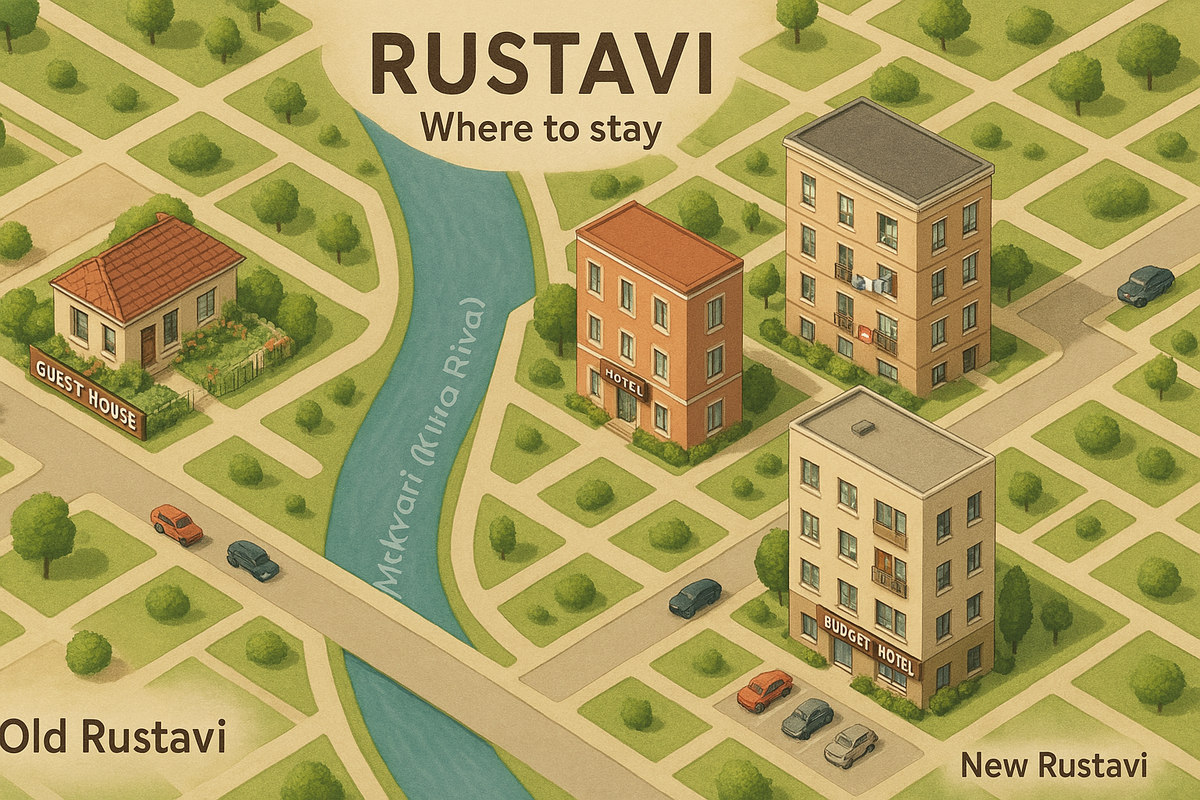
Rustavi isn't a tourist metropolis, so there aren't any luxury hotels with swimming pools and panoramic views. However, there are clean, cozy, and affordable options, from private apartments to mini-hotels. Everything is calm, homey, and uncluttered.
🛏️ Accommodation Options
📍 Guesthouses and Mini-Hotels
- The most popular type of accommodation in the city
- Clean rooms, often with a private kitchen and balcony
- Price: 70 to 150 GEL per night
📍 Private Apartments
- Can be found on Booking, Airbnb, or simply in local Telegram groups
- Apartments are often rented out daily in the Old and New Towns
- Pros: Comfort, kitchen, internet, hosts will help you find things to do
- Cons: Best to book in advance
- Prices: 60 to 120 GEL per night
📍 Economy Hotels
- Suitable for a short stay, especially if you're just passing through
- Basic amenities, but everything you need is there
- Prices: from 80 GEL
📍 Where is it better to live – the Old or the New?
- Old (Dzveli Rustavi): closer to the historic buildings, theater, fortress, and park. The atmosphere is calm and old-school.
- New (Akhali Rustavi): more shops, coffee shops, street art, and easy access.
🧳 If you want to stroll around the city and enjoy the atmosphere, choose Old Rustavi. If you want more "civilization" and quick access to cafes and shops, choose accommodation in New Rustavi.
💡 Good to know:
- Often, hosts will meet you at the train station and help you with accommodations.
- Wi-Fi is available almost everywhere.
- It's best to book in advance, especially on holidays or weekends.
📌 Tip: If you're traveling by car, check for parking availability. If you're traveling without a car, choose accommodations closer to Central Park or Shartava Avenue—everything is close by and convenient.
🎒 Travel tips and useful information
If you're planning a visit to the city, here are some important and simply convenient tips that will make your trip easier, more comfortable, and more enjoyable.
🗺️ How to navigate the city
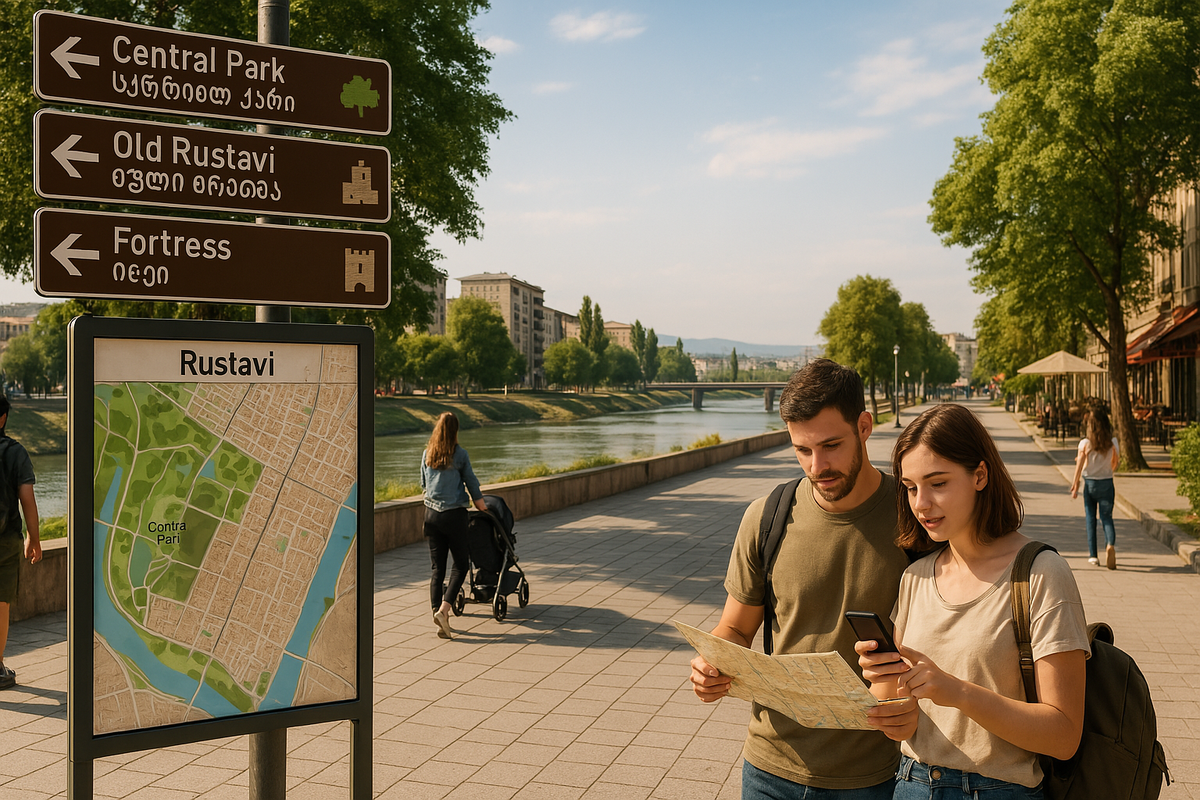
- The city's layout is very clear:
Old Rustavi is to the west,
New Rustavi is to the east.
Between them is the Kura River and the central park.
- Most of the sights and attractions are within walking distance, especially in the Old Town area.
- Street signs are available, and many names are also available in English.
🚶♀️ Shoes and clothing
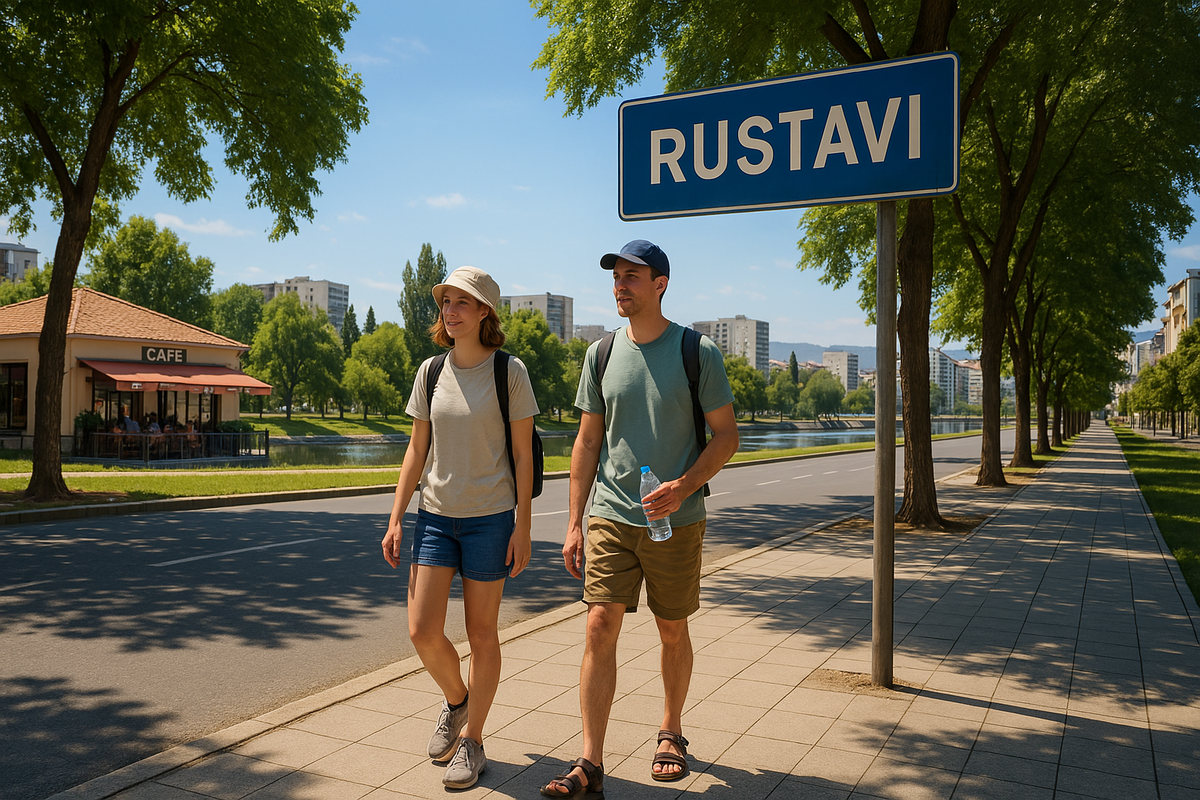
- The city is located on a flat surface, so you can easily walk around without any ups or downs.
- Comfortable shoes are a must, especially if you want to explore the park and the embankment.
Sneakers
Comfortable sandals (for summer)
- Summer is hot and dry, so bring water and a hat. Winter is mild and windy, but not too cold.
💬 Language and communication
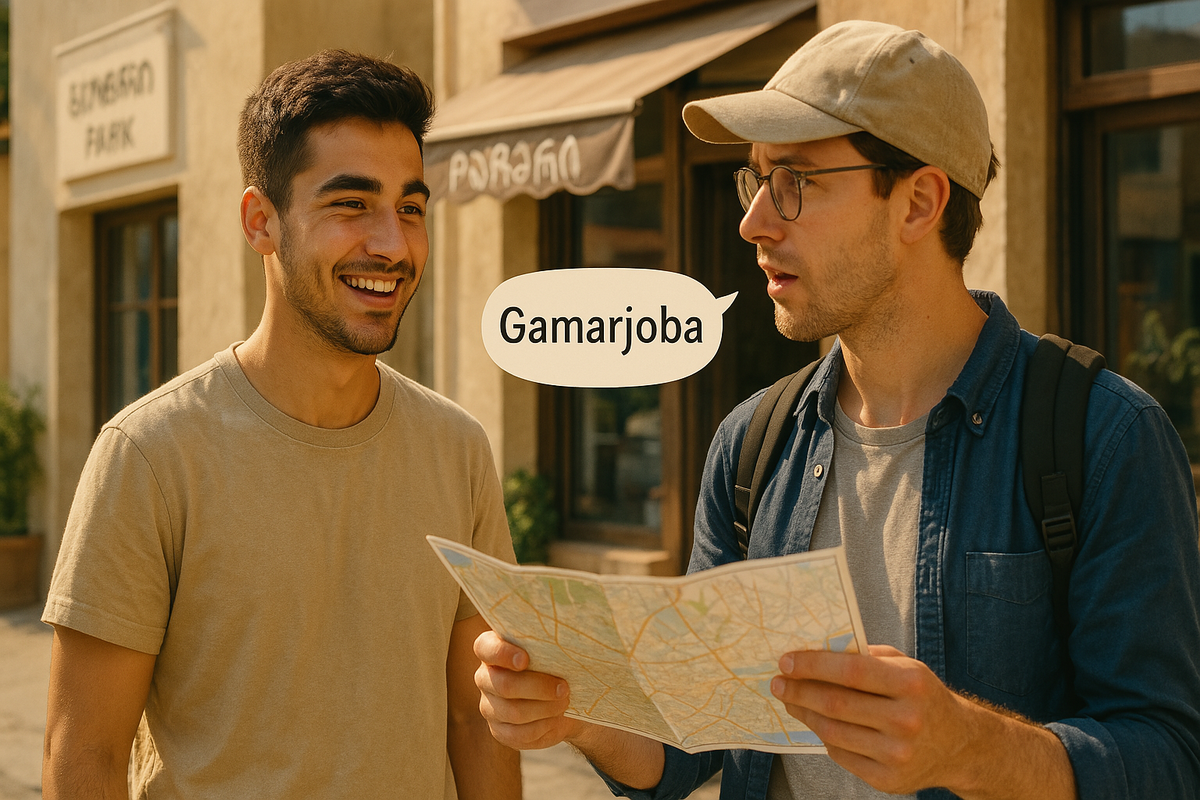
- Most residents speak Georgian and Russian.
- Young people increasingly speak English.
- In cafes and shops, you can communicate in basic English or with gestures.
People here are very friendly.
- If you don't know the language, don't worry:
a smile and a "gamarjoba" can work wonders 😊
💸 Money and payment
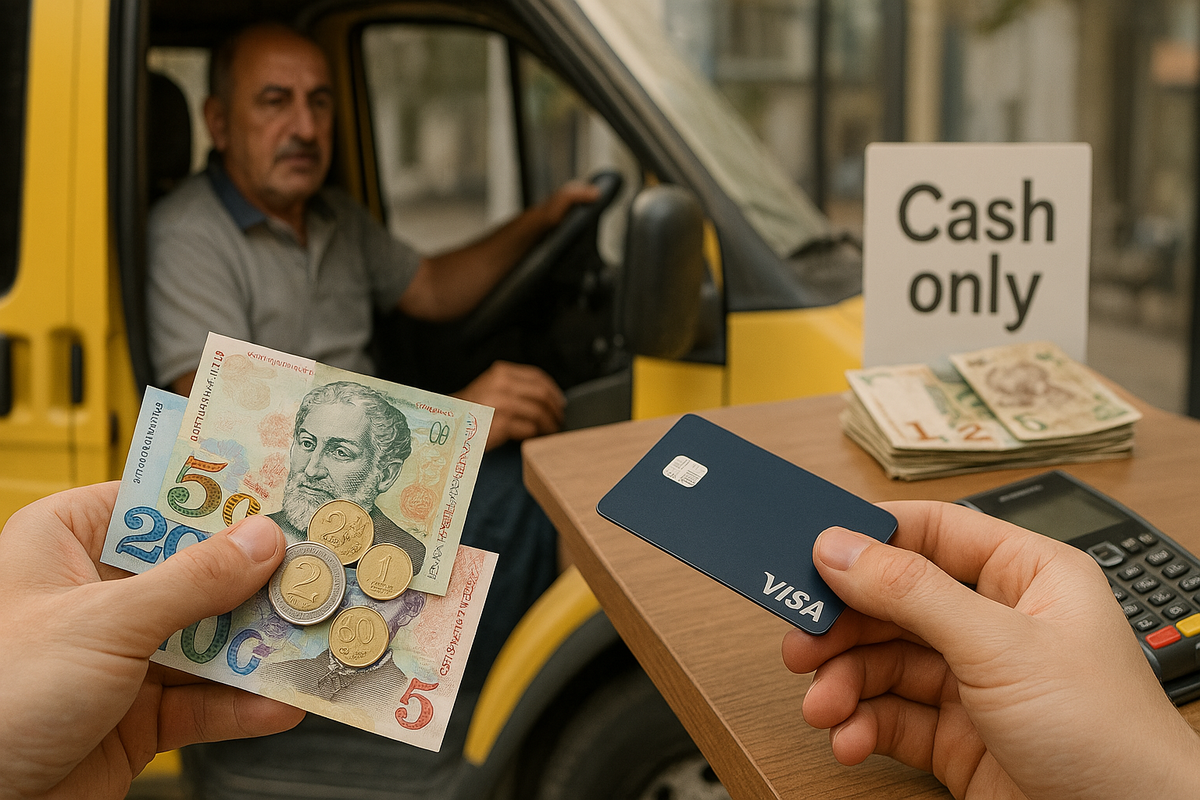
- Currency: Georgian lari (GEL).
- Card payments are accepted almost everywhere: in supermarkets, cafes, and on public transport.
- Minibuses: cash only.
It's best to carry small bills.
🧃 Where to buy water and get a snack
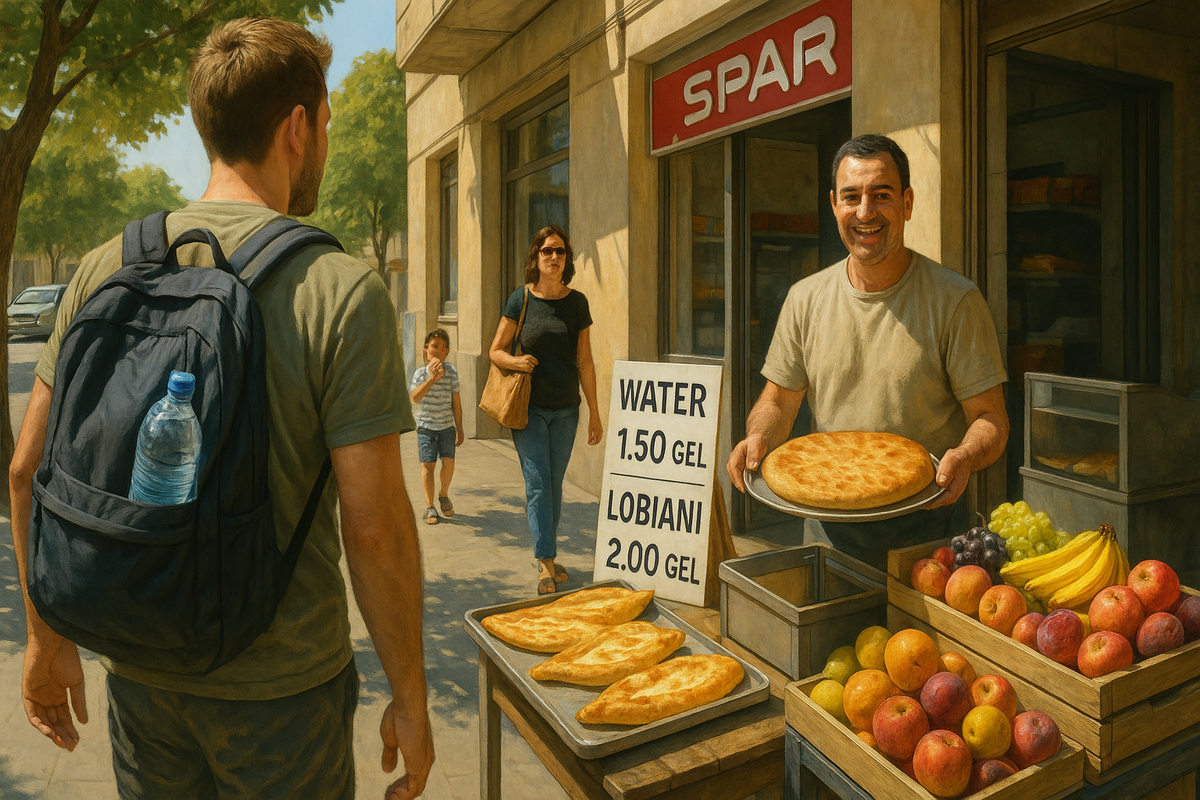
The city has many supermarkets
- SPAR
- Nikora
- Carrefour
as well as small shops.
- Street food—khachapuri, pies, fruit—can be found near parks, train stations, and markets.
- It's best to bring your own water, especially in the summer.
📶 Internet and Communications
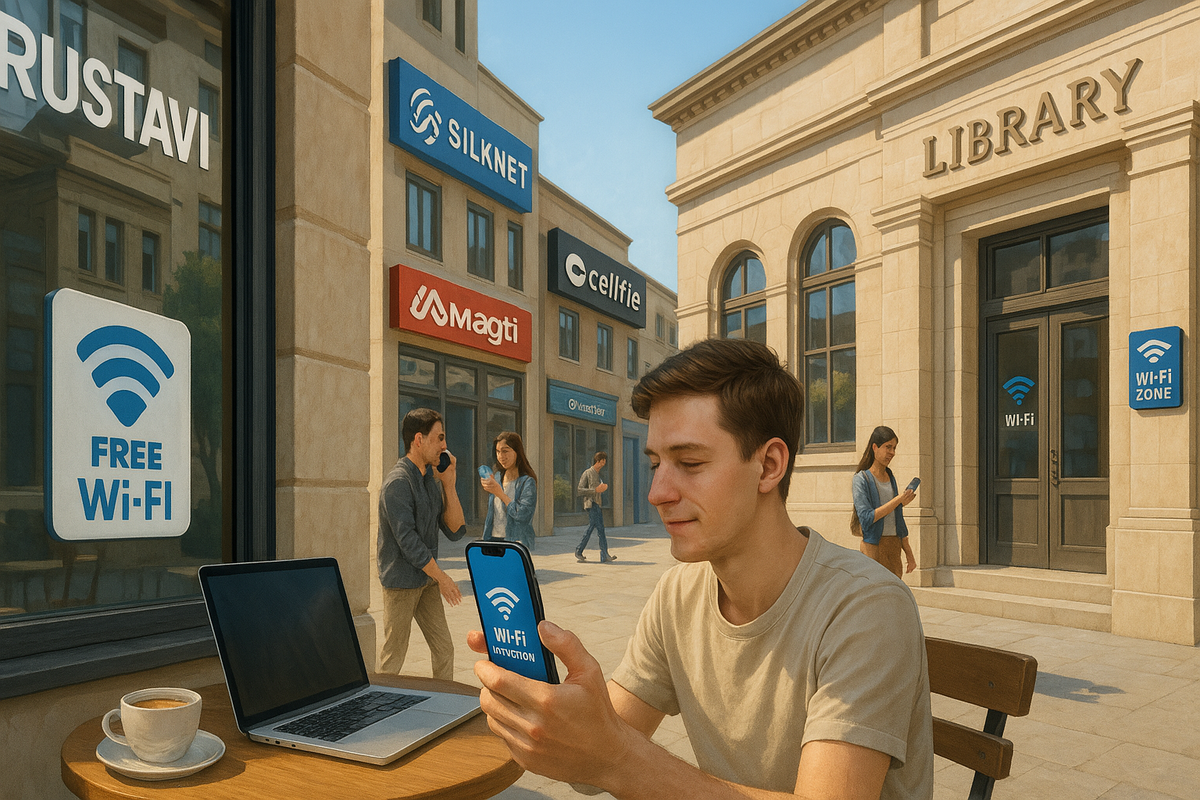
- Mobile internet coverage is excellent, especially with providers such as
- Magti
- Silknet
- Most cafes, libraries, and even the train station offer
- free Wi-Fi.
- If you're staying for a long time:
Buy a local SIM card; it's inexpensive and convenient.
📅 When is the best time to go?
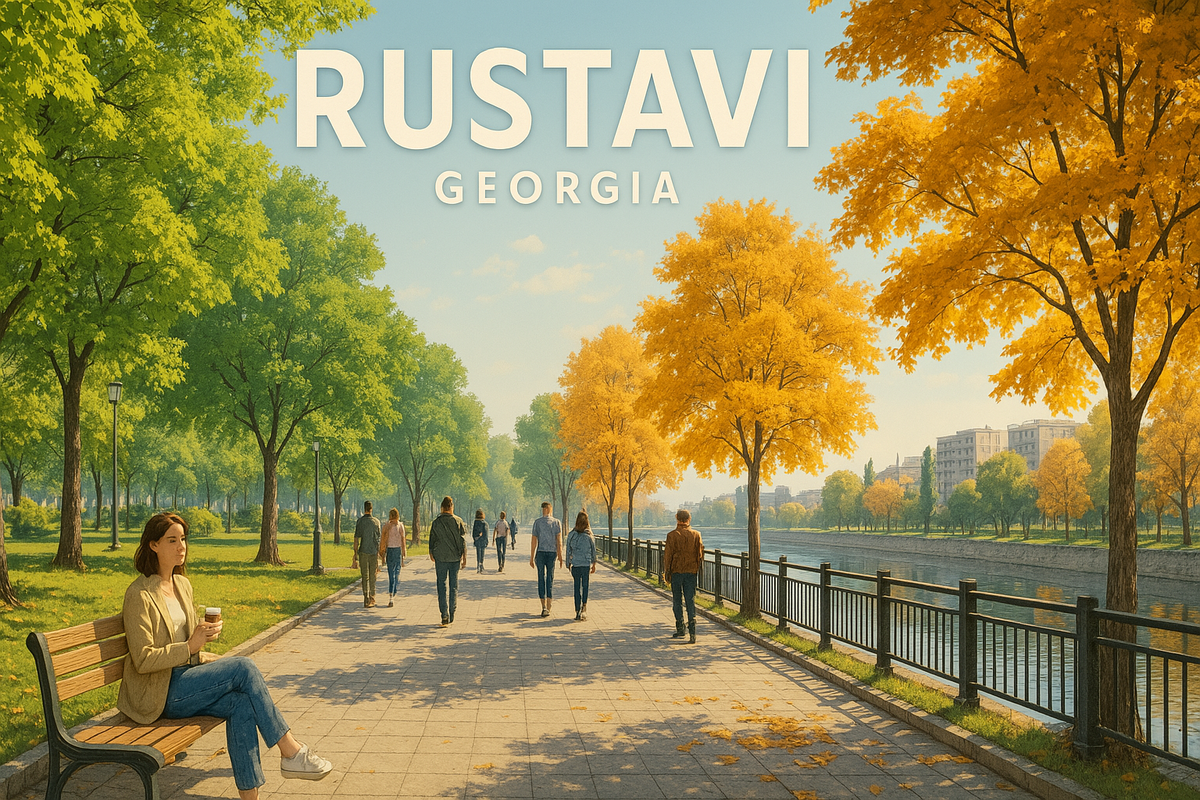
- Spring and fall are the most comfortable times: warm, green, and not stuffy.
- Summer: hot, especially during the day. Plan your walks for the morning and evening.
- Winter: dry, but can experience strong winds, especially along the river.
📍 Our directory is your guide.
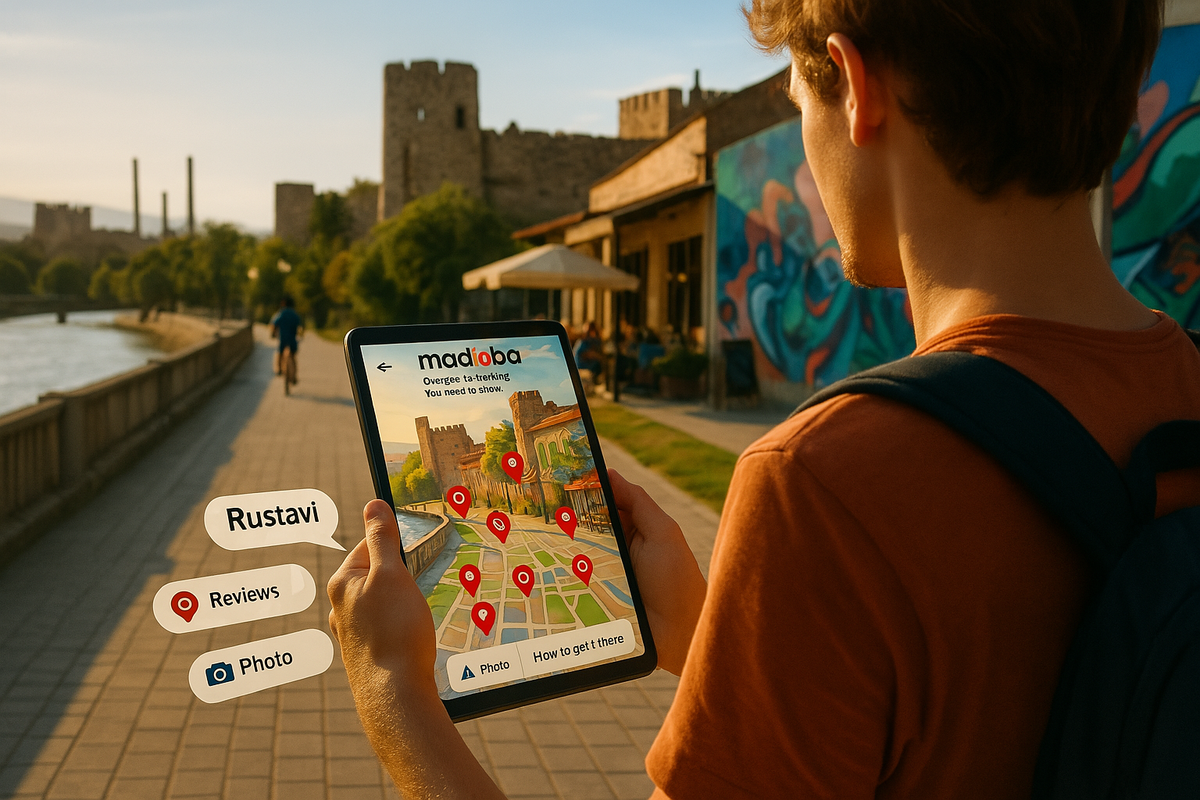
To avoid getting lost and missing interesting places, check out our directory. There you'll find:
- All attractions with photos, descriptions, and a map
- Restaurants, cafes, and bars with recommendations
- How to get there, where to stay, and what to do
- Tips from locals 💬
📌 Rustavi is a city where tourists don't need a guide. A couple of hours, good shoes, and an open heart are enough. And we're here to tell you, show you, and inspire you 💛
✨ Final impression
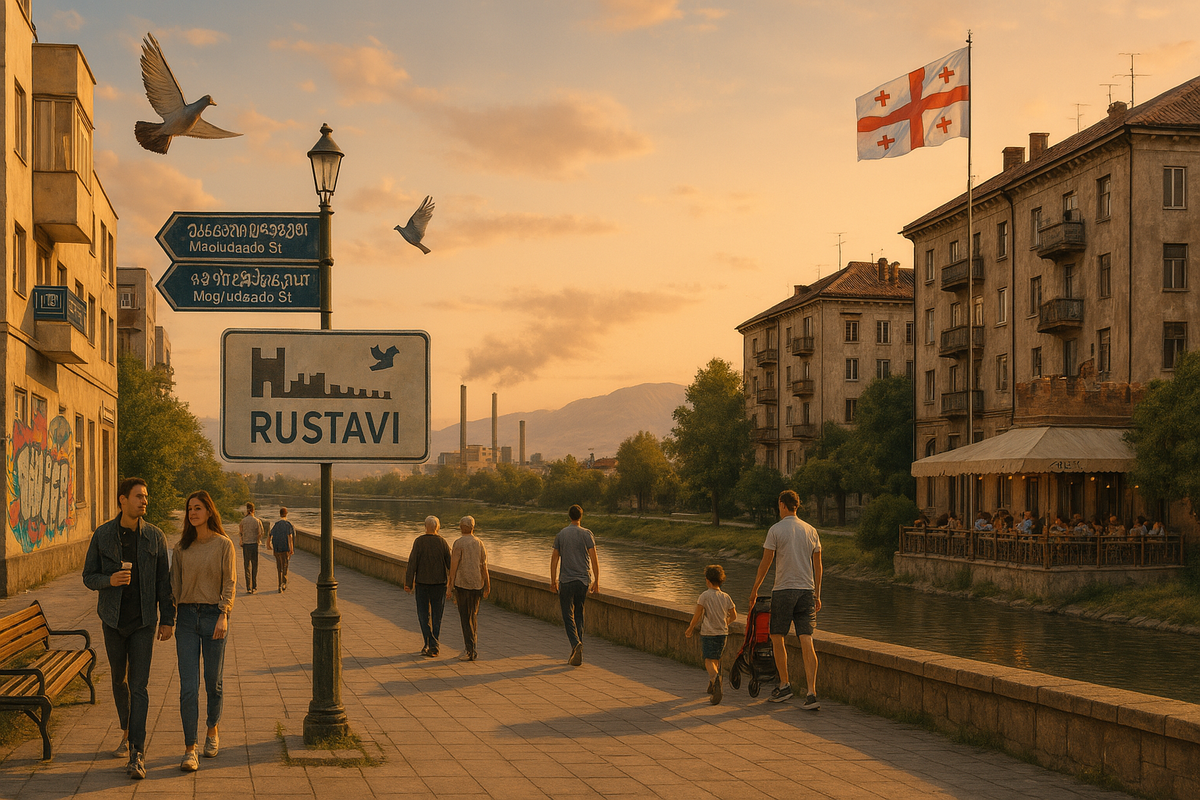
A city rarely mentioned in tourist guides, but that's precisely its charm. It's not polished for postcards, not hidden behind the facades of five-star hotels. It's real. With character, with history, with quiet streets where the footsteps of Soviet architecture and the rhythm of modern street art can still be heard.
This is not a city for a spectacle, but a city for those who seek depth behind the facade, silence after the noise of the capital, and sincerity in the details.
Here you can stroll aimlessly, drink coffee by the river, talk to the locals, and observe life—at your own pace. Rustavi doesn't demand attention; it simply waits for you to notice it.
📍 This is a place where you are welcomed and invited.
And if you give it a chance, it will remain in your heart. Quietly, but for a long time.
💬 What tourists say
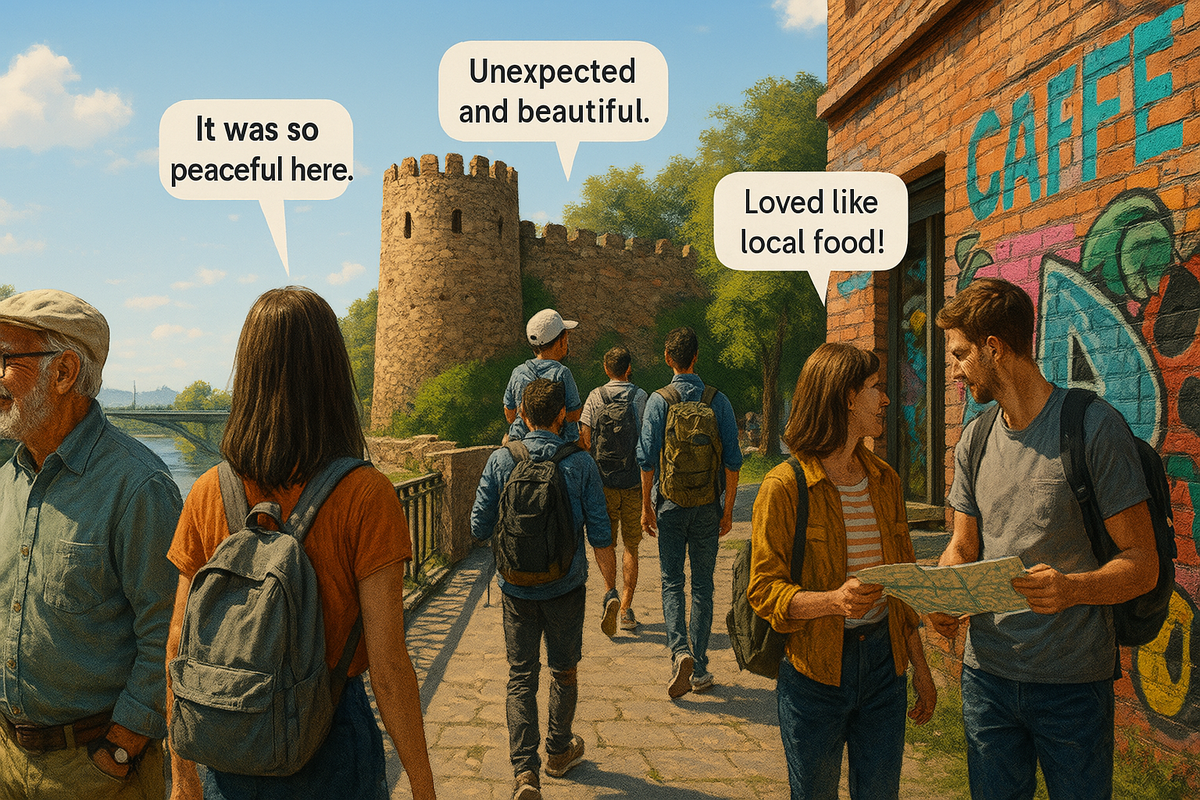
The opinions of those who have already visited are the most honest reflection of the city. Here's what travelers from different countries have to say:
👨👩👧👦 A Polish couple with a 6-year-old child:
"We didn't expect Rustavi to be so peaceful and green! The park with the lake turned out to be a real find—the kid was riding his scooter, and we were just relaxing. After the hustle and bustle of Tbilisi, it was a breath of peace. And yes, the khinkali here is better than in the city center!"
🧳 An elderly couple from Germany:
"We loved the city's rhythm—measured and unhurried. We strolled through Old Rustavi, admiring the architecture, reminiscing about Soviet times. Everyone was friendly, even without speaking the language. A wonderful place to unwind."
👩🎨 A tourist from France, traveling alone:
"I just walked the streets and caught inspiration. Graffiti, abandoned buildings, the old fortress, industrial zones—everything was so vibrant and atmospheric. Rustavi gave me ideas for a series of drawings. And it's surprising, because I didn't expect anything from it."
👯♂️ A group of students from Turkey:
"We came for one day and stayed for two! Wine, an auto fest, hookahs in the courtyard in the evening, and a street concert—who would have thought you could have such a great time in an 'unknown city'?"
🎒 A young couple from Lithuania, with backpacks:
"It was a spontaneous itinerary, but Rustavi was a revelation. We rented bikes, rode along the river, ate in small cafes, and chatted with the locals. It wasn't touristy, but it was authentic. It was very atmospheric!"
📌 Rustavi reveals itself to everyone in its own way. And if you want to see the Georgia that's not shown on postcards, this is the place for you.
🧐 Interesting facts about Rustavi
- Origin of the name: In the 4th century BC, the settlement on the site of modern-day Rustavi was called Ostan-Kalaki (Persian: "Astan" - province, region; "Kalaki" - city).
- Rustavi 2 TV Company: One of Georgia's largest private television companies, Rustavi 2, was founded in 1994 in Rustavi. It currently broadcasts from Tbilisi and covers 85% of the country's population.
- Streets with History: In 1948, the first streets appeared in New Rustavi, named after the Komsomol, the city's builders, and the ancient settlement of Bostan-Kalaki.
- Division of the City: The Kura River divides Rustavi into two parts: Old Rustavi (Dzveli Rustavi) and New Rustavi (Akhali Rustavi), giving the city a distinctive character and a variety of architectural styles.
- Industrial Heart: During Soviet times, Rustavi was known as one of the largest industrial centers, particularly due to its metallurgical plant, which played a key role in the region's economy.
📝 And now, it's your turn!
We've tried to collect the most important, interesting, and heartwarming facts about Rustavi—from history to street graffiti, from the fortress to a cup of coffee in a quiet café.
But the most important thing is your opinion.
🫶 Have you been to Rustavi? Tell us what you liked, and what perhaps seemed unexpected.
🧐 What would you add to this article? Or perhaps, on the contrary, remove?
💬 Share your stories, impressions, or just a kind word in the comments.
Let this article be more than just text, but a real conversation about a city that won't open up right away, but will forever. We're eagerly awaiting your feedback! 💛
ℹ️ Please note:
The information in this section is collected from open sources and is subject to change over time.
We strive to keep it up-to-date, but we recommend checking the details before your trip.
If you have any new information, updates, or comments, please let us know via the feedback form or in the comments below 💬
This way, you'll help other travelers—and together, we'll make this guide even better! 💛
Last updated: October 2026. Travel prices were checked against data from September 2026.
❓ Frequently Asked Questions about Rustavi
💬 The most convenient way is a municipal bus: N20 from Isani metro for 1.50 GEL, or N21–N24 from the Sports Palace, Didube, the TSU high-rise building and the railway station for 2.50 GEL. A minibus costs 3 GEL.
💬 About 50 minutes by bus or minibus and 30–40 minutes by taxi. At rush hour the trip can take over an hour.
💬 Via an app it is usually 25–35 GEL, depending on the district of Tbilisi.
💬 Yes, the Tbilisi–Gardabani commuter train leaves the central station at 06:50 and 18:50, and a ticket costs 50 tetri. Rustavi station is about 1.5 km from the centre.
💬 Freedom Square and Kostava Avenue, the history museum, the culture park with its lake and the fortress, and Sioni Cathedral. In the evening you can go up to the cross on Mount Yagludzha.
💬 Yes, entry is free. The fortress stands at the southern edge of the culture park, and you reach it through the park.
💬 About 5 GEL. The museum is open Tuesday to Sunday and closed on Mondays.
💬 Not at the moment. It is an equestrian club: you can walk around the grounds for free, and 20 minutes of riding costs about 20 GEL.
💬 The Georgian circuit racing championships run from spring to autumn. For the exact schedule, see the motor park’s listing or its official website.
💬 It is home to the largest car market in the Caucasus, through which most of the country’s imported cars pass. We cover the car market in more detail in the section above.

43 comments
Log in to leave a comment
Довольно интересная догадка, что Рустави бы городом-крепостью. К сожалению много чего мы теперь узнать не сможем. Но зато мы можем насладиться атмосферой той эпохи в местном краеведческом музее.