




🏧 Withdrawing Cash in Georgia Without Overpaying: Fees and Limits
🏧 One withdrawal, up to three fees at once
Most people only think about the ATM's own fee. There are usually three, charged by three different parties. Understanding who takes what matters more than any "fee-free ATM" list you'll find online.
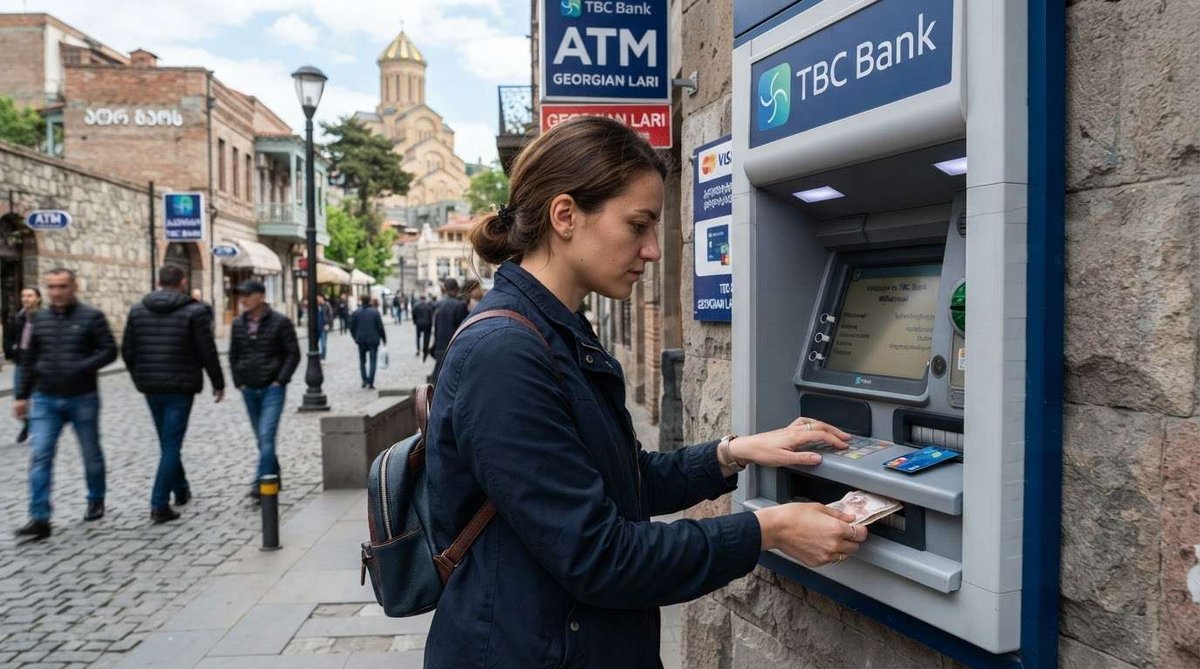
If you've already searched for where to withdraw cash in Georgia without fees, you've probably noticed something odd. One writer says Bank of Georgia charges nothing. Another says a dollar. A third names three lari. All three are probably telling the truth, just at different times, with different cards, at different machines.
So this piece works differently. We won't promise you a magic fee-free ATM. We'll show you how to see the fee for yourself before your money leaves your account, and where the real losses usually happen. Spoiler: usually not where you'd expect.
💳 What fees do TBC, Bank of Georgia and Liberty ATMs charge
Let's start with the honest part. The range in reported experiences is enormous, and we're not going to hide that.
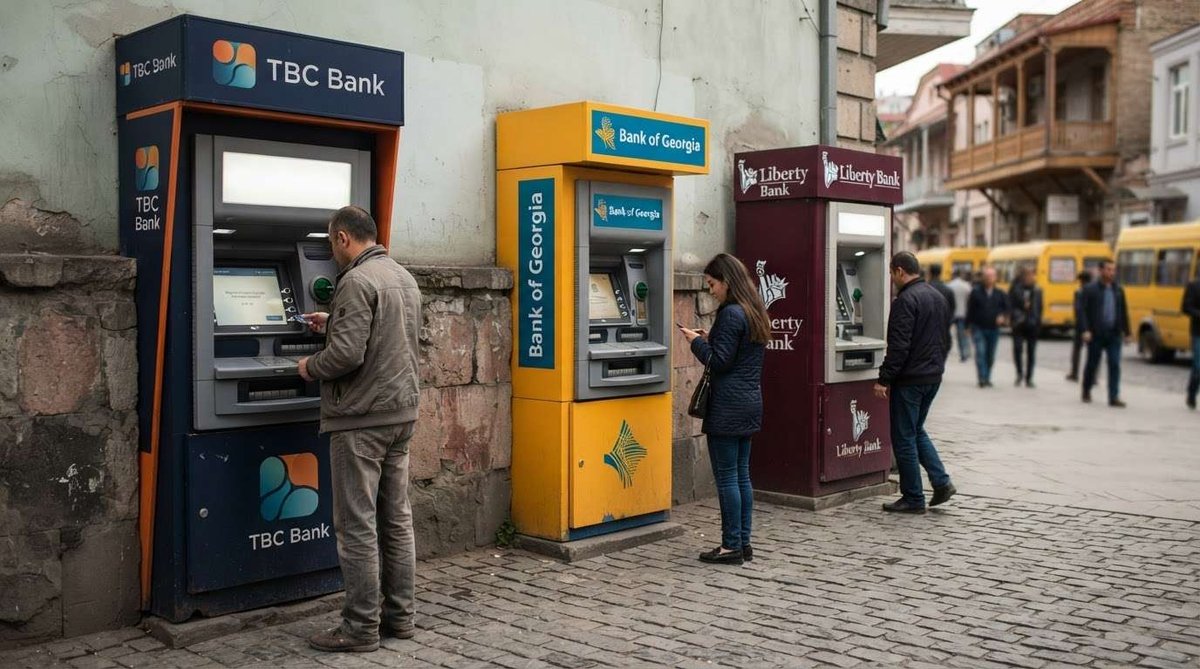
TBC. Some say there's no fee at all, others quote three to five lari, and one traveller reported withdrawing dollars and getting hit with ten dollars on top. The most credible pattern from recent reports: some TBC machines in residential neighbourhoods add roughly 2% for foreign cards if you withdraw less than about 500 GEL. So with TBC it pays to withdraw a larger sum in one go, from a thousand up.
Bank of Georgia. Most commonly reported at around 3 GEL per transaction. There are reports of a dollar charge when withdrawing dollars, and one detail worth knowing: the fee is taken on top of your withdrawal, so if your card has exactly a hundred dollars on it, you won't be able to take out a hundred.
Liberty Bank. The least predictable of the three. The official schedule lists fees up to 20 GEL, but in practice foreign cards are often charged little or nothing at all. Not reliable as your main option, but worth keeping as a backup.
Cartu, Basis, Credo. Some reports claim no fee whatsoever, and Credo also dispenses dollars. But there's much less data on these, and far fewer of their machines around.
Why the numbers are all over the place. The fee depends not just on the bank but on the specific machine, your card type, the withdrawal currency, and the amount. Two people at the same ATM can genuinely see different numbers. That's not a scam, just how the system is built.
ATM FEE 3.00 GEL
────────────
CONVERT TO USD?
RATE 1 USD = 2.54 GEL
TOTAL 395.28 USD
👀 How to check an ATM's fee before you withdraw
This is the core skill, and it works at any machine in the country.
Before dispensing cash, an ATM is required to show its own fee. It appears on a separate screen or as a line in the transaction summary. Look for the words fee, charge or surcharge next to a number.
From there it's simple. Fine with the amount, confirm. Not fine, hit cancel, take your card, and walk to a different bank's machine. In central Tbilisi and Batumi they're often literally across the street from each other, so you're out a minute at most.
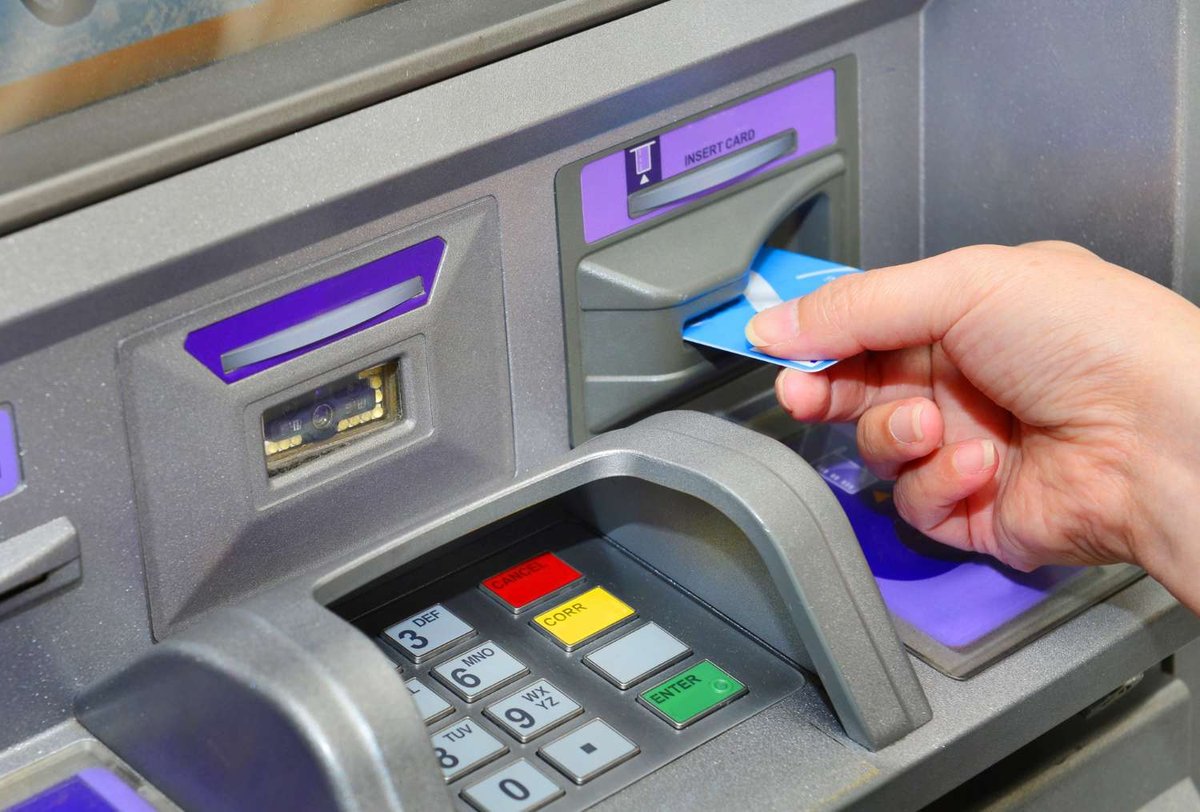
One thing that trips people up. Sometimes no fee shows on screen at all, and money still comes out short. Most often that's your own bank's fee, covered below, but occasionally a Georgian ATM just takes an extra lari or two without flagging it. The only way to catch that is checking your statement afterward.
So a good habit for your first few days: withdraw a small amount at a couple of different machines and compare what actually came off your statement. That's how you find "your" ATM near home, and after that you just go there.
The nearest ATMs are easiest to find in the directory: banks in Tbilisi, Batumi and Kutaisi.
🔄 Why you should never accept ATM currency conversion
This is where most of the money quietly disappears.
When you withdraw lari on a card denominated in dollars, euros or something else, the ATM often offers a "convenient service": show you upfront exactly how much comes off in your own currency. Sounds helpful. It's actually called dynamic currency conversion, and the rate is usually noticeably worse than what your own bank would give you.
One rule: always decline. Press without conversion, decline, or choose to withdraw in lari. Your bank then does the conversion at its own rate, and that's almost always the better deal.
On a single transaction the difference looks small. But withdraw weekly over a few months, and by year's end it adds up to enough for a couple of decent dinners out.
The same rule applies when paying by card in shops and restaurants: if the terminal offers to charge you in your own currency, choose lari instead.
📊 What's the ATM withdrawal limit in Georgia
This depends on two things: the machine and your card.
The ATM's own limit per transaction usually runs 2,000-3,000 GEL. There are reports of lower limits on some older machines and higher ones at newer airport ATMs, but that's the range to expect. If you need more, just run several transactions in a row.
Your card's limit is set by your own bank, and it's often stricter than the Georgian side. If an ATM declines you without an obvious reason, check your daily limit in your banking app first.
On banknotes. Large 100 and 200 GEL notes are hard to break at small shops, markets and with taxi drivers. If the ATM lets you choose denominations, go smaller.
For anyone living in Georgia with a local account, the limits look completely different; TBC cards, for instance, come with daily withdrawal limits in the thousands. We've covered opening an account separately.
🏦 How much does your own bank charge for withdrawing abroad
This is the fee almost nobody thinks about until they see it on their statement.
The bank that issued your card charges its own fee for withdrawing cash abroad. It never shows up on the ATM screen, because the Georgian machine has no way of knowing about it. It might be a flat fee, a percentage of the withdrawal, or a combination, and on top of that your bank converts the currency at its own rate.
For example, by some reports, Kazakhstan's Kaspi charges around one per cent for withdrawals abroad plus conversion at the card network's rate. Other banks have entirely different terms, some offering fee-free withdrawals up to a certain limit.
What to do. Open your banking app before you travel and check the fee schedule for "cash withdrawal abroad" or "other banks' ATMs." If the fee is high, withdraw less often but in larger amounts; a flat fee on one big withdrawal beats paying it five times over.
If your card doesn't work in Georgia at all, that's a different issue. Which cards are accepted and which aren't is covered in paying in Georgia.
💵 Is it better to withdraw lari or exchange cash dollars
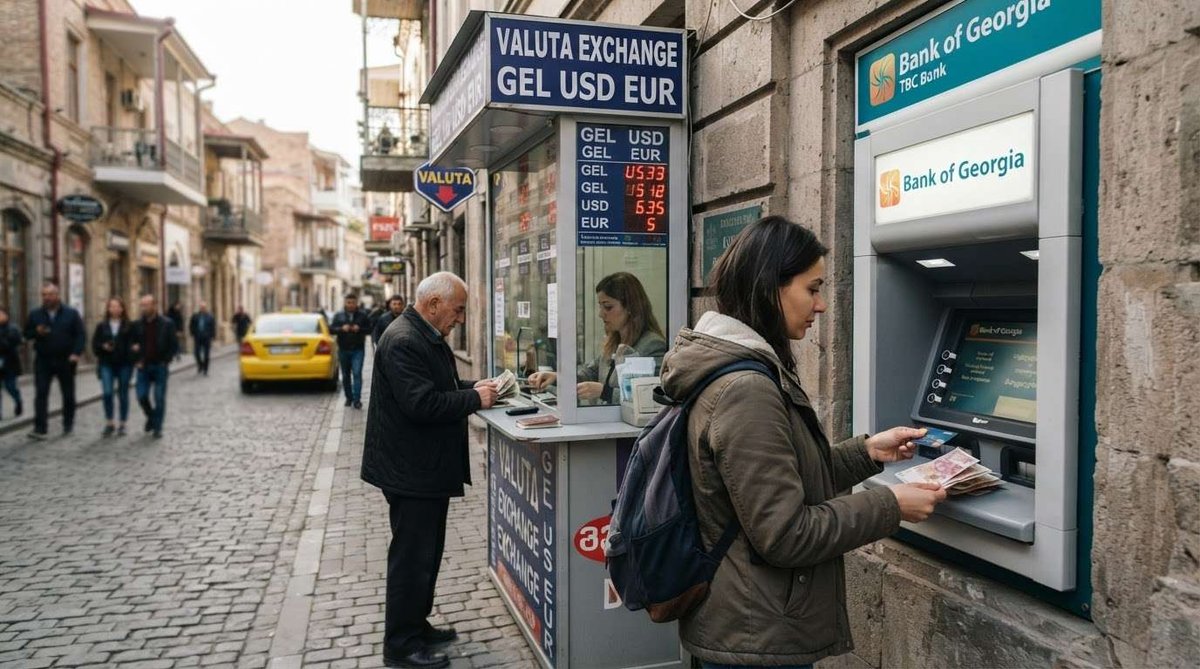
Honest answer: it depends on what you arrived with.
If you have a card, an ATM is more convenient: no hunting for an exchange office, and declining conversion gets you a reasonable rate. The downside is those same two fees, the ATM's and your own bank's.
If you have cash dollars or euros, an exchange office is usually the better deal. On the same day street exchange offices were matching almost the official rate, bank counters were running one to two per cent behind. The gap looks small on paper, but on a larger sum it's real money.
Where not to exchange. Airport rates run worse than in the city. Change or withdraw just enough there for a taxi to your hotel, and do the rest once you're in town.
And on rubles. They're exchanged reluctantly in Georgia and at a poor rate, so there's little point bringing them along. More on currency and exchange is in currency in Georgia.
Withdraw less often, but in bigger amounts. Nearly every fee here, the ATM's and your own bank's, works on a flat-per-transaction basis. One withdrawal of a thousand lari costs less overall than five withdrawals of two hundred.
And find your ATM in the first few days. Pull small amounts at two or three machines near where you're staying, check your statement to see which one took the least, and stick with it after that. It's more reliable than any ranking online, because it's tested on your own card.
Withdrawn cash in Georgia? Leave a review on Madloba: tell us which ATM, which card, and what actually came off your account. Reviews like that help other travellers avoid overpaying, because the general tables out there just don't hold up.
Information is current as of September 2026. Georgian ATM fees depend on the bank, the specific machine, your card type, the currency, and the amount withdrawn, and open sources disagree substantially on the details. Check your own bank's fee schedule directly. Exchange rates shown are from 1 August 2026 for comparison and change daily.
❓ Frequently asked questions
💬 Probably none, guaranteed. Reports on every bank contradict each other. Some travellers report no fee at Cartu, Basis and Credo, and Liberty often charges little or nothing. The most reliable approach is reading the ATM screen; it shows the fee before you confirm.
💬 Reports range from zero to five lari. Recent accounts suggest some TBC machines in residential areas add roughly 2% for foreign cards when withdrawing less than about 500 GEL. So with TBC it pays to withdraw a larger amount at once, from a thousand up.
💬 Most commonly reported at around three lari per transaction. Some report a dollar charge when withdrawing dollars. Keep in mind the fee comes off on top of your withdrawal, so your card needs slightly more than you're taking out.
💬 Usually 2,000-3,000 GEL per transaction, depending on the machine. If you need more, run several transactions back to back. Also check your own card's limit, set by your bank, which is often the stricter of the two.
💬 No, always decline. If the machine offers to show the amount in your own currency, the rate in that offer is almost always worse than what your own bank would give. Choose without conversion or withdraw in lari.
💬 Most likely that's your own bank's fee; the Georgian ATM has no way of showing it. Less often, a machine takes an extra lari or two without flagging it. Check your statement after the transaction to be sure.
💬 If you're carrying cash dollars or euros, an exchange office is usually the better deal: on 1 August 2026, street exchange offices were matching close to the official rate, while bank counters ran one to two per cent behind. If your money's on a card, an ATM is more convenient, just decline the conversion.
💬 Airport ATMs work fine, but exchange office rates there run worse than in the city. Change or withdraw just enough for a taxi to your hotel, and handle the rest in town.
💬 Smaller ones, if the ATM lets you choose. 100 and 200 GEL notes are hard to break at small shops, markets, or with taxi drivers.

0 comments
Log in to leave a comment