



💱 Currency Exchange in Batumi: Where to Change Money Without Losing Out
💱 Where to Change Money in Batumi at a Good Rate
The rate differs by a few percent from one place to the next, and the difference stays with the exchange office if you don't spot it. Here are the four places people most often change money, from best to worst.
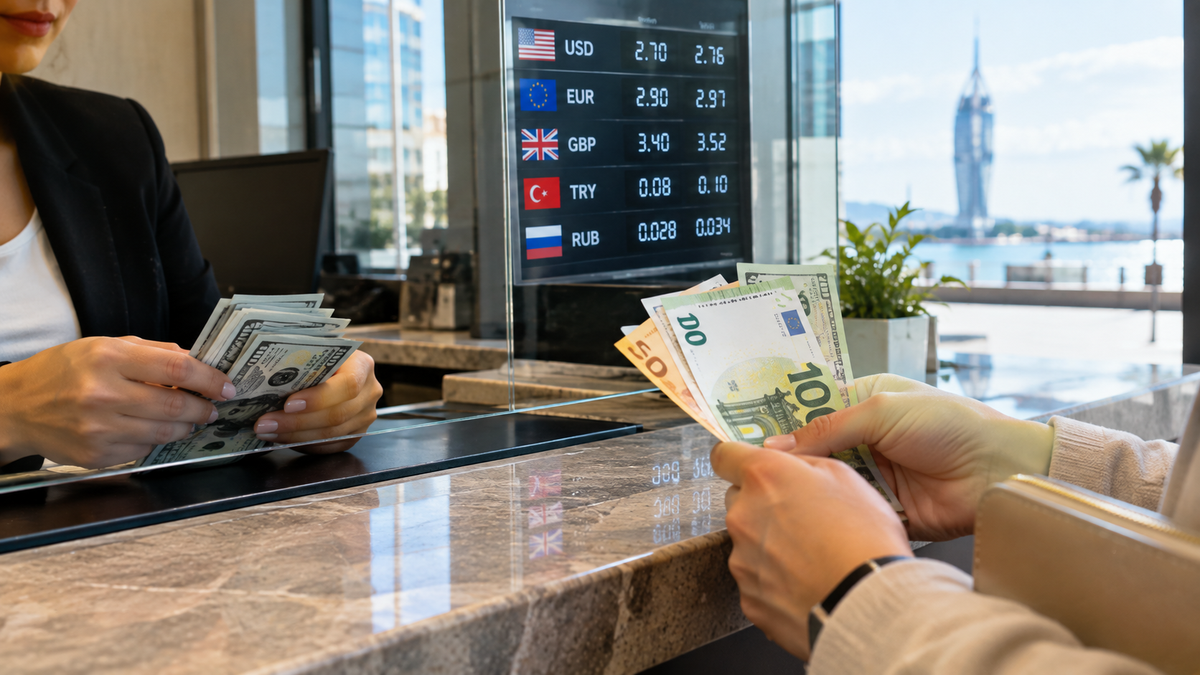
Changing money in Batumi looks like a two-minute job: you spot a sign that says "Currency Exchange," walk in, hand over dollars and get lari. Most of the time that is exactly how it goes. But keep one thing in mind: the rate at neighbouring exchange offices can differ by a few percent, and on a few hundred dollars that is the price of a good dinner.
Below we look at where the rate really is better, which currency is worth bringing, what happens at the airport, and how to check in one minute whether you are overpaying. All the addresses, reviews and opening hours are in our directory: currency exchange points in Batumi. This article is here so that you know what to look for once you pick one.
🏦 Exchange Office or Bank: Which Gives a Better Rate in Batumi
Let's start with the question everyone asks: bank or exchange office? For an ordinary trip the answer is almost always the same, and it favours the exchange office.
The reason lies in how each earns money. A bank makes its profit on a wide gap between the buy and sell rates, while a private exchange office keeps that gap narrow and lives on volume: the more people walk in, the less it needs to add on each one. As a result, an exchange office's rate is usually very close to the official National Bank rate, and a bank's clearly lags behind.
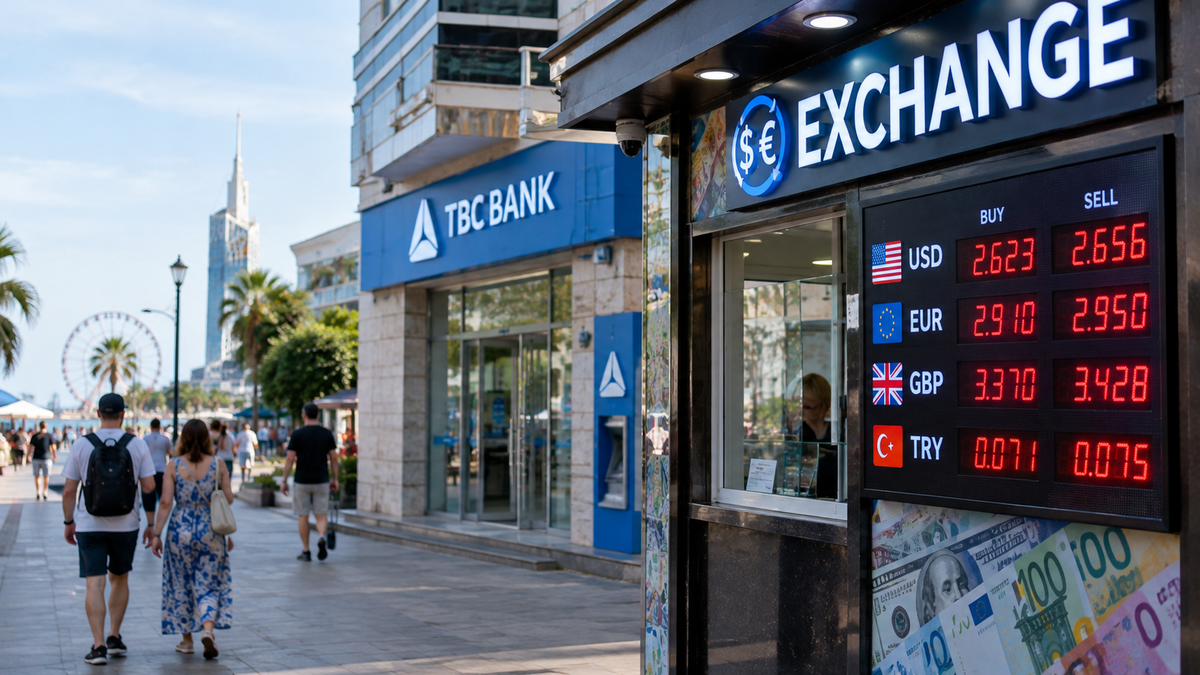
How clearly? An example shows it. On 1 August 2026 a street exchange office bought dollars at 2.623 GEL, while TBC Bank paid 2.574. On 500 dollars the difference came to about 24 GEL, and you get it simply by walking into a kiosk across the street rather than a bank branch. These figures show the size of the gap, not today's rate: it changes every day, so check it yourself before exchanging (how to do that is below).
So is a bank never needed? It is, in two cases. First, when the sum is large and you want the most transparent transaction, with a passport and a receipt. Second, when you need a non-cash transfer rather than lari in your hand. In all other cases, on a one- or two-week holiday, an exchange office is simpler and cheaper.
📍 Where to Find Exchange Offices in Batumi
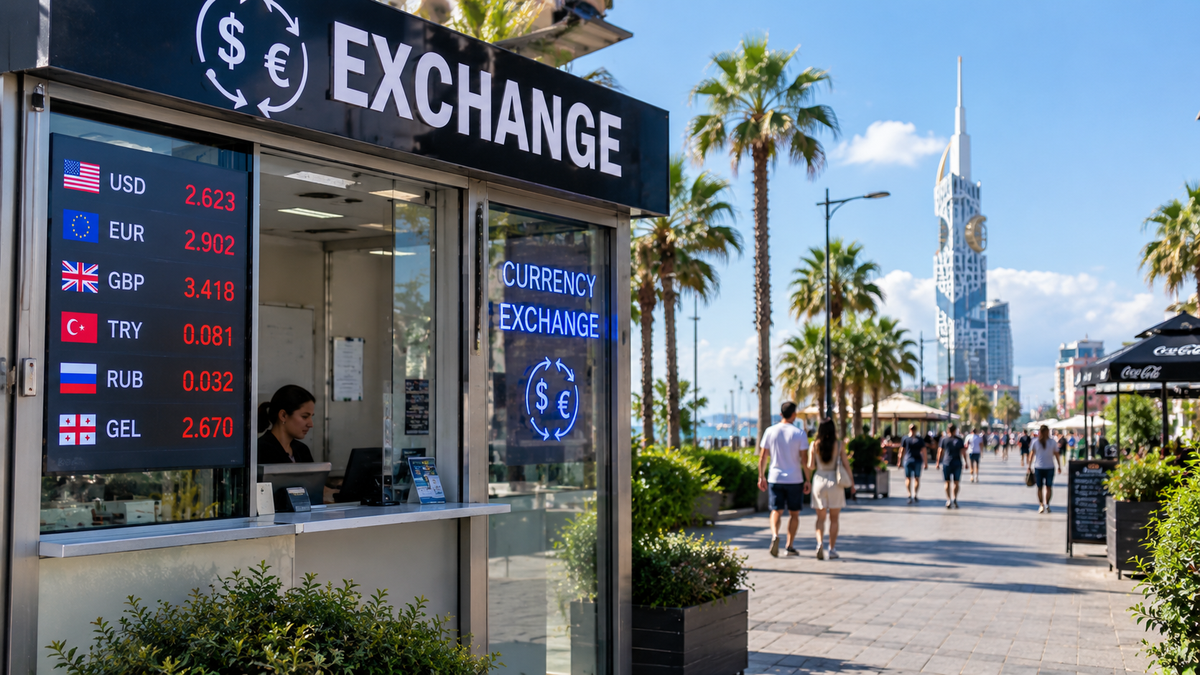
Exchange points stand thickest on Chavchavadze Street and Gorgiladze Street, and the rate there is usually better than the city average. The logic is simple: when exchange offices face each other, the customer has a choice, and the owners have to keep their price close to the official one.
The flip side is just as simple: the closer you get to the seafront and the tourist routes, the worse the rate. It is set there for people who don't compare and don't plan to come back. So the best habit for the whole trip is to walk past two or three exchange offices in a row and choose the one with the better number on the board. That takes five minutes and usually pays for itself.
You can find the nearest one in our directory, which lists 43 exchange points with addresses, opening hours and reviews. There is also a separate card for the exchange point at Batumi airport, which we talk about below.
💵 Which Currency to Bring to Batumi
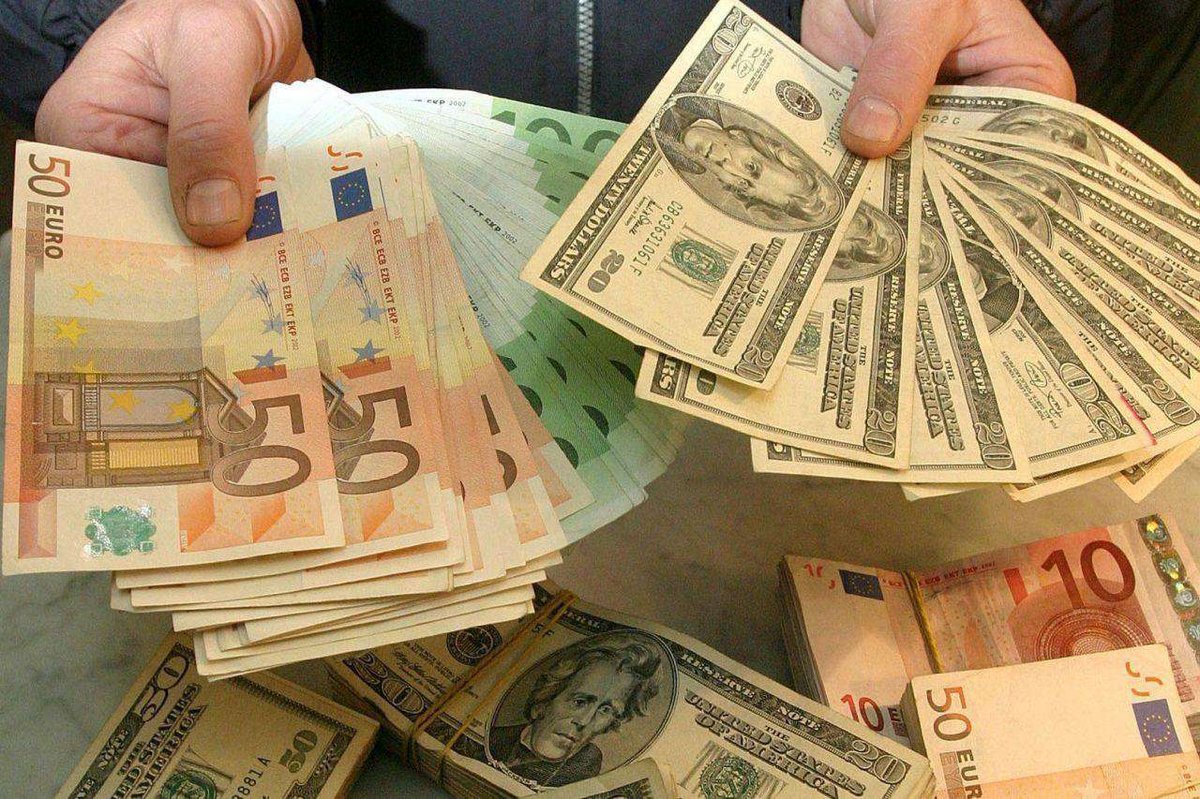
If you haven't arrived yet and are deciding what to put in your wallet, the answer is short: US dollars and euros. Demand for them is highest, so exchange offices take the smallest margin and are not afraid to keep them in the till. New, flat, undamaged notes are accepted without discussion, while old and crumpled ones may be taken at a discount or refused.
Rubles and hryvnia can be exchanged, but they lose noticeably more, roughly 5–7% against the official rate. That doesn't mean bringing them is pointless. If you have no other currency, change what you need in the centre and look in at two or three offices to pick the best rate. But if you can swap rubles for dollars at home or on the way, you may save on the trip.
A separate point about cards. Russian Visa, Mastercard and Mir cards generally don't work in Georgia, so cash remains the main way to pay in that respect too. We wrote about this in more detail in how to exchange currency in Georgia and currency exchange in Tbilisi.
✈️ Should You Change Money at Batumi Airport
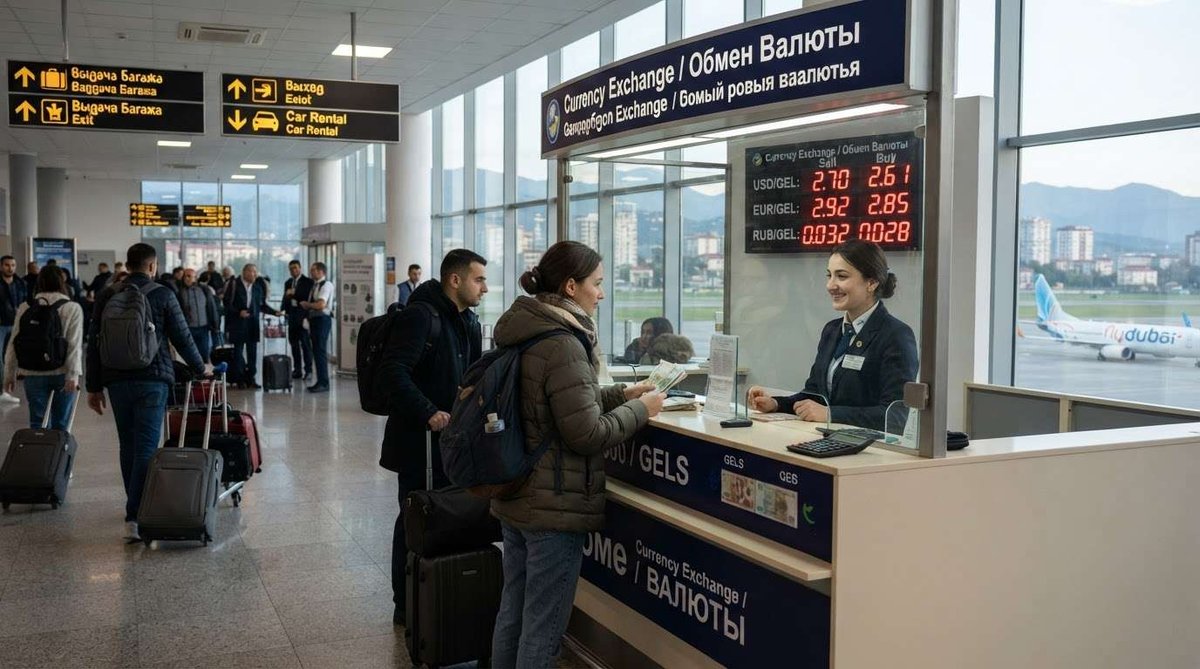
Opinions on the airport online vary widely. Some say you will lose about 1%, others warn of a margin "up to 15%." We checked and found no recent measurements we could trust, so we won't quote a figure: that would be invention.
The principle itself is clear and not disputed: the airport rate is generally worse than in town, because the point is there for people with no alternative. A sensible strategy is simple: change a little at the airport, enough for a taxi, coffee and a SIM card, and change the main amount in the centre, where you can compare rates. We covered the airport, transfers and services in more detail in the article Batumi Airport.
⚠️ Exchange Traps: What to Watch For
Cheating at exchange offices is less common than forums suggest, but a few tricks turn up regularly. It is easier to remember them as a list than to figure them out on the spot.
The receipt deserves a separate word. According to local media, the National Bank of Georgia has tightened the rules for exchange points, and from September 2026 they need to issue a receipt for every transaction, record operations in real time and keep cameras inside and outside. This is a single report, and we could not verify how it is applied in practice. But in any case, the habit of asking for a receipt costs you nothing and protects you in a dispute.
🔎 How to Check the Rate in One Minute
Checking takes less time than the exchange itself, and it saves you from the most annoying mistake: exchanging at a marked-down rate simply because you had nothing to compare it with. The order of steps is simple and worth learning once.
- Open the National Bank of Georgia rate on the NBG official site or in its app and note the figure for your currency. That is your reference.
- Compare two or three boards at neighbouring exchange offices. You need the "buy" rate: that is what the office pays for your currency.
- Ask for the final total: "how many lari will I get for this amount." The rate on the board and the sum in your hand should match.
- Count the money and take a receipt before you step away from the window.
You can compare rates across the city without leaving your hotel: the aggregator myFin ge shows Batumi exchange offices by today's best rate. Then you go and check in person, because the prices on the site and on the board sometimes differ by a few tetri.
📄 Passport, Limits and Cash at the Border
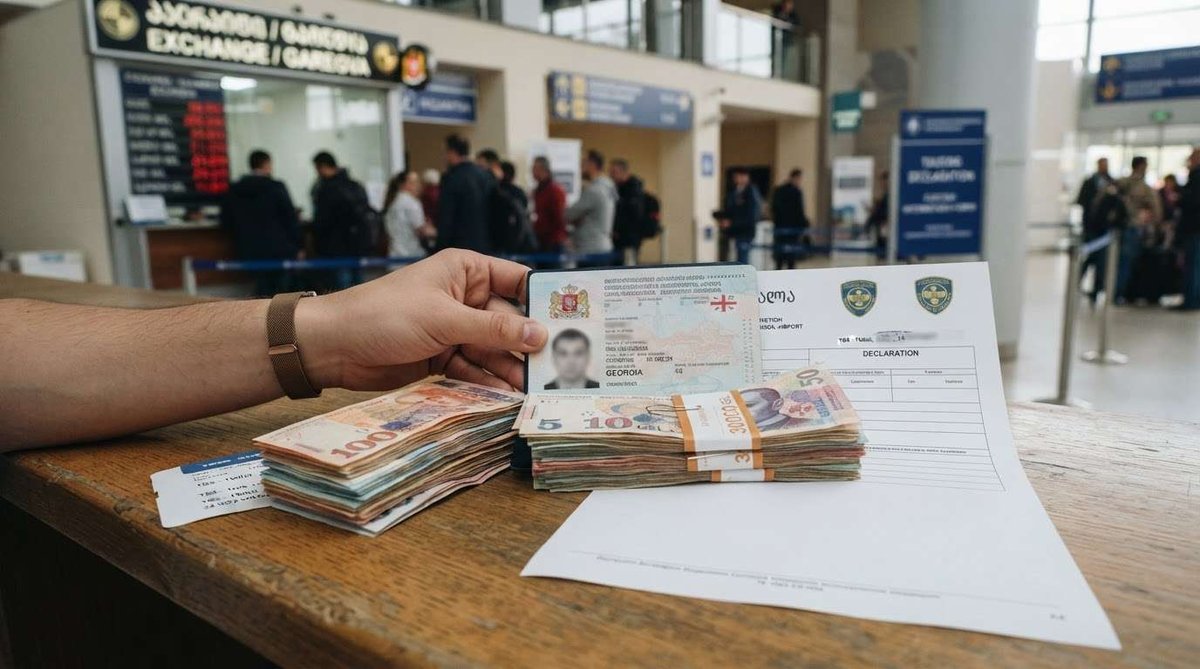
Many people wonder whether a passport is needed to exchange money. The answer: a bank always asks for it, while an exchange office may ask for it on a large sum, so it is better to carry your passport or a copy with you. The exact amount from which exchange offices ask for ID is given differently in different sources (from 1,000 to 2,000 dollars), and we won't quote a single figure where there is no single answer.
The second question is for those bringing a lot of cash. A sum above roughly 30,000 GEL (about 11,000 dollars) must be declared on entering Georgia, and amounts in different currencies are added together. The declaration itself is free, while failing to declare risks a fine and confiscation of the money. Some sources give a threshold of 25,000 GEL, so if your sum is close to the line, check the current rules on the Georgian customs website before you travel.
🏧 ATMs and Cards: How Not to Lose on Conversion
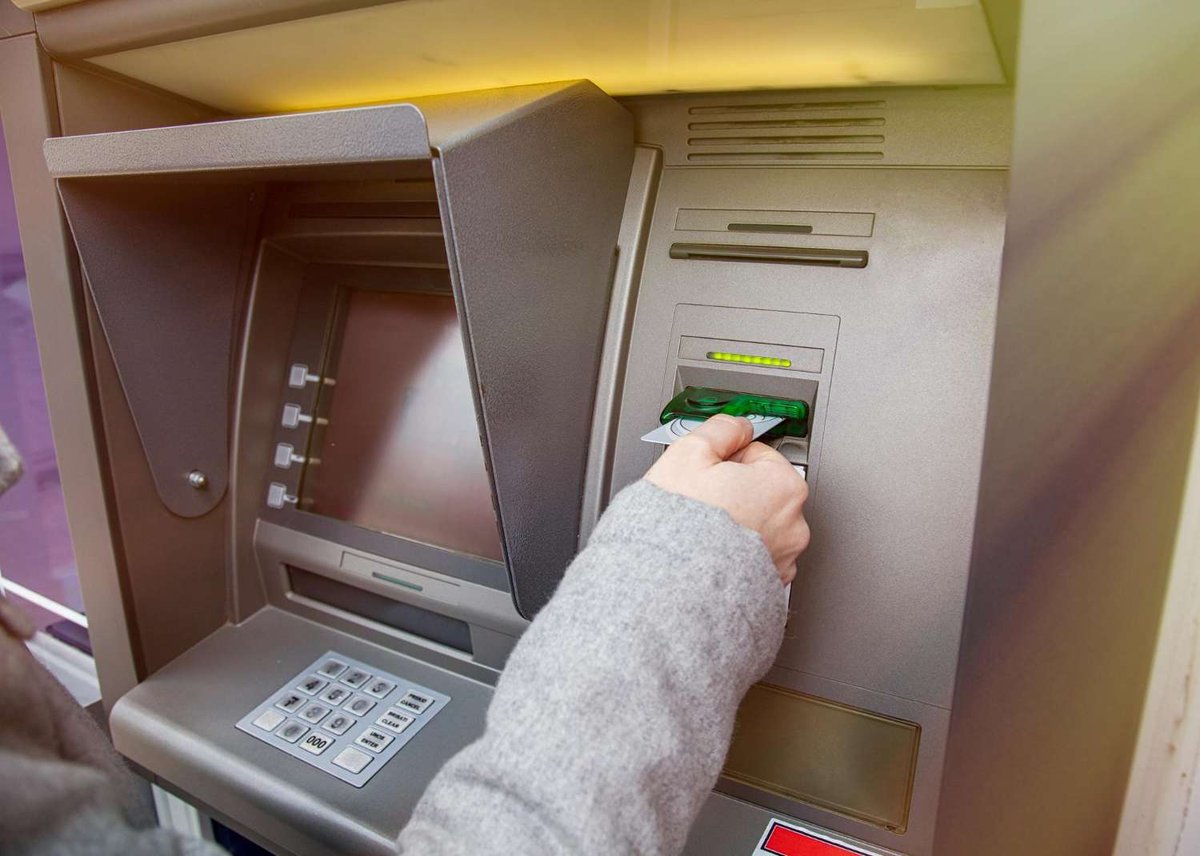
Many people skip the exchange office altogether: they arrive with a card and withdraw lari from an ATM. This works if the card is not Russian and you know two rules.
The first rule concerns the fee. For cash withdrawal the bank charges usually 1–5 GEL per transaction, so it is cheaper to withdraw a large amount at once, from 1,000 GEL, rather than a little five times in a row. The second and main one: when the ATM or terminal asks in which currency to charge you, always choose lari. If you agree to your card's currency, the ATM does the conversion itself at an unfavourable rate, and this trick is called dynamic currency conversion.
And don't forget cash. Markets, taxis and small shops don't take cards, so keep about 100 GEL in small notes for each day. This is the case where you need cash itself, not a good rate.
₿ Cryptocurrency and USDT in Batumi

Batumi is searched for not only as a place to swap rubles for lari. A noticeable share of searches is about exchanging cryptocurrency, especially USDT: the city has long been known as a place where crypto exchangers operate.
This is a separate market with its own rate, its own fees and its own risks, and it can't be judged by the rules of an ordinary exchange office. For a tourist there is one rule, and it is short: choose an office with a real address and reviews, take a receipt, and don't exchange with random people on the street. If the sum is large, agree the terms in advance and don't start the transaction until you understand exactly how much you will receive. A list of crypto exchangers with addresses and ratings is in the directory.
Don't change your whole sum on the first day. Change enough for two or three days, and in that time look around at the exchange offices near where you are staying. Almost every district of Batumi has its own "honest" point where locals go, and the rate there is usually better than near the station or on the seafront.
And keep a simple formula in mind: the centre instead of the airport and the bank, dollars or euros instead of rubles, the National Bank rate in front of your eyes and a receipt in your hand. That is enough to lose the minimum on the exchange.
Changed money in Batumi? Tell us on Madloba which exchange office, at what rate, and whether they asked for your passport. Reviews like these help other travellers find an honest-rate point right now, because the prices on the boards change every day, while good exchange offices stay for years.
The information is current as of September 2026. Exchange rates change daily: the official National Bank rate is given for 30 September 2026, and the example of the gap between an exchange office and a bank for 1 August 2026. The rules for exchange points, ID thresholds and cash declaration limits may change, so before travelling with a large sum, check the websites of the National Bank of Georgia and customs.
❓ Frequently Asked Questions About Currency Exchange in Batumi
💬 Usually at private exchange offices in the city centre, on Chavchavadze and Gorgiladze streets. Their rate is close to the official National Bank rate, while banks and the airport give less. To avoid a mistake, walk past two or three points in a row and pick the best.
💬 For an ordinary trip, an exchange office. A bank has a wider gap between buy and sell: in our example from 1 August 2026 it came to about 24 GEL on 500 dollars. A bank makes sense for large sums where transparency of the transaction matters.
💬 US dollars and euros, because you lose the least when exchanging them. Rubles and hryvnia lose roughly 5–7% against the official rate, so if you have a choice, take dollars.
💬 Only a small sum for first expenses: a taxi, coffee, a SIM card. The airport rate is generally worse than in town, and the main amount is cheaper to change in the centre.
💬 In a bank, always. At an exchange office you may be asked for it on a large sum, so keep your passport or a copy with you.
💬 Yes. According to local media, from September 2026 exchange offices must issue a receipt for every transaction. If a dispute over the amount arises, the receipt protects you.
💬 Generally no: Visa and Mastercard from Russian banks don't work abroad, and Mir is not accepted in Georgia. Count on cash or a card from a foreign bank.
💬 Usually from 1 to 5 GEL per transaction, depending on the bank. It is cheaper to withdraw a large sum at once, from 1,000 GEL, and always choose to be charged in lari on the screen rather than in your card's currency.

0 comments
Log in to leave a comment