




Muri Fortress in Lechkhumi: Towers and a Medieval Chain Prison
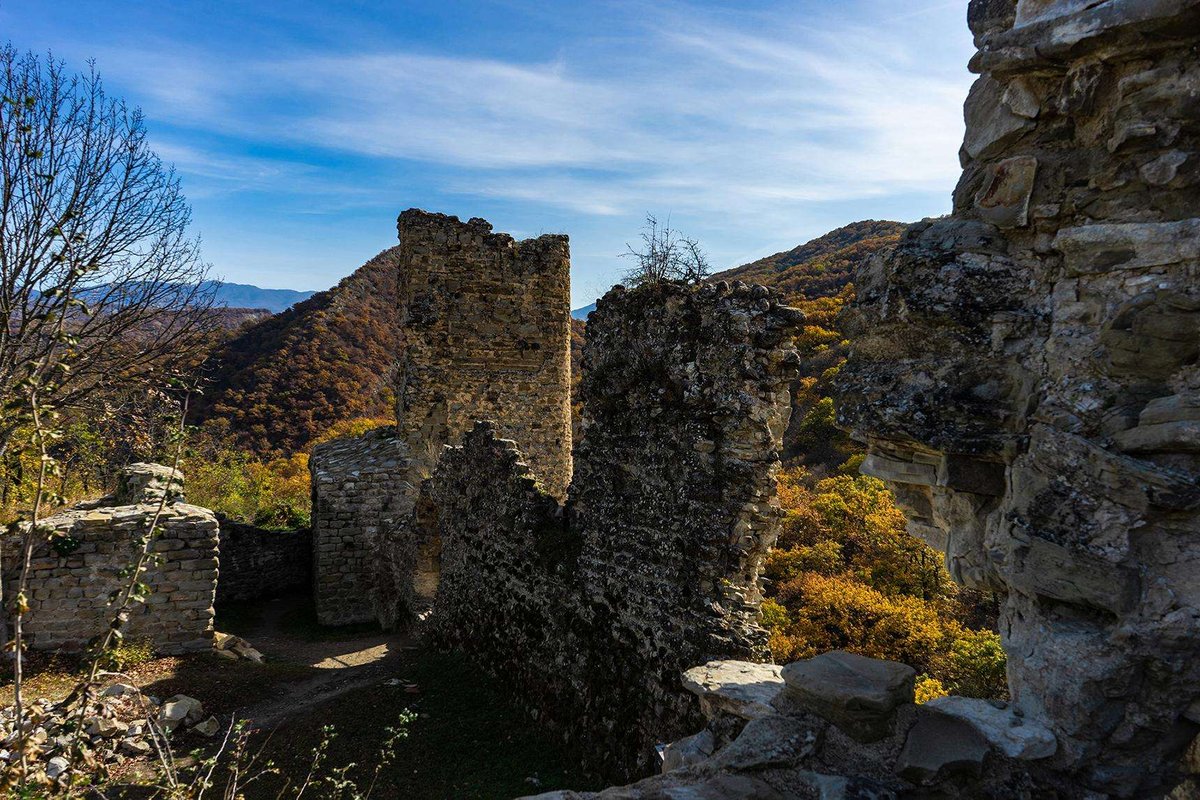
The Muru Fortress (Skiomari, Tsikhnari) is a complex perched on rocky mountains in Lechkhumi. The fortress once played a major role in the city's defense. The castle stood firm against Ottoman attacks and was never captured. The castle consisted of three parts: the main building and two large towers.
One stood to the east, the other to the west. The main building was nicknamed "Give a Good Welcome." The tower to the east served as a guard tower and was called "Hka Magas." When an enemy approached, it alerted the main castle of the danger. After the defeated enemy turned his back on the castle, he would rest against the western tower, "Don't Let Go."
The castle walls also held terrifying stories and events. It was here that peasants were punished, chained and held there for several years. The castle's prison was one of the most brutal. Today, four small towers remain of the castle, indicating that the entrance was from the southwest. To the east, the remains of a two-story house can be seen; it once served as a palace. In some places, the fence remains.
In 2018, a decision was made to build a road from the highway towards the castle for tourists and visitors. The castle has been listed as one of the most beautiful places in Georgia.
About the castle.
Muri Castle is a historically significant monument and landmark in Georgia. Situated on the border of two cities: Svaneti and Lechkhumi, it represents a fortress impenetrable to enemies.
Traces of human activity have been found within the fortress's boundaries and surrounding area: tombs, qvevri, and objects made of gold, silver, and iron. And at the very foot of the castle, the monastery and cemetery of Confessor Maximus, a great philosopher of the time, remain. The castle was first restored in the Middle Ages. At various times, the fortress belonged to various rulers: Chikovani, Gelovani, Akhvlediani, Kopaliani, Mushkudiani, Kipiani, Silagadze, and Inasaridze.
References to Muri Fortress began as early as the 6th century, and even then, the castle fascinated the people with its resilience and inaccessibility. It never surrendered and always withstood every enemy attack.
Since the early 18th century, Muri Fortress has served as the residence of the Dadiani family, a decision made due to the castle's location.
Gildenstedt, while traveling through Georgia, mentioned the castle several times in his notes, and geographer Gustav Radhe, after becoming acquainted with Muri, couldn't resist making sketches of the fortress that captivated him.
If you're planning a trip and are compiling a "things to see in Georgia" list, be sure to include Muri Castle on it. The fortress will leave no tourist indifferent; its grandeur and history captivate from the very first moment.

34 comments
Log in to leave a comment
Полезно было прочитать отзывы тех, кто уже побывал на месте: указания о подходах к крепости, лучшие ракурсы для фото и моменты, когда свет создаёт самые выразительные тени на стенах, помогли лучше спланировать прогулку и понять, куда именно стоит направлять взгляд. Это добавляет уверенности, когда отправляешься в такие места без экскурсии.
После исследования стен заглянул в небольшое кафе неподалёку — простая еда и спокойная атмосфера деревни стали отличным завершением насыщенного дня, а разговоры с местными дали ещё больше контекста про регион. Классные подборки Madloba вдохновляют искать такие места, где история ещё ощущается в воздухе.
Как вы думаете, лучше всего посещать крепость Мури в начале дня, чтобы успеть спокойно пройти все тропы, или под вечер, когда солнце мягче, а виды становятся особенно выразительными?
У крепости Мури какая-то мистическая, мрачная атмосфера, но сам вид её красив и удивителен.