




Khikhani Fortress in Adjara: Outpost at 2600 m Altitude
Of all Georgia's cultural, historical, and architectural landmarks, the Khikhani Fortress is the most difficult to access. Situated at an altitude of over 2,600 meters, atop the mountain of the same name, its history is steeped in myths and legends, and the exact date of its construction remains unknown. Various sources cite a timeframe from the 10th to the 13th centuries.
The Khirkhati Fortress in Adjara is not simply a fortification with walls topped by a few towers. When fully functional, the fortress in Khikhani was a small town spread over an area of one hectare. In addition to towers, walls, and other military outbuildings, two churches were built above ground within the Khirkhati Fortress at different times, one of which is the Church of St. George, of which there are many throughout Georgia.
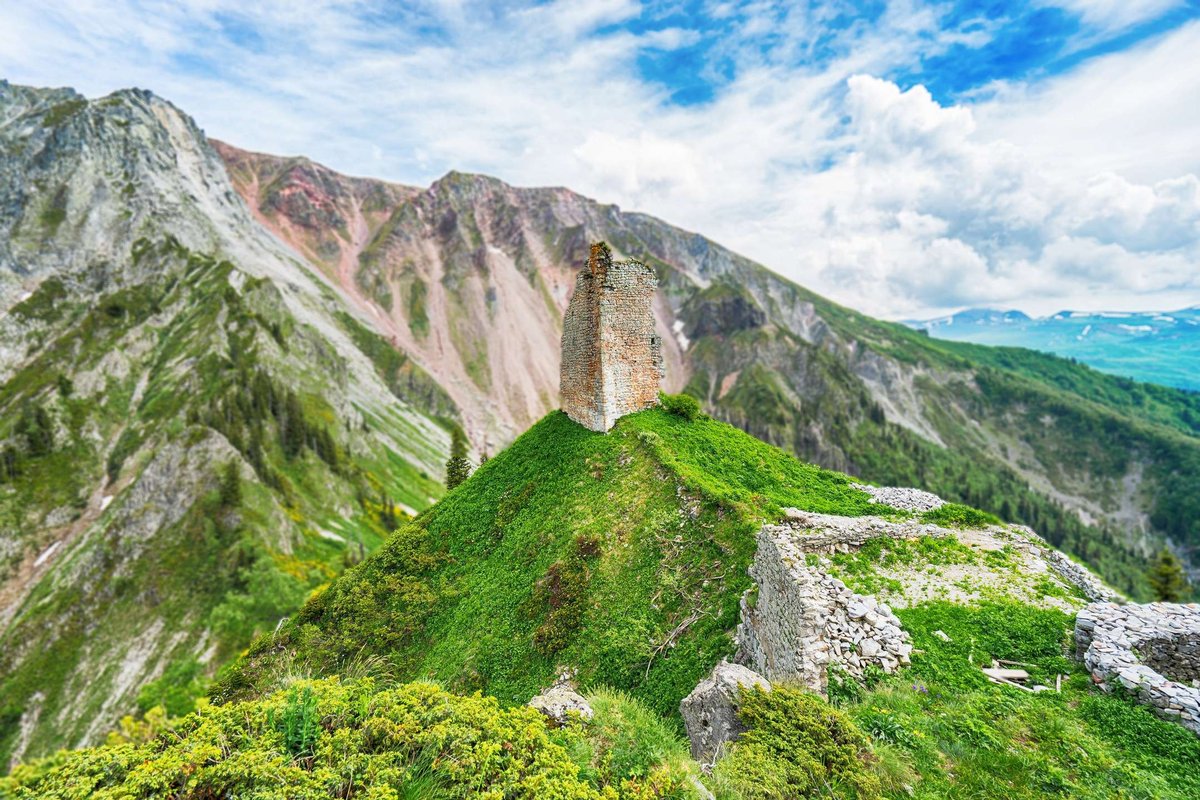
There were also various utility buildings. One such example is a bakery. However, only the foundation remains, discovered during excavations. Archaeological expeditions have been sent to the Khirkhati Fortress several times. The time layers have been studied in an attempt to accurately determine the construction period. However, despite the efforts of archaeologists, a precise date has never been established. During the very first expedition to the Khikhani Fortress, four wine storage vessels, or "kvevri," were discovered.
The next layer, dating back to a later period, yielded over forty vessels in which the defenders of the Khikhani Fortress stored water, preparing for a long siege and repelling enemy attacks. Of particular interest are the ancient towers of the legendary fortress—they consisted of several stories, as clearly evidenced by the remains of ceilings in some places.
There are several theories regarding who built this marvel of Georgian medieval architecture. One version claims that the Khikhani Fortress was built by members of the Abuseridze princely family. Moreover, Tbeli Abuseridze, who later died in battle with the Turks, began construction, and his wife, Magula Abuseridze, completed the outpost. Another version of the construction of the Khirkhati Fortress claims that it was built by Queen Tamar.
Myths and Legends of the Khikhani Fortress
There is no documentary evidence that underground tunnels existed within the fortress, but speculation and legends about their existence persist. They were built to avoid confrontation with the enemy if the fortress's surrender and defeat were inevitable.
Despite the fortress's location in an extremely remote area, it has been under the control of invaders. According to one legend, a certain queen did not have time to escape from the enemies who had captured the fortress and preferred death to shame, drinking poison, which she always had with her for such occasions.
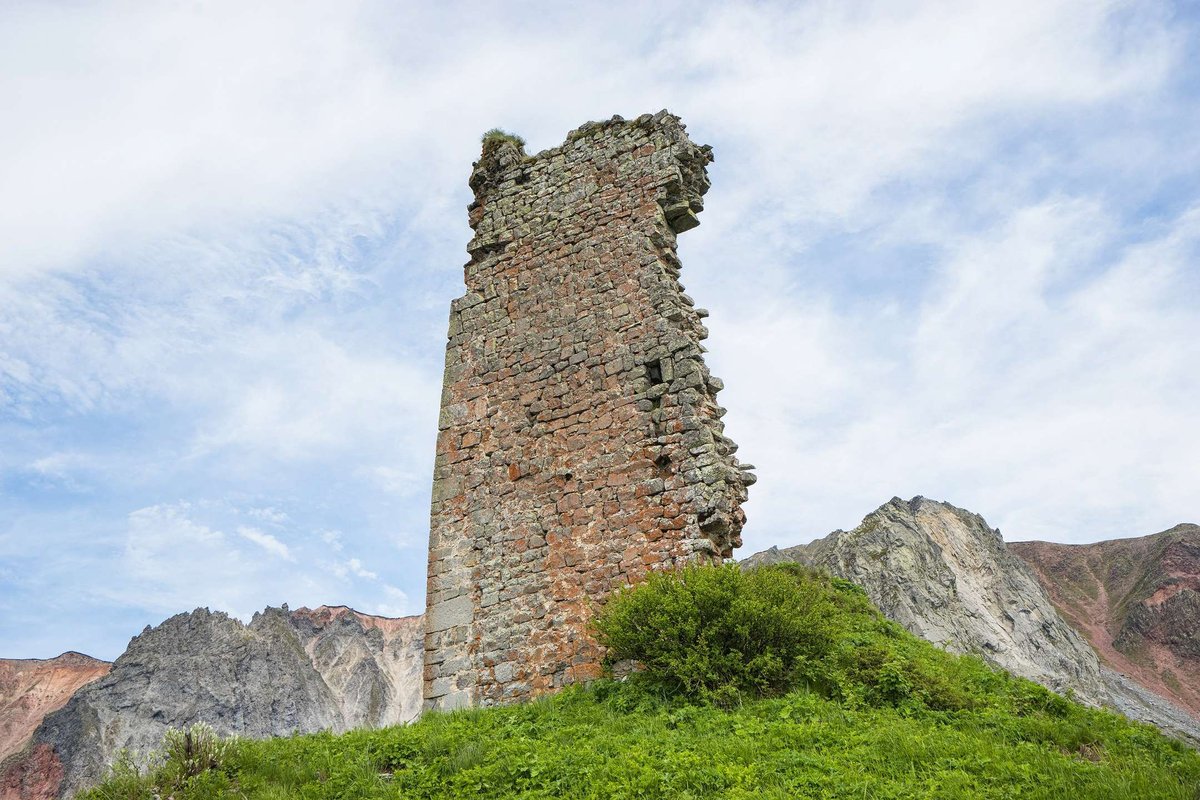
How to get to the Khikhani Fortress
It's worth setting aside at least a couple of days for a tour of the Khikhani Fortress. This way, you won't have to rush anywhere and will have the opportunity to enjoy the fantastic views from the fortress's summit.
The best time of year to visit is summer, ideally with dry and cool weather. From Batumi, drive to the village of Bakibako. From there, you can drive along a dirt road for about 4 km. However, this requires an SUV. Otherwise, you'll have to walk. The next section is about a kilometer long, with an elevation change of 1,800-2,200 meters. The last stretch is the most challenging.
You'll have to climb a fairly steep slope, requiring physical fitness. The trail itself runs along a wooded mountainside. The elevation change is 450 meters. Don't forget to bring your documents—the fortress is located almost right on the border. A camera is absolutely essential, otherwise you'll be forced to return again.

28 comments
Log in to leave a comment