




Gori Fortress in Kartli: History and Panoramic Views
The Italian missionary Cristofero de Castelli arrived in Georgia in 1628 and lived there for 26 years. He wrote invaluable information about the life and state of Georgia during this period. From these notes, we learn that most of the fortress that survives today was built in the 17th century, during the reign of King Rostom, the last representative of the Kartli Bagrationi dynasty.
In the center of Gori, at the mouth of the Liakhvi and Medjuda rivers, stands the Gori Fortress on a hill. From this vantage point, the entire city and its surroundings are clearly visible.
For centuries, the Gori Fortress was a vital strategic asset—capturing it meant the political subjugation of all of Kartli. Therefore, throughout its existence, even after 1801, when the Russian Empire abolished the Kingdom of Kartli-Kakheti, the fortress retained its significance.
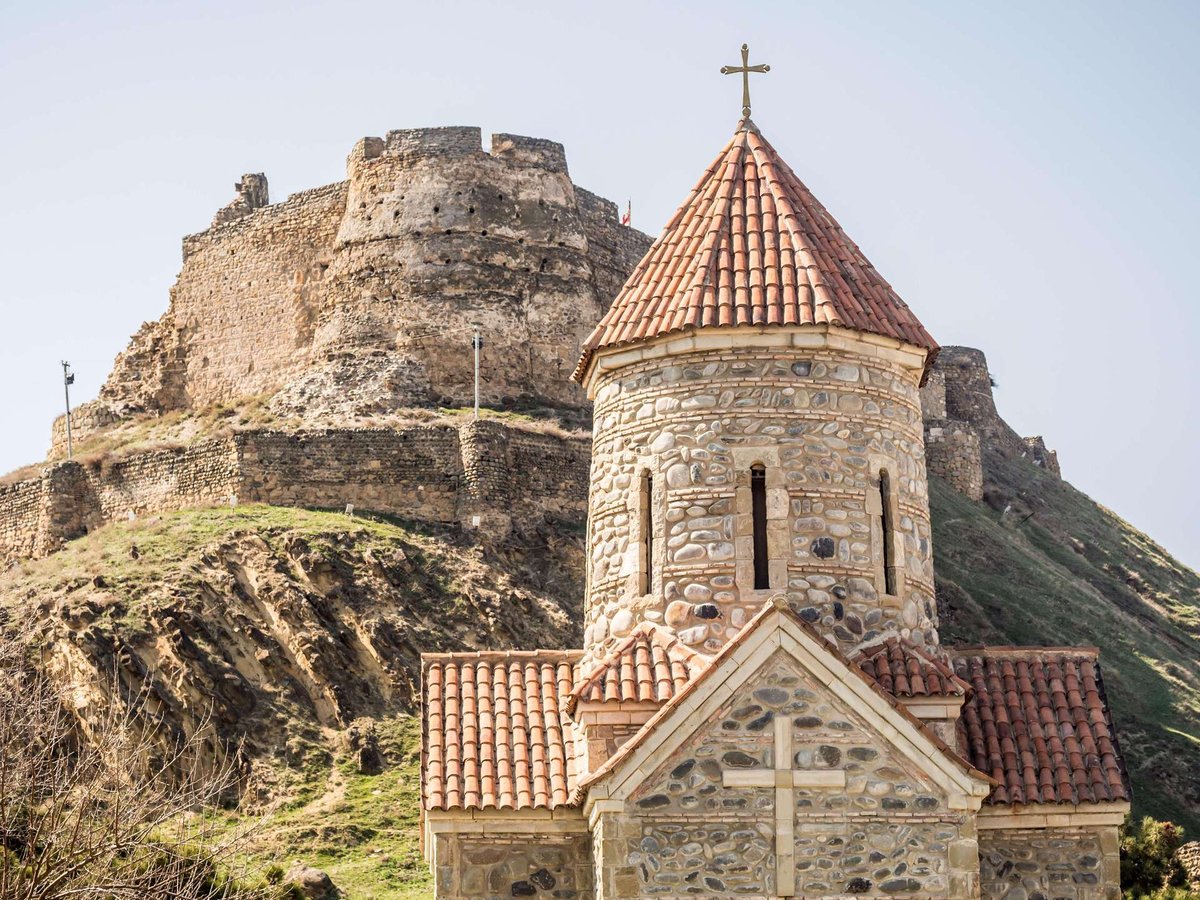
Historical sources first mention the fortress in the works of the chronicler Juansher, in connection with events of the 7th century. Late medieval sources report that the fortress was repeatedly restored and renovated. It acquired its current appearance as a result of extensive reconstruction work in 1774, during the reign of Erekle II.
The Gori Fortress consists of a citadel on the upper plateau (180 x 40 m) and the Tskhrakara Fortress on the eastern slope. It is constructed of cobblestones and rubble, sometimes replaced by dressed stone and brick. The fence is 2 meters thick and 10 meters high. The comparatively better-preserved Tskhrakara Fortress consists of seven unequal parts. They are separated from each other by parallel load-bearing walls and connected by passages. The fence extends along the perimeter of the slope, forming a semicircle at its end.
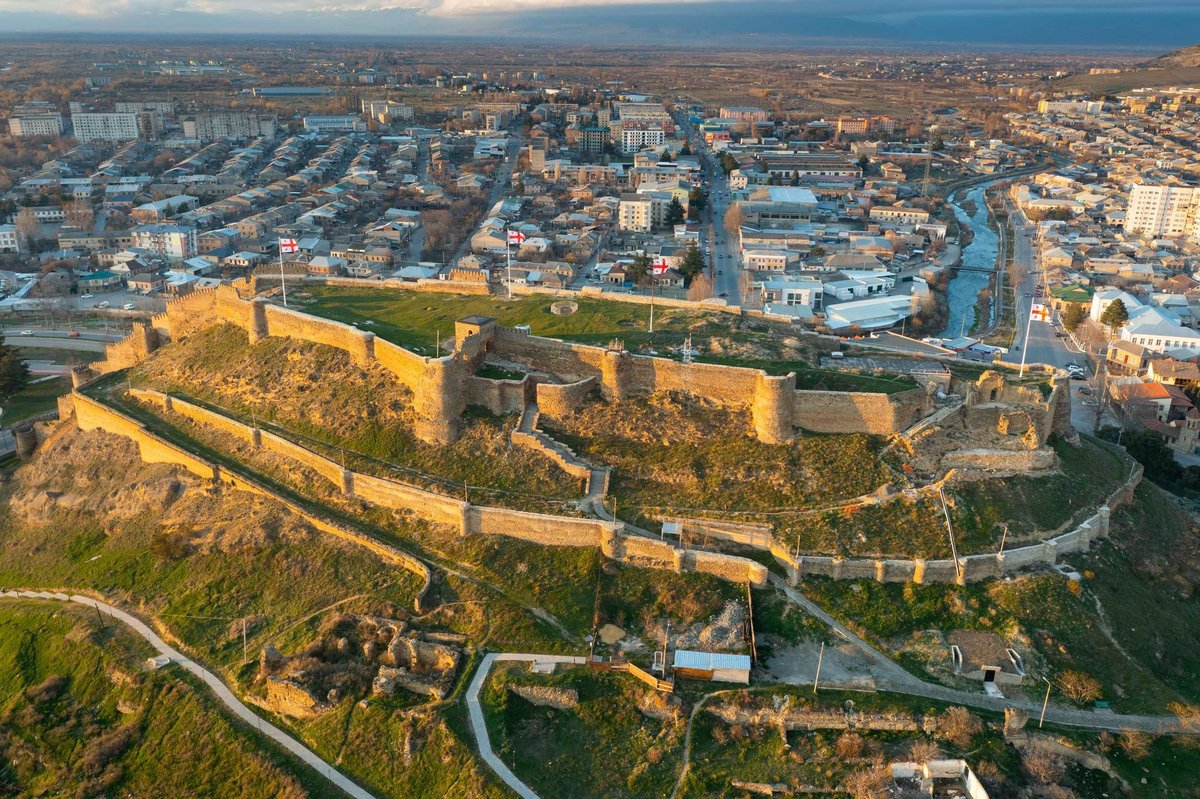
In February 1920, a powerful earthquake struck Gori, significantly damaging both the fortress itself and the small hall church (11th-12th centuries) located in the eastern part of the citadel. From 1951 to 1955, extensive restoration work was carried out on the Gori Fortress. This work helped restore the building's appearance and preserve its ancient history to this day. Overall, this desire of Georgians to preserve the memory of their ancestors has contributed to the fact that historical sites unparalleled anywhere in the world are scattered throughout the country.
Read more articles and facts about Georgia, its traditions, and unique features in Madloba's catalog. Right now, you can learn incredible legends about the origins of the first human descendants, as well as current news about the lives of Georgians.
Visit our website, read reviews and comments, and share your own impressions in the comments!
Read also

40 comments
Log in to leave a comment
Интересная, познавательная статья!