




Manavi Fortress in Kakheti: History, Architecture & Route
The Manavi Fortress Complex is a striking example of the architecture of the late feudal period in Kakheti, the same period that encompasses some of Georgia's most beautiful places, or at least some of its most beautiful.
Location: Kakheti Region, near the village of Manavi, Sagarejo Municipality.
Upon arrival and careful examination of the castle, it becomes apparent that construction took place in several stages. The first, and main, stage occurred in the 10th and 11th centuries, followed by a more recent phase in the 16th and 17th centuries. As you may have already guessed, the name is typical of most structures of that period. It derives its name from the small village of Manavi, near which the fortress is located.
Now let's turn to the architecture of the complex. From the outside, the fortress is divided into two main parts. The first is the citadel, located on a hill. The second is the so-called lower fortress. The upper part contains residential and utility rooms, protected by a defensive wall. The lower part is the primary defense, designed to delay the enemy and prevent them from reaching the core of the complex, which would allow for the capture of an advantageous battle position.
The castle's enclosure consists of four round towers, offering excellent views of the surrounding area. This was likely the main observation post, from which a signal would be sent in case of danger.
Like any fortress, Manavi had several entrances, the main one being in the northern part. It was through this entrance that kings and their retinues entered their domains. Unfortunately, not all components of the fortress have survived to this day. But even what remains is sufficient to understand how and why it was built at that time, and what the emphasis was.
The complex currently includes the following buildings:
- the inner bailey (the latest of all the buildings in the complex);
- the citadel (the upper defensive complex);
- the ruins of a former tower house; Small tower;
- 3 churches (the large Church of the Holy Mother of God, the small church, and the Church of St. George);
- Lower fortress (the first line of defense against the enemy);
- Reservoir.
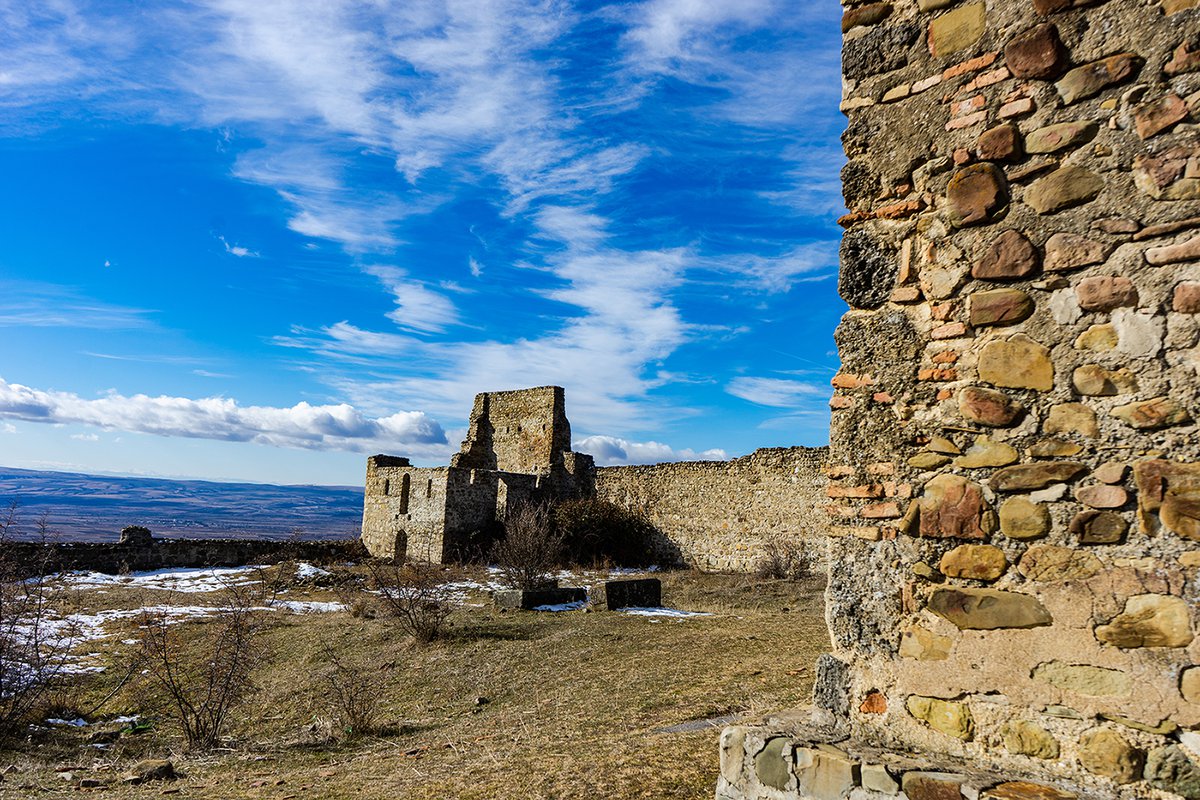
The history of the fortress is fascinating, albeit somewhat mysterious. This is due to the structure's strategic importance and the fact that very little information about it has survived.
Since its location on the mountain offered a commanding view in all directions for a radius of 10-15 kilometers, it was crucial to prevent an enemy from reaching this point; otherwise, retaking the fortress would have been virtually impossible.
From the few surviving records in a number of historical documents, we can learn that as early as 1724, the fortress was bustling with activity: the owners and their servants were busy with their affairs and hosting events. However, this is practically the only information available.
Manuscripts provide information only about the first two decades of the 18th century. For example, we know that in the early 18th century, King David II (Imam Kuli Khan) of Kakheti lived here and ruled the state from here.
Judging by the different construction styles, it can be assumed that the king felt the existing structures within the fortress were insufficient, so he began construction of a palace. The importance of the complex is also demonstrated by the fact that King Teimuraz II held his wedding here in 1712 and resided in the Manavi fortress for the following years.
For some time after this, the fortress's fate is not covered in any known chronicles. The next information dates back to 1772. It was written by Johann Antonovich Güldenstedt, a naturalist and traveler whose task was to describe the Caucasus within the Astrakhan province.
However, he was so inspired that he independently set out to explore Northern Caucasus and Georgia. Thanks to his scientific notes, we were able to supplement the existing information. Güldenstedt writes that the village of Manavi was almost completely destroyed, and the remaining population fled north, beyond a steep hill.
This is where the historical information about the fortress ends, and its fate can only be guessed at. Judging by what we see now, the former owners found a new location and completely forgot about this one. Without constant monitoring of its condition, the fortress simply began to collapse, and only about half of the complex has survived to this day.
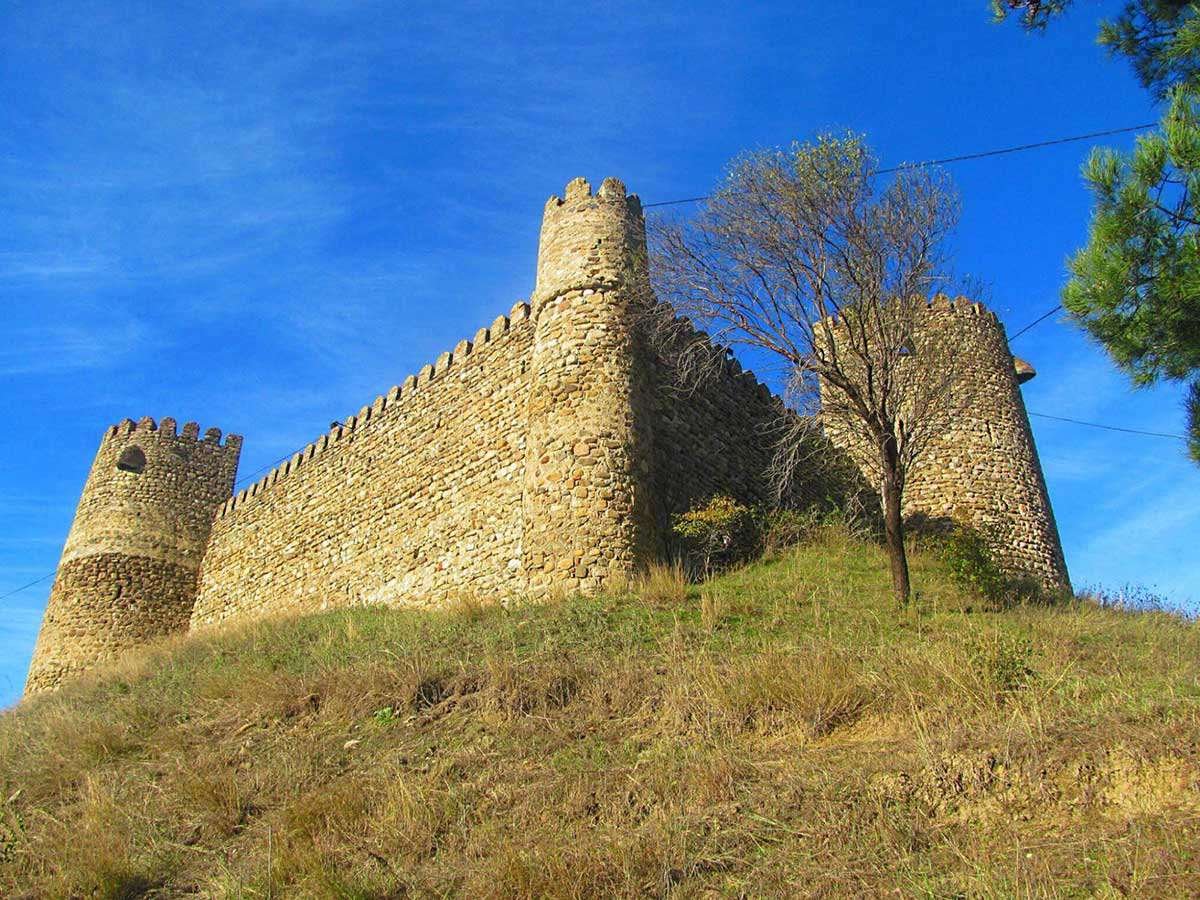
For travelers who appreciate dilapidated antiquity, unspoiled by hasty reconstruction, this place could be a true treasure. Incidentally, for those who enjoy artistic photography, Manavi is a godsend: a fusion of nature and architecture, modern life and bygone history.
The key is to truly understand the subject, allowing you to create a special magic through your lens.
Looking at the hill from a bird's eye view, it seems as if nature has slowly begun to reclaim this human creation. Grass and trees are already growing even on the watchtowers and passageways, on the defensive walls. It's possible that in a couple of centuries, without human intervention, nothing will remain of the fortress.
Therefore, if you're planning a visit, be sure to add the Manavi Fortress complex to your "things to see in Georgia" list, so you can leave your memories and photographs for future generations who may no longer be able to enjoy this beauty.

32 comments
Log in to leave a comment
Здесь определённо есть, что изучить, на что посмотреть.
Архитектура поистине впечатляет даже со слов статьи, представить не могу увидеть такое вживую!