




Batonistsikhe in Telavi: Palace of the Kakhetian Kings
"The Lord's Fortress," which translates as Batonis-Tsikhe, was built over 400 years ago. Initially, it served as Archil's court church, and a hundred years later, King Erekle transformed the fortress into a truly royal palace. It housed not only the ruler's private residences, but also a bathhouse, two churches, a tunnel, and, of course, a worthy fence with columns and watchtowers.
Erakli I (1720-1798) died in Batonis-Tsikhe, in the room in which he was born. He was a superb military leader. Almost all the battles he led as ruler of the country ended in victory for the Georgians. According to legend, his entire body was covered with wounds from numerous battles.
Although another legend holds that, thanks to his prowess and good equipment, he was never wounded. Erekle I is buried in Mtskheta, in the courtyard of the Svetitskhoveli Cathedral.
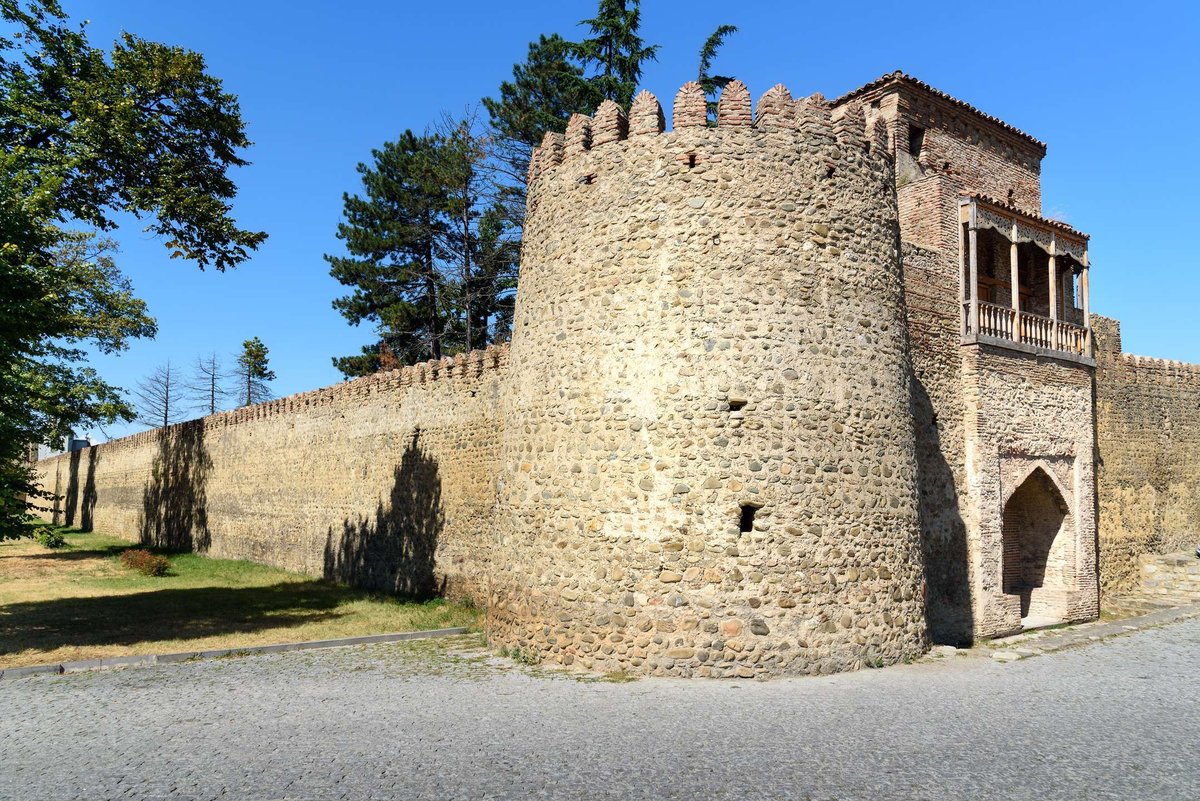
The city of Telavi is the administrative and economic center of the Kakheti region. It is located in the Alazani Lowland, northeast of the Gombori Pass.
In the city center, on an elevated site, stands a key monument of Georgian secular architecture from the late feudal period—the residence of the Kakhetian kings, Batonistsikhe.
The construction of the complex can be roughly divided into two stages: the construction of the royal palace was initially begun by King Archil II (second half of the 17th century), when he moved the royal residence from Gremi to Telavi. During this period, the Palace of the Kakhetian Kings, the eastern gate, and the bathhouse were built. In 1753, the second stage in the complex's history began. During the reign of Erekle I, a court church, a multi-pillar fence, and a western gate were added to the existing buildings.
The residence occupies an area of 3 hectares. It consists of two parts: the citadel (1 hectare) stands in the eastern part, and the fortified wall (1.5 hectares) in the western part. The citadel houses the royal palace, two churches, and a bathhouse. The influence of Iranian culture is evident in the palace's design and decorative elements, distinguishing it from other Georgian royal residences. The towers and walls are crowned with high dentils. The two-story wall has two rows of loopholes.
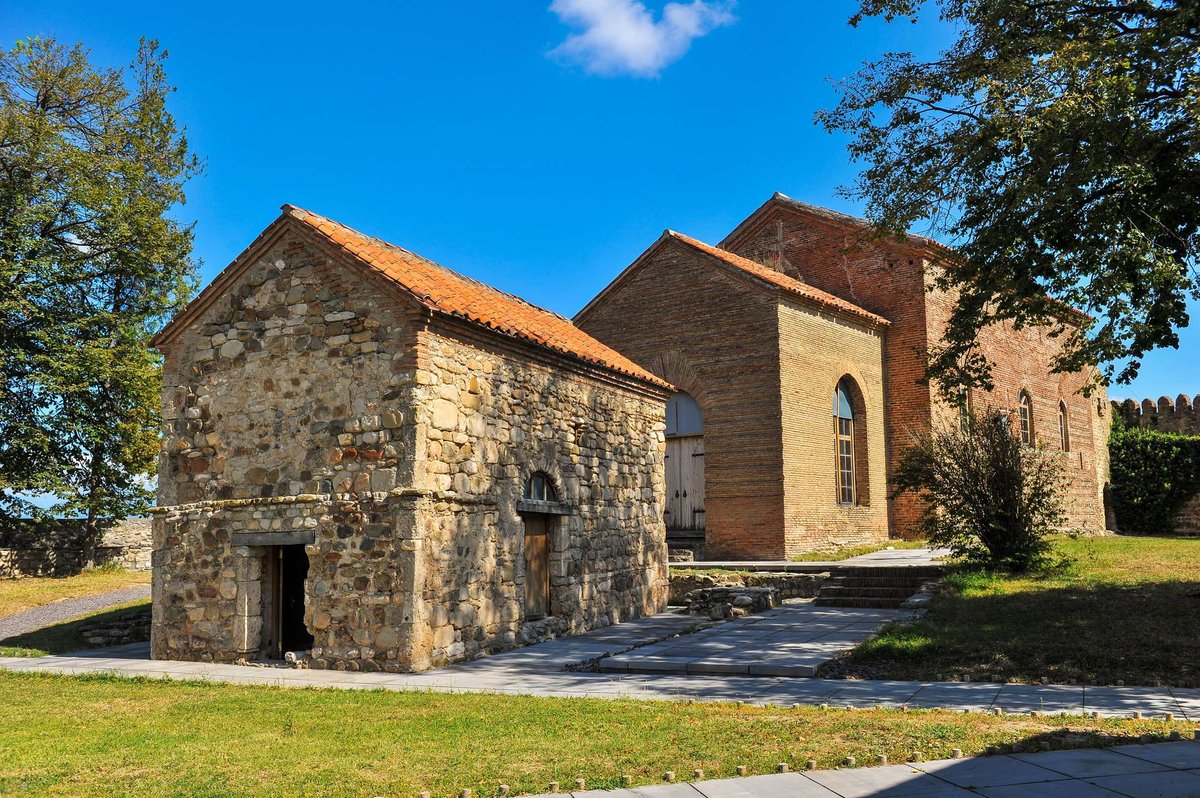
To the southeast of the citadel stands a large column (14 meters in diameter). Nowhere in Georgia is such a massive column found. It was used for artillery—until the 1880s, a huge cannon (7.5 meters long) stood on it. Since 1927, Batonistsikhe has housed a museum, which includes the palace of the Kakhetian kings, court churches, the ruins of a philosophical and theological school (founded by Heraclius I in the 1750s), the royal bathhouse, an underground tunnel through the palace grounds, and magnificent fences on the eastern and western sides.
In front of the museum stands a monument to King Heraclius II (sculptor: Merab Berdzenishvili). If you want to learn more about Georgia's rulers, its landmarks, and historically significant events, visit madloba.info and read the latest articles and notes from our experts. We share the most interesting and verified information with our readers.

36 comments
Log in to leave a comment
«Красивые сооружения в Грузии. Посетить дворец кахетинских царей».
Что можно сказать о статье.
✅ Положительный момент статьи: Один из наиболее интересных моментов статьи - это описание резиденции кахетинских царей, которая является важным памятником грузинской светской архитектуры. Резиденция занимает огромную площадь в центре города Телави и состоит из двух частей : цитадели и крепости-ограды. Внутри резиденции находятся царский дворец, две церкви, баня, тоннель и много других интересных объектов. Все здания отличаются высокой архитектурной стойкостью и декоративностью, а также великолепными оградами и башнями. Особенностью дворца является влияние иранской культуры в его конструкции и декоративных элементах. Также в статье описывается музей, который расположен на территории резиденции и включает в себя множество интересных экспонатов, таких как развалины философской и богословской школы, царская баня и многое другое.
✅ Отрицательный момент статьи: Отрицательным моментом статьи может быть отсутствие более подробной информации о значимости резиденции кахетинских царей в истории Грузии. Также статья не упоминает о том, какие меры принимаются для сохранения и реставрации этого важного исторического объекта.
Несмотря на положительные и отрицательные моменты статьи, я благодарю автора на каталоге Мадлоба за интересную и полезную статью!!
Строительство комплекса можно условно разделить на два этапа. Царский дворец, баню и часть ворот возвел царь Арчил II , перенеся сюда свою резиденцию. А в 1753 году Ираклия I достроил придворную церковь, оградау и ворота.
У цитадели стоит большая колонна диаметром 14 метров, в Грузии такой массивной колонны нигде нет, ё использовали для артиллерийского оружия.