




Ksani Eristavi Fortress House: History and Noble Interiors
One of the first Georgian football players, the heroic cadet Shalva Eristavi, grew up in the palace of the Ksani Eristavis. He, along with other Georgian cadets, died defending the First Georgian Republic in the unequal battle at Kojori Fortress in 1921, when Georgian students stubbornly resisted the numerous Red Army.
The Akhalgori Municipality is located between the municipalities of Dusheti, Kaspi, Gori, Java, and Kazbegi. Its high mountain landscape is traversed by the Ksani River, which originates from Lake Keli, located on the southern slope of the Magran-Dvaleti Caucasus. The river crosses the Mukhran Lowland and, 84 kilometers from its source, near the village of Ksani, joins Georgia's main river, the Kura.
Akhalgori is located in the central part of the valley along the middle reaches of the Ksani River. In the first half of the 17th century, several architectural complexes were built here, among which the Ksani Eristavi Fortress stands out. The fortress has survived to this day in the form it received during its reconstruction in the 19th century.
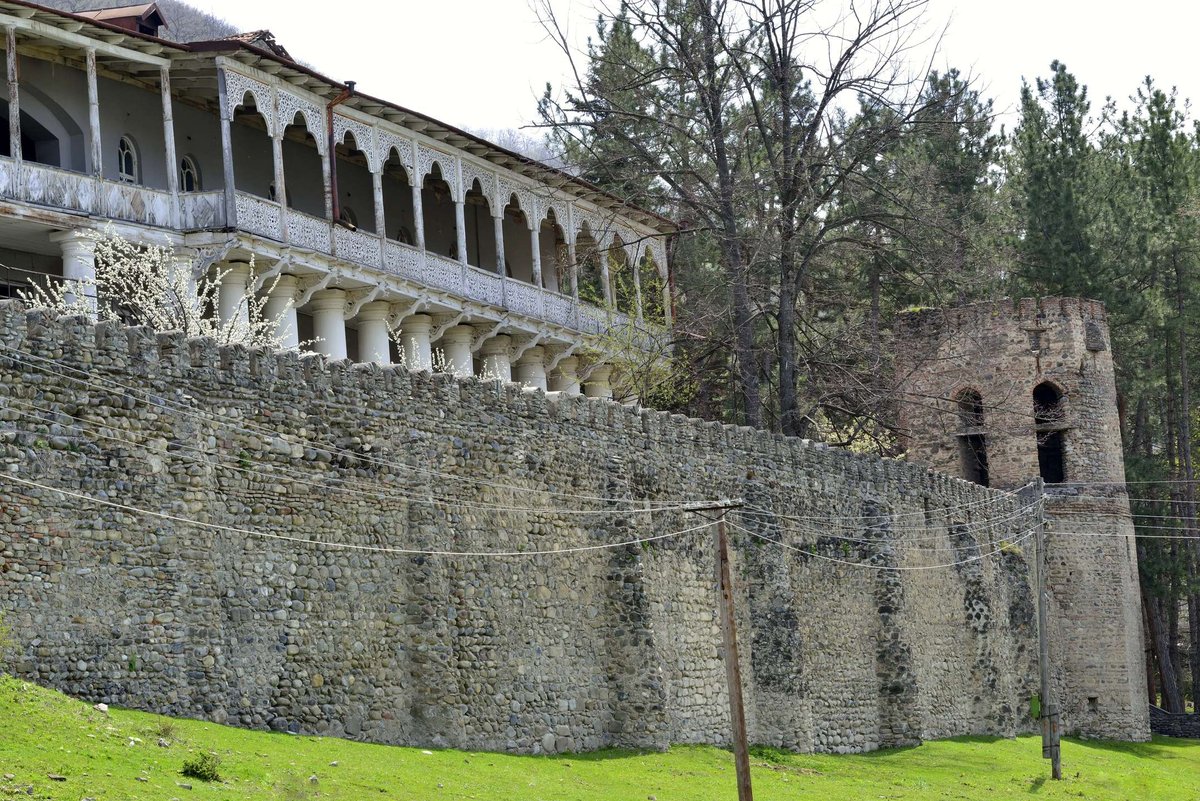
The Ksani Eristavis' House-Fortress stands on a mountainside. The terraced fortress is surrounded by a common fence 3 meters high. The palace building itself consists of three floors. The Eristavi family lived on the third floor. The floor is covered with parquet, and the ceiling is painted and decorated with decorative elements. The first and second floors of the palace were intended for servants and the manager.
Beyond the architectural complex are the ruins of outbuildings and a church. In the late 17th century, the German scholar and traveler, member of the St. Petersburg Academy of Sciences, Johann Güldenstedt, traveled through Georgia. During this journey, he stayed for a time (in early 1772) with the owner of the palace, Prince David Eristavi-Ksani. This was a period when Georgia was constantly being raided by the Nal tribes of the North Caucasus. He was forced to ask the prince to provide him with dozens of fighters to protect him, ensuring his safe passage. In his notes about Georgia, the traveler described not only the country's sights, but also the grave consequences of the raids of North Caucasian tribes.
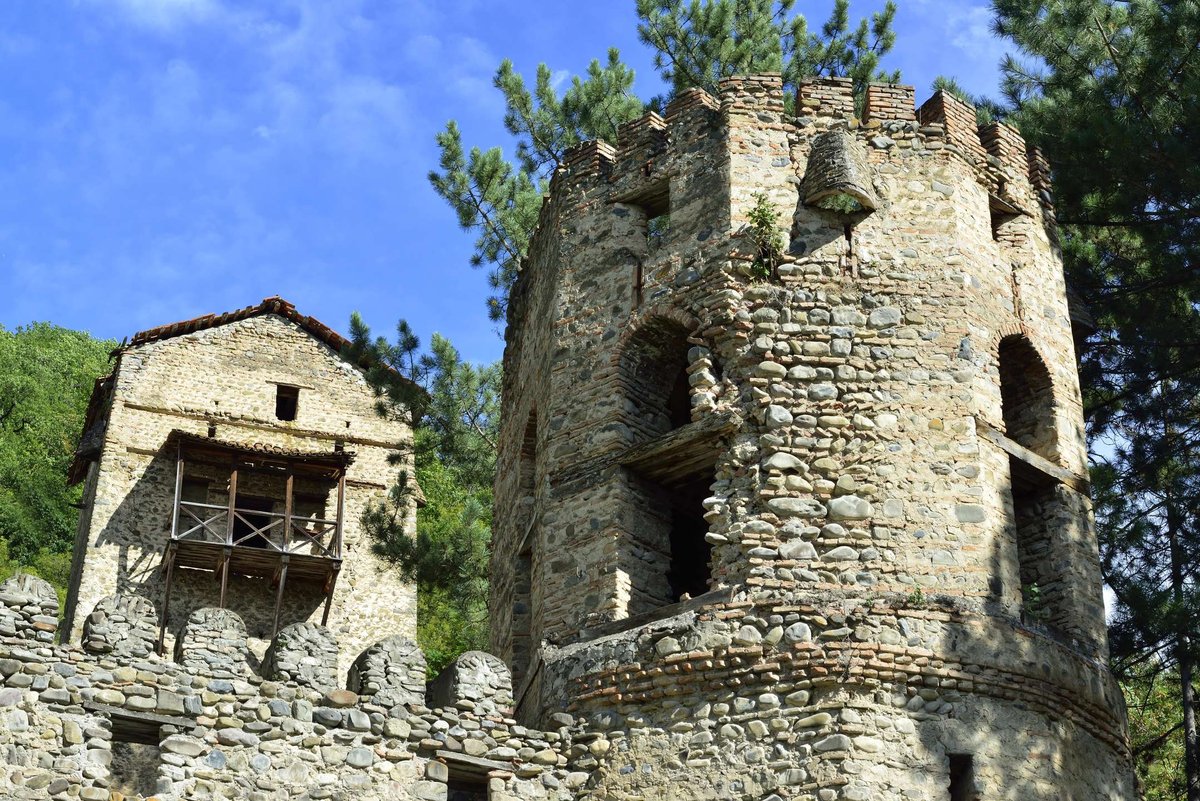
Today, the fortress houses a local history museum. Over 5,000 exhibits are displayed in several halls of the palace. A restaurant has been set up in the surviving stables, a few meters from the palace's central hall.
Tourists love strolling around the palace grounds, and the museum entrance is particularly striking – an ancient, heavy door alerts the staff to the presence of guests with a loud, drawn-out creaking sound. This ambiance immediately immerses visitors in the Middle Ages, even though the reconstruction of the 17th-19th centuries significantly altered the palace's appearance.
Read more fascinating reviews of life in Georgia, its sights, and interesting facts in the Madloba catalog – the best tourist guide!

40 comments
Log in to leave a comment