




Dmanisi Sioni: 6th–7th Century Cathedral — History, Frescoes
🌟 One of Georgia's most ancient and unique architectural wonders is the Dmanisi Sioni Monastery. How has the temple survived the centuries, and what secrets are hidden in its ancient murals? Find out in our guide!
📍 Tourist Guide: Dmanisi Sioni
What it is: An ancient church located in the village of Patara-Dmanisi in the Kvemo Kartli region of Georgia. This temple is an important religious and cultural landmark of the country, built in the 6th–7th centuries. The church is known for its unique architectural features and preserved frescoes, making it a valuable historical monument.
🌍 Address: Patara-Dmanisi village, 600 meters north of the settlement.
📅 Opening hours: The church is open to visitors 24/7.
💰 Entrance fee: Free.
🛣️ How to get there:
By car: You can reach it via Patara-Dmanisi village. For convenience, it is better to use a four-wheel-drive vehicle.
Public transport: From Tbilisi by minibus to Dmanisi.
⚠️ Tips:
- Be sure to bring water 💧, as there are no shops nearby.
- Comfortable shoes 👟 — the road can be difficult and slippery.
- Use Google Maps 📱 for accurate navigation, as there are no signs.
- There are no cafés on site, so bring light snacks 🍪.
- The best time to visit is spring and autumn 🌞, when the weather is mild and there are fewer tourists.
- Plan your visit in advance — the site may not be very popular, but the surroundings are beautiful and peaceful 🌳.
🔑 Useful information:
There are scenic natural routes around the church, so be sure to bring a camera 📸 and enjoy walking through these remarkable places.
🌟 Why read this article?
The Dmanisi Sioni, or Dmanisi Cathedral of the Mother of God, is a majestic monument of Georgian history and culture! ⛪ Situated in a picturesque area, the temple is shrouded in many mysteries and historical events worth exploring. 🔑 This article will be useful for all tourists interested in the history and religious monuments of Georgia, as well as those who want to learn how to make their trip more convenient and fulfilling.
❓What you will learn:
- How to get to the church 🚶♂️
- Key historical points associated with the church 🏛️
- Architectural features and the church's importance for Georgia ⛪
- What to see nearby 🏞️
- Where to eat and where to stay 🛏️
Read to the end to avoid missing important details of your trip!!!
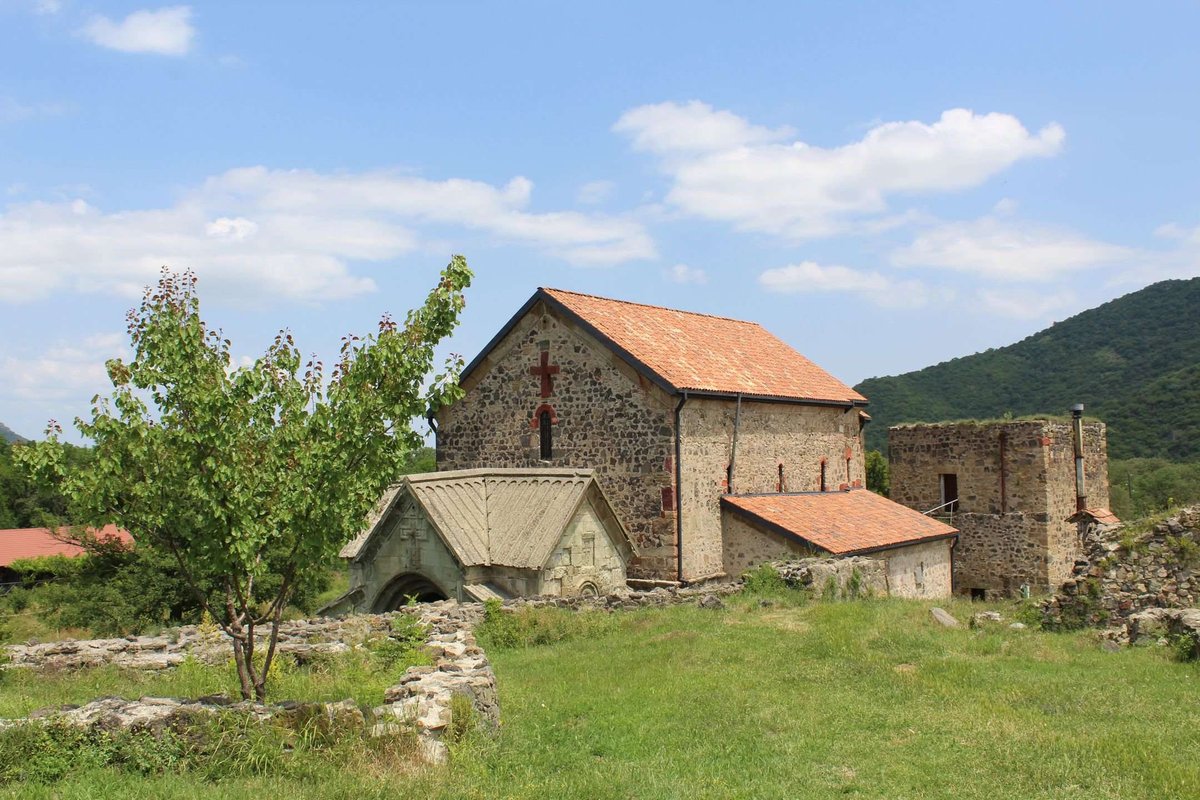
🏛️ History of the Dmanisi Sioni Church: A Relic of Antiquity and Important Cultural Heritage
The church in Dmanisi is one of five Sioni churches in Georgia, built in the 6th-7th centuries in honor of the Dormition of the Blessed Virgin Mary. The church is located on the site of the ancient settlement of Dmanisi, near the village of Patara-Dmanisi in Kvemo Kartli. This site is a major architectural landmark in Georgia, not only because of its age but also because of the surviving fragments of ancient murals.
The church was originally dated to the 6th-7th centuries by such renowned scholars as Giorgi Chubinashvili, Levan Muskhelishvili, and Vakhtang Beridze. However, later research by E. Arjevanidze placed the church in the 9th century. In any case, it remains an example of early Georgian architecture.
👑 The church's political significance cannot be overstated. It served as the cathedral of the Dmanisi Diocese until it was abolished around 1750, and then restored in 2003. King Vakhtang III (1298/1302-1308) is buried in the Dmanisi Sioni, but his tomb has not survived.
🏰 From the 16th to the 18th centuries, the church was also used as a family burial vault for the princes Baratashvili and Orbeliani. In the 17th century, Bishop Pavle of Dmanisi was buried in the portico. This site preserves the memory of many important figures, whose graves are located within and around the church.
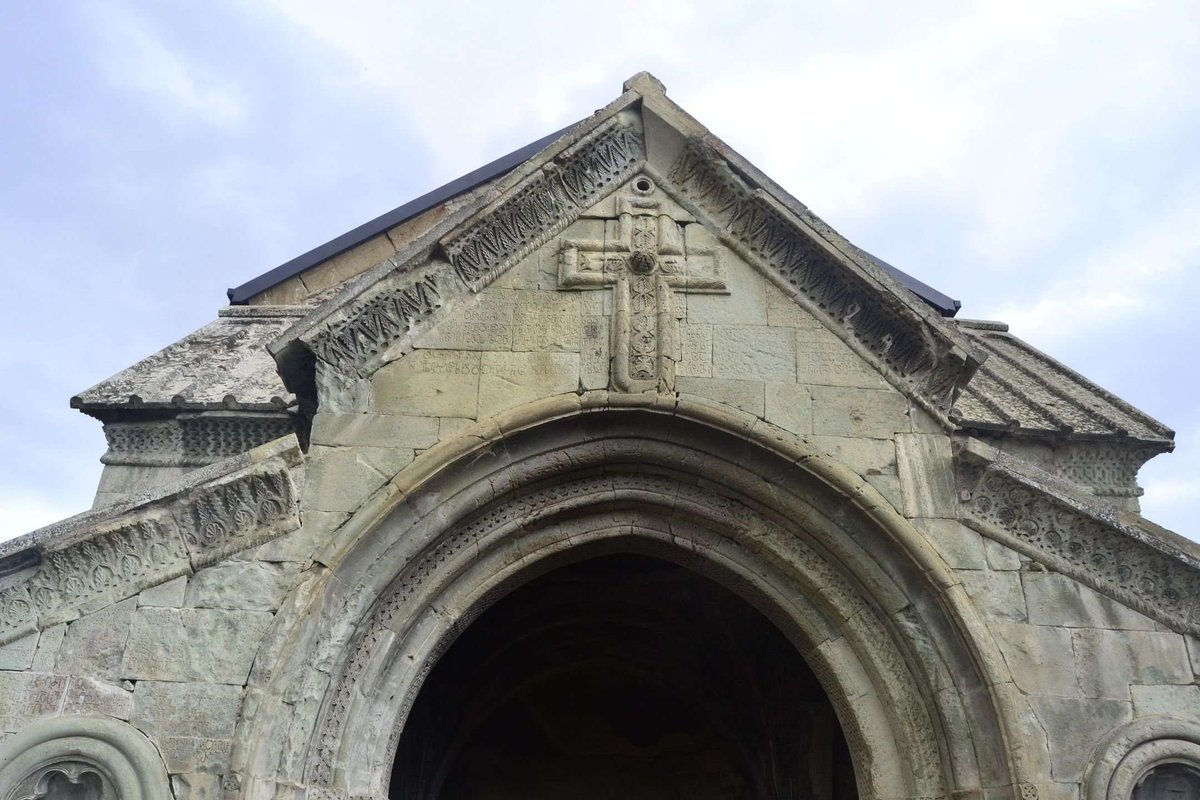
🏗️ Temple Architecture: Simple yet majestic design
The Dmanisi Sioni Church is a fine example of Georgian architecture. While modest on the outside, its interior conceals incredible architectural treasures.
The church features a hall structure with side aisles and a barrel vault, a rare and unique feature for Georgia during this period. The walls are constructed of local stone, and a portico adjoins the church on the southeast side. It was built in a later period, between 1213 and 1223.
Particular attention should be paid to the decoration—the reliefs, ornaments, and stone carvings, particularly in the portico. These elements are adorned with plant motifs, and an Armenian khachkar can be seen on the pediment of the portico, providing an important cultural trace of connections with neighboring peoples.
🔸Key architectural features:
- The temple is built of cobblestone and covered with a barrel vault.
- It has a semicircular apse and a simple façade.
- Annexations on both sides of the temple (north and south) were added in the late 9th - early 10th centuries.
🔑 In the 13th century, the temple was restored and decorated. A portico with carvings and decorative arches was added.
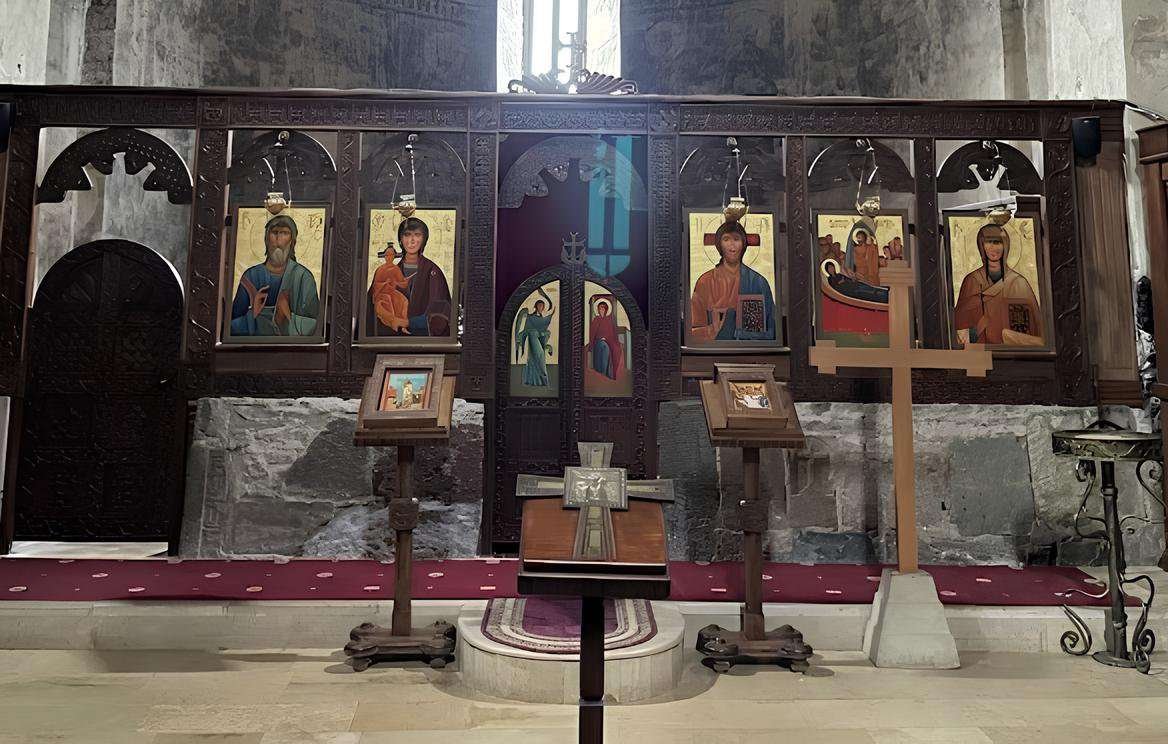
🎨 Paintings: Craftsmanship and Symbolism
The frescoes in the Dmanisi Sion date back to the reign of George IV Lasha (13th century). Inside the church, one can see images of apostles, saints, and scenes from the Last Judgment.
🔸Features of the frescoes:
- Images of prophets and saints on the northwest pilaster.
- A royal portrait, possibly of George IV Lasha.
- Frescoes in the altar apse: high quality and monumental.
Apparently, the paintings were executed by different artists, each of whom contributed their own exquisite style of painting, making them not only a historical but also an artistically valuable heritage.
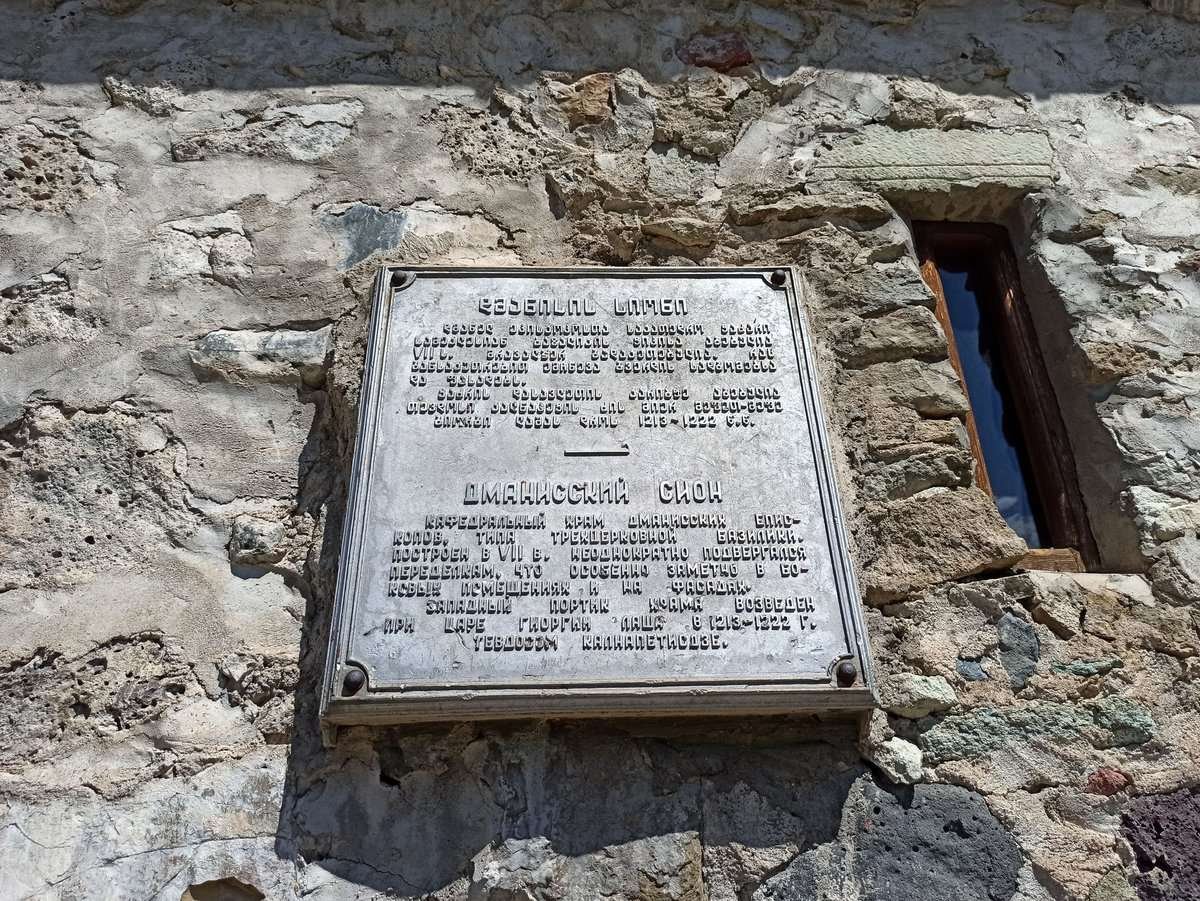
💬 Real reviews from tourists
"The Dmanisi Sion is a place where history comes alive. I felt like I was part of something great standing next to this temple. I highly recommend everyone to visit!" — Ivan, a tourist from Moscow
"The views from the temple are incredibly beautiful, and the place itself is simply steeped in antiquity. Walking along the surrounding paths left the warmest impressions." — Anastasia, a traveler from St. Petersburg
"This place is worth a visit. The architecture and atmosphere are very interesting. The history of the Dmanisi Sion is simply captivating." — Dmitry, a tourist from Yekaterinburg
🚶♂️How to get there?
🏞️ On foot: If you enjoy hiking, the walk from Patara-Dmanisi village to the temple takes about 30 minutes along a scenic forest trail. Climb the hill, which offers incredible views of the surrounding rivers and natural landscapes.
🚗 By car: For those traveling by car, the route is a little easier. You can reach Patara-Dmanisi village by paved road, then follow the signs. However, it's worth noting that the road to the temple itself is unpaved, so a four-wheel drive vehicle is recommended.
🚍 Public transportation: From Tbilisi, you can take a minibus to Patara-Dmanisi village (costs about 6 GEL). Then, follow the marked trail to the temple.
🍴 Where to eat nearby?
There are no large restaurants in Patara-Dmanisi or the surrounding villages, but don't worry! Right in Sighnaghi and Dedoplistskaro, you'll find plenty of places to enjoy local cuisine: 🍖 meat dishes, aromatic khachapuri, and delicious Georgian soups. 🌶
📍 Sighnaghi is the perfect place to sample traditional Georgian dishes. For the best mountain views, choose establishments with panoramic terraces. 🍽
💡 However, if you're looking for a little more comfort and variety, Tbilisi's restaurants are your best bet! Although it's 90 km from Dmanisi, returning to the capital after visiting the temple guarantees a relaxing stay and unlimited opportunities for culinary pleasure.
🏨 Where to spend the night?
In Sighnaghi and Dedoplistskaro, comfortable guesthouses and hotels await you, perfect for both short stays and a relaxing getaway after a busy church tour.
🛏 For the most comfortable stay, it's best to stay in hotels in Tbilisi or Dmanisi.
Both locations have excellent restaurants and cafes serving Georgian cuisine. After exploring the temple, you can enjoy the cozy atmosphere and relax in one of the local hotels or guesthouses.
🌄 What to see nearby



💡 Tips from the Madloba.info team to make your trip not only interesting but also safe!
- Cellular Service and Wi-Fi 📱: In remote areas, such as Dmanisi Sioni, cellular service and internet can be unstable. It is recommended to download offline maps and routes in advance to avoid navigation issues.
- Cash 💵: ATMs or currency exchange offices may not be available in the villages near the temple or within the temple grounds. Be sure to bring cash for unexpected expenses.
- Comfortable Footwear 👟: The roads and paths leading to the temple can be challenging and uneven, so comfortable, waterproof, and non-slip shoes are essential for comfortable travel.
- Water and Light Snacks 💧: There are no shops or cafes in the vicinity of the temple, so be sure to bring water and light snacks to keep you energized during the excursion.
- Headwear 🧢: Depending on the time of year, the sun in Georgia can be very strong. Be sure to bring a hat to avoid overheating and sunburn.
- Basic First Aid Kit 🩹: Don't forget to pack a small first aid kit with basic supplies: painkillers, antiseptics, bandages, and insect repellent.
- Emergencies 🚑: In case of emergency in Georgia, call 112 (the national emergency number). Make sure you have your exact location coordinates to help the emergency services find you faster.
- Ask locals 🗣️: Locals can always help with directions and navigation. However, keep in mind that in remote places, such as a temple, people may not always be available. Bring a backup source of route information (such as offline maps).
- Dress appropriately 🧥: Depending on the time of year, the weather can change dramatically. In summer, wear light clothing and sun protection, and in winter, wear warm, windproof clothing. Make sure you're properly prepared for the weather conditions.
💖 Enjoy your journey through history!
Dmanisi Sioni is more than just architecture; it's living history, steeped in the spirit of the past. Every stone here holds the secrets of antiquity, and every step takes us back to Georgia's unforgettable past.
Don't forget to save this article to refer back to when planning your trip to Georgia! 🗺️
📢 Share your opinion!
🗨️ Now we give you the floor! Share your impressions of the temple, ask questions, tell us about your travels in Georgia—we will be sure to read and respond to every comment! ❤️
❓FAQ
🚗 The temple is located in the village of Patara-Dmanisi and can be reached via Tbilisi by car or by minibus to Dmanisi. The village is 600 meters from the temple. Those who decide to walk will have to walk several kilometers through mountainous terrain.
🌞 The best time to visit is spring and fall, when temperatures are mild and the scenery is especially picturesque. Summer months are also suitable, but be sure to wear sun protection.
🍽️ There are no cafes or restaurants near the temple, but in the nearby towns of Dmanisi and Sighnaghi you will find places to relax with local cuisine.
📸 Yes, you can take photos in the temple. But please be mindful and respect other religious practices, especially in sacred places.
🎤 Although the temple is accessible for independent visits, a guide can provide valuable insights into its history and architecture. If you want to learn more about the temple, we recommend hiring a guide.

23 comments
Log in to leave a comment