


Emergency in Georgia: Police, Ambulance, What to Do
Did you get a toothache, lost your passport, broke the lock at the hotel, fell on the ski slope or had an accident?.. Or maybe you've run into scammers or you can't reach a doctor?
👉 This article contains clear instructions on where to call, where to go, and how to act in an emergency.
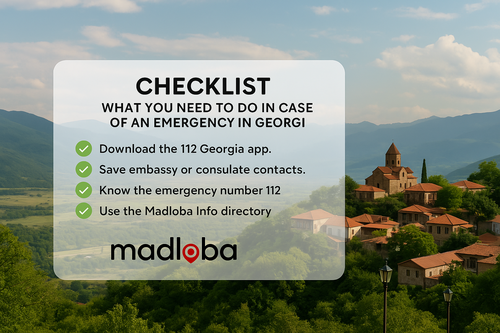
Checklist: what to do in emergency situations in Georgia?
📞 Unified emergency number — 112
Works throughout Georgia, 24/7. You can call from any mobile phone, even without a SIM card. The operator will respond in Georgian, Russian, or English.
📱 “112 Georgia” app
Allows you to quickly call for help with your location automatically shared.
🟢 Available in
🏛 Contacts of embassies and consulates
Check the phone numbers and addresses of your country’s embassy in advance. In case of lost documents or detention — contact the consular section.
📌 Stay updated with our catalog — we strive to collect all the important and useful information for you!
| Country | Address | Phone | Website | |
|---|---|---|---|---|
| Armenia | 4 Tetelashvili St., 0102 Tbilisi | +995 32 295 17 23, +995 32 295 94 43 | www.georgia.mfa.am | [email protected] |
| Austria | 31 Griboedov St., 0108 Tbilisi | +995 32 243 44 00, Fax: +995 32 225 36 84 | ||
| Azerbaijan | 4 Gorgasali St., Tbilisi | +995 32 224 22 20, Fax: +995 32 224 22 33 | [email protected] | |
| Vatican | Nutsubidze Plateau, 40 Zhghenti St., Tbilisi | +995 32 253 76 01/04 | [email protected] | |
| Brazil | 6/2 Chanturia St., 0108 Tbilisi | +995 32 293 24 19, Fax: +995 32 293 24 16 | [email protected] | |
| Bulgaria | 15 Gorgasali St., 0105 Tbilisi | +995 32 2910194/95 | www.mfa.bg/embassies/georgia | [email protected] |
| United Kingdom | 51 Krtsanisi St., 0114 Tbilisi | +995 32 227 47 47 | [email protected] | |
| Hungary | 83 Lvov St., 0160 Tbilisi | +995 32 239 90 08 | [email protected] | |
| Germany | 20 Telavi St., Tbilisi | +995 32 244 73 00 | www.tiflis.diplo.de | [email protected] |
| Greece | 40 Razmadze St., 0179 Tbilisi | +995 32 291 49 70/75 | www.mfa.gr/georgia | [email protected] |
🧭 In this article, you will find answers to the following questions:
📞 Who to call and where to seek help
🏥 What to do if you are injured or fall ill
🦷 What to do if you have a toothache
🌍 Flood, earthquake, or strong wind — how to act
🏨 Problems at a hotel or with rental housing
🍽 Conflict in a restaurant, store, or taxi
💳 Theft of money or loss of a card
📄 Loss of passport and other documents
⚖️ If you are stopped by the police or have legal issues
🚗 What to do in case of a road accident in Georgia
🕵️ If you encounter scammers — how to protect yourself
➕ Also:
🧭 Final tips
❓ Frequently Asked Questions (FAQ)
📞 Who to call and where to seek help
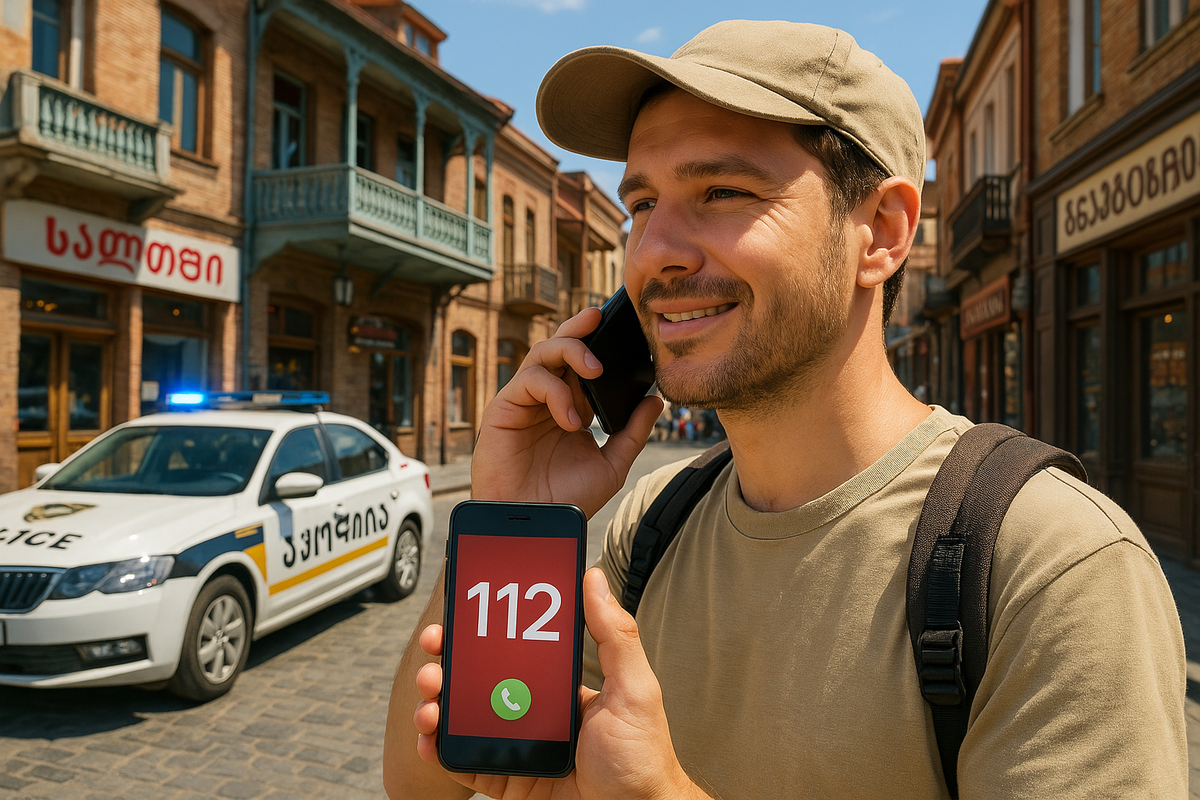
If you find yourself in an emergency situation in Georgia — whether you’ve fallen ill, been injured, witnessed a road accident, or feel threatened — call 112 first. This is the unified number for all emergency services: police, ambulance, and fire brigade.
📱 You can call from any phone, even without a SIM card or with zero balance.
Operators speak Georgian, Russian, and English — you will be able to communicate and receive assistance.
Useful to know:
🔹 The “112 Georgia” app — an official application that automatically sends your location to the operator. It’s very helpful if you don’t know your exact location.
➡️ Available for free in the App Store and Google Play.
🔹 If the situation does not require urgent intervention (for example, you lost an item or need legal advice) — look for the tourist police. In Tbilisi, Batumi, Kutaisi, and other major cities, patrols are on duty and ready to assist travelers.
💡Save the 112 number and download the app in advance — this will save valuable time at a critical moment.
🏥 If you are injured or sick
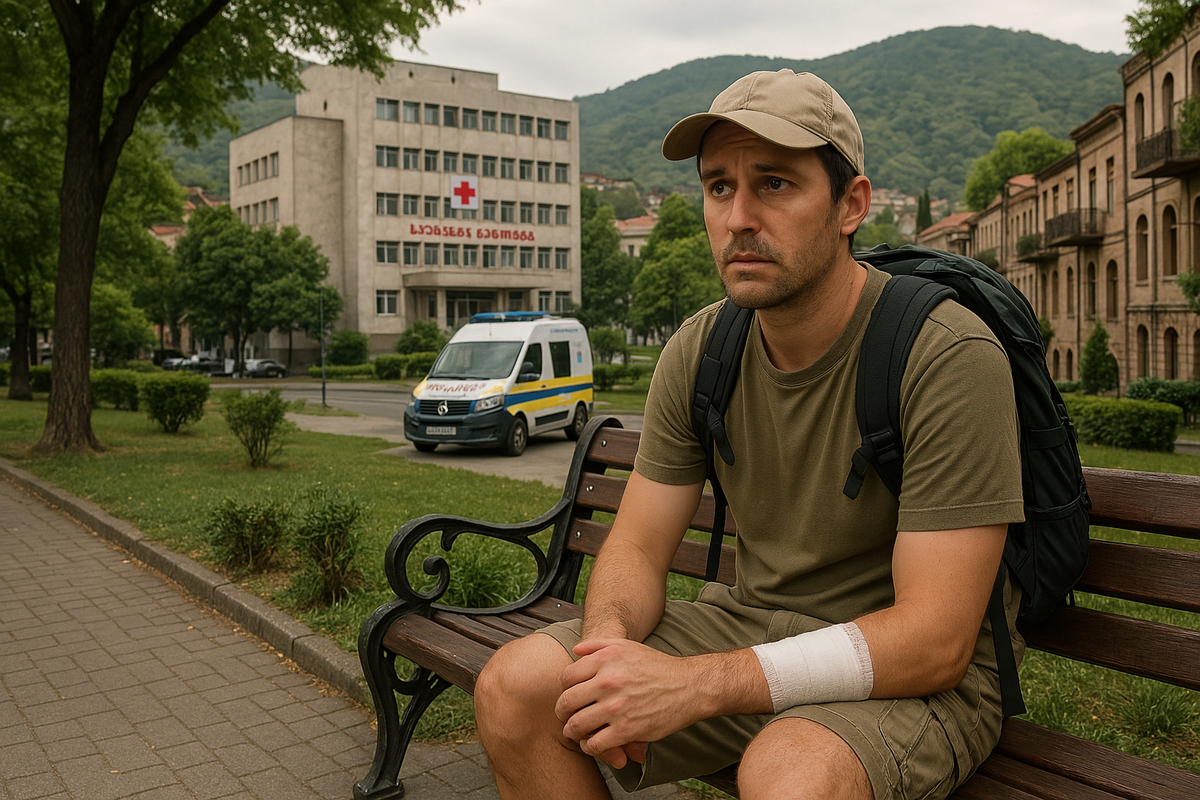
A tourist can fall ill on any trip — whether it’s a cold, food poisoning, an allergic reaction, or an accidental injury. The key is not to panic and to know where to go.
What to do first:
🔹 In case of serious injuries or acute pain, immediately call 112 — an ambulance will arrive.
If you are in the mountains, on a highway, or outside the city — the operator will dispatch the nearest mobile team.
🔹 If the case is not critical (for example, fever, stomach upset, or a bruise), you can go to the nearest private clinic or medical center. In cities, especially in Tbilisi, Batumi, and Kutaisi, there are many clinics with English-speaking doctors.
🔹 Tourists are also accepted in public clinics, but there may be queues and a lack of English-speaking staff.
💊 Pharmacies
Pharmacies in Georgia are everywhere.
Many of them operate 24/7 (look for the “24/7” sign), and in larger pharmacies, staff often speak Russian or English.
🟢 Important: some medications are available only by prescription. It is better to have a basic first-aid kit and a photo/scan of your prescription in English or Russian.
💡If you have travel insurance, find out in advance which clinics it cooperates with. This will help you avoid overpaying and get help without unnecessary bureaucracy.
🦷 What to do if you have a toothache
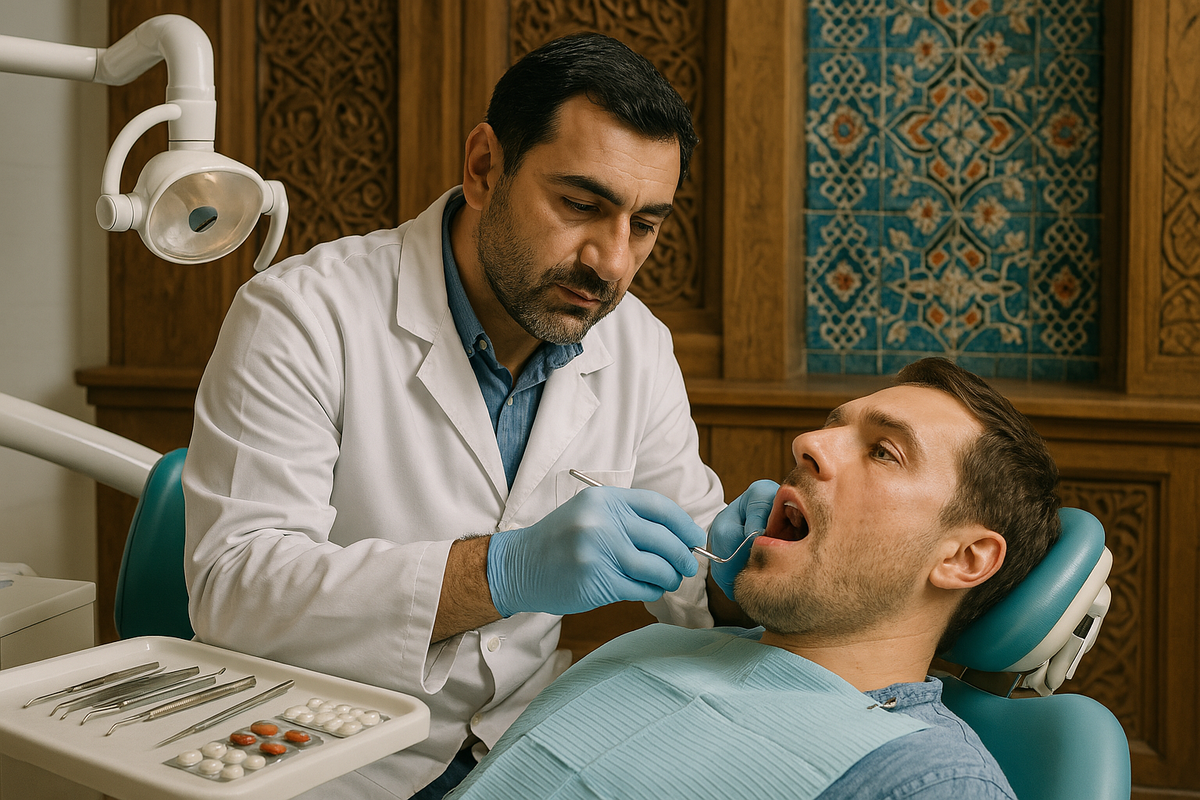
Toothache during a trip — quite an unpleasant “surprise.” But don’t worry: in Georgia, it’s easy to find a private dental clinic, even on weekends or holidays.
Where to go:
🔹 In major cities (Tbilisi, Batumi, Kutaisi), there are dozens of modern clinics, and many of them accept patients without prior appointments — especially in emergency cases.
🔹 Prices for dental services are lower than in most European countries. However, always ask about the cost before treatment to avoid misunderstandings.
🔹 If you have travel insurance, check whether it covers dental care — most often, it only applies in cases of acute pain or injury.
Useful tips:
💡Use Google Maps or Maps.me — you can find dentistry with reviews.
💡 In an emergency, you can call 112 and find out which clinic is on duty nearby.
💡If a tooth starts to hurt in a small town or in the mountains, it is better to immediately move to the nearest large settlement, where there will definitely be a dentist.
🌍 Flood, earthquake or strong wind — how to act
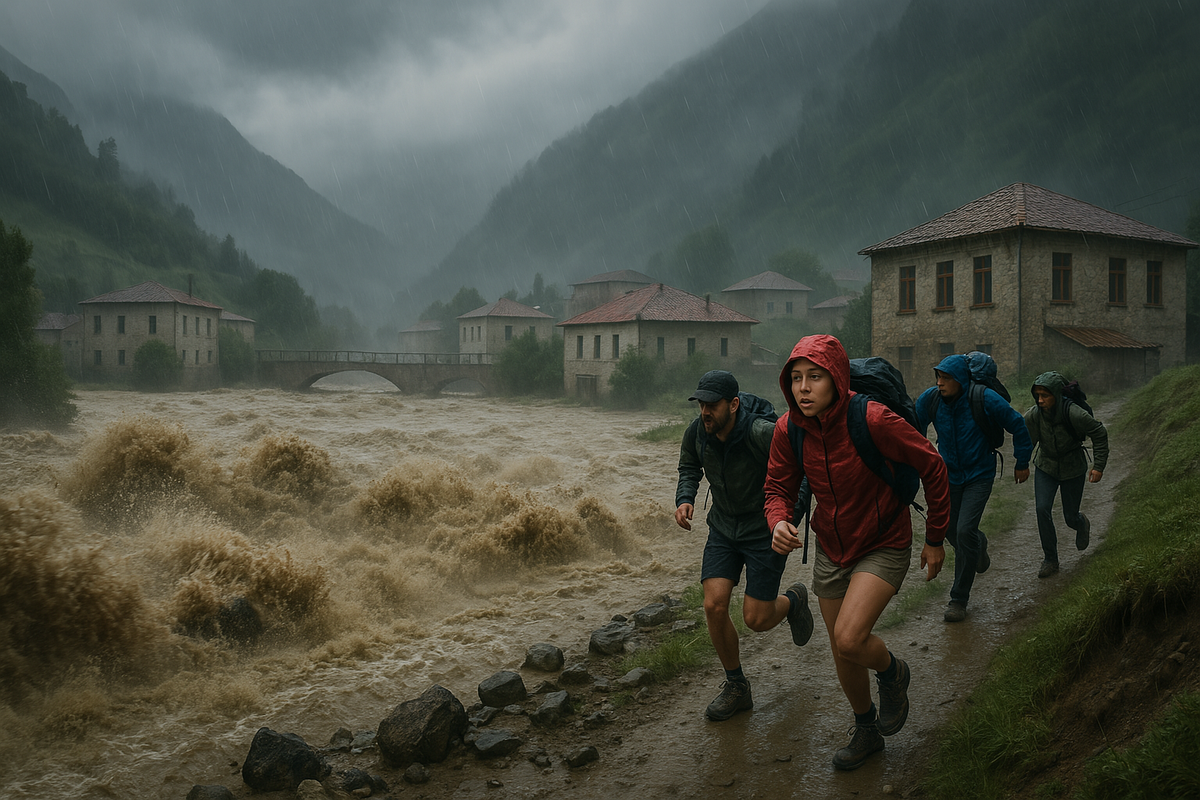
Georgia is a country of mountains and rivers, and although natural disasters are not frequent, it’s important to be prepared for them, especially if you are traveling in the regions.
🌊 Flood
Floods most often occur during the spring–summer period, especially in mountainous areas and near full-flowing rivers (for example, in Svaneti or Adjara).
🔹 If you are in a danger zone:
Move to higher ground
Do not attempt to cross water on foot and do not approach the riverbank
Do not get behind the wheel — even “shallow” water can be dangerous
🔹 Follow alerts from emergency services or local authorities. In large cities and tourist areas, such messages are often duplicated in English.
🌍 Earthquake
Georgia is located in a seismically active zone, but strong tremors are rare. However, it is important to know how to act:
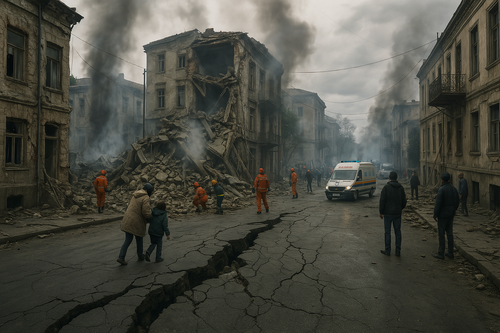
🔹 During an earthquake:
Do not run out of the building if you are above the first floor
Stand in a doorway, under a table, or near a load-bearing wall
Stay away from windows and glass surfaces
🔹 After the tremors:
Calmly leave the building
Do not use the elevator
Check for gas and electricity — shut them off if necessary
💨 Strong wind
Especially common in coastal areas (Batumi, Kobuleti) and high mountainous regions.
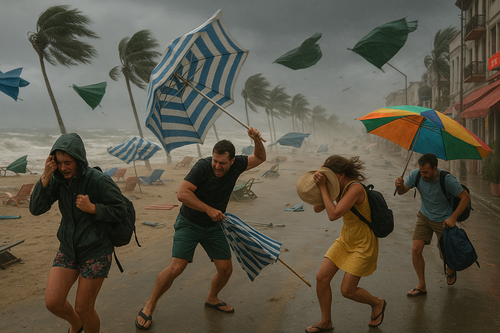
🔹 What to do:
- Avoid staying under old trees, balconies, and billboards
- Do not park your car under unstable structures
- Close windows and doors indoors
💡 If a natural phenomenon catches you on the road or on the route, look for the nearest shelter and do not try to “wait out in a tent” or a car on the side of the road. It's better to return to civilization.
🏨 Problems at the hotel or with the rental of housing
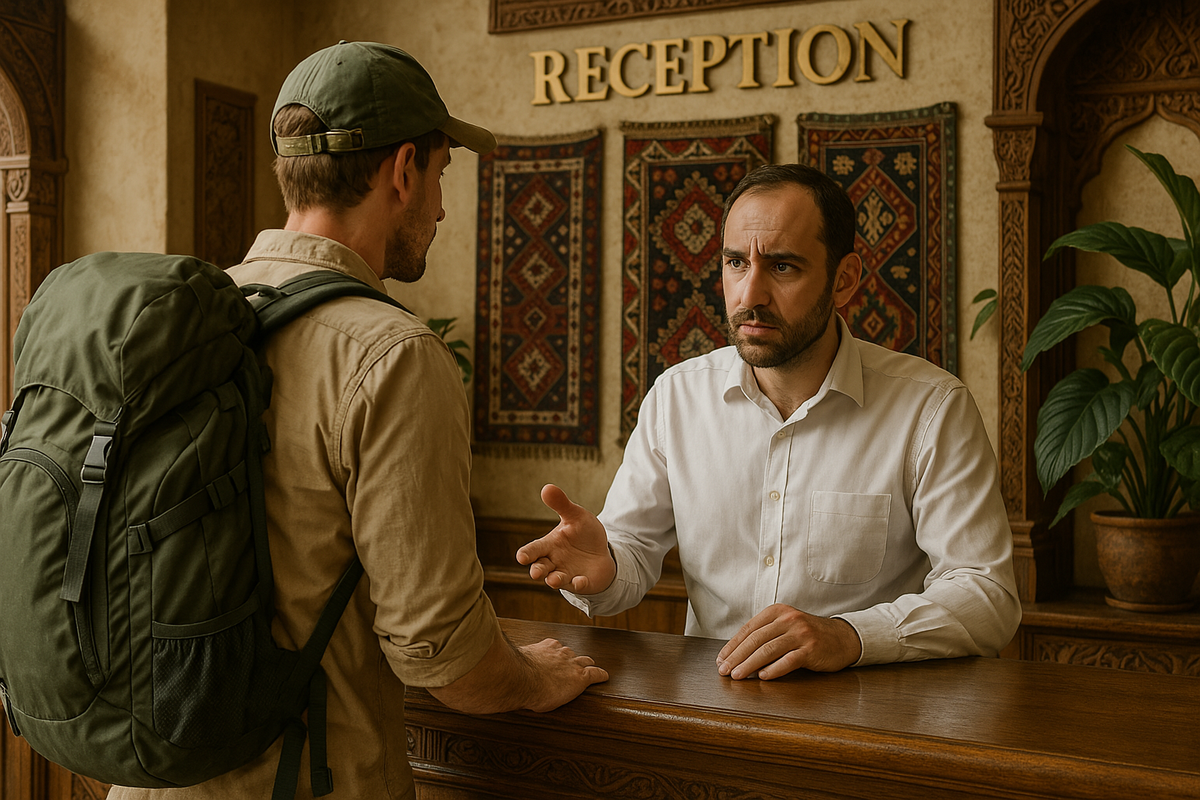
Sometimes a vacation can be spoiled by everyday inconveniences: a non-working shower, a broken air conditioner, an unfriendly host, or unexpected “extra charges.” The main thing is to stay calm and act wisely.
If you are staying at a hotel:
🔹 Report the problem to the reception. Politely but clearly describe what is not working: “the air conditioner doesn’t turn on,” “there is no hot water in the room,” “the door is broken.”
🔹 Demand a solution or compensation. If the issue is not resolved — suggest moving to another room or ask for a discount. Do this confidently, but calmly.
🔹 Don’t be afraid to contact the manager. Most hotels have senior staff who handle conflict situations.
If you rented an apartment via Airbnb or directly:
🔹 Contact the host immediately. Describe the situation with photos or videos — this is especially important if you want to receive compensation.
🔹 Reach out to the platform’s support service (for example, Airbnb). Cases where the accommodation does not match the description are resolved through official channels.
🔹 Document everything. Save messages, take photos/videos, and record the date and time.
💡 If you feel that you are being deceived (for example, they demand a “cleaning fee”, which was not mentioned), record the fact and contact the police or the tourist service.
🍽 Conflict in a restaurant, shop, or taxi
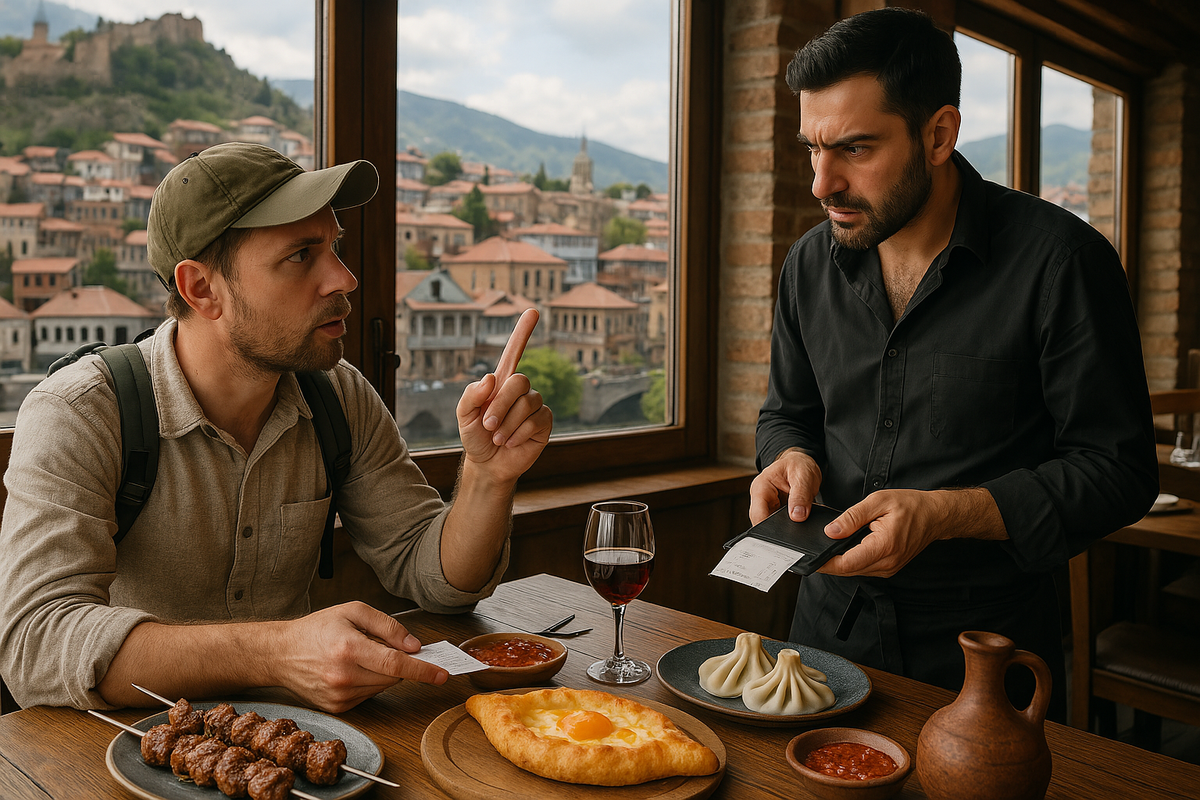
Even in the warmest and most hospitable country, you may encounter misunderstandings, billing errors, or attempts to scam you. The key is not to get nervous and to know how to act.
In a restaurant or café:
🔹 If you were served the wrong dish — politely clarify what you ordered and ask for a replacement. Most establishments handle such issues calmly.
🔹 If the dish is of poor quality or spoiled — refuse it and ask not to include it in the bill. Don’t be afraid to stand up for your rights.
🔹 If there are “extra items” on the bill — check everything and ask questions.
📌 In tourist areas, a “service charge” is sometimes added without notice — clarify in advance whether it is included.
In a store or market:
🔹 If you were given incorrect change — don’t hesitate to count it immediately and point it out. It’s best to do this right at the register or in front of the seller.
🔹 If the price at the register differs from the one on the shelf — ask why. In large stores, it often helps to contact a manager.
🔹 Bargaining is acceptable in markets and small shops, but do it with respect and a smile — Georgians value friendly communication.
In a taxi:
🔹 If you are being overcharged — first make sure the meter was turned on. If the ride was “by agreement,” clarify the price in advance.
🔹 We recommend using apps (Bolt, Maxim, Yandex Go) — they are safer and have transparent pricing.
🔹 If a conflict arises — stay calm and do not make threats. If necessary, call 112 and ask for assistance from the tourist police.
💡 Capture controversial situations on camera or take screenshots of correspondence in applications. This will help in case of a complaint.
💳 Theft of money or loss of a card
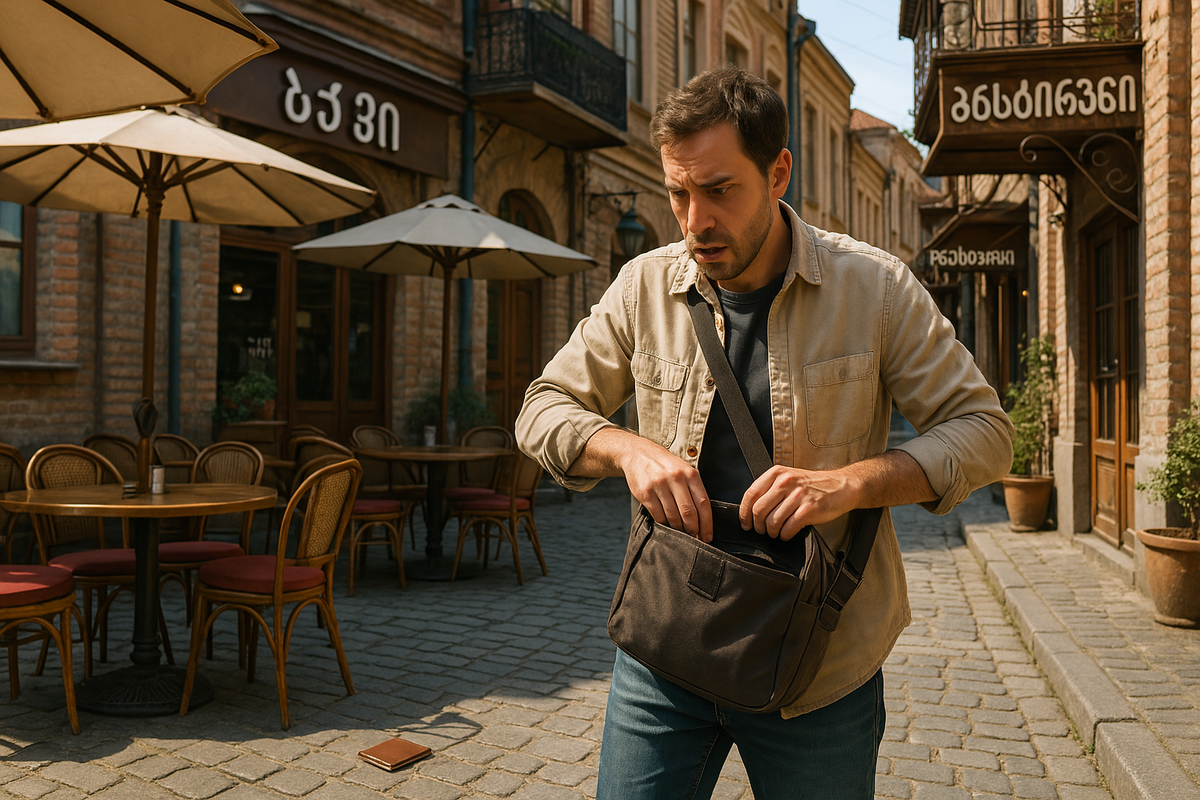
Such situations are always stressful, especially in another country. But the faster you react, the fewer the consequences will be. The key is not to panic and to act step by step.
💸 If cash was stolen:
🔹 Go to the nearest police station or call 112. They will help you file a report — you will need it to contact your insurance company (if you have one) or your embassy.
🔹 Remember or write down the circumstances of the theft. When and where did it happen? Were there cameras or witnesses? Any detail can help.
🔹 If the money was stolen in a hotel or rented accommodation, inform the staff or the host immediately. In some cases, you may be able to recover at least part of the amount or arrange to move to another place.
💳 If a bank card is lost or stolen:
🔹 Immediately block the card via your mobile app or by calling the bank’s hotline.
🔹 Check whether there have been any transactions. If there were — document them and notify the bank to file a dispute claim.
🔹 If you cannot contact your bank, ask friends or relatives to do it from your home country.
🔹 If necessary, contact your country’s consulate — they may assist with temporary financial support or a transfer.
💡 It is best to always have a “backup” card with you or some cash in another place: in a bag, belt, hidden pocket.
📄 Loss of passport and other documents
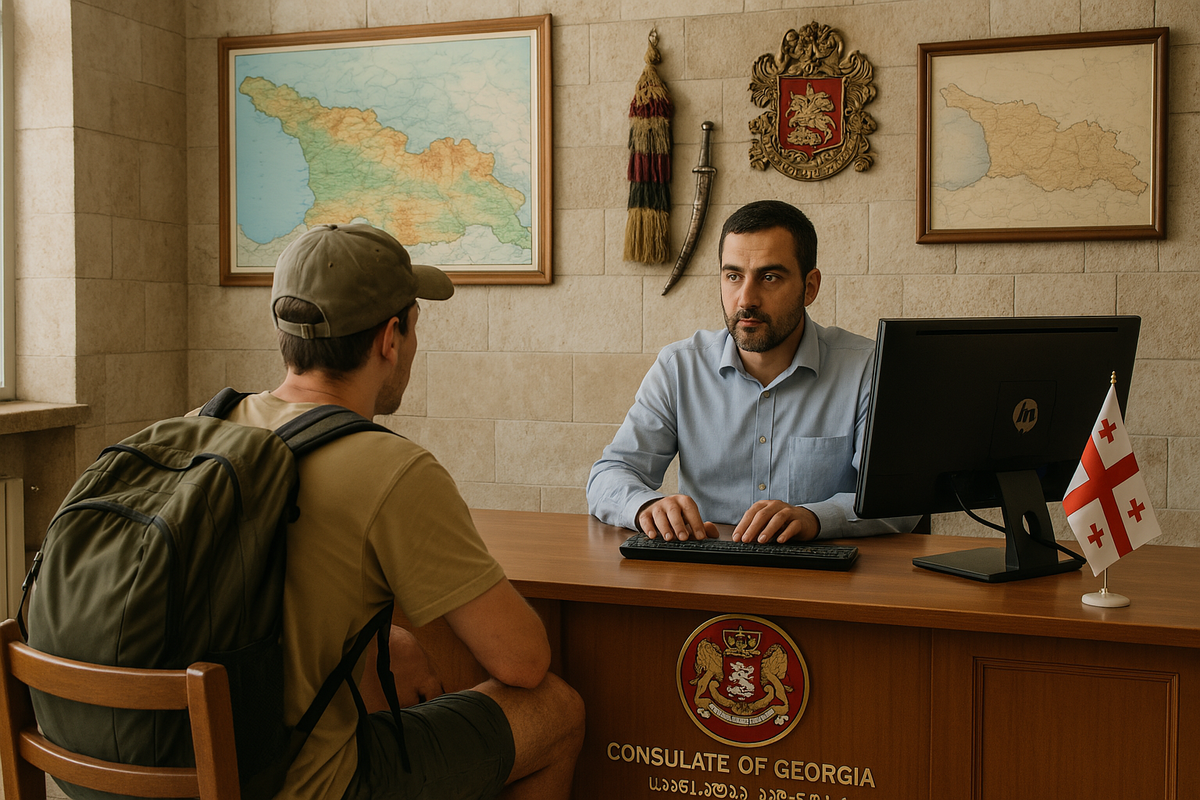
Losing your passport abroad is not the end of your trip, but you need to act quickly and properly, especially if the documents were stolen.
🛂 If you lost your passport:
🔹 Go to the nearest police station and report the loss or theft. Be sure to obtain an official report (you may need it at the consulate and when crossing the border).
🔹 Contact your country’s embassy or consulate in Tbilisi.
They will help you obtain a temporary identity document (travel document) that will allow you to leave Georgia.
🔹 Prepare documents: if possible, bring with you:
a copy of the lost passport;
another identity document (if available);
passport-size photos;
a police report (if issued).
🧾 If you lost other documents:
🔹 Driver’s license: you can obtain a certificate from the police and use a digital version (if предусмотрено in your country).
🔹 Visa documents, insurance, bookings: restore them via email or online accounts.
💡 Tip: before the trip, take a photo or scan of all the documents and send them to your email. This will help restore the data in case of loss.
⚖️ If you are stopped by the police or have problems with the law
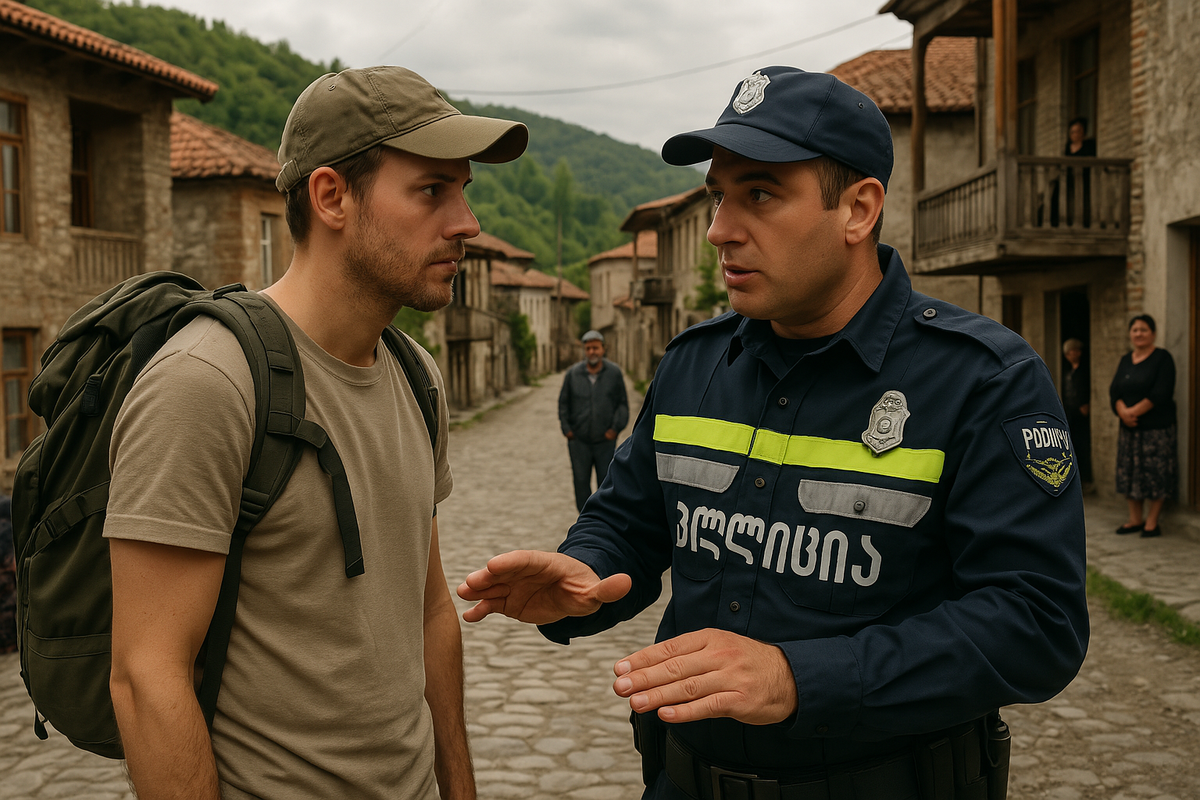
The police in Georgia are generally friendly toward tourists, but if a situation arises — it’s important to know your rights and behave respectfully and confidently.
🚓 If you are simply stopped on the street:
🔹 Stay calm.
You have the right to ask the reason for the stop. The police officer must introduce themselves and explain the situation.
🔹 Show your documents.
A passport, driver’s license (if you are driving), or a photo of your passport on your phone is sufficient if your documents are left at the hotel.
🔹 Language barrier is not a problem.
Ask the officer to call a colleague who speaks English/Russian, or use a translation app.
🛑 If you are detained or charged:
🔹 Request an interpreter.
You have the right to have all actions and reports explained to you in a language you understand.
🔹 Do not sign anything if you do not understand the text.
🔹 Contact your country’s embassy.
You have the right to consular protection — a consul can contact you, explain your rights, and assist you with further actions.
💡 There is a tourist police in Georgia. In a dispute with a hotel, taxi, or when trying to cheat, you can also contact them.
🚗 What to do in case of an accident in Georgia
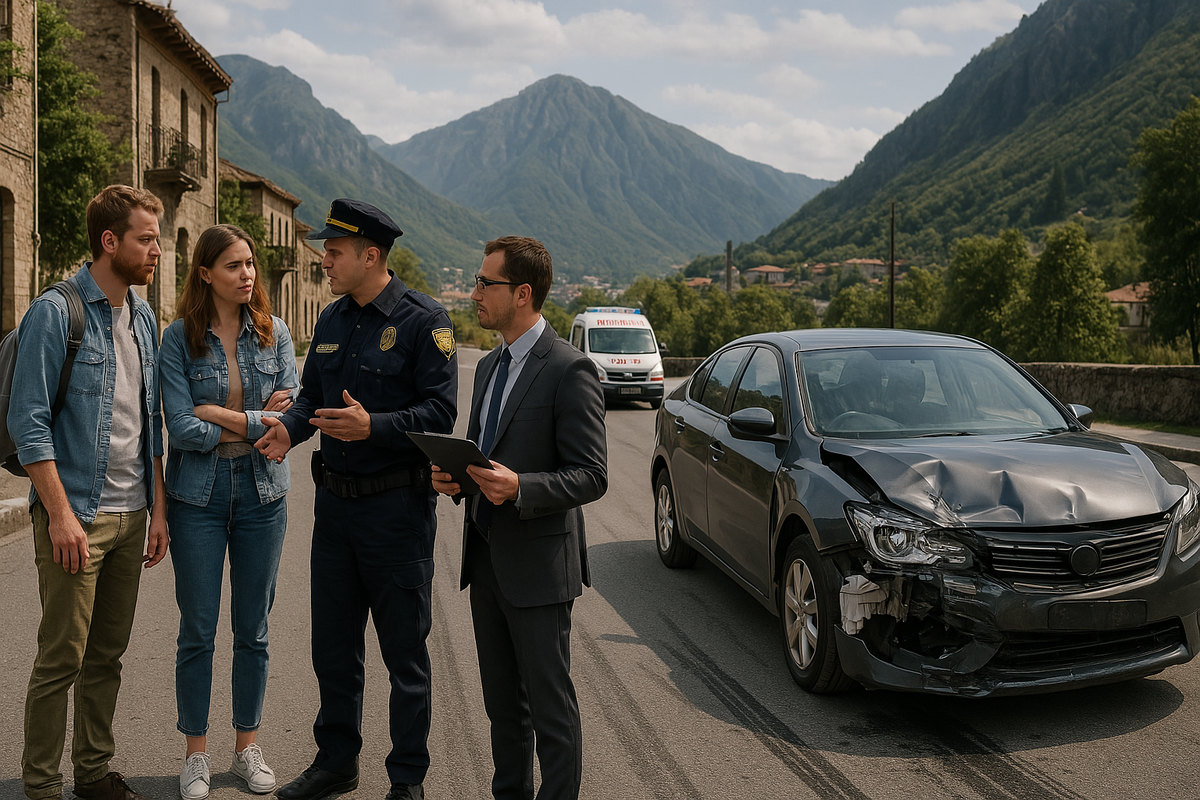
If you are involved in an accident as a driver, passenger, or even a pedestrian — the main thing is not to panic. In Georgia, there is an emergency response system, and help can be called quickly.
🚘 If you are the driver of a rental car:
🔹 Stop, turn on your hazard lights, and do not leave the scene of the accident.
Even if the accident is minor — you must not leave.
🔹 Call the police at 112.
This is mandatory, even if no one is injured — an official report is required.
🔹 Take photos at the scene:
damage, license plates, road conditions, and the other driver’s insurance.
🔹 Contact the rental company.
They will advise you on what to do next and how to proceed with insurance.
🚕 If you are a passenger in a taxi or another vehicle:
🔹 Make sure you are okay.
If there are injuries — call an ambulance (or ask the driver to do so).
🔹 Remember or write down the car number, the driver’s name, and the taxi company.
This will be useful when filing a complaint or arranging insurance.
🔹 If necessary — contact the police.
Especially if the driver left the scene or refuses to cooperate.
💡 In Georgia, cars are required to be insured, but it is advisable for tourists to take out their insurance with accident coverage in advance — it's safer this way.
🕵️ What to do if you encounter scammers
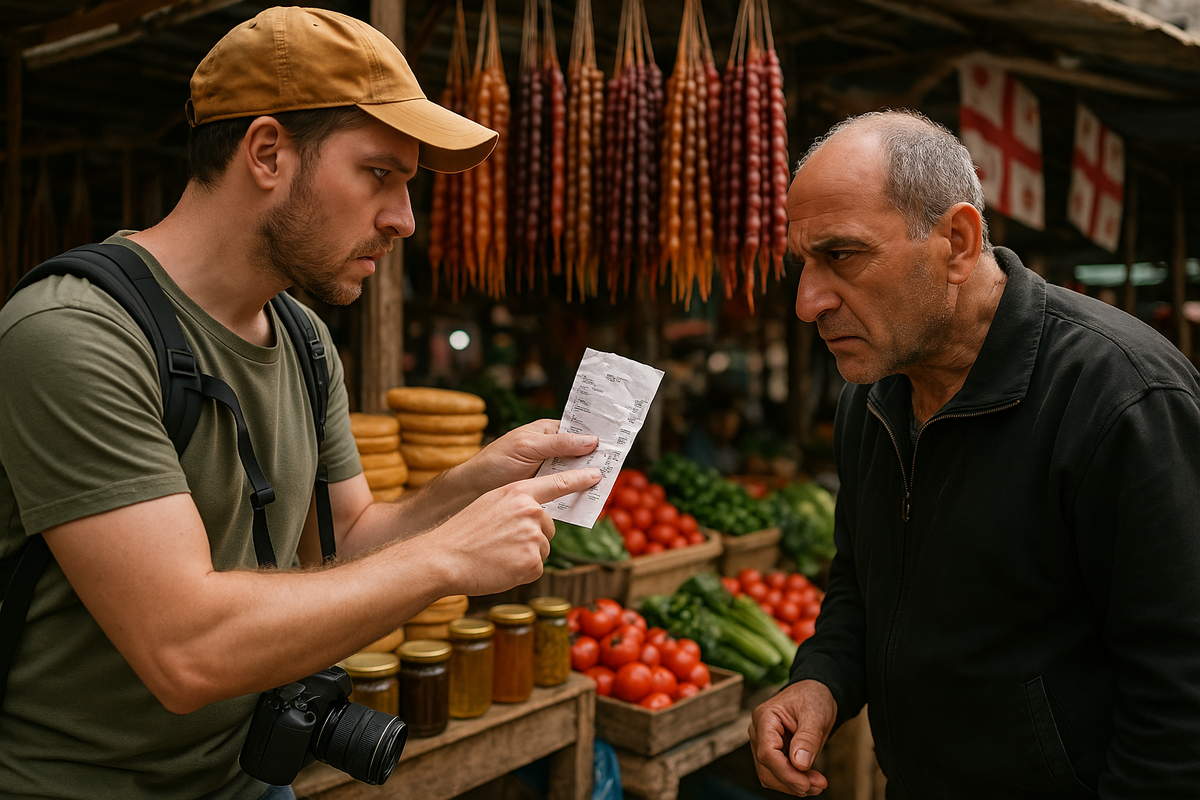
Even in friendly and hospitable Georgia, you may encounter a scam. The key is to react quickly and not be afraid to stand up for your rights.
🚩 Common schemes:
🔹 Taxi without a meter — the price is 3–4 times higher than the real one
🔹 “Fake” accommodation rental — they promise housing, take a prepayment, and disappear
🔹 Private currency exchangers with a “floating” rate
🔹 Charging for services that were not provided — in restaurants, tours, hotels
🔹 Fake tours or “guides” who are not authorized by anyone
🛡 What to do:
🔹 Document everything: photos, videos, messages, receipts, details — any evidence.
🔹 Do not give in to pressure.
If you sense a scam — politely but confidently refuse and leave.
🔹 Contact the police at 112.
There are also dedicated tourist police units in Georgia for assisting visitors.
🔹 Report it to the platform or service through which you booked/paid.
Booking, Airbnb, bank cards — they have buyer protection mechanisms.
💡If you have become a victim of scams, be sure to tell us about it in the comments. This way you will help other tourists not fall into the same trap.
🧭 Final tips
🔹 Save the contacts of emergency services (112, embassy, insurance) in your phone and write them down separately — in case your device fails.
📌 Additionally — download the “112 Georgia” app in advance.
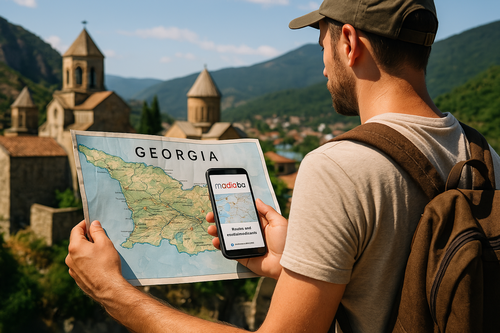
🔹 Always have a backup way to communicate and pay.
An extra card, some cash kept in a different place, a charger, or a power bank can be a real lifesaver.
🔹 Take photos or scans of all important documents and send them to your email or store them in the cloud.
🔹 Use only trusted services — whether it’s accommodation, taxis, tours, or currency exchange. If something looks suspicious — it’s better to refuse.
🔹 Don’t hesitate to ask for help.
In Georgia, people often genuinely want to help — especially if you are polite, calm, and open to communication.
💡 Emergencies do happen, but proper behavior and a little preparation in advance will help you deal with them quickly and without unnecessary nerves.
⚠️ Important: information accuracy
This article is for informational purposes and is based on open sources, official websites, and real traveler experiences.
We strive to keep the information up to date, but:
📌 contacts, addresses, opening hours, and procedures may change without prior notice.
🔹 Before contacting a specific organization (especially embassies, clinics, support services, etc.), we recommend checking the information on official resources.
🔹 If you notice any inaccuracies or outdated information — please let us know. We will обязательно check everything and make corrections 💛
💬 Hopefully, you will never need to put these tips into practice. But if anything, you are armed with knowledge and you will not get lost.
❓ Frequently Asked Questions
✅ Yes, the number 112 works without a SIM card and even with no balance — from any phone.
📱 Use Google Maps, Maps.me, or ask the hotel staff.
🟢 In large cities, pharmacies and medical centers are everywhere.
📋 Partially — yes. Some medications are available without a prescription, but stronger or specific ones will require one.
👨🏫 In most tourist areas, people speak Russian or English.
If not — use a translation app or show the phrase in Google Translate.
👍 Yes, especially if you contact the tourist police.
They are trained to assist foreigners.
📸 Collect evidence (receipt, photos, car number) and contact the police.
You can also file a complaint with the taxi service if the ride was booked via an app.
🔍 Check reviews, and the presence of a website or social media page.
If something looks suspicious — it’s better to refuse.
🚫 No. It’s better to exchange money at banks or official exchange offices.
Private exchangers may deceive you with the rate.
✈️ Yes, but first you need to go to the police (to get a report) and then to your country’s embassy — they will issue you a temporary travel document.
🚨 No, it’s risky. It’s better to have copies with you, and keep the originals in a safe or another secure place.
💬 Now it’s your turn!
We hope this article will be useful and help you avoid неприятные situations in Georgia. But every experience is unique! 🌍
✨ Have you had any emergency situations in Georgia? How did you handle them?
📢 Share your experience in the comments — your tips may be helpful to other travelers!
🔑 Maybe you have questions we didn’t answer? Don’t hesitate — leave them below, and we will definitely help!

21 comments
Log in to leave a comment