




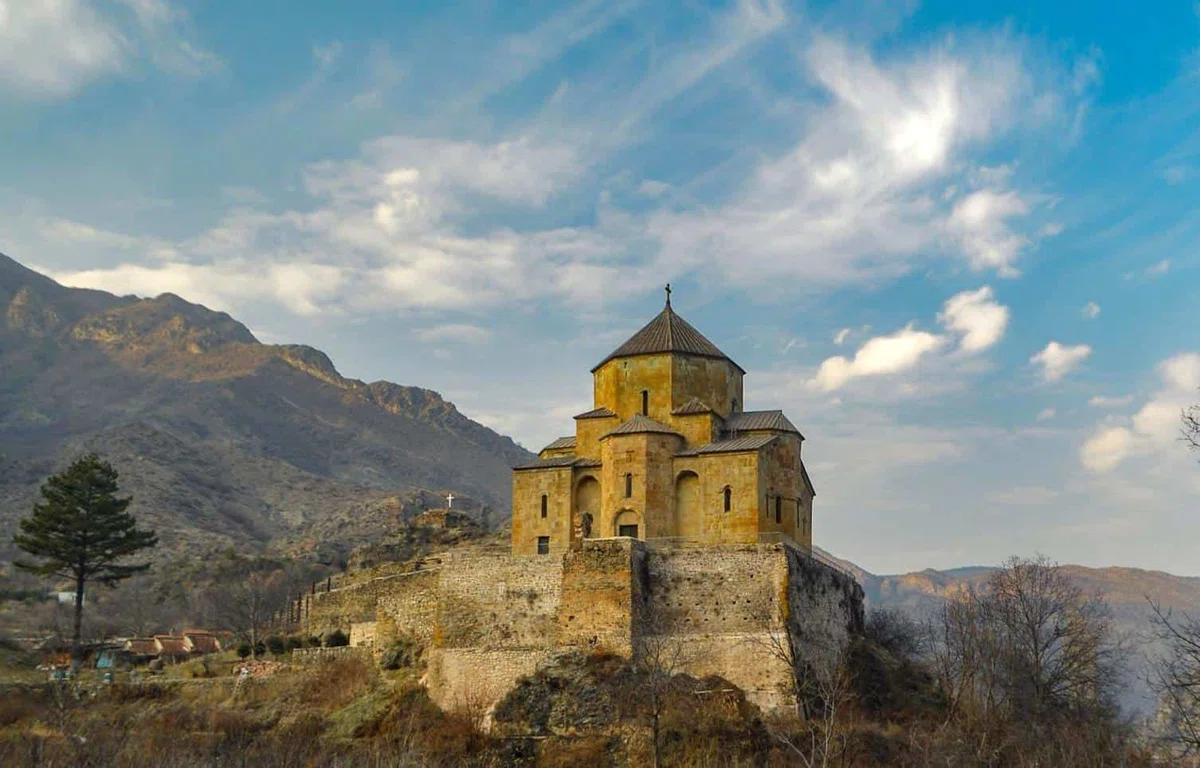
Sights of Georgia in Gori - the ancient temple of Ateni Sioni built in the 7th century.
One of the most popular Christian sites in Georgia is located 10 km from Gori and is called Ateni Zion. The construction dates back to the 7th century. Partially preserved temple paintings from the 11th century...
In the land of Shida Kartli, Gori Municipality, Not very far from the village of Ateni, in the valley of the same name, is the Ateni Zion. It is located on the edge of a steep hill. The building dates back to the beginning of the 7th century.
It is a cross-domed church, of the type of a four-apse cathedral. Its walls are built of hewn blocks of greenish-gray sandstone, and stones of other colors were also used in the construction.
The square under the dome of the temple is its core in composition. The spherical octagonal dome, the throat of which has four windows, rests on the projection of the apse. The dome itself is quite wide and low, its neck is very massive. According to the layout, the open four-sided domed space with apses forms the shape of a cross. In each corner of the cross there is one room connected to the central space of the temple. The altar rises two steps.
The priest's residence and the corresponding apse are located in front of the western apse of the altar. This makes the east-west axis longer than the south-north axis. The entrance to the temple is from the south and north. In the corners of the roof, southeast and southwest, there are images of sheep's heads, and the northeast corner is decorated with a dome of a smaller version of the temple.
A distinctive feature of the eastern and southern facades is the abundance of decoration. The windows of the temple are decorated with protruding frames. The main entrance to the temple is from the south. The vestibule is decorated with double capitals in the form of balls, bases and decorative half-columns.

In the decoration of Zion, under the crumbling plaster, remnants of ancient decor were found. Architectural folding was imitated with red paint. The cross, which adorns the dome, is outlined with the same color. Also in the interiors of the temple, there is decor of an even later time. On the ledge of the apse and above the door leading to the sacrificial chamber, crosses were found, painted on a gray wall covered with plaster with white and red paints. Such crosses performed protective functions.
The temple was painted in the second half of the 11th century. Comparing the handwriting and technical means, we can conclude that the work was done by several professionals. Despite this, the iconographic and artistic meaning of the painting are unified. Many shades of different colors were used in the painting.
The sights of Georgia carry the history and culture of the country. Thus, the painting of Ateni Zion is considered one of the most accurate examples of Georgian monumental painting.
You can get to Ateni Zion from Gori by car. The road from Gori to Ateni is 10 km. The most beautiful places of Georgia are contained in the cultural and architectural monuments of this country. If you do not know what to see in Georgia, Ateni Sioni will introduce you to the basics of ancient Georgian painting and inspire you with the beauty of the surrounding areas.

See all the sights of Georgia
-
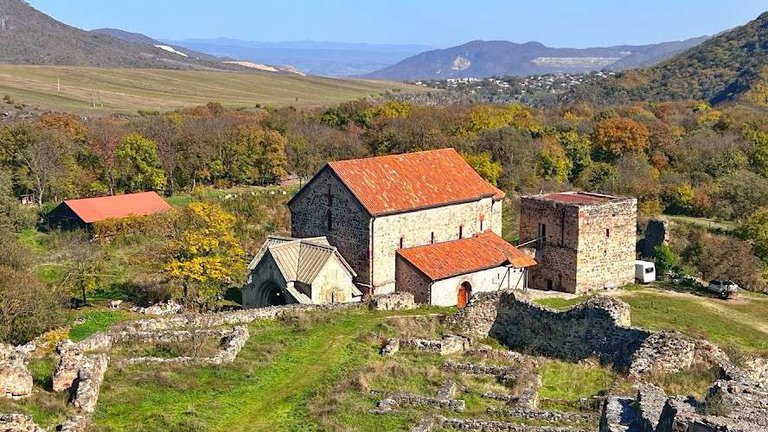
🏰 Dmanisi Sioni: An architectural wonder and an important religious center of Georgia 🌍
Sights of GeorgiaThe Dmanisi Cathedral of the Mother of God is one of the oldest churches in Georgia, buil…
-

🔮 Church of the Ascension in Ozaani: History, frescoes and architectural features of one of the most interesting sights of Georgia!
Sights of GeorgiaVisit the unique church in Ozaani! Find out how to get there, what to take with you, wher…
-
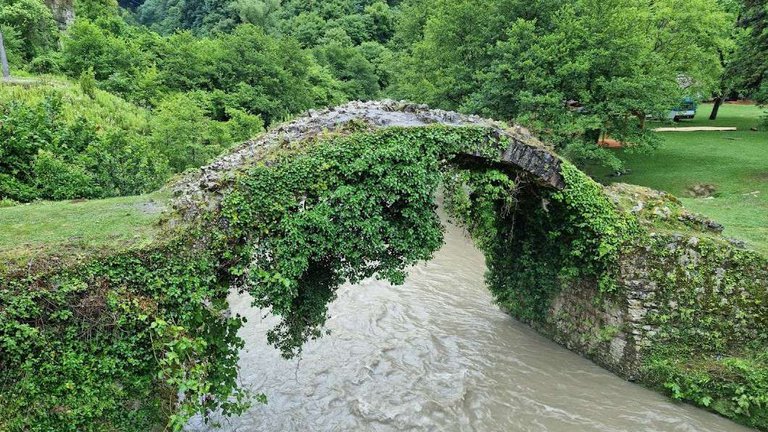
Besletsky Bridge in Abkhazia: Legends, Secrets and How to Get to This Ancient Miracle
Sights of GeorgiaHow to get to the Besletsky Bridge in Abkhazia? Where to spend the night, what to take wi…
-
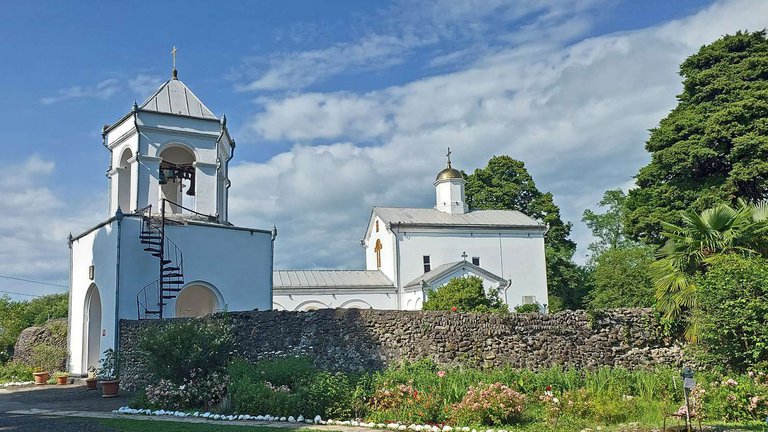
Ilori Temple in Abkhazia: Tragedy of Restoration, Disappeared Relics and Secrets Shrouded in Darkness
Sights of GeorgiaFind out everything about the Ilori Temple in Abkhazia: how to get there from different c…
-
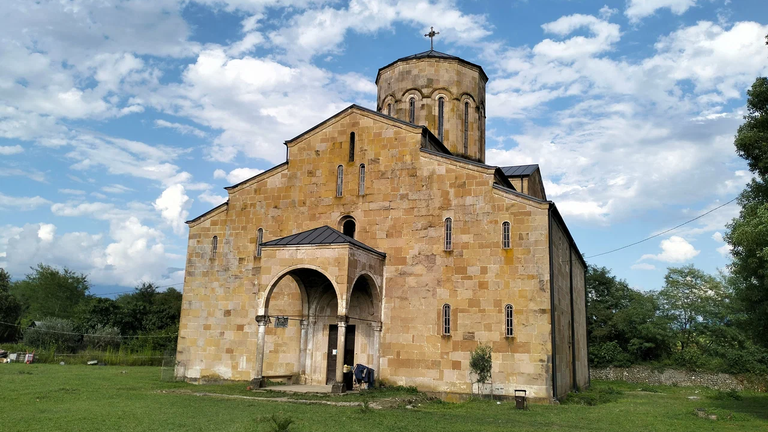
A place that defies restoration: why is the Mokva Cathedral in Abkhazia called cursed and sacred at the same time?
Sights of GeorgiaPlanning a trip to Abkhazia? Don't miss the Mokva Cathedral, one of the most ancient chur…
-
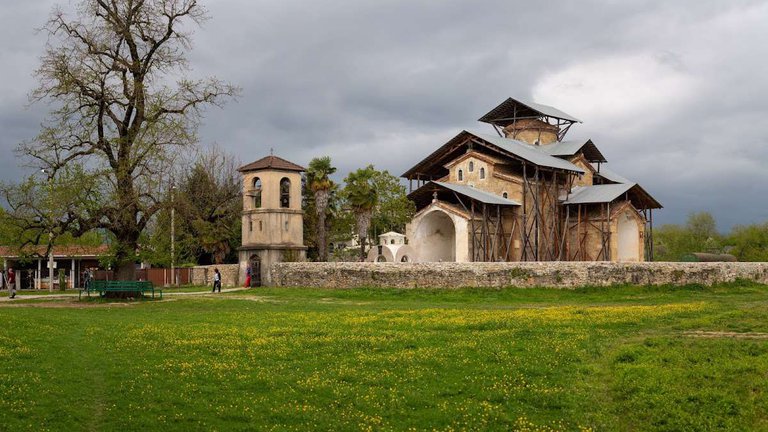
The Lykhny Church of the Dormition of the Blessed Virgin Mary is a 10th century mystery that is worth revealing!
Sights of GeorgiaFind out how to get to the temple, what to see nearby, where to eat and stay, and what sp…
-
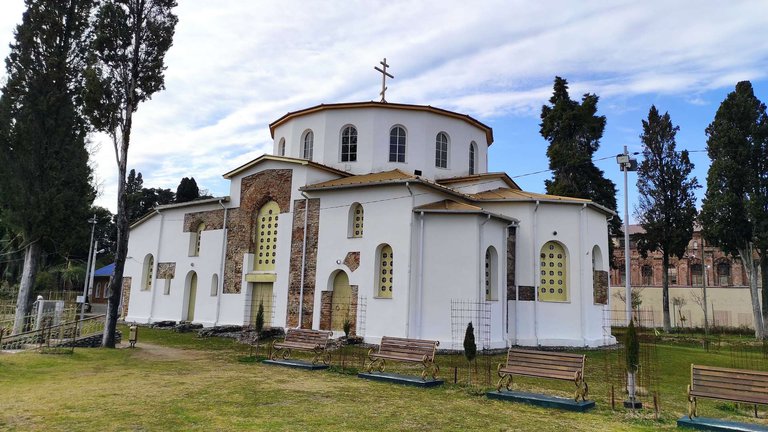
Dranda Cathedral of the Dormition of the Blessed Virgin Mary - Find out what one of the oldest temples in Abkhazia hides
Sights of GeorgiaFind out what the Dranda Cathedral in Abkhazia hides behind it! 🌍 Discover the mysterious…
-
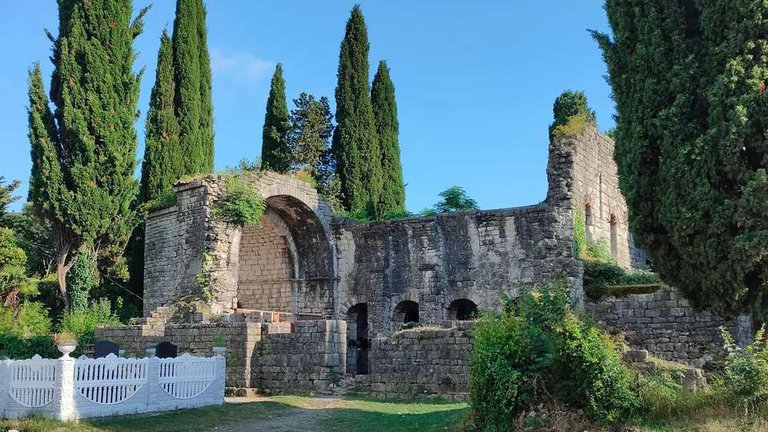
Tsandripsh Basilica: a unique Byzantine temple in Abkhazia that you must see!
Sights of GeorgiaThe Tsandrypsh Basilica is one of the most mysterious and unique sights of Abkhazia. Lear…




22 comments
Log in to leave a comment