💬 How to speak and search correctly?
To avoid confusion in the names, especially when navigating:
- ✅ Correct name: Mokva Cathedral of the Dormition of the Blessed Virgin Mary
- 📍 Also called: Mokva Temple, Mokva Monastery, Cathedral in Mokva, Dormition Cathedral in Mokva
- 🔍 Search the Internet for the following queries: Mokva Cathedral, Mokvi Church, Abkhazian temples
- ⚠️ Important to know: The names “Mokva” and “Mokvi” are the same village. They are just different transliteration options.
- 📱 Tip: When searching on Google Maps, use both options - this way you will definitely not make a mistake with the route.
🧳✨Practical tips for tourists, pilgrims and travelers
🍽️ Where to eat nearby?
There is practically no developed tourist infrastructure near the Mokva Cathedral, therefore:
- Take snacks and water with you, especially if you are planning a long stay.
- In the nearest villages and in Ochamchire (only 20 km) there are cafes and canteens serving home-made Abkhazian cuisine: khachapuri, mchadi, shashlik, corn porridge with cheese.
- Some local farms offer lunch by prior arrangement - check with your hotel or guide.
🛏️ Where to stay overnight?
- In Ochamchira and the surrounding area you can find guest houses, family mini-hotels and apartments. The level of comfort is from basic to very cozy, with the possibility of breakfast.
- If you are traveling by car, you can also consider accommodation options in Sukhum - about 1.5 hours on the road.
- When booking, pay attention to the availability of parking and communication - not everywhere there is a good mobile network 📶.
🏞️ What else to see nearby?
If you are already in these parts, don't limit yourself to just the cathedral! Here's what you can add to the route:
- 🌳 The Mokva River and its surroundings - picturesque views, a good place for walking and taking photos.
- 🏛️ Ruins of other churches and Christian shrines in the Ochamchira area - they are not always visible on the maps, but they are there.
- 🐟 Trout farms nearby - here you can not only eat deliciously, but also buy fresh fish.
- 🍇 Wineries and private farms - can be found in the area. It is better to go with a guide who knows the locals.
💡 Tourist life hack: 📶 Download an offline map of the area in advance, as there is often no stable Internet in the village of Mokva.
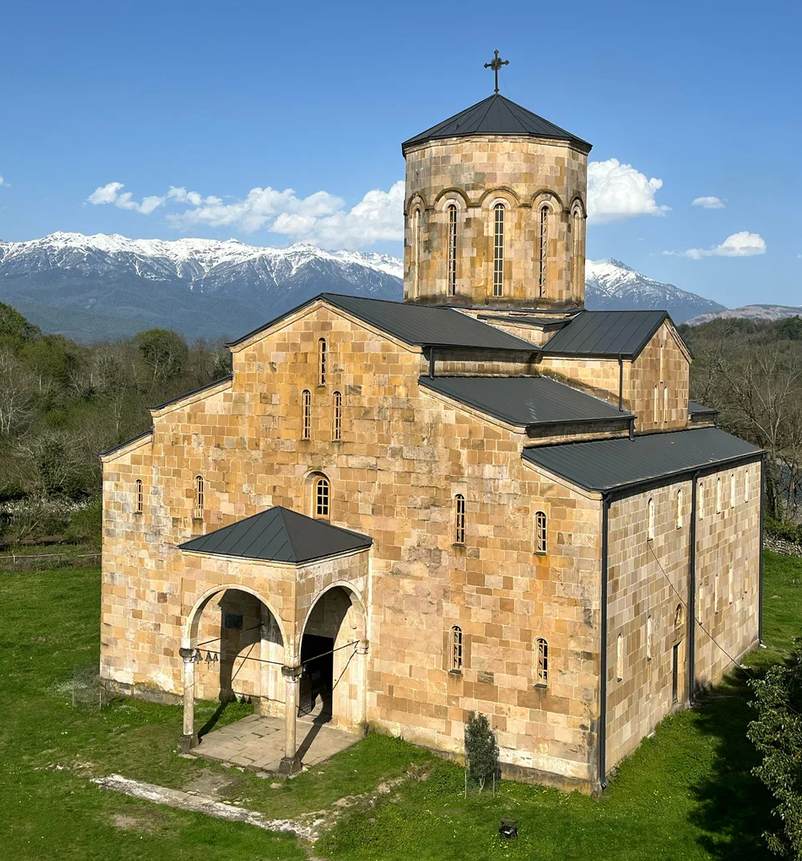
📜 Brief information and key events
🕰️ Date of foundation: third quarter of the 10th century.
⏳ Who was at the origins?
🔹 King of Abkhazia Leon III (957–967) is considered the founder of the temple. It was under him that the Abkhazian kingdom reached its peak of power.
🔹 Catholicos David I — a spiritual leader, under whom Mokva became the residence of the Catholicos and the place where church texts were rewritten.
🏛️ Why Mokva?
The Mokvi (Mokva) location was not chosen by chance: trade, political and church interests intersected here. From the moment of its foundation, the cathedral became the cathedral center of the Catholicos of Abkhazia, and the Catholicos himself resided in Mokva from the end of the 10th to the middle of the 17th century.
✨ 11th–12th centuries — the temple was restored and decorated with Byzantine frescoes with the support of Emperor Alexius I Comnenus and the Georgian King David the Builder.
📖 1300 — monk Ephraim rewrote the famous Mokva Gospel, one of the most important written monuments of medieval Georgia, within the walls of the cathedral.
🏹 17th century — with the arrival of the Ottomans, the temple was plundered and partially destroyed. Church life was interrupted for centuries.
⚰️ 19th century — the cathedral was transformed into a burial vault for the princes of Chachba, rulers of Abkhazia. Mikhail Shervashidze, the last ruling prince, deprived of power after the Lykhny Uprising of 1866, is buried here.
🔧 1968 — restoration began for the millennium of the temple. The walls and dome were strengthened, and the original appearance was partially restored.
A bit of history
📖 Role in church and educational life
The cathedral was the site of active literary and spiritual activity. Liturgical books were copied here, and one of the most important manuscripts, the 12th-century Mokva Gospel, written in the Georgian rite and richly illustrated, is now kept at the Institute of Manuscripts in Tbilisi.
🎨 Frescoes and paintings
The interior of the cathedral contained unique 11th-century Byzantine frescoes, many of which were later restored. The images of the Dormition of the Virgin Mary, the Virgin Mary on the throne, saints, evangelists, and prophets have been preserved. The style of the painting is reminiscent of the Byzantine school of the 11th–12th centuries.
🕌 What happened next?
After the conquest of these lands by the Ottoman Empire, the cathedral was closed, and church life died out. However, in the 19th century, with the arrival of Russia, services resumed, and the first restoration work began.
👑 Imperial support
Under Nicholas II, the cathedral received official support - the tsar ordered the restoration of the building and its transfer to the jurisdiction of the Georgian Orthodox Church. The Shervashidze princes actively participated in the restoration of Mokva. It was here that Safar-bey Shervashidze was buried - one of the last rulers of Abkhazia to accept Orthodoxy.
🧱 Soviet and post-Soviet times
In the USSR, the temple was not destroyed, but it stood idle. The frescoes were damaged by time, and some of the paintings were lost. Only in the early 2000s did new restoration attempts begin. Today, conservation work is being carried out in the temple, and services are held rarely, on special days.
📚 Unique facts
- The Mokva Cathedral is one of the few where original Greek and Georgian inscriptions from the 11th–12th centuries have been preserved.
- It has never undergone a major reconstruction, which makes it especially valuable in the eyes of historians.
- This is the only temple in Abkhazia where such volumes of fresco painting and 11th-century architecture have been preserved.
🏛️ Architectural features and interior decoration
🏰 General architecture
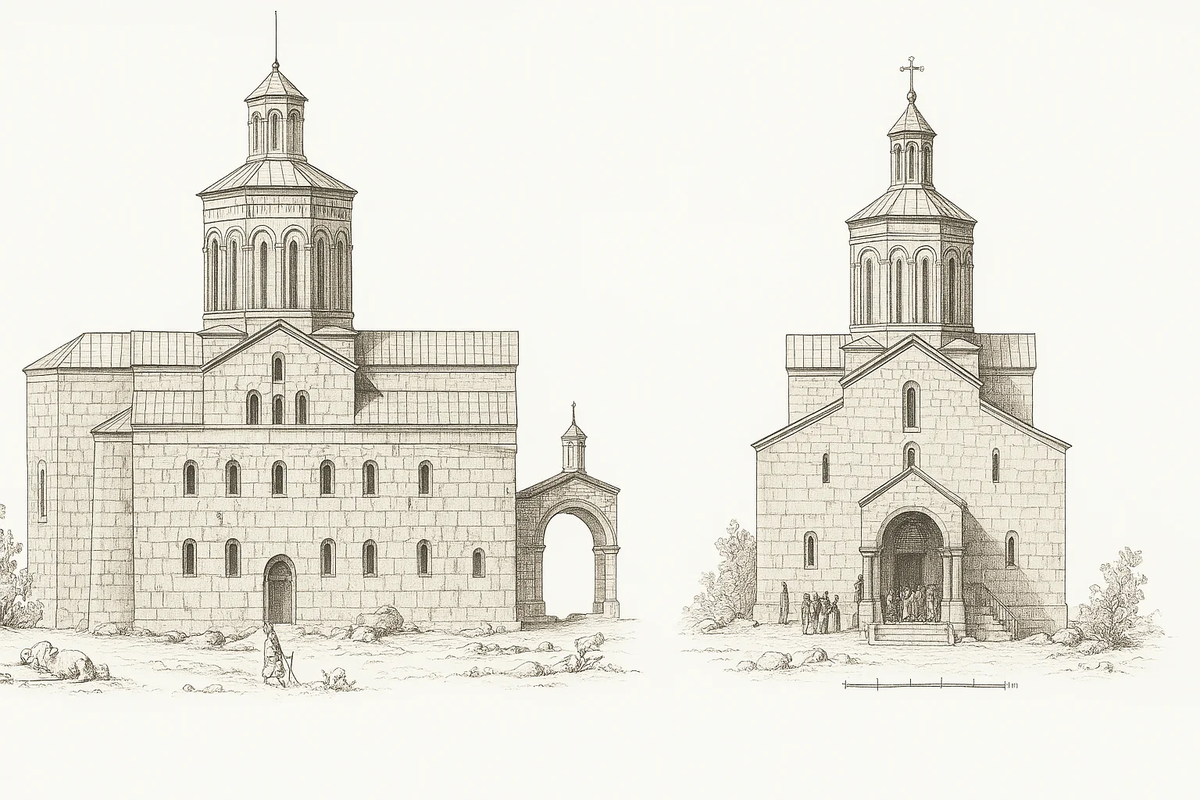
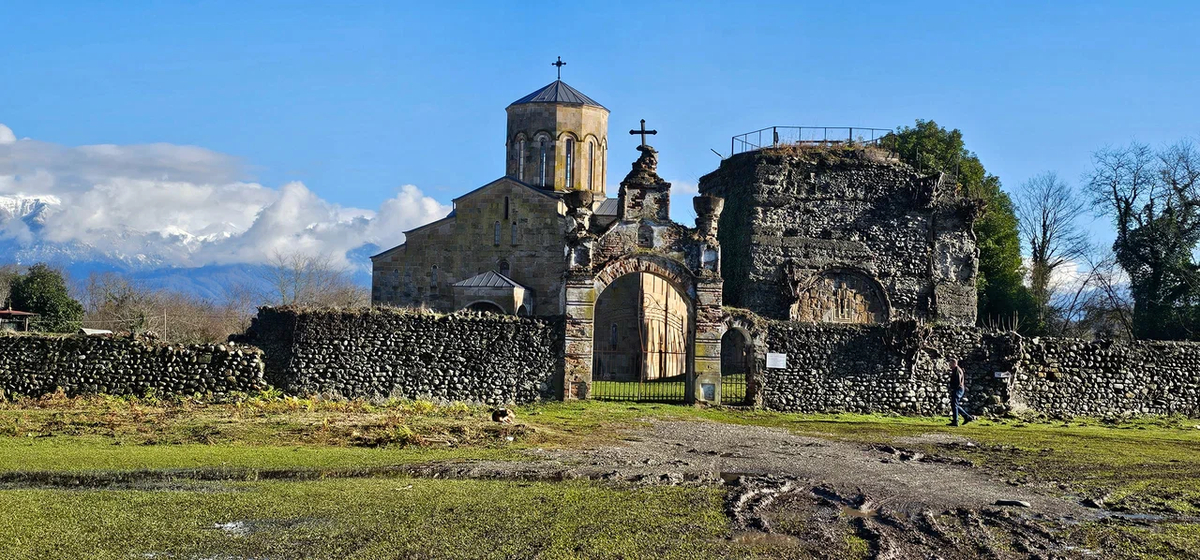
- Type of construction: a five-aisled cross-domed cathedral with three apses, typical of Byzantine-Georgian architecture.
- Materials: light limestone mined in the surrounding mountains, beautifully processed and laid in even rows.
- Dimensions: about 28 meters long and 20 meters wide - this is one of the largest temples of its time in Abkhazia.
- Dome: octagonal, with a low drum, rests on four massive pillars. The drum itself has a small diameter, which makes the room inside especially vertical and light.
- From the outside, the cathedral looks strict and majestic - smooth walls, laconic lines, no unnecessary decorativeness. Such asceticism emphasizes its spiritual significance.
🕍 Layout
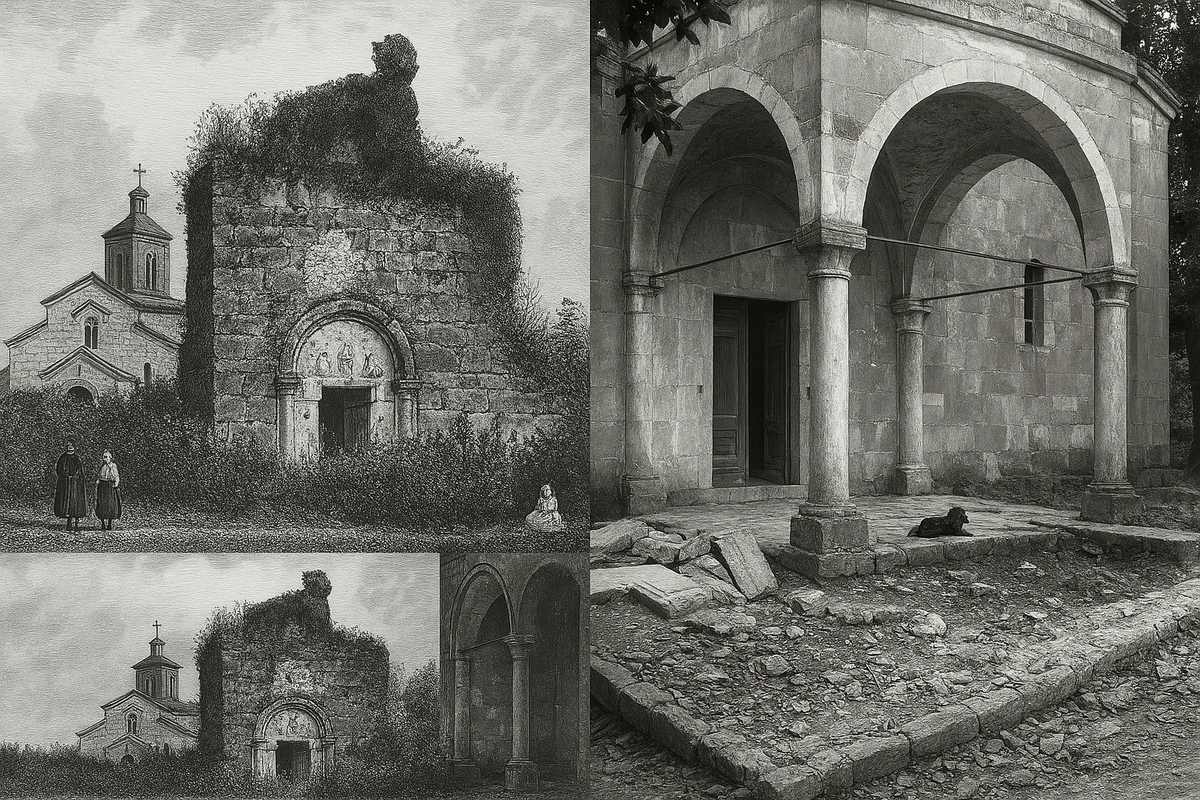
- Narthex (entrance part): two-story, with choir galleries. Served as a place for pilgrims and laymen.
- Main nave: elongated, with clearly zoned space.
- Apses: three - central, altar (north side) and diaconicon (south side). In front of them are rectangular bems.
- Passages and arches: decorated with powerful vaults, giving an acoustic effect. Inside, a mysterious twilight reigns, through which rays of light break through.
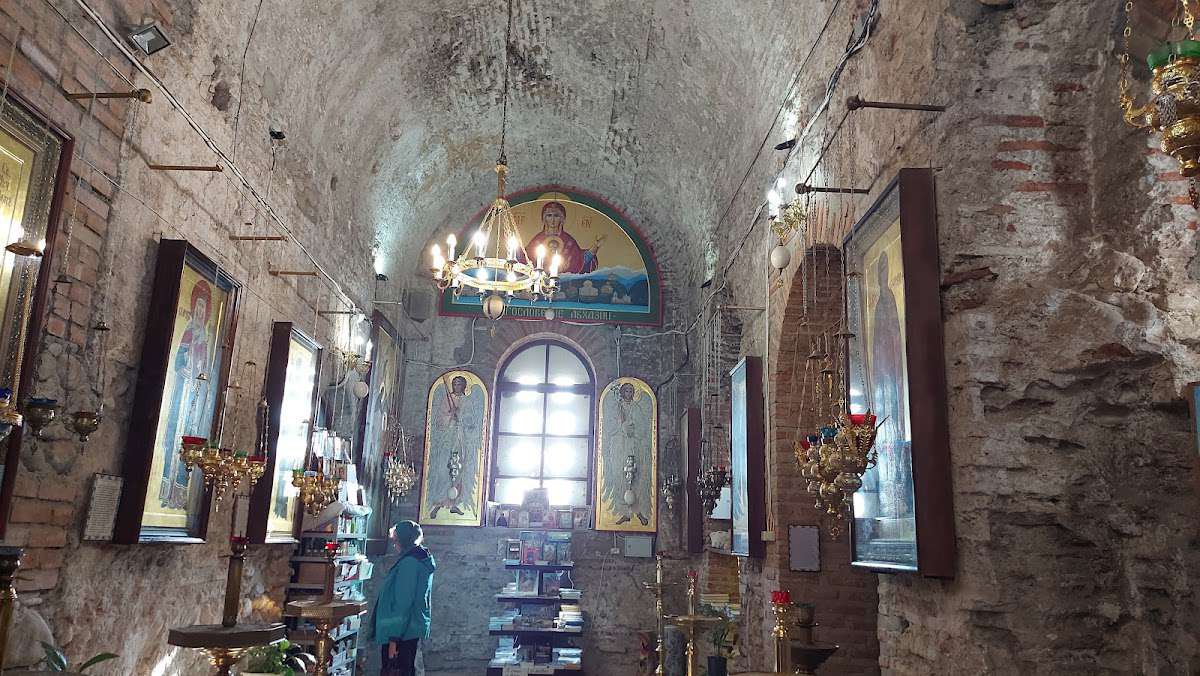
🎨 Unique frescoes
The Mokva Cathedral is especially famous for its fresco paintings, most of which date back to the 11th century. This is one of the few churches in Abkhazia where paintings of such scale and antiquity have been preserved.
🖼️ What can be seen in the frescoes:
- In the apse are the Virgin Mary with the Child on the throne, angels and the scene of the Eucharist.
- On the walls are episodes from the life of Christ: "The Myrrh-Bearing Women at the Tomb of the Lord", "The Hospitality of Abraham", "The Sacrifice of Abraham".
- In the lower tier are figures of saints: Basil the Great, Gregory the Theologian, Cyril, Phocas.
- On the western wall is the Dormition of the Virgin Mary and the scene of the transfer of the belt to the Apostle Thomas.
🌟 A special feature of the paintings: they are executed in the Palaiologan style (a typical late Byzantine style with elongated figures, restrained colors and dynamic compositions).
👨🎨 Researchers suggest that the paintings were created by three masters, and one of them was probably a famous Byzantine artist.
Inscriptions and relics
- On the walls of the cathedral there are Georgian and Greek inscriptions, including a mention of the appearance of Halley's Comet in 1066, which makes the temple unique even from the point of view of astronomical chronicles.
- Traces of paintings from the 10th–12th centuries have survived to this day, as well as architectural details without a single reconstruction.
💫 The atmosphere inside
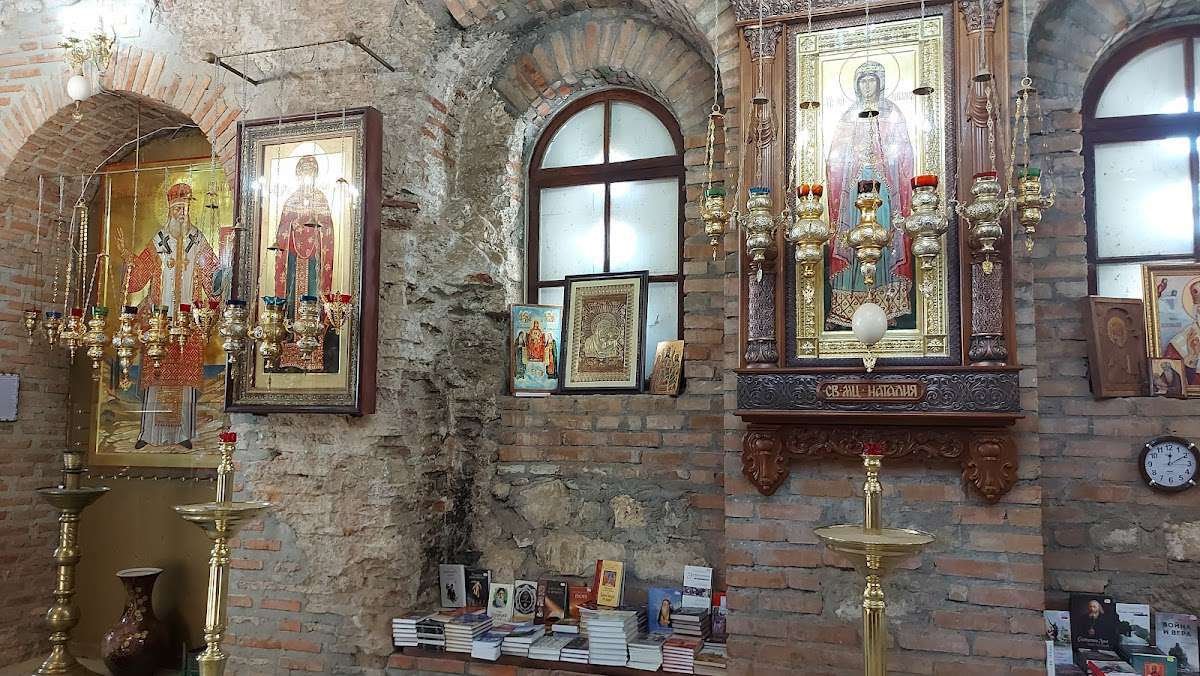
Entering this temple, you seem to be transported to another time - a thousand years ago. The air is filled with the light aroma of incense, the semi-darkness is penetrated by rays of light breaking through narrow windows. Half-erased frescoes on the walls, massive arches, ancient stones underfoot - everything around seems to whisper stories of the past. This special sacred silence makes the cathedral not just an architectural monument, but a place where the breath of centuries is felt. This is what attracts here not only pilgrims, but also historians, researchers, travelers.
Previously, the interior decoration was striking in its magnificence: the walls were completely covered with frescoes, the floor was laid with mosaics with a round insert of red marble, and the majestic iconostasis of white marble with columns added to the feeling of sacred solemnity. Unfortunately, only fragments of this former beauty have survived to this day - but even they are impressive and make you freeze in silence.
🛠️ Current state
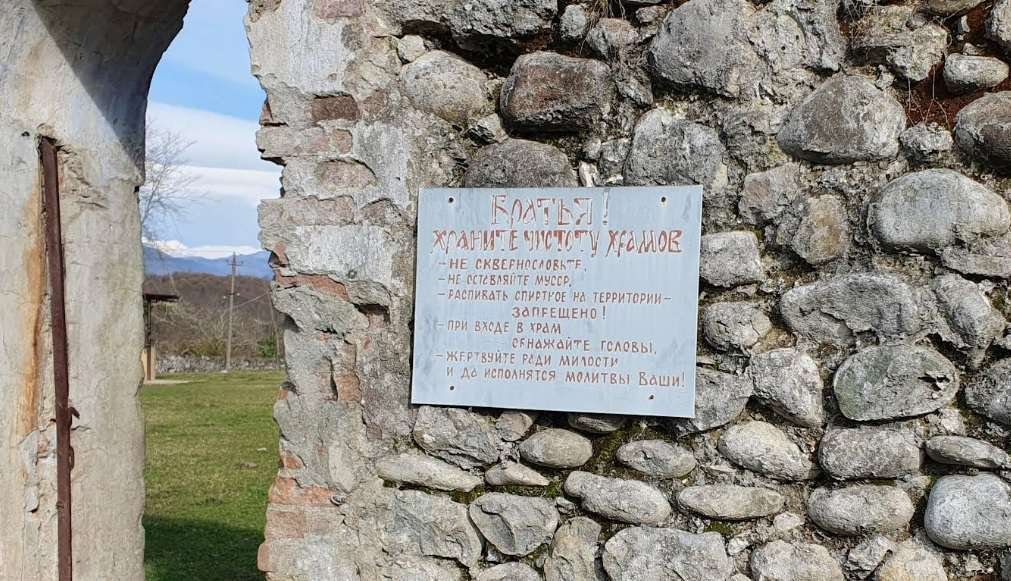
Currently, the Mokva Cathedral is functioning: services are held irregularly, but the doors of the temple are open to visitors. The cathedral needs restoration, as many elements of the building and decoration have suffered from time and looting.
🕯️ Legends and interesting facts
💫 The place chosen by heaven
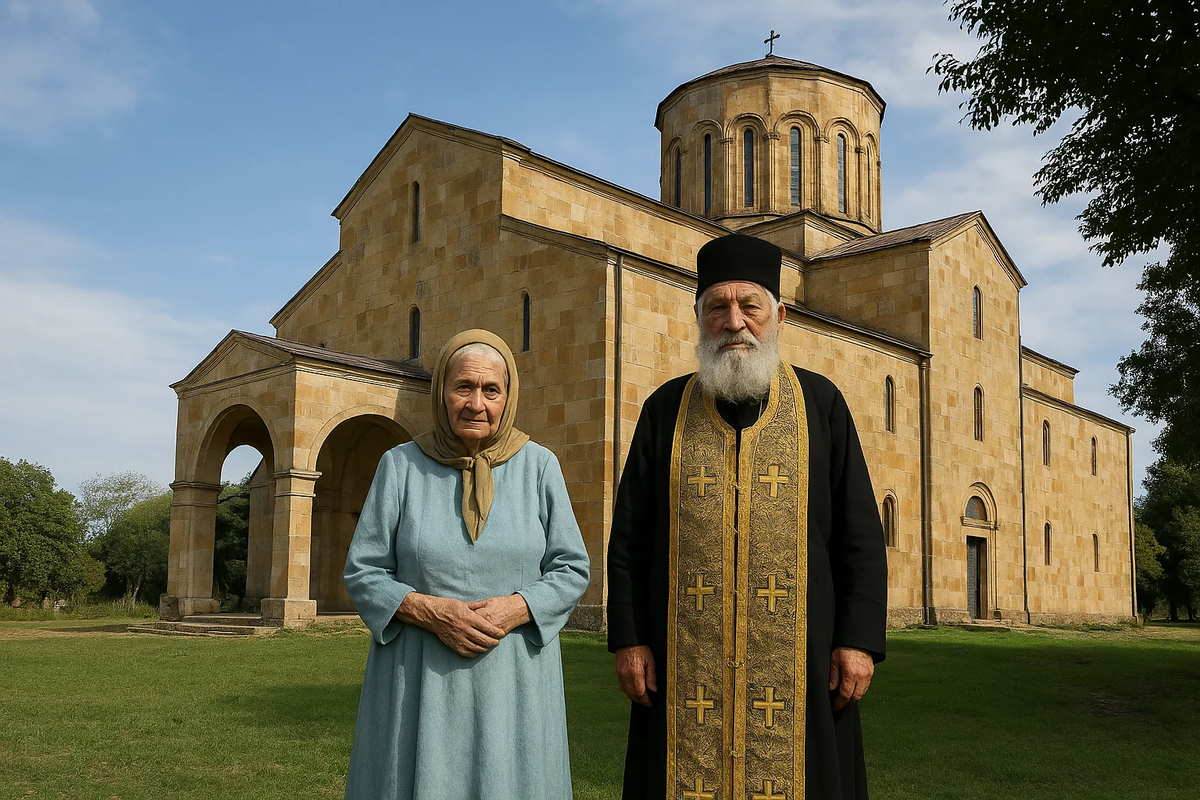
According to legend, the place for the cathedral was indicated by the Mother of God herself - to the elder in a dream. Since then, Mokva has been considered a consecrated land, where people come not only to pray, but also to "hear themselves."
💬 "When I went inside, it became cold, although it was summer. It was as if someone was standing nearby... I prayed, and my soul felt light" - Natalia, a pilgrim from Moscow.
🌠 Halley's Comet and the Stone Prophecy
On the wall of the temple there is an inscription about the appearance of an unusual star in 1066 - this is one of the first mentions of Halley's Comet.
💬 "This is not just a temple. This is a window into the past, where you seem to read the stars in stone," shares a traveler from Tbilisi.
⚒️ Architecture that is not subject to destruction
Despite wars and earthquakes, the dome of the cathedral has survived. Attempts at restoration have been repeatedly thwarted by weather cataclysms - they say that the temple "does not allow itself to be touched."
💬 “It’s as if an invisible force is protecting him…”, a pilgrim left a comment on the forum.
⚰️ Burials with history
Under the temple are the burials of the princes of Abkhazia, including Mikhail and Georgy Shervashidze. Many crypts have not yet been explored.
💬 «When you stand at the grave of Safar Bey, you feel awe. As if history is breathing nearby,” says a pilgrim from Sukhumi.
📜 Legend of the architect
Tsar Leon III refused to pay the architect, accusing him of not being able to see all the Abkhazian churches from the dome. When the architect climbed up, the ladder was removed — so he remained at the top forever.
🕊️ Miraculous icon
In the 19th century, the church was given the icon of Our Lady of the Sign. It is believed that it helps to heal.
💬 "I came here after the operation. I just wanted to ask for strength. And I left - with peace inside...", - the pilgrim wrote in the guest book.
💬 "In Mokva you don't need to talk. You just need to stand here. And listen to the silence," is the short but profound response of another guest.
😇 Cursed or Blessed? Mysticism and Reality
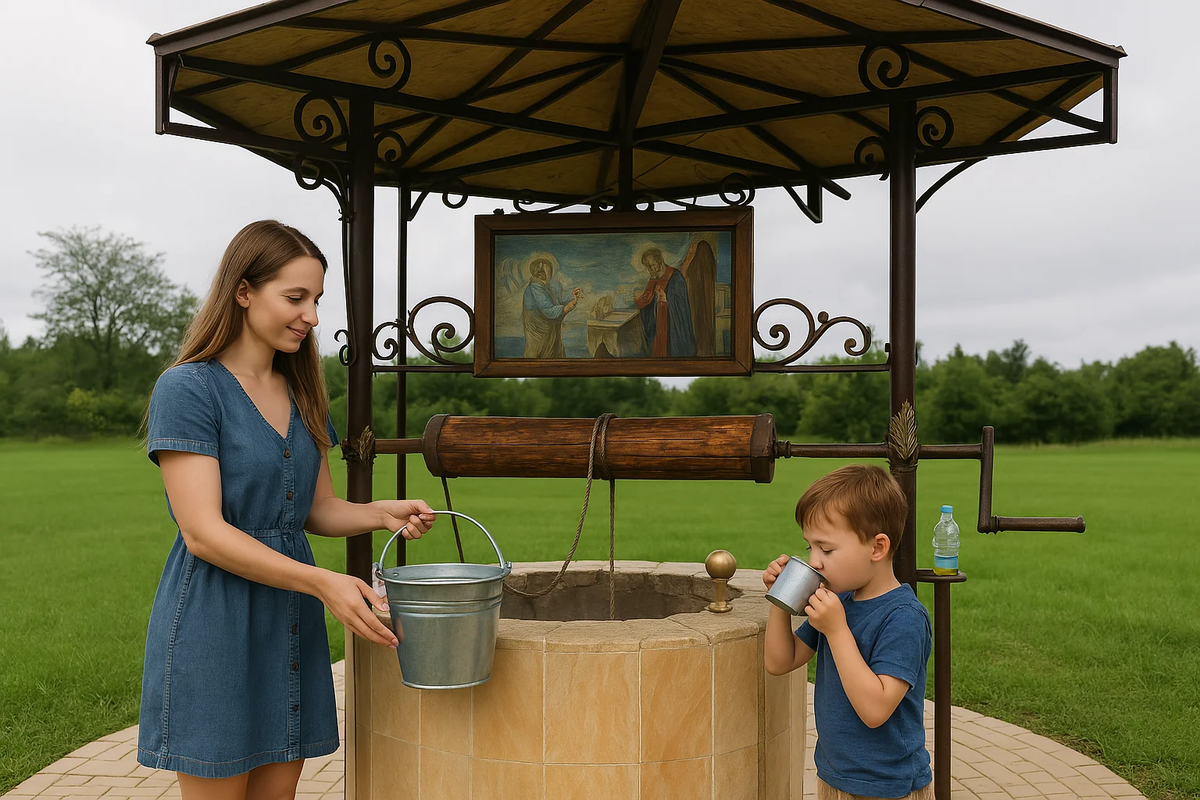
The Mokva Cathedral is not just an architectural monument. It is a place of power, surrounded by many legends. It is called both sacred and… inaccessible to interference, as if it decides who to let in and what to allow.
😇 Why is it considered sacred:
- The temple was built in the 10th century and served as the spiritual center of Abkhazia for over a thousand years.
- The Catholicos' seat was located here, church texts were copied, and relics and icons were kept.
- Pilgrims still come here to heal their souls and bodies, and simply to be in silence.
- Frescoes, arches, ancient masonry - everything breathes sacred history.
👻 Why are people afraid to touch it:
- Any serious restoration was again and again disrupted - either by the weather, or by illness, or by tragic events.
- Architects and workers encountered anomalies, and one of them admitted: "It seems the temple does not want to be touched..."
- As a result, a compromise solution was adopted: not a reconstruction, but a canopy roof, just to protect from the rain.
- Locals are sure: if you harm the temple, evil will return. And there are indeed many such stories.
- And there is also a legend about the tsar's architect, who was left to die on the dome when he dared to argue with the tsar about the temple - "a curse for impudence."
💬 Maybe these are just coincidences... or maybe the ancient shrines really do have a will of their own?
📣 What do you think? Do you believe in such coincidences? Share in the comments — your opinion is important!





21 comments
Log in to leave a comment
The way the light hits those stones at sunset, it’s magical. I was practically in awe the whole time, lost in a blend of reverence and curiosity. Plus, the journey there-whether by car or those little minibuses-is an adventure on its own. Just pack some snacks to keep that spirit up! The sense of history there, it’s palpable, like the cathedral is inviting you into its myths. Can't wait to go back again and dive even deeper into its mysteries. Abkhazia has a special kind of charm. ✨🔥