




Kintsvisi Monastery in Georgia: 12th–13th Century Domed Temple
Georgia's history is multifaceted and spans thousands of years. The country's conversion to Christianity and the reign of kings who saw the Georgian people flourish form the basis for various legends and tales. Among these is Queen Tamar, who reigned in the late 12th and early 13th centuries. Her reign is called the "golden age," as it was during this period that Georgia's development reached its peak. During this time, the construction of temples and churches continued, and painting and culture flourished.
Under Tamar's reign, the state's borders expanded and strengthened, relations with the King of Egypt and other neighboring countries were established, and many enemies were defeated.
Only four portraits of Queen Tamar have survived to this day: in addition to the fresco in Kintsvisi, her images can be found in Vadzia, Betania, and also in the David Gareja desert, in the frescoes of the Bertubani Cathedral (the David Gareja image is currently housed in the Georgian State Art Museum).
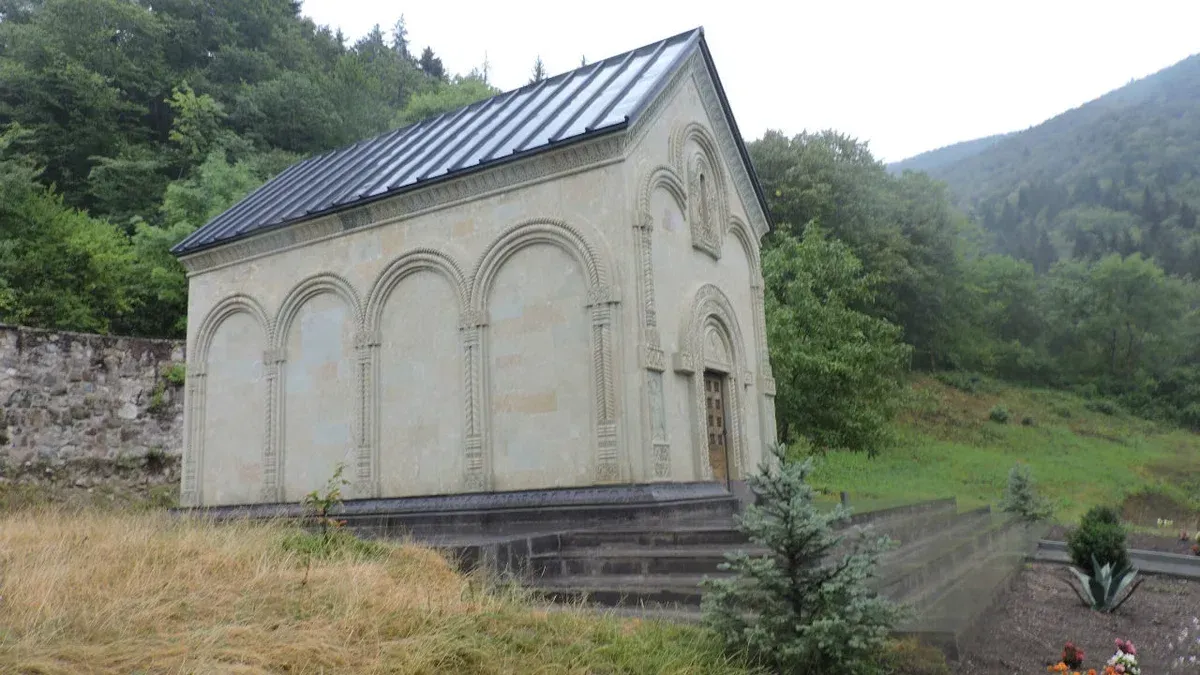
Kintsvisi Monastery is located 12 kilometers from Kareli, near the village of Kintsvisi. It belongs to a group of buildings from the turn of the 12th and 13th centuries that share common features: social function, location, proportionality, decorative design, and others. Within this canonical type, original and interesting examples were created, clearly demonstrating the evolution of the decorative system. Kintsvisi Monastery is one such clear example.
The monastery is surrounded by a fence. The main structure of the complex is the large domed Church of St. Nicholas (13th century) – a striking example of "brick architecture." The rectangular, elongated structure is almost entirely free of carved ornamentation, which was typical of Georgian churches. Paintings, also dating back to the 13th century, cover the walls of the entire interior. They were commissioned by Anton Glonistavisdze, the first minister (mtsignobartukhutsesi) of Queen Tamar. Particularly noteworthy is the interior's northern wall, which depicts King George III, Queen Tamar, and her son, Lasha-George. This wall also features an angel announcing the Savior's resurrection. The angel's figure, executed in light shades with flexible and flowing lines, and its expressive gaze leave a lasting impression on the viewer. The Kintsvisi Church's murals are a remarkable example of Georgian mural painting.
To the southeast of the main church are the ruins of a hall church dedicated to the Holy Mother of God, also dating back to the 13th century. On the western side of the church stands a small single-nave church, built in the late Middle Ages. The only decorative element in this church is a relief cross above the window on the eastern façade.

43 comments
Log in to leave a comment
Монастырь Кинцвиси — это не просто религиозный комплекс, а часть древней истории Грузии, расположенный у слияния рек Алазани и Кинцвиси. Он был основан в VI веке, но по‑настоящему расцвёл в XI–XII веках как важный духовный центр восточной Грузии.
Мне особенно понравилось, как автор описывает архитектурную целостность и ощущение пространства: белокаменный храм с гармоничными пропорциями, старинные купола и покой, которые сразу настраивают на медитативный лад. Этот монастырь — одно из тех мест, где понимаешь, почему грузины так глубоко чтят своих святых и духовные традиции.
Особенно ценно, что в рейтинге есть советы от местных: куда лучше подходить, чтобы увидеть лучшие ракурсы архитектуры, как совместить посещение Кинцвиси с другими религиозными объектами Кахетии и что стоит знать, чтобы уважительно вести себя в монастыре.
Отзывы других путешественников тоже вдохновляют: многие отмечают невероятную атмосферу тишины и умиротворения, которую испытывают в Кинцвиси, когда нет суеты, а вокруг только история и природа.
Спасибо автору за такой тёплый и информативный обзор!
А вы уже мечтаете посетить монастырь Кинцвиси — больше из‑за духовной атмосферы, архитектуры или красивых пейзажей вокруг? 🕊️✨
Почему нет фотографий изнутри? Пишите, что внутри стены храма покрыты росписями и фресками. Заинтриговали! Очень хочется посмотреть, что внутри, хотя внешне монастырь ничем не примечателен, кроме своей необычной формы.