




Tbilisi History Museum: Caravanserai and Ancient City
🏺 History museum · ⏱️ 1.5–2.5 hours · 📍 8 Ioane Shavteli Street, Old Town, Tbilisi
🏺 Before you visit
| 📍 Address | 8 Ioane Shavteli Street, Old Town, Tbilisi |
| 📅 Founded | 1910. Named after Iosif Grishashvili since 1984 |
| 🏗️ Building | Historic Karvan-Sarai (caravanserai), built in 1818. Museum here since 1988 |
| 🗃️ Collection | 61,000 items from the late 4th millennium BC to the present day |
| 🌿 Highlights | Garden 1.5 ha with 300+ plant species. Library ~30,000 books. Coin collection ~20,000 |
| 🏛️ Floors | 1st — souvenirs, 2nd — permanent exhibition, 3rd — temporary exhibitions |
| 💰 Entry | Check current prices before your visit |
🧭 Who this article is for
The Iosif Grishashvili Tbilisi History Museum is one of the most unusual museums in Georgia. Not because of the sheer number of exhibits — though there are 61,000 — but because the building itself is part of the collection. A caravanserai from 1818, where merchant convoys once stopped on the route from the Caucasus to Persia, now holds the history of the city from the Stone Age to the present day. This article is for those who want to understand what to look for across three floors of this unexpected place.
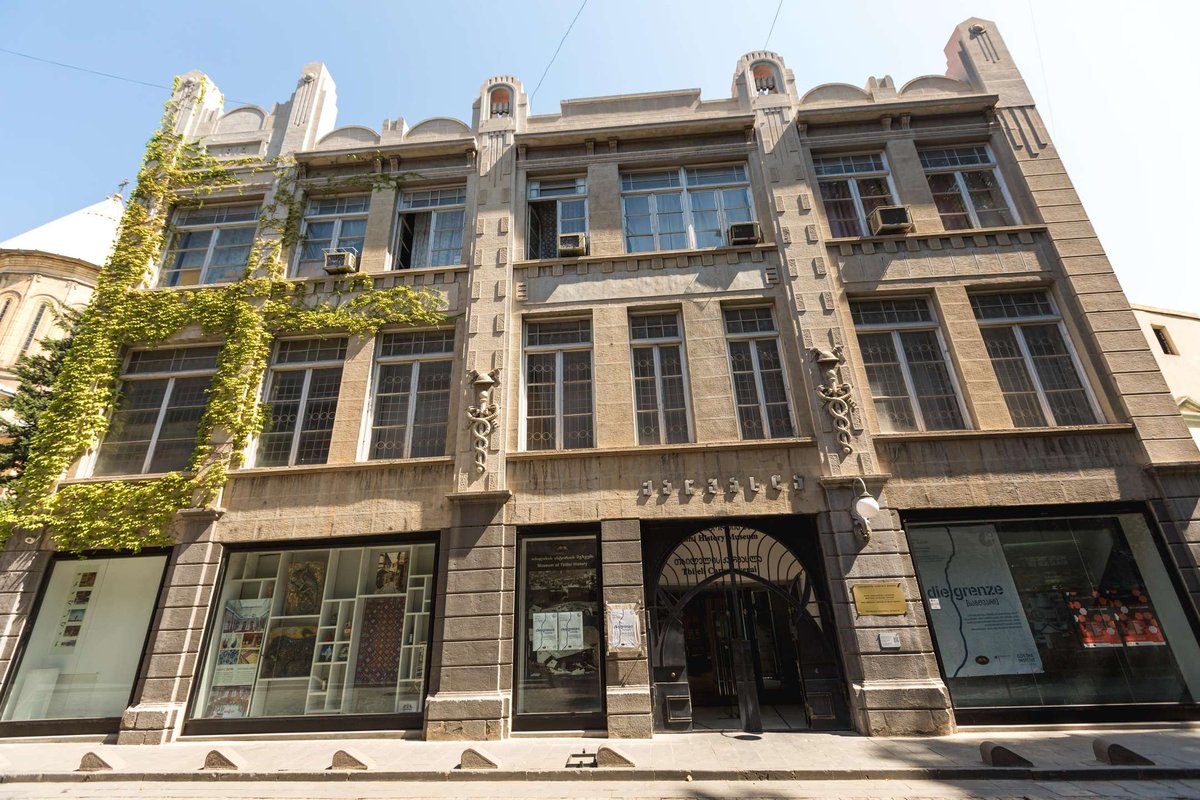
🏛️ A building that is itself an exhibit
A Karvan-Sarai (caravanserai) was a trading house, an inn for merchants and their goods. The building that now houses the museum was built in 1818 on a trade route connecting the Caucasus with Persia. Merchant convoys stopped here, traded, exchanged goods.
Then times changed. In 1988 the historic building became home to a museum founded back in 1910 as the "Municipal Museum" of the city administration. Since 1984 the museum has borne the name of poet and researcher of old Tbilisi Iosif Grishashvili (1889–1965).
One visitor put it precisely: "Placing a museum in the Karvan-Sarai building was a risky and innovative move. What's remarkable is how well the exhibits fitted into the surrounding space — while the building retained its unique atmosphere and architecture."
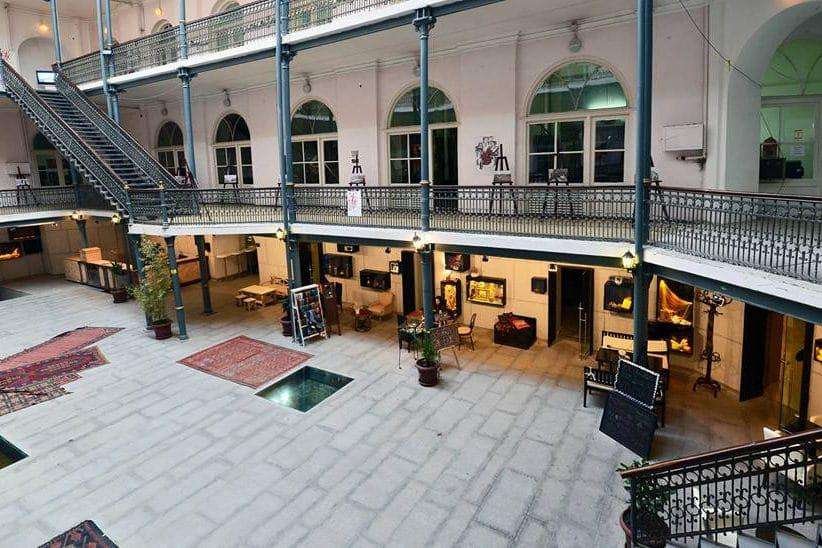
🏺 What 61,000 items contain
- Archaeology and bronze. The collection spans from the late 4th millennium BC to the present day. Bronze and gold artefacts from the 3rd–2nd millennia BC are among the first things that strike you: Georgia had advanced metalworking six thousand years ago.
- Old Tbilisi in objects. Old photographs and drawings of the city. Reconstructions of historic houses and workshops. A fragment of the ancient city wall. Weapons, household objects, clothing — things through which the daily life of different eras can be read.
- Coins — ~20,000. One of the largest coin collections in the region. Greek and Roman periods, medieval Georgian kingdoms, the Russian Empire — all in one fund.
- Georgian carpets and folk art. Carpets a hundred years old that still look new. Ceramics, woodcarving, folk costumes, jewellery — evidence of a living culture rather than a dead past.
- Georgian Orthodox Church. A dedicated section: icons, liturgical objects, books — the history of the Georgian Orthodox Church as a cultural institution.
- Library and garden. Library (~30,000 books) open to researchers. Garden of 1.5 hectares with over 300 plant species, many of them endemic to Georgia. Perfect for a pause mid-visit.
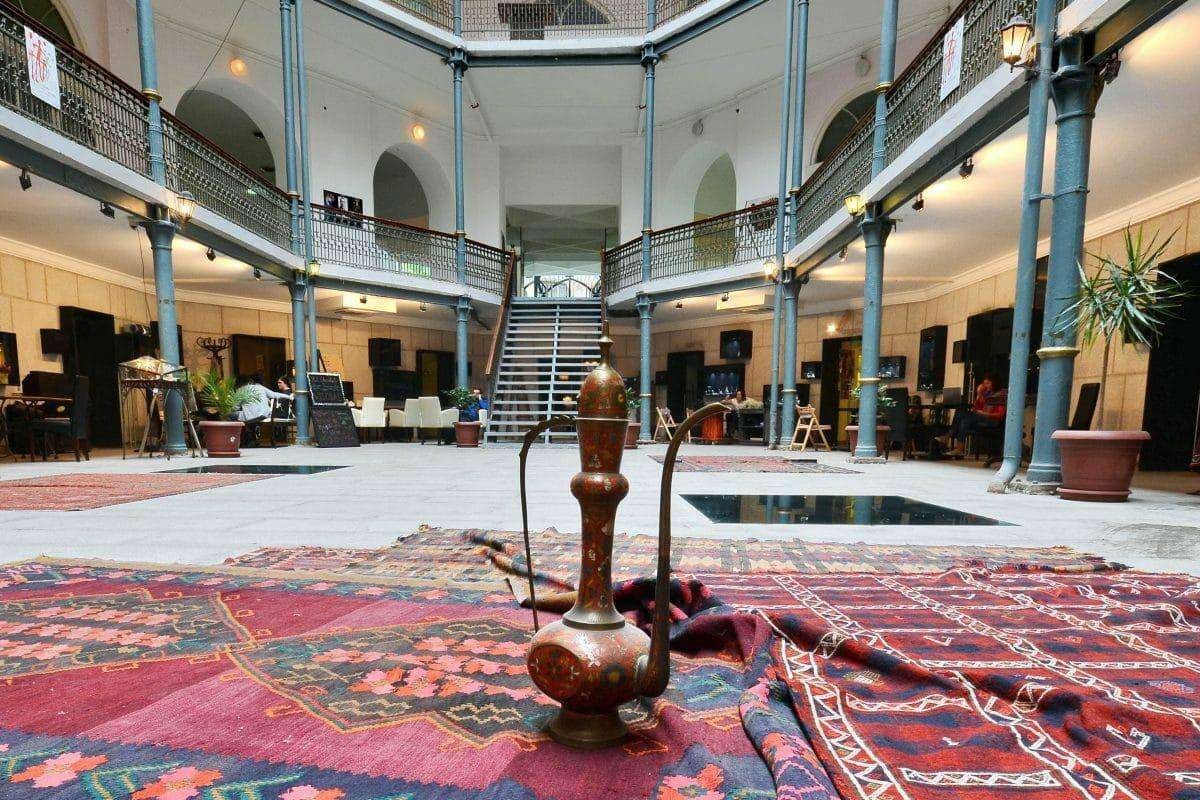
Don't miss the third floor with temporary exhibitions — these usually show contemporary Georgian artists. After the main tour, step into the garden: 1.5 hectares with plants from many of Georgia's regions — this is not just a rest area but a separate exhibition. The ground-floor shop has good books on Tbilisi's history.
🗺️ How to plan your visit
1️⃣ Start outside — look at the Karvan-Sarai building: this is early 19th-century architecture, and it feels that way.
2️⃣ Ground floor — the souvenir shop. Pick up books on Tbilisi's history, get your bearings with the floor plan.
3️⃣ Second floor — permanent exhibition. Bronze artefacts, house reconstructions, coins, photographs. Worth spending a long time here.
4️⃣ Third floor — temporary exhibitions, usually contemporary artists. Different every time.
5️⃣ The garden — a pause between the galleries. Look at the plants; find the fragment of the city wall.
💬 What visitors say
"It's incredible that the 1818 caravanserai building was preserved and used like this. That adds a special charm. A collection of 61,000 exhibits impresses — from ancient textiles to paintings by well-known artists."
"Everything here is interesting: from the historic building to the exhibits and the surrounding garden, which is itself an open-air museum of over 300 plants."
"My visit was not only fascinating but gave me a much deeper understanding of Georgian history. The ancient artefacts are particularly impressive."
🏁 Is it worth going
If you want to understand Tbilisi — not just look at it, but understand where it came from and what it was — there is no better place. 61,000 items covering six thousand years. A building that is itself a historical document. A garden of endemic plants. This is a museum where time moves differently.
ℹ️ Confirm opening hours and prices before your visit. Information is current at the time of publication.
🏛️ What to see and where to go nearby


Have you been to the Grishashvili Museum? What surprised you most — the Karvan-Sarai building itself, the coin collection, the garden, or something completely unexpected? Tell us — we read every comment ❤️
❓ Questions people ask most often
💬 Address: 8 Ioane Shavteli Street, Old Town, Tbilisi. The building is the historic 1818 Karvan-Sarai. Confirm opening hours before your visit.
💬 Iosif Grishashvili (1889–1965) was a Georgian poet and researcher of old Tbilisi. He is known for his book "The Literary Bohemia of Old Tbilisi" and other works on the city's history. The museum has borne his name since 1984.
💬 A Karvan-Sarai (caravanserai) was a historic trading house, built in 1818 on a trade route between the Caucasus and Persia. Merchant convoys stopped here. Since 1988 the building has housed the Tbilisi History Museum.
💬 61,000 items, covering from the late 4th millennium BC to the present day. Plus a coin collection (~20,000 coins), a library (~30,000 books) and a 1.5-hectare garden.
💬 Ground floor — souvenir shop. Second floor — permanent exhibition (the main collection). Third floor — temporary exhibitions, usually contemporary artists.
💬 Check the availability and language of guided tours in advance — conditions may vary.
💬 Yes. The reconstructions of old houses and workshops, ancient weapons and coins interest children. The museum also holds craft masterclasses (pottery, weaving) — check the schedule in advance.

43 comments
Log in to leave a comment
✅ Положительный момент статьи: Одним из положительных моментов статьи является то, что она дает подробное описание Государственного музея истории Тбилиси имени Иосифа Гришашвили, его экспозиций и фон, а также описывает его историческое и культурное значение для Грузии. Статья также подчеркивает важность музея как научного центра и места, где проводятся мероприятия, связанные с историей и культурой Грузии.
✅ Отрицательный момент статьи: Статья не содержит явных отрицательных моментов, но может быть, что-то не упомянуто или недостаточно подробно описано. Также, возможно, некоторые посетители музея могут иметь другие мнения или ощущения относительно экспозиций и коллекций, которые не были упомянуты в статье.
Несмотря на положительные и отрицательные моменты статьи, я благодарю автора на каталоге Мадлоба за интересную и полезную статью!!
тбилисском Караван -Сарае.Здесь собран большой фонд,много интересных композиций.Основан музей был в 1910 году.Собрано 61000 экспона-
тов.Отражена вся история Тбилиси с древних времён и до наших дней.Отличный музей,обязательно стоит его посетить.
Это муниципальное учреждение культуры Грузинского народа.
Он датируется 1818 годом, и расположился в караван-сарае торговом пути
Арцруни. Относительно не давно с 1984 года музей стал называться в честь поэта
Йосифа Гришашвили.
Выставочный материал датируется 4 тысячелетием до нашей эры.
В качестве артефактов выставлены, археологические, этнографические и архивные
материалы. Ещё есть богатая фотоколлекция, макеты старых домов, мебель,
посуда и образцы одежды.
Постоянная выставка находится на втором этаже, на первом этаже можно приобрести
различные сувениры, третий этаж временная выставка в основном художников.
Очень хотелось бы что бы автор в статье подробно описал содержание музея,
выставочный зал. Фотографий древних предметов быта, одежды, и хозяйства.
Потому что не все могут попасть в этот музей. А хочется узнать по больше…