


Facts About Georgia: Traditions, Etiquette and Culture
Interesting facts about Georgia are often sought out by prospective tourists. Georgian traditions and legends invariably amaze newly arrived vacationers. The locals' unusual way of life, their spirited manner of communication, their immense friendliness, and their eagerness to invite strangers to share at least one glass of wine—all of this may seem so unusual to a resident of central Russia.
This is often simply breathtaking, leaving tourists feeling as if they've landed on another planet, but that planet is Georgia. Don't let this small mountainous country fool you with its size; trust me, it will captivate you with its soul.
There are so many incredible and curious things here that even a long vacation won't be enough to see them all.
As trivial as it may sound, at first glance, everything around tourists will seem unusual: intricate panel houses with numerous balconies, kind police officers always ready to help.
Delicious, inexpensive wine and huge portions of food, long toasts that carry a certain meaning and reveal yet another interesting legend or fact from Georgian history, and, finally, people who always go through life with a smile.
The Georgian language
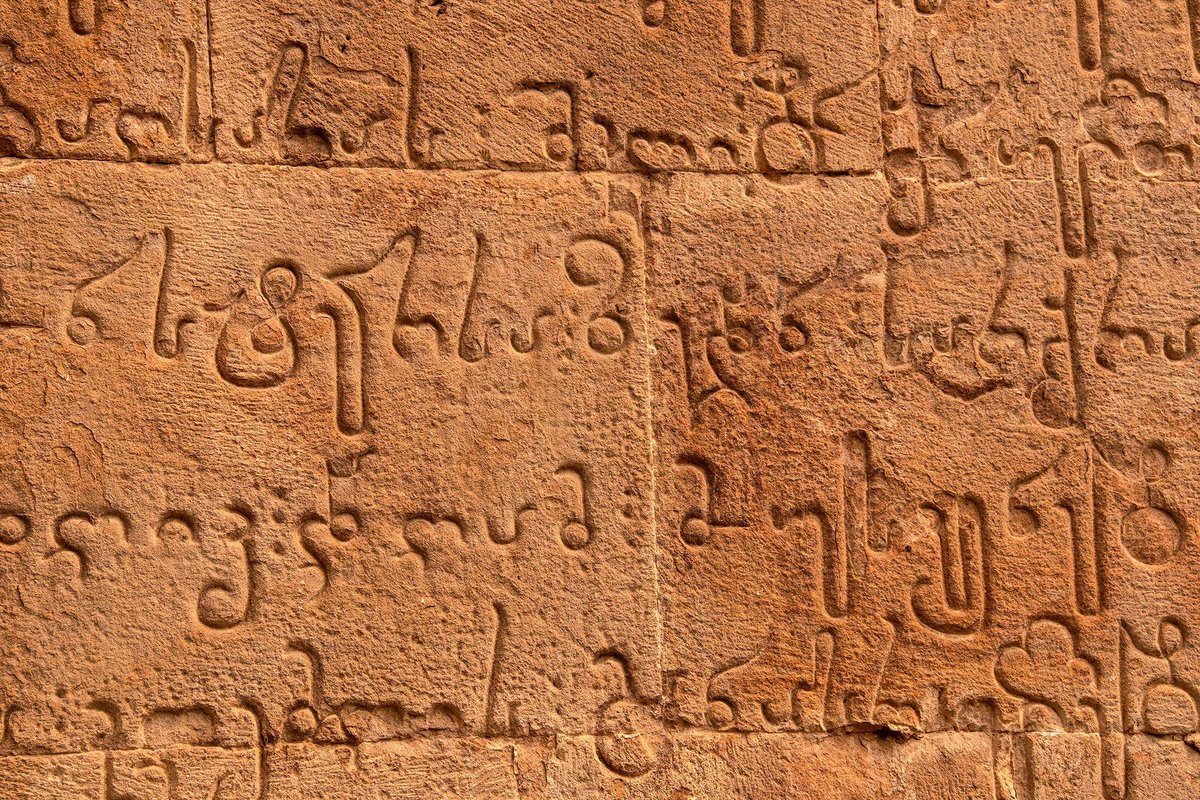
A unique ancient alphabet with 33 letters—5 vowels and 28 consonants—has no capital letters. Each sound has its own letter. Everything is written as it sounds, significantly simplifying spelling.
Georgian has no distinction between neuter, masculine, and feminine genders. The grammatical structure of Georgian, according to some linguists, is much more complex than that of most European languages. During the Soviet era, the Georgian SSR was the only union republic whose constitution specified the official status of the Georgian language.
The first book in Georgian was printed in 1629 in the Vatican—a Georgian-Italian dictionary. The first book published in Georgia itself was the poem "The Knight in the Panther's Skin," published in 1712.
The Georgian language is very conservative and has rarely changed over the centuries. Georgian schoolchildren study Shota Rustaveli's poem in the original, along with the first monument of Georgian writing, the 5th-century "Martyrdom of Shushanik." And, without false modesty, it can be said that, by many estimates, the Georgian language is one of the most beautiful languages in the world.
Counting System
It turns out that, unlike other languages, Georgian uses a vigesimal counting system: a number is determined by the number of twenties and the remainder. The ancient Mayans and the Basques also used this system.
Thus, "thirty-six" in Georgian sounds like "twenty plus sixteen." And the numeral "fifty" has nothing in common with the numeral "five"; these words have different roots. "Fifty" in Georgian sounds like "twice twenty and ten." Therefore, the first twenty numerals need to be learned first.
Today, vigesimal counting is used by many Caucasian peoples: Chechens, Adyghe, and even Ossetians, who adopted this counting system from their native Iranian decimal system. In Europe, this system is actually used by the Danes and the French. For example, the Danish numeral "60" literally translates as "third twenty." This leads to the theory that decimal counting is historically unique to the Caucasian peoples, and that it was adopted by others from them. It is believed that the Celts lived near the Caucasus, adopted this system, and brought it to Europe, where it was from the Gaulish Celts that it entered the French language.

Basque Country Sakartvelo
Incidentally, some scholars hypothesize that the Basques and Georgians are fragments of a single ancient cultural and ethnic group, especially since Spain and Georgia were both known as "Iberia" in ancient times.
It is believed that both Georgians and Basques descended from a single Caucasian tribe that lived in the territory of Colchis (now Abkhazia and Georgia) and gradually migrated west in search of gold. Historical records indicate that one of the kings of Georgia wrote to the king of Spain, addressing him "From the king of Iberia in the east to the king of Iberia in the west."
Also, up until the 17th century, Georgian historians referred to the Basque Country as Sakartvelo (Sakartvelo is Georgia's self-designation). At the time when Giorgi Saakadze requested troops from Western Europe to fight the Turks and Persians, the Pope promised the Georgians every possible military aid if they converted to Catholicism, like their Spanish-Iberian brothers.
Many modern travelers note the similarities between Spain and Georgia, primarily in mentality. Indeed, there are many similarities between the two peoples: a cult of food, clay cups for aging wine, songs, and similar sounds in language. However, the theory of a kinship between the Basques and Georgians has not received serious scholarly support.
National Anthem of Georgia
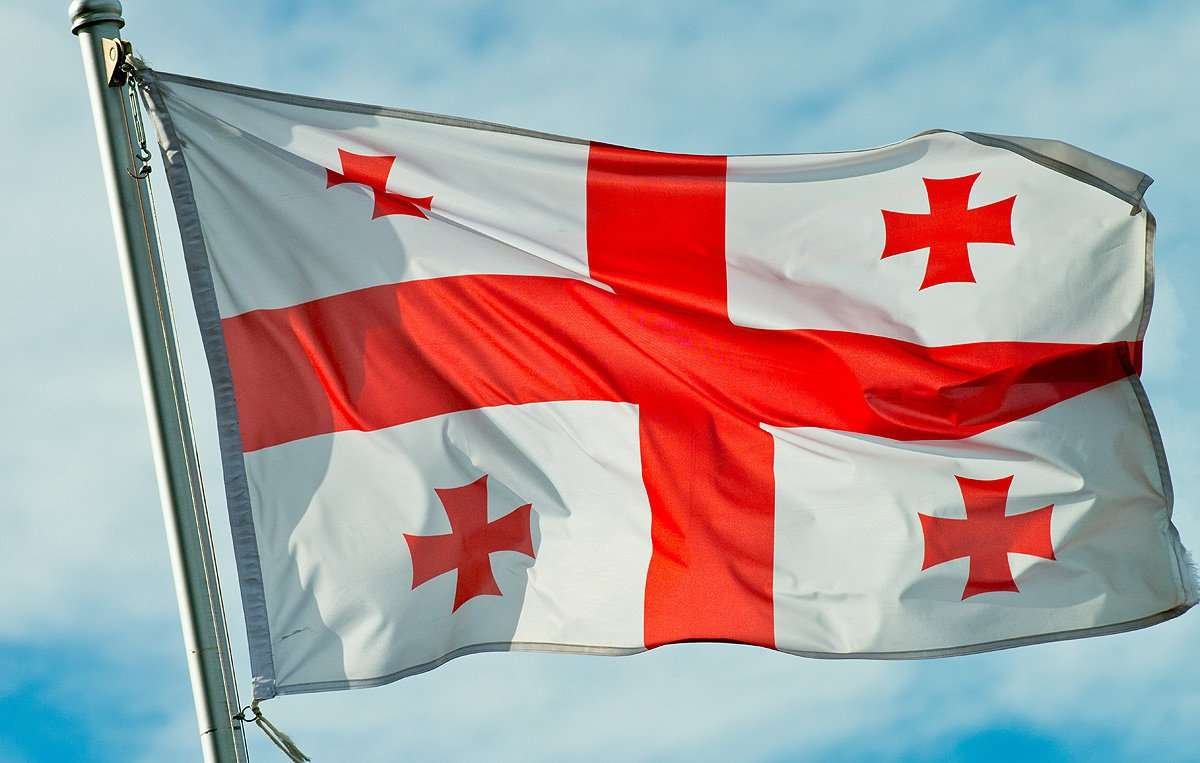
The national anthem of Georgia, adopted in April 2004, is called "Tavisupleba" ("Freedom"), one of the main state symbols of Georgia, along with the flag and coat of arms. The music for the anthem was taken from two operas by Zakharia Paliashvili, a composer who lived in the early twentieth century: "Daisi" ("Twilight") and "Abesalom and Eteri."
The lyrics were written by contemporary Georgian poet David Maghradze, who used quotations from the poems of classical Georgian poets Akaki Tsereteli, Grigol Orbeliani, and Galaktion Tabidze. Interestingly, in recent years, a new tradition has emerged among Georgians to stand during the performance of the anthem and place their hand over their heart, as well as to sing the anthem at weddings.
A literal translation is:
My icon is my homeland, Its iconostasis is the whole world, Illuminated mountains and valleys, Divided among equals by God. Our freedom today sings its praises to the future, The dawn star will rise and shine between two seas, Glory to freedom, glory to freedom!
On the anniversary of "Gavrilov's Night," the event commemorating the events of June 20-21, 2019, concluded in central Tbilisi with the performance of the Georgian National Anthem. Along with hundreds of people gathered on Tbilisi's main avenue, renowned Georgian singer Tamara Chokhonelidze performed the anthem.
Georgian Table Etiquette
A traditional feast is an essential attribute of Georgian hospitality. Table order and proper etiquette are key features of the feast. This is the responsibility of the toastmaster, who is chosen at the very beginning of the celebration. The toastmaster means "leader of the celebration."
Toasts are offered in a specific order. The first, obligatory, is a welcoming toast, wishing everyone well-being. Then comes the toast itself, congratulating everyone on the occasion. Next come the main, traditional toasts to peace and family, the homeland, parents, children, the deceased, relatives, and friends. The final toast at the festive table is usually raised to the hosts, thanking them for their hospitality and wishing them happiness and prosperity.
Finally, everyone drinks to the toastmaster, expressing gratitude for a pleasant evening.
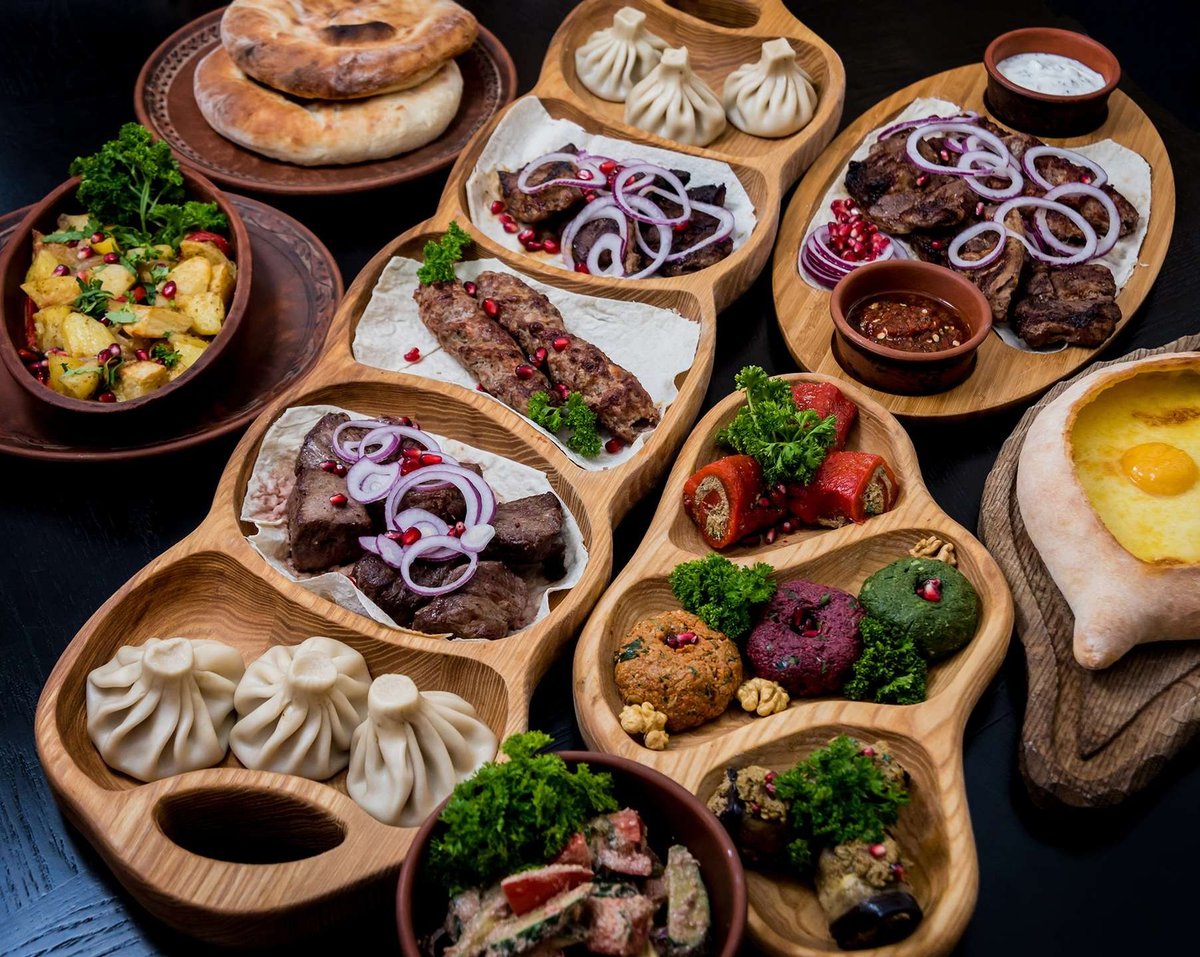
Georgian cuisine also deserves a mention—it is the food of the gods. You won't find such an abundance of food and drink in any other cuisine in the world. Of course, no Georgian feast is complete without mtsvadi—Georgian shashlik—and several types of wine. It's impossible to resist the pleasure of sampling everything on your plate. It's not for nothing that Alexander Pushkin wrote, "Every Georgian dish is a poem."
National Characteristics
Georgia is a multiethnic state, with the majority of the population consisting of peoples from the Transcaucasus. The total population of Georgia (excluding the partially recognized states of South Ossetia and Abkhazia) as of January 1, 2019, was 3,723,500.
While the population of Tbilisi alone, as a populated area, according to the 2014 census, is 1,062,282, modern Georgia is home to 10 ethnic groups: Georgians (86.8%), Azerbaijanis (6.3%), Armenians (4.5%), Russians (0.7%), Ossetians (0.4%), Yazidis (0.3%), Ukrainians (0.2%), Chechen-Kists (0.2%), Greeks (0.1%), Assyrians (0.1%), Jews, Abkhazians, Kurds, Avars, and others (0.4%).
According to some sources, more than 120 ethnic groups live in Georgia!
The major Georgian cities of Tbilisi, Batumi, and Rustavi are traditionally multinational. According to the 2002 census, of Tbilisi's 1,081,679 residents, Georgians made up 84.2% (910,712 people), Armenians 7.6% (82,586 people), Russians 3.0% (32,580 people), Azerbaijanis 1.01% (10,942 people), Ossetians 1.0% (10,268 people), Greeks 0.4% (3,792 people), and others 2.9% (27,471 people).
Jews have lived in Georgia for 2,600 years, and there has never been anti-Semitism. During Soviet times, Meskhetian Turks and Pontic Greeks were deported. Turks were forced to flee Uzbekistan in the late 1980s due to ethnic conflicts, but they were never allowed into Georgia. Georgia is recognized as a multicultural country, with over 80% of the indigenous population practicing Orthodox Christianity. The second largest religion is Islam, practiced by approximately 10% of the population. The Armenian Apostolic Church, Catholicism, Protestantism, and Old Believer communities are also represented in the country. Interestingly, during your travels, you can encounter landmarks representing various religious movements: Jewish synagogues, Catholic churches, and mosques.
The capital of Georgia is Tbilisi
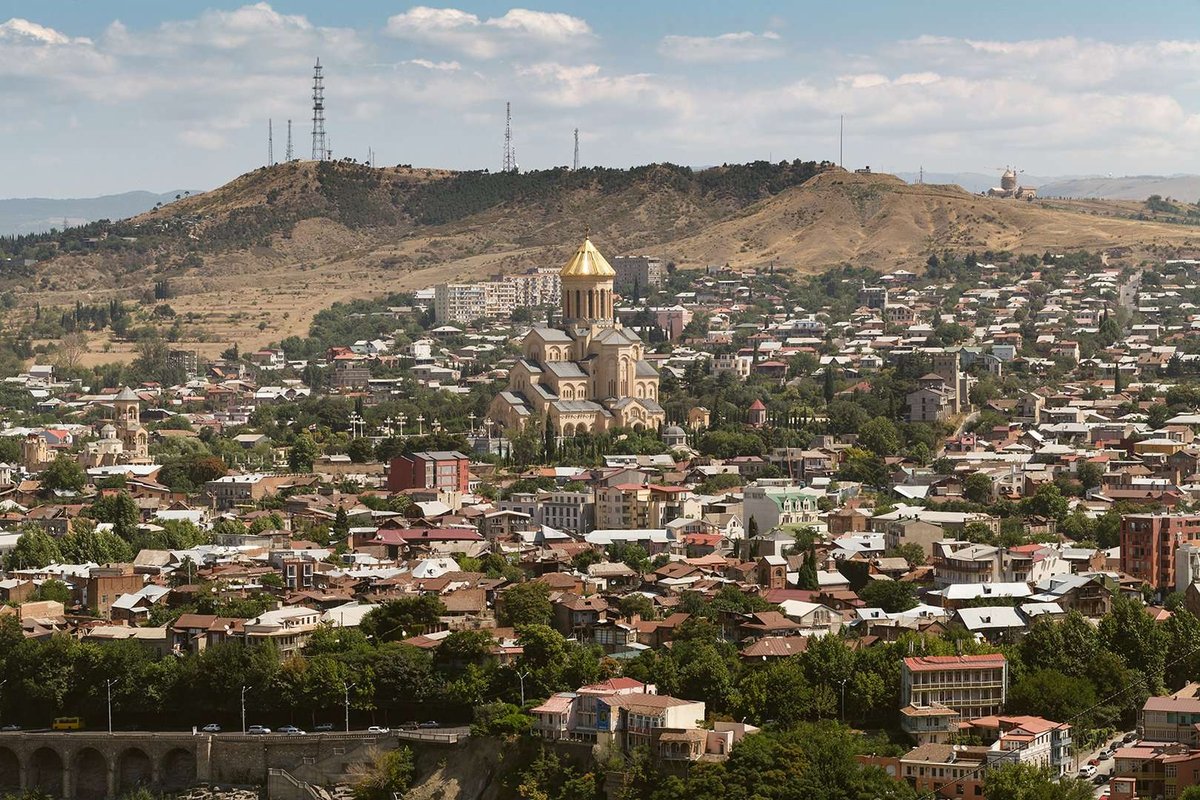
Tbilisi is one of the oldest cities in the world, dating back approximately 1,500 years. The name of Georgia's capital derives from the word "tbili," meaning "warm," referring to the warm hydrogen sulfide springs flowing from Mount Tabori. However, Tbilisi wasn't always the capital in ancient times. This role was held by the city of Mtskheta, and later by Kutaisi.
Interestingly, for 400 years (until the 11th century), Tbilisi was the capital of an Arab feudal domain in Georgia, known as the Tbilisi Emirate. Currently, Tbilisi is home to more than a third of the country's population. Today, it is a major metropolis that has retained its distinctive charm, a city with a rich history and unique architecture.
Tbilisi is Georgia's largest city, home to over a million people. The capital of Georgia is developing rapidly: new modern residential complexes and shopping and entertainment centers are being built, comfortable and well-equipped public spaces are appearing, and foreign investment is attracting. Overall, the city is becoming increasingly attractive to tourists year after year, earning the sincere admiration of travelers from all over the world. Tbilisi is home to a large number of historical and architectural monuments that reveal the history of the city and Georgia as a whole.
It's truly difficult to find a more interesting and captivating city on the world map than the capital of Georgia. A multitude of iconic landmarks, a rich history, a warm and mild climate, the unique hospitality of the Georgians—these and other advantages of Tbilisi are endless!
Church Holidays in Georgia and Their Significance
After the collapse of the USSR, the majority of the population became very religious. Churches are always crowded, and many observe fasts and celebrate religious holidays.
The country's major religious holidays are Christmas, Epiphany, Easter, the Dormition of the Blessed Virgin Mary, St. George's Day, and Trinity Sunday. Ninooba is a major church holiday commemorating the arrival of St. Nino, who brought Christianity to Georgia.
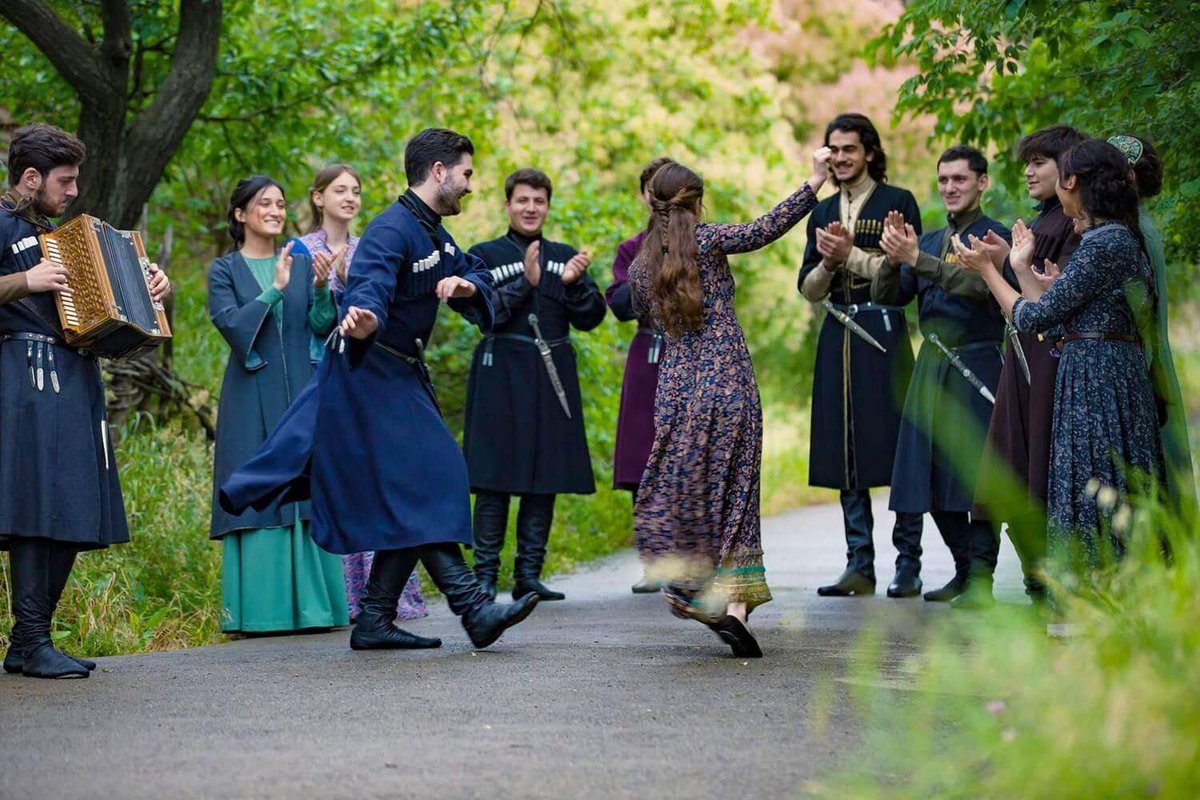
On St. George's Day—the most revered and beloved saint among Georgians—all churches in Georgia ring their bells, and believers kneel in prayer to St. George. They ask him for family well-being, the health of loved ones, and peace. And, of course, Rtveli, an ancient Georgian holiday honoring the grape harvest, is not tied to a specific date, as the grape harvest varies across Georgia. If you're looking to experience true Georgian traditions, try to attend this festival. Rtveli is a celebration of joy, dancing, laughter, singing, and, of course, the famous Georgian wine, which flows freely on this day.
You might notice how, when passing a church, everyone on public transportation crosses themselves, including the driver, who is holding a cigarette and a cell phone.
One of the most important manifestations of Georgian Orthodoxy is fasting. To observe it and retain customers, restaurants offer guests delicacies uncharacteristic of Georgian cuisine, such as Lenten khachapuri or khinkali with potatoes and mushrooms.
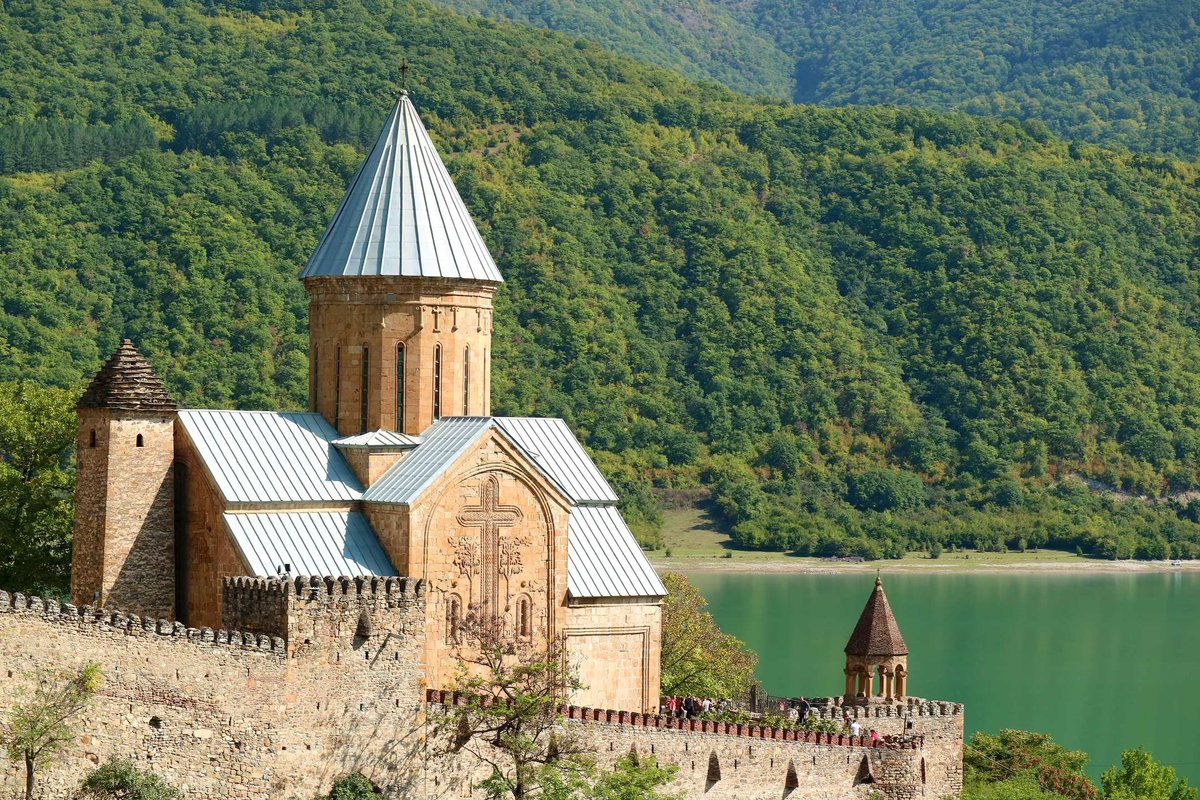
Georgian Singing - Features
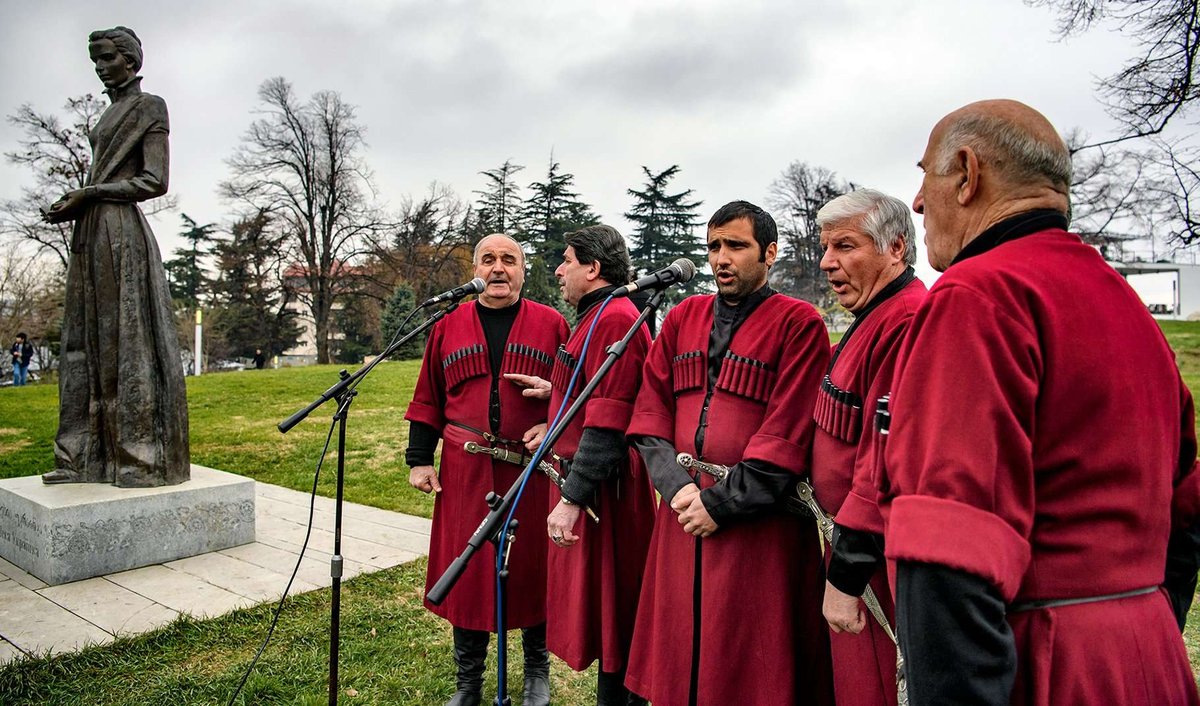
One of the most fascinating musical phenomena is Georgian polyphonic singing, comparable in antiquity to Gregorian chant. Every Georgian is proud of the traditional songs and musical culture of their country.
Georgian polyphonic singing is a priceless tradition, inscribed on the UNESCO Intangible Cultural Heritage List. Traditionally, typical Georgian songs are performed by men, spanning at least three vocal ranges. Interestingly, the Voyager space probe, sent by NASA in 1976 to search for extraterrestrial intelligence, carried a recording containing a Georgian folk song, "Chakrulo."
Singing is an integral component of legendary Georgian hospitality and is a crucial part of the Georgian feast. A supra, a Georgian feast, can last for several hours and will inevitably include long and eloquent toasts followed by an appropriate song.
Unfortunately, 70 years of Soviet repression had a negative impact on Georgian traditional music, and some songs were forgotten forever. Since the collapse of the USSR, musicologists have been collecting and reviving old songs.
It is noteworthy that after the adoption of Christianity, Georgian folk songs began to develop in a religious context, with church chanting becoming especially widespread. Each region of Georgia has its own characteristic polyphonic and monophonic forms; for example, the bourdon is found in Kakheti songs. There are 15 distinct types of Georgian polyphony.
Bride Kidnapping in Georgia - History and Modernity
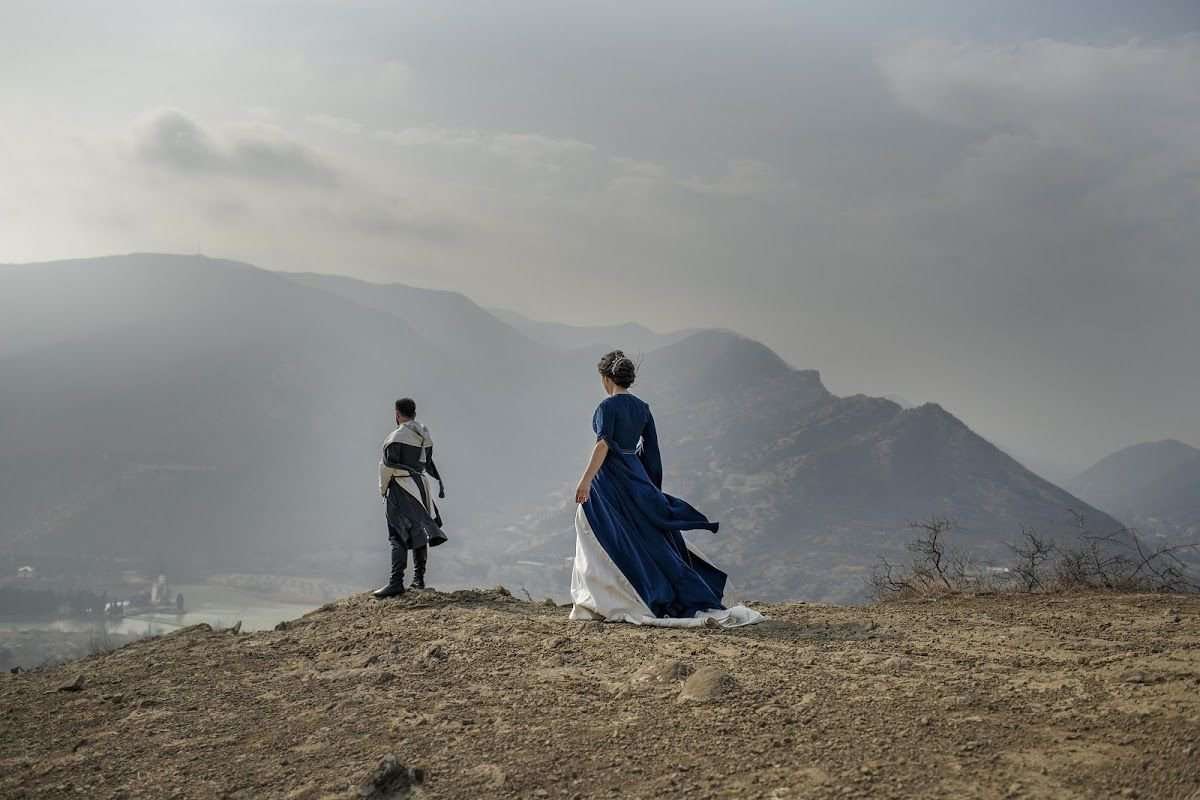
The practice of bride kidnapping and forced marriage, common in the Caucasus, is now considered a crime in most countries, rather than a legal form of marriage. The advantage of bride kidnapping for the groom is that he avoids having to pay the bride's parents a bride price.
Typically, the groom and his friends, or the groom's friends alone, kidnap the bride and bring her to the groom's house. There, the groom's relatives try to calm the kidnapped girl and persuade her to marry her abductor. However, sometimes bride kidnapping occurs with everyone's consent as a ritual to circumvent certain traditional taboos.
In Georgia, the custom of bride kidnapping was common until just a few years ago. A girl could be kidnapped for the purpose of marriage. Historically, bride kidnapping was common and justified if it was done with the bride's consent. In the twenty-first century, this tradition has lost its relevance, but it is still occasionally practiced in more rural areas. Clearly, such abductions were most often "contractual" and committed by mutual consent.
In recent years, as criminal penalties have become more stringent in the country, cases of abduction have virtually disappeared: there's always the risk that a woman who has given clear hints may later change her mind and send her would-be husband to prison.

48 comments
Log in to leave a comment
Радует, что статья упоминула про пение, а именно полифонический вокал. Однако про это мало почитать, это нужно услышать!
Я не знала, что в Грузии есть город Рустави, и самое интересное из статьи, что меня действительно удивило это похищение невест, рада, что это уже в далеком прошлом, думала это традиция была только на Северном Кавказе. Очень интересная, открытая статья, полезная, можно даже рассказать друзьям.