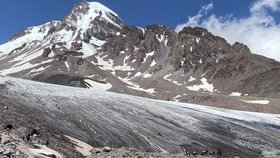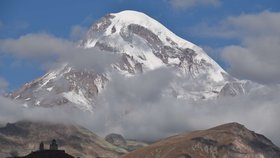





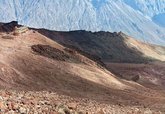

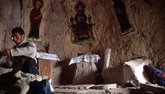

Betlemi Cave is located on the Mount Kazbek massif, in Kazbegi Municipality, Mtskheta-Mtianeti, among the natural attractions of the region. Its name is simply similar-sounding to the biblical Bethlehem; there's no direct connection between the two. The cave sits on the ridge separating the Gergeti and Abano glacier basins, at an absolute elevation of around 4,100 metres above sea level, well above the glacier line.
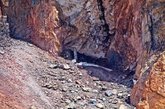
The entrance to the rock-cut hermitage is carved into a sheer cliff of reddish andesite, at a height of 350-400 metres above the base of that cliff, making the site extremely hard to reach even by the standards of mountainous Georgia: visiting requires mountaineering skills and appropriate gear, this is not a walking trail for casual visitors. A metal door on a chain once sealed the entrance; today it's kept in the Stepantsminda local history museum alongside a bronze candlestick and church utensils. Inside, the hermitage opens into a spacious domed chamber with semicircular walls, a stone-slab floor, and a window facing south.
The cave was first noted by mountaineer Levan Sujashvili in 1947, with official research beginning the following year, 1948, uncovering coins, books and icons that testify to monks having lived here across different centuries. Inscriptions on the walls date to the 10th-11th centuries. The site is mentioned by the 18th-century historian Vakhushti Bagrationi and is known in Georgian culture as the inspiration for a poem by Ilia Chavchavadze. The route to the cave begins in the village of Stepantsminda.