




🚗 How to Drive in Georgia: Traffic Rules, Road Signs, Fines and Mountain Roads
Driving in Georgia: what to know first
Right-hand traffic, European rules and a few local quirks. Roads between cities are good; mountain roads are narrow and demand attention. Fines rose sharply from 1 May 2026, and cameras are everywhere.
Driving in Georgia is a convenient way to reach the parts of the country that public transport can't: mountain monasteries, wine villages, the semi-deserts of the south-east. The rules are broadly European, but there are local specifics worth knowing in advance, from driving style to road signs and the recent, noticeably higher fines.
This article is a general guide to driving: rules, signs, rental, mountain roads, police. If it's fines you're after specifically, how to check them, how much they are, how to pay online, there's a separate, detailed article for that: Traffic Fines in Georgia 2026.
📌 General Rules: Licence, Age, Documents
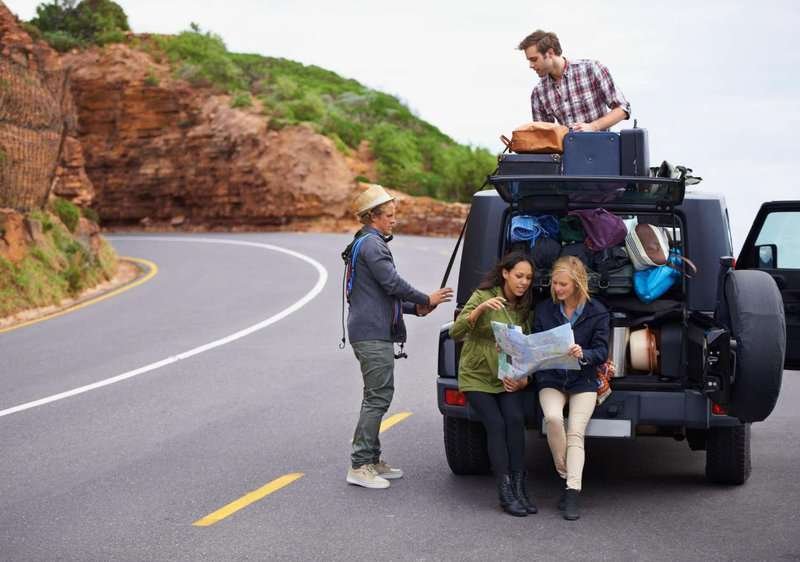
Georgia has right-hand traffic, and most cars are left-hand drive. To get behind the wheel you need a valid driving licence, passport and vehicle documents. If your licence isn't in Latin script or English, an International Driving Permit is advisable.
To rent a car, the minimum age is 21 with at least one year of driving experience. This applies at most rental companies.
Separately, from 2026: health insurance became mandatory for all foreign nationals on entry (minimum coverage 30,000 GEL), and foreign vehicles must carry a motor insurance policy valid in Georgia. Details are in the fines article, which also covers insurance.
🛣️ Speed Limits
Georgia has plenty of enforcement cameras, both in cities and on major highways. Limits are standard:
In built-up areas, 60 km/h. Outside built-up areas, 90 km/h. On motorways, 110 km/h, unless a sign says otherwise.
Worth respecting the limits for more than the fine: Georgia's mountain roads are unpredictable, and a margin of speed here is directly about safety.
🚸 Seatbelts and Carrying Children
All front-seat passengers must wear seatbelts. Children under 12 travel in the rear seats only, and under-7s need a child seat. From 1 May 2026 the fine for an unfastened belt is 50 GEL.
🪧 Road Signs in Georgia
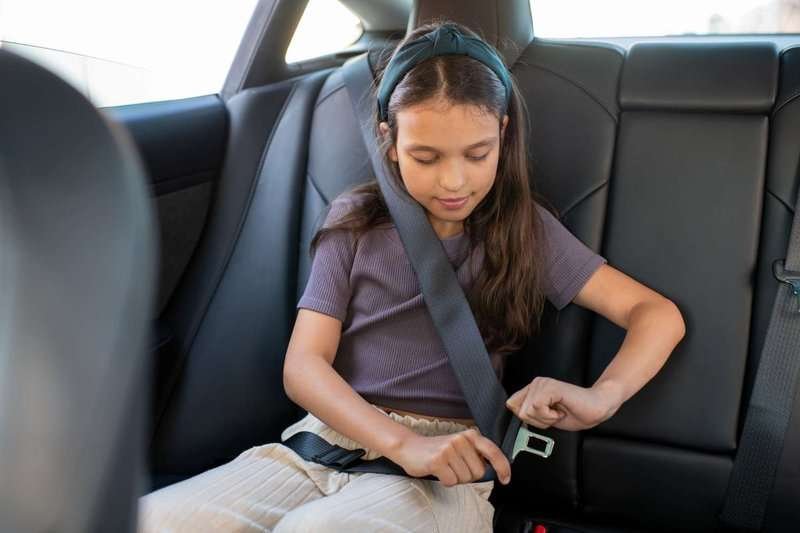
Road signs in Georgia follow the international Vienna Convention, so they're broadly familiar to any driver from Europe or the CIS. But there are nuances worth remembering.
Language on signs. Place-name and direction signs are usually shown in both Georgian and English (Latin script). On secondary roads and in remote areas you'll find Georgian-only signs, so it helps to know your destination's Latin-script name in advance.
Warning signs in the mountains. Mountain roads frequently carry "steep descent," "dangerous bends," "rockfall," "wild animals" and "livestock crossing" signs. Don't ignore them: landslides and animals on the road are a real, not decorative, hazard.
Priority and roundabouts. At roundabouts, priority goes to traffic already on the circle. Cities have many unregulated junctions where the right-hand rule applies.
Stopping and parking signs. From 2026, fines for illegal parking rose sharply (parking on the pavement in major cities, 100 GEL). Watch carefully for "no stopping" signs and yellow markings at the road edge.
⚠️ Current 2026 Fines: In Brief
From 1 May 2026, traffic fines in Georgia rose noticeably. Here are the key amounts worth keeping in mind:
Speeding (15–40 km/h over), 100 GEL. Phone use without a hands-free kit, 50 GEL. Unfastened seatbelt, 50 GEL. Parking on the pavement in major cities, 100 GEL. Drink-driving, from 700 GEL and licence suspension.
These are just the headline items. The full fine table (speeding, overtaking, drifting, trucks, pedestrians), the 20% discount for paying within 10 days, and step-by-step instructions on how to check a fine by plate number and pay online, all of that is in the separate article: Traffic Fines in Georgia 2026: Full Guide.
An unpaid fine multiplies 8–10 times on your next entry into Georgia, and the border service database keeps debts indefinitely. Before departure, check your fines at police.ge by plate number. For the step-by-step process, see the fines guide.
Noise Level Checks Starting September 1, 2026
Starting September 1, 2026, Georgia will begin checking the noise levels produced by vehicles while driving. Checks will be carried out using certified portable noise meters that meet the international ISO 5130:2019 standard. If a police officer has reasonable grounds to believe a vehicle exceeds the permitted noise level, they can stop the car for a measurement.
In populated areas, between 11 PM and 8 AM, a vehicle's noise level must not exceed 80 decibels. When stopped for a check, the driver must pull over, present their ID and vehicle registration certificate, and not obstruct the measurement.
Fines for exceeding the limit:
- first violation, 100 GEL and minus 10 points
- repeat violation, 200 GEL and minus 20 points
- third and every subsequent violation, 300 GEL and minus 30 points
The measurement procedure itself is fairly strict: the noise meter must be calibrated both before and after the check, background noise is measured first, and if the difference between the vehicle's noise and the background level is less than 10 decibels, the result is considered invalid. Measurements are only taken at air temperatures between −10°C and +50°C, and strong wind, precipitation, reflective surfaces and other factors that could affect accuracy must also be taken into account.
🚙 Driving Style and Road Conditions
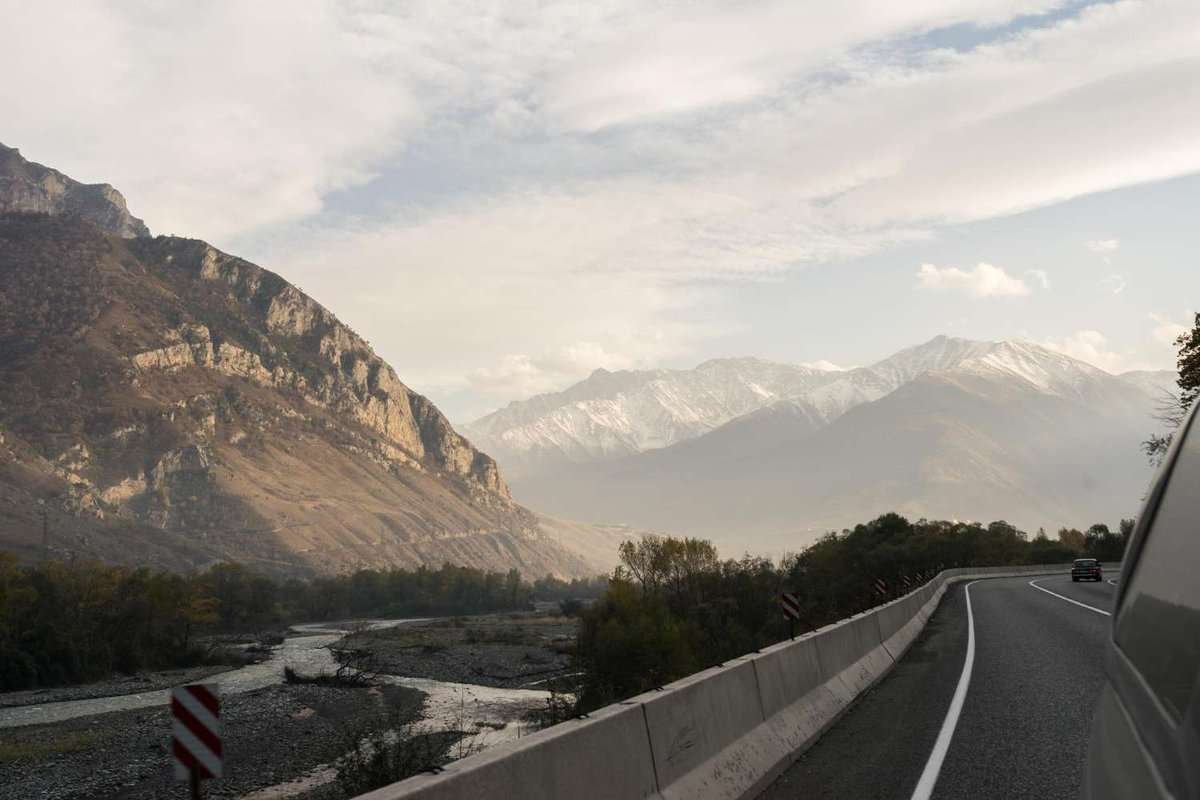
Georgian drivers, especially in cities, drive assertively: they may change lanes suddenly, honk, or overtake in unexpected places. Be ready for it and keep your distance, a defensive driving style pays off here.
Roads between major cities (Tbilisi, Batumi, Kutaisi) are in good condition. In rural areas and the mountains, though, they're narrow, winding and sometimes unpaved. In the rainy season landslides are possible and some roads may close. Always check the current condition of your route before setting off, especially in the highlands.
⛰️ Mountain Roads: How to Drive Them
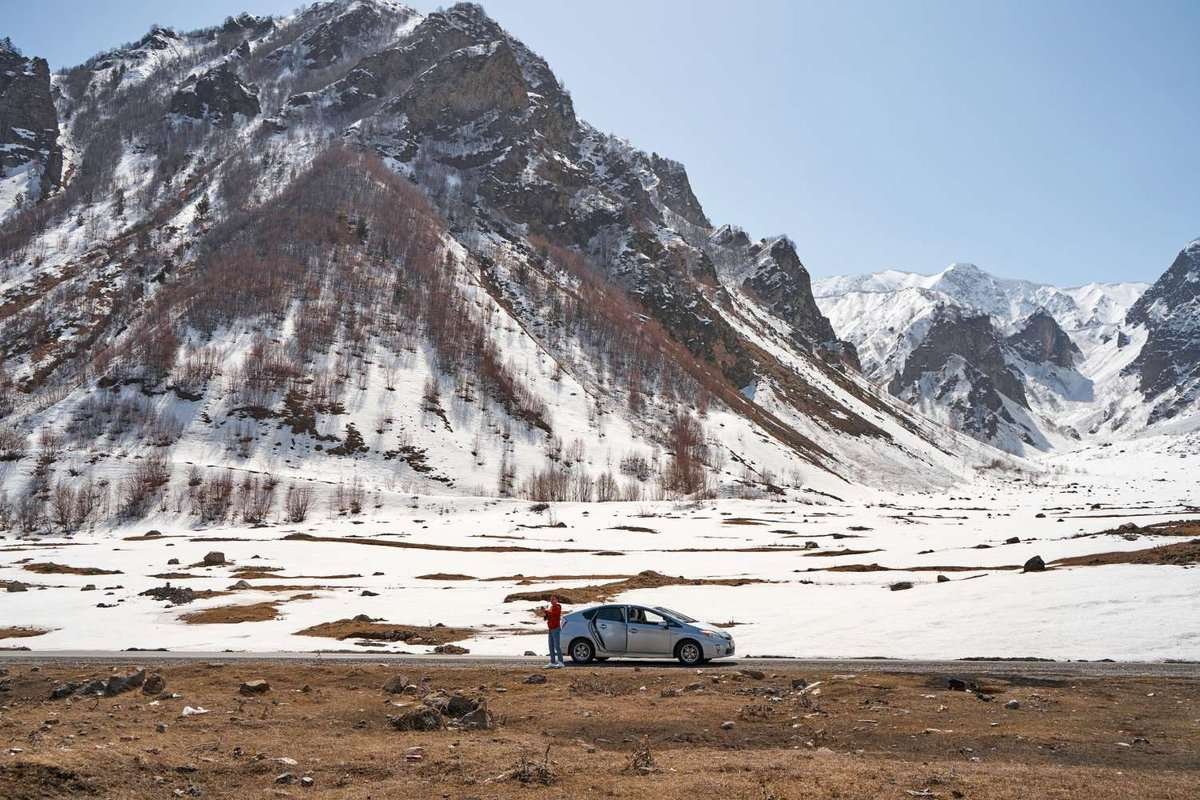
Mountain routes are a story of their own. Steep descents and climbs, sharp bends, unguarded drops, and passing oncoming traffic on narrow sections.
A few rules that genuinely help:
Use engine braking. On long descents, don't ride the brake pedal continuously, brakes overheat. Shift down to a lower gear.
Slow down before bends. Blind corners are the norm in the mountains. An oncoming car may come round the bend in the centre of the road.
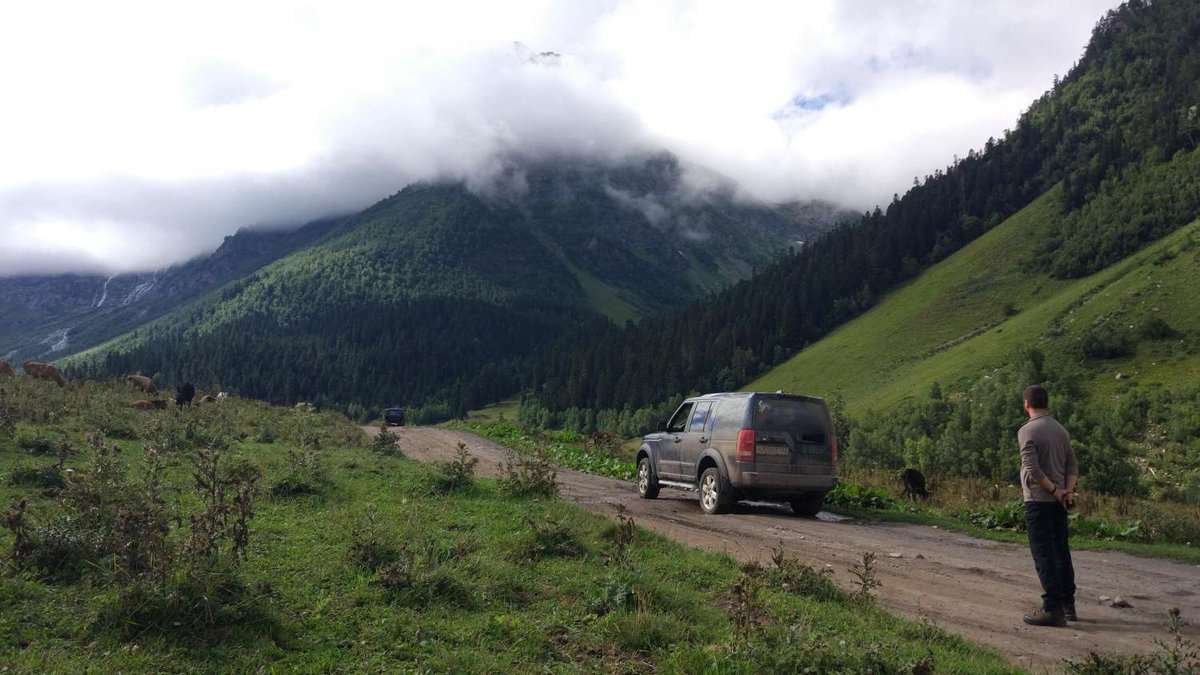
Take a 4x4 for the regions. Tusheti, Svaneti, Khevsureti and Vashlovani require an off-road vehicle, an ordinary car won't make it. Some roads (like the Abano Pass in Tusheti) are seasonal and open only in summer.
Prepare the car. Spare wheel, first-aid kit, water, phone charger, offline maps. Signal drops out in the mountains.
👮 Dealing with the Police
If you're stopped: stay in the car, keep your hands visible, and have your licence, passport and vehicle documents ready. Georgia's police are among the least corrupt in the post-Soviet space, and attempting a bribe here will cause serious problems rather than solve them. Be polite and calm; the language barrier is usually manageable, as many officers understand basic English or Russian.
🚗 Renting a Car
Renting in Georgia is simple and affordable. There are plenty of rental companies, from international chains to local operators. A small car is fine for the city; for mountain and regional trips take an SUV or four-wheel-drive, not a luxury but a necessity on narrow rural roads.
When renting, check: whether insurance is included in the price, whether there are regional restrictions (some companies forbid certain mountain roads), and what to do in case of a breakdown.
🗣️ Now over to you! Share your experience of driving in Georgia: how the mountain roads went, whether the police stopped you, what surprised you on the road. Your stories help those about to get behind the wheel.
Information current as of June 2026. Fine amounts and rules may change; check current figures at police.ge and in our fines article.
The first hundred kilometers in Georgia are easier in a car class you know: see what local companies offer before choosing between economy and a crossover.
Planning to drive in Georgia?
Compare prices and availability from local rental companies.
Affiliate link: we may earn a commission, your price stays the same.
❓Frequently Asked Questions
Not mandatory, but recommended if your national licence isn't in Latin script or English. National licences from most countries are recognised in Georgia. Always carry your licence, passport and vehicle documents.
In built-up areas 60 km/h, outside built-up areas 90 km/h, on motorways 110 km/h unless a sign says otherwise. Enforcement cameras are widespread.
0.03‰, a very low limit, effectively about one small glass of wine. Drink-driving carries a fine from 700 GEL and licence suspension. In practice, it's best not to drive after drinking at all.
An ordinary car is fine for cities and highways between major cities. For mountain regions (Tusheti, Svaneti, Khevsureti, Vashlovani) an off-road vehicle is essential, a standard car won't get through.
Signs follow the international Vienna Convention and are recognisable. Directional signs are usually in both Georgian and English, but secondary roads may be Georgian-only, so know your destination's Latin-script name in advance.
Stay in the car, keep your hands visible, have your documents ready. Bribery is a serious offence in Georgia, don't attempt it. Police are usually polite and many understand English or Russian.
Online at police.ge (by plate number) or videos.police.ge (camera fines). Payment via bogpay.ge, tbcpay.ge, pay.ge or terminals. Paying a camera fine within 10 days gives a 20% discount. Full instructions are in our fines guide.
Yes. From 2026, foreign vehicles must carry a motor insurance policy valid in Georgia (100 GEL fine for not having one), and foreign nationals must have health insurance with coverage of at least 30,000 GEL.

22 comments
Log in to leave a comment
And those mountain roads? Sure, they’re breathtaking, but who decided they needed to be so narrow? Do you reckon there's a secret handbook for navigating them like a local? What about the best time to avoid the madness?