




Ascension Monastery Complex Vezhini (Lavra) in Kakheti
If you're interested in unique architecture and looking for the most beautiful places in Georgia, then you should visit the Vergini monasteries.
The Vergini Ascension Monastery Complex is located in the village of Vergini in the Katekhia region (Gurjaani municipality). Locals call this architectural complex "Ascension."
About the monastery complex
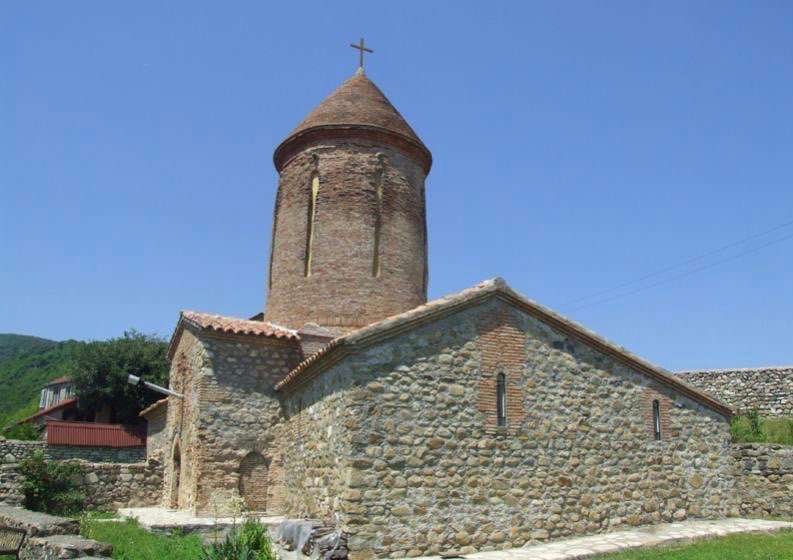
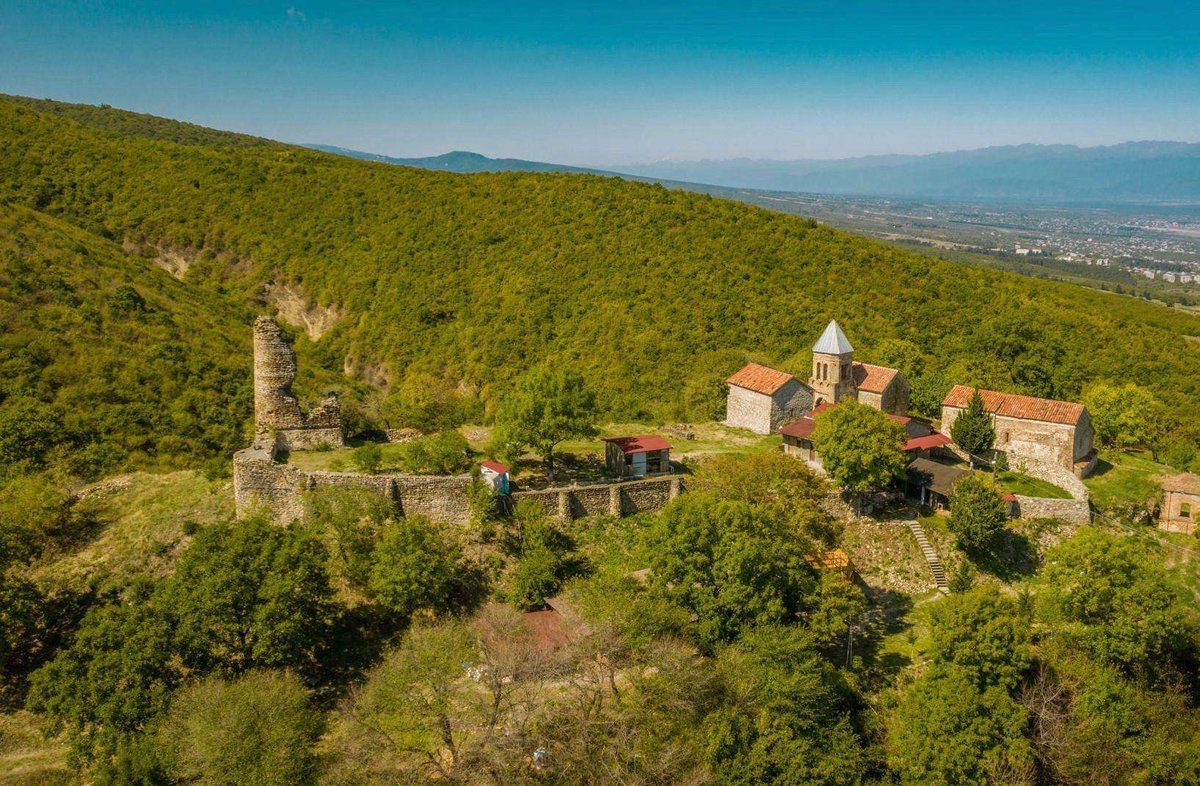
The church complex dates back to the 10th-11th centuries and was built of cobblestone. It includes the Church of the Ascension, the Church of the Holy Pascha, the Church of St. Mary, the Tamar Fortress, and two-story bell towers. Due to their advanced age, the buildings have been repeatedly rebuilt and restored.
One of the architectural elements of the complex is the castle. Surrounded by ravines, it remained inaccessible to enemies, a significant strategic advantage. This building left its mark on the epic poems. Vakhushti Batonishvili wrote: "North of Bakurtsikhe, at the foot of the mountain, lies your castle—strong and magnificent—and the domed Church of God." A path leads from the Tamar Fortress to another, no less remarkable fortress.
The Church of the Ascension is the center of the entire complex in the village of Vedjini.
Religious festivities dedicated to the Ascension are held here, attracting not only pilgrims and local residents, but also tourists. In honor of this feast, the church received its second name—the Church of the Ascension.
It is a domed stone building with carved windows and an altar inside.
A small prayer house, decorated with ornaments and crosses, is adjacent. The walls of the church are beautifully decorated; the paintings date back to the 16th-17th centuries. The eastern wall near the entrance features a fresco depicting a woman in a red cloak, holding a scroll with liturgical inscriptions. It depicts a scene from the Holy Scriptures, specifically the Nativity and Annunciation.
On the vault of the church, as if in the sky, is a figure of the Mother of God holding the Child in her arms, surrounded by Archangels. The images below are of six holy fathers, who hold scrolls with Greek inscriptions—excerpts from their works. Inside the church is a tomb with two graves, presumably containing the deceased from Quirike. That's not all there is to see in Georgia. North of the Ascension Church is the Paschal Church and its two-story bell tower. Experts believe this bell tower is the oldest structure in all of Katekhiya, dating back to the 15th century. The bell is located on the second floor, from where you can access the Paschal Church via a staircase.
A few steps from the bell tower is the Church of St. Mary. In the Middle Ages, the church was connected to the observation tower via tunnels; unfortunately, these passages are now filled in.
History
Georgia's landmarks boast a centuries-old history, and the architectural complex in Vejini is no exception. The earliest mentions of Vejini Castle date back to the 10th century. During this period, Hereti and Kakheti were independent principalities. Hereti was ruled by Adarnase Patrikios, while Katenia was led by Kvirike I.
For Hereti, the castle was a vital strategic asset; if the fortress was captured, Hereti would be subordinate. Therefore, Prince Kvirike I (893-918) decided to ally with Constantine, the King of Abkhazia, to reunite Hereti, and sent reinforcements to Verjni Castle.
The siege lasted for a long time, until Adarnase Patrikios, the leader of the Abkhazian kings, declared a truce and then capitulated. The deal was struck: in exchange, the King of Abkhazia received Arishi and Gavazi, and Kvirike received Orchobi. It was also stated that the fortress was the residence of the royal couple of Katekhii, Aghs Artan I and Aghs Artan II.
At the end of the 11th century, Emperor George II decided to annex Katekhii and Hereti, allying with the Turks. The military campaign was planned through Vejini. As a result, the castle became an important trading center; part of the caravan route leading to Tbilisi has survived to this day.
Copper coins found during excavations in the surrounding area also provide evidence of this. These coins have been declared a monetary relic, the Vejini Treasure. The age of this priceless treasure was determined thanks to the Arabic inscription on the coins, which reads: "Queen of queens, beauty of land and faith, Tamar, daughter of George, worshiper of the Messiah." The names of the rulers – Queen Tamar and David Soslani – were listed 1,200 years ago. In the 12th century, the heat of military action at the fortress subsided, due to the resolution of internecine wars and the shift of the military front to the periphery. However, this does not mean that Vejini Castle was quiet. Beginning in the 12th century, Lezgins, Tatars, Mongols, and many others passed through it. The castle's image became ingrained in the memory of ancestors as the embodiment of fear, as evidenced by numerous chronicle entries.
The history of Vejini was also marked by tragedy. From the epitaph on the princes' graves, scholars have learned that it was in Vejini in 1782 that Irakl's son, Levani, was murdered. This occurred while the grand princes were in the service of the Russian Tsar. The feudal lords Abashidze, Andronikashvili, Shalikashvili, and Vachnadze, out of greed, plotted against Levan Batoshvili.

29 comments
Log in to leave a comment