




Vakhanis Kvabebi: Monastery Complex Carved in Rocks of Georgia
Vahanis Kvabebi (Vakhan Cauldrons) is a rock-cut monastery complex (8th-16th centuries). The complex is located in Javakheti, 27 kilometers from Aspindza, on the right bank of the Kura River.
At the center of the complex stands the Church of St. George, whose cauldron-cells were carved in the 9th-11th centuries. In 1089, the Vani earthquake severely damaged the cauldrons. The owner of the monastery, Ichkit Gurgenisdze, began restoring these cauldrons between 1186 and 1191. He restored the Church of St. George and the adjacent ancestral gates, and carved donor inscriptions at the entrance. In 1204, Anton Mtsignobartukhutsesi-Chkondideli restored the limestone barrier. Between 1204 and 1283, The monastery was governed by the eristavi of Javakheti, Tmogveli. They established the monastery's typikon, the "Charter of Vahanis Kvabebi" (1204-1234), installed gates for the Church of St. George and a bell tower, and built a hall church (1265-1283). In 1283, as a result of an earthquake, Vahanis Kvabebi was again destroyed. In 1551 and 1576, Vahanis Kvabebi suffered Persian and Ottoman invasions. After this, the monastery ceased to exist.
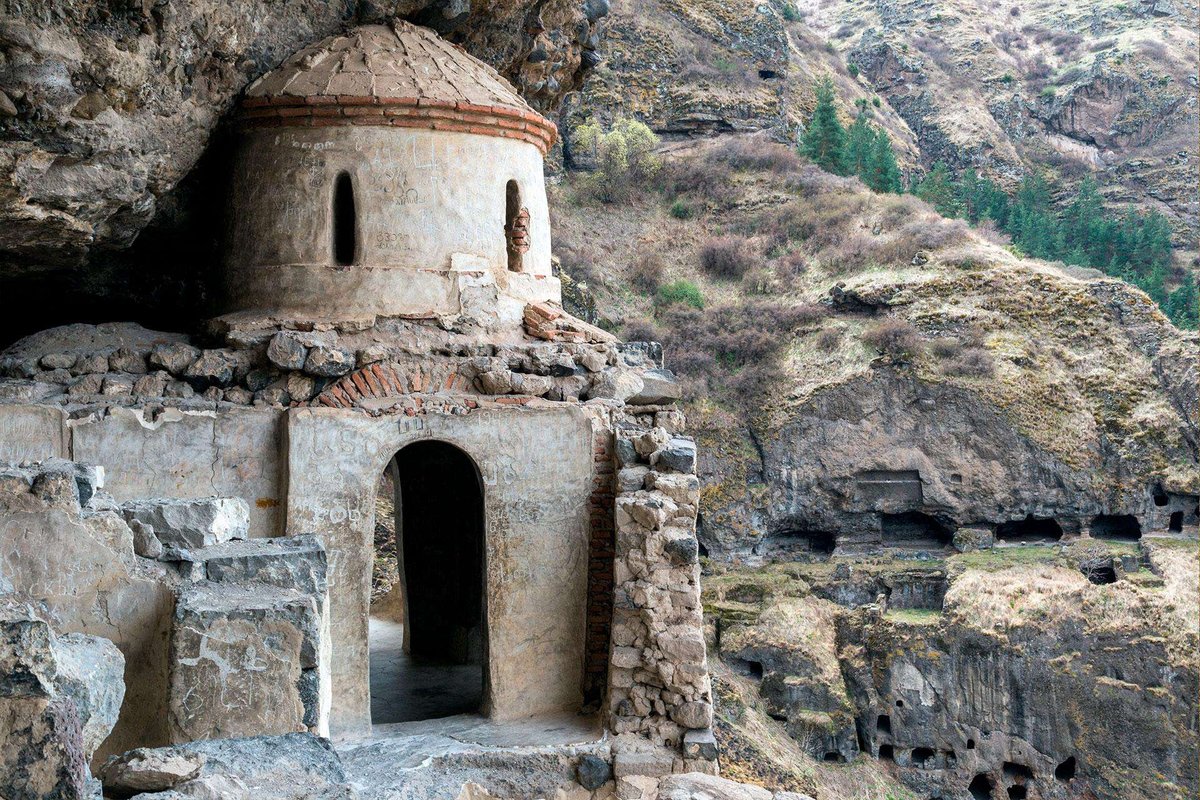
Vahanis Kvabebi consists of 200 caves carved into the wall (cells, gates, tombs, shelters, communication tunnels, similar storage facilities, and six churches), spread over 16 floors. Remains of a reservoir and three water supply lines have been preserved. Archaeological excavations have uncovered eight marani (wine cellars), a rock-cut press, and a ceramics workshop. Experts believe the construction and architectural experience gained during the construction of Vahanis Kvabebi paved the way for the creation of the rock-cut complex in Vardzia.
On the top floor of Vahanis Kvabebi, frescoes from the 12th-13th centuries have been preserved, as well as historical inscriptions (15th century), including inscriptions in the Mkhedruli alphabet made by nuns (Gulkan and Anna Rcheulishvili, Tumian Godzhishvili, and others). They lament their bitter fate. These women carved two stanzas from "The Knight in the Panther's Skin" on the wall.

44 comments
Log in to leave a comment
Судьба у здания монастыря трагичная. С такой радостью начала чтение и с каким сожалением закончила. Столько усилий вложено в восстановление после землятрясений и всё - таки добили здание, но огорчило то, что после нашествия османов и персов, монастырь полностью прекратил свое существование, никто больше не взялся за него. После раскопок много было обнаружено, что теперь напоминает о былом существовании монастыря.