




Ushguli: Svan Towers, Height and Ancient Fortresses
Ushguli is the outermost district of Zemo Svaneti, comprising several villages. It lies on the southern slopes of the Central Caucasus Mountains, in the valley of the Tsaneri River (a right tributary of the Inguri River), at an altitude of 1,600–2,200 meters above sea level. By this altitude, it is the highest inhabited settlement in Europe.
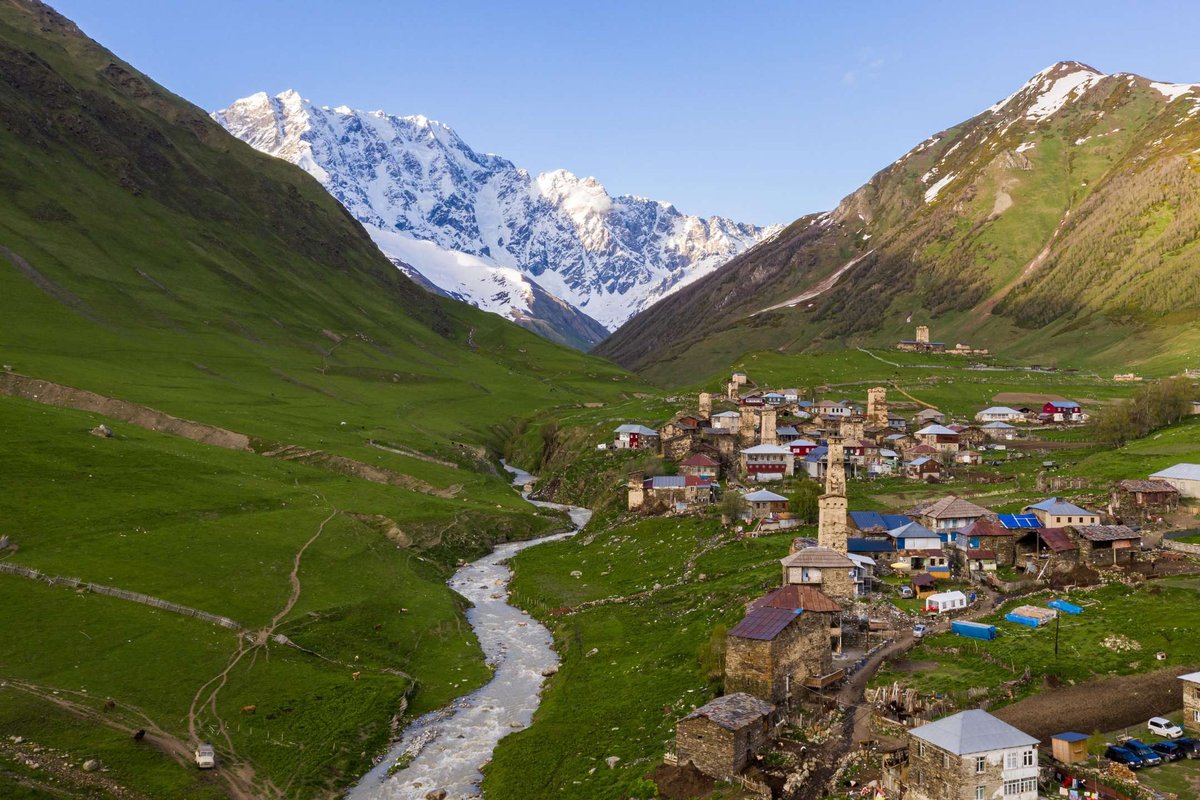
Ushguli is located in a basin-shaped, well-protected valley. The surrounding terrain features river floodplains and terraces, gentle and steep slopes. Precipitation reaches 1,200 mm, which is very favorable given the prevailing geographic conditions. Fir and beech forests dominate the northern-facing slopes, while secondary and subalpine meadows dominate the southern slopes.
Ushguli is surrounded by several landscape types, fully consistent with the altitudinal zonation. Particularly striking is the mixed forest landscape, with an evergreen understory in the lower layer. This is followed first by high-mountain forest, then alpine and subalpine meadows, and subnival and nival landscapes.
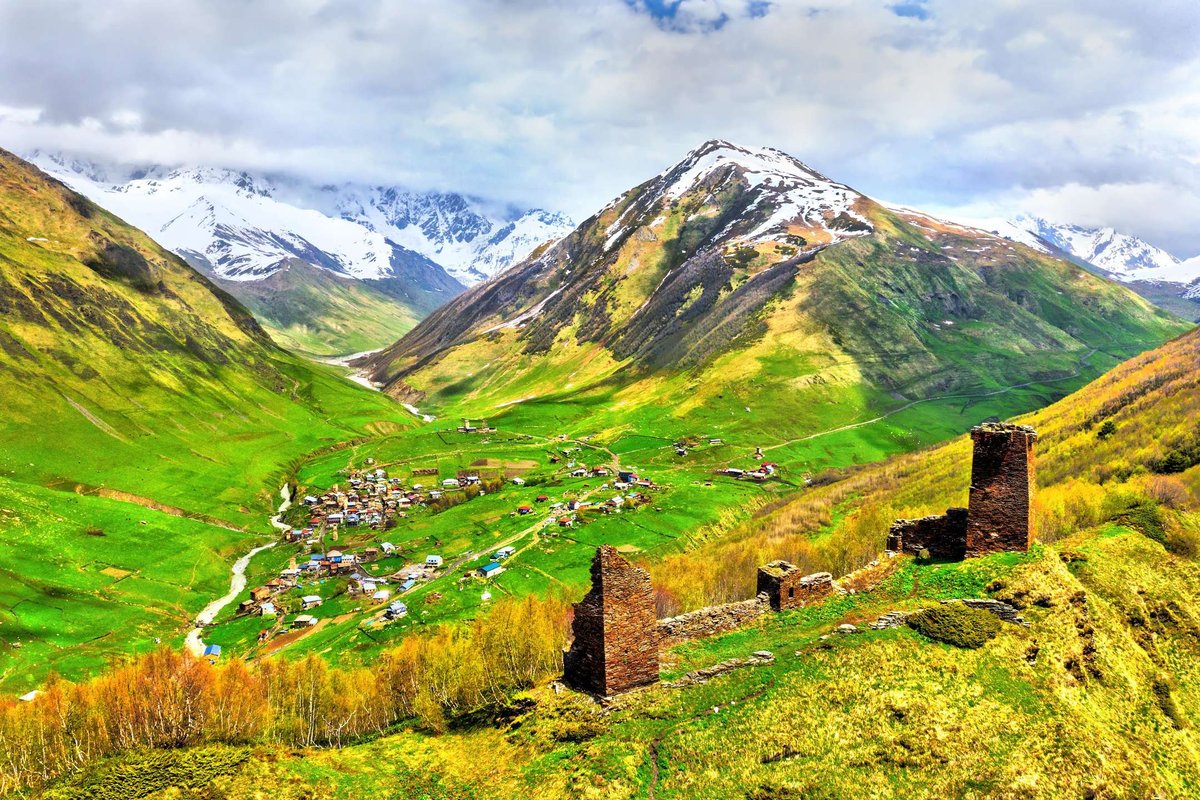
Fragments of a 12th-century fortress, several churches, more than thirty fortified houses, and religious buildings have survived in Ushguli. Most of the fortified houses are ancient monuments dating from the 9th-10th centuries. Ushguli is a UNESCO World Heritage Site.
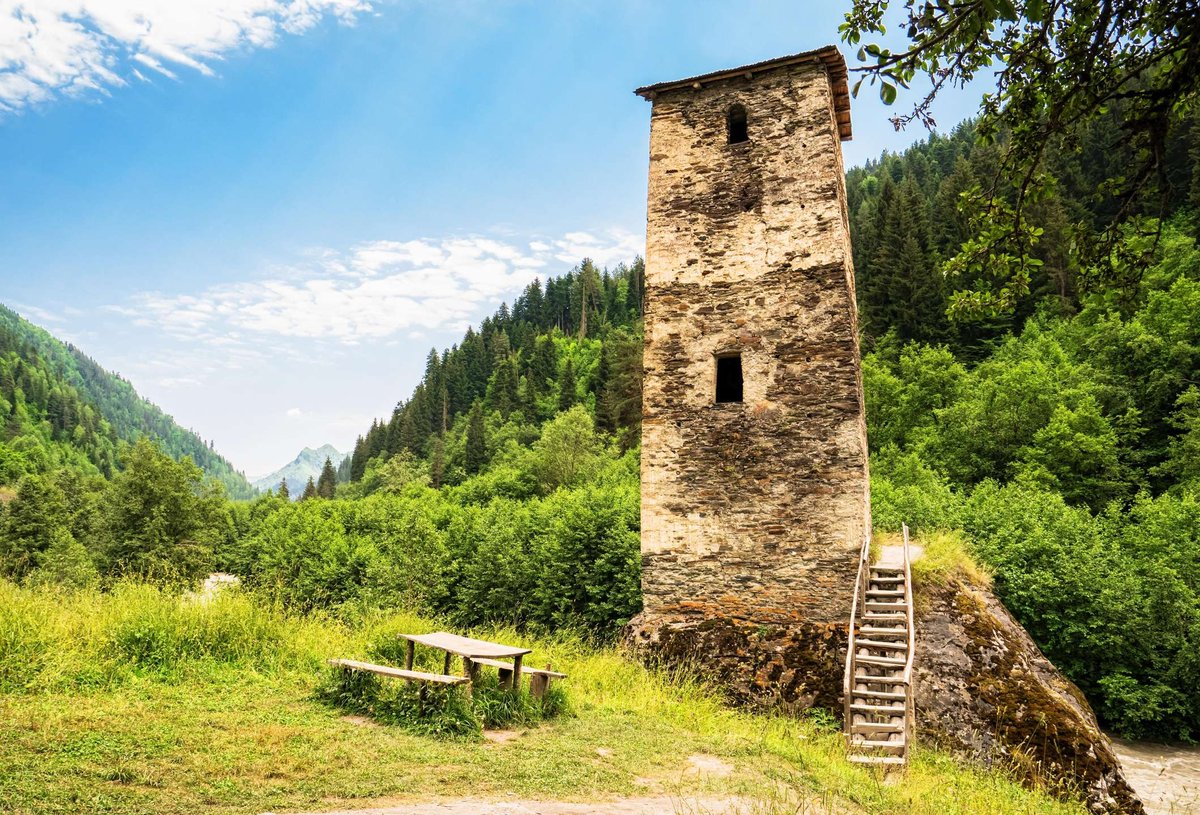
A Svan tower is a defensive structure common in Svaneti, consisting of 4-6 stories and covered with a gable roof. Svan towers were built of cobblestone and rubble. Towers were typically 20-25 meters high. The entrance to the tower is typically on the second floor. The floors are connected by a portable wooden staircase located in the interior. The top floor of the tower contains a fighting platform with loopholes. Some Svan towers are attached to residential buildings (murkvas), while others stand alone.
Svan fortress-houses, consisting of three stories, are lower and more massive than towers. The first floor was used for living quarters and as a stable for livestock. The second floor was for household needs; the third floor, the attic, was used for defensive purposes (e.g., the Chazhashi Tower).
In Svaneti, there is the "Tower of Love," associated with a legend: the daughter of a noble Svan had a fiancé who was leaving for war. The girl promised to wait for him and not marry. The young man died on the battlefield. The girl, unable to believe her lover was dead, waited for him. To ease his daughter's wait, her father built a tower by the road, where the girl spent her entire life, awaiting her beloved.

41 comments
Log in to leave a comment
В статье удивительно живо описаны архитектурные особенности сванских башен, их историческая роль в обороне и быту местных семей, а также поясняется, как лучше планировать маршрут, чтобы успеть увидеть ключевые точки комплекса, не спеша наслаждаясь ландшафтами. Подробные советы от людей, которые уже были в Ушгули, и отзывы туристов делают планирование поездки намного проще и приятнее, потому что ты уже знаешь, чего ожидать от трека, погоды и видов.
Особенно ценно, что помимо сухих фактов рейтинг даёт ощущение присутствия: ты будто идёшь по тропинкам, слушаешь ветер в горах и представляешь, как жители веками создавали свою культуру в условиях суровой природы.
Как вы думаете, какое время года создаёт наиболее запоминающуюся картину Ушгули — снежная тишина зимой, зелёная свежесть августа или золотой свет осени над сванскими башнями?
Как в этом районе с электричеством, в хорошем ли состоянии автодороги, и проходимы ли они в течении всего года?
Если Ушгули - памятник под защитой ЮНЕСКО, значит ли это, что древние исторические башни и другие постройки будут своевременно реставрироваться, или, наоборот - больше бюрократии и сложнее заниматься непосредственно объектами защиты?
Сванская башня – оборонительное сооружение, построенное из булыжника и камня. В Сванети находится «Башня любви», меня особо впечатлила легенда о этой башне.