




Svan Tower at Turtle Lake in Tbilisi: a hilltop viewpoint above the city
🏔️ Architectural landmark · ⏱️ 1–2 hours · 📍 Open Air Ethnographic Museum / Turtle Lake, Tbilisi
🏔️ Good to know before you visit
| 📍 Location | Open Air Ethnographic Museum / Turtle Lake, Vake altitude ~687 m above sea level |
| 🕐 Access | open 24/7 (exterior) · illuminated at night |
| 💰 Cost | viewpoint around tower — free access via ethnographic museum — paid ticket |
| 🚠 Cable car | Vake Park → Turtle Lake · 1 GEL · summer 08:00–24:00 |
| 👁️ Views | Turtle Lake, Saburtalo and Vake districts, mountain ridge |
🧭 Who this article is for
The Svan Tower near Turtle Lake is one of Tbilisi's least-known viewpoints. Hikers pass it on the Mtatsminda ridge route, visitors spot it from the ethnographic museum, and some people make the climb specifically for the views. This guide covers how to get there, what to expect, and whether the effort is worth it.
🗼 A tower above the lake
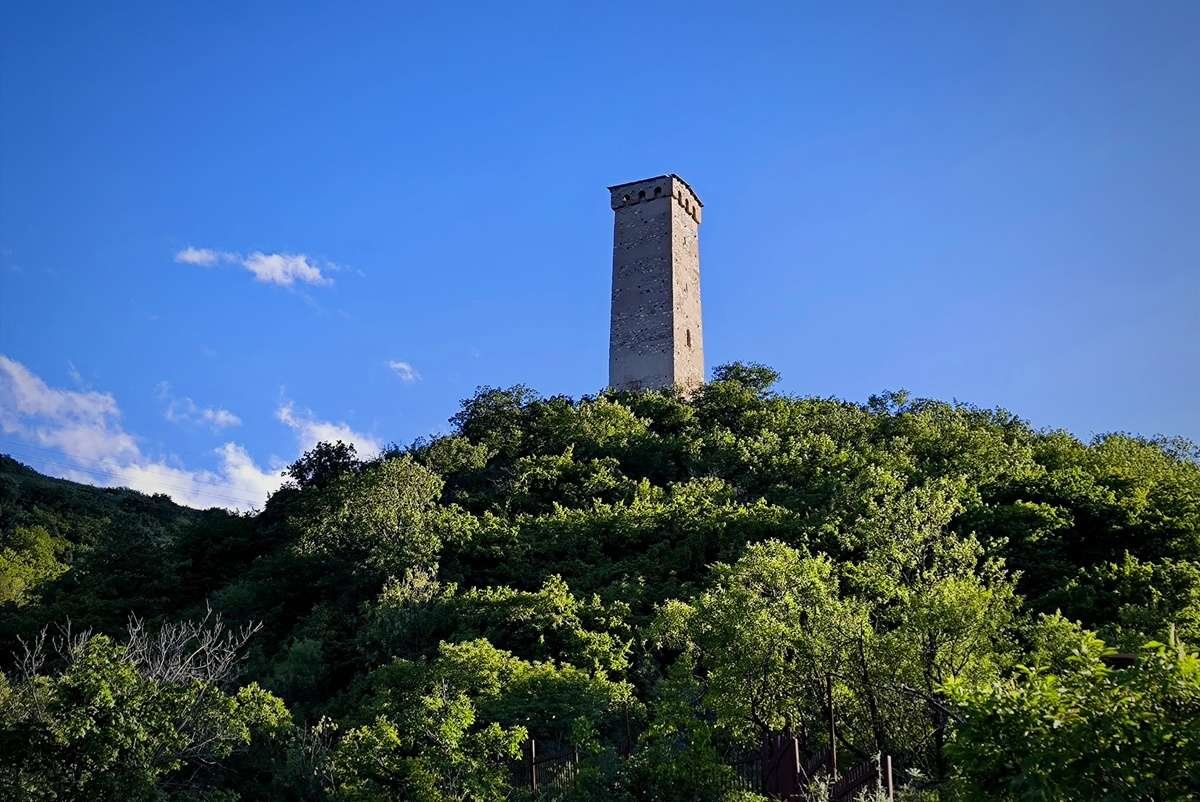
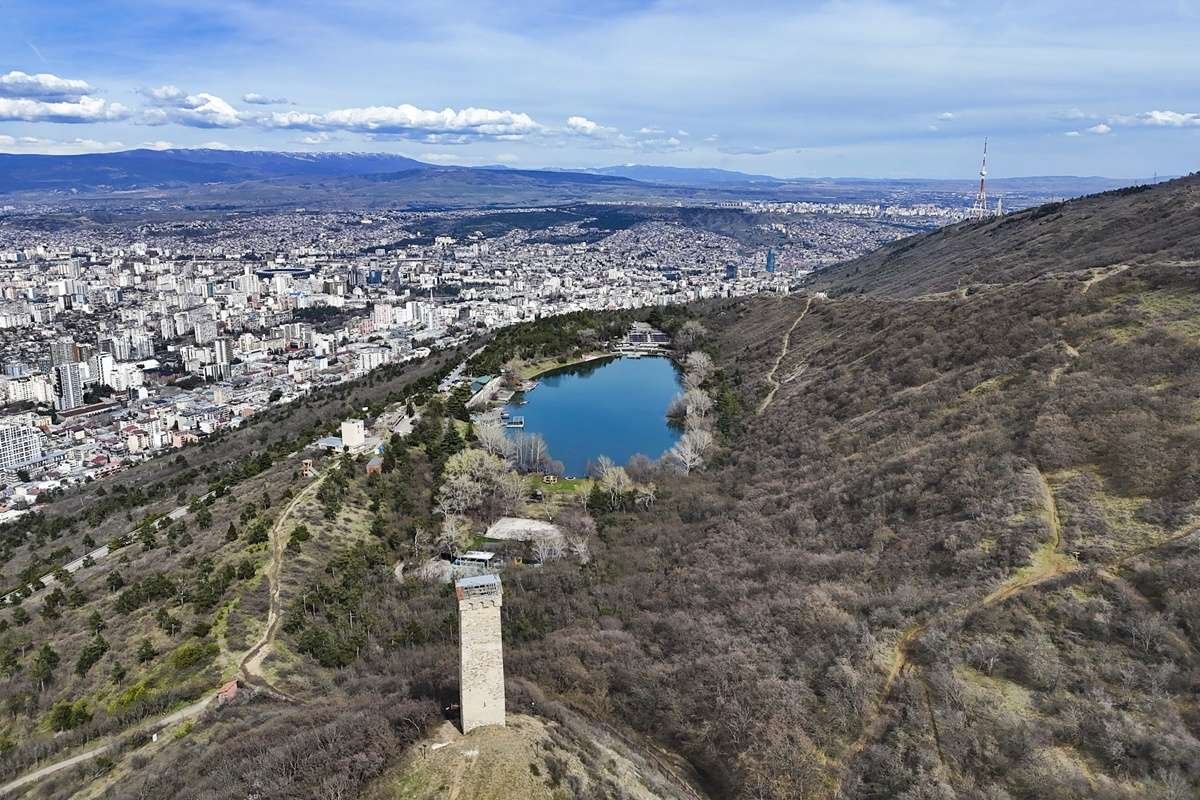
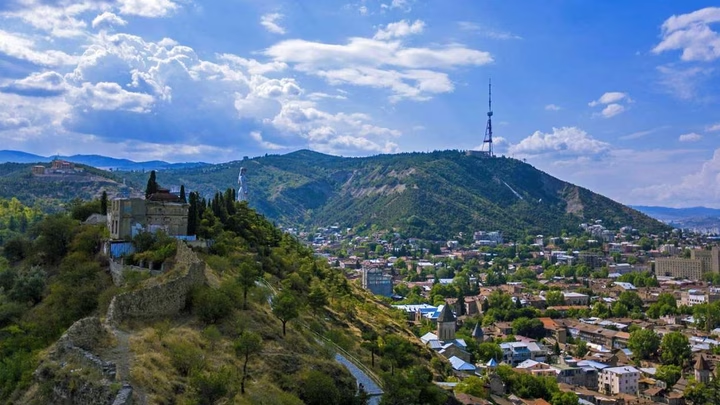
From Turtle Lake, a stone tower is clearly visible on the hilltop above. Square, tapering toward the top, crowned with a row of battlements — these towers have stood across Upper Svaneti for over a thousand years. This one is an exhibit of the Tbilisi Open Air Museum of Ethnography, relocated from Svaneti to the museum's hillside grounds on Mount Mtatsminda.
The tower is lit up at night and visible from several parts of the city. It's not a replica — this is an authentic Svan tower, an original structure moved here as part of the museum's collection. You can't go inside: as with real Svan towers, there is no external entrance. At about five metres up, a former window opening is still visible. Traces of wooden exterior structures — once an outside staircase — remain in the stonework.
🏛️ What a Svan tower actually is
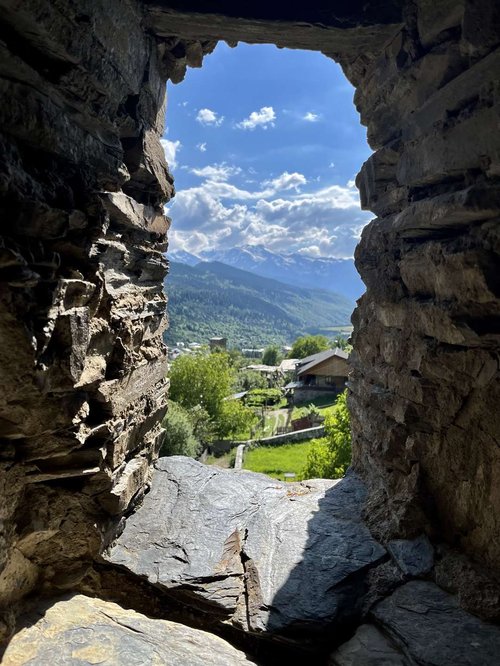
Svan towers were built in the 10th–11th centuries as clan fortifications. The architecture followed military logic: a square base measuring 5–8 metres per side, walls up to 1.5 metres thick at ground level tapering to 0.7–0.8 metres at the top. Height reached up to 25 metres — four to five storeys.
At the summit: a decorative crown with arrow slits and arched machicolations — openings through which defenders could drop stones or pour boiling pitch while staying protected. There was no external entrance; access was only through the attached family house or via a secret underground passage, the route of which was a closely guarded family secret.
Upper floors often contained cisterns built into the walls — enough water to survive a long siege. Hidden compartments held family valuables. Towers were designed for complete self-sufficiency over months.
The architecture of Svan towers is unique in the world — nothing like it exists anywhere else.
🌿 The Ethnographic Museum: context
The tower stands on the grounds of the Tbilisi Open Air Museum of Ethnography, founded in 1966 by historian and ethnographer Georgi Chitaia. The museum covers 52 hectares of Mtatsminda hillside, divided into 11 zones representing Georgia's different regions.
Traditional houses, churches, water mills, wineries, towers and other structures have been gathered from Kartli, Kakheti, Svaneti, Adjara, Mingrelia and elsewhere, spanning the period from the Bronze Age to the 20th century. The Svan tower is one of the most visible landmarks in the museum — it can be seen from Turtle Lake and from the road long before you reach the museum entrance.
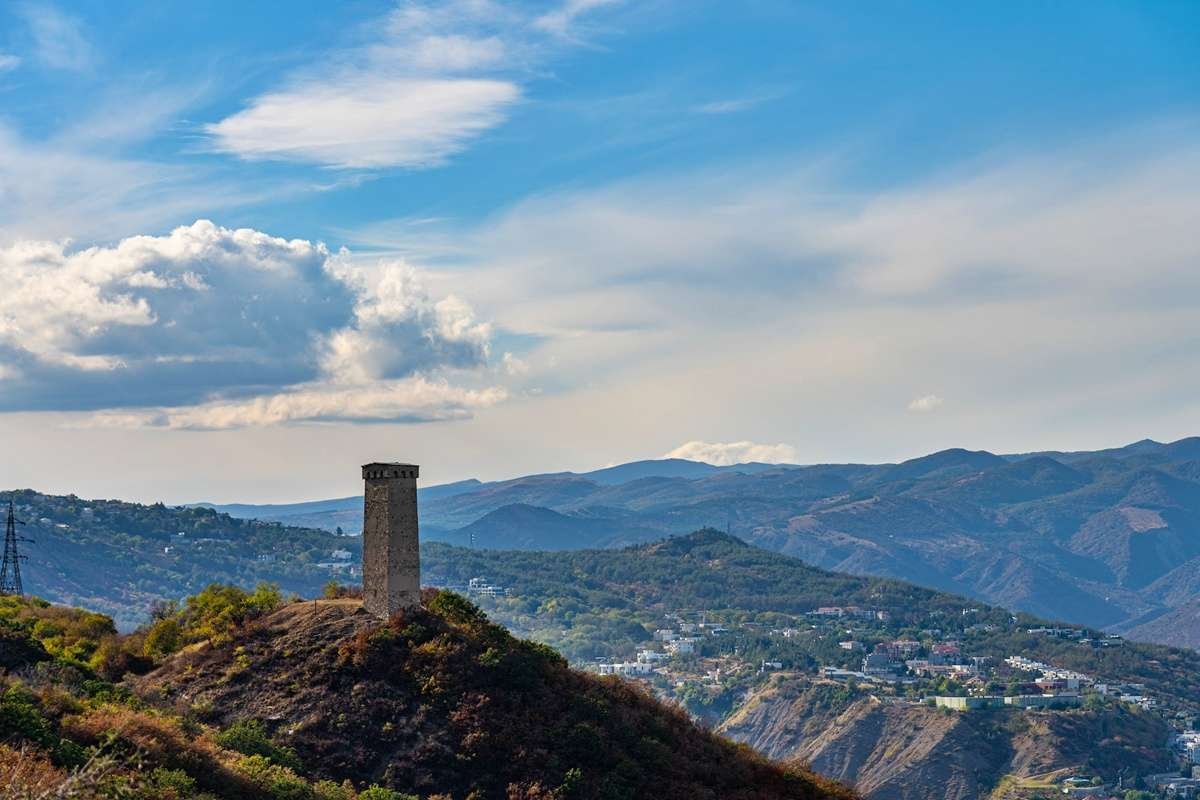
The official route to the tower is through the ethnographic museum ticket office (paid entry). The informal route runs from Turtle Lake up a steep path — about 15–20 minutes — ending at a fence. From the tower the views open onto Turtle Lake, the Saburtalo and Vake districts and the mountain ridge. Early evening and sunset offer the best light and cooler air. At night the tower is illuminated and looks striking from the lake below — but the path up is dark without a torch.
🗺️ How to get there
1️⃣ By cable car from Vake Park — marshrutkas №83, 87, 140, 9, 59, 61 to the lower station on Chavchavadze Avenue. The ride takes 6–7 minutes and costs 1 GEL. From Turtle Lake's upper station, the path to the tower is a steep 15–20 minute climb.
2️⃣ Through the ethnographic museum — buy a ticket at the main entrance and follow the marked paths to the upper zone. This is the official route; some trails in the upper section of the museum are overgrown.
3️⃣ By taxi (Bolt / Yandex) — ask for Turtle Lake (~7–8 GEL from the centre), then walk up. Tower coordinates: 41.6990, 44.7477.
💬 What visitors say
«The view from up there was stunning, but getting to the tower was quite difficult.»
«Beautiful and peaceful place. There's an open-air ethnographic museum nearby and a beautiful medieval Svan tower overlooking the lake.»
«The entrance to the tower is always locked. We often come here on weekend group hikes — starting from Udzo and finishing at Turtle Lake. The trail is well marked and mainly goes downhill, but can be slippery after snow.»
«It's a nice spot. From there you can walk to the valley of nightingales — a few kilometres further on.»
«Incredible views of the city from the lake and the Svan Tower viewpoint.»
🏁 Is it worth the climb?
The Svan Tower isn't the main event — it's a good stop along a route. If you're already at Turtle Lake, go up. It takes 15–20 minutes and the views are genuinely good. If you're planning specifically for the tower, pair it with a walk through the ethnographic museum or the full ridge hike to Mtatsminda. Turtle Lake itself, the cable car, cafes, zipline and the museum make for a full day of outdoor activity within city limits.
Save this article or share it with anyone planning a trip to Tbilisi.
ℹ️ The viewpoint around the tower is free to access. Entry through the ethnographic museum is ticketed. Some trails in the upper museum zone are not maintained. The path from the lake is not officially marked. Information is current at time of publication.
🗺️ What to see nearby



Have you been to the Svan Tower at Turtle Lake? Did you climb up from the lake or come through the museum? What views stood out — the lake, the city spread below, or the mountain ridge at sunset? Tell us — we read every comment ❤️
❓ Frequently asked questions
💬 No. Like original Svan towers in Svaneti, there is no external entrance. At about five metres up there is a former window opening. The remains of an external wooden staircase are still visible in the stonework, but the structure itself is long gone.
💬 It depends. Through the museum is the official and more comfortable route — buy a ticket and follow the marked paths. From Turtle Lake is shorter but involves a steep 15–20 minute climb ending at a fence, which most visitors pass through or around. The lake approach makes sense if you're already there and want to add the tower to your walk.
💬 It's genuine. The Ethnographic Museum collected authentic structures from across Georgia's regions — entire buildings were relocated to the museum grounds. This tower was brought from Svaneti and is an original 10th–11th century structure. To see Svan towers in their natural setting, visit Mestia in Upper Svaneti.
💬 Turtle Lake → Svan Tower (15 min) → panoramic viewpoint (another 10 min) → Nightingale Valley → Mtatsminda Park. Or in reverse from Mtatsminda down to the lake and the cable car. The trail is well signposted and takes 2–4 hours in total.
💬 Late afternoon or golden hour before sunset — cooler air, softer light. Mornings are quieter. At night the tower is illuminated and looks dramatic from the lake, but the path up is dark without a torch. In summer the trail can be slippery after rain.
💬 Yes — several cafes with open terraces and views right at Turtle Lake. Pedal boat rental, a zipline and kids' attractions are also there. Restaurants are available on the museum grounds as well.

4 comments
Log in to leave a comment
E il viadi cun il telefericu? Cur che jò vi giò, l'hai ridù in vaira. In quant ti va dapertutta la vetta? E pu ti set siglizà, e sa saber ch'il temp è temporà.
Plausibilmè, quai svan e il lago sun in bun quiel. Sperën ch'ain schabkräft i’all da navi.