




🏰 How to visit the women’s monastery in Simoneti from Kutaisi: road, history and photos
What to know before visiting Simoneti
This is a short trip to an active monastery in Imereti. Before leaving, save the location on your map, choose modest clothing, allow time without rushing and think about the return journey in advance.
The women’s monastery in Simoneti, or სიმონეთის დედათა მონასტერი, is a good stop for travellers who want something quieter than the usual tourist route in Imereti. It is close to Kutaisi, but the mood is different: less movement, more silence, simple church architecture and a short road into the softer side of the region.
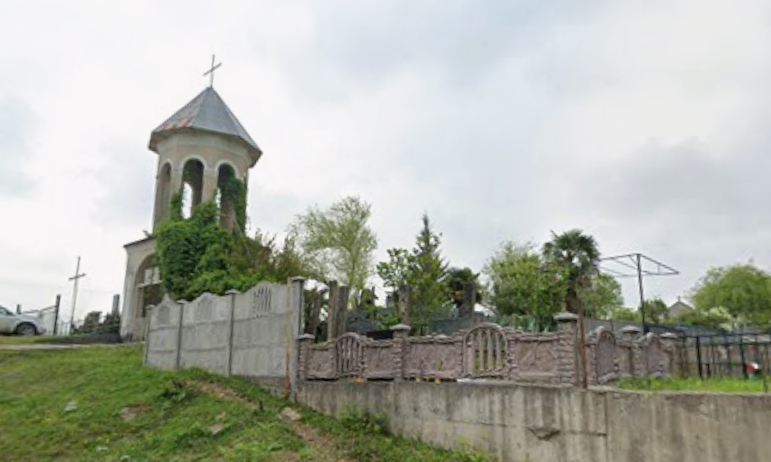
Simoneti fits naturally into a trip around religious landmarks in Georgia, especially if you have already seen the famous churches near Kutaisi and want to add a calmer place. Locations like this show Georgia not through crowds and quick photos, but through pauses, rural views and respect for monastic rhythm.
Keep the Georgian name in your notes or navigation app. Searching for სიმონეთის დედათა მონასტერი can make it easier to find the monastery in local sources, while the English name helps connect it with a route from Kutaisi.
📍 Where the women’s monastery in Simoneti is located
The women’s monastery in Simoneti is in Imereti, in Terjola Municipality, near the village of Simoneti. For planning, open the women’s monastery in Simoneti in advance to save the location, check photos, reviews and the map point.
This place works well as a short trip from Kutaisi. You do not need to cross half the country to reach it, so the monastery can be added to a morning plan, an afternoon route or a quiet detour between other Imereti stops.
Simoneti should not be seen as a replacement for Gelati, Motsameta or Bagrati. Its character is different: smaller in scale, less crowded, more intimate and quiet. That is exactly why it works well for travellers who have already seen the main sacred sites of Imereti and want to add a softer stop to the route.
If you are planning a day around Kutaisi, collect nearby places in advance. For general navigation, sacred places in Kutaisi can help you combine the city, churches, views and a short trip outside the centre.
🕯️ When the monastery appeared and who it is dedicated to
The monastery in Simoneti was founded in 2009, while the church itself was built earlier, in 2006–2008. So this is not a medieval shrine with ancient frescoes, but a modern monastic place that continues the Orthodox tradition of Imereti today.
The monastery is dedicated to Constantine Kakhi. In Georgian Orthodox tradition, his name is linked with loyalty to faith and inner strength. This dedication matches the atmosphere of the place: there is no loud grandeur here, only quiet focus.
For travellers, the recent foundation date is useful because it sets the right expectation. In Simoneti, you should not look for ancient walls, a museum-like display or centuries of history in every stone. The meaning of the place is different: it shows that religious life in Georgia did not stay only in the past.
When reading about religion in Georgia, it is easy to remember the famous names and old churches. Simoneti adds a modern layer to that picture: small monasteries that do not compete with the great shrines, but quietly continue the same line.
🏛️ What to notice in the church architecture
The church in Simoneti is built in a restrained way. Its architecture does not try to impress through scale or a dramatic first view. Simple shapes, calm proportions and the way the building sits in the rural landscape matter more here.
Architecturally, it is a hall church. The eastern part has a semicircular apse set into a rectangular volume. On the western side there is an entrance section with an arched opening, while the doorway itself is rectangular. The church is plastered inside and outside, which gives the space a bright and composed feeling.
This architecture is best approached slowly. Do not expect rich carving or museum-level detail. Walk around, look at the silhouette of the church, the entrance side, the overall volume and how the monastery appears against the hills.
After a busy route through Kutaisi landmarks, Simoneti can feel like a quiet contrast. In the city, the eye catches history, bridges, cathedrals and movement. Here, everything speaks more softly: stone, greenery, road, pause.
🧭 Dates without confusion
Where to take photos and what to capture
In Simoneti, the best photos are usually simple: the overall view of the monastery, the road leading to it, the church exterior and quiet façade details. This is not a place that needs staged shots. The cleaner the angle, the better the mood comes through.
For an article cover, use horizontal images without text: the church against greenery, a wider view with hills, the entrance side, the road and the rural landscape around it. These photos work well both on mobile screens and in a gallery.
In spring and summer, the surroundings are greener. In autumn, the light and colours become warmer. In winter, the monastery may look stricter and quieter. On a cloudy day, stone and plaster often appear softer, without harsh shadows. For a religious place, that can be an advantage: the image feels observed, not staged.
Ask before taking photos inside the church or photographing people. In Georgian monasteries, this is not just a formality, it is a matter of respect. Outside, there are usually enough angles to show the place and its atmosphere without disturbing monastic life.
🚗 How to get from Kutaisi to Simoneti
🚗 By car: from Kutaisi, drive towards Terjola and Simoneti. The journey takes about 25–30 minutes if the route is clear and there are no delays. Before leaving, open your navigation app, save the location and check the return route.
🚕 By taxi or private driver: this is the easiest option for travellers, especially if you do not want to work out local transport. It is better to agree on a return trip and waiting time in advance. For a small monastery, this is more practical than trying to find a car after the visit.
🚌 By public transport: a direct and convenient option should be checked locally in Kutaisi or Terjola. In smaller settlements, schedules may change, and the return journey often matters more than getting there. If your time is limited, do not rely only on marshrutkas.
The route works well as a half-day plan. You can leave Kutaisi in the morning, visit the monastery calmly and return to the city by lunchtime. Another option is to keep Simoneti for the afternoon, after seeing the main city sights.
🚗 Short route logic
Save the monastery location before leaving.
Choose a car, taxi or private driver.
Allow time for the road and a calm visit.
Plan the return to Kutaisi in advance.
🧭 How much time to allow for the visit
A calm visit to the women’s monastery in Simoneti usually takes 40–60 minutes. That is enough to see the church from outside, walk around quietly, take photos and avoid turning the stop into a race.
If you are travelling from Kutaisi, count not only the time on site but also the road there and back. In a real itinerary, the whole trip will take more than an hour, even if the monastery itself is quick to see. Add a small buffer: in Imereti, weather, rural roads and navigation sometimes leave their own little signature on the schedule.
A packed itinerary does not suit Simoneti. If you squeeze it between three major locations, the place loses its point. It is better to visit when you have a little space in the day, not when the navigation app is already breathing down your neck.
🌿 What to see near Simoneti
Simoneti is easy to combine with Kutaisi and other places in Imereti. If you are staying in the city, the monastery can be added to a quiet day without an early start or a long drive. For planning, what to see in Kutaisi in one day can help you keep the route clear instead of mixing everything into one overloaded plan.
A simple half-day idea: Kutaisi, the road towards Simoneti, a visit to the monastery, a short photo stop and a return to the city. If you want more religious context, add well-known churches around Kutaisi, but do not try to see everything in one day.
Simoneti works especially well after larger sacred sites. First, the traveller sees scale and history; then a small active place without museum distance. This contrast makes the route warmer and more honest.
If you are travelling with children or older relatives, keep the plan simple. A short road, a calm visit and a clear return plan. No marathon of “just five more places nearby”, because in Georgia “nearby” can sometimes mean another hour and a surprise mountain road.
🙏 How to behave at the monastery
Choose modest clothing for the visit. For women, covered shoulders and a skirt or headscarf may be appropriate if required on site. For men, ordinary closed clothing is better than anything beach-like.
Speak quietly on the grounds and do not enter closed areas. Even if there are no signs, monastic space is usually easy to read: where visitors can walk and where it is better to stop. If in doubt, ask locally.
Take photos with care. The church exterior, road, landscape and façade details are suitable for photography. People, nuns, the interior and services should not be photographed without permission.
📌 Check before the trip
Whether the monastery point is saved in your navigation app.
Whether you have a clear option for the return journey.
Whether your clothing is suitable for visiting a church.
Whether you have enough time for the road without rushing.
👨👩👧 Is the trip suitable for families and calm travellers?
Simoneti can suit families if children handle short drives well and can behave calmly near a church. There is no difficult trail, long climb or dense excursion programme, so the visit can stay light and short.
For older travellers, the format may also be comfortable if transport is arranged in advance and there is no need to wait long for the return journey. The main risk is not the monastery itself, but the logistics: do not go without a clear plan for getting back.
If you expect cafés, souvenirs, guides and tourist infrastructure, the place may feel too modest. Simoneti is better chosen for a pause, prayer, photos and a quiet meeting with Imereti, not for services or spectacle.
💬 Now it is your turn
Have you visited the women’s monastery in Simoneti? Leave a review on Madloba: tell other travellers how the road went, how long the visit took, whether it was easy to get there from Kutaisi and what first-time visitors should know.
Information is up to date as of June 2026. Before travelling, check the weather, road access, visiting rules and current conditions on site.
❓ Frequently asked questions about the women’s monastery in Simoneti
The women’s monastery in Simoneti is in Imereti, in Terjola Municipality, near the village of Simoneti. It is a convenient place for a short trip from Kutaisi.
In Georgian, the name is written as სიმონეთის დედათა მონასტერი. Save this version for searching on maps and in local sources.
The women’s monastery in Simoneti was founded in 2009. The monastery church was built earlier, in 2006–2008.
The monastery is dedicated to Constantine Kakhi. In Georgian Orthodox tradition, his name is associated with loyalty to faith and spiritual firmness.
The easiest option is to travel by car, taxi or private driver towards Terjola and Simoneti. Public transport should be checked locally, especially the return journey.
A calm visit usually takes 40–60 minutes. With the road from Kutaisi and back, allow more time so the trip does not feel rushed.
You can photograph the church exterior, road and surrounding views. For photos inside, or for photographing people or nuns, ask permission first.
You can visit in any season. Spring and summer bring more greenery, autumn gives softer colours, and winter can make the place feel especially quiet.
Yes, if children can behave calmly in religious places and manage a short drive. It is better not to overload the trip with too many stops.
Yes, if you are looking for a quiet religious place near the city. If you want a large ancient complex, combine Simoneti with other sacred sites in Imereti.
Read also
- Fifteen Places in Kutaisi: Sights and Route
- Armazi Virgin Mary Monastery: A Pilgrimage Site on the Armazistskali River
- The former Georgian parliament in Kutaisi: a dome and a future technohub
- Kutaisi Museums: A Guide to Museum Collections and House Museums
- Kutaisi Observation Decks: Where to Find the Best Views

3 comments
Log in to leave a comment
But stepping inside was transformative. Quietness wrapped around me like a warm blanket, and I was struck by the serenity that hung in the air. The architecture, oh my, so majestic yet so humble at the same time! And the stories that linger in the walls... you can almost hear the whispers of history. Each corner of the monastery had its own vibe, its own pulse.
It’s a bit of a trek to get there, true, but the reward? A slice of peace that’s hard to come by these days. Just be yourself, soak it all in, and let the place work its magic. Can't wait to go back! ✨
ახლა, ჩემს შვილებთან ერთად ვგეგმავ დასვენებას და ერთი მხრით მინდვია, მოვიტანო ისინი ამ ადგილას, მეორე მხრით კი, მეშინია, რომ მათ არ გაუგონ, რა სიმდიდრეა ბუნებაში და ისტორიაში. ყველამ უნდა ნახოს ეს ადგილი, აუცილებლად!
ეს ადვილია ქუთაისიდან? მანქანით დავიწყებთ?