




Manglisi Sioni: First Stone Cathedral, History & Route
Manglisi Sioni is an active Orthodox church in Georgia. It is located in a picturesque area of Kvemo Kartli, near Daba Manglisi and Tetritskaro, offering some of Georgia's most beautiful views.
The church was first mentioned in 330. It is a protected architectural monument of Georgia. It is famous for the relic once kept within its walls—a piece of the Life-Giving Cross, specifically the stand on which Christ rested his feet during the crucifixion. It is a fine example of Georgia's Christian heritage.
History.
Historical sources claim that the first stone cathedral was built here in the 30s of the 3rd century, during the time when Christianity was made the official religion of Georgia. According to Leonti Mroveli, Constantine the Great, at the request of King Mirian, who had converted to Christianity at the time, sent Bishop John with sacred artifacts and treasures to build Christian religious buildings in Georgia. Along the way, he stopped in Manglisi, then one of the most developed cities in the Kvemo Kartli region, and began constructing a church. Here, he enshrined one of the most important relics of the Christian faith—a particle of the Holy Cross of Christ—much to the dismay of the king, who believed that all such powerful relics belonged in the capital.
In the 7th century, Manglisi was almost completely destroyed, and its religious monuments and objects were plundered, with the Byzantine Emperor Heracles to blame. Until the early 11th century, the chronicles are silent on the history of the church. In the early 11th century, evidence emerged that the church had been restored: the dome was replaced, the exterior was decorated in stone, and the interior was painted. In 1441, Tsar Alexander I mentioned it under a new name: the Cathedral of the Virgin Mary.
During the Caucasian War, it was again destroyed and plundered, and afterward, it lay abandoned for a long time, serving as a shelter from the weather for local residents. In 1850, following the arrival of the Metropolitan, who was interested in restoring the churches, Manglisi began to be restored. Intermittent restoration continued until 1862, and although it was formally restored, many religious and cultural objects were lost forever. The church underwent its last renovation between 1953 and 1956, during which time the roof was rebuilt, the frescoes were restored, and some were taken to a museum.
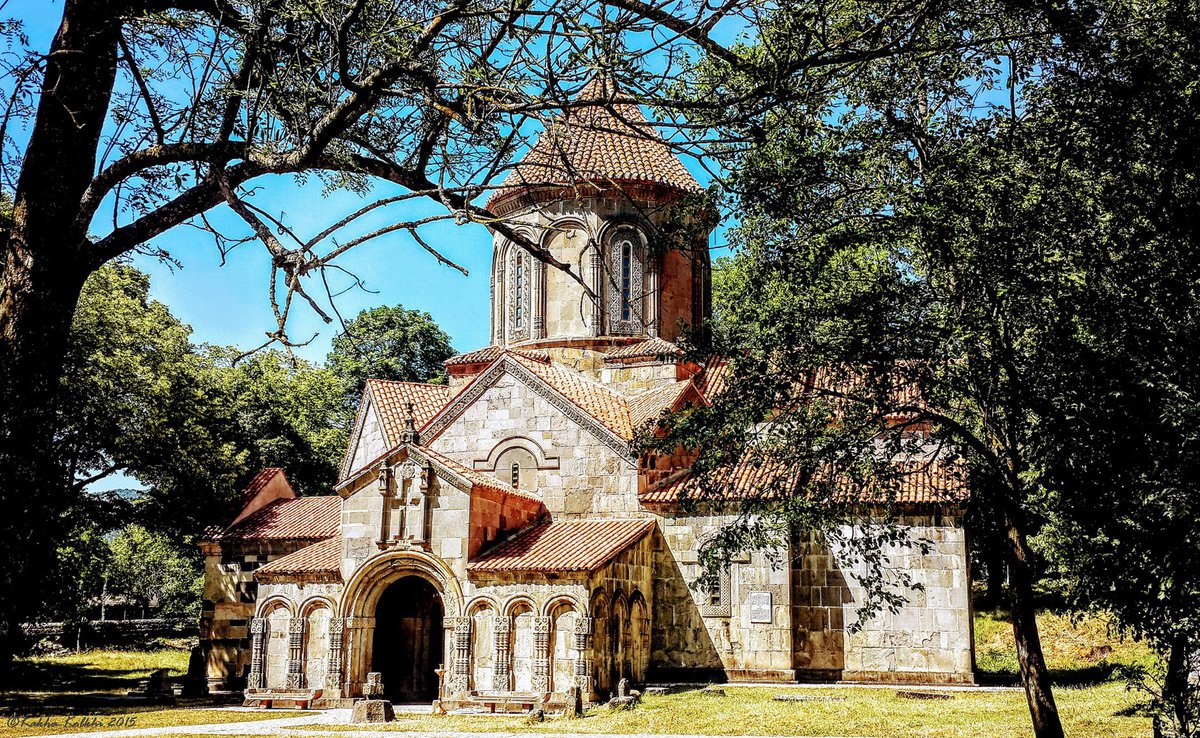
Architecture.
Architecturally, the church is a four-petaled structure with a dome on an octagonal drum with narrow windows for natural light. It has two entrances pierced in the apse—an asymmetrical southern entrance toward the western wall, and a western entrance. Its current state is also a sight to behold in Georgia—small fragments of the original remain. The original paintings are only present on the dome. In addition to the cathedral, the grounds include a separate bell tower, a cemetery, and the remains of outbuildings and a fence.
Dmanisi was a fortress town in the Middle Ages. It is located in Kvemo Kartli, at the mouth of the Finezauri and Mashavera rivers, 93 km southwest of Tbilisi.
Dmanisi was first mentioned in historical sources in the 9th century, when the city was under Arab rule and ruled by an emir. In the 11th century, the city fell to the Seljuks. In 1123, David IV Agmashenebeli (the builder) liberated Dmanisi and made it a royal city, which determined its particular significance in the 12th and 13th centuries. Caravan routes to Western Asia passed through here, and a mint was located there. In the 14th and 15th centuries, Dmanisi was subjected to numerous enemy raids (Tamerlane, Yaqub Khan, etc.), which led to the devastation and ruin of the city. It frequently fell under the rule of conquerors (Ottomans, Iranians).
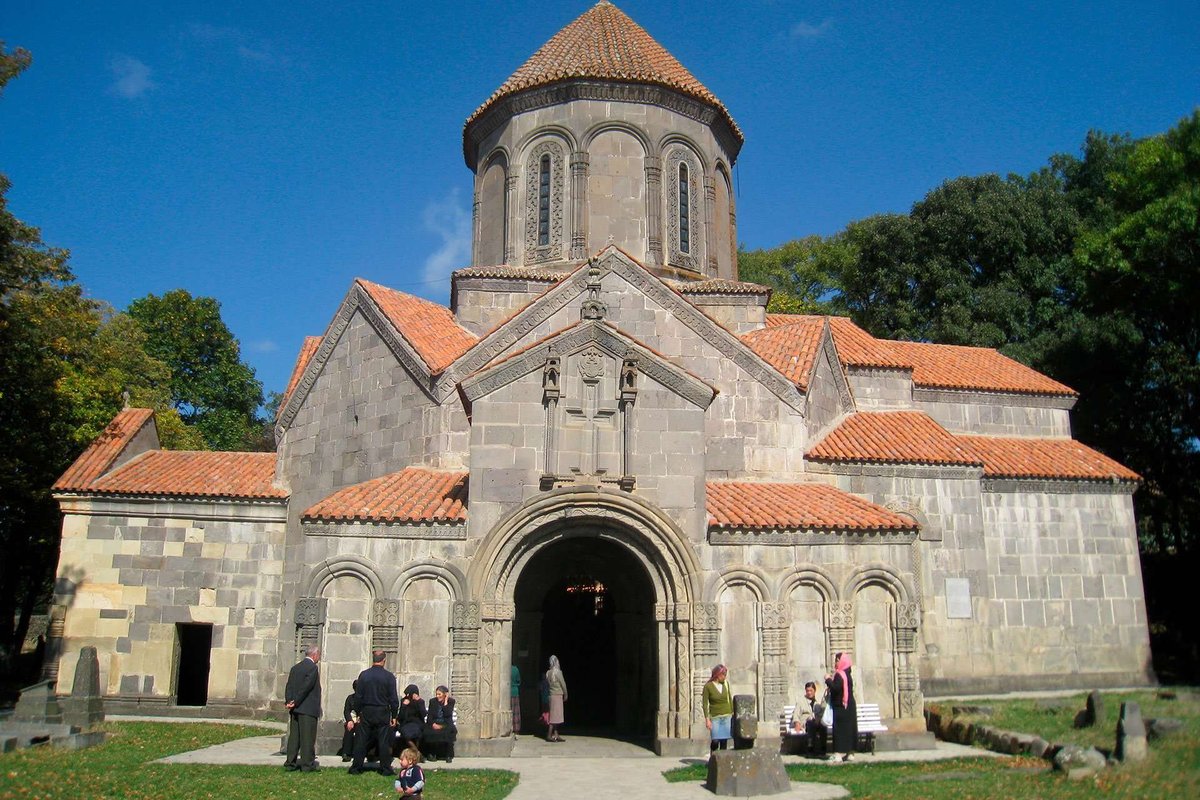
The town was surrounded by a high fortified wall constructed of basalt stone and reinforced with buttresses. A city gate stood on the southwestern side of the enclosure. The town streets, 2.5 meters wide, were paved with stone tiles. Inside the fortress stood a three-aisled basilica—the Dmanisi Sioni (6th century), to which gates with richly carved decorations were added during the reign of George IV Lash. The fortress also housed a church and a bell tower dating from the late feudal period. A wide tunnel leading to the river was discovered within the settlement, as well as workshops (oil mills, potteries), baths, a marketplace, wine storage facilities (marani), a mosque with a minaret, and a madrasah. The houses of wealthy Dmanisi residents were faced with green tiles.
The area around Dmanisi has been inhabited since ancient times. Here in 1992, archaeologists discovered human remains (a lower jaw and teeth). German paleoanthropologists determined that these remains are 1,800,000 years old, making them the oldest remains in Eurasia. Scientists created models of "Dmanopithecus"—a man and a woman—and named them after their ancient Georgian names: Zezva and Mzia. These models are kept in Tbilisi, in the Georgian State Museum.
Manglisi Sioni is a significant monument of Georgian architecture and one of the oldest centers of Christianity in Georgia. The first church in Manglisi was built in the 4th century, and by the 5th century it had become an episcopal center. The foundation layers of today's church date back to the 7th century. In 1002, the church was renovated. The eastern part of the church, the gates, and the wall cladding date back to the 11th century. The dome painting also dates to this period. In 1852, the Russian authorities whitewashed the church's interior, completely destroying the frescoes. During this period, the church's fence and the bell tower built into it were erected. Traces of Russian architecture are visible in the decor of the main church. The church courtyard contains numerous graves dating from the 18th and 19th centuries.

37 comments
Log in to leave a comment
Обожаю, что помимо описания Мадлоба даёт советы от жителей Грузии: как доехать без таксиста-мошенника, где парковаться бесплатно, лучшее время на закате для фото без жары. Отзывы читателей супер — узнала про службу по субботам с грузинским хором, а FAQ закрыли мои вопросы: "можно ли с детьми?" (да, площадка рядом), "сколько времени?" (2 часа хватит). Без этого гайда ехала бы наобум, а так всё чётко, планирую вернуться с подругой на выходные, может, даже в соседний Тетрискурку из похожих рекомендаций. Спасибо Мадлоба за такие жемчужины Квемо-Картли — теперь Грузия для меня не только вино и хинкали!
А вы были в Манглиси Сиони и что вам больше всего запомнилось — фрески или виды? Делитесь, поеду по вашим фишкам ещё раз! 🤔
Подставка Иисуса Христа! Это ведь единственная в своём роде историческая и религиозная ценность. Восхительно! Я в полном предвкушении, надеюсь, как можно скорее мне удастся съездить к этому храму.