




Poti Cathedral
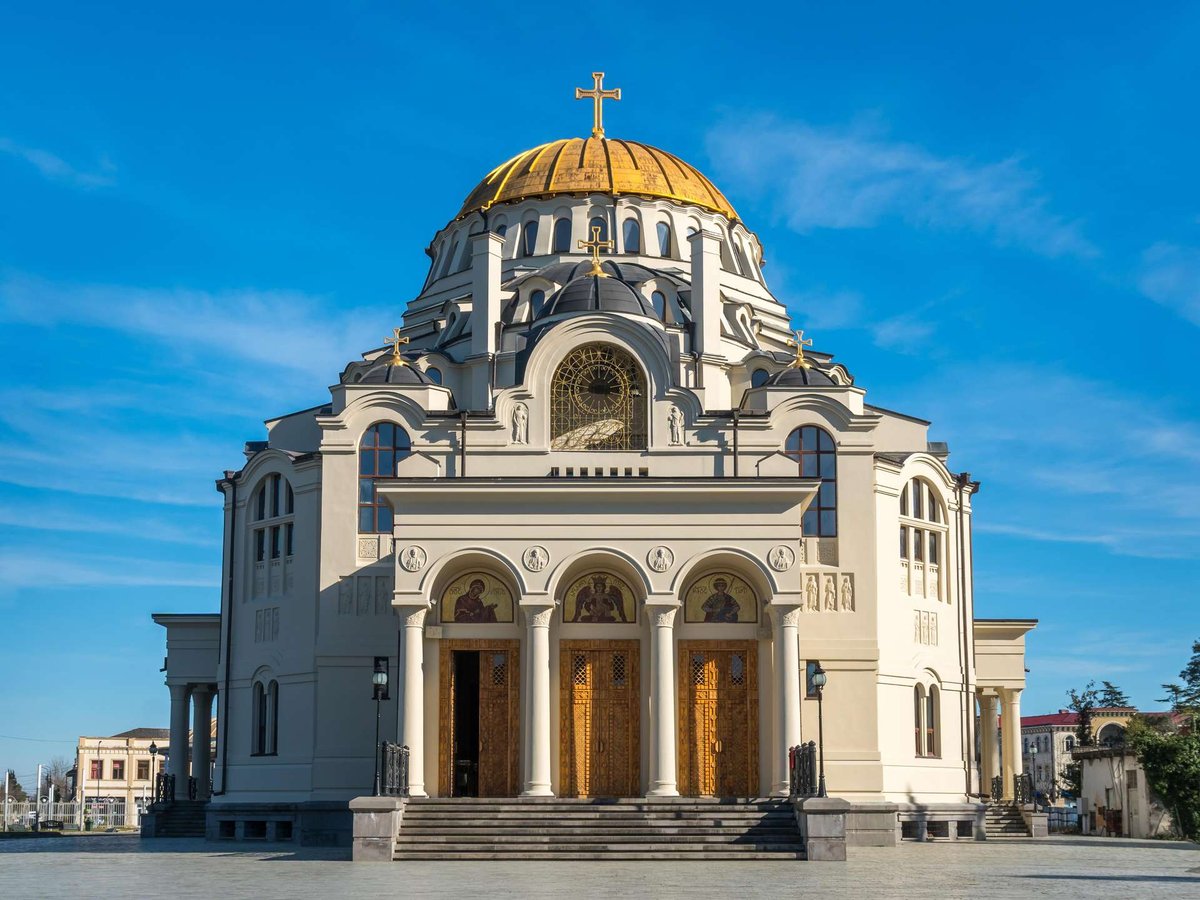
Georgia's landmarks are striking in their splendor. In the Samegrelo region, in the city of Poti, stands a unique cathedral, the Church of the Resurrection of Christ. It was built in the Byzantine style.
History
The decision to build the church was made in 1895. The Russian Emperor issued an order establishing a committee to build a cathedral in Poti. The project was led by the city's mayor, Niko Nikoladze, who was also a journalist and publicist. His idea was for a church in the national architectural style, but Russian authorities objected to the simplicity of the idea.
They believed the city deserved a grand cathedral. After some debate, they decided to build a church that would be an exact replica of the Hagia Sophia in Constantinople, but smaller. They named the future church St. Andrew the First-Called.
The church was built according to the designs of A. Zelenko and M. Marfeld. The architects created a design in the neo-Byzantine style. The decorations used to adorn the cathedral were brought from various medieval Christian churches in the area around Trabzon (now part of Turkey). The foundation was laid in 1906 and consecrated by Bishop Giorgi Gurias-Migrel on the feast of the Exaltation of the Cross.
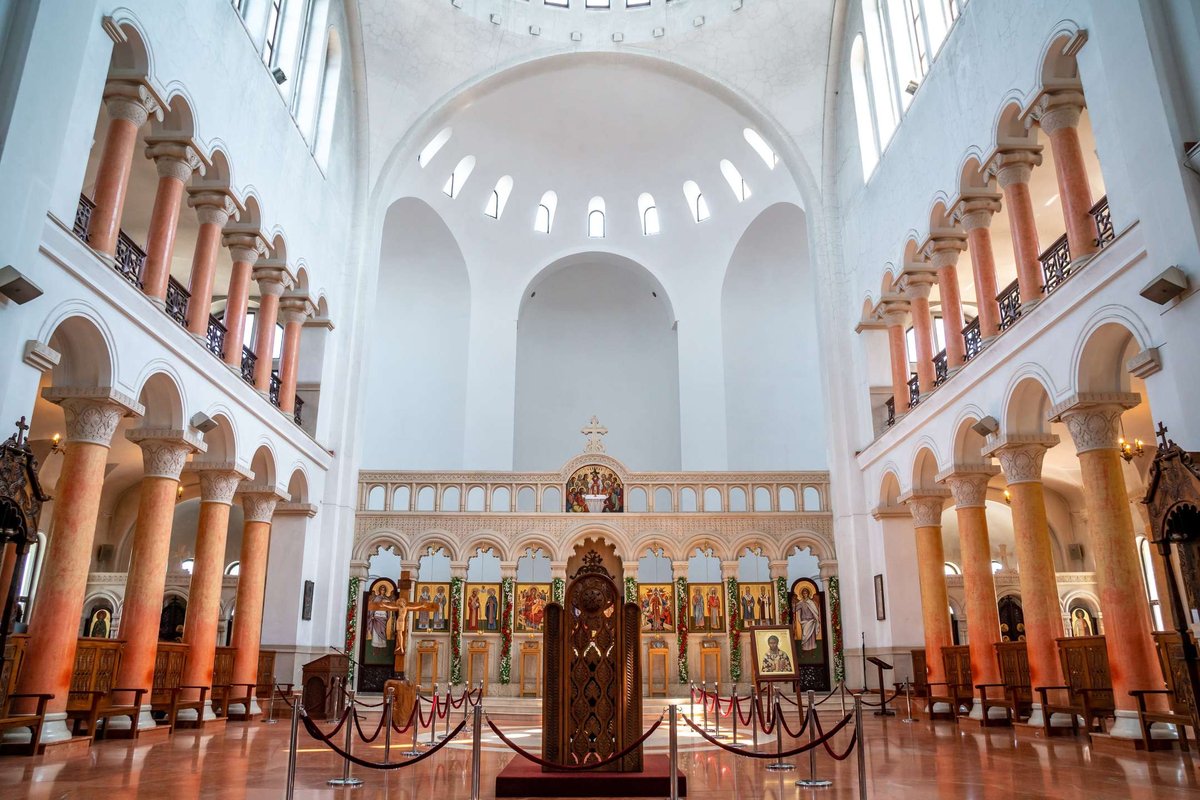
Construction of the church lasted only a year, and in 1907, a cross was erected on the dome. The cathedral was decorated with frescoes, designed by V. I. Dumitrashko, who served at the Imperial Academy. The frescoes were created in different styles, chosen for each wall. Some were painted in the Greco-Byzantine style, others in the Georgian-Byzantine style, and still others in the Russian-Byzantine style.
However, the frescoes have not survived to this day. During the communist era, the cathedral was converted into a theater. The bells were melted down, and the building was reconstructed. In 1932, a theater was housed in the cathedral, where it remained until the collapse of the Soviet Union. The Orthodox Church of Georgia fought for a long time for ownership of the cathedral, and only in 2005 was the decision made to return the building to the church. President Mikheil Saakashvili personally presented the keys to the Cathedral to Ilia II, Catholicos of Georgia. Restoration work was carried out with the help of donations and state budget support. Following this, the Cathedral rightfully earned a place among the "Most Beautiful Places in Georgia" lists.
If you're wondering what to see in Poti, you definitely need to visit the Church of the Resurrection of Christ, a source of pride for all the city's residents.

32 comments
Log in to leave a comment
Фрески, созданные Думитрашко, действительно завораживают - они как будто разговаривают с тобой, каждый стиль рассказывает свою историю. Но, признаюсь, иногда мне кажется, что современная реальность затмевает эту духовную глубину. Люди фотографируются на фоне собора - это прекрасно, но жаль, что мало кто вникает в детали его судьбы. Этот храм - не просто строение, а целая эпоха. Возвращение к церкви в 2005 году выглядит как надежда на возрождение чего-то более человечного, но насколько ли реально это в наше время? Наполнен ли он сейчас тем же смыслом или стал просто очередной декорацией для туристов?
История этого места действительно впечатляет: построенный в начале XX века, собор пережил времена, когда его использовали как театр в советские годы, а затем был возвращён церкви и восстановлен, что делает его не только архитектурной, но и культурной жемчужиной города.
Очень приятно, что в рейтинге есть советы от местных, ответы на частые вопросы и живые отзывы, которые помогли мне лучше понять, что именно стоит посмотреть здесь. Атмосфера внутри просто невероятная: тишина, свет, который льётся сквозь витражи, и ощущение, словно время замирает.
Я уже запланировал вернуться сюда вечером, чтобы увидеть собор в подсветке и потом прогуляться по набережной. А вам интереснее посещать такие исторические соборы днём или именно в вечернем освещении, когда архитектура раскрывается иначе?