




Sachino: a Palace in Tbilisi
🏰 Historic palace · ⏱️ 1–1.5 hours · 📍 Urbniси Street, Tbilisi
🏰 Before you visit
| 📍 Address | Urbniси Street, Tbilisi, Old Town |
| 📅 Built | Late 18th century. King Erekle II built it for his wife, Queen Darejan |
| 🏆 Why it matters | One of only two surviving royal palaces from that era in Georgia |
| 🏛️ Complex | Palace + church (former Transfiguration Monastery), enclosed by a stone wall |
| 🔭 Viewpoint | Decorative tower balcony — free viewing platform with panoramic city views |
| 🚇 Getting there | 5–7 min walk from Meidani Square, or 3 min from Abanotubani sulphur baths |
| 💰 Entry | Balcony viewpoint — free. Some rooms — check on site |
🧭 Who this article is for
Darejan Palace is not the loudest landmark in Tbilisi. Most tourists walk past without knowing what they're looking at. But this is one of only two surviving royal palaces from its era, with a personal story behind it: a king who built a residence for his wife, a wife who left after his death, and two centuries of transformations — monastery, seminary, storage room, theatre. This article is for those who want to see more than the façade.
📖 The history behind the walls
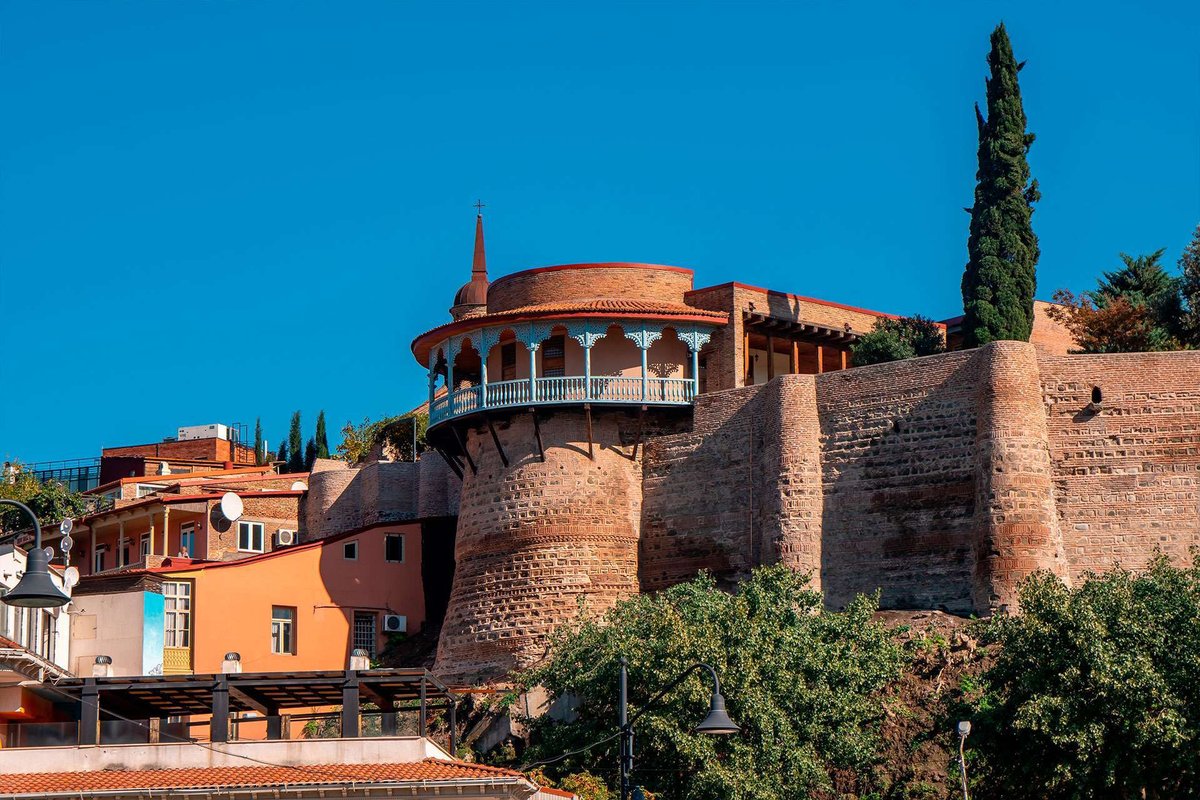
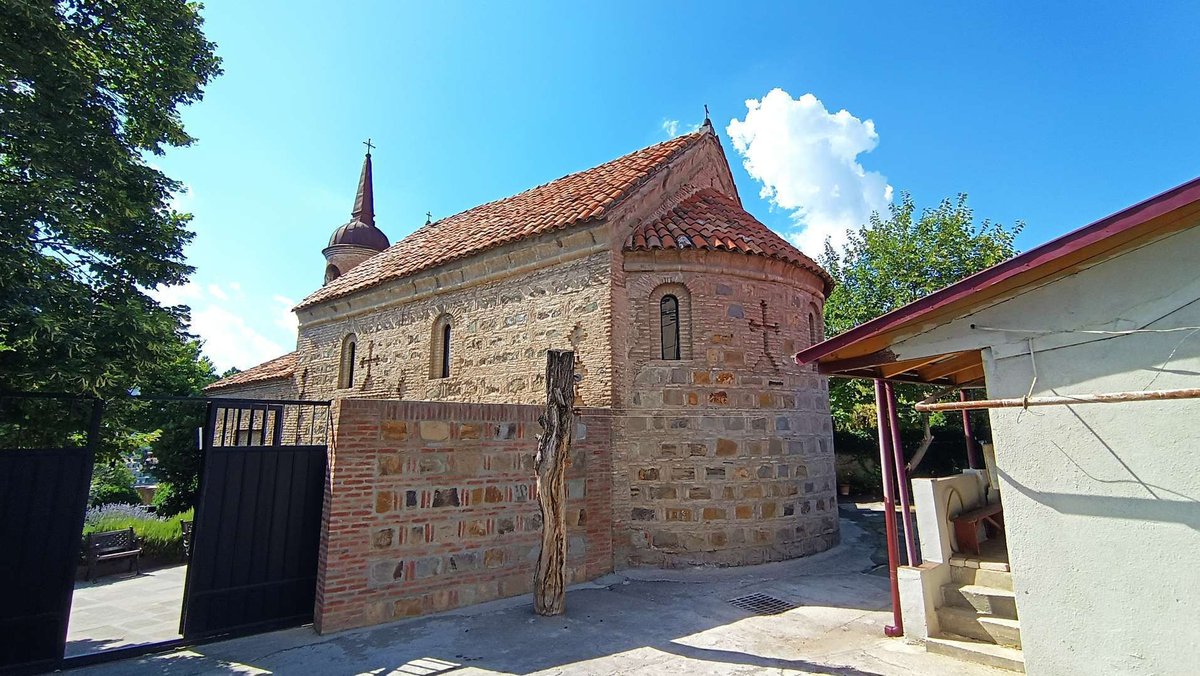
There was once an old castle on this site. Queen Darejan chose to build both a palace and a church on its remains — the Church of Saint Erekle and Saint Darya. Over time the church became the Transfiguration Monastery, popularly called Darya's Monastery. The palace took the name "Sachino."
King Erekle II had the complex built in the late 18th century — for his wife. It was a personal project, not a state commission. That's why the palace has the character it does: not a monumental fortress but a living space with decorative details and a human scale.
After the tragic death of Erekle, Queen Darejan left the palace. Exarch Theophilact bought both the palace and the church, and they were converted into seminaries and church-parish schools.
🏚️ What happened next
During the Soviet period, the monastery stopped operating. In the 1970s a district museum was set up in its spaces. The church found an entirely non-religious use: first a storage facility, then a one-man theatre. After the Soviet collapse the theatre closed and the building came under the patronage of the patriarchate.
This is a familiar story for historic buildings from the Soviet era — and it makes the fact that the complex has survived in its current state feel less obvious than it might seem.
🏛️ Architecture: what to look at
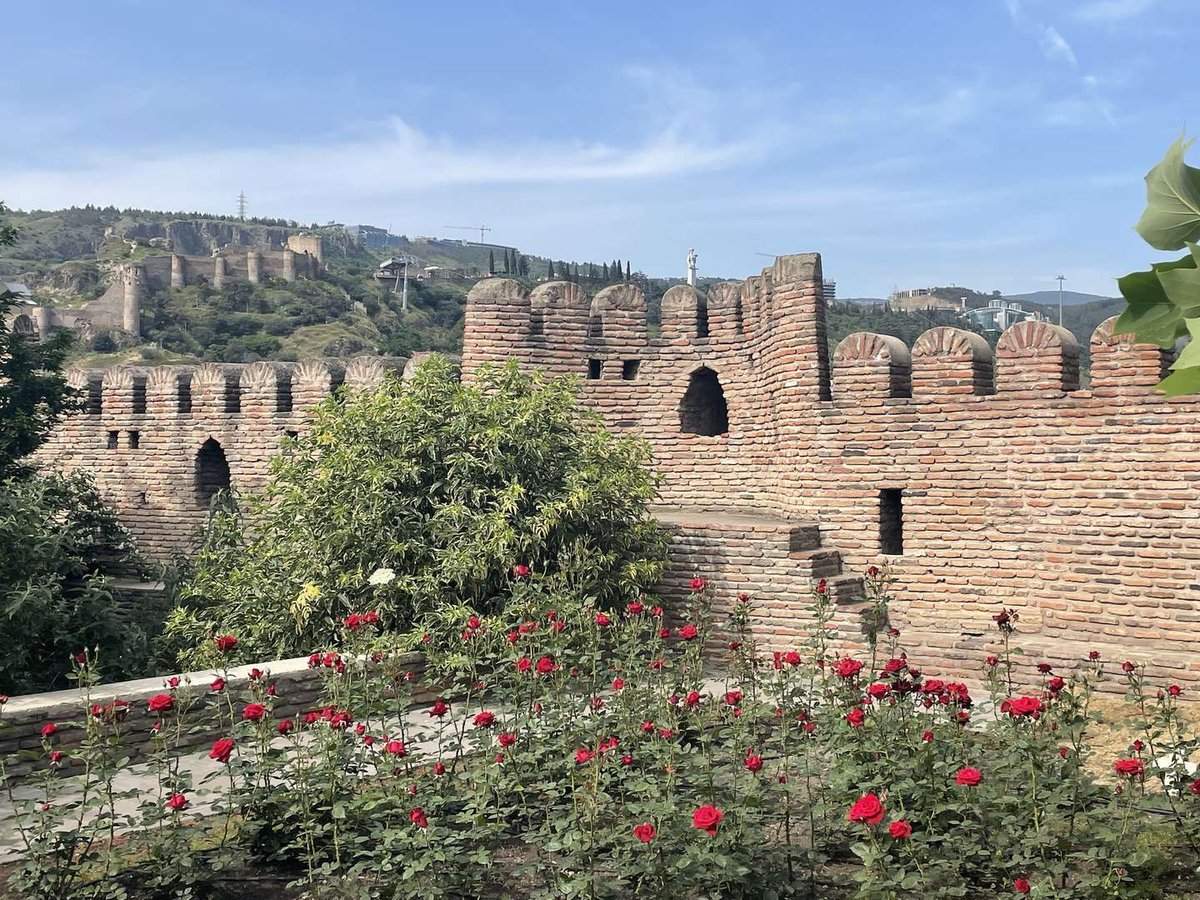
The palace and church form a single architectural complex, surrounded by a stone wall.
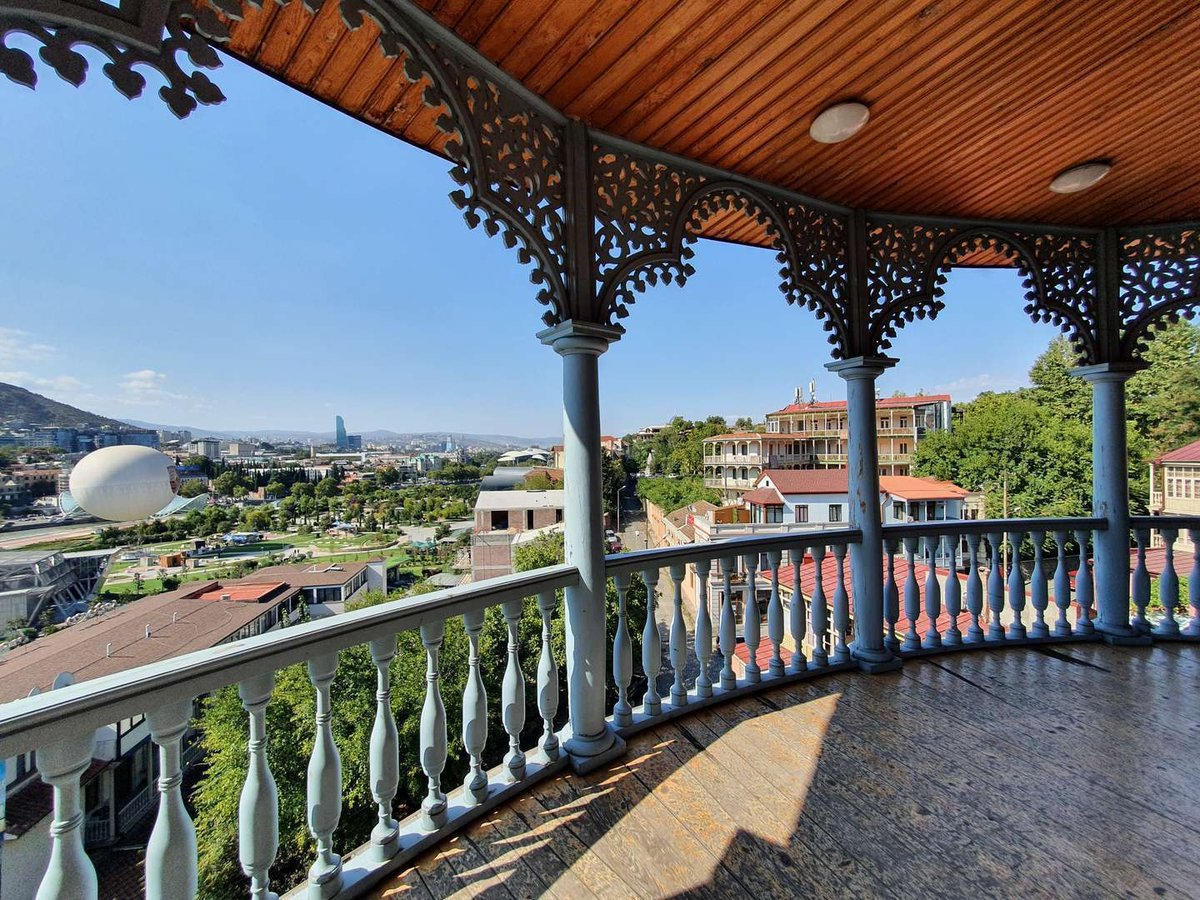
The lower part of the palace is built from rubble stone, the upper from square bricks laid in layers. A decorative balcony is attached to the upper part of the tower. This balcony is now the viewing platform open to all visitors free of charge.
From the balcony you can see the Abanotubani sulphur baths, Narikala fortress and several quarters of the Old Town. The view is compact but alive.
Inside, some rooms are open to visitors — 18th-century living space that hasn't been turned into a museum reconstruction.
Don't stop at the balcony. Go inside and walk through the rooms — the scale of 18th-century living space feels completely different when you're standing in it rather than looking at photographs. And notice the stonework: the difference between the rubble lower section and the brick upper courses is visible to the naked eye.
🗺️ How to spend your time at the complex
1️⃣ Enter through the gate in the stone wall and take in the courtyard — here you can clearly see how the palace and church relate to each other as a single complex.
2️⃣ Look at the lower section of the palace from outside — the rubble stone construction is easy to see.
3️⃣ Go into the accessible rooms inside — 18th-century interiors without tourist reconstruction.
4️⃣ Climb to the decorative tower balcony — free viewpoint with views over Abanotubani and Narikala.
5️⃣ Visit the church — the former Transfiguration Monastery, now under the patronage of the patriarchate.
💬 What visitors say
"The viewing balcony was particularly impressive with its beautiful views over the city. It felt as though the walls were holding all of that rich history. A place definitely worth visiting."
"The decorative balcony as a viewing platform is a clever architectural touch. Visiting in spring, when everything around blooms, is worth it."
"Walking through the palace, you feel the spirit of history and learn about Georgian royal life. The balcony is stunning, and it shows how the palace was built with attention to detail."
"I think everyone has wondered as a child what it was like to live as a tsar. The Sachino Palace answers many of those questions."
Have you been to Darejan Palace? What stayed with you most — the balcony view, the rooms inside, or the history of the palace itself? Tell us — we read every comment ❤️
🏁 Is it worth going
Darejan Palace is not a required stop on any tourist itinerary. But if you're already in Abanotubani or near Narikala, walking past without going in means missing one of only two surviving Georgian royal palaces from that era. The balcony is free, the complex is small and the history is dense. Half an hour here is well spent.
ℹ️ Opening hours and access to individual rooms may vary. The complex is under the patronage of the patriarchate. Check current information before your visit.
🏛️ Nearby attractions




❓ Questions people ask most often
💬 5–7 minutes on foot from Meidani Square, or 3 minutes from the Abanotubani sulphur baths. By car — Urbniси Street. Parking is limited in this area; it's better to walk from the Old Town centre.
💬 "Sachino" is a Georgian word meaning "the place of the beloved" or "the queen's place." The palace was built by King Erekle II specifically for his wife — Queen Darejan — which is how it got this name.
💬 Darejan was the wife of King Erekle II of Kartli-Kakheti, for whom the palace was built in the late 18th century. After her husband's death she left the residence, and it passed through several different owners.
💬 Yes, the decorative tower balcony works as a viewing platform and is open to all visitors free of charge. From it you can see the Abanotubani sulphur baths, Narikala fortress and the Old Town.
💬 Yes. The courtyard, balcony and some interior rooms are accessible. The balcony is free. Check opening hours before your visit as they may change.
💬 Very few Georgian royal residences from that era have survived intact — most were destroyed in wars or during Soviet reconstruction. Darejan Palace is one of just two that have come down to us in reasonably complete form.
💬 The church went through a long journey: first a monastery, then under Soviet rule a storage facility, then a one-man theatre. After 1991 the building came under the patronage of the patriarchate.

36 comments
Log in to leave a comment
Понравились советы из рейтинга и отзывы путешественников — они подсказывали, с какого ракурса лучше смотреть дворец, где можно сделать фото и какое время дня выбрать, чтобы свет на фасаде был мягче. Такие мелкие подсказки реально помогают лучше прочувствовать место, а не просто «галопом» пробежать мимо.
Зашёл после прогулки в кафе неподалёку, которое упоминалось в статье — кофе оказался очень к месту после насыщенного тура по Тбилиси. Классные подборки Madloba действительно вдохновляют двигаться дальше и смотреть на знакомый город под другим углом.
Как вы думаете, лучше сначала изучить дворец снаружи пешком, а потом заходить внутрь для деталей, или наоборот — сначала интерьер, а потом прогулка вокруг?