


Alexander Nevsky Church in Tbilisi: Russian Parish Since 1864
Caves ⛪ Active Church · ⏱️ 30–60 min · 📍 38 Kote Marjanishvili St, Tbilisi
⛪ What you need to know before visiting
| 📍 Address | 38 Kote Marjanishvili St, Tbilisi |
| 🕐 Opening hours | Mon–Sat: 08:00–19:30 · Sun: 06:30–19:30 |
| 💰 Entrance | Free |
| 📅 Year of construction | 1864 — built on parishioners' donations and 5,000 rubles from the Most Holy Synod |
| 🕍 Language of services | Church Slavonic — one of only two such churches in Tbilisi |
| 🚇 How to get there | Marjanishvili Metro Station, 5-minute walk · Bus No. 62 |
🧭 Who This Article Is For
The Alexander Nevsky Church is one of the oldest Russian Orthodox parishes in the Caucasus, vibrant and deeply spiritual. Russian-speaking residents of Tbilisi and pilgrims from all over the world come here to visit the grave of Schiarchimandrite Vitaly. Tourists interested in the city's history and cross-cultural heritage will find architecture that strikingly stands out from Georgian tradition. This article is for anyone who wants to understand what this place is and why to visit it.
🏛️ White Walls and Blue Domes
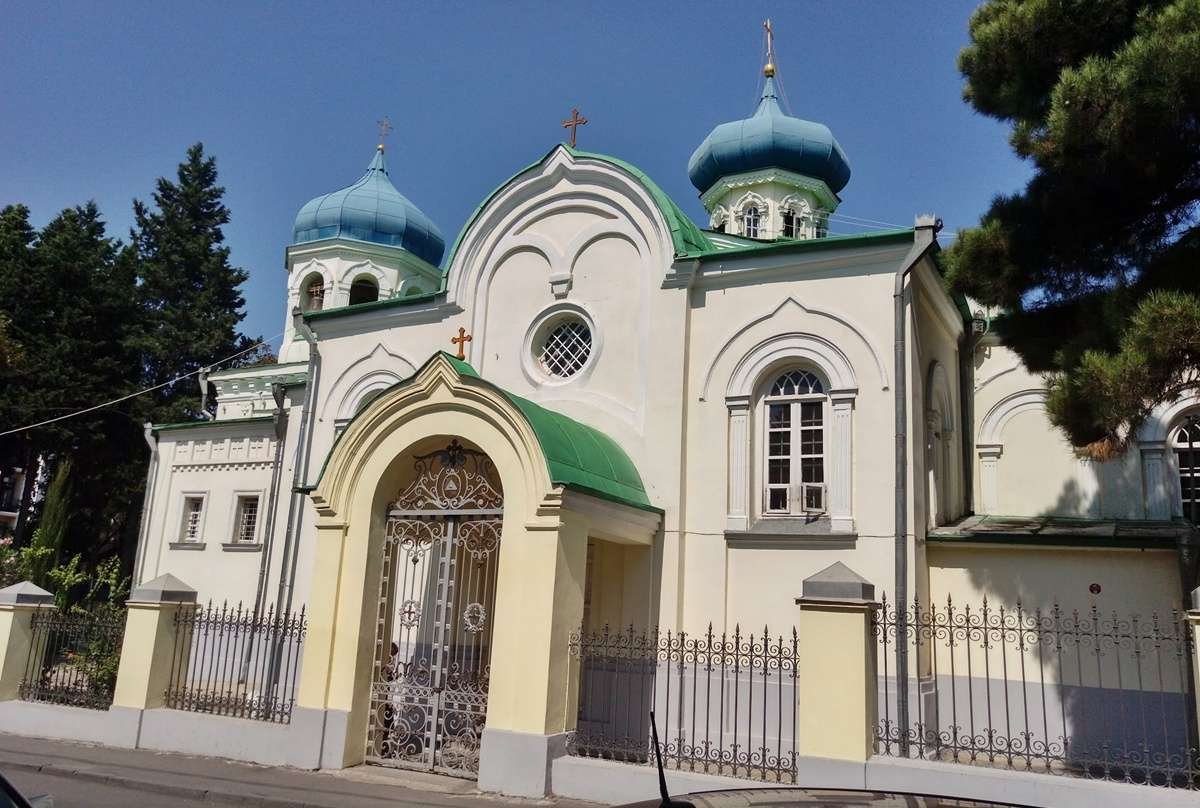
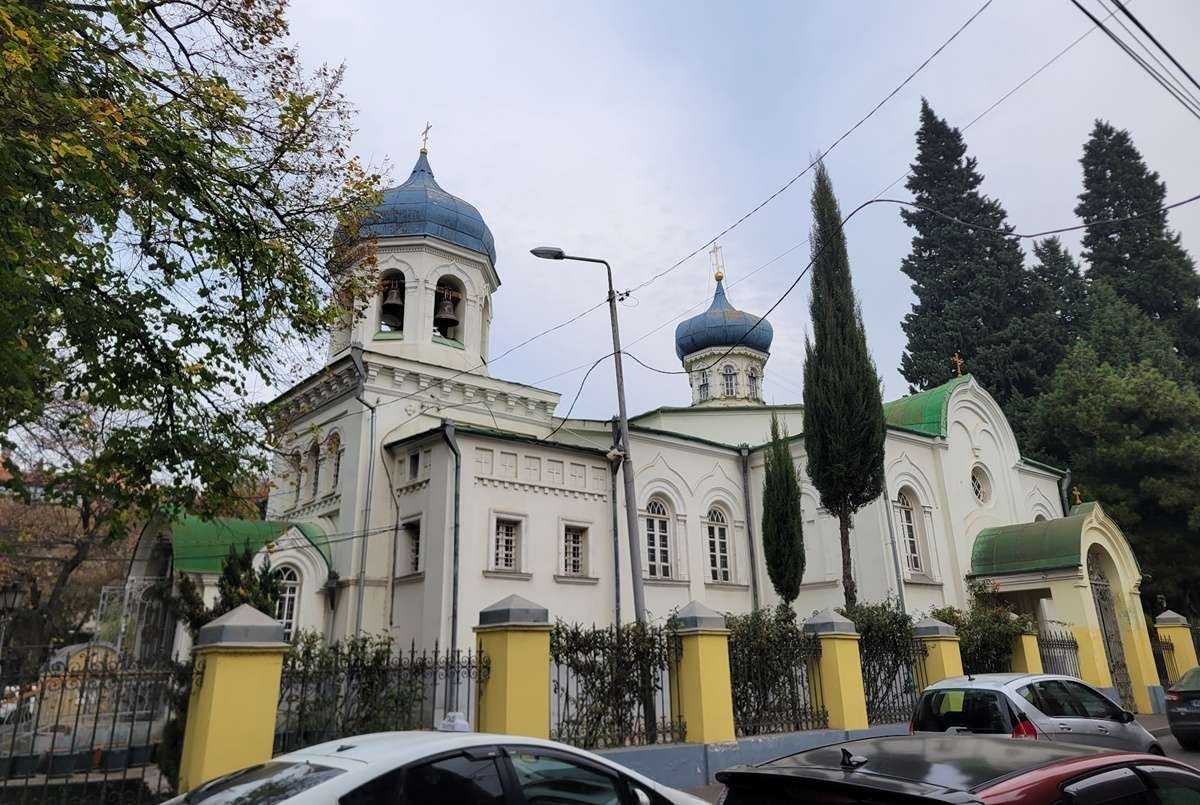
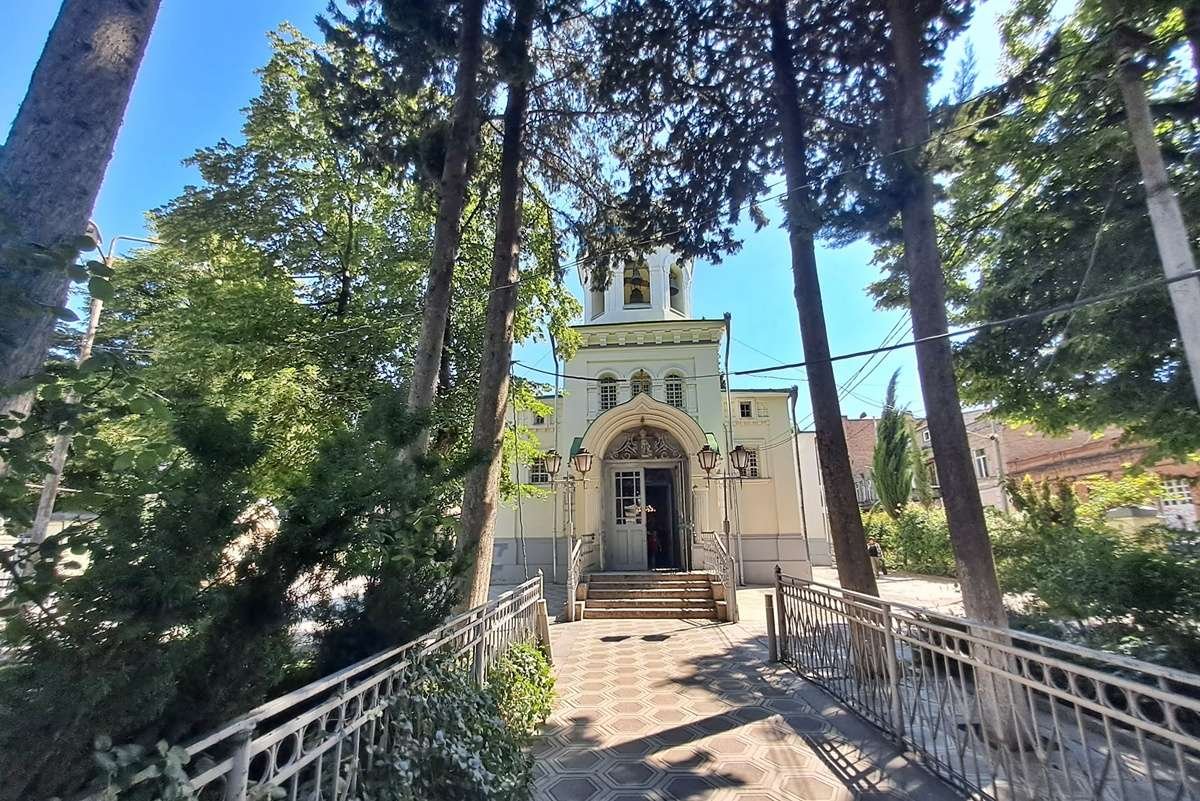
On Marjanishvili Street, just a few minutes away from the metro station of the same name, stands a church that looks unexpected for Tbilisi at first glance. It lacks the typical Georgian cross-domed silhouette and Armenian tufa masonry; instead, it features white walls with bluish-green roofs, a bell tower, gilded icons, and Church Slavonic chanting. This is the Alexander Nevsky Church—locals have long called it simply the "Russian Church."
It was built in 1864. The funds were raised by the whole community: parishioners donated whatever they could, and the Most Holy Synod contributed 5,000 rubles—a very substantial sum at the time. In 1886, the church was nearly doubled in size: chapels were added on three sides, and a single-tier bell tower with a belfry was built. The work was overseen by the diocesan architect at the initiative of Exarch Pavel.
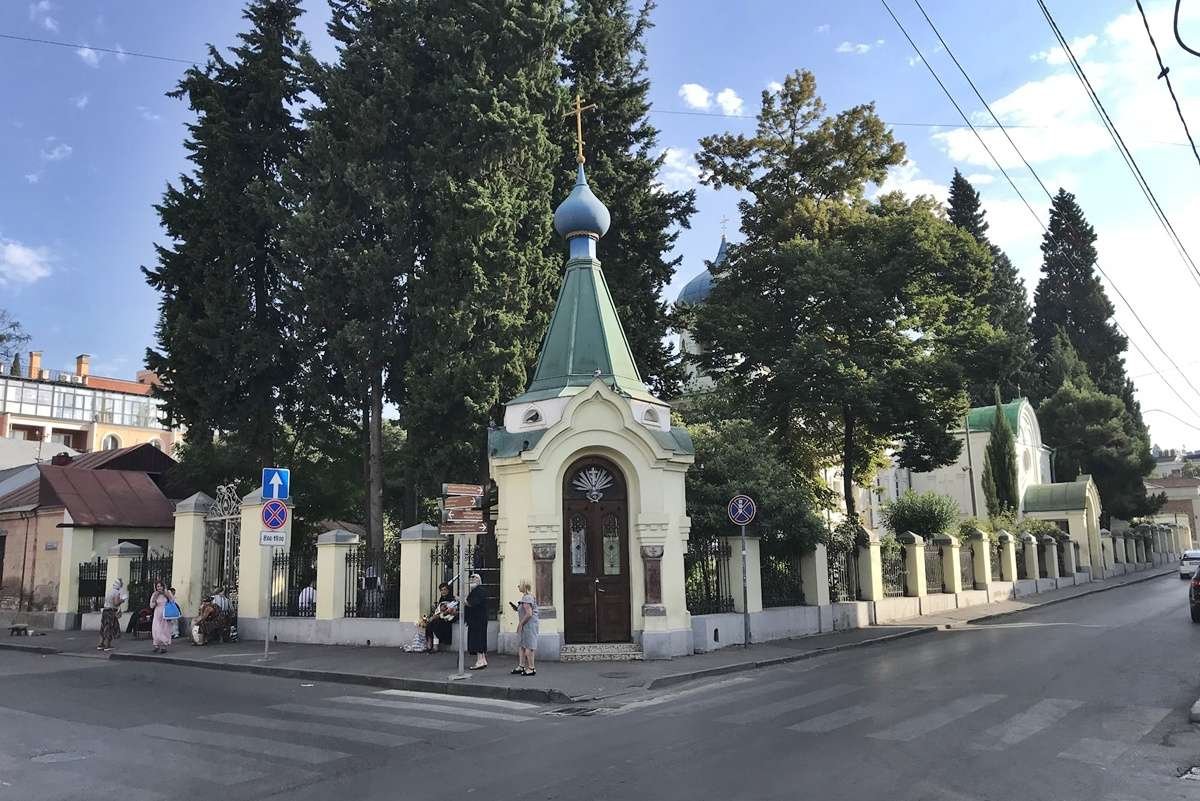
Later, new structures appeared. In 1869, the Glamazdin family built a prayer house on the grounds. In 1900, the chapel of St. Nicholas the Wonderworker was built to the right of the altar to honor the chrismation of Emperor Nicholas II, entirely funded by the congregation. In 1913, a chapel dedicated to the Feodorovskaya Icon of the Mother of God was built near the courtyard gates to commemorate the 300th anniversary of the Romanov dynasty.
🕍 What’s Inside
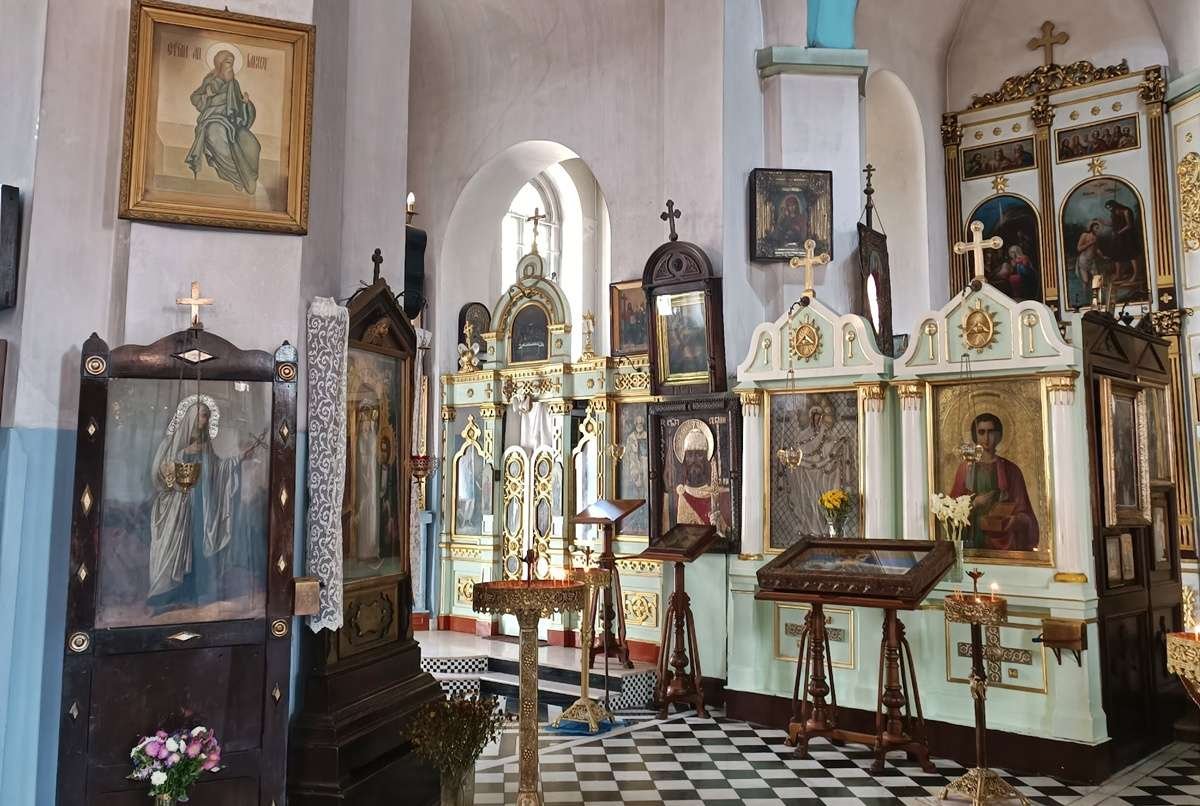
The interior is tightly packed with icons of various sizes, artistic styles, and eras. The iconostasis, arches, and ornaments are covered in gold leaf. The atmosphere is solemn and composed, free from tourist bustle.
The church houses particles of the holy relics of several saints: Mary Magdalene, St. Nina Equal-to-the-Apostles, St. Nicholas the Wonderworker, St. Shio of Mgvime, and others.
Services are conducted in the Church Slavonic language, exactly like in Russian Orthodox churches. There are only two such parishes in Tbilisi: this one and the Church of St. Vladimir in the Vera district. Weddings, baptisms, and funerals all follow the same tradition. A charity soup kitchen also operates here, feeding the needy daily.
📜 How the Church Survived the Soviet Era
Following the establishment of Soviet power, attempts were made to close the church multiple times. In 1928, the local commissar summoned the rector, Father Ioann, and offered him a position as a professor of philosophy at Tbilisi State University if he renounced his holy orders. Father Ioann refused. Persecution against him and his family began. In 1937, he was arrested, and a few days later, the court sentenced him to execution by firing squad.
Despite this, services in the church never stopped.
✨ Metropolitan Zinovy and the "Branch of the Glinsk Hermitage"
From 1950 to 1982, the rector of the church was Metropolitan Zinovy (Mazhuga) (1896–1985), one of the last Glinsk elders. He survived imprisonment and wandering through the Caucasus mountains before finally settling in Tbilisi. Under his leadership, a whole group of ascetics from the Glinsk Hermitage gathered around the Alexander Nevsky Church, earning the parish the nickname of its "branch."
It was Metropolitan Zinovy who performed the monastic tonsure of the current Patriarch-Catholicos of All Georgia, Ilia II. In 1972, he was elevated to the rank of Metropolitan. At the end of his life, he took the great schema with the name Seraphim. In March 2009, he was canonized as a saint by both the Georgian and Ukrainian Orthodox Churches. His relics rest near the northern wall of the church, in the St. Nicholas chapel.
🕯️ Schiarchimandrite Vitaly: The One Pilgrims Come to See
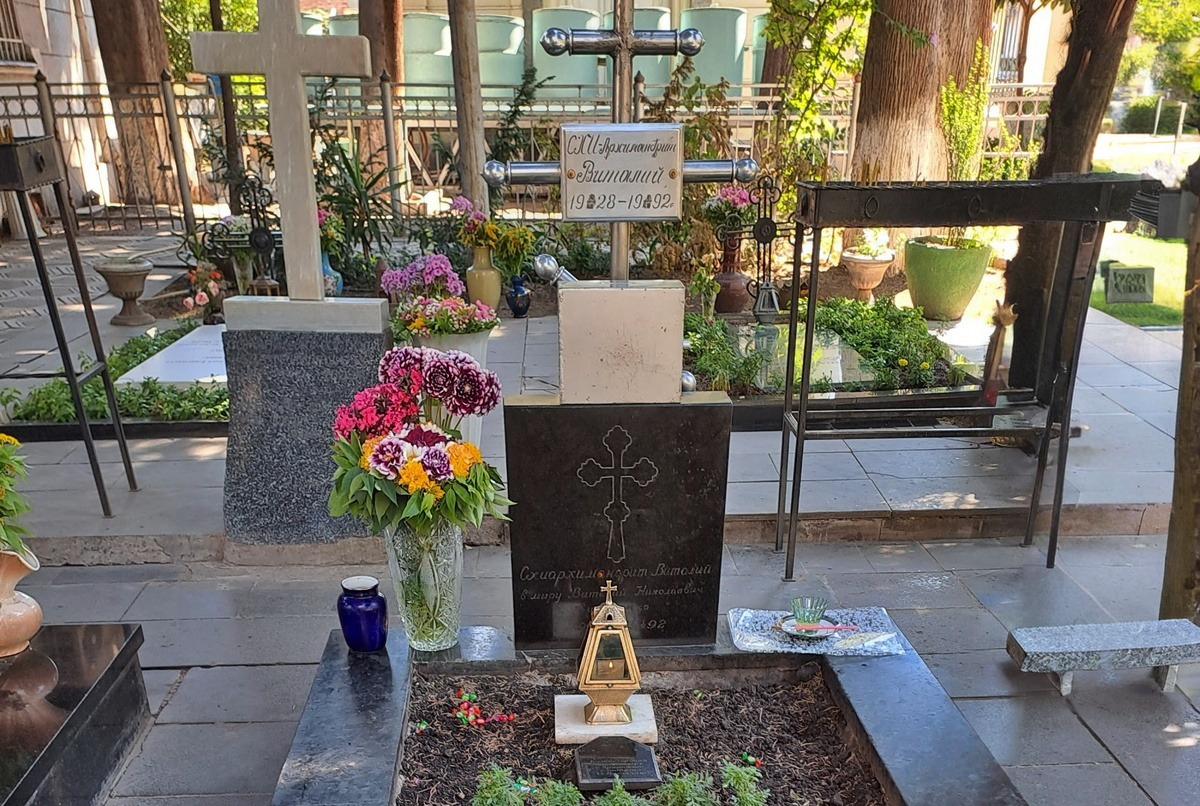
In the courtyard by the church altar lies the grave of Schiarchimandrite Vitaly (Sidorenko) (1928–1992). This spot is perhaps the main reason why pilgrims travel here from Russia, Ukraine, Georgia, and other countries.
Father Vitaly arrived in Tbilisi in 1969, fleeing the mountainous Caucasus where monks were persecuted by the KGB. He was welcomed by Metropolitan Zinovy, who ordained him a hieromonk in 1976. From then until his death, Father Vitaly served at the Alexander Nevsky Church. He was renowned as a strict ascetic, a man of deep prayer, and a spiritual guide, drawing people from all over the USSR. He was known for his clairvoyance and extreme selflessness—always wearing an old cassock, he gave everything away. It is said that he predicted the civil war in Georgia many years before it began.
On December 1, 1992, Schiarchimandrite Vitaly passed away. His funeral service was led personally by Patriarch Ilia II in the presence of a vast crowd. There are always fresh flowers and burning candles on his grave. Although Father Vitaly has not been officially canonized, believers continue to collect testimonies of miracles and healings occurring at his tomb.
If you are a tourist rather than a pilgrim, take a moment to step into the courtyard. The grave of Schiarchimandrite Vitaly is worth visiting just to stand quietly and feel how alive this place is. It is never deserted, even on weekdays. Sunday services begin at 06:30 AM—if you want to attend a liturgy in Church Slavonic, this is a rare opportunity in Tbilisi. The dress code is standard: women should wear a headscarf and cover their shoulders; men should avoid wearing shorts.
🗺️ How to Get There
1️⃣ Marjanishvili Metro Station — exit and walk up Marjanishvili Street without turning anywhere for about 5 minutes. The church will be on your right.
2️⃣ Bus No. 62 — there is a bus stop right next to the church.
3️⃣ By Taxi (Bolt / Yandex) — ask for the "Alexander Nevsky Church on Marjanishvili" or use the coordinates 41.7114, 44.8011.
💬 What Visitors Say
"The church is in a Russian style, which looks unusual for Tbilisi. It was built in 1864 through donations. A must-visit for history enthusiasts and Orthodox believers alike."
"The architecture of this church and its customs are very reminiscent of churches in Russia. The service is held in two languages, and many parishioners speak Russian."
"In 2019, I visited Georgia on a pilgrimage. We visited the grave of Schiarchimandrite Vitaly, who is remembered and deeply respected in the Voronezh and Lipetsk dioceses."
"There is a very warm atmosphere here, and the church itself is small and very cozy. Numerous icons fill almost the entire space. They are all different—in style, size, and design."
"Our wedding took place in this church. Father Alexander received us with great respect, showing sincere kindness."
🏁 Why Visit
The Alexander Nevsky Church offers 160 years of history in a single courtyard. Here you can hear a service that most tourists have never encountered in Tbilisi—in Church Slavonic. It is the resting place of two holy ascetics whose graves still attract people from all over the Orthodox world. Its architecture serves as a reminder that Tbilisi is not just about Narikala and sulfur baths, but also a rich, shared history of many peoples.
Save this article or share it with those planning a trip to Georgia.
ℹ️ Free entrance. The schedule of services may change on holidays—please verify on-site. Dress code: modest clothing, headscarves for women. Information is up to date at the time of publication.
Have you ever been to the Alexander Nevsky Church? Did you come for a service, to visit Father Vitaly's grave, or just stop by along the way? Share your impressions and what stood out to you. We read all comments ❤️
❓ Frequently Asked Questions
💬 Because services here are conducted entirely in Church Slavonic, just like in Orthodox churches in Russia. There are only two such parishes in Tbilisi: this one and the Church of St. Vladimir in the Vera district. However, the church is part of the Georgian Orthodox Church (Mtskheta-Tbilisi Diocese) rather than the Russian Orthodox Church.
💬 Vitaly Sidorenko (1928–1992) was an ascetic monk, a disciple of the Glinsk elders, a spiritual father, and a man of prayer. He served at the Alexander Nevsky Church from 1976 to 1992. He was famous for his clairvoyance, strict asceticism, and the gift of healing, drawing people from all over the Soviet Union. After his passing, his funeral was performed by Patriarch Ilia II himself. Although he has not been officially canonized, Schiarchimandrite Vitaly is venerated by thousands of believers. His grave in the courtyard near the altar is never left empty.
💬 Zinovy Mazhuga (1896–1985) served as the rector of this church from 1950 to 1982 and later became the Metropolitan of Tetritskaro. He was one of the last Glinsk elders. He performed the monastic tonsure for the current Patriarch-Catholicos of Georgia, Ilia II. In 2009, he was canonized by both the Georgian and Ukrainian Orthodox Churches. His relics rest in the St. Nicholas chapel of the church, by the northern wall.
💬 Yes, the church is open to the public during working hours (Mon–Sat 08:00–19:30, Sun 06:30–19:30). You can enter at any time; it is usually quiet on weekdays. The courtyard and graves are also accessible.
💬 On Sundays, the early liturgy starts at 06:30 AM, followed by a later morning liturgy. On weekdays, morning services begin around 09:00 AM. It is best to check the exact schedule in advance, as it may change during holidays.
💬 Yes, the same as for any Orthodox church: women should wear a headscarf, a skirt or long trousers, and cover their shoulders; men must not wear shorts. Headscarves are usually available at the entrance.
💬 Marjanishvili Square and Metro Station are a 5-minute walk away, featuring various cafes and restaurants. The Kote Marjanishvili State Academic Drama Theatre is just one block from the church. The Dry Bridge flea market is a 15-minute walk away.

1 comment
Log in to leave a comment