




💧 The Mineral Resorts of Racha After the Shovi Disaster: Where You Can Still Go, and Where You Can't
💧 Three Resorts in Racha, Three Different Answers
Racha has long been called Georgia's Switzerland, largely for its mineral waters. But the picture has changed in recent years, and coming here "for the waters" no longer means what it used to. In short, this is where things stand.
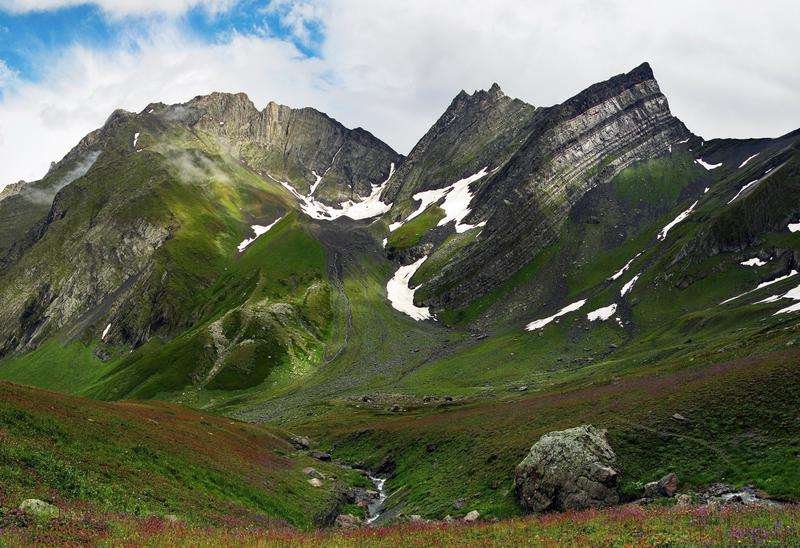
The mineral resorts of Racha are, first and foremost, Shovi and Utsera. That was true for decades, and it's still what most guidebooks say. But 2023 drew a hard line between the two names: one resort is gone, the other is open.
This matters for a practical reason, not a historical one. People still search for "Shovi holiday" and "Shovi spa," unaware of what happened. This article is an honest answer to the question of where in Racha you can still go for the mineral waters, and where you no longer can, and why.
Let's start with the hard part.
🕯️ Shovi: The Resort Is Gone
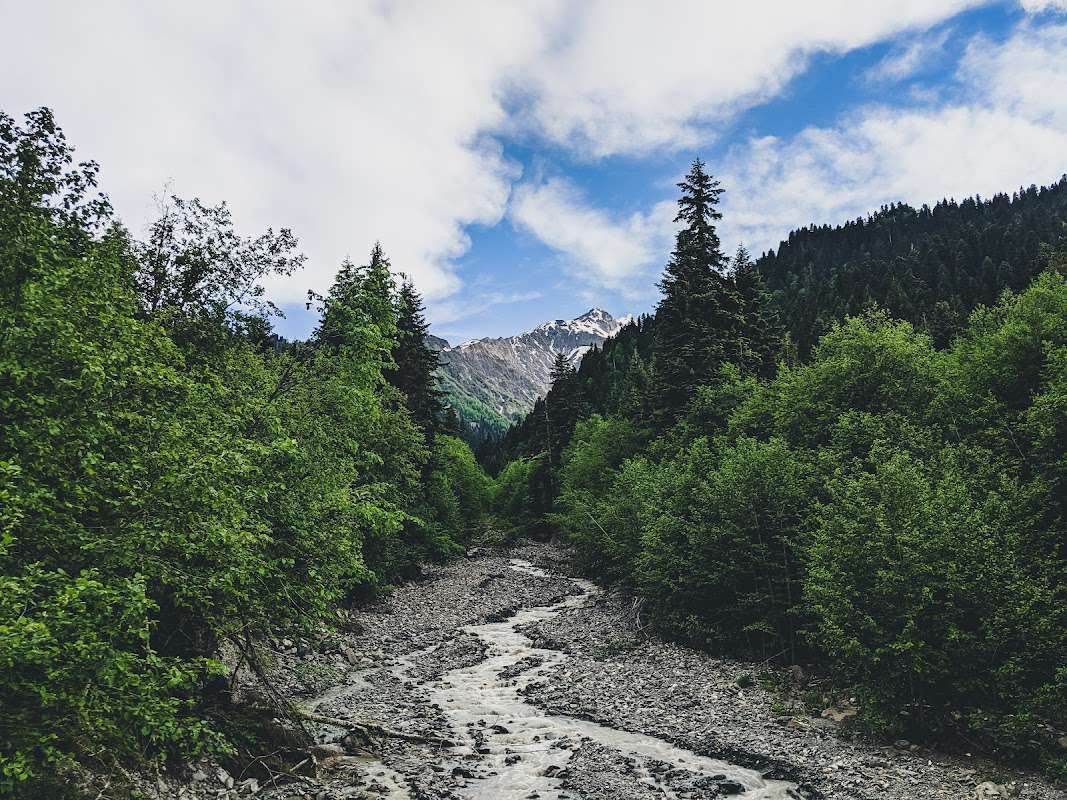
On 3 August 2023, at around a quarter past three in the afternoon, a powerful mudflow came down the valley of the Bubistskali river. It covered roughly 26 hectares, the very cottage district where people were on holiday. Thirty-three people died, among them children and foreign tourists. It became the deadliest natural disaster in Georgia's 21st-century history.
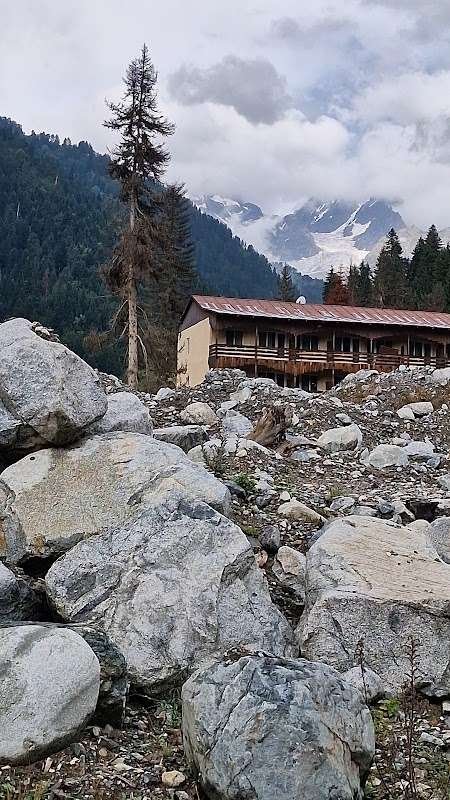
The cause took time to establish. According to the final report of the Ministry of Environmental Protection, published in February 2024, a rock mass collapsed to the west of the Buba glacier, struck the glacier, released subglacial water, and all of that, together with ice melt and rain, produced a mudflow of extreme force. By all accounts it was a sunny day. Nothing warned of it.
One detail makes the story especially bitter. No major mudflows had been recorded in the Bubistskali valley for centuries. The place was considered safe, which is precisely why the cottages were built there. Environmentalists later noted that given how fast the flow came down and how short the distance from glacier to settlement was, a warning system wouldn't have saved people anyway.
Where things stand now. The Georgian authorities have decided not to rebuild the resort. A year on, human-rights organisations concluded that Shovi as a resort had all but ceased to exist, with no prospects ahead. A memorial church is planned on the site of the tragedy. Where century-old firs and pines once stood, there is now rock and rubble.
You can physically reach the place; the road exists. But you can't go there as to a resort: there's no infrastructure, and the valley itself remains a risk zone. If you were planning on Shovi, the plan has to change. Below is where to go instead.
🌲 Utsera: The Only Working Resort in Upper Racha
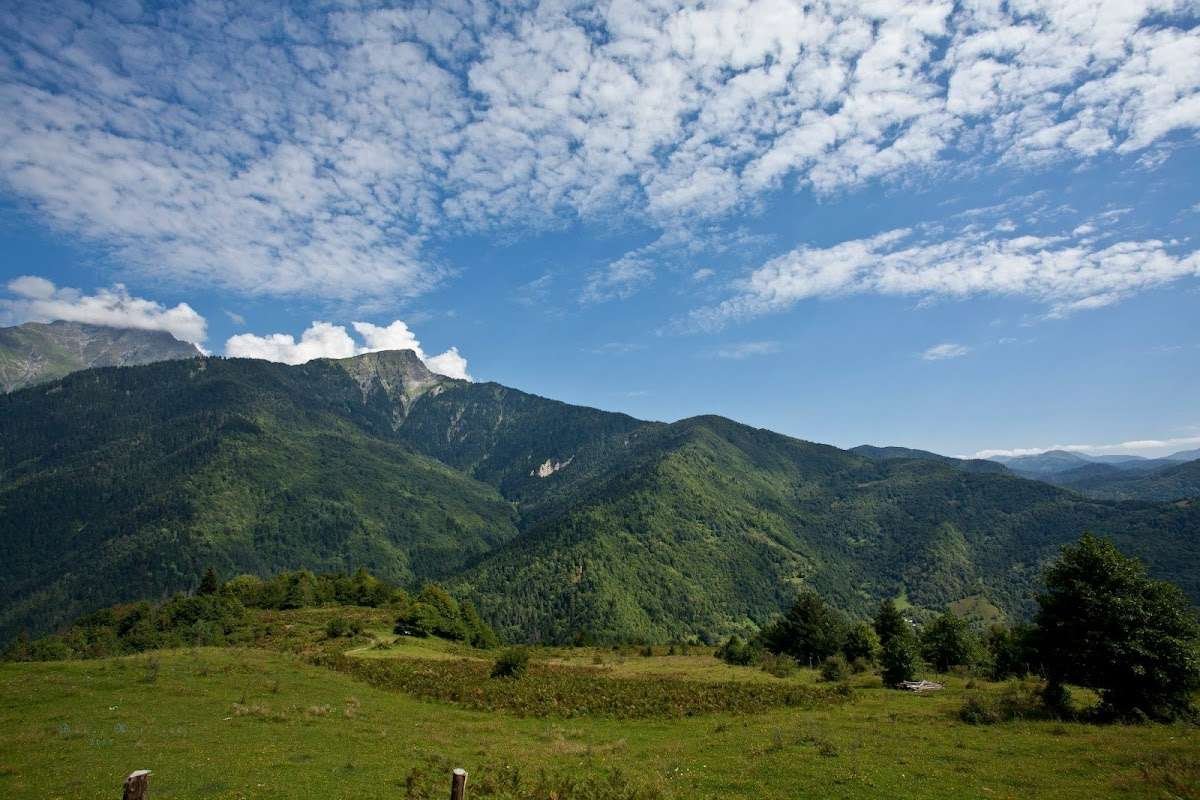
The good news is that the mudflow didn't touch Utsera. And that isn't luck, it's geography: Utsera sits on the Rioni river, near Oni, while Shovi lay 25 kilometres higher, in the separate Bubistskali valley. Different rivers, different gorges. The flow came down there; Utsera stayed whole.
It's a mountain balneo-climatic resort at around 1,100 metres, 8 kilometres from Oni. Coniferous and mixed forests surround it, and because of them the air here is considered healing in itself, recommended for preventing respiratory illness, especially in adolescents. Utsera has many mineral springs: sources speak of 28 kinds of water. Some rise right by the road, others higher up in the forest, and locals reckon the forest ones taste best. The water is bottled under the "Utsera" label; in type it's close to the Borjomi family and is used for liver and gastrointestinal conditions.
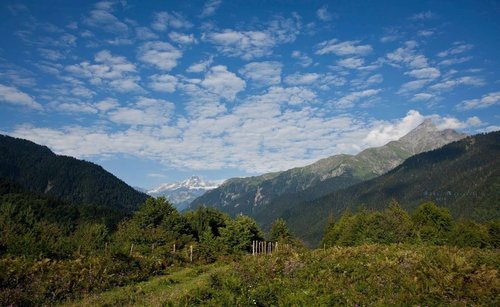
A lovely legend attaches to the name. Queen Tamar, passing through with her retinue, is said to have exclaimed something like "how indescribable this beauty is," and the word for "indescribable" eventually stuck to the village, becoming "Utsera."
An honest word on what to expect. Utsera is not a bustling resort with a promenade and entertainment. Rather the opposite: a quiet, sparsely populated place people come to for the air, the water and the calm. Some describe it as "almost uninhabited," and there's truth in that, the flow of visitors here is small. But the fast-flowing Rioni is nearby, popular with rafters, and there's fishing and hiking. Accommodation is mostly the private sector, on a budget. For luxury, spa complexes and high-end service, you'd go elsewhere.
💧 Mineral Springs: What Survived It All
There's something in this story that no mudflow undid. Upper Racha stands on mineral waters, and the springs rise across the whole valley regardless of what becomes of any single resort.
You can spot them without a map: around each outflow the stones turn a characteristic rusty colour from iron, and sometimes whole pools and little lakes of carbonated water gather. The compositions vary, ferruginous in one place, highly mineralised in another. Racha's spring water is close in type to the well-known Georgian brands, and it's what the region's entire balneology rested on for over a century.
If it's the springs themselves you're after, rather than resort infrastructure, Racha remains a fine place. Drinking from a roadside spring, breathing pine air, looking at the mountains, none of that has gone anywhere. It's just that this is now a story about nature and Utsera, not about Shovi.
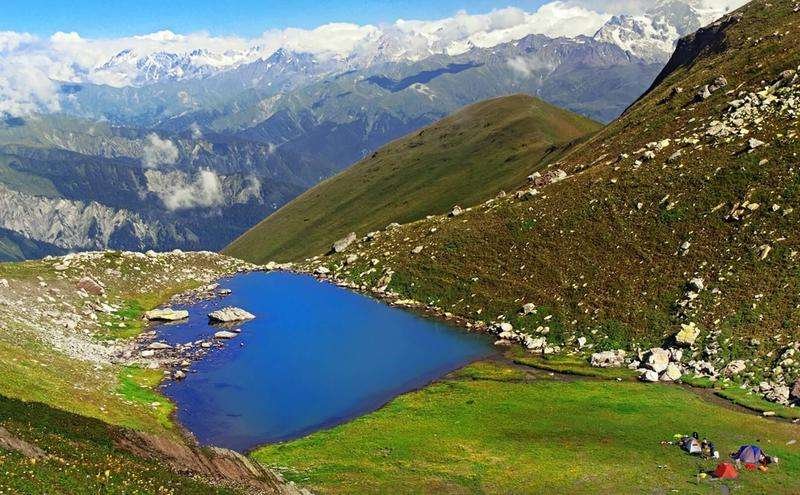
🗺️ Resorts and Springs of Upper Racha
Open in Google Maps🤔 Is Racha Worth Visiting for the Waters
The short answer: yes, but with the right expectations.
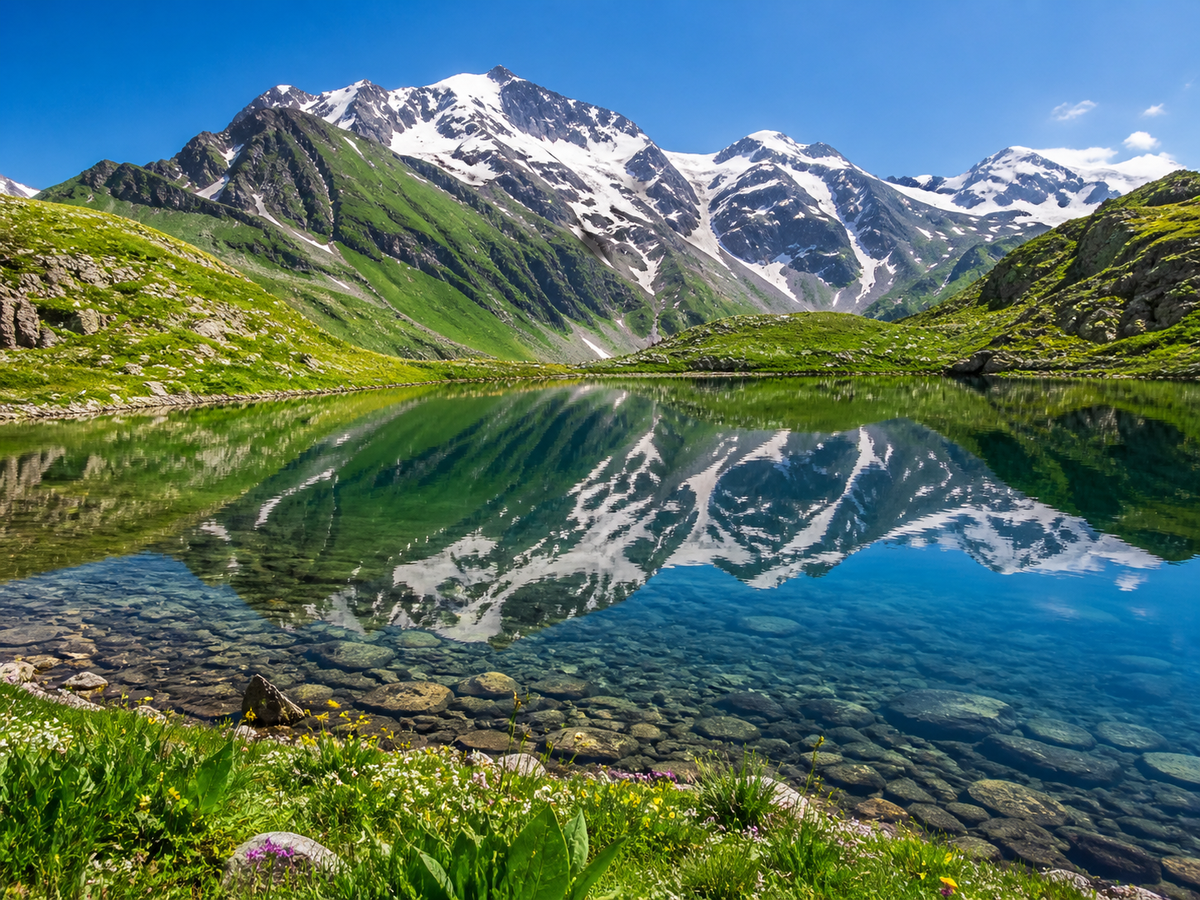
It's worth going if you want quiet, pine air, mineral water from a spring and beautiful mountains. Racha gives all of that, and Utsera is living proof. The region is still one of the cleanest in Georgia, and it isn't called Georgia's Switzerland for nothing.
It isn't worth going if you expect a resort in the usual sense: a developed promenade, upscale hotels, spa and evening life. There's none of that in upper Racha, and after the tragedy there won't be for the foreseeable future. This is a destination for quiet, almost wild time in nature, not for sanatorium polish.
And above all: as you plan, cross Shovi off the itinerary as a resort. As a place of memory it may take on a different meaning once the church is built. But you can no longer go there to take the waters or to rest.
🗿 What Else Is Nearby
Racha isn't only its resorts, and the mineral waters here are part of a bigger natural picture. From Utsera and Oni the main sights of upper Racha are within easy reach.
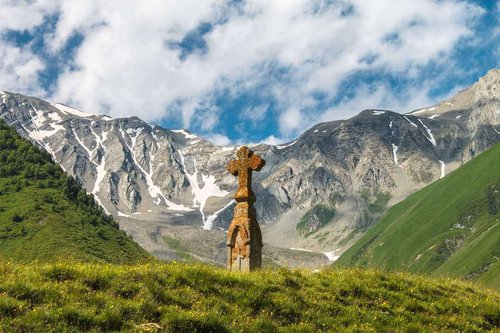
If mineral springs draw you, it's worth knowing there's a similar but far larger "valley of narzans" in the neighbouring region, the Truso Gorge near Kazbegi: around sixty springs, travertines and a carbonated lake. For the nature of upper Racha, including its rivers, glaciers and waterfalls, see the guide to the rivers of Racha-Lechkhumi. And for a sense of the region as a whole, its history and wines, there's the overview of Racha-Lechkhumi and Lower Svaneti.
Racha is still a land of mineral waters and pine air; it's just that the land has grown quieter and sadder. Utsera receives those who come for calm and for water. The springs rise as they did a hundred years ago. And Shovi remains in memory, and the best thing you can do for the place is to come to Racha with respect for what happened here.
Have you been to Racha, to Utsera, or to Shovi before the tragedy? Share it in the comments on Madloba: tell us how this land stayed with you and where you'd send people for the mineral waters.
Information is current as of July 2026. The status of the Shovi resort is given per the report of Georgia's Ministry of Environmental Protection of February 2024 and reports by human-rights organisations. Road conditions in upper Racha depend on the season, so check before setting off.
📚 Read Next Racha and its mineral waters
❓ Questions and answers
No. The resort was destroyed by a mudflow on 3 August 2023, and the Georgian authorities have decided not to rebuild it. There's no infrastructure there; you can't go to Shovi as to a resort.
On 3 August 2023 a powerful mudflow came down the valley of the Bubistskali river, covering about 26 hectares of the cottage district. Thirty-three people died. Per the Environment Ministry's report, the cause was a rockfall at the Buba glacier that released subglacial water.
Yes. Utsera is a working balneo-climatic resort on the Rioni river, 8 kilometres from Oni. The mudflow didn't affect it: it lies clear of the Bubistskali valley where the tragedy happened.
Its mineral springs, counted at up to 28 kinds, and its coniferous forest air, considered healing. The water is bottled under the "Utsera" label; in type it's close to Borjomi and is used for liver and gastrointestinal conditions.
No, it's a quiet, sparsely populated place for calm time in nature. There's no developed promenade, no large hotels or spa, and accommodation is mostly the private sector. People come for the water, the air and the quiet.
No. Utsera and Shovi stand on different rivers: Utsera on the Rioni near Oni, Shovi 25 kilometres higher in the Bubistskali valley. The mudflow came down there and never reached Utsera.
Springs rise across upper Racha, many surfacing right by the road, given away by the rusty colour of the stones. Most are around Utsera. An even larger valley of mineral springs lies in the neighbouring region, the Truso Gorge near Kazbegi.
Yes, if you want quiet, spring mineral water and pine air. Not if you expect a resort with developed infrastructure, a promenade and a spa, upper Racha has none of that.

44 comments
Log in to leave a comment
Водоëм на фотографии выше прекрасен. А он постоянен? И живëт там кто-то?
Эти места, наверное, можно считать отдалëнными, поэтому преполагаю, там довольно много щедрого и открытого душой народа... Я бы посетила эту природу...
имеют климатическое и бальнеологическое назначение.Сюда едут у кого проблемы с желчными,мочегонными,дыхательными путями,печени,
пищеварительной системы и многие другие заболевания.Помимо лечебных свойств это место богато многочисленными археологическими па-
мятниками.Красивыми природными пейзажами можно любоваться вечно Удивительные места.
Курорт Шови не менее известен своими минеральными водами, но и красивейшими пейзажами. Воды помогают излечить заболевания мочегонных путей, дыхательных органов.
Минеральные воды курорта Уцера также используются для лечения многих болезней, таких как, лечения печени, пищеварительной системы.