



⛰️ Shovi: The Balneological Resort That No Longer Exists
Shovi Today Is Not a Resort
On August 3, 2023, a landslide struck Shovi. Dozens of people died, the resort infrastructure was destroyed, and rebuilding has been officially prohibited. This article covers what Shovi was and what the area looks like now, not a "where to go" tourist guide.
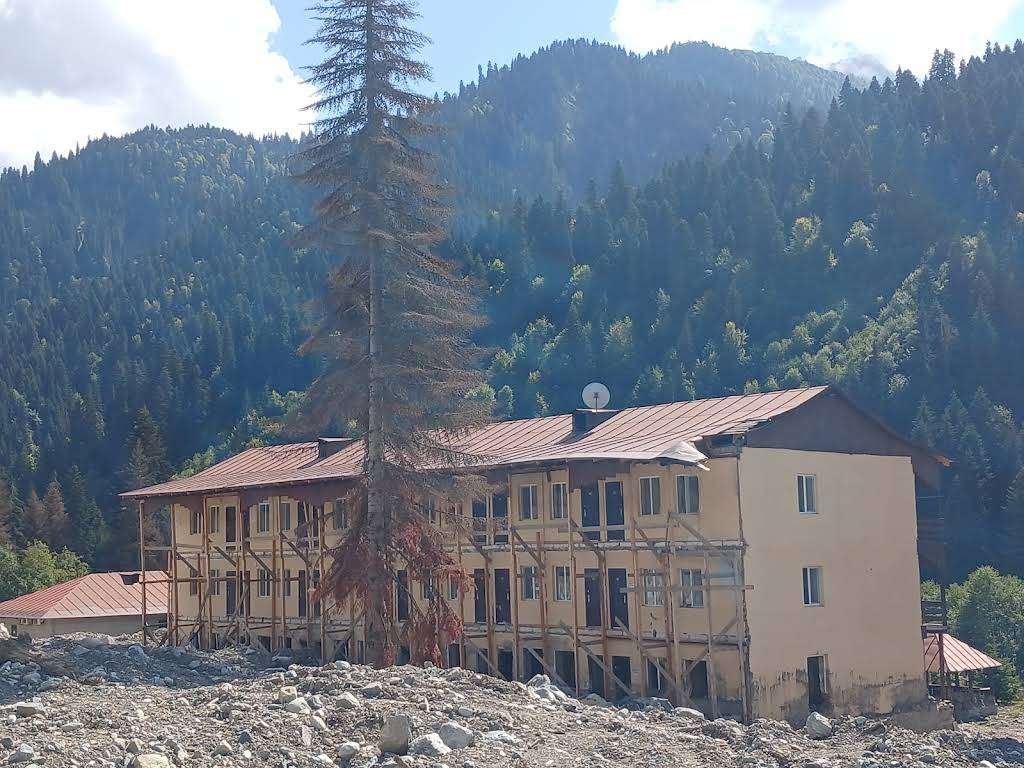
Shovi is a mountain area in upper Racha, in the Oni Municipality, where one of Georgia's oldest balneological-climatic resorts operated until August 2023. Today, Shovi isn't a functioning resort, it's the site of one of the most severe natural disasters in the country's recent history, which happened three years ago.
This article isn't about where to go for a relaxing stay in Shovi. It's about what the resort used to be, what happened there, and what condition the area is in now, told honestly, without a tourist gloss over it.
📜 What the Resort Was Like Before 2023
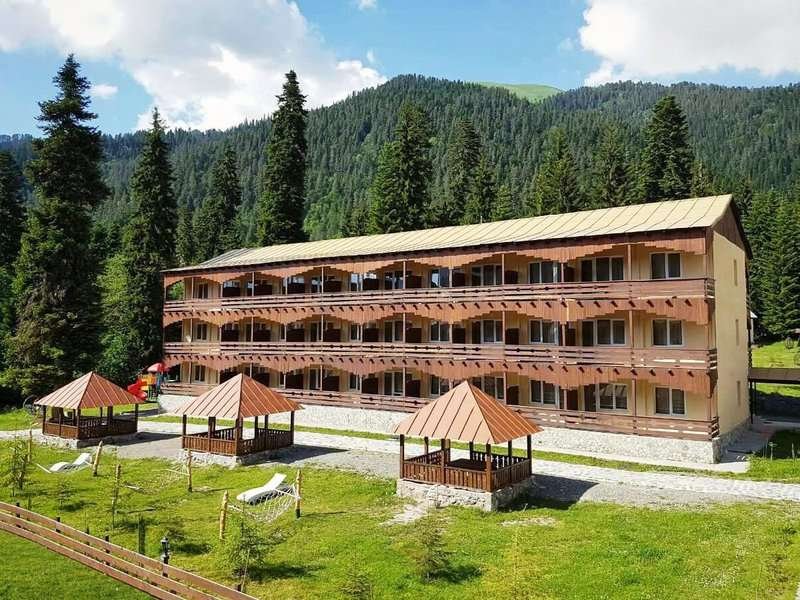
Shovi resort was founded in 1929 in the Chanchakhi River valley, on the southern slope of the Main Caucasus Ridge, at about 1,600 metres, some 30 km from the district centre of Oni. It belonged to the category of climato-balneological resorts: the treatment factors here were the mountain air and carbon dioxide-bicarbonate calcium-sodium mineral springs, of which around 13 were found in the surrounding area. The resort was recommended for non-tuberculous respiratory conditions, as well as digestive and nervous system ailments.
The climate was a temperate mountain one: cool summers, with an average July temperature of around 16°C, mild winters, averaging about minus 6°C in January, fairly high humidity, and roughly 1,100 mm of precipitation a year. The resort season ran from June to October. In the decade before the tragedy, the village had seen noticeable tourism growth: beyond sanatorium treatment, people came for trekking, alpine meadows, glacier views, and proximity to Lake Udziro.
🏔️ What Happened on August 3, 2023
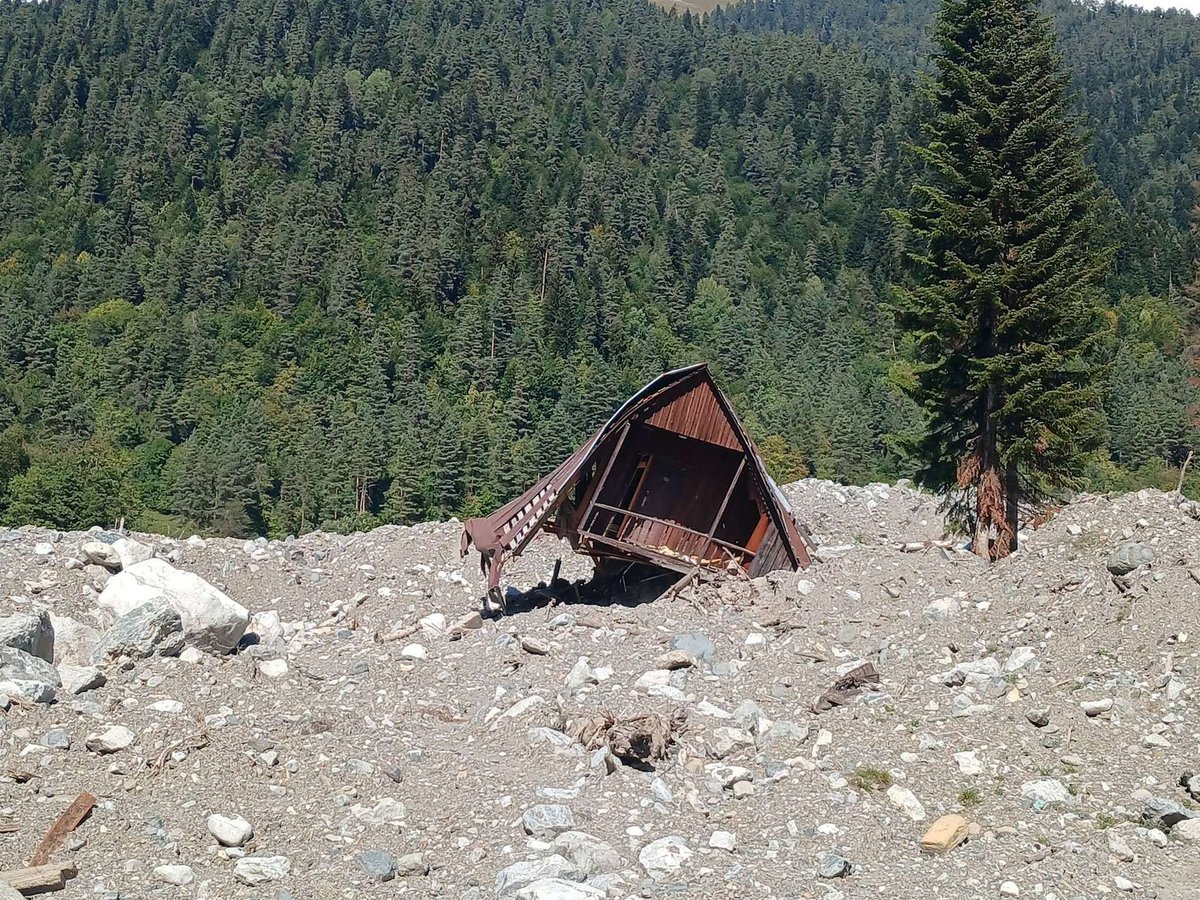
On the afternoon of August 3, 2023, a large-scale landslide struck the resort. Estimates put the volume of earth that came down from the mountains at between 2 and 5 million cubic metres, burying the resort area within minutes. The swollen river tore out bridges, swept away cars and trees, and destroyed hotels, cottages, and roads. Rescue efforts were hampered by the scale of the destruction: a helicopter didn't reach the site for several hours, and more than 200 people were evacuated from the disaster zone that same night.
According to the final count, reached after months of search efforts, 33 people died. Some bodies, including one of the victims, were identified only a month later through DNA analysis. Georgia's prime minister declared August 7, 2023, a day of national mourning. Within days of the tragedy, Tbilisi's mayor, after inspecting the site, stated that Shovi resort "no longer exists, it has been completely destroyed."
🚧 What Shovi Looks Like Now
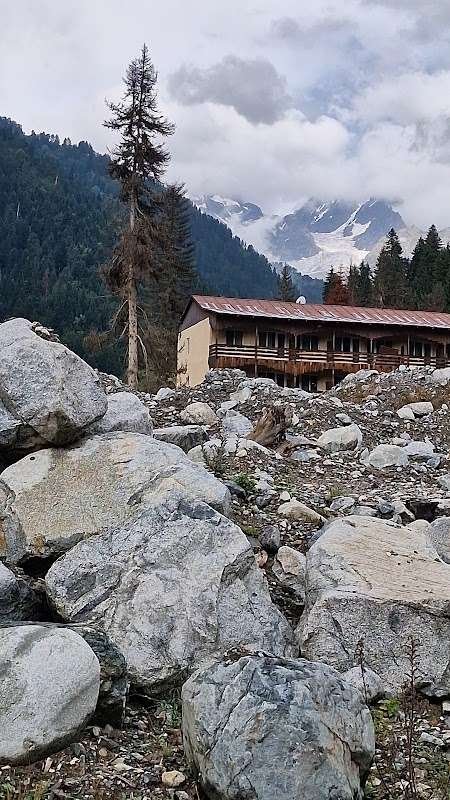
As of February 2024, Georgia's National Environmental Agency officially stated that no construction or rebuilding could take place at the site: research into natural hazards on the southern slope of the Caucasus, linked in part to climate change, is ongoing. A year after the tragedy, independent journalism described only the riverbed as having been cleared, the site itself remaining deserted, with the resort's future, whether it would ever be rebuilt at all, left an open question. There is no more recent official confirmation of the resort reopening as of the time this article was prepared.
Neighbouring villages, particularly Gola, a couple of kilometres from Shovi, had relied heavily on the resort's tourist traffic, and largely lost that source of income after the tragedy. That's also part of the aftermath that rarely makes it into travel write-ups of the region.
📌 If You're Planning a Trip to This Area
To be direct about it: Shovi today isn't a place for rest, treatment, or ordinary tourism. If you do find yourself in this part of Racha, for instance passing through on the way to Lake Udziro or as part of a wider regional route, it's worth treating the former resort site with respect, not turning it into a backdrop for dramatic photos of the destruction, and checking the current situation and any restrictions with locals or the Oni Municipality administration beforehand.
If you visited Shovi before 2023 or have memories of the place, you're welcome to share them with Madloba. We're not asking for a rating of the "stay," we're gathering what the resort meant to the people who spent time there.
Information is current as of July 2026. The status of the area may change, check official sources for current conditions before travelling to this region.
❓ Frequently asked questions
💬 In upper Racha, in the Oni Municipality, in the Chanchakhi River valley, about 30 km from Oni, on the southern slope of the Main Caucasus Ridge.
💬 No. Following the devastating landslide of August 3, 2023, the resort infrastructure was destroyed, and authorities officially prohibited construction and rebuilding on the site due to the risk of further landslides.
💬 Shovi was considered a balneological-climatic resort with a mild mountain climate and around 13 mineral springs nearby. It was recommended for respiratory, digestive, and nervous system conditions.
💬 On August 3, 2023, a large-scale landslide struck the resort, destroying hotels, cottages, bridges, and roads. According to the final count, 33 people died.
💬 As of February 2024, authorities officially stated that construction on the site was prohibited due to unresolved risk. There is no more recent confirmed information about rebuilding.
💬 There's no organised tourism at the former resort site. If you're passing through this area, for instance en route to Lake Udziro, it's worth treating the place with respect and checking the current situation locally.
💬 Neighbouring villages, particularly Gola, had relied heavily on the resort's tourist traffic and largely lost that source of income after 2023.

45 comments
Log in to leave a comment
О Грузии благодаря сайту узнала многое, так и про курорт Шови узнала. По фотографиям я вижу удивительную природу. Туристы однозначно будут наслаждается прогулками в Шови. Место для души и тела!!!
Я очень рекомендую посетить Шови, особенно весной или летом, когда природа раскрывается во всей красе. Но даже зимой здесь есть своя прелесть, с возможностью заняться горными лыжами и другими зимними видами спорта.
В общем, Шови - это место, где вы можете насладиться чистым воздухом, удивительными видами и расслабляющей атмосферой. Здесь есть множество развлечений и возможностей для активного отдыха. Я узнал обо всем этом из самого большого справочника-каталога о Грузии, Madloba.info.
Курорт простирается на равнине в окружении хвойных и смешанных лесов (здесь встречаются ели, пихты, сосны, дубы, буковые, грабовые, кизиловые и ольховые деревья) и вечно снежных вершин.
Здесь исследовано 16 минеральных вод,
строительство курорта началось в 1923 году, а в советское время были построены очень красивые санатории и дома отдыха.
Место привлекает любителей альпинизма, горнолыжного спорта и катаний на байдарках.
Здесь такие вершины, превышающие 4000 метров, на которых ещё не ступала нога человека.
Высота над уровнем моря 1600 м, рельеф гористый.
Климат верхнего пояса средних гор, зима холодная, с устойчивом снежным покровом.
Лечатся заболевания дыхательных путей (бронхиальная астма), анемия, заболевания желудка и кишечника, заболевания желчных и мочегонных путей, лимфаденит.