





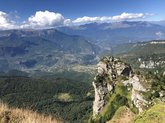

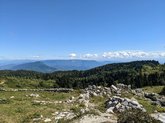

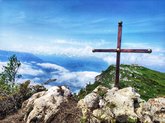

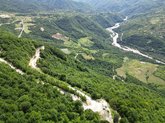



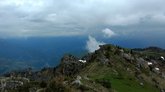

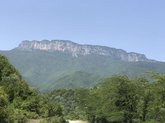

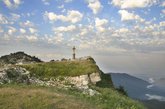

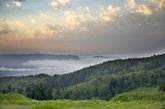

The massif stands on the border between Tsageri and Tskaltubo municipalities, in the heart of Lechkhumi, among the natural attractions of the region, at an elevation of 2,002 metres. Its western side drops away in a sheer cliff about 300 metres high, concealing historical caves once used as shelters.
For more on the history, legends and cave paintings of the massif, see the article on Khvamli Massif.
Among the massif's karst caves, Tekenteri (a karst shaft 16 metres deep at around 1,620 m) and God's Icebox (at around 1,700 m, where ice survives even in high summer) are especially notable. At the massif's highest point stands the Church of St George: every year, during the Khvamloba festival, many pilgrims come here. For more on the karst systems of this area within the wider river network of Racha-Lechkhumi, see the guide Rivers, Waterfalls and Lakes of Racha-Lechkhumi.
The massif's caves preserve rock paintings made in red pigment during the High Middle Ages. Local folklore ties Khvamli to legends of treasure hidden by Georgian kings and a hero chained to its cliffs, echoing the figure of Prometheus in Georgian mythology.