



Cathedral of the Nativity of the Holy Virgin in Batumi — the Main Orthodox Church of Adjara
Batumi is a city where a mosque and an Orthodox cathedral stand two blocks apart — and first-time visitors often aren't sure which building is which. If you're looking for the main Orthodox church in the city, this is the one: the Cathedral on Katolikosi Square. You can see the bell tower from the seafront, hear the bells across the city centre, and once you step inside, it feels nothing like the busy beach resort outside.
This guide is for visitors who want to enter with some context: understand what they're seeing, why the building looks the way it does, and avoid any awkward missteps.
🏛️ What Does the Batumi Nativity Cathedral Look Like Inside and Outside
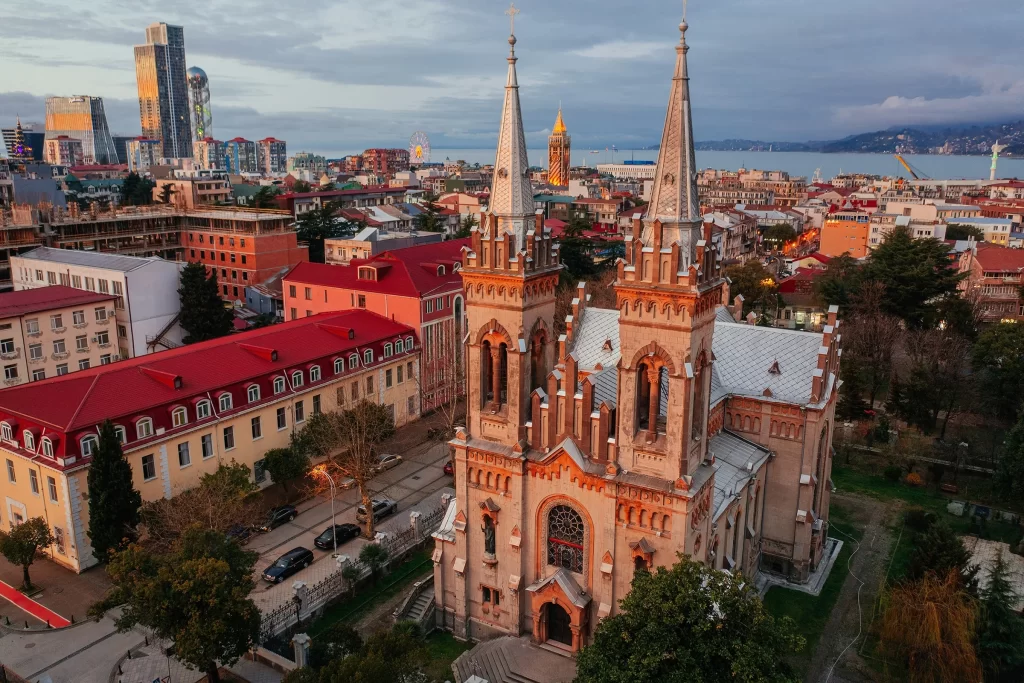
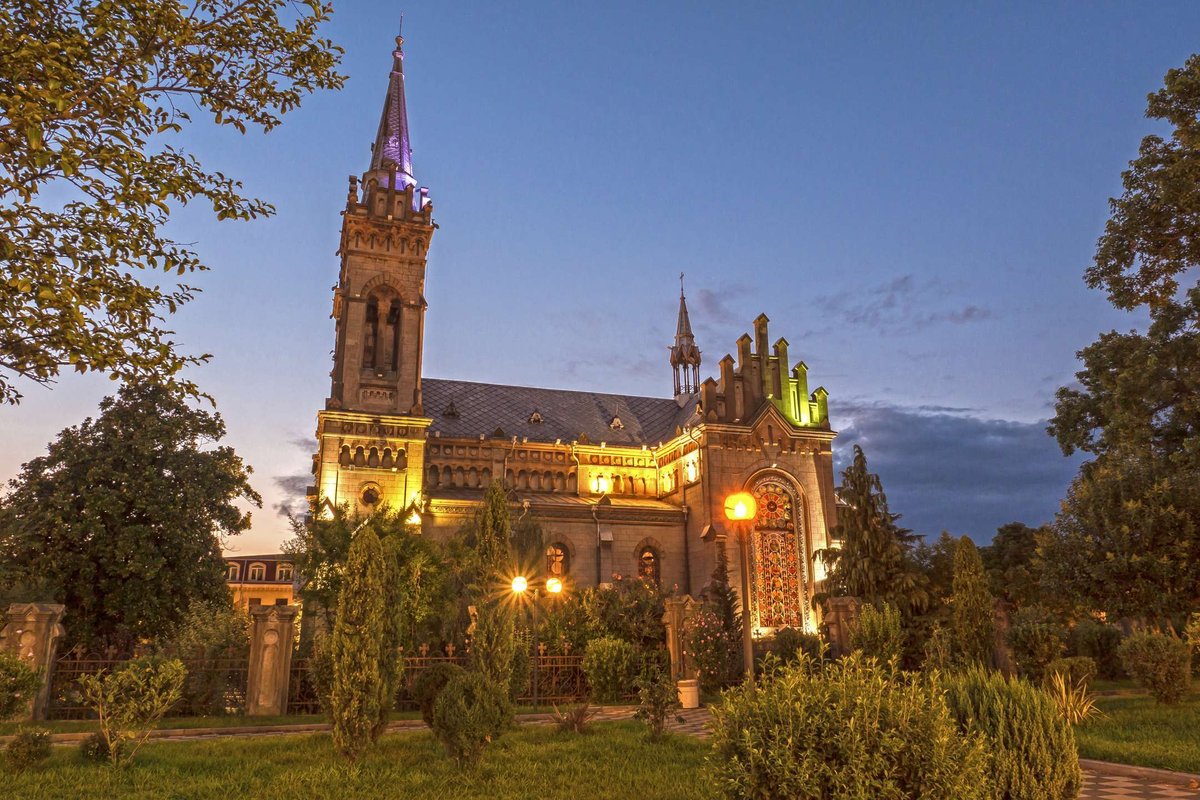
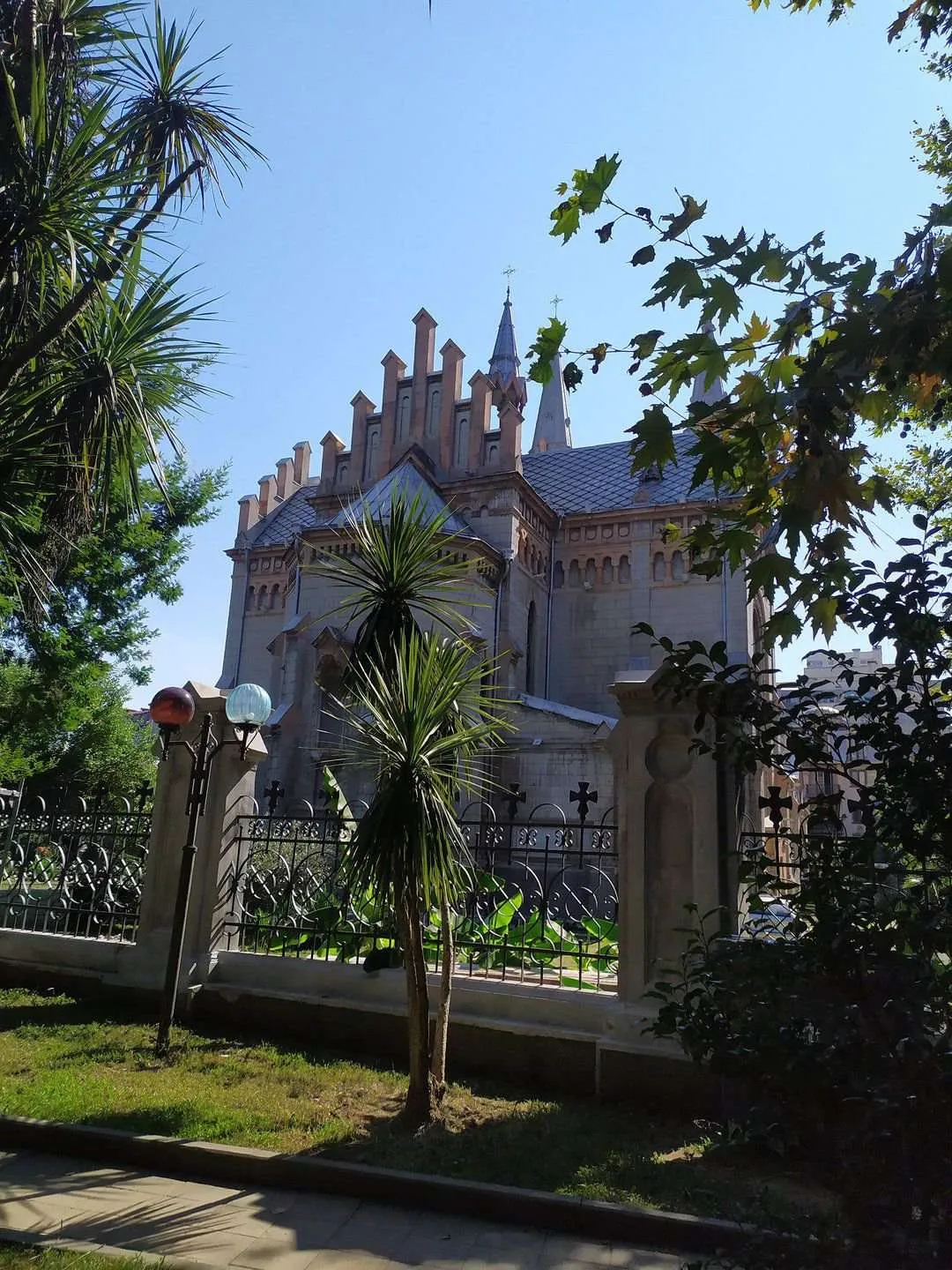
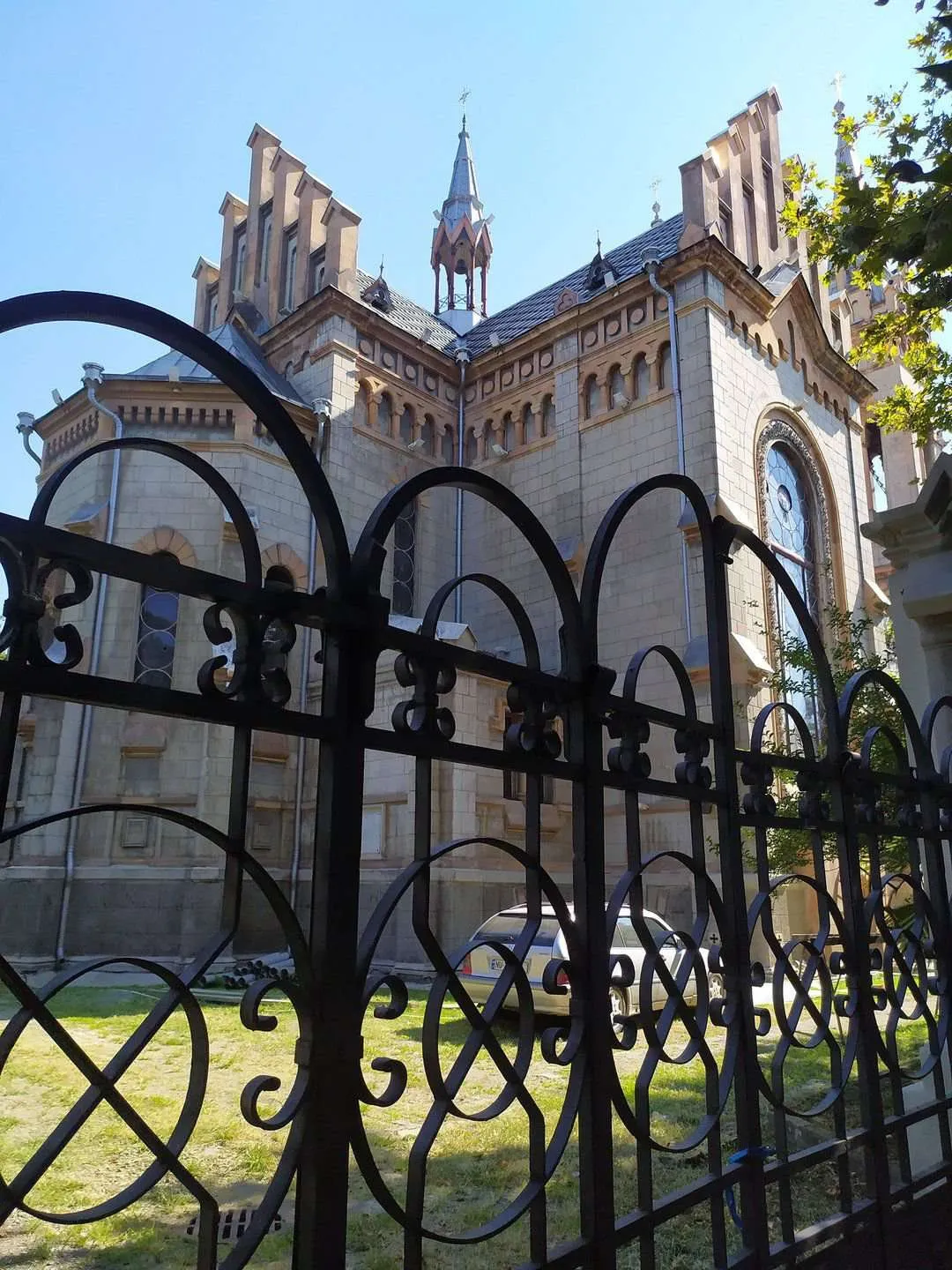
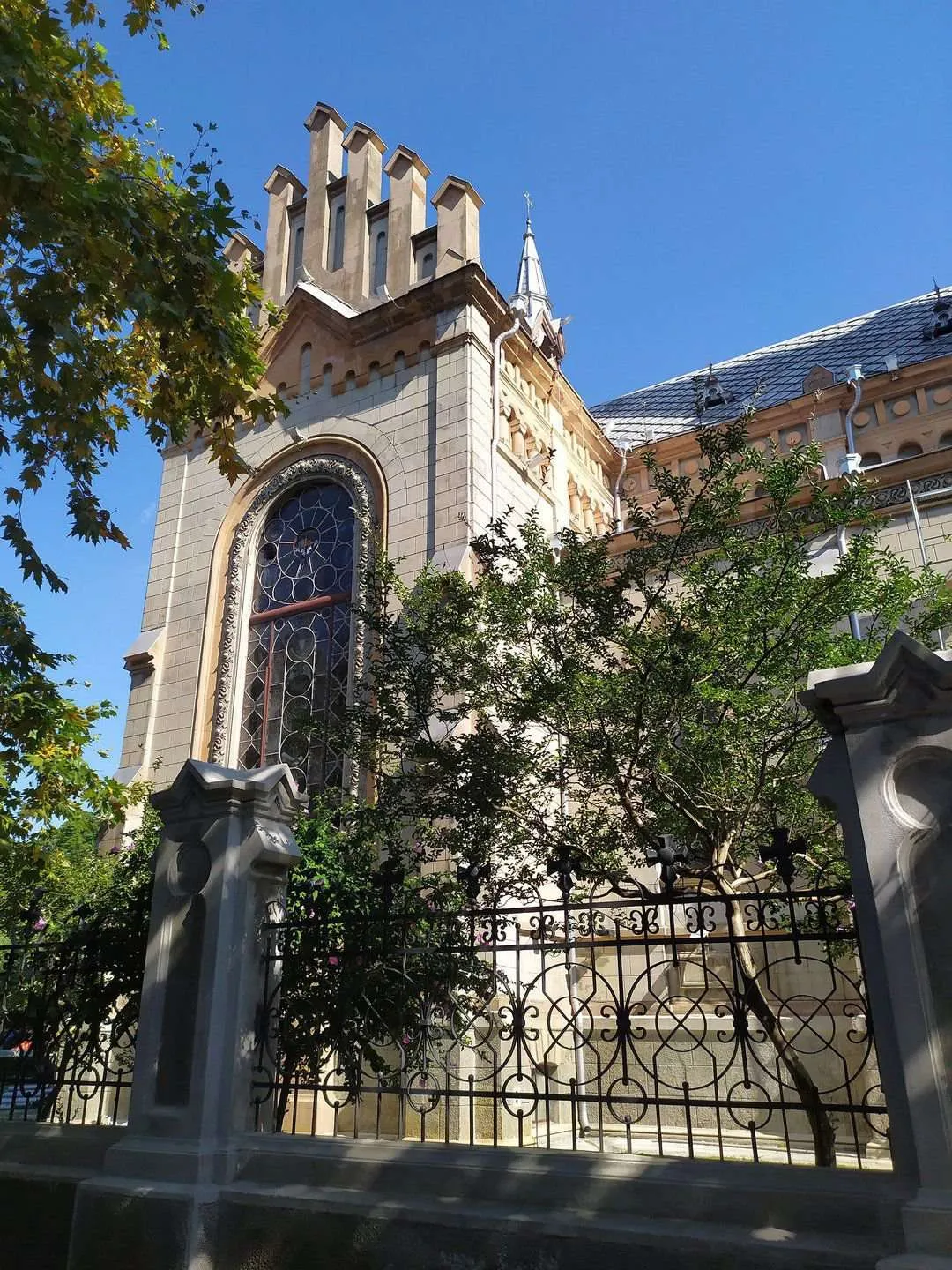
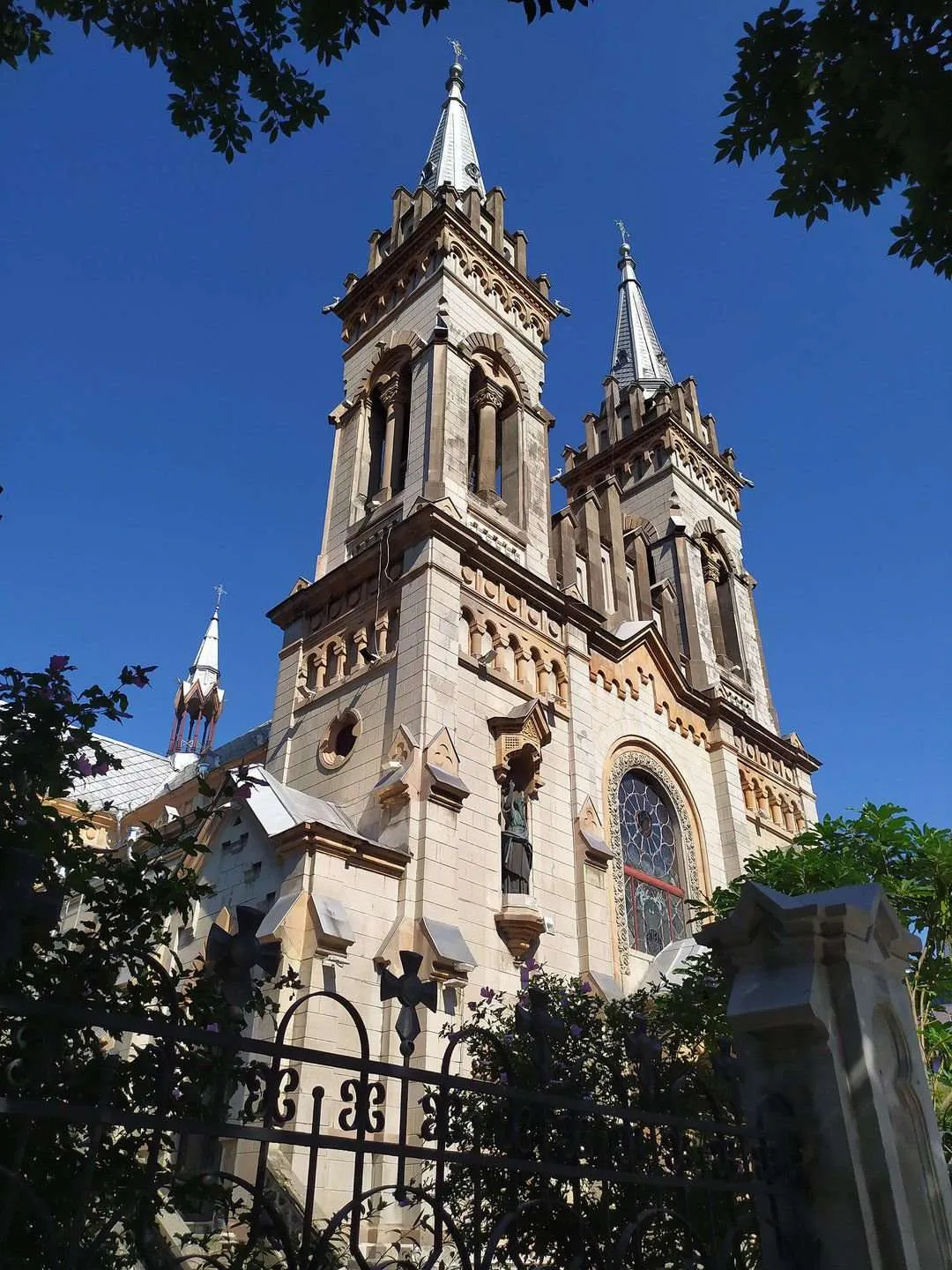
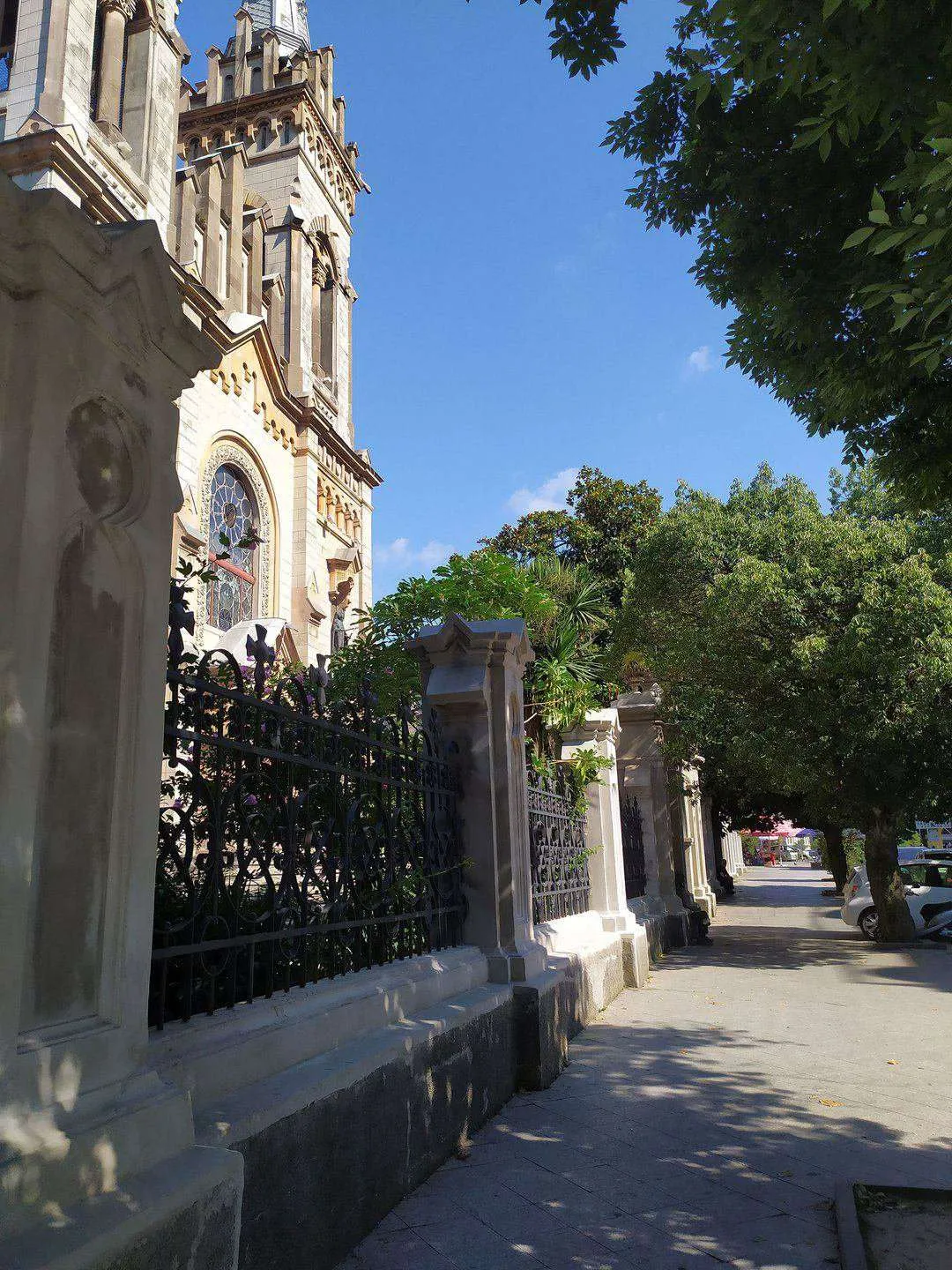
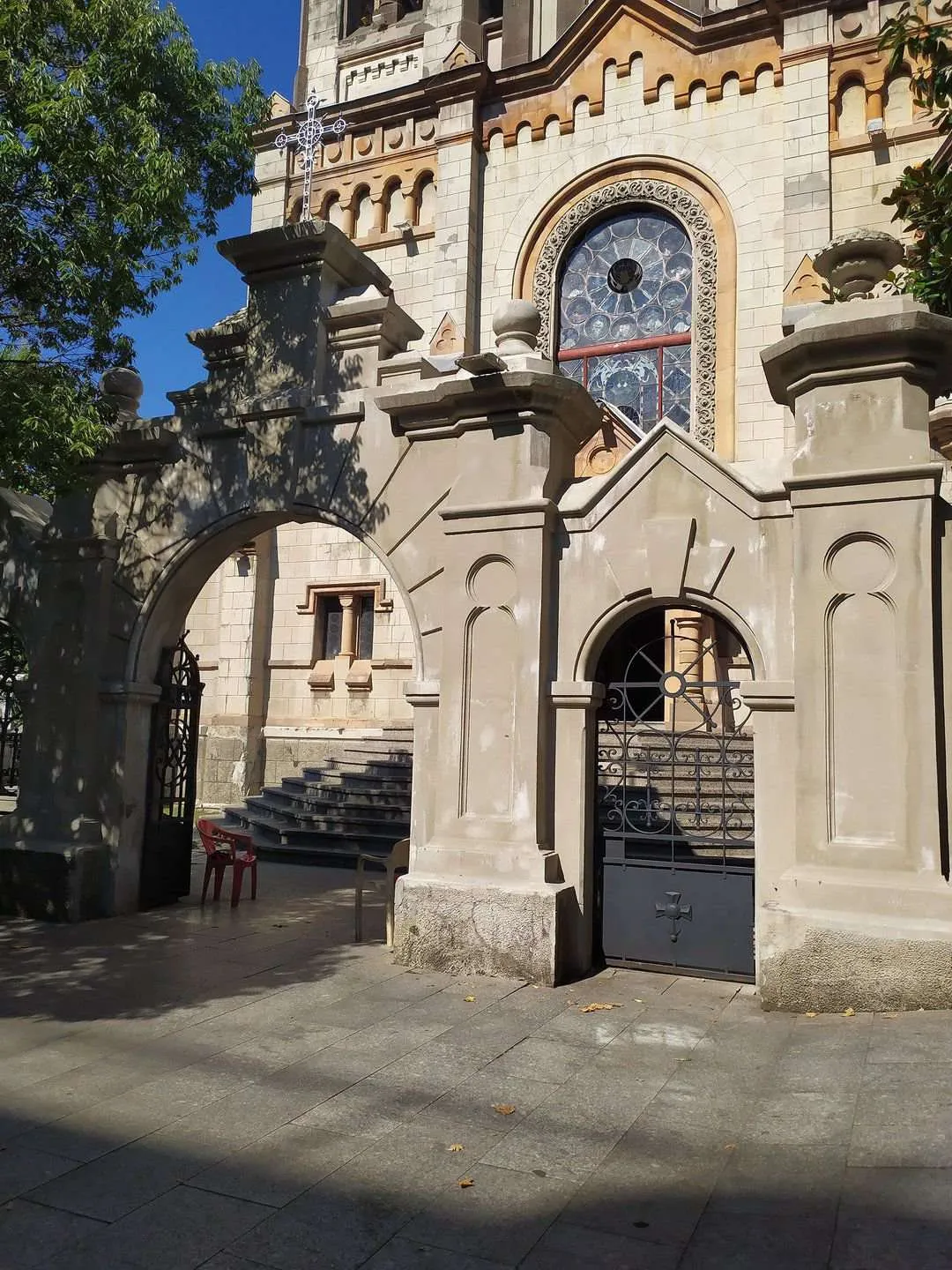
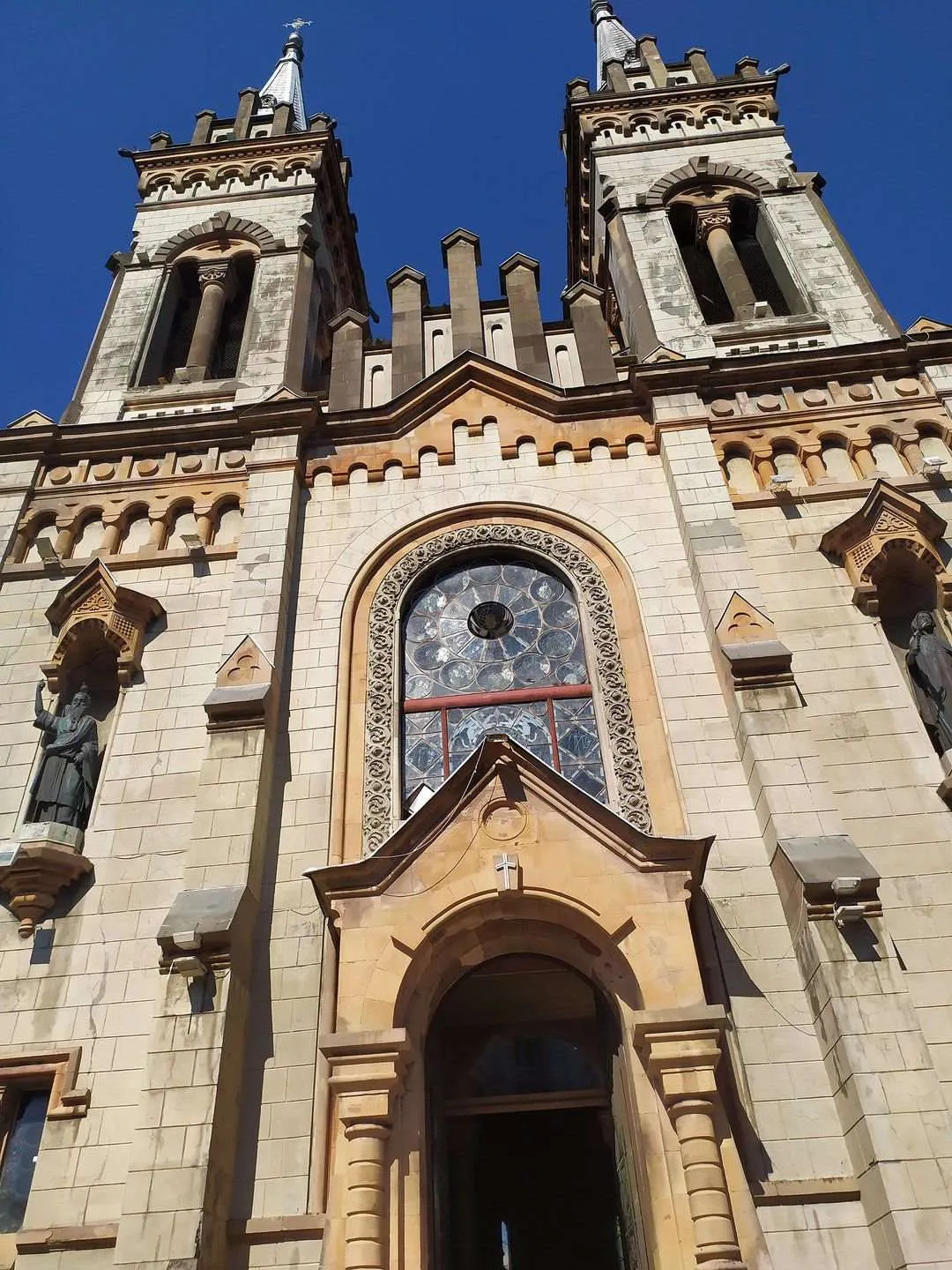
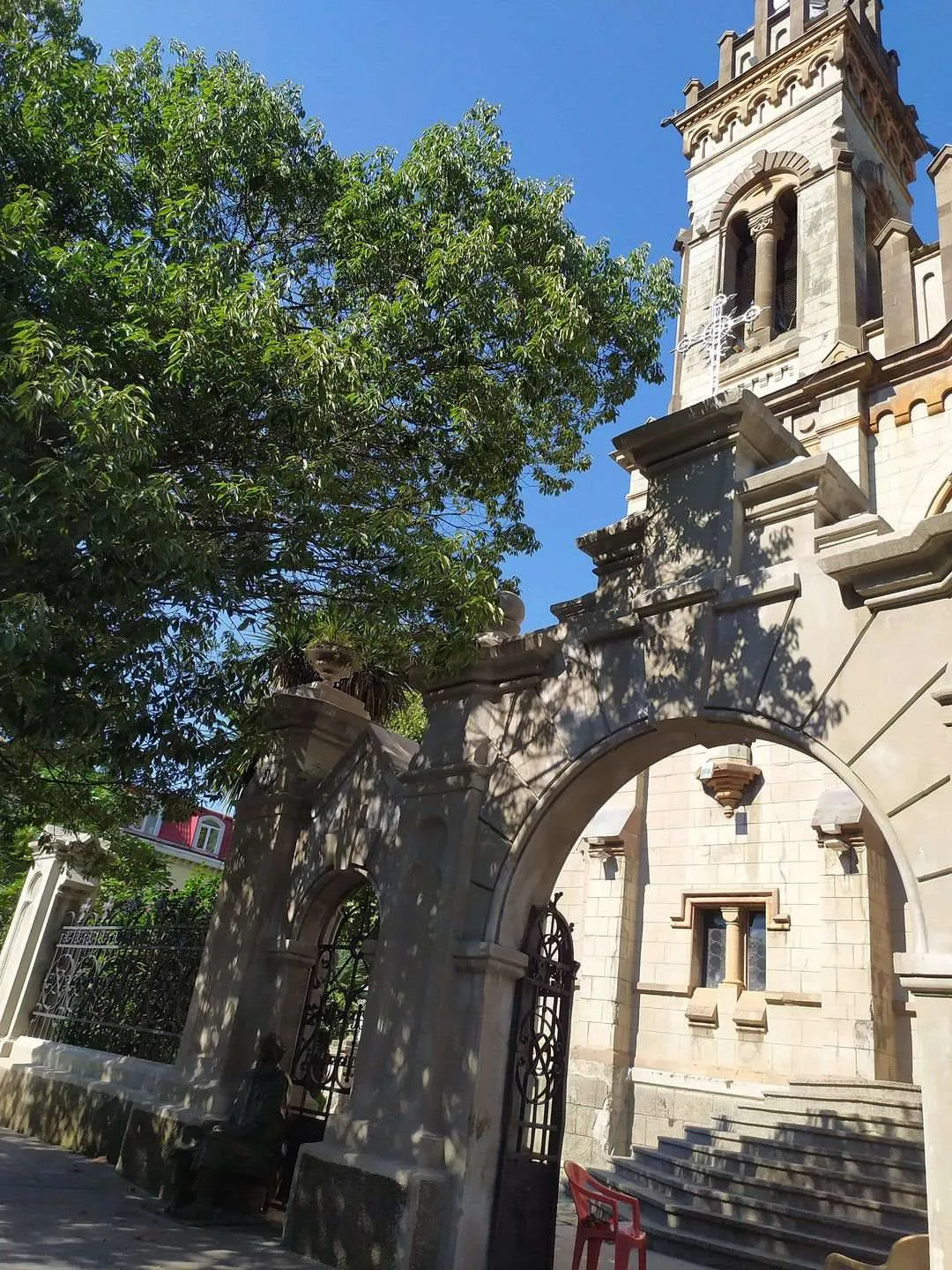
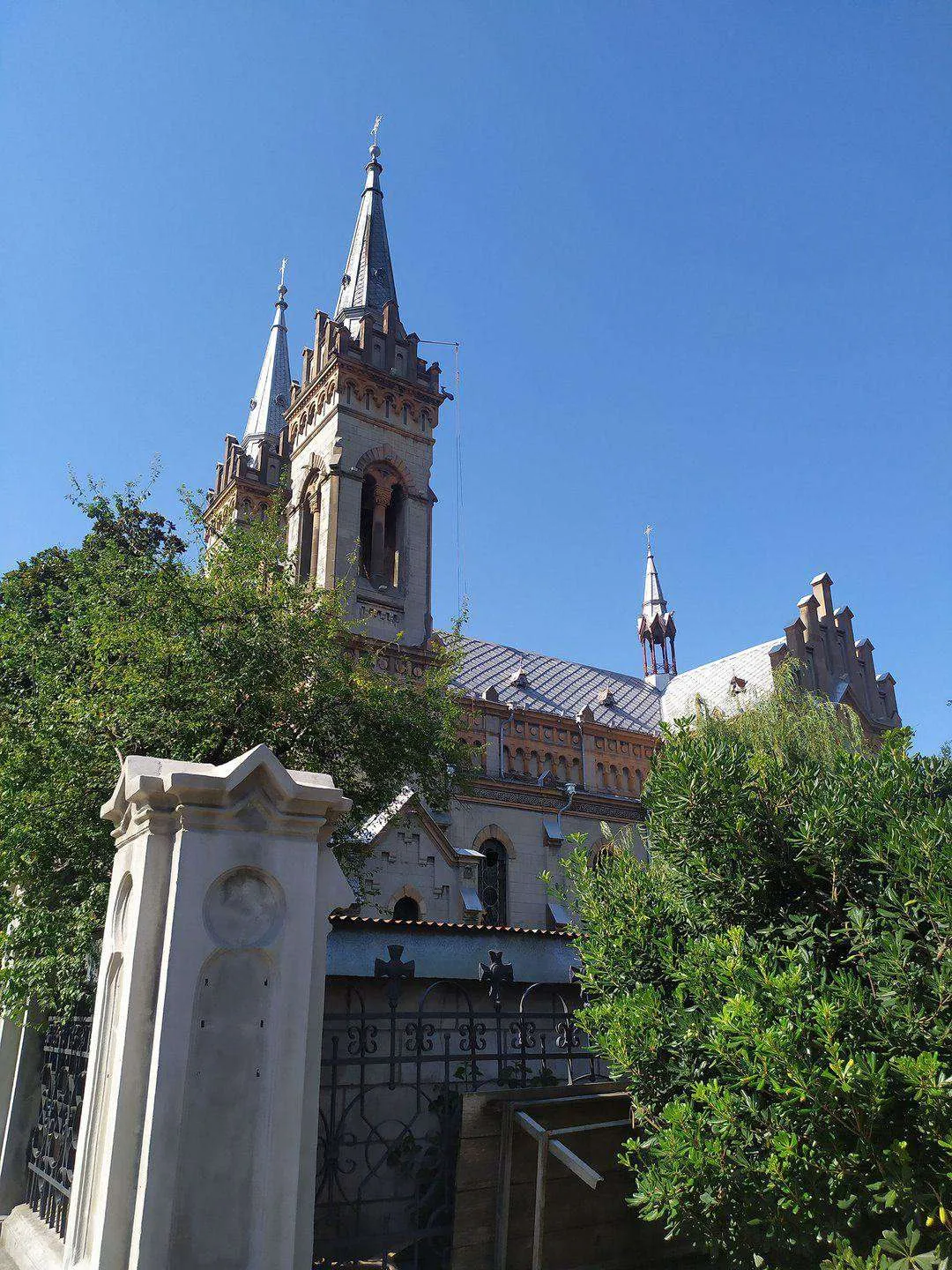
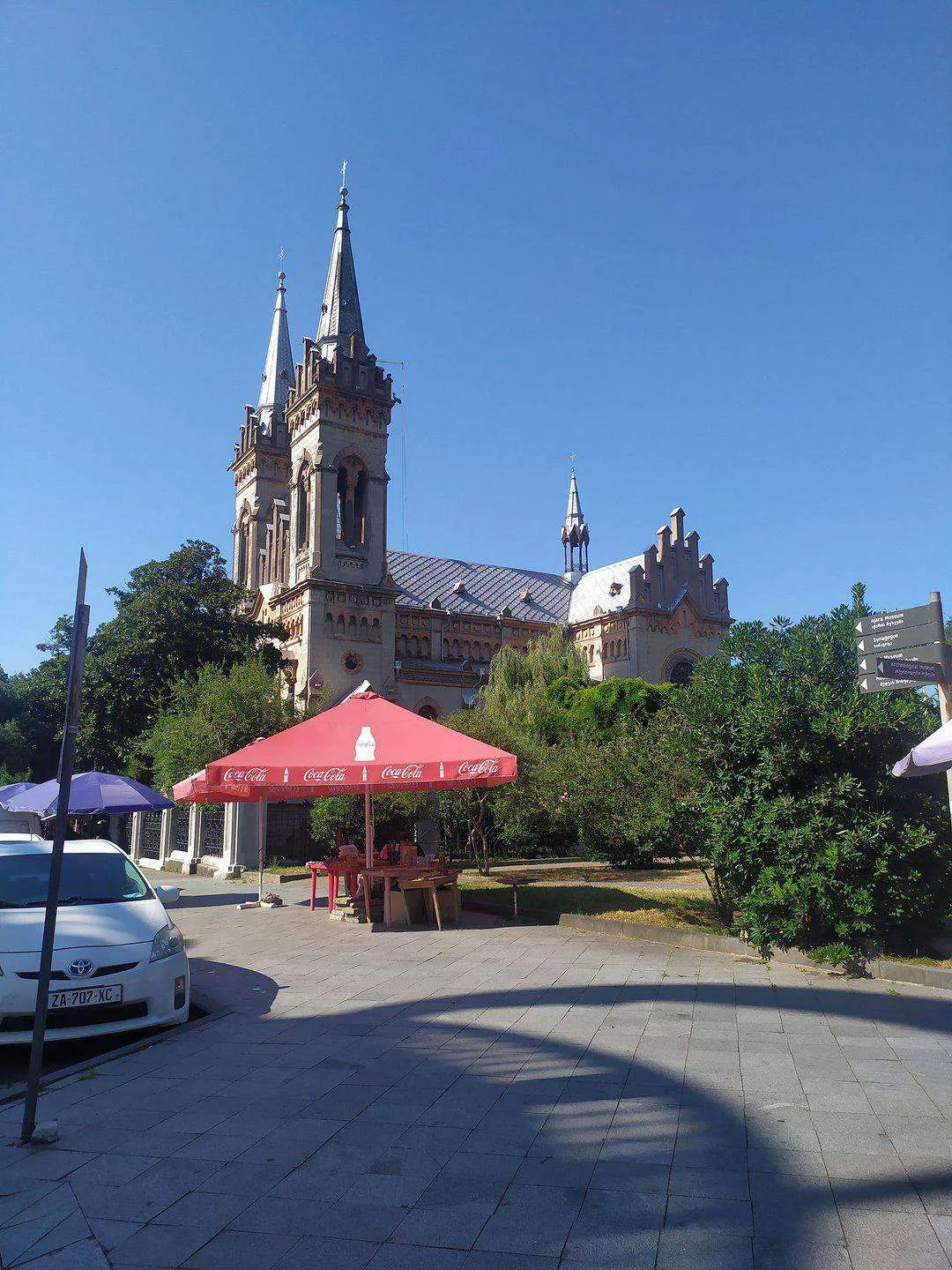
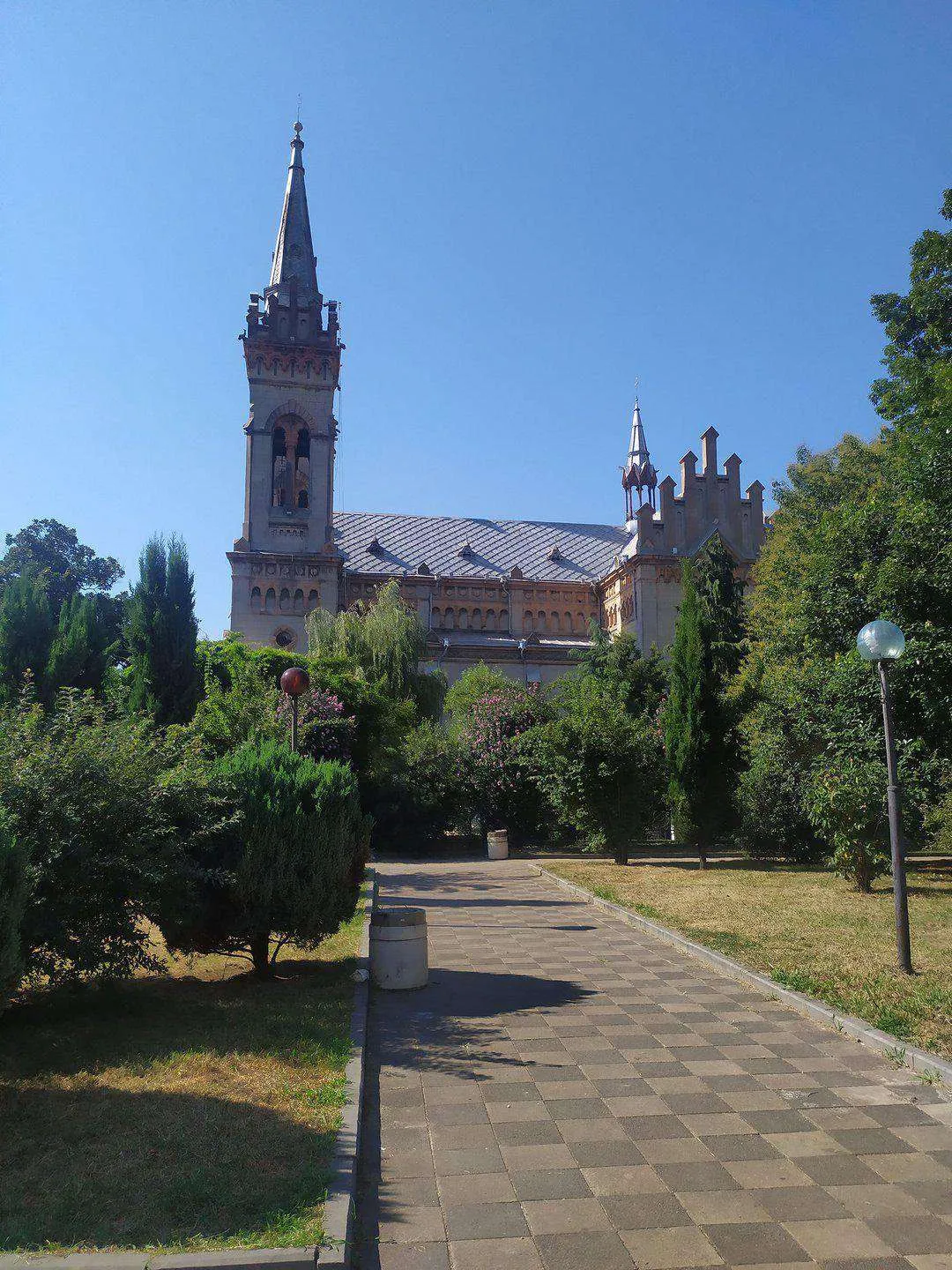
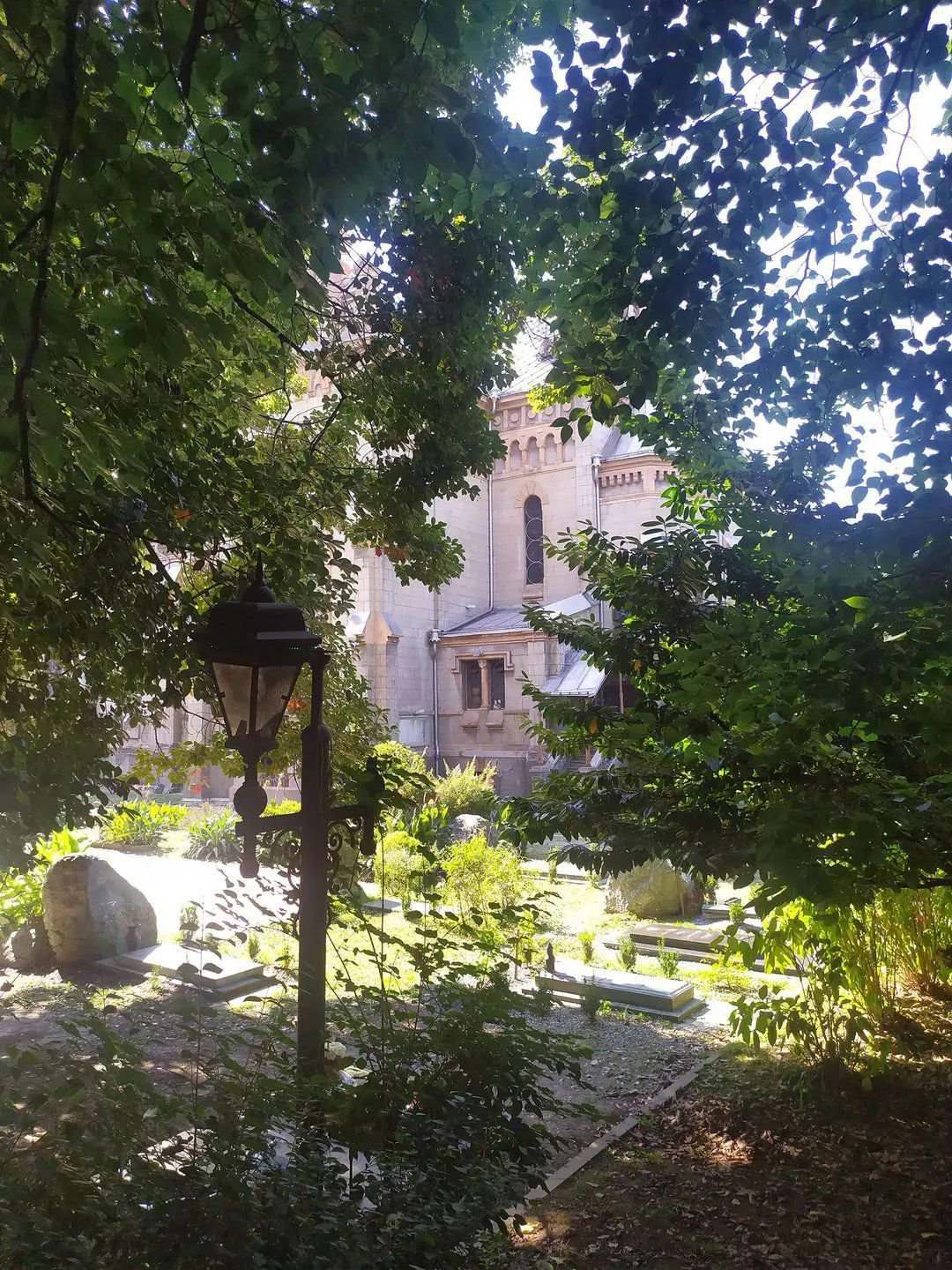
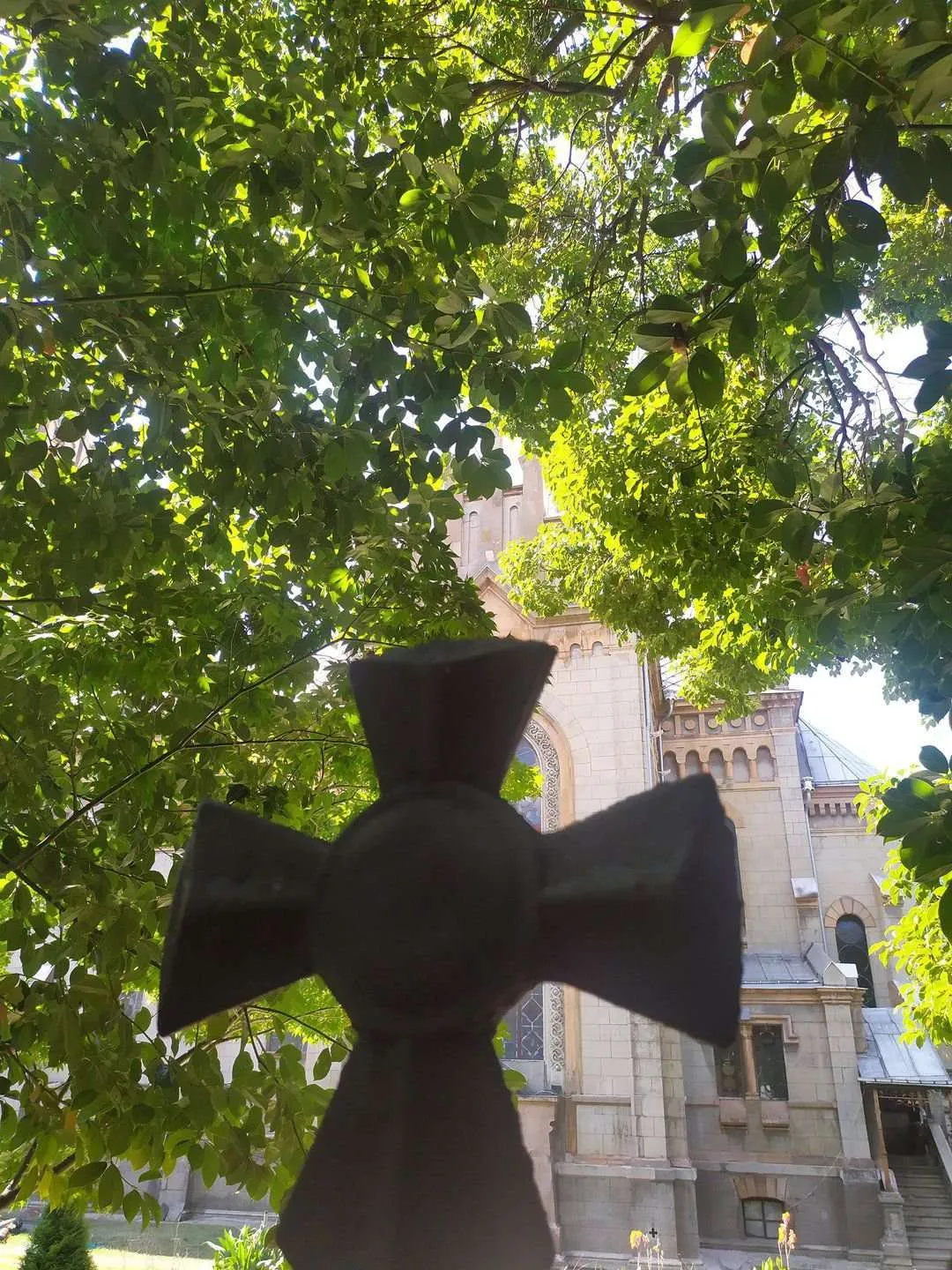
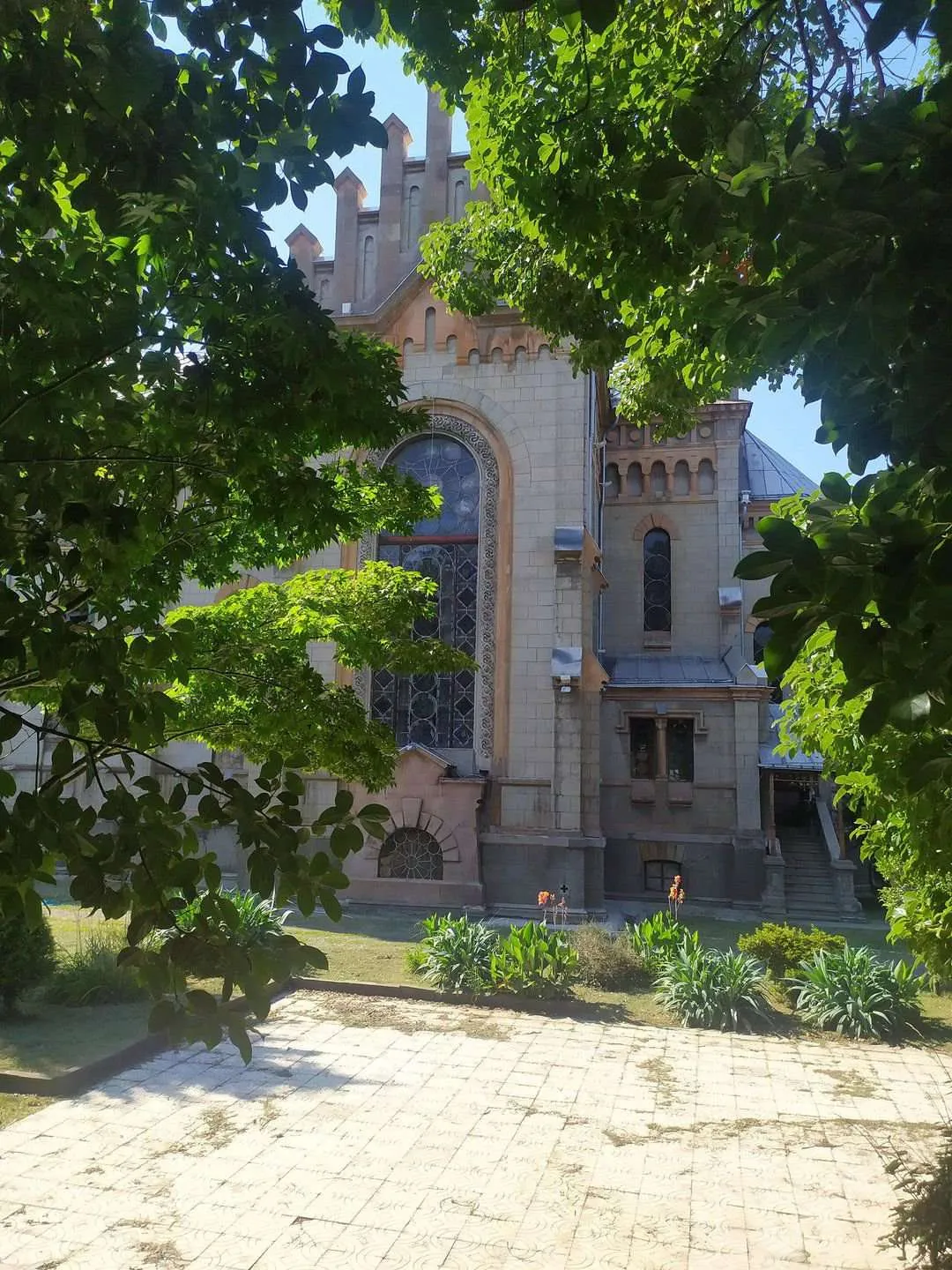
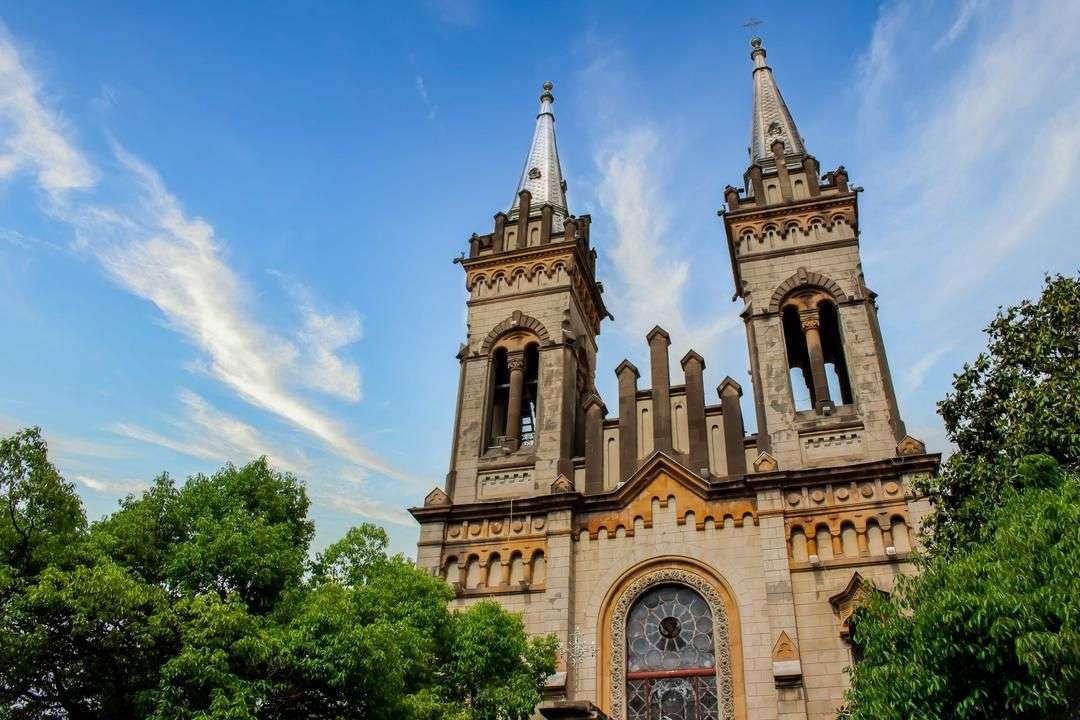
The first thing you notice from a distance is the height. The bell tower is visible from almost anywhere in the city centre — the best landmark to navigate by when you're looking for the cathedral. The architecture is eclectic, built in the late 19th and early 20th century when Batumi was growing fast as a major port city. The style reflects Russian-Byzantine influence: a large central dome, solid stone walls, and a decorative facade.
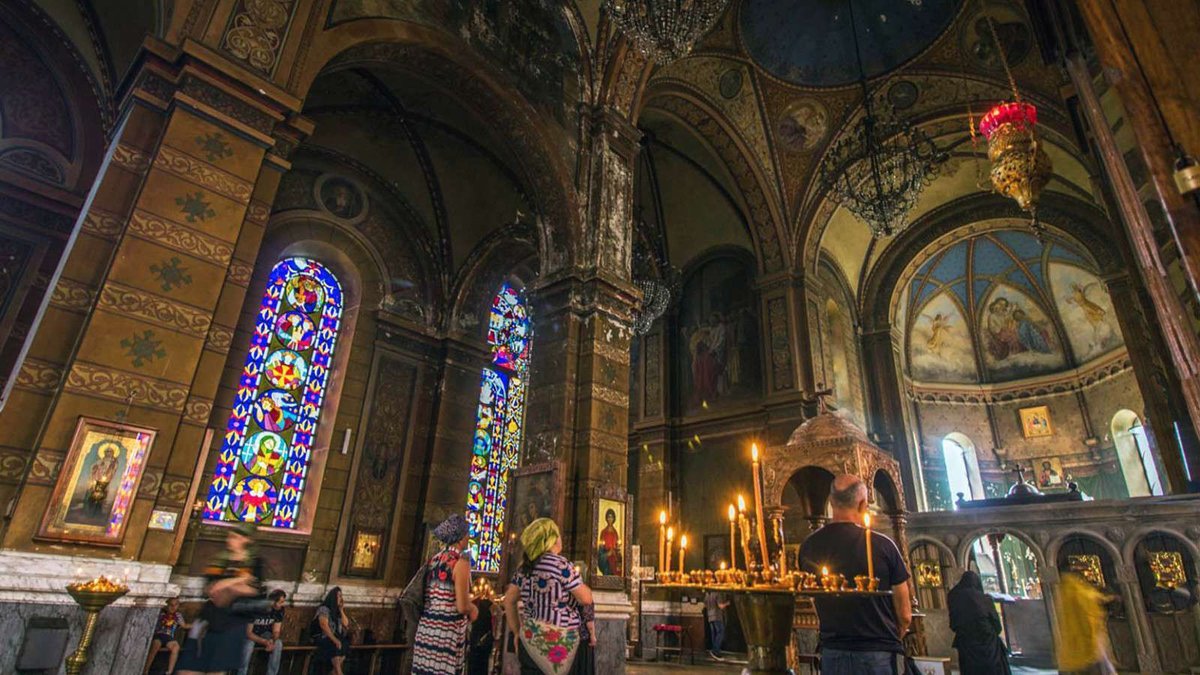
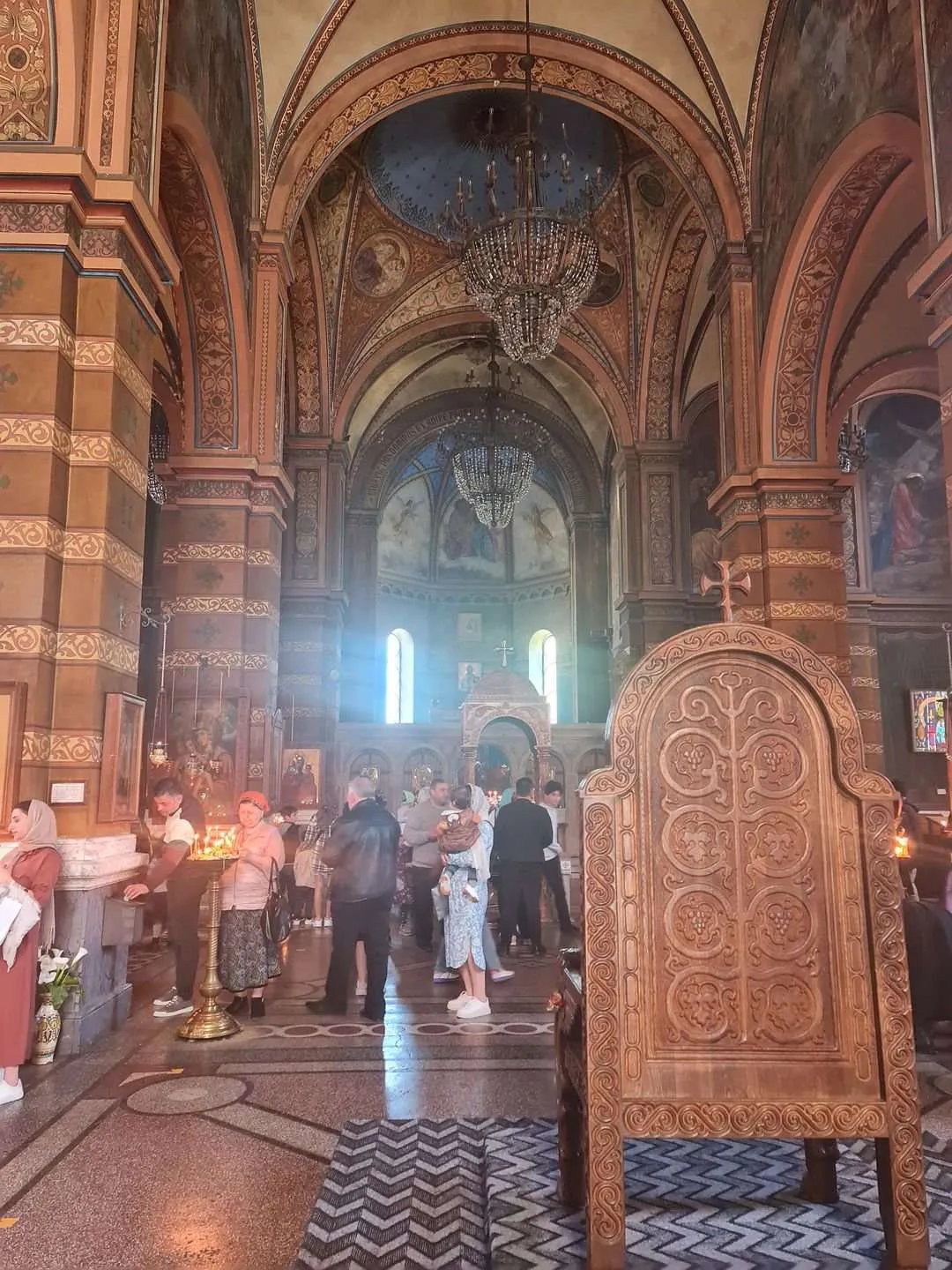
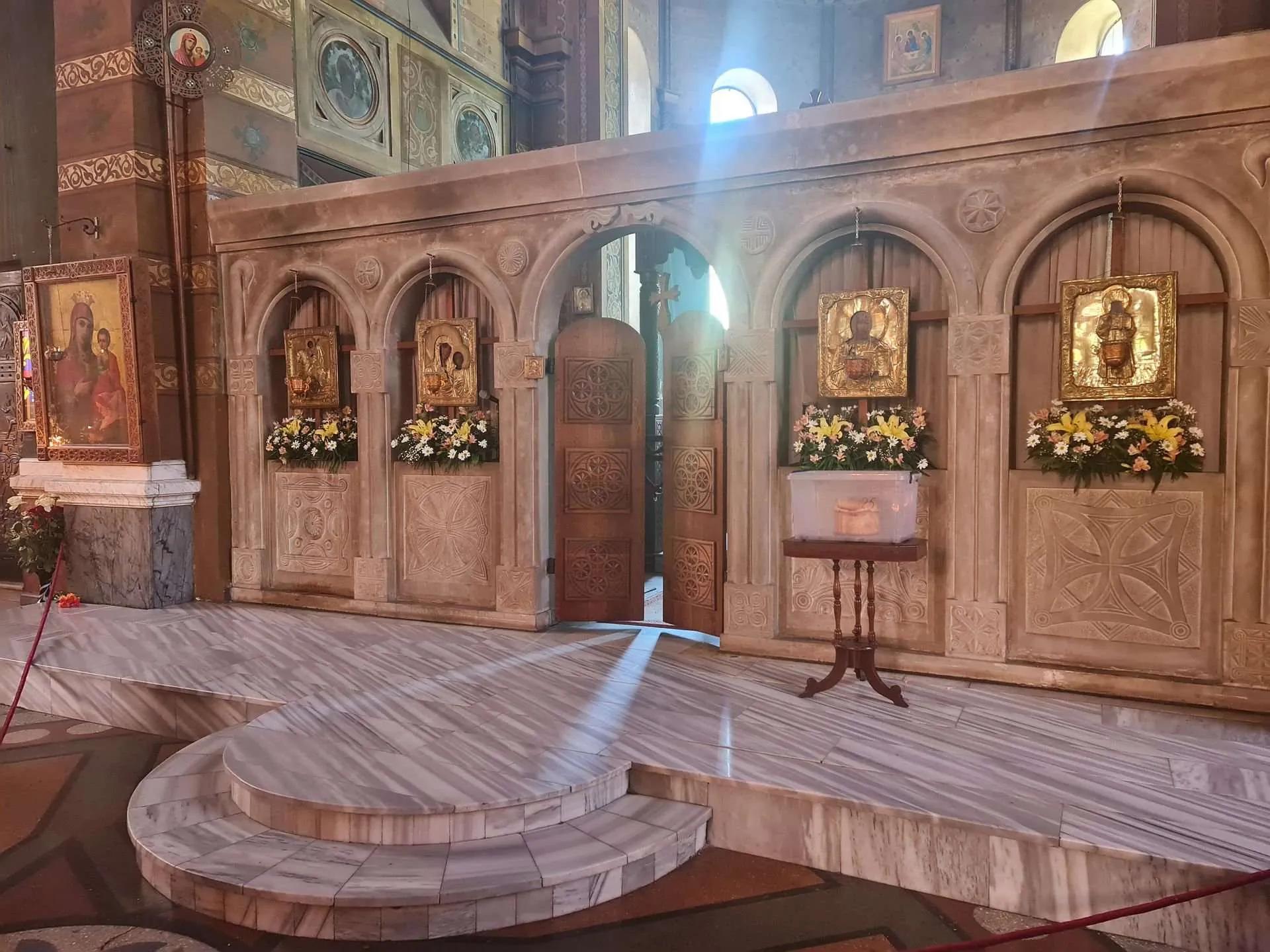
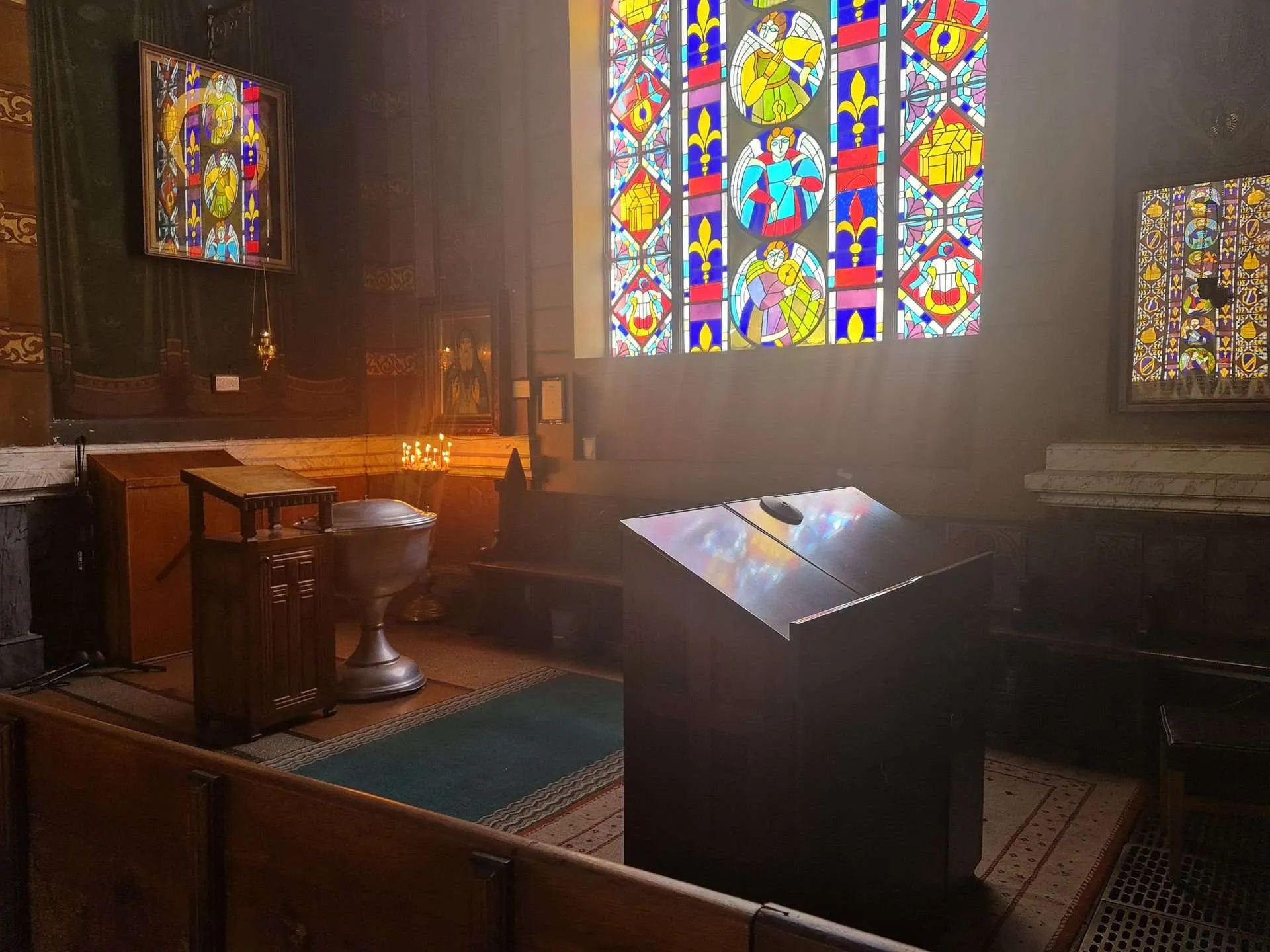
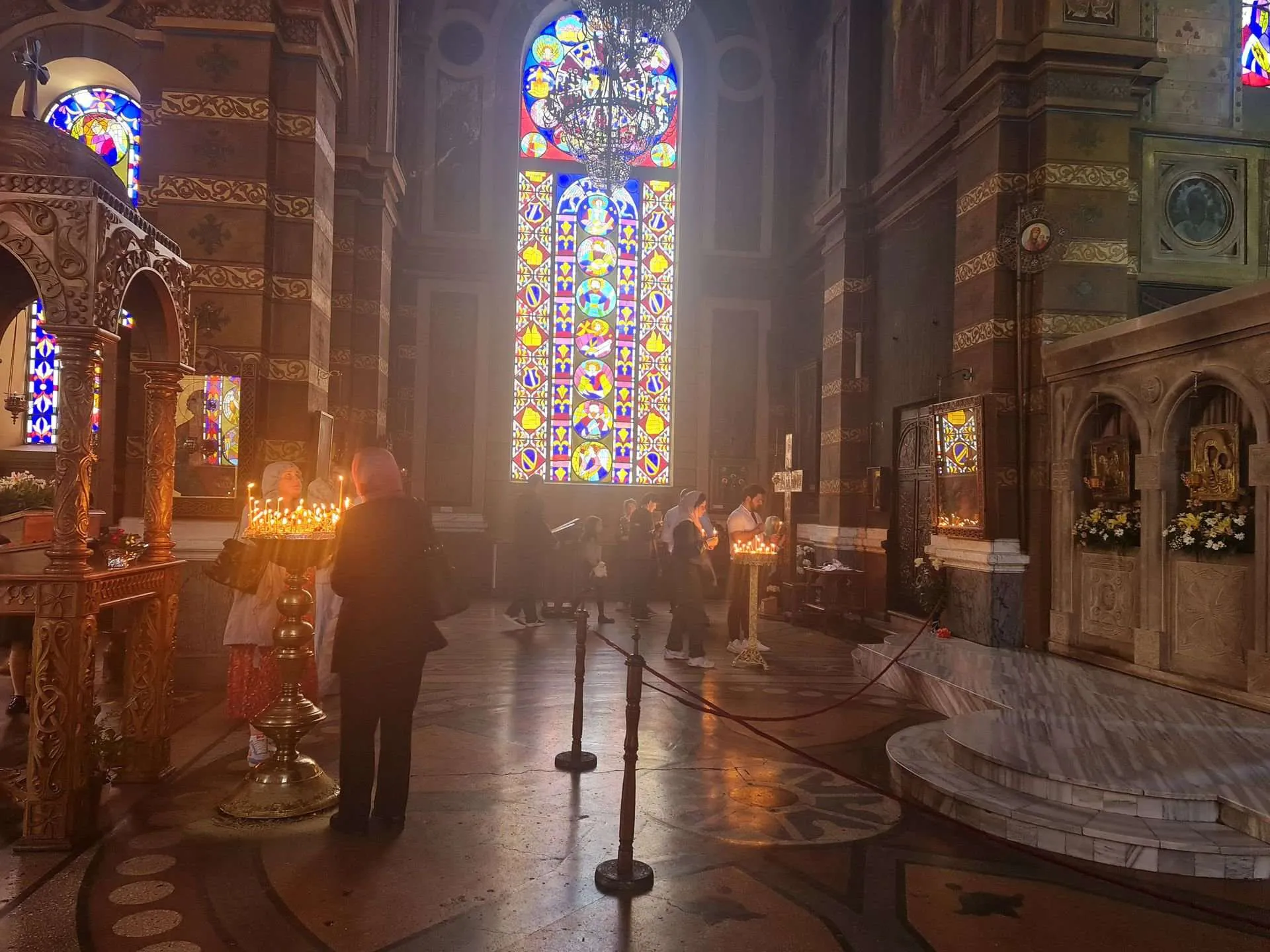
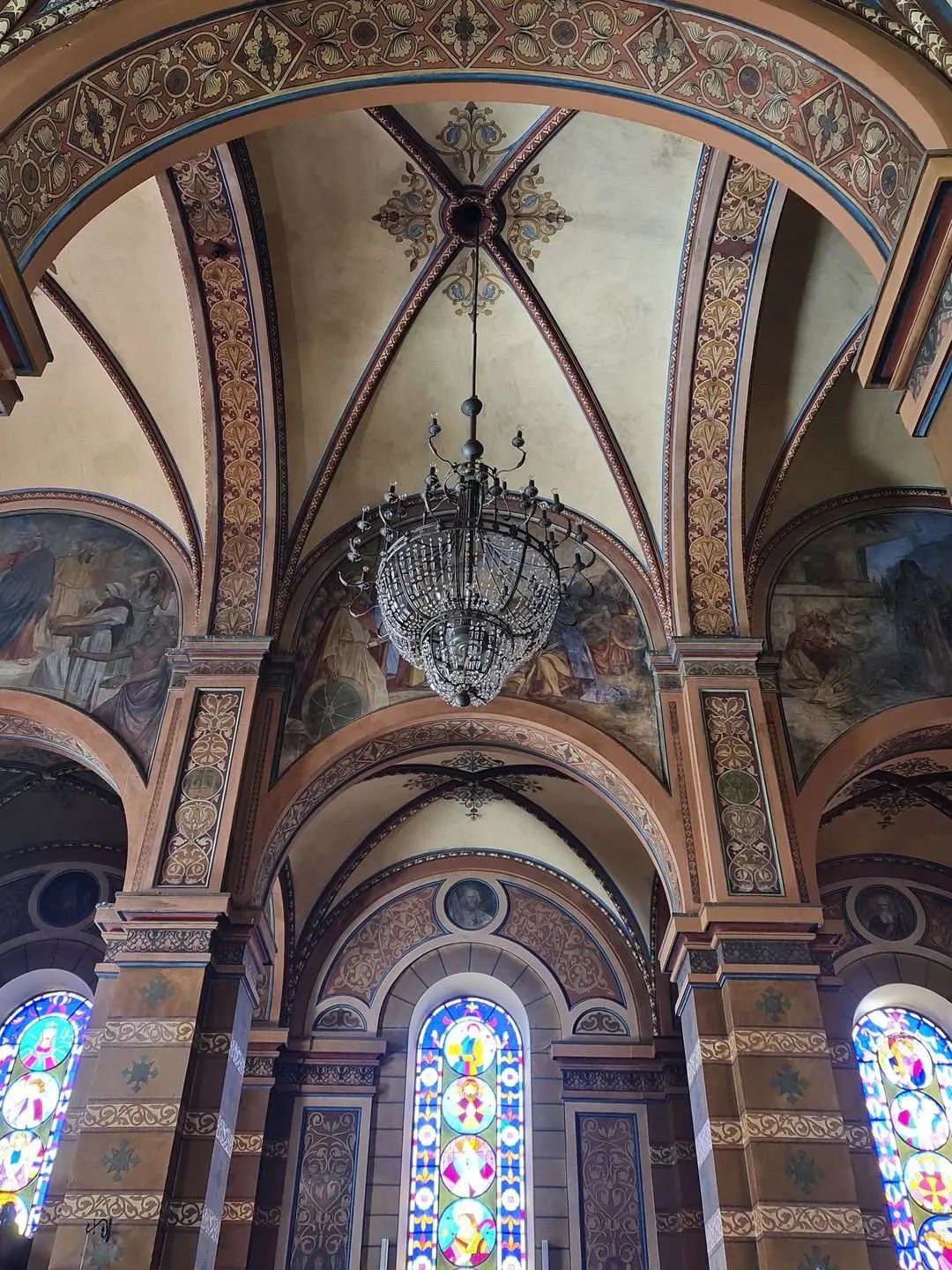
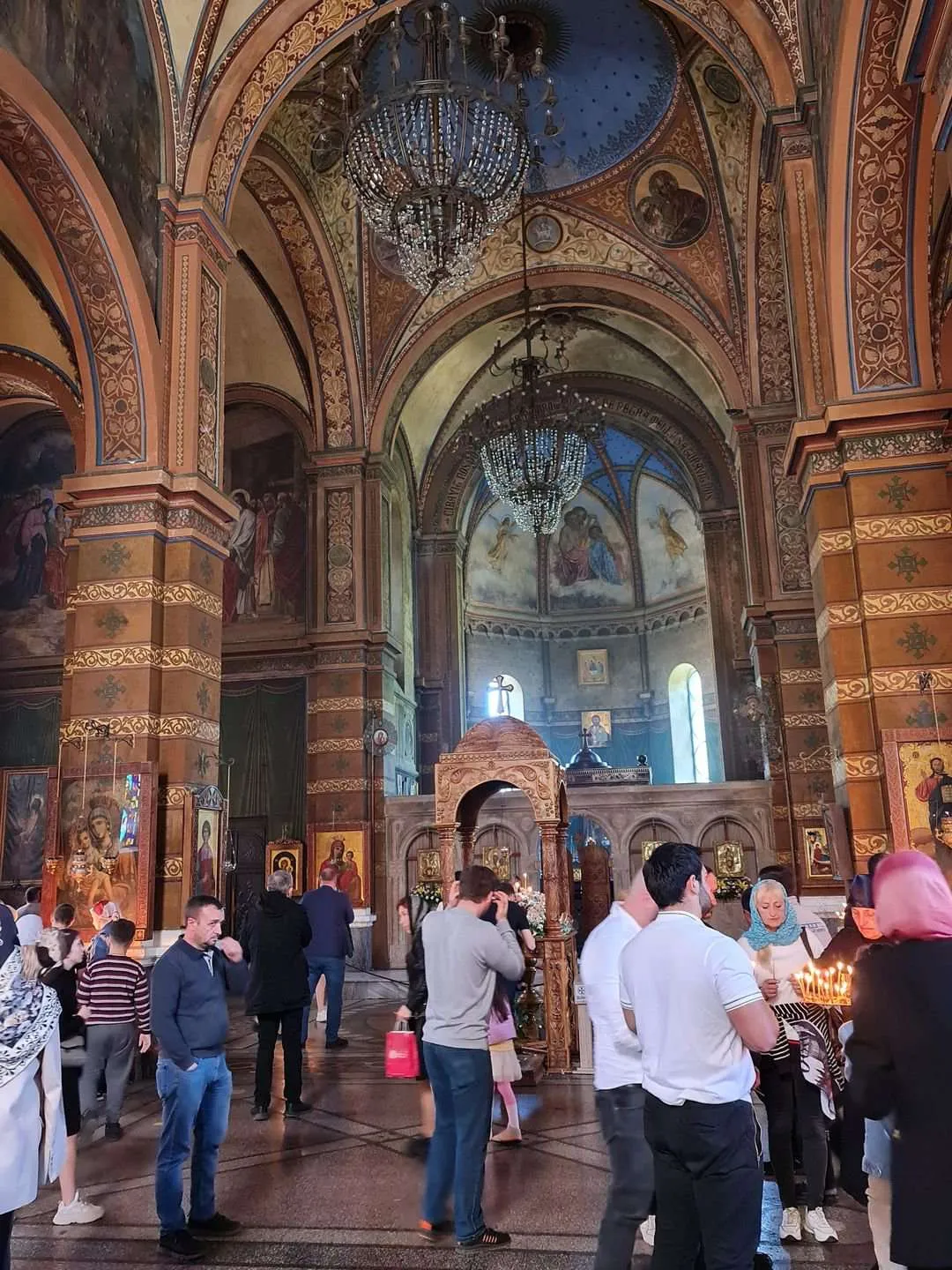
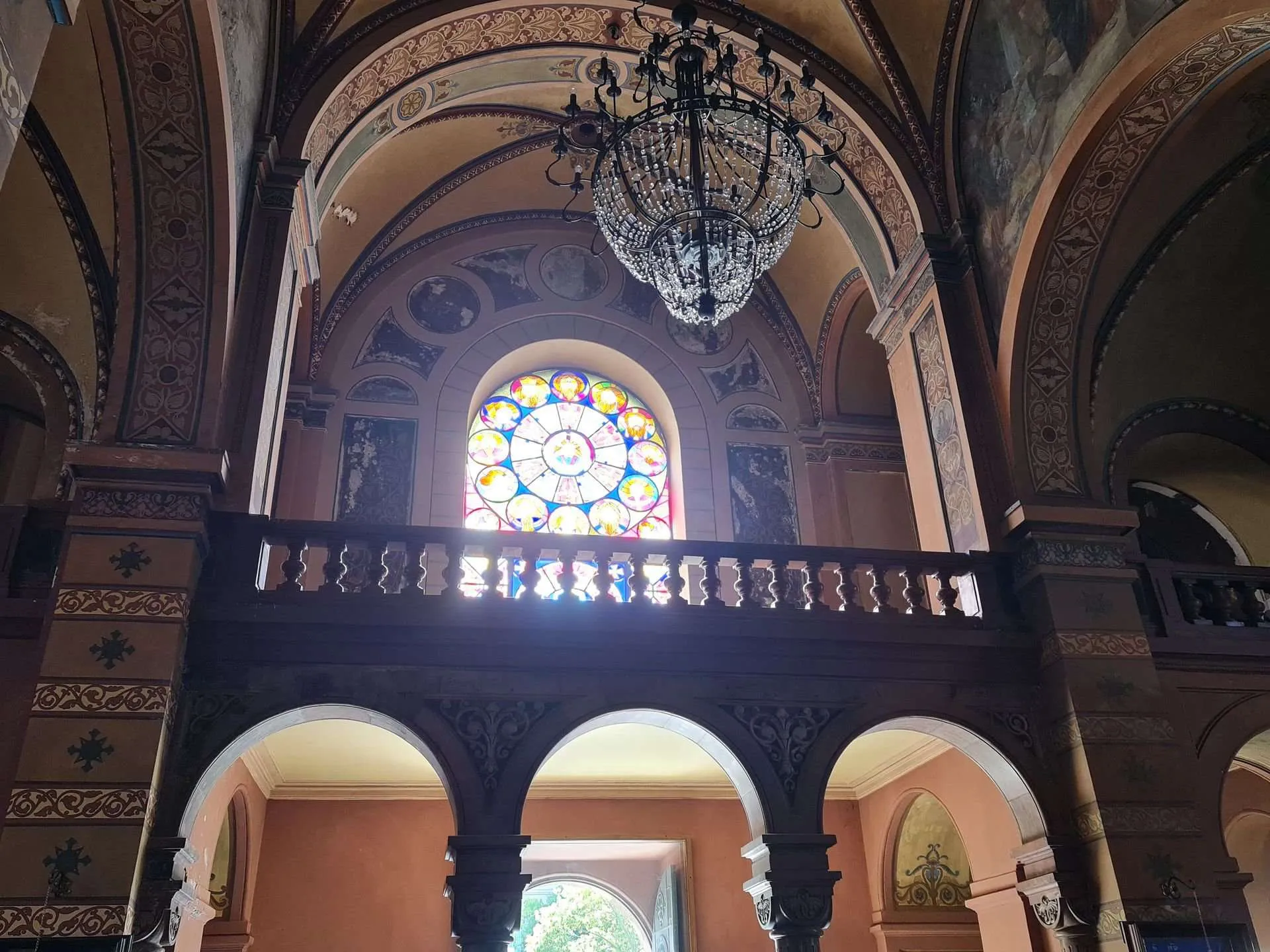
Inside, the atmosphere shifts completely. High vaulted ceilings, walls and ceiling covered in frescoes, a carved wooden iconostasis. Deep reds, gold, the warm glow of candles — a stark contrast to the bright, noisy city you just walked in from.
Visit the Cathedral of Batumi⬇️
If you've already visited Bodbe Monastery in Kakheti — with its hilltop silence and garden paths — this cathedral will feel very different. Urban, busy, lived-in. Less pilgrimage, more parish.
🗺️ How to Get to the Cathedral of the Nativity in Batumi
The cathedral is in the city centre, a five-minute walk from Batumi's seafront boulevard. Address: 4 Katolikosi Square.
On foot from anywhere in the centre — 10 to 15 minutes. Use the bell tower as your landmark; it's visible from most streets. From Batumi's Europe Square or the boulevard, walk inland (away from the sea) for about 600 metres.
By taxi from anywhere in Batumi — around 3–7 GEL (approximately $1–3; confirm before you get in). Search Google Maps for "Batumi Cathedral" or "ბათუმის ტაძარი."
By car: parking around the square is limited; side streets nearby are easier.
🕐 Opening Hours and Service Schedule at the Cathedral
The cathedral is open for visitors every day, morning through evening, including when no service is in progress.
Services are held in the morning (around 9:00 am) and evening (around 6:00 pm). The schedule shifts on major Orthodox holidays — it's worth checking on-site before you arrive. Attending a service as a visitor is completely normal in Georgian Orthodox churches; people come to pray and tourists quietly observe — both happen at the same time.
📜 Cathedral History: From 1898 to Soviet Planetarium and Revival
Batumi at the end of the 19th century was a city in the middle of a construction boom. After it came under Russian Imperial rule in 1878, the town was rapidly developed as a major oil and cargo port. In a few decades, a theatre, mosques, a Catholic church, banks and hotels all went up. The Orthodox cathedral was built as part of that same wave.
Construction began in 1898 and the cathedral was consecrated in the early 1900s. It was designed from the start as the main Orthodox church of the city and the seat of the bishop.
When Soviet power was established in Georgia in 1921, most Orthodox churches faced a similar fate. The Batumi cathedral was closed for worship and spent several decades as a planetarium — a common story across Georgian cities, where dozens of historic churches were converted to museums, cinemas or scientific facilities.
After Georgia declared independence in 1991, the building was returned to the church. The process of restoration took years: frescoes, the iconostasis and all the interior had to be recreated almost from scratch. Today it's a fully active cathedral again — the seat of the Batumi-Lazeti Diocese of the Georgian Orthodox Church.
For more on Batumi's religious landscape, the full list is in the Batumi churches and monasteries directory.
🎨 What to See Inside: Iconostasis, Frescoes and What to Look For
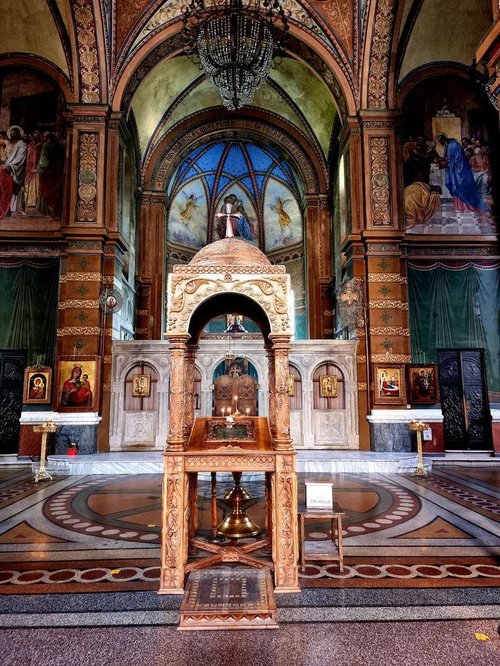
Walking in, the first thing to understand is that this is a working church, not a museum. Services are held, candles burn, people pray — not for photographs.
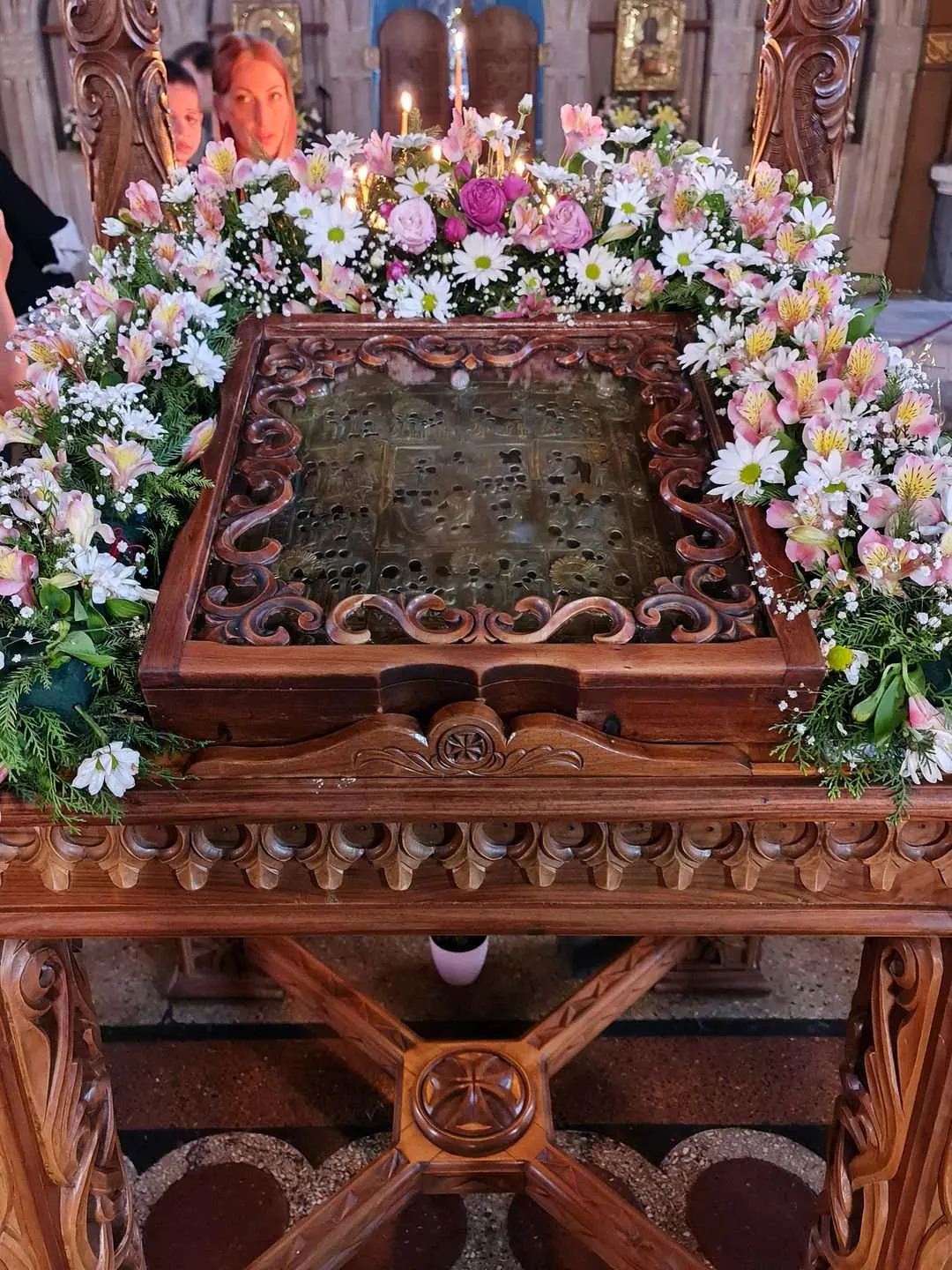
The iconostasis. Carved wood, multi-tiered. It was recreated after the Soviet period — the craftsmanship is detailed and worth looking at closely.
The frescoes. The paintings cover the walls and dome throughout. Unlike ancient Georgian churches where frescoes date to the 11th–13th centuries, most of what you see here is contemporary — painted during the post-Soviet restoration. That doesn't make it less interesting: Georgian ecclesiastical painting has its own iconographic tradition.
Burial sites. Georgian cathedral churches sometimes hold the remains of notable clergy within the church itself. Ask the staff whether the cathedral has any — there's usually a story attached.
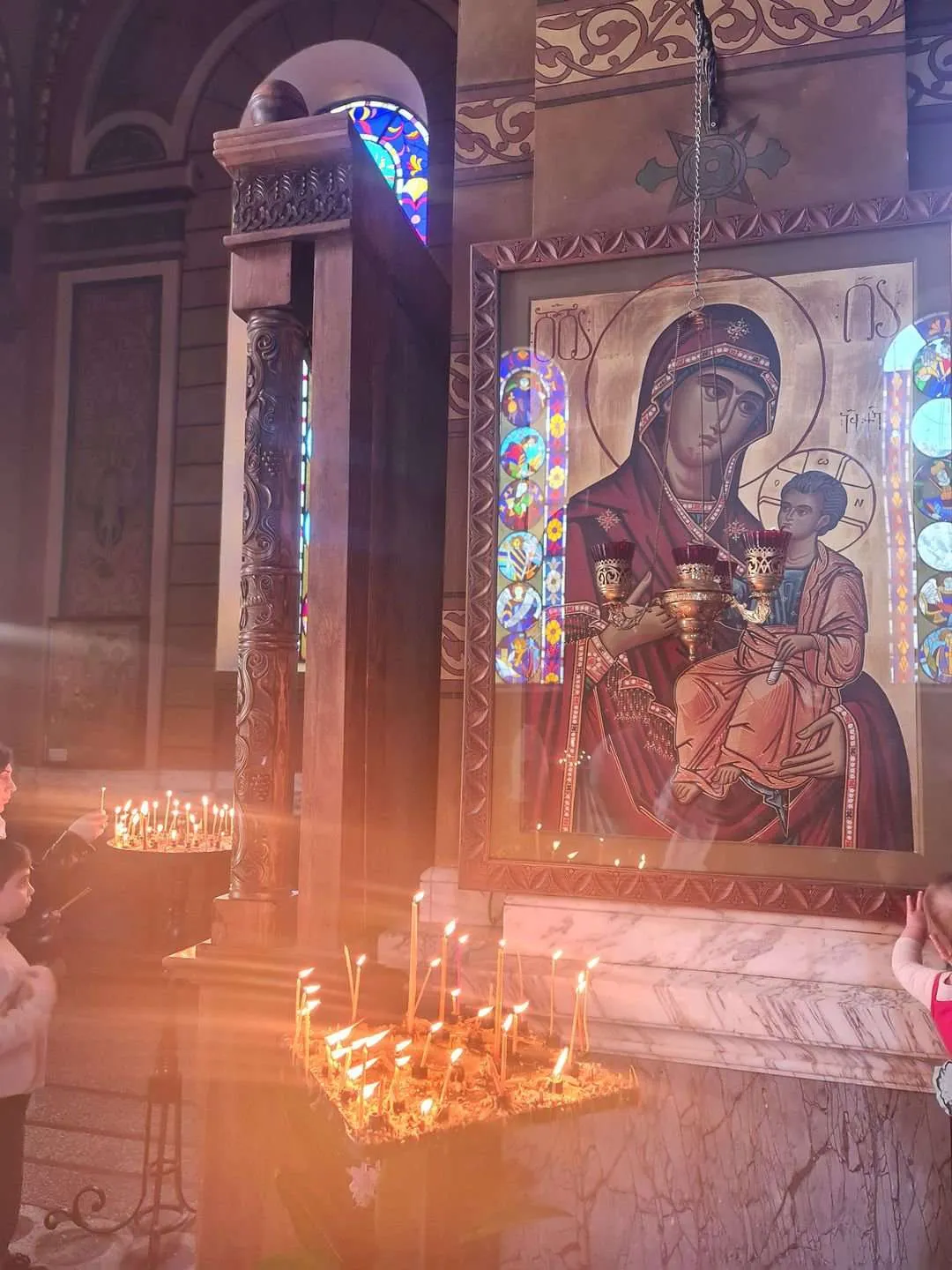
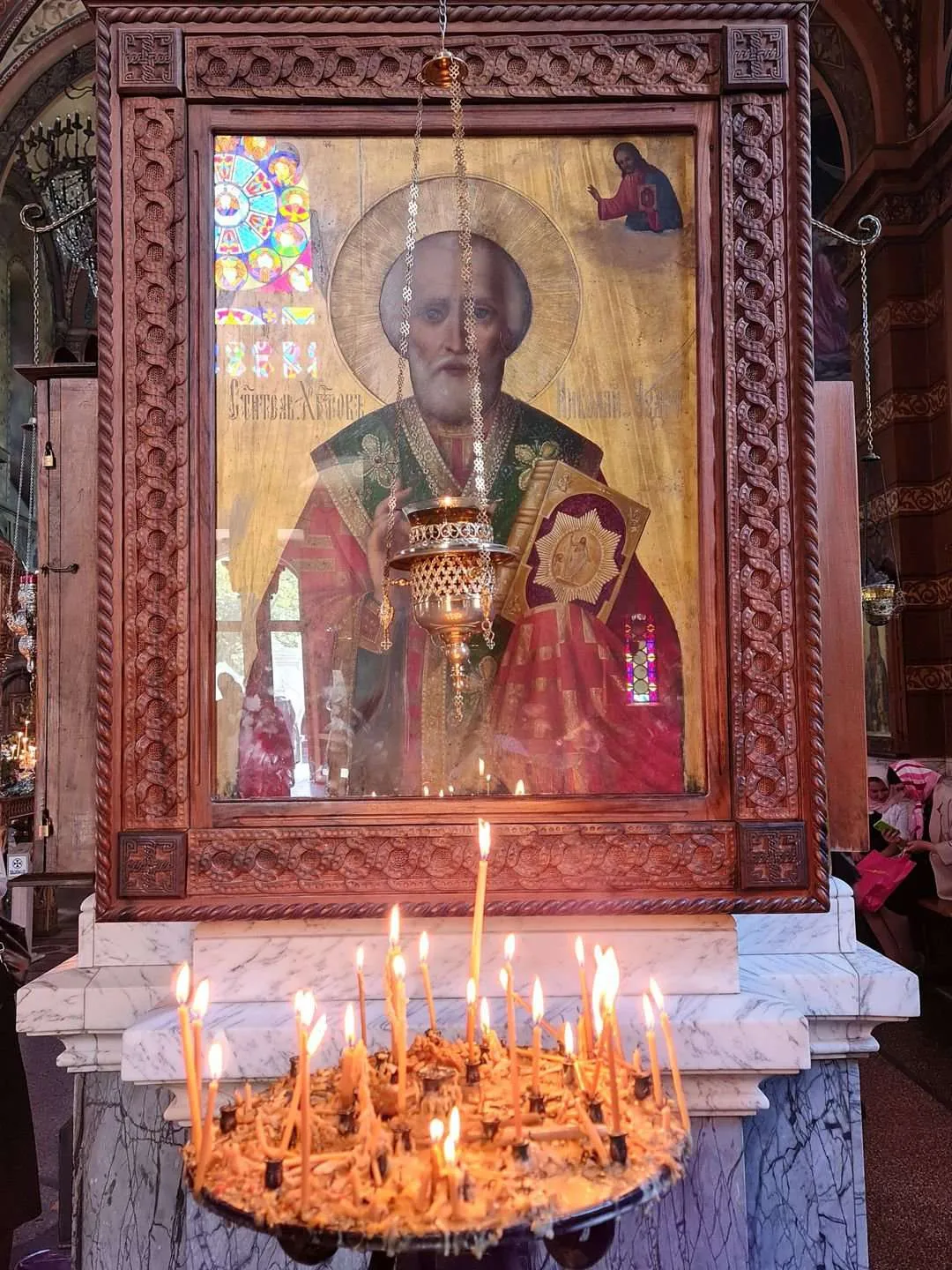
Candles. Lighting a candle is a normal practice for visitors, not just parishioners. Candles are sold at the entrance.
💡 How to Visit an Orthodox Church in Georgia: Visitor Tips
Georgian Orthodox churches are open to tourists, but a few things will make the visit comfortable for everyone.
One thing most guides don't mention: in Georgia it's customary to kiss icons on entering a church. If you see a small queue near an icon stand, that's what it's for. You're not expected to join — but it's good to know what's happening.
Batumi is genuinely multi-faith and worth exploring on that level. A few blocks away is Holy Trinity Church (Sameba), another significant Orthodox church in the city. Near the Green Bazaar, Batumi Synagogue has its own distinct history worth looking up.
🌆 What to See Near the Cathedral in Batumi City Centre
Katolikosi Square is a natural starting point for a walk through Batumi's historic core. From the cathedral on foot:
5 minutes — Batumi Boulevard and the seafront. The city's most popular promenade.
10 minutes — Vakhtang Gorgasali Church, one of the few Batumi churches with notable organic search traffic — which says something about how many people look for it.
15 minutes — the Old Town, with cobbled lanes, independent cafés and 19th-century facades.
20 minutes — St. John the Theologian Convent in Sarpi — a completely different scale and atmosphere, worth a separate trip.
If you're spending more than a day in Batumi, browse the full Batumi churches directory — 20+ religious sites across faiths: Orthodox, Armenian, Catholic, a synagogue, mosques.
Batumi Is Multi-Faith — and That's Part of What Makes It Worth Exploring
The Cathedral of the Nativity is a useful anchor for understanding Batumi's religious history. The city has been a crossroads for centuries: Persian, Ottoman and Russian influences all layered onto a Georgian foundation to produce the complex, layered character you see today.
Go in for more than a photo. Stand still for a moment. Listen. Batumi is loud outside — and unexpectedly quiet in here.
To continue exploring Georgia's religious heritage, browse the Batumi churches and monasteries directory or make the trip to Bodbe Monastery in Kakheti — a completely different scale and setting.
🗨️ We'd Love to Hear from You!
Have you visited the Cathedral of the Nativity? Did you catch a service or explore between prayers? Share your experience in the comments — we read every one ❤️
ℹ️ Opening hours and service times are accurate as of the date of publication. Schedules may change on major Orthodox holidays or in exceptional circumstances. Please verify details before your visit.
FAQ
Yes — it's the same building. Locals and visitors often call it simply "the Batumi Cathedral" or "the main cathedral." Its full official name is Cathedral of the Nativity of the Most Holy Theotokos.
Construction started in 1898 and the cathedral was consecrated in the early 1900s. It was built during a period of rapid urban growth in Batumi under the Russian Empire.
After Soviet power was established in Georgia in 1921, most churches were closed for religious use. The Batumi cathedral spent several decades as a planetarium. Following Georgian independence in 1991, the building was returned to the Orthodox Church and a long restoration began.
You can enter. But it's better to follow the dress code: women need a covered head and a skirt. Most entrances keep spare headscarves and wraparound skirts for visitors — just ask staff at the door.
Early morning is quietest with beautiful light. The evening service (around 6 pm) is more atmospheric — candles, choir, the smell of incense. Sunday morning is lively. Choose based on what you're looking for.
About 10–15 minutes on foot — walk inland from the boulevard toward the city centre. The bell tower is visible from a distance. By taxi: no more than 5–7 GEL from anywhere on the seafront.
Several are within walking distance. Closest and most visited: Vakhtang Gorgasali Church and Holy Trinity (Sameba). The full list is in the Batumi churches directory.

35 comments
Log in to leave a comment
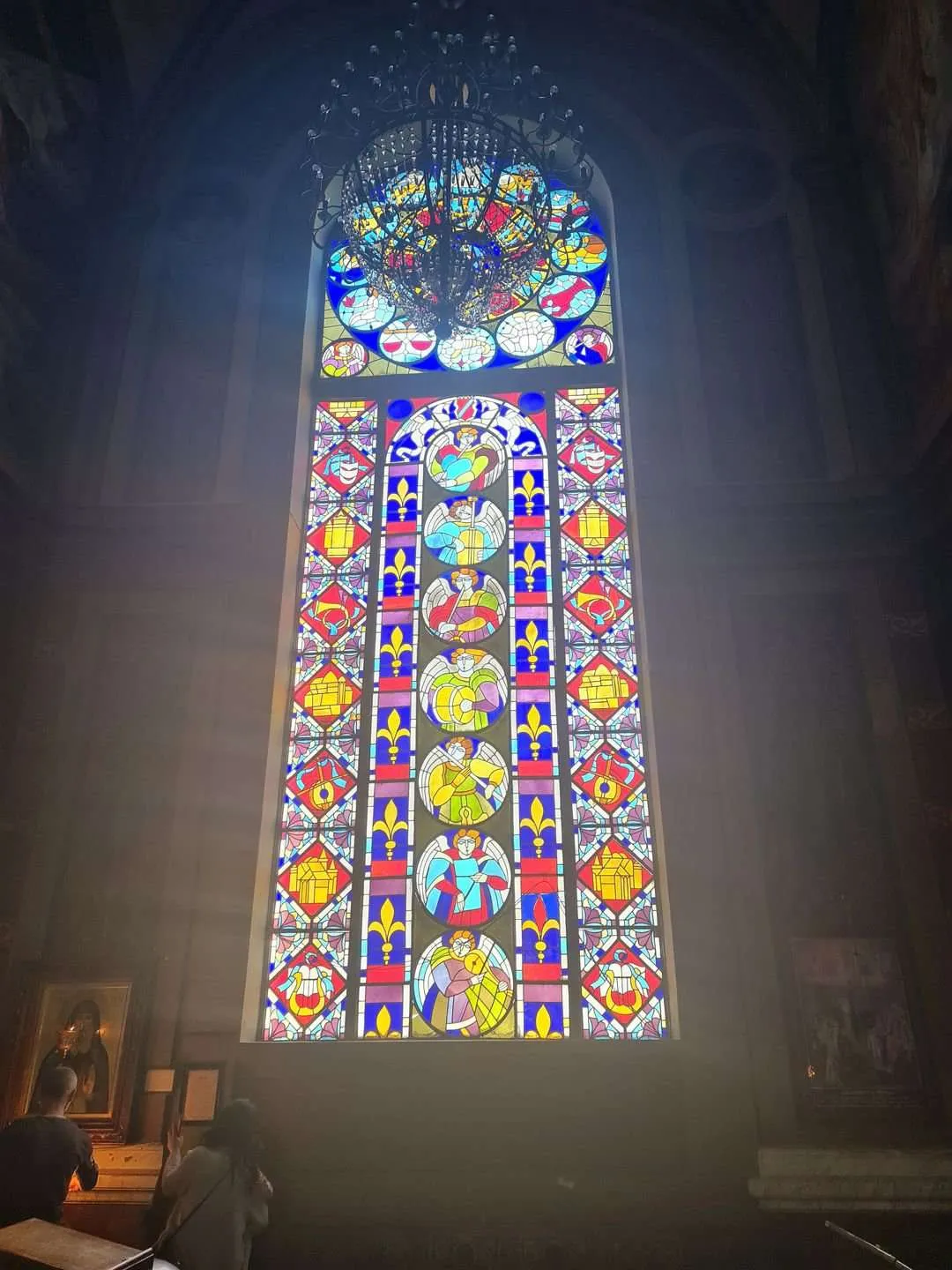
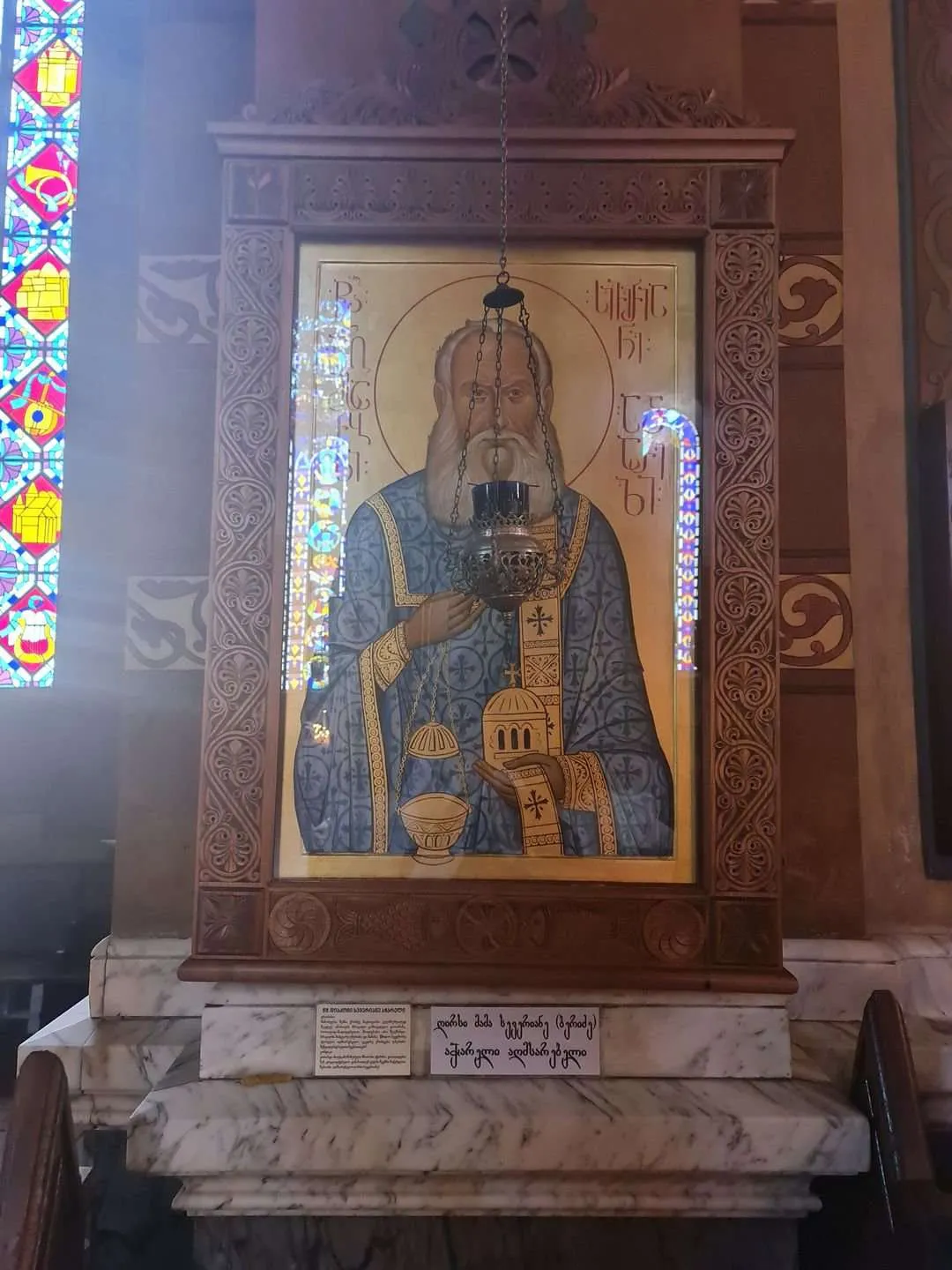
The vibrant icons and that unmistakable blue sky through the stained glass whisper stories you can’t ignore. Sure, it’s a bit touristy now, but that doesn’t take away from its charm. Just wandering through the square and soaking it all in made me appreciate how history laces through the present. Batumi has this pulse, a rhythm that tells you there’s so much more beneath the surface.
Когда я зашла в эту церковь, я не хотела уходить. Просто сидела на лавочке внутри и наслаждалась, тихонько слушая Бога. Я посещала этот храм на праздник, и несмотря на большое количество людей, атмосфера не была испорчена. Все были сплочены событием и чувствовалось особое единение.
Это самая большая церковь в Батуми, расположенная в центре города. Собор впечатляет своей архитектурой и величием. Внутри царит особенная атмосфера, которая позволяет забыть о суете и полностью погрузиться в молитву и размышления.
трудились над проектом и росписью храма.Построен храм в неоготическом стиле,что непривычно для Грузии.Автор прекрасно описал историю
этого храма и великая честь грузинскому народу ,что смогли сохранить до наших дней такой величественный храм.В 1989 году храм освятили ,
этот обряд совершил Католикос Грузии Илия ll.В этот день крещение совершили 5000 человек.Сейчас собор является главным храмом Батуми.