


Add organization

Tbilisi Balneological Resort: Sulfur Waters

In the center of old Tbilisi, on the border of Abanotubani and Ortachal, hot sulfur waters flow to the surface of the earth. It is with these sources that the history of the foundation of Tbilisi is connected.

According to one of the legends, several centuries ago, when the capital of Georgia was the city of Mtskheta, and the territory of the Tbilisi basin was covered with impenetrable forests, King Vakhtang Gorgasali accidentally discovered a hot spring in which his peregrine falcon and its prey, pheasant, were cooked while hunting in these forests.

The tsar liked these amazing springs so much that he ordered a city to be built on this territory, which was named after the hot waters of "Tpilisi" ("tpili" - in Georgian. "warm"; since 1936 - "Tbilisi"). In a short time, sulfur baths were built on the territory where the springs flow out, which are still operating at the present time, and the nearby territory was named Abanotubani (bath district).

TBILISI BALNEOLOGICAL RESORT

Tbilisi baths were famous throughout the Middle East. The 10th-century Arab geographer Ibn Haukal wrote about the miraculous properties of sulfur waters "... there are baths in which water boils without fire...".

The cruel conqueror Agha Mohammed Khan hoped to get rid of his incurable disease in the Tbilisi baths. But his hopes were not fulfilled, and in despair, the Scopian ordered the city to be razed to the ground. Baths built on natural hot water sources are mentioned by almost all foreign travelers who visited Tbilisi and famous people of the XVII-XIX centuries. Among them: French travelers Jean Chardin and Dubois de Montpellier, botanist Joseph Tournefort, Italian missionary Delaporte, Russian poet Pushkin and others.

The first fundamental study of the thermal waters of the capital of Georgia was carried out in the second half of the XIX century by German geologist, famous researcher of the Caucasus Wilhelm Abich. It was he who left a geological description of these places and suggested that the Tbilisi mineral waters could be used for medicinal purposes.

Later, the high efficiency of Tbilisi thermal waters was confirmed by clinical and experimental observations, which revealed the feasibility of creating a balneological resort in Tbilisi. Currently, about 35 mineral water wells are known, the total daily flow rate of which is 1,300 liters. The opening of the resort was preceded by an interesting fact: one of the founders of the resort, Mikhail Zandukeli, intended to build a resort area around sulfur springs, on the territory adjacent to Ortachala, which would include the Tbilisi Botanical Garden. The famous artist Sidamon Eristavi, at the request of Zandukeli, even developed a project for this resort area. But, unfortunately, the implementation of the project was prevented by the Second World War.

Today, the territory of the resort accommodates 400 hectares of area. From the north-eastern and eastern sides, the Kura River flows through the resort area and there is a Garden of 300 Aragvinets. The Tbilisi Botanical Garden is located on the western and south-western sides. And on the south side - the Tabori upland and Krtsanisi. Tbilisi Balneological Resort is a modern well-equipped medical, diagnostic and rehabilitation institution with valuable natural factors - therapeutic mineral and sulfur waters, as well as therapeutic mud (Kumisi mud is used). Here, with the help of modern diagnostic devices, together with medicines and natural factors, under the supervision of qualified specialists, you can undergo a medical and rehabilitation course. There is also a scientific and practical center of balneology, physiotherapy, rehabilitation and medical tourism.

📍 Location

Southeastern part of Tbilisi. Part of the Tbilisi resort group.

⛰ Elevation

420 m above sea level

🌄 Relief

Hilly-mountainous terrain

🌤 Climate

Mild continental, moderately dry. January — −1°C · August — 24°C

🌧 Annual precipitation

554 mm

💧 Humidity

66%

☀ Sunshine duration

2112 hours per year

♨ Natural healing factors

Low mountain climate, weakly mineralized thermal (37–47°C) sulphide and sodium chloride-hydrocarbonate mineral waters.

💧 Water yield

2,000,000 liters per day. Therapeutic mud from Akhtala and Kumisi is widely used.

🩺 Types of treatment

Mineral baths, hydrotherapy, mud baths, applications, tampons, passive climatotherapy.

❤️ Medical indications

Chronic joint diseases, cardiovascular diseases, nervous system disorders, chronic gynecological diseases.
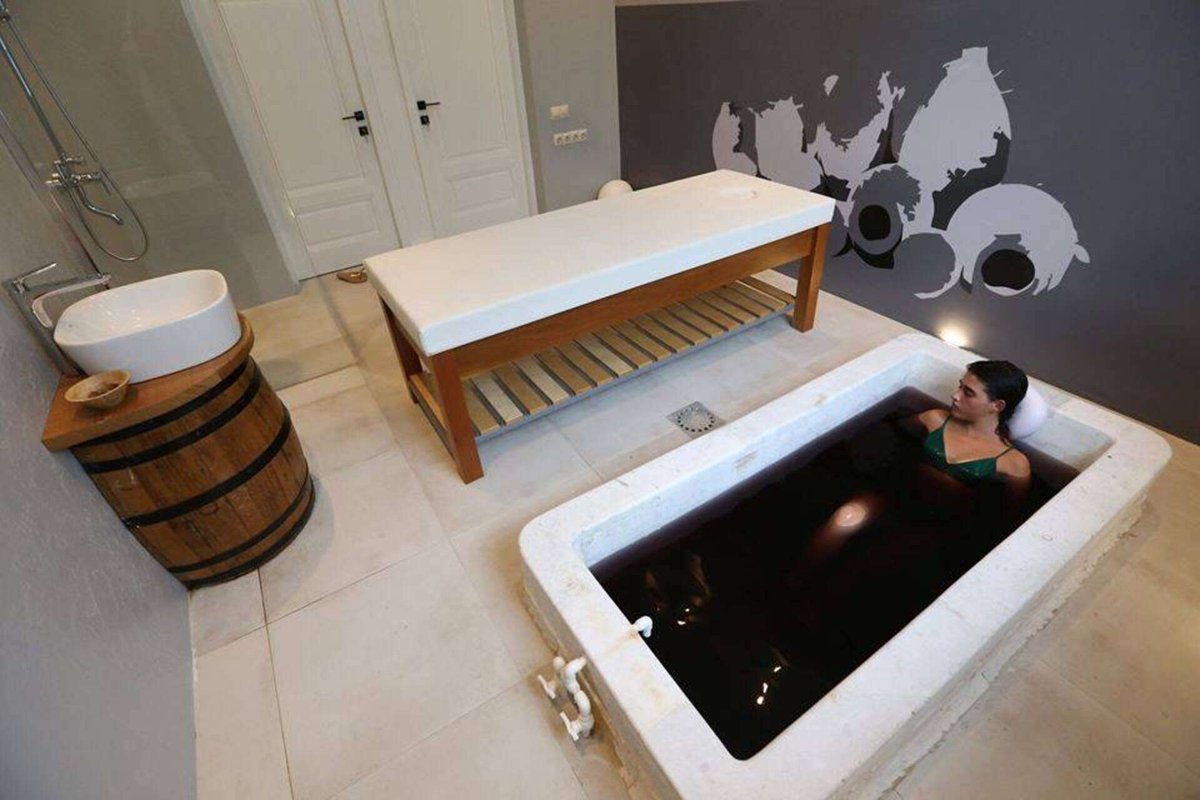
Bath at the Tbilisi Spa Resort

Tbilisi bathhouses are one of the most famous and popular places in Georgia, where people gather not only for recreation and entertainment, but also for treatment. They attract tourists from all over the world with their miraculous properties. The effectiveness of the resort's thermal waters has been confirmed by many observations and experiments, and there are about 35 wells of mineral water with a total daily flow of 1,300 liters. Interestingly, one of the founders of the resort, Mihail Zandukeli, had plans to create a spa zone around the sulfur springs in the territory adjacent to Ortachala, including a botanical garden. But his project was not realized because of World War II. The modern balneological resort is a huge area covering 400 hectares. Located on the banks of the Kura River, the resort is surrounded by green areas, mountains and hills. On the northeastern and eastern sides is the Garden of 300 Aragvi, and on the western and southwestern sides is a botanical garden. The resort area is bounded on the south side by the Tabori uplands and Krtsanisi.

Since ancient times, the spring attracted many people wishing to restore their health. Therefore bathhouses started to be built around it and the city of Tbilisi, which means "warm", was founded. One of the main advantages of the baths is their unique architecture that combines elements of different styles. The bathhouses look very beautiful and are located in the center of the city. In addition, the bathhouses are not only a place to heal the body, but also the spirit. Here you can relax from the bustle of the city, spend time with friends or family and enjoy the procedures. Thermal springs, on which the baths are based, have many therapeutic properties. They contain a large number of minerals and trace elements that are beneficial to the human body. In particular, sulfuric water, which is one of the main components and helps in combating skin diseases, strengthens the immune system and reduces stress. In addition, the baths offer various treatments such as massages, scrubs, wraps and others. They help eliminate fatigue and tension, improve blood circulation and metabolism, and restore tone and energy.

A bathhouse is not only a place for bathing, but also for socialization. Traditionally, Georgian bathhouses were places where men gathered to discuss business and spend time together. Today in the bathhouses you can find not only men, but also women and children who come to enjoy the therapeutic properties of mineral waters and to relax. Each bathhouse has its own unique architecture and interior. Some of them are preserved from ancient times, while others were built in a new style. But in any case, they are all distinguished by their cozy atmosphere and traditional decor. In the bathhouses you can taste authentic Georgian cuisine, such as khachapuri and khinkali, as well as try Georgian wines and chacha. They also host various cultural events such as exhibitions and concerts, making them even more attractive to tourists. In addition, the bathhouses were also a place where celebrities came together. One of their regular guests was the great Russian poet Alexander Pushkin, who visited Tbilisi in 1829 and described his visit in a letter to his wife: "Today I visited the baths, where all the peoples of the Caucasus have fun and bathe. There I met several Caucasian princes and even exchanged a few words with the Georgian king."

Today, the Tbilisi spa continues to attract tourists from all over the world. Baths of different categories and levels of comfort, from cheap to luxurious, provide an opportunity to experience the healing properties of mineral waters and enjoy the unique atmosphere of old Tbilisi. You can also try national Georgian dishes, enjoy local music and dance in the bathhouses. Next to them is Sulfat Park, where there are drinking galleries with mineral water. In addition, there are various masseurs and therapists offering their services to care for the body and cure many diseases on the territory of the baths.

The Tbilisi bathhouses, with their miraculous properties and sulfurous waters, have always been attractive. But, as it turned out, the thermal waters have not only unique healing properties, but also high efficiency, confirmed by clinical and experimental observations. As a result, it was decided to create a balneological resort in Tbilisi. There is a modern therapeutic, diagnostic and rehabilitation facility with valuable natural factors such as the therapeutic mineral and sulfuric waters and Kumisi mud. Patients can undergo a therapeutic and rehabilitation course with the help of modern diagnostic equipment in combination with medicines and natural factors, under the supervision of qualified specialists. In addition, there is a scientific and practical center of balneology, physiotherapy, rehabilitation and therapeutic tourism on the territory of the resort. Here researches are conducted and innovative methods of treatment and rehabilitation are developed. Thus, the balneological resort is not only a place for rest and recreation, but also a center of scientific research and development of the medical industry.

The resort is located in the southeastern part of Tbilisi at an altitude of 420 meters above sea level. It is part of a group of resorts and has a mountain-hilly terrain. The climate here is mild, continental, moderately dry. In winter the temperature rarely falls below -1 ° C, and in summer can reach 24 ° C. The average annual precipitation is 554 mm and the relative humidity is 66%. The duration of sunshine here per year is 2112 hours.

The natural healing factors include the climate of the low mountains and the curative mineral waters. The resort uses low-mineralised, thermal (37-47°C) sulphide, chloride-hydrocarbonate and carbonate-chloride, sodium mineral waters with a total mineralisation of 0.3-0.4 g/dm³ and hydrogen sulphide content of 10-20 g/dm³. The water flow rate is 2,000,000 liters per day. In addition, the therapeutic muds of Akhtala and Kumisi are widely used in the resort.

The Tbilisi Balneological Spa specializes in the treatment of chronic joint diseases (rheumatic, infectious, traumatic, endocrinological), cardiovascular diseases, peripheral nervous system diseases, chronic gynecological diseases, as well as various types of inflammation of muscles and cartilages. The treatment uses mineral water baths, dousing, hydrotherapy, mud baths, opplications, tampons and passive climatotherapy. There is also a scientific and practical center of balneology, physiotherapy, rehabilitation and medical tourism. This center employs highly qualified specialists who diagnose and treat patients with various diseases.

The therapeutic muds of Akhtala and Kumishi used in the resort have a unique composition, which allows effective treatment of many diseases of the musculoskeletal system. The muds contain a large number of minerals and trace elements, which have a beneficial effect on the skin and muscles, improve blood circulation, metabolism and the immune system. Besides disease treatment, the resort also offers preventive programs for maintaining health and improving immunity. As part of these programs, patients are offered special procedures that help strengthen the body and prevent the development of various diseases.

Here you can receive highly qualified medical care and restore your health in a pleasant and relaxing environment. Feel free to leave comments under the article and ask questions - we will be happy to answer them and help you learn more about the resort and the services it offers. We hope that our article was useful for you and will help you choose the ideal place for rest and treatment.

Tamuna Beridze
By:

Tamuna Beridze

Post: Expert, Culinarian

Hello! I am Tamuna Beridze, and my passion for cooking began in childhood. Georgian cuisine is my specialty, and I master the intricacies of preparing traditi…

Visit author

41 comments


Log in to leave a comment


  • P
    Piotr Kamiński
    Pamiętam, jak po raz pierwszy odwiedziłem Tbilisi z moją rodziną. Byliśmy tam latem, gdy słońce grzało, a miasto pełne było kolorów i dźwięków. A te wspaniałe łaźnie… przeszliśmy się po wąskich uliczkach Abanotubani, a wszystkie te zapachy, gorące pary, które uderzały w nas jak fala. Wchodząc do wody, czułem, jak moje zmartwienia znikają. Dziwne, jak ich siarka ma w sobie jakąś magię, nieprawdaż? Całe nasze zmęczenie poszło w niebyt. Ten relaks, ten głęboki oddech. Czasami żałuję, że nie mogę tego poczuć znowu. Ale wspomnienia to typowy skarb. Moja żona zawsze mówi, że takie chwile są najważniejsze. Ciekawie, czy kiedyś zabiorę tam dzieci… Tbilisi to nie tylko miasto, to jak uczucie, które nosisz w sercu.
  • Н
    Николай Попов
    Сколько раз я слышал о том, как серные воды решают все проблемы тела - кажется, этот миф неистребим! Но вот вопрос: действительно ли эти бани работают, или это просто хорошая реклама старины? И вот еще что - какому-то другому человеку эти процедуры, может, покажутся обманом, а вы сделаете шаг в мир чудес? Я в Тбилиси был, конечно, и видел эти бани, но подходить к ним мысленно сложно, ведь они такой же кусочек истории, как и вздымающиеся вокруг горы. Но в действительности, нравится ли вам запах сероводорода? И, честно, кто-то знает, есть ли там нормальные условия, чтобы не только окунуться, но и не убежать от вонючей воды?
  • M
    Min Liu
    我记得第一次去第比利斯时,那种温暖的气息包围着我,仿佛城市在低声诉说着她的秘密。整个地方都被这种令人沉醉的气味渗透,那是硫磺水的味道。我和家人一起走进了那些古老的澡堂,石头墙壁湿漉漉的,仿佛在回忆过去的光辉岁月。我们在水中浸泡,所有的疲惫与压力都被冲刷掉了。只是静静地享受,听着水的潺潺声,想着人生。那一刻,我明白了,健康不仅在于身体,也是心灵的洗礼。那些矿泉水的神奇力量,仿佛在告诉我们,放慢脚步,活在当下。每次想到那些水,都会想起和家人在一起的美好时光。
  • P
    Philippe Dubois
    je me souviens de ma première visite aux bains de Tbilissi, l'odeur soufrée m'a presque surpris, mais en même temps, c'était comme un affrontement avec la réalité. ce mélange de chaleur et de vapeur, c'est comme plonger dans une autre époque. les eaux thermales, ça fait un bien fou, mais, honnêtement, c'est presque mystique, non ? ces 35 sources, il y a quelque chose de presque magique derrière, comme si chaque goutte avait son histoire. j’hésite toujours à parler de l'impact sur la santé, parce que chacun réagit différemment. mais pour moi, une après-midi là-bas, c’était un pur bonheur. est-ce que tu as déjà essayé les bains en pleine nuit ?
  • Е
    Екатерина Павлова
    Знаете, как это бывает: заходишь в баню, а на тебе уже этот специфический аромат серы, словно ты попал в другой мир. В Тбилиси это особенно сильно чувствуется. Я всегда обожал гулять по Абанотубани, слышать, как вода бурлит в колодцах. И да, тут есть нечто магическое. Погружаясь в ванну, кажется, что все проблемы остаются за пределами этих стен. Это не просто роскошь, а настоящее искусство заботиться о себе. Задумался, сколько времени достаточно провести в этих водах - чтобы здоровье действительно поправить?
  • Т
    Татьяна
    Я очень люблю такие рейтинги на Madloba, которые не только вдохновляют на новые путешествия, но и помогают узнать Грузию глубже 🌿💆‍♀️. Статья о Тбилисском бальнеологическом курорте — именно про такие места, которые хочется добавить в маршрут даже тем, кто уже бывал в Тбилиси. 

    Особенно впечатляет, что история этого курорта буквально переплетается с историей самого города: именно серные источники Абанотубани дали название Тбилиси — от слова «тпили» (теплый).  Сегодня здесь есть около 35 минеральных источников, чьи воды и термальные ванны помогают при состояниях опорно‑двигательного аппарата, сердечно‑сосудистых и нервных заболеваниях. 

    Мне особенно классно было узнать, что курорт — это не просто старинные бани, а современный лечебно‑диагностический и реабилитационный центр, где можно пройти комплекс процедур — от минеральных ванн до физиотерапии и грязелечения с вулканическими грязями — под наблюдением специалистов.  Это идеальный способ совместить отдых в центре Тбилиси с заботой о здоровье!

    И да, не только лечение: многие посетители отмечают, что атмосфера серных бань — это часть тбилисской души, где можно расслабиться, насладиться традиционной водой и даже попробовать хачапури или вино после процедур 🥂. 

    После прочтения рейтинга я точно хочу посетить Тбилисские серные бани и попробовать их оздоровительные процедуры, а потом прогуляться по старому городу.

    А вы бы выбрали этот курорт ради оздоровительных процедур и серных ванн, или больше ради исторической атмосферы Абанотубани и прогулки по старому Тбилиси? 😊
  • H
    Helen Armstrong
    The balneological resort in Tbilisi is a hidden gem. The combination of thermal mineral waters and therapeutic muds like Akhtala and Kumisi offers an exceptional healing experience. With a mild climate year-round and a rich history dating back to the 17th century, it’s fascinating to see how the resort has developed over time. The scientific center for balneology and rehabilitation adds an extra layer of reassurance for those seeking treatments for joints, heart issues, and more. Visiting the sulfur baths truly felt like stepping into a historical tradition, making it a unique addition to any wellness journey.
  • D
    Darya
    Интересно узнать, как долго длятся курсы лечения на этом курорте и каковы рекомендации по частоте посещений для достижения устойчивого результата. Также хотелa бы подробнее понять, как именно действует сера в термальных водах на организм, особенно в контексте лечения воспалений.
  • N
    Nino
    ეს რაიმე არაჩვეულებრივია! არაჩვეულებრივი კომბინაციაა სეროვანის და გრუნტის პროცედურები. შარშან, როდესაც ამ კურორტზე ვიყავი, ნამდვილად ვიგრძენი ამ მინერალური წყლების სარგებლობა. კუმისის გრუნტი საოცრად დამამშვიდებელია, განსაკუთრებით მძიმე დღის შემდეგ. თვალსაჩინოა, როგორ ეხმარება ეს კურორტი ჯანმრთელობის მრავალ სფეროში. მე ძალიან ვაფასებ იმას, რომ ექიმები და მეცნიერები აქ შრომობენ, რომ თითოეულ ადამიანს მაქსიმალური შედეგი მიაწვდინონ.
  • Y
    Yasmeen
    I visited this spa in Tbilisi and was amazed by the natural thermal mineral waters. The climate was perfect for a relaxing getaway, and the treatments offered, like mud therapies and baths, left me feeling rejuvenated. I was fascinated to learn about the history of the sulfur baths dating back to the 17th century. Despite the development project not being completed, the place has a charm of its own. Would highly recommend it for anyone looking to heal or simply unwind.
  • A
    Anna
    Никогда не думала, что в Тбилиси есть такой уникальный бальнеологический курорт с термальными водами и серными банями.
  • K
    Keti_Sea
    სამი წლის წინ, როცა ტბილიში ჩამოვედი, ბალნეოლოგიური კურორტი ჩემს ერთ-ერთ საყვარელ ადგილად იქცა. სუფთა ჰაერი და თბილი, მინერალური წყლები მაძლევს ენერგიას და სიმშვიდეს. განსაკუთრებით მომწონს სურნელიანი გოგირდის აბანოები, სადაც თითოეული შეხვედრა უნიკალური და დაუვიწყარია. აღფრთოვანებული ვარ მეცნიერების ცენტრის სერვისებითაც, რომლებიც ყველაზე თანამედროვე მეთოდებს სთავაზობენ. რბილი კლიმატი ზამთარშიც კი სასიამოვნო გამოთვლილი და თანდათანობითი განწყობას ქმნის.
  • Ç
    Çiğdem
    Could you provide more details about the therapeutic benefits of the mineral waters used at the resort? I'm particularly interested in how they impact conditions like arthritis and cardiovascular issues.
  • თ
    თამარიკო
    მართლაც შთამბეჭდავია, რომ ჩვენი ტფილისის ბალნეოლოგიური კურორტი ტრადიციებს საუკუნეების მანძილზე ინარჩუნებს. სამეცნიერო ცენტრი კურორტოლოგია და რეაბილიტაციის შესახებ რომ გამახსენდა, მაინტერესებს, არსებობს თუ არა ახალი კვლევები ან მეთოდები, რომელსაც ისინი იყენებენ ბოლო წლებში? ყოველთვის საინტერესო იყო, როგორ ვითარდება ჩვენთან მსგავსი სამკურნალო დაწესებულებები.
  • Л
    Лариса Коваль
    Как влияет мягкий климат на эффекты лечения курорта? Особенно интересуют зимние месяцы, когда температура может падать ниже нуля.
  • Т
    Тамар Эристави
    Так приятно узнать об уникальном месте в Тбилиси, где можно поправить здоровье с помощью природных ресурсов. Особенно впечатляет использование термальных вод и лечебных грязей. К тому же, мягкий климат делает это место привлекательным в любое время года. Интересно, работают ли сейчас серные бани, которые упоминаются с XVII века, и можно ли их посетить?
  • t
    terryjones
    Are the therapeutic mud treatments at this spa suitable for all skin types, or are there specific considerations for sensitive skin?
  • მ
    მალხაზი
    გამაღელვებელია, რამდენად ეფექტურია თერმული წყლების გამოყენება ნერვების და გულის სამკურნალოდ? აქვთ თუ არა რაიმე კვლევები ამ მიმართულებით? ასევე, მაინტერესებს, როგორ პირობებში ინახება ბალნეოლოგიური ცენტრი, რომ მაქსიმალურად დაცული იყოს ბუნებრივი რესურსები.
  • А
    Артем Луценко
    Когда был в Тбилиси, заглянул на этот курорт. Привлекла история серных бань, они действительно заслуживают внимания. Приятно было узнать, что минеральные воды и грязевые процедуры помогают при хронических проблемах с суставами. Хотел бы вернуться туда еще раз, чтобы попробовать все методы лечения и узнать больше о научных исследованиях в центре курортологии.
  • Е
    Евгения
    Какая интересная и полезная информация о лечебных свойствах термальных вод и грязей в Тбилиси. Большое удивление вызвала информация о суточном дебите воды — 2 миллиона литров. Захотелось бы узнать больше о методах, которые применяют для лечения различных заболеваний. Особенно интересны грязевые процедуры и их влияние на здоровье. Это наверняка потрясающее место для оздоровления и восстановления сил.
  • m
    maryharrison
    Are the sulfur baths still in use today, and are there specific treatments recommended for stress relief? The historical mention of the baths is intriguing.
  • m
    maryharrison
    Are the sulfur baths still in use today, and are there specific treatments recommended for stress relief? The historical mention of the baths is intriguing.
  • ი
    იაკო
    საინტერესო ინფორმაცია ბალნეოლოგიური კურორტის შესახებ, მაგრამ მაინტერესებს, ნამდვილად არის აწყობილად მუშაობს თუ არა სამეცნიერო ცენტრი კურორტოლოგიის და რეაბილიტაციის კვლევებში? ხშირად ვხვდები, რომ მსგავს დაწესებულებებს რესურსების ნაკლებობა უშლის ხელს.
  • c
    claraevans1989
    Are the sulfur baths accessible year-round, even during the colder months? I'm curious if people visit during winter and how the experience might differ from summer visits.
  • R
    Richard
    Очень интересно узнать, как именно природные условия и методики помогают в лечении нервных заболеваний на этом курорте.
  • a
    amanzholova.a.s18
    Тбилиси – не только исторический центр, но и место для оздоровительного отдыха. Один из интересных вариантов для путешественников – Тбилисский бальнеологический курорт, известный своими минеральными водами и лечебными процедурами. Для меня, как для любителя релакса, это отличное место, чтобы совместить отдых и восстановление. Курорт предлагает целый ряд процедур, от минеральных ванн до грязевых обертываний, которые помогают при различных заболеваниях. Я даже решила попробовать несколько из них, и эффект был замечательным. А виды на город, которые открываются с этого курорта, просто захватывают дух. Если вы хотите не только отдохнуть, но и оздоровиться, это точно стоит посетить!
  • s
    sipacheva.72
    Для меня баня это нечто без чего я не могу жить. Баня это чистота тела и души. Я со своими родителями несколько раз переезжала из одного населенного пункта в другой. С бани начиналась жизнь на новом месте.Поэтому эта статья меня очень заинтересовала.Тбилисские бани, с их чудесными свойствами и серными водами, всегда были привлекательны. Но, как выяснилось, термальные воды имеют не только уникальные лечебные свойства, но и высокую эффективность, подтвержденную клиническими и экспериментальными наблюдениями.
  • e
    evfadeeva.2017
    Очень необычное местечко есть в Тбилиси. Я вообще впервые узнала, что существует серные бани.Тбилисский бальнеологический курорт специализируется на лечении хронических заболеваний суставов (ревматических, инфекционных, травматических, эндокринологических), сердечно-сосудистых заболеваний, периферийных заболеваний нервной системы, хронических гинекологических заболеваний, а также различного происхождения воспаления мышц и хрящей. Для лечения используются ванны из минеральных вод, обливание, гидротерапия, грязевые ванны, оппликации, тампоны и пассивная климатотерапия. Здесь также функционирует научный и практический центр курортологии, физиотерапии, реабилитации и лечебного туризма. В этом центре работают высококвалифицированные специалисты, которые проводят диагностику и лечение пациентов с различными заболеваниями.
  • d
    dacascas
    Бани и минеральные воды могут быть действительно полезными. Но не нужно забывать, что лучшее - это враг хорошего. Как говорится в пословице: заставь дурака богу молиться, так он лоб себе расшибёт. Вот и с различными процедурами для оздоровления не стоит перегибать палку. Для той же самой бани есть множество ограничений.
  • g
    galina.gurikova
    Отличный курорт не только для отдыха, но и для оздоровления. По фото напоминает санаторную зону. Серные воды всегда славились своими лечебными свойствами, но не каждая страна может похвастаться наличием таких источников. Обязательно нужно посетить этот курорт. Сложно даже выбирать между курортами, где просто отдыхаешь, и лечебными курортами.
  • b
    bikteeva94
    Очень полезная статья! Конечно же имеет свою непростую судьбу и тяжелую историю, мне очень нравится читать про прошлое такие известных достопримечательностей, так как от этого складывается их вся в жизнь в будущем! И также это отражается на городе или стране! Спасибо автору за статью!
  • v
    vponomareva383
    Этот Тбилисский Бальнеологический курорт явно особенен тем, что он находится в горах, а это значит, что там свежий воздух. Также из статьи узнала, что там можно принимать как и минеральные ванны, так и грязевые. Более того, не во многих курортах присутствует такой вид лечения как гидротерапия. Очень порадовало!
  • a
    anastasi777333
    История основания Тбилиси связана с вытекающими на поверхность горячими серными водами, в центре старого Тбилиси, на границе Абанотубани и Ортачала. Когда столицей Грузии был город Мцхета, а территория Тбилисской котловины была покрыта непроходимыми лесами, царь Вахтанг Горгасали во время охоты в этих лесах случайно обнаружил горячий источник, в котором сварились его сапсан со своей добычей –фазаном. Царю настолько понравились эти удивительные источники, что он построил город Тпилиси.
  • l
    loli.lol.01
    Я знаю, что в Тбилиси есть большое количество хороших курортов. И Тбилисский Бальнеологический курорт совсем не исключение! Бани это отличное место для вашего времяпровождения. Мне понравилось, что автор смог так подробно описать всё в своей статье. Получилось очень интересно. Большое спасибо за статью!
  • И
    Ира
    Сколько много лечебных источников, просто удивляюсь. Да и вправду люди приезжают, лечатся и исцеляются. Ничего себе я даже и не могла представить, что там был. А. С. Пушкин. Очень бы хотела побывать там, посмотреть что да как посмотреть на эти прекрасные пейзажи, невероятную красивую красоту. Спасибо автору за эту статью! )
  • И
    Ира
    Сколько много лечебных источников, просто удивляюсь. Да и вправду люди приезжают, лечатся и исцеляются. Нечего себе я даже и не могла представить, что там был. А. С. Пушкин. Очень бы хотела побывать там, посмотреть что да как посмотреть на эти прекрасные пейзажи, невороятную красивую красоту. Спасибо автору за эту статью! )
  • И
    Ира
    Царю настолько понравились эти удивительные источники, что он велел на этой территории построить город, который был назван в честь горячих вод «Тпилиси» («тпили» - по-груз. «тёплый»; с 1936 г. - «Тбилиси»). В скором времени на территории, где вытекают источники, были построены серные бани, действующие и в настоящее время, а близлежащая территория получила название Абанотубани (район бань).
  • ნ
    ნატალი ხანოვა
    Случайная находка царя Вахтанг Горгасали способствовала образованию города Тбилиси. Это не просто находка , а лечебные, серные источники. До сих пор люди приезжают сюда и проходят лечебный и реабилитационный курс. На этих источниках был великий русский поэт А.С. Пушкин. Во время путешествия сочинил стих о Грузии "На холмах Грузии лежит ночная мгла…" Автор завлекательно написал статью, появилось желание побывать там.
  • G
    Greeny
    Развлечения на отдыхе, конечно, здорово. Но в статье показан наглядный пример того, что можно посетить места, где и позаботится о своём здоровье можно. Даже на курорте. Приезжаешь сменить обстановку, а возращаешься не только отдохнувшим, но и здоровым. Возможно, что на серьёзные проблемы со здоровьем такое лечение никак не повляет, но общее состояние улучшит так точно.
    И даже у этого места есть легенда. Только печальная к сожалению.
  • И
    Ира
    Когда ты читаешь статью, то ты осознаёшь, что сколько людей пытались завоевать это невероятное место, и ни у кого не получилось)) Сегодня территория курорта вмещает 400 гектаров площади. С северо-восточной и восточной стороны по курортной зоне протекает река Кура и находится Сад 300 арагвинцев. С западной и юго-западной стороны расположен Тбилисский ботанический сад. А на южной стороне - Таборийская возвышенность и Крцаниси. Тбилисский бальнеологический курорт является современным благоустроенным лечебным
  • В
    Влада
    Сколько же людей хотели завоевать это место, и построить свой город. Очень жаль что завоеватель Ага Мохаммед сравнял город с землей, и бань тех времен не осталось, Минеральные воды конечно полезны, но не всемогущи. Но всё-таки хорошо, что термальные воды не оставили без внимания, и они есть и есть санатории, куда можно приехать и пройти лечение.