


🌊 Black Sea Water in Autumn: September, October and When Swimming Ends
🌊 The shoulder season: how it works
Water cools more slowly than air, and that is the whole logic of autumn swimming. September on the Georgian coast is a full swimming month. October means the first ten days, and even then only for the committed.
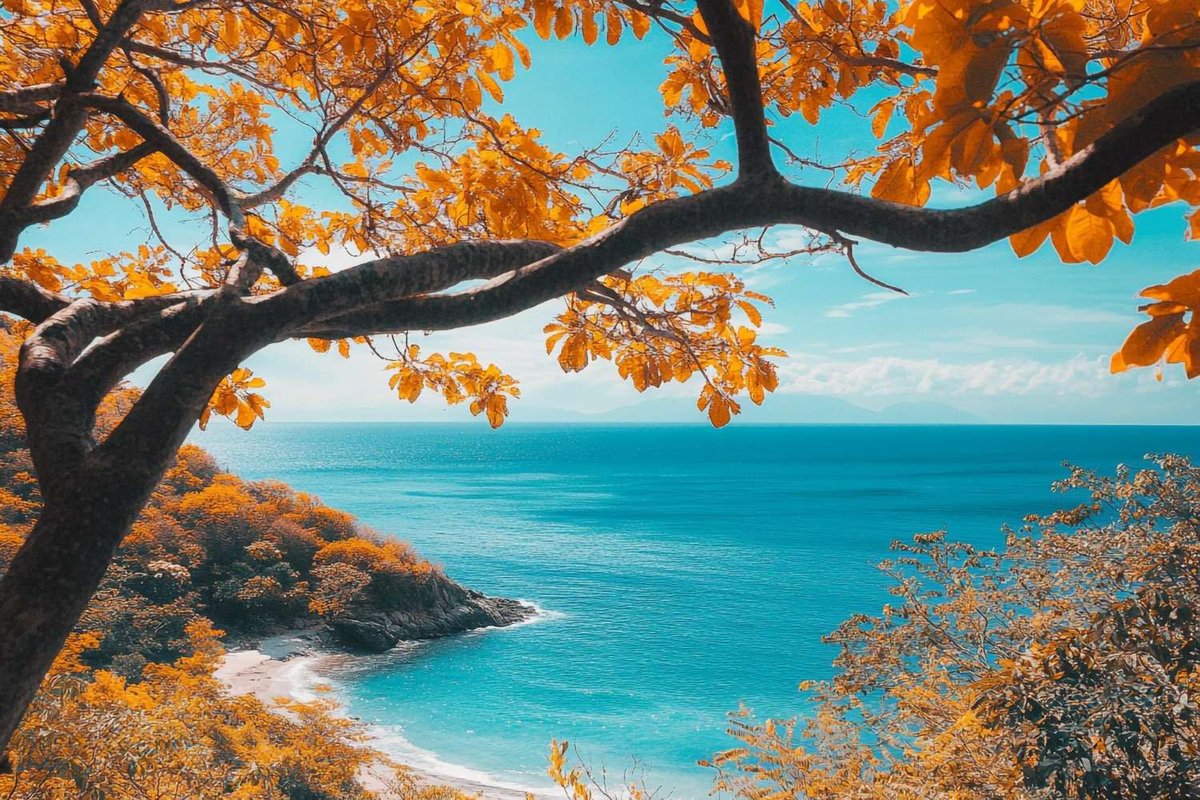
The main fact of autumn swimming is simple: water cools more slowly than air. The sea banks heat all summer and gives it up unhurriedly, which is why in September the air can already feel like autumn while the water still feels like summer.
That is the shoulder season. In September you are swimming in the same water as in August, minus the August crowds and at lower prices.
Below is how long that lasts, and where exactly.
📊 Water temperature by ten-day block
Figures first, then why they cannot be broken down resort by resort.
📅 How late people actually swim
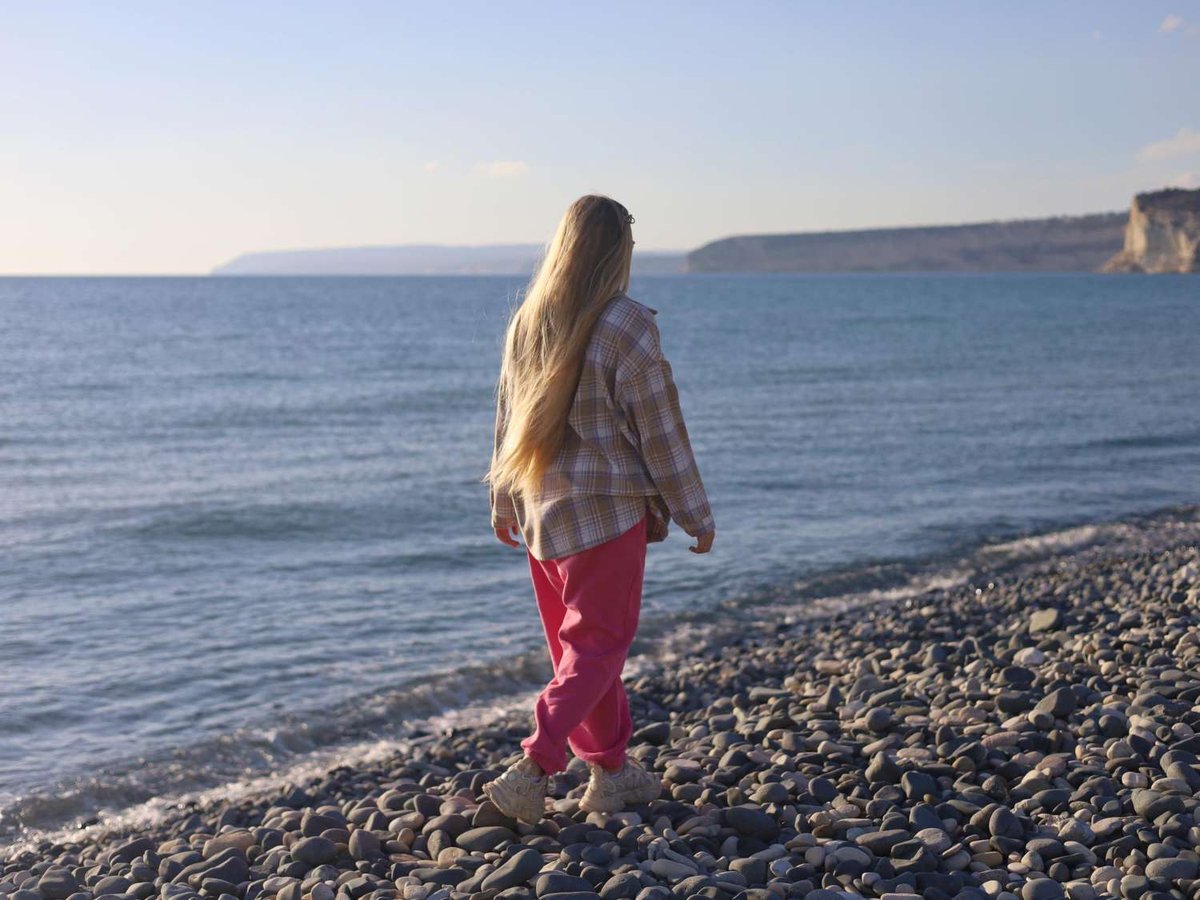
The practical answer, and probably why you opened this piece.
In numbers, through the end of September. The water stays above 22°C all month, and the beaches carry a normal crowd.
The first ten days of October, many still swim, but not for long. The water sits around 20°C, the air about the same, and the sea breeze makes that twenty feel considerably cooler. A ten-minute dip rather than a beach day.
The second ten days of October, only a few. Technically it is still possible; in practice you will have the beach to yourself.
After the twentieth of October the season is over. Storms move in, and the shore becomes a place for walking rather than swimming.
One caveat on Adjara. September and October are the two wettest months of the year in this region, around 250 mm each. The water can be warm while it rains for three days straight above it. Plan a fallback.
🏖️ What actually differs: getting into the water
This is where the real difference between resorts lies, and in autumn it matters more than the degrees.
🏰 Gonio and Kvariati: for clear water
Twenty minutes south of Batumi, almost at the Turkish border.
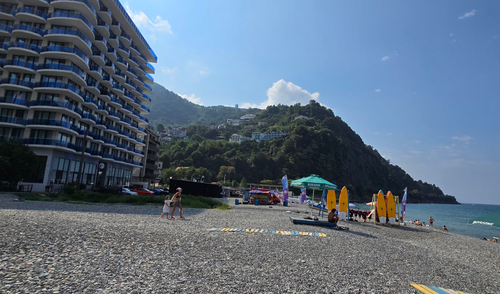
This is the clearest water on the Georgian coast, for two reasons. A pebble bottom does not stir up silt, and there are no large rivers nearby carrying in sediment. The difference from Batumi's water is visible to the naked eye.
What to know. The pebbles are large, so water shoes are not a luxury. The slope is steep, so watch children closely. And in autumn it runs colder than the sandy beaches, since there is no warmed shallow layer.
What is nearby. Gonio Fortress, a Roman-era stronghold, among the oldest on this coast. A good fallback for a cool or overcast day.
Sarpi lies further south still, right on the border. The beach is small, squeezed between cliffs, but the water there is clearer even than Kvariati's.
Accommodation is in where to stay in Gonio.
🧲 Ureki and Shekvetili: for warm water
About two hours north of Batumi, and a different world entirely.
Ureki is known for its magnetic sand: black, fine, high in magnetite. It is credited with health benefits and used in a wellness format, but with chronic conditions it is better to consult a doctor before starting a course.
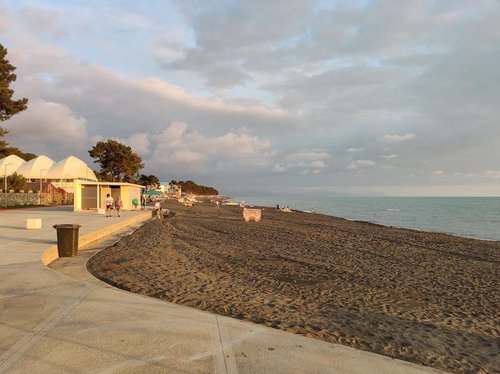
For our purposes something else matters more: the bottom here slopes down very gently. It takes a long walk to reach any depth, and the warmed shallow layer holds heat longer than on deeper beaches. By late September the difference is noticeable.
Shekvetili is next door, the same sand, but with pine forest coming right up to the beach. There is shade even at midday, and the air feels different.
Who it suits. Families with small children: a gentle slope, shallow, warm. Anyone travelling late in the season who wants to actually swim rather than wade in to the knees and out again.
What to know. There is less infrastructure than in Batumi, and the sand stirs up with any wave, clouding the water.
🌊 Kobuleti and Batumi
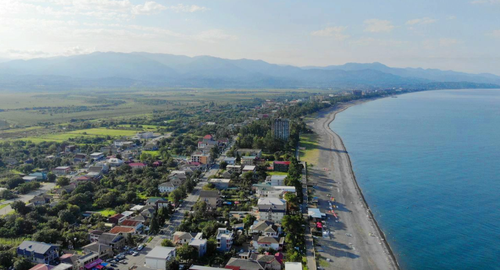
Kobuleti, a long, quiet beach half an hour north of Batumi. A sanatorium atmosphere, noticeably cheaper, and nearly empty in autumn. The town itself is covered in the town of Kobuleti.
Batumi on this list is more of a base than a beach destination: people come here for the city, and swimming is an extra. What there is to do here in autumn is covered separately in Batumi in September and Batumi in October.
Anaklia on the northern coast stands apart: a sandy bottom, unusual for the Black Sea, and almost no crowds. The infrastructure, though, is modest.
🧖 What to do instead once the sea closes
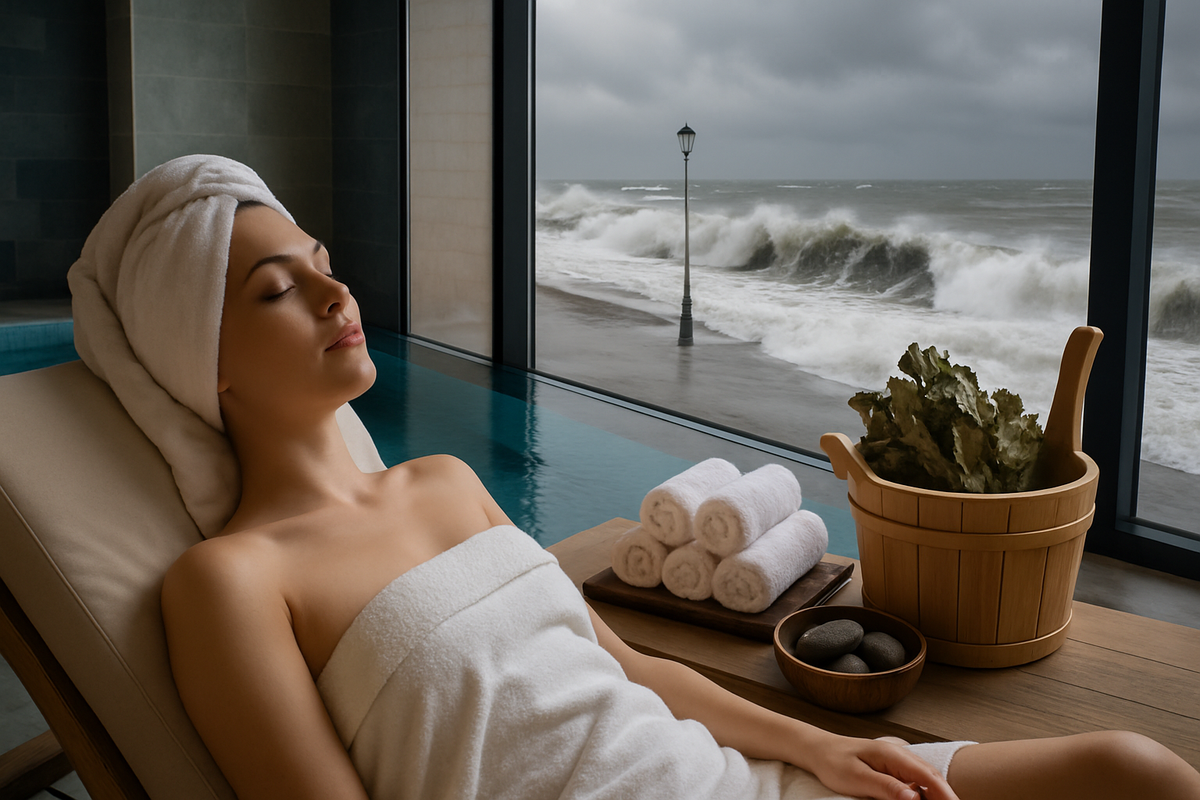
Once the season is over, the coast is not without a purpose. The programme just changes.
Heated indoor pools. The most direct answer: swimming without the weather in the way. The selection is in indoor pools in Batumi.
Hotels with pools, if you want the water right where you are staying. Options are in hotels with pools in Batumi.
Bathhouses and spas. In cool weather they finally make sense; in summer they are stifling. Collected in the best spas in Batumi and bathhouses and saunas.
And the storms. October waves against an empty promenade are exactly what some people travel for in the off season.
The best two weeks of autumn sea in Georgia run from the 11th to the 25th of September. The water is still around 24°C, the air no longer burns, school has started and the beaches have emptied out, and accommodation prices are already falling.
If you can only pick one window for the whole season, pick this one. The first ten days of September are barely distinguishable from August, crowds included, while October already needs a backup plan every single day.
🏨 Where to stay by the sea in autumn
Autumn on the coast is the low season, and the choice of accommodation widens while prices sit noticeably below August's.
A general selection covering the whole coast is in where to stay by the sea.
If you are travelling in October, look at places with a pool: once the sea closes, the pool stays open. See hotels with pools in Batumi.
For specific resorts there is a separate guide, where to stay in Gonio.
One note on Ureki and Shekvetili. Once the season ends, some guesthouses there close until spring, and the choice narrows noticeably by October. Batumi and Kobuleti see nothing of the kind; both run year-round.
Been swimming in Georgia in autumn? Leave a review on Madloba: tell us the dates, the beach, and how late swimming was actually possible.
Information is current as of September 2026. The water temperatures are long-term averages, not a reading for today. Check current figures on the day you travel.
❓ Frequently asked questions
💬 Around 25-26°C in the first ten days, 24-25°C mid-month and 22-23°C by the end. It is a full swimming month: the water stays summer-warm while the air has already lost the August heat.
💬 In the first ten days, yes: the water is around 20-21°C. But the air runs about the same, and the sea breeze cools it further, so it works out as a short dip rather than a beach day. By mid-month only a few swim, and after the 20th the season is over.
💬 In Ureki and Shekvetili. Not because the water is different, but because the bottom slopes down very gently: the warmed shallow layer holds heat longer than on the deep pebble beaches of the south.
💬 On the southern coast: Gonio, Kvariati and especially Sarpi. A pebble bottom does not stir up silt, and there are no large rivers nearby carrying in sediment. This is the only stretch of coast worth snorkelling.
💬 Ureki if swimming is the priority and you have children: shallow, warm, a gentle slope. Batumi if you want a city with restaurants, museums and a backup plan for rain. In September the difference in water between them is small; the difference in everything else is large.
💬 Barely. From Sarpi to Anaklia is about a hundred kilometres, one body of water, and the gap between resorts on the same day sits inside the margin of measurement error. What varies is not the water but how you get into it.
💬 September and October are the two wettest months of the year in Adjara, roughly equal at about 250 mm each. The water can be warm while it rains for three days straight above it, so a backup plan is essential.
💬 Heated indoor pools, hotels with their own pool, bathhouses and spas. All of these run year-round, and in cool weather a bathhouse finally makes sense, which is more than can be said for it in the summer heat.
💬 Batumi and Kobuleti year-round. In Ureki and Shekvetili, some guesthouses close until spring once the season ends, and the choice narrows noticeably by October. Check when booking.

0 comments
Log in to leave a comment