




Borjgalo Ethnographic Museum in Batumi
Have you ever wondered how people lived in the mountains of Adjara hundreds of years ago? What crafts were held in high esteem, what did the houses look like, and what did the locals eat?
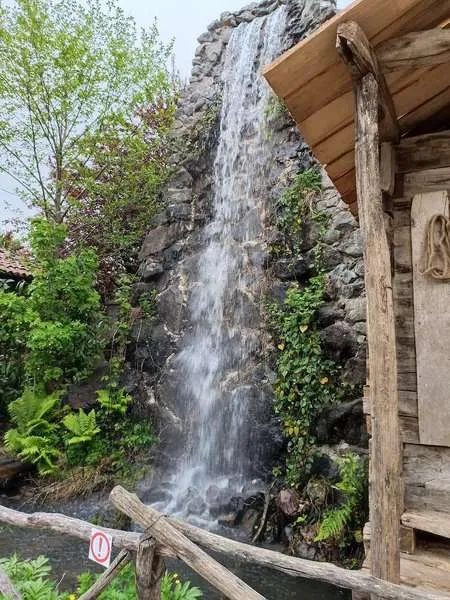
If so, then the Borjgalo Ethnographic Museum is a place where history comes to life. It is not just a museum in the usual sense, but a real open-air ethnographic space created with love and respect for the traditions of Georgia.
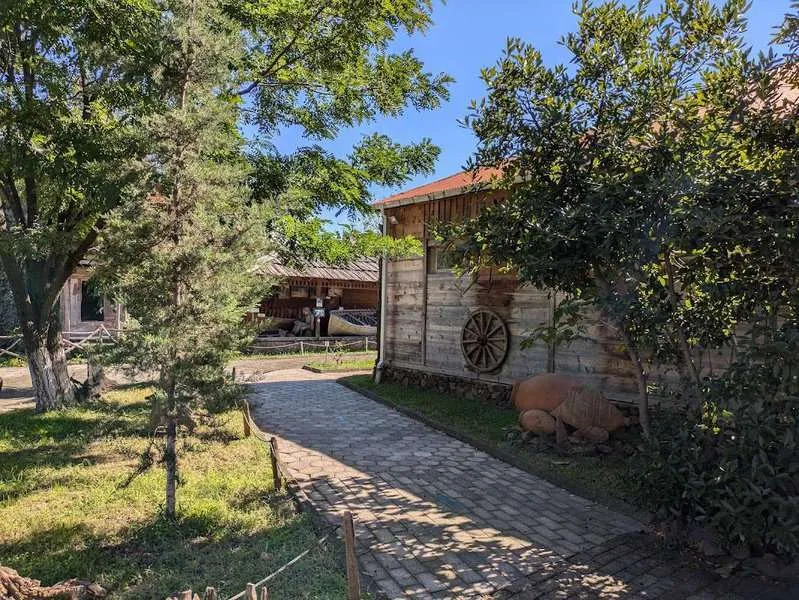
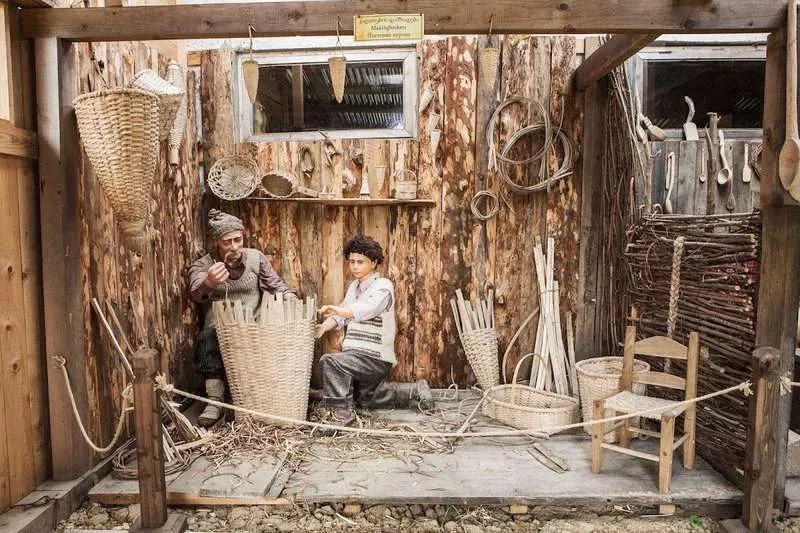
Situated just a few kilometres from the centre of Batumi, Borjgalo opens up a world of the past to visitors – cosy houses with stone fireplaces, workshops of folk crafts and figures of people frozen in their daily routines. Here you can see traditional houses, forges, wineries and even a church – everything as it was centuries ago. But what makes this museum special?
Why should you include it in your Georgia itinerary? Let's find out!
History of the creation of the museum
A museum created by one man
Interestingly, this museum is not a state project, but a private initiative. It was founded by the famous Georgian wood carver Kemal Turmanidze. He dedicated more than 30 years to creating this unique space, collecting antiques, restoring traditional houses and creating wooden sculptures that convey the spirit of the past.
Kemal started his business in his youth, when he worked as a carver and wood craftsman. His talent was recognized far beyond Adjara, and later he decided to create an environment where people could see how their ancestors lived. This is how the idea of the museum was born.
"I wanted our traditions not to be forgotten. So that young people could see how their great-grandfathers lived, what kind of houses they had, what crafts were held in high esteem. This is not just a museum - it is history frozen in time," Turmanidze said.
Today, Borjgalo is one of the most interesting ethnographic museums in Georgia, attracting both tourists and local residents.
Museum exhibition: what can you see?
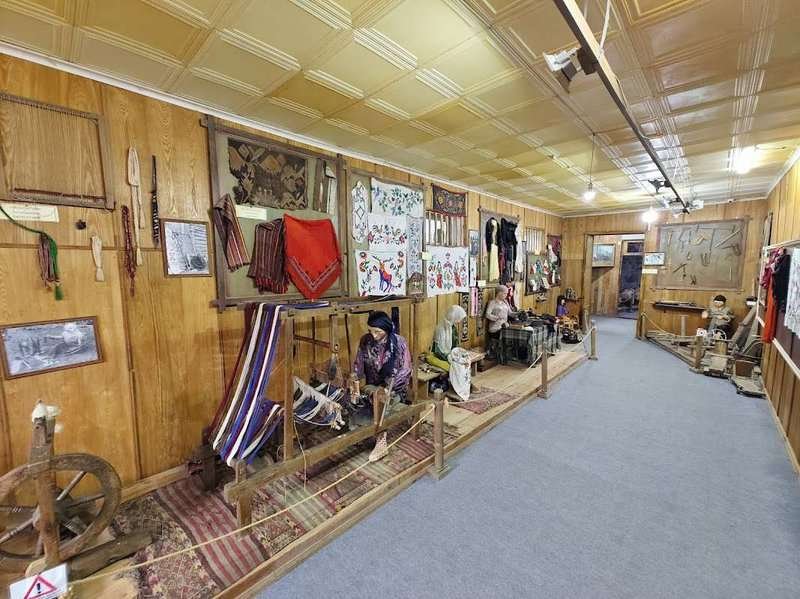
The museum presents more than 30 objects, each of which tells about different aspects of life in Adjara.
👉 Traditional houses
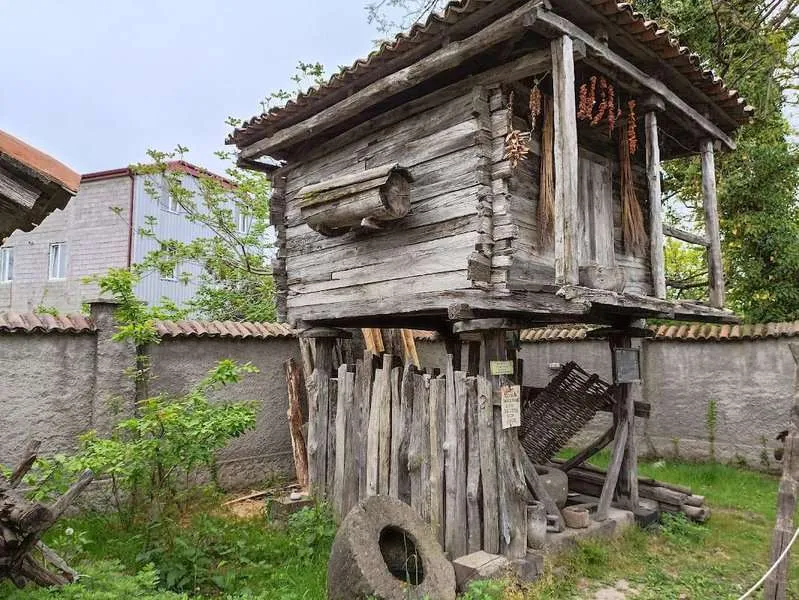
Here you can see typical houses where Georgians lived 100-200 years ago. They differ depending on the area:
- Mountain houses - built of wood, with stone stoves and thick walls that protected from the cold.
- Coastal houses - with large windows and wooden balconies.
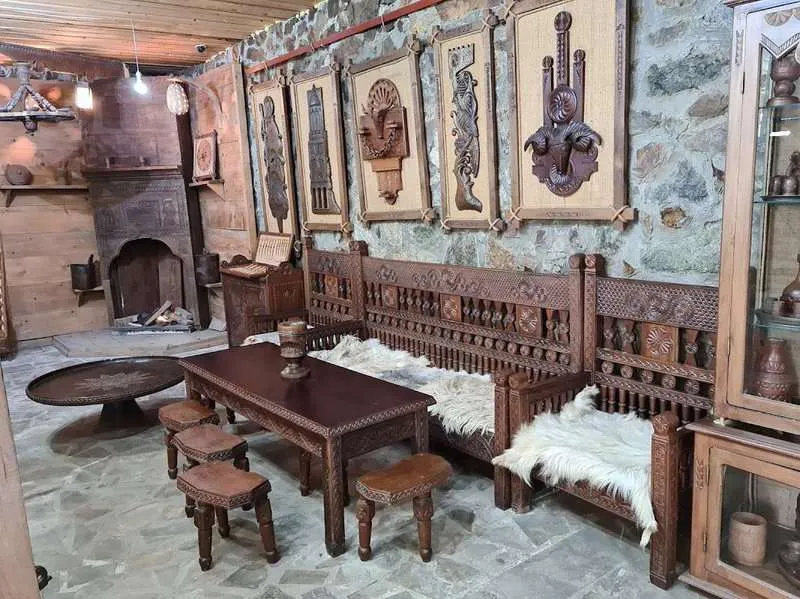
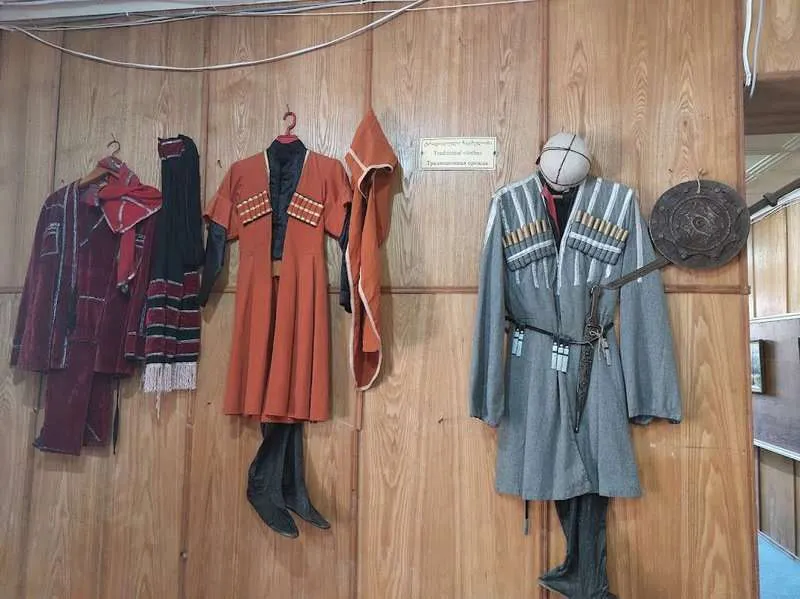
Each house has authentic furniture, dishes, carpets, chests, old photographs and traditional clothing.
👉Forge and pottery workshop
💡 Did you know that blacksmiths in Georgia were considered not just craftsmen, but people who “tamed fire”?
In the museum's forge, you can see ancient tools that were used by artisans several centuries ago. The process of forging and making household items is also demonstrated here.
Nearby is a pottery workshop, where you can try yourself as a master and mold a traditional Georgian jug - kvevri.
👉Church and winery
Religion has always played an important role in the lives of Georgians. The museum has a small wooden church built on the model of old mountain temples.
And next to it is a traditional winery, where you can learn how wine was made according to ancient recipes.
Folk crafts and traditions
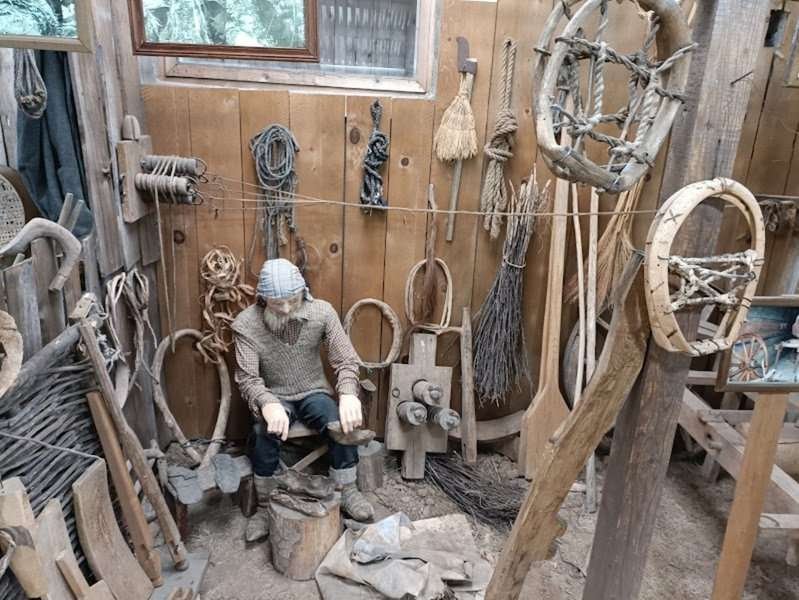
Borjgalo presents many ancient professions that Georgia has been famous for since ancient times. Here you can not only see the works of masters, but also learn how they are created, and in some cases even try yourself as a craftsman.
✅ Potters - make jugs, plates, bowls and traditional qvevri (large vessels for storing wine) from clay. The dishes are decorated with Georgian ornaments, and some products are covered with a special glaze, as they did in the old days.
✅ Blacksmiths — work with metal, forge knives, daggers, horseshoes and even miniature copies of ancient Georgian swords. In the forge, you can see an anvil, bellows for blowing fire and hammers, which blacksmiths used to manually process metal.
✅ Weavers - create woolen carpets, bedspreads and traditional clothing. Here you can see ancient looms on which multi-colored patterned fabrics were woven by hand. Interestingly, Georgian carpets have always had a sacred meaning - many patterns were used as amulets.
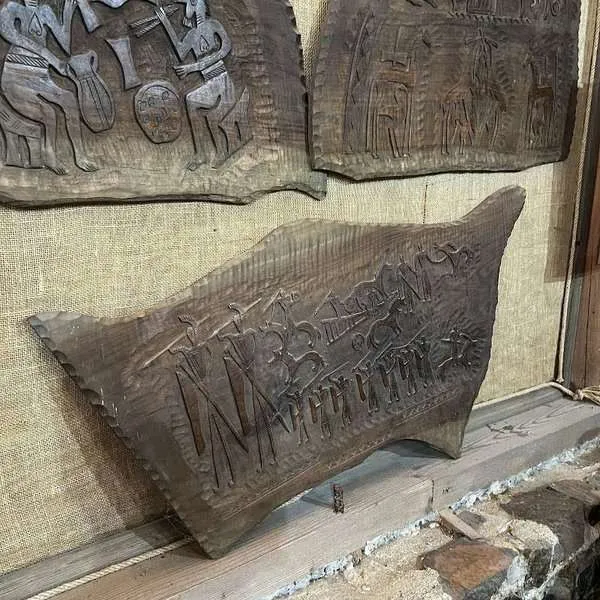
✅ Wood carvers - create decorated wooden chests, furniture, doors, balcony railings and sculptures. The museum displays a collection of wooden doors with carved ornaments, which Georgians have used to decorate their homes for centuries.
✅ Potters and ceramics masters - they make not only dishes, but also decorative items: small sculptures, masks and tiles with Georgian patterns. Of particular interest are miniature copies of traditional Georgian houses made from baked clay.
✅ Jewelers - create jewelry in a traditional style, using ancient techniques of granulation and filigree (making the finest patterns from silver wire). In the museum, you can see copies of ancient Georgian jewelry found during archaeological excavations.
✅ Leather craftsmen - make traditional belts, bags, wallets and dagger sheaths. Many items are decorated with embossing, embroidery and metal inserts.
All exhibits are authentic or recreated using ancient technologies, which makes them valuable not only for studying culture, but also for preserving unique Georgian crafts that are passed down from generation to generation.
Practical information
📍 Address: M. Sharashidze str., 14, Batumi, Georgia
☎️ Phone: +995 514 33 01 01
⏳ Working hours: daily from 10:00 to 19:00
💰 Ticket price:
- Adults — 15 GEL
- Children (7–14 years) — 5 GEL
- Children under 7 — free
♿ Access: the museum is equipped for people with disabilities
📌 How to get there?
- By bus #12
- By taxi (about 15 minutes drive from the center of Batumi)
The Borjgalo Ethnographic Museum is a place where history comes to life. Here you can not only see the past, but also touch it: stand by the hearth of an old house, hold a clay jug in your hands or hear the ringing of a hammer in a forge. A visit to the museum will be a highlight of your trip to Batumi!
💬 Did you know about this museum? Share your impressions!
❓ FAQ
📸 Yes, filming is allowed throughout the museum. You can take photos and videos, but without using flash indoors.
🎤 Yes, excursions are conducted in Georgian, Russian and English. It is recommended to check the excursion schedule in advance.
🎁 Yes, the museum has a shop with traditional Georgian products: carved wooden figurines, clay jugs, carpets and national clothing.
⏳ Average visiting time is from 30 minutes to 1.5 hours, depending on the depth of the excursion and the interest of visitors.
🙌 In most areas of the museum, exhibits can be viewed up close, but touching them is only permitted in specially designated areas, such as the pottery or blacksmith workshop.
🚗 Yes, there is a convenient free parking lot near the museum. It is also equipped with places for people with disabilities.
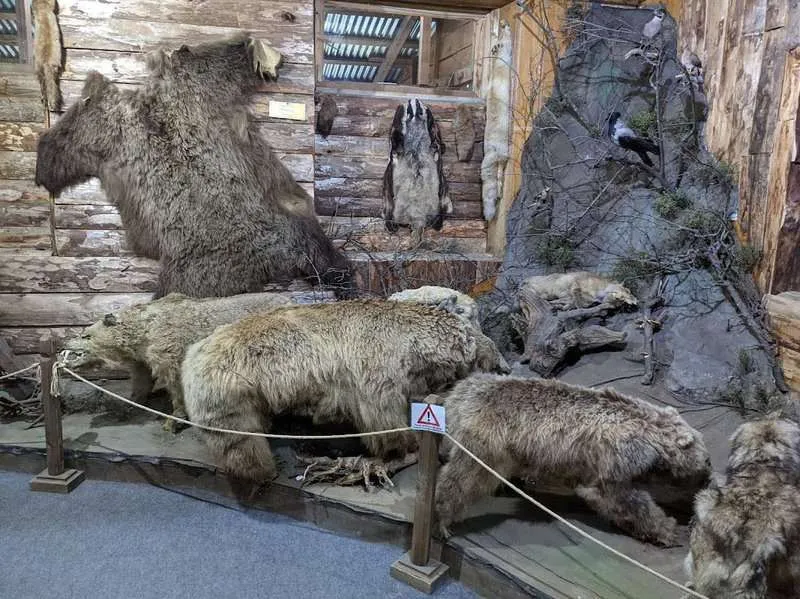
👶 Yes, the museum is suitable for families with children. There are convenient paths, and children will be interested in seeing figures of people, animals and old household items.
🌧️ Yes, the museum is open in any weather, but since the exhibition is partially outdoors, it is worth taking an umbrella or raincoat with you.
🍽️ There is no cafe in the museum itself, but there are small establishments next to it where you can try Adjarian khachapuri, mchadi, suluguni cheese and homemade wine.
🎟️ No, tickets can be purchased on site, but for organized groups and excursions it is better to book in advance by calling the museum.

23 comments
Log in to leave a comment
Посещение музея "Борджгало" — это, без сомнения, отличный способ погрузиться в историю Грузии, увидеть быт предков и почувствовать атмосферу того времени. Мой муж и дети тоже любят исследовать такие места, и я уверена, что мы обязательно посетим этот музей, чтобы узнать больше о грузинской культуре и традициях. Это место не только для любителей истории, но и для всех, кто интересуется ремеслами и искусством, а также хочет сохранить в памяти богатое наследие народа.