




Batumi Archaeological Museum: History and Collections
In ancient Greek, this region was called Colchis — the same Colchis that Jason and the Argonauts crossed the whole Mediterranean to reach. The legend of the Golden Fleece is not pure invention: it reflects the real gold that was panned and cast in these mountains for thousands of years. Some of that gold is now in the display cases of the Batumi Archaeological Museum on Chavchavadze Street.
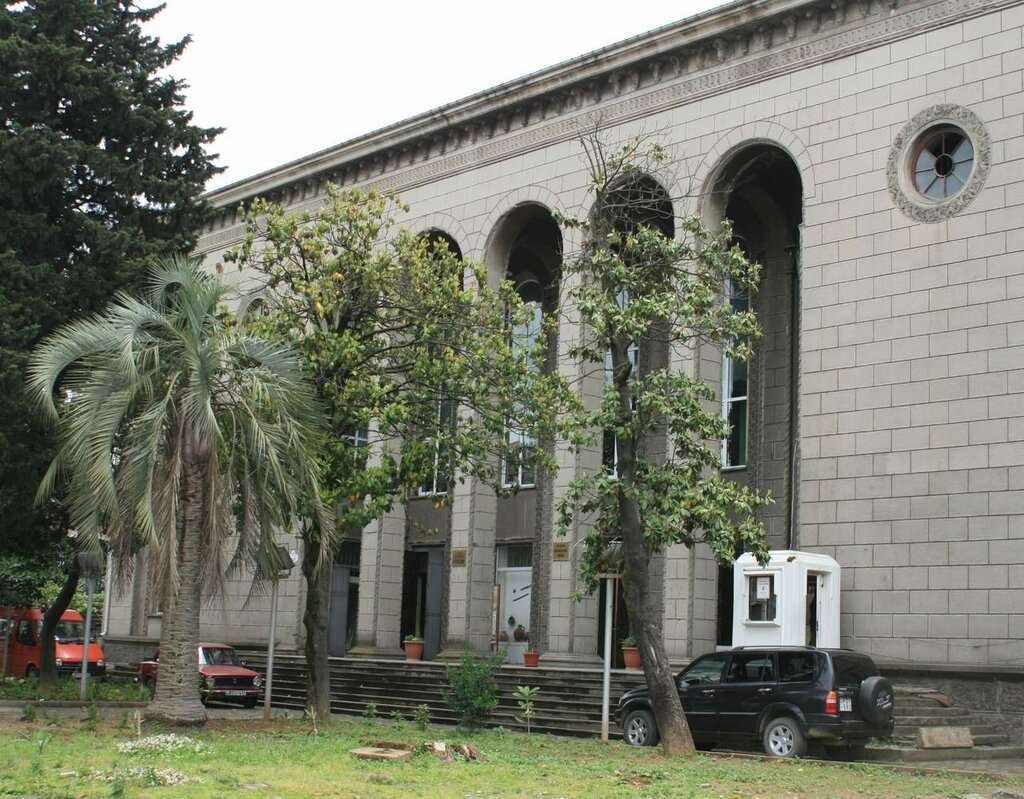
The museum is one of the most significant in the region and one of the oldest in Georgia: 22,800 artefacts, a timeline from the Stone Age to the medieval period, a collection assembled through decades of excavations across Adjara. One essential note before planning a visit: since September 2024 the museum has been closed for reconstruction. No reopening date has been announced — check the current status by phone or on the official website before you go.
🏛️ About the Museum
The museum is named after Amiran Kakhidze, the Georgian archaeologist who devoted his career to Adjarian archaeology and in whose honour the institution is named. The building itself, a 1950s construction, is an example of Soviet-era Batumi architecture and forms part of the historical context of the street.
Archaeological excavations in Adjara began in the 1890s, during the Russian Empire period — nearly a century before the museum opened to the public. The collection was assembled over generations, and in 1994, after Georgia gained independence, it was opened for general admission. A first major renovation followed in 2014, during which a unique jewellery collection was added to the holdings. The museum accepted visitors until September 2024, when the current, second renovation in a decade began.
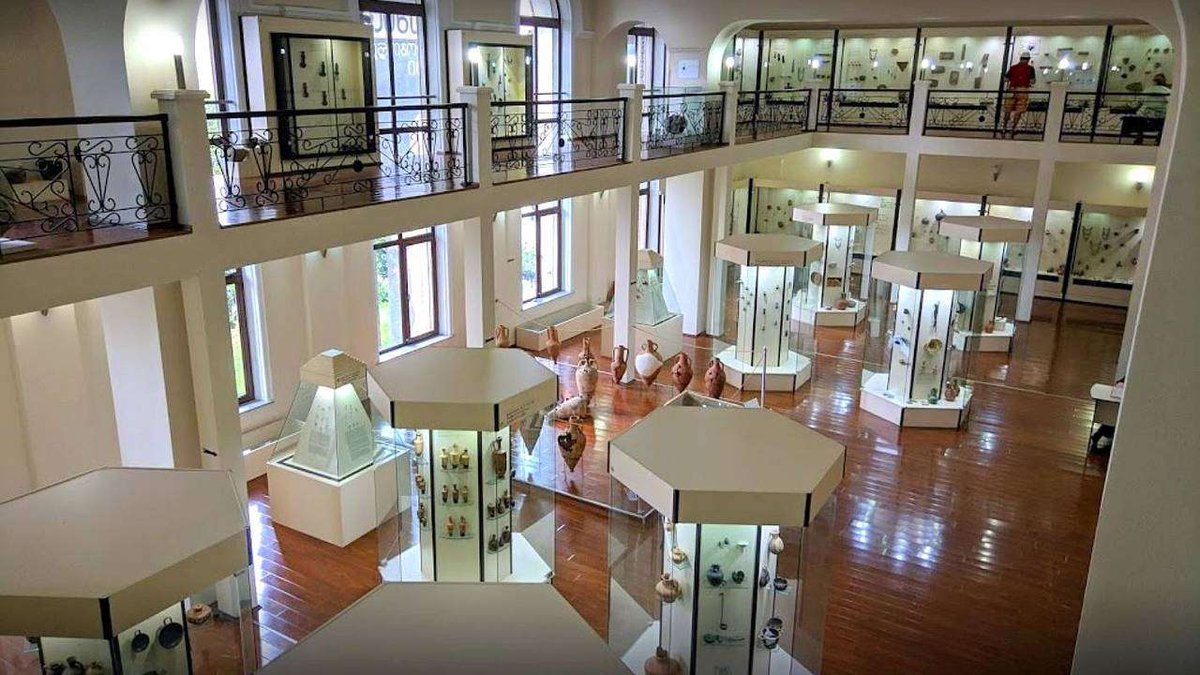
🗿 Second Floor: from the Stone Age to Colchis
The historically logical starting point is the upper floor — here is where everything begins. The earliest objects are stone tools discovered in the Adjarian mountains near the Beshumi resort. The age of some of them is estimated at 300,000–400,000 years. This is the Acheulean period — a time when Homo sapiens did not yet exist, and human ancestors were just beginning to shape stone.
The next significant moment in the timeline is approximately 10,000 years ago, when the territory of present-day Adjara witnessed the revolutionary transition from hunting and gathering to agriculture. Artefacts from this period offer a rare material glimpse of one of the most consequential turning points in human history.
The centrepiece of the second floor is the Bronze Age and Early Iron Age collection (XV–VII centuries BC). This is where the material basis for the Golden Fleece myth is on display: objects made by Colchian craftspeople — jewellery, weapons, ritual objects. The Chorokhi river basin was in antiquity one of the most important metallurgical centres in the Near East. The Greek myth of the Argonauts is a literary reflection of the very real gold of these mountains.
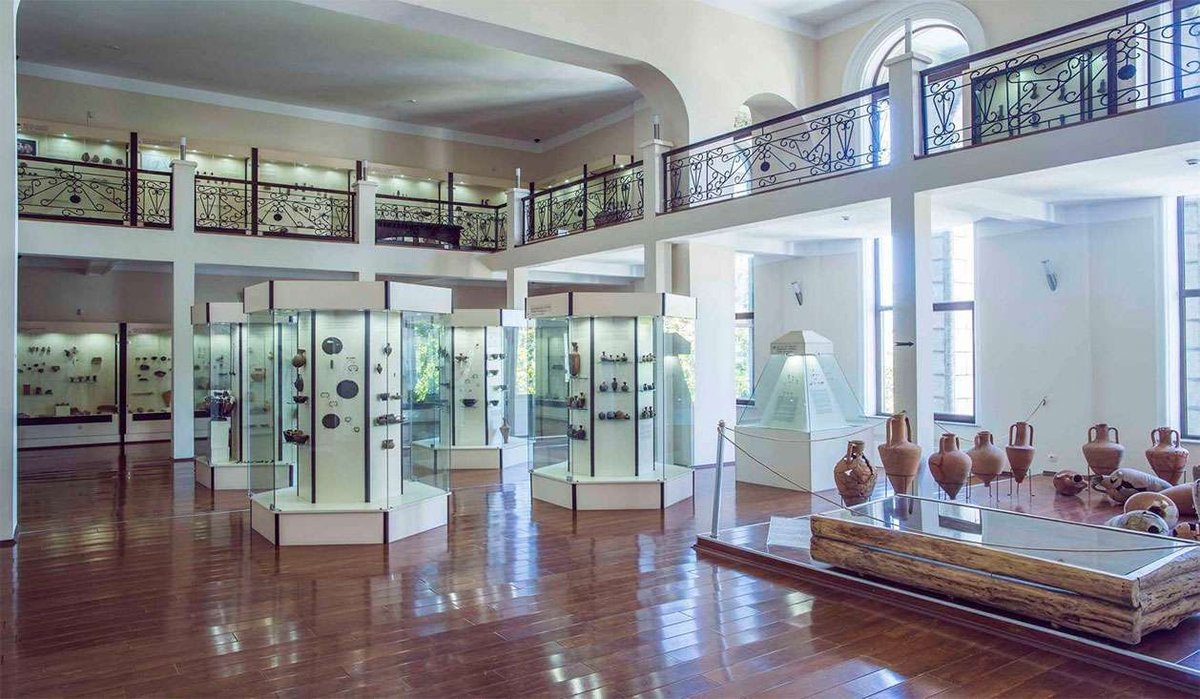
🏺 First Floor: Antiquity and the Middle Ages
The lower floor is devoted to finds from the periods of Greek colonisation, Hellenism, Rome and the early Middle Ages. The main sources are three key archaeological sites of the region:
Gonio-Apsaros — a Roman fortress a few kilometres south of Batumi. Here was found the Gonio Hoard: gold objects, coins and high-status household items. This is the most famous single cache in the museum's collection.
Pichvnari — a Greek burial ground of the V–IV centuries BC, one of the richest find sites in Georgia: imported Attic ceramics, terracotta figurines, jewellery.
Tsikhisdziri — a fortified late-antique and early medieval site, providing material continuity between antiquity and the Middle Ages.
The numismatic collection is a separate point of interest: coins from Greek city-states, Roman denarii and local minting. Together they form a trade map of the region across a thousand years.
🐬 The Dolphin-Bone Flute
This exhibit attracts more questions than any other in the museum. What is it?
A flute — a wind instrument made from the bone of a dolphin, dating to the era of the Argonauts (the Colchian Bronze Age). Dolphins were abundant in the Black Sea and played an important role in the life and ritual culture of coastal peoples. The precise dating and the circumstances of the discovery are held in the museum's records — best confirmed with museum staff during a visit. The object's very existence says a great deal: this was a culture in which the dolphin was not merely a marine animal but a source of music.
🗺️ What to See Nearby
The museum and the Gonio-Apsaros fortress are directly linked: the fortress was the source of some of the museum's finest finds. Visiting both — the objects in the cases and the place where they were found, 15 km apart — gives the history two distinct dimensions.
Among Batumi's other museums: the Adjara State Museum named after Akhvlediani (founded 1908) for regional history, and the Fine Arts Museum for Georgian art including Pirosmani, Kakabadze and works by Picasso, Dalí and Matisse.
Over to you
Have you visited the Batumi Archaeological Museum? Tell us in the comments what stayed with you most — and if you saw the dolphin-bone flute, we would especially love to hear 🏛️
❓ Frequently Asked Questions
The museum has been closed for reconstruction since September 2024. No official reopening date has been announced. Check the current status at +995 422 22 36 94 or ajaramuseums.ge before visiting.
Before the current closure: adult 6 GEL, student 3 GEL, children under 16 one GEL. Prices after reopening should be confirmed separately.
A wind instrument made from a dolphin bone, dating to the Colchian Bronze Age (the era of the Argonauts). It is one of the rarest artefacts in the collection. Dolphins were important in the culture and ritual life of Black Sea coastal peoples.
Gold objects and household items found during excavations of the Roman Gonio-Apsaros fortress near Batumi. One of the principal jewellery and numismatic treasures in the museum.
Adjara is ancient Colchis — the land the Argonauts sailed to for the Golden Fleece. The museum holds real Colchian gold jewellery from the XV–VII centuries BC, as well as axes, pottery and other objects from that period.
Address: 77 Ilia Chavchavadze St. The nearest bus stop — "Archaeological Museum" — is 46 m from the entrance.
The museum works in Georgian, Russian and English. Guide availability on a specific date is best confirmed by phone or on the website in advance.
Yes, it is listed as child-friendly. The collection features tangible objects — tools, jewellery, coins — that work well for younger visitors without specialist knowledge.
Information is accurate as of 5 June 2026. The museum has been closed for reconstruction since September 2024 — verify the current status before visiting.

37 comments
Log in to leave a comment
Сколько же древних вещей, с абсолютно разных эпох, которые, будто пронесшиеся на машине времени прямо в наш век, предстали перед глазами посетителей.
Даже читать о том, что в мире сохранились такие артефакты, свидетельства наших далёких предков, дух захватывает!
.Разнообразные артефакты из разных эпох позволяют узнать об истории древних народов и их уникальных культурных обычаях. Начиная от каменного века и до позднего средневековья, коллекции музея представляют широкий спектр экспонатов, каждый из которых является уникальным свидетельством того времени.При посещении этого места вы будете поражены множеством интересных артефактов, каждый из которых рассказывает свою удивительную историю.
От памятников каменного века до артефактов позднего средневековья, музей богат коллекциями материальной культуры и предлагает уникальный взгляд на жизнь и обычаи древних народов, включая колхидские топоры, железный шлак, гравированную посуду, древние свирели и многое другое. Посетите это место и погрузитесь в богатство культурного наследия этих земель!
Здесь собраны артефакты датирующимся бронзовым веком и до средневековья.
В залах музея выставлены уникальные артефакты средневековья, римские статуи,
Греческие перстни, посуды из разных материалов глины из золота. Они относятся
разным эпохам развития человечества ,иконы кресты и так далее.
В других источниках читала что в комплекс музея входит реставрационная
лаборатория где специалисты занимаются восстановлением исторических артефактов.
На территорий музея работает керамическая мастерская. Всегда мечтала работать
в керамической мастерской, и делать из глины посуды. Это такая трудоёмкая работа, которая
требует аккуратности и точности. Удивительно как эти кувшины и посуды из керамики
сохранились до наших времён.