


💻 IT Courses and Coding Schools in Tbilisi
Georgia has free programs from banks and the state, paid schools and bootcamps for adults, and about a dozen coding schools for kids. The key is knowing what language you're ready to study in and what profession you want to end up with.
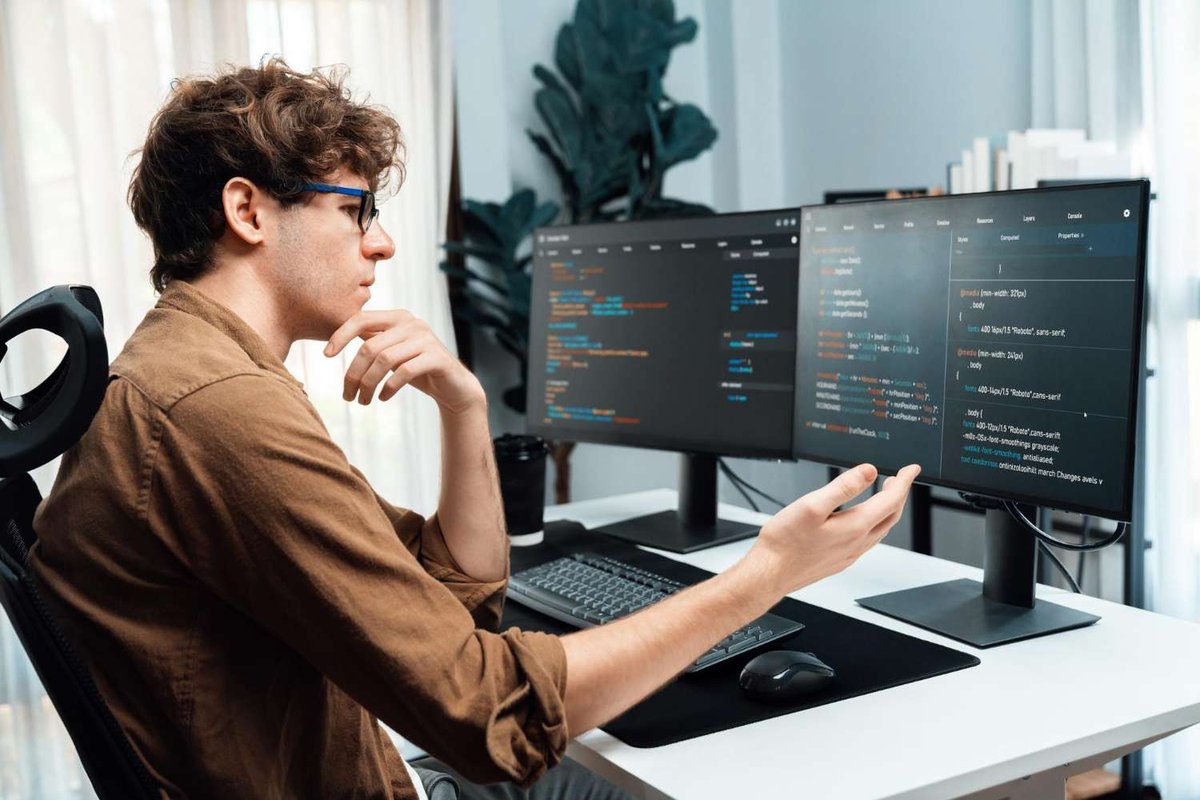
Thinking about switching to IT? Or does your kid spend hours in games, and you’d like them to build games, not just play them? Maybe you’ve already moved to Tbilisi and are looking for a way to make good use of the fall. Good news: IT education in Georgia is fairly well developed, and some programs are completely free. Banks, the government and international funds invest in training tech people because there’s a shortage of specialists. There’s a catch, of course: many free courses are taught in Georgian. Let’s work out where and what you can study, what it costs and how not to waste half a year.
🆓 Free IT programs in Tbilisi
Let’s start with the best part. If you speak Georgian or are ready to study in English, you have a chance to get a profession without paying a single lari.

TBC IT Academy. The best-known free program in Georgia. It is run by TBC bank together with its own teams. As of May 2026, admissions were open for two tracks: GetData (data processing and analysis) and Quality Engineering & Test Automation. More than 300 people have completed the testing course, and almost half of the bank’s QA team are academy graduates. Selection is serious: an application, a test and an interview, with about 30 people taken per course. On the plus side, it’s online, and you can apply from any region.
TBC Campus. A modular online program for young people aged 18 to 24: data analytics, fundamentals of tech project management, IT business analysis and SQL. Also completely free. In spring 2026 registration was open until April 1, so keep an eye out for the next intake.

TBC Tech School. This one is for students in grades 9 to 12: web development, UI/UX design, mobile apps and graphic design. Online and free. If your teenager goes to a Georgian school, it’s a great way to try a profession before choosing a university.
State programs. The Georgian Innovation and Technology Agency (GITA) has collected IT training on a single portal: doit.gov.ge. Over the years it has hosted state-funded programs for Georgian citizens over 16, EU-backed projects and CODE-IT coding courses for school students in technoparks. Which programs are open right now is best checked on the portal itself.
A free start. Bitcamp offers a free two-week introductory challenge: you write code for a virtual robot and finish by building your own game. The materials are mostly in English. It’s a good way to find out whether you like programming at all before paying for a course.
🏫 Paid schools and bootcamps for adults
If the free programs don’t fit your age, language or timing, paid schools remain. Their advantage is simple: no competition to get through, and you can usually choose the language and format. Some of these centers are in our catalog of educational centers in Tbilisi.

Skillwill. An online university with 3-month and 7-month programs: programming from scratch, cybersecurity, graphic design, digital marketing. The school focuses on graduate employment.
10x. A Tbilisi center with courses in programming, design and marketing. Classes are led by practicing mentors, with a focus on the skills employers need today.
Unilab. A learning center that teaches front-end development, Python, interface design, graphic design and digital project management. There is a cyber lab for hands-on practice and a weekend school run with Ilia State University. You can find Unilab itself in the catalog of universities and colleges in Tbilisi.
Cisco Academy. Part of Cisco’s international networking academy: computer networks, cybersecurity and basic IT skills. An option for those drawn more to hardware and networks than to code.

IT Step. An international computer academy with a branch in Georgia, best known for its kids’ and teens’ courses.
Computer courses for all ages. For example, IT Space on Akaki Tsereteli Avenue teaches both computer basics and programming from beginner to advanced. Explanations are in Russian, English and Georgian.
Online schools in Russian. If you prefer to study in your native language, many relocants in Tbilisi choose online schools: for example, Skillbox operates in Georgia with courses from 2 to 15 months and installment payments. Up-Step runs online C# and Unity game development courses for adults and kids, with a teacher in a virtual classroom.
🧒 Programming for kids
For kids the choice is arguably even wider than for adults. Tbilisi schools teach programming through games, cartoons and robots, so children barely notice they’re learning.

A small tip from parents who have been through this: for the little ones (ages 6 to 9), interest matters more than the programming language. If after a trial lesson your child tells you what they made, you’ve picked the right school. Teenagers should already look at real projects: their own game, website or robot that they can show off.
🧩 Which direction should a beginner pick
The most common question: “Where do I start if I know nothing at all?” Here’s a short cheat sheet.
💰 How much IT courses cost in Tbilisi

Most schools don’t publish open price lists: the price is named after a consultation and depends on course length and format. So use this scale as a guide.
- Free. TBC programs, state programs on doit.gov.ge (if you meet the conditions), introductory courses such as Bitcamp’s starter challenge, and free trial lessons at kids’ schools.
- Inexpensive. Online group lessons with a teacher and kids’ clubs. For example, an online C# course in a small group costs from 130 GEL a month for 4 lessons, while an extended programming and game development course is about 250 GEL a month for 8 lessons (data as of October 2026).
- Mid-range. Multi-month professions at online schools and bootcamps, with a mentor and portfolio projects. You can often pay in installments.
- Premium. One-on-one mentoring and intensives with guaranteed help in finding a job.
Before paying, be sure to ask: what the price includes, whether installments are available, what happens if you miss lessons and whether you get a certificate at the end.
🗣 What language to study in

For relocants this is probably the main question. Free programs from banks and the state are usually aimed at a Georgian-speaking audience. If you don’t speak Georgian, you have three paths:
- Russian-speaking schools. Kids’ schools such as KubRubik and Up-Step, many computer centers and online schools.
- English. Many materials and international courses are in English, and that’s doubly useful: in IT you can’t do without English anyway. If you feel your language is slipping, take a look at our guide to English courses in Batumi: the tips on choosing a school work for Tbilisi too.
- Georgian. A long but rewarding investment: it opens access to free programs and the local job market. We explain where to start in the article Georgian language courses in Tbilisi, Batumi and online.
✅ How to choose an IT school: a checklist
- Will I have a portfolio?A good course ends not with a certificate but with several real projects you can show an employer.
- Who teaches?Ask where the teacher works now. A practicing developer teaches what the market needs, not what was relevant five years ago.
- Is there a trial lesson or an introductory module?Before paying for half a year, make sure you actually enjoy writing code.
- Do they help with finding a job?Internships, career consulting, connections with companies. Check any "100% employment" promise against graduate reviews.
- How much time a week do I need?Be realistic about your energy: most adults need 10 to 15 hours a week to keep up.
- What do graduates say?Find two or three people who finished the course and ask where they work now.

And once you’ve finished a course, our article how to get a job in Georgia will come in handy. If you’re considering full higher education in IT, see our guide on how to get into a university in Georgia.
Start with something free. Take an introductory course or a trial lesson and spend a couple of weeks on the exercises. If you got hooked and don't want to close the laptop in the evening, invest in a paid program with confidence. If not, you've lost two weeks, not half a year's salary. And follow the TBC IT Academy and doit.gov.ge pages: free intakes open and close quickly.
Studied programming in Tbilisi or take your child to an IT school? Leave a review on Madloba: tell us how the lessons went, whether there was enough practice and whether the course helped with finding a job. For those still choosing, your honest experience will be very useful.
Last updated: October 2026. Conditions of free programs, intake dates and prices change. Before enrolling, confirm everything on the programs’ official pages and with the schools themselves.

❓ IT courses in Tbilisi: FAQ
💬 Yes. TBC IT Academy, TBC Campus and TBC Tech School teach for free, online and across Georgia. State IT programs are collected on the portal doit.gov.ge. For a start there are also free introductory courses, such as Bitcamp’s two-week challenge.
💬 It depends on the program. State courses on doit.gov.ge are aimed at Georgian citizens, and TBC programs are usually taught in Georgian. Check the conditions for foreigners when you apply.
💬 Russian is used at many kids’ schools (for example KubRubik and Up-Step), at computer centers like IT Space, and at online schools that operate in Georgia, such as Skillbox.
💬 From free programs to multi-month professions with installment payments. Online group lessons with a teacher start at about 130 GEL a month. Data as of October 2026.
💬 Usually from 6 or 7. Younger kids are taught through Scratch, games and robots, and teenagers through Python, C++ and Unity.
💬 KubRubik, RoboCode, IT Step, RoboTesla, Robbo Club, Happy Edu and Up-Step. They differ by age and focus, from robotics to game development.
💬 Most often web development or testing (QA). They offer a quick way in, plenty of courses and a clear path to a first job. If you like numbers, data analytics may suit you.
💬 Most courses last 3 to 8 months. It usually takes a few more months to build a portfolio and find a first job.
💬 It isn’t required to start, but it’s strongly recommended: documentation, tools and many courses are in English. It’s worth improving it alongside.
💬 Many promise help: internships, career consulting, connections with companies. For example, some TBC IT Academy graduates work at the bank itself. Always check such promises against graduate reviews.

0 comments
Log in to leave a comment