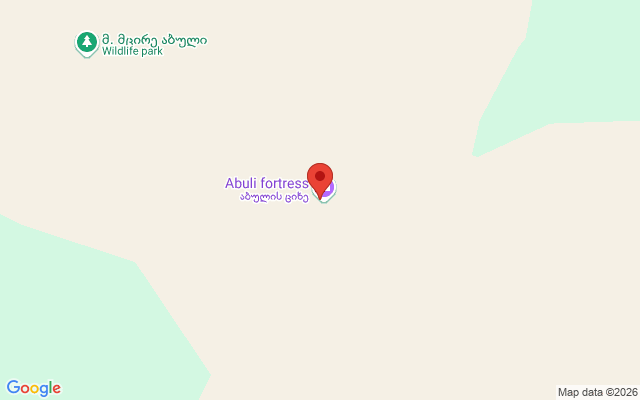




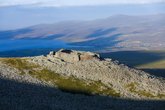

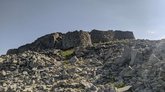

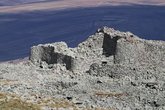

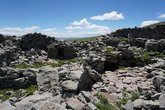

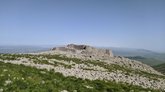

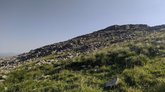

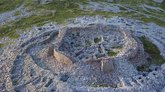

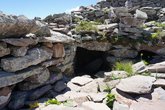

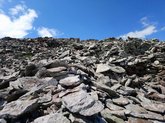

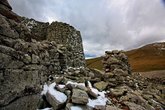

The fortress stands in the mountains of Samtskhe-Javakheti, near the village of Gandzani, Ninotsminda Municipality, on Patara (Small) Abuli mountain, at an elevation of 2,670 metres, among the fortresses, ruins and castles of the region. It's a cyclopean fort built in the 2nd-1st millennium BC using dry stone masonry, with no mortar.
For more on the fortress's history, see the article on Abuli Fortress.
In construction technique, the fortress resembles Shaori Fortress: open corridors and paths characteristic of both structures. The walls reach up to 5 metres in height and, in places, up to 3 metres in width. Inside, remnants of up to 40 dwellings survive, attached to the walls and supports, some of them two or three storeys. The builders made use of the terrain's features, creating hidden spots with narrow, hard-to-spot passages.
Opinions on the route's difficulty vary. Some reviews describe the climb as physically demanding, with an uneven trail, while others note the walk is short and doesn't require serious fitness: the difference likely depends on the starting point chosen. According to one review, some historical context is lost without a guide, as there are no information plaques on site, so it's worth reading up on the fortress's history beforehand.