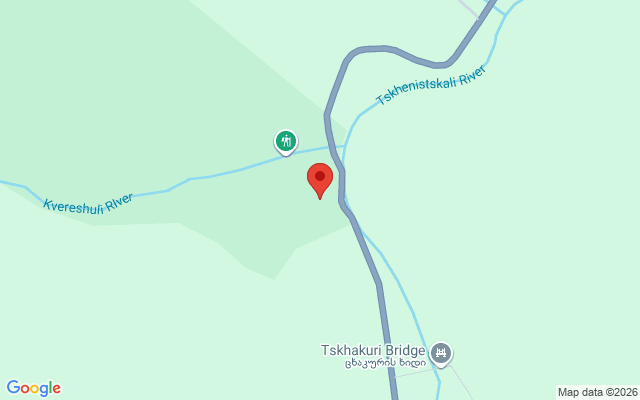




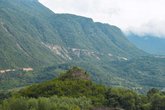



Zubi Fortress stands in the village of the same name, in Lechkhumi, among the fortresses and ruins of the region. The fortress occupies a projecting cape in the middle of a valley surrounded by mountains: the east side was the only one requiring fortification, as the river naturally protects the other three.
According to the ancient Georgian chronicle "Kartlis Tskhovreba" ("The Georgian Chronicles"), the fortress is associated with Takveri, a stronghold that historian Vakhushti Batonishvili placed at the foot of the Caucasus, on the banks of the Tskhenistskali River. It may have served as one of the residences of the Takveri dukes, a noble Georgian feudal house. In the 17th century, ownership passed to the Khvamli Church of St George, gifted by Grigol Tsagereli.
The complex is arranged across several terraces: the lower fortress sits along the slope, enclosed by a stone wall and a ditch; a second, rectangular terrace is held by a massive wall of stone blocks; on the highest, third terrace stands a rectangular citadel reinforced with semicircular and round towers, with a square tower at its centre. Architectural features point to two distinct building periods, suggesting the fortress was reworked in the late medieval era.