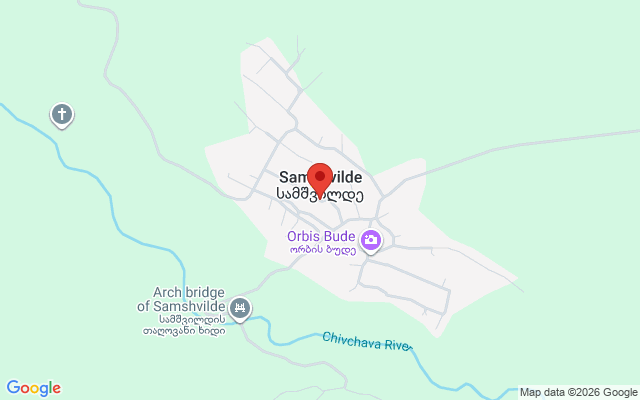




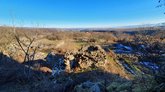

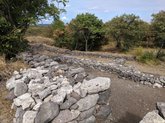

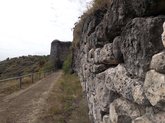

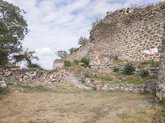

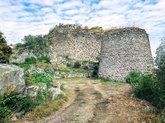

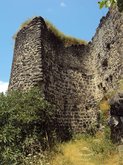

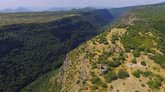

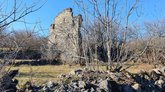

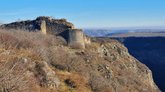


The fortress-city of Samshvilde stands near the village of the same name in Tetritskaro Municipality, Kvemo Kartli, among the fortresses and ruins of the region. It's one of Georgia's oldest historical fortress-cities, occupying a naturally fortified headland at the confluence of the Chivchavi and Khrami rivers: rocky gorges protect the complex on three sides, with a fortress wall on the fourth, less defended side. The best panorama of the surrounding Samshvilde Canyon opens from the fortress grounds themselves.
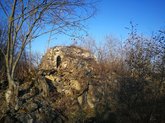
The complex's main structure is the 8th-century Samshvilde Sioni Cathedral, a domed church and one of the significant monuments of early medieval Georgian architecture. Alongside the cathedral, ruins of several other churches survive: St George's, the Chamber Church, the Dormition, a three-nave basilica, a church with a projecting apse, and the Theogenida church on the Khrami riverbank (12th-13th centuries). Remnants of feudal palaces, residential buildings, water reservoirs and a bridge over the Chivchavi are also visible.
Archaeological finds on the site date to the second half of the 4th millennium BC, making Samshvilde one of the oldest inhabited places in Georgia. In later centuries the city played a significant role in the region's history, including periods under the Tbilisi Emirate, wars and liberation.
According to visitor reviews, the best time to visit is late March and early April, when the surroundings are especially scenic. The road requires either a 4x4 or a willingness to cover the final stretch on foot; the climb is physically noticeable, but the canyon views make up for the effort. A local guide can sometimes be found on site, sharing stories not found in any guidebook.