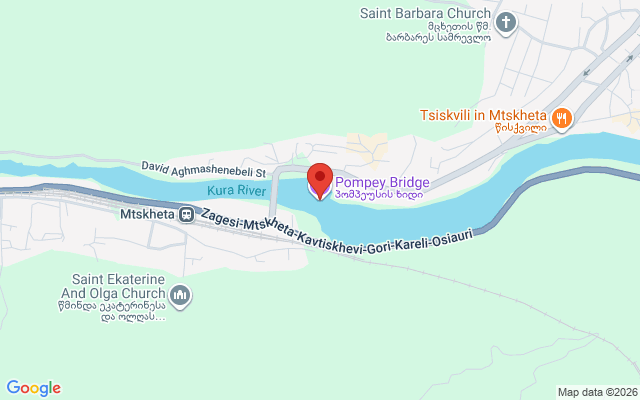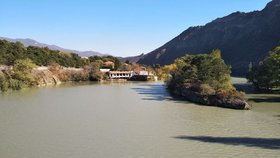




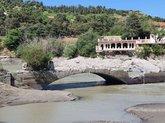

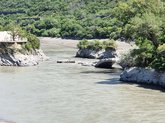

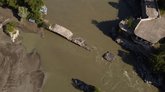

Pompey's Bridge, represented today by the remains of a stone pier, is located near Mtskheta, among the sights, entertainment and leisure spots of the city. A crossing of the Mtkvari River has existed at this spot since antiquity and was rebuilt many times over the centuries: the stonework visible today mostly dates to a 19th-century reconstruction, though the site's history runs far deeper. The bridge takes its name from the Roman general Gnaeus Pompey, who, according to tradition, may possibly have laid the foundation of a crossing here during his campaign into Iberia in 65 BC.
The bridge was submerged in 1926 following the construction of the Zemo-Avchala Hydroelectric Power Station. Since then, the remains of the stone pier on the river's right bank, atop a high rocky outcrop, are usually hidden beneath the reservoir's water and only become visible when dam operators temporarily lower the water level for engineering work. If planning a visit specifically to see this site, it's worth checking current water levels beforehand, as there's no guarantee the ruins will be visible.
Pompey's Bridge also appears in Russian classical literature: Alexander Pushkin crossed it himself and left a brief note about it in his "Journey to Arzrum during the Campaign of 1829." The site will particularly appeal to history and archaeology enthusiasts and photographers seeking unusual, rarely accessible locations.