




Khinkali and khachapuri: whose dishes are they?
The origins of Georgia's two signature dishes.
Short answer
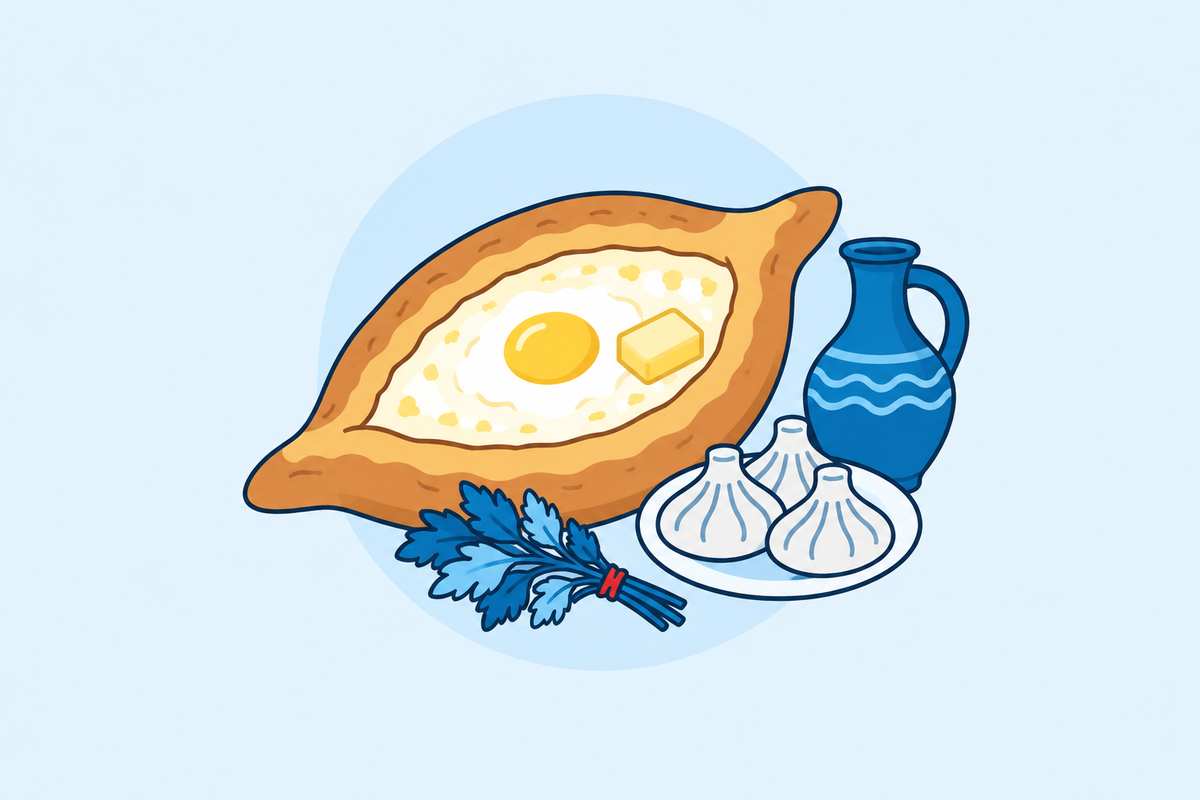
Both khinkali and khachapuri are Georgian dishes. Khinkali come from the mountain regions of eastern Georgia, Pshavi, Khevsureti, Tusheti and Mtiuleti, and spread across the country. Khachapuri is baked all over Georgia with regional versions, and in 2019 it was added to Georgia's list of intangible cultural heritage.
Why
- Many cuisines have dough-and-meat dishes, but pleated, broth-filled khinkali are distinctly Georgian.
- The name khachapuri is linked to the words for curd cheese and bread.
- The best-known types are Imeretian, Megrelian and Adjarian.
Details
Try traditional khinkali in the mountains, for example in Pasanauri or Kazbegi, and khachapuri in each region, where it's made its own way.
Tip
Try khinkali in the mountains, for example in Pasanauri, where they're made the traditional way.
What may differ
Each Georgian region has its own versions of dishes, so the same dish can taste quite different.
People also ask
- Is khinkali Georgian?
Information checked on October 4, 2026.
Khinkali: history and originRelated questions
-
How do khinkali differ from manti?
Khinkali are a Georgian dish boiled in water, while manti come from Central Asian and Turkic cuisines and are steamed.
-
Which cheese do you need for khachapuri?
In Georgia, khachapuri uses Imeretian cheese, a young brined cheese with a mild tang, and sulguni, which stretches well.
-
How do you make khachapuri at home?
The easiest home khachapuri is Imeretian: make a dough of matsoni or kefir with flour, egg and baking soda, fill it with grated cheese, flatten it and fry in a pan or bake.
-
How to make khinkali at home: dough, filling and shaping
For khinkali, knead a stiff dough of flour, water and salt and let it rest for 30-40 minutes.