




Dimitri Shevardnadze Gallery: Art Exhibitions in Tbilisi
🎨 Art museum · ⏱️ 1.5–2 hours · 📍 Rustaveli Avenue, 11, Tbilisi
🖼️ What to know before you visit
| 📍 Address | Rustaveli Avenue, Tbilisi. The blue-façade building — the "Blue Gallery" |
| 📅 Founded | 1917 |
| 🗃️ Collection | 30,000 items: paintings, graphic art, sculpture, decorative and applied arts |
| 🌟 Key artists | Pirosmani, Kakabadze, Akhvlediani, Gudiashvili, Parjiani and others |
| 🌍 International guests | Works by Salvador Dalí and Joan Miró have been exhibited here |
| 🚇 Getting there | Rustaveli metro station, 2–3 min walk |
| 💰 Entry | Check current prices before your visit |
🧭 Who this article is for
The National Gallery is not a museum with dusty display cases. It's a living venue where the permanent collection of Georgian masters runs alongside temporary exhibitions — from classic painting to video installations and performances. This article is for anyone who wants to know what is actually kept here, whose work to look for, and why this building holds a special place on Rustaveli Avenue.
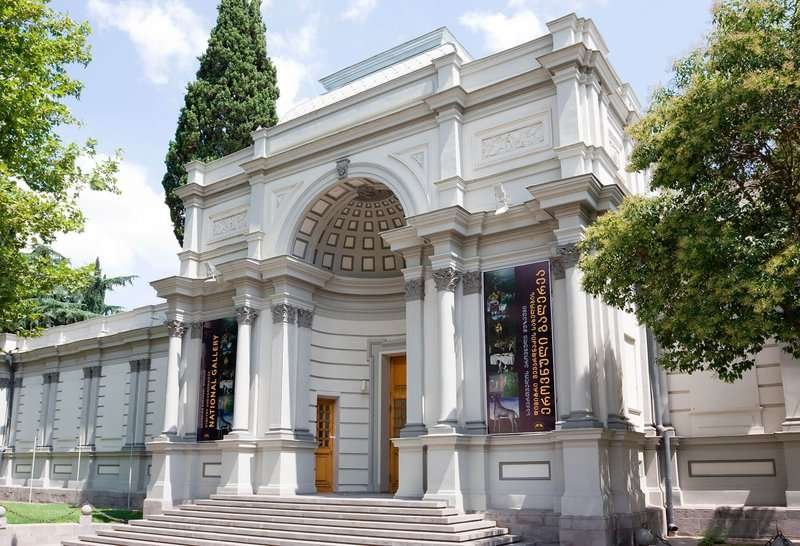
🏛️ History: from founding to today
The gallery was established in 1917 — at a turning point in the country's history. The driving force was Dimitri Shevardnadze — a Georgian cultural figure and art critic. One important note: this is an entirely different person from the Soviet-era politician. The gallery was officially named after this Shevardnadze — the arts patron — in 1993.
According to one account, the building was modelled on an exhibition museum in Rome. At various points the gallery received Russian Emperor Nicholas II among its visitors.
After renovation, the gallery looks both historic and modern at once: a white, restrained building with a blue façade and bright, open halls inside.
🖼️ What the collection holds
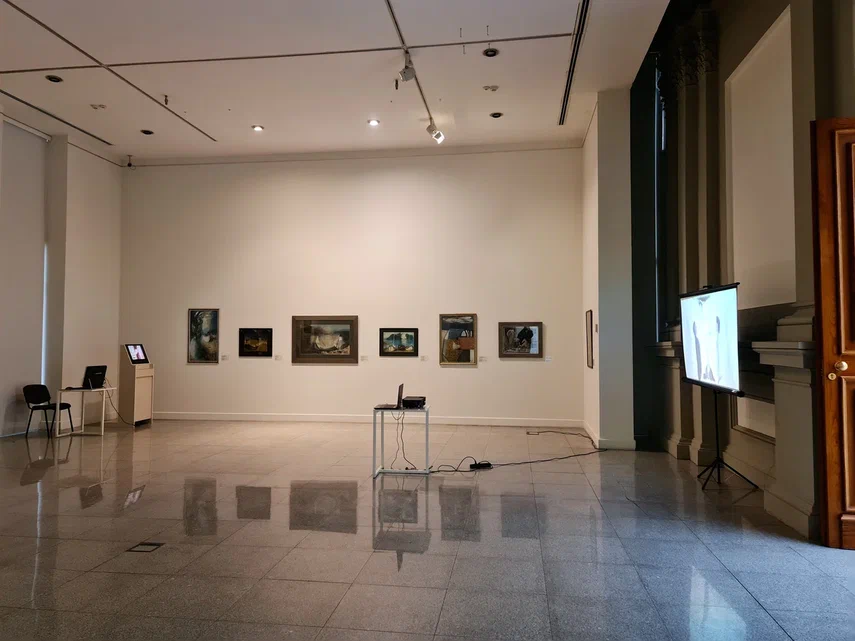
The core of the collection is Georgian fine art from the 19th and 20th centuries: paintings, graphic art, small-format sculpture and decorative arts. The collection contains around 30,000 items in total.
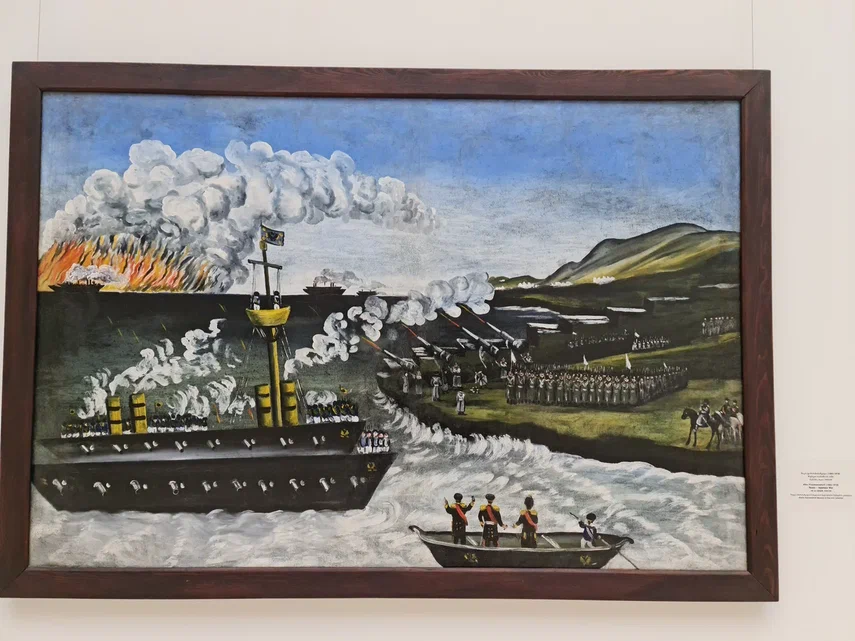
Niko Pirosmani. A self-taught artist who lived in poverty and painted on black oilcloth. His work is striking — not because of academic technique, but because of something harder to define. The gallery holds his "Saint George" and "Bread Table" — arguably his most recognised paintings.
Other artists in the collection. The National Gallery holds works by David Kakabadze, Elena Akhvlediani, Gigo Gabashvili, Lado Gudiashvili, Irakliy Parjiani, Sergo Kobuladze, Korneli Sanadze, Zurab Nizharadze and many others — in total, works by dozens of significant Georgian artists.
International exhibitions. The gallery has hosted shows by Salvador Dalí and Joan Miró — which says something about the calibre of the venue.
🎭 What else happens here
The gallery goes well beyond its permanent collection. Regular events include:
- Exhibitions of young artists — the gallery actively supports emerging talent and gives them a platform to show work to a wide audience.
- Internship programme — there is a structured programme for young artists to work alongside experienced practitioners.
- Contemporary art — photography shows, video installations, performances. This is not an archive of the past but a live space with a current programme.
- External exhibitions — the venue is also used by other cultural organisations for their own shows.
Don't stop at the permanent collection. Before you visit, check whether there is a temporary exhibition running — the programme changes and it's sometimes worth timing your visit around it. And find the Pirosmani room: "Saint George" and "Bread Table" look entirely different in person than they do in reproductions.
🗺️ How to plan your visit
1️⃣ Find the gallery by its blue façade on Rustaveli Avenue — it's easy to spot.
2️⃣ Check the temporary exhibition schedule in advance — by website or phone.
3️⃣ Start with the permanent collection: Pirosmani first, then work through the rest.
4️⃣ Don't skip the graphic art and decorative arts halls — they're often bypassed and shouldn't be.
5️⃣ If there's a temporary exhibition running, leave time for that too.
💬 What visitors say
"This is the ideal place for anyone who wants to understand and feel Georgian culture through painting and sculpture. If you love art — this is a must-visit."
"There's never a rush in the museum. Nobody hurries, everything is unhurried and calm. Sometimes it feels like time moves differently inside, or stops altogether."
"The collections of local artists like Niko Pirosmani and David Kakabadze are simply impressive. I would recommend it to anyone interested in Georgian culture and art."
Have you been to the Shevardnadze Gallery? Which works stayed with you — Pirosmani, someone else from the permanent collection, or maybe a temporary exhibition? Tell us — we read every comment ❤️
🏁 Is it worth going
If you're in Tbilisi and want to understand Georgian art — the Shevardnadze Gallery is not optional. Not because it "should" be on your list, but because it's the best place in the city to see Pirosmani, Kakabadze and Gudiashvili in one space. Add the regular exhibition programme and the young artists who make their debut here, and an hour and a half is the minimum.
ℹ️ Opening hours, ticket prices and the temporary exhibition schedule may change. Check current information on official resources before your visit.
🏛️ Nearby attractions


❓ Questions people ask most often
💬 On Rustaveli Avenue — in the building with the characteristic blue façade, known locally as the "Blue Gallery." Rustaveli metro station, 2–3 minutes on foot.
💬 A Georgian cultural figure and art critic — not to be confused with Eduard Shevardnadze, the Soviet-era politician. Dimitri Shevardnadze was a patron of the arts and the gallery's founder. The gallery was officially named after him in 1993.
💬 Around 30,000 — paintings, graphic art, small sculpture, decorative and applied arts.
💬 "Saint George" and "Bread Table" — among the artist's most recognised paintings. Pirosmani was self-taught and painted on black oilcloth. Seeing them in person is worth it just to understand why he is so highly regarded.
💬 Yes, regularly. Photography shows, video installations, performances and exhibitions of young artists. The gallery has also hosted international names — works by Salvador Dalí and Joan Miró have been shown here.
💬 Check availability and format before your visit — the situation may vary.
💬 About an hour for the permanent collection if you look carefully. Add a temporary exhibition and allow an hour and a half to two hours. The halls are bright and spacious — you won't feel rushed or tired.

41 comments
Log in to leave a comment
一开始我还有点犹豫,不知道该从哪一幅画开始看起,仿佛每一幅都在呼唤我。走在Rustaveli Avenue,阳光洒在身上,心情格外舒畅。这样的地方真是给我带来了灵感,仿佛也让我更懂得艺术的美好。
如果有将来再来的机会,你觉得再去的时候,是否有特别的展览推荐呢?
любителей творчества живописи представлено множество работ известных грузинских художников.Скульптуры, экземпляры народного прик-
ладного творчества.Этот музей стоит посетить, прикоснуться к прекрасному, обогатиться духовно.Национальная галерея основана в 1917 году и существует до наших дней.Просторные,светлые залы,красивое оформление.Я не прошла бы мимо этого музея.Спасибо автору за содержательную статью