




Veriko Anjaparidze and Mikhail Chiaureli House Museum
🎭 House-museum · ⏱️ 1–1.5 hours · 📍 16 Veriko Anjaparidze Street, Tbilisi
🎬 Before you visit
| 📍 Address | 16 Veriko Anjaparidze Street, Tbilisi |
| 🏗️ The building | Built by Mikheil Chiaureli in 1935. He designed and built it himself |
| 🎭 Collection | Over 10,000 items: archives, photos, audio/video, paintings, sculptures, manuscripts |
| 👨👩👧 Four people | Veriko Anjaparidze, Mikheil Chiaureli, Sofiko Chiaureli, Kote Makharadze |
| 🎪 "Veriko" Theatre | One-person theatre within the museum. Founded by Kote Makharadze in 1987; in the museum since 1996 |
| 🏛️ Status | Immovable cultural heritage monument of Georgia |
| 💰 Entry | Check prices before your visit |
🧭 Who this article is for
The Anjaparidze and Chiaureli house-museum is known to many in Tbilisi but visited by relatively few tourists. That's a mistake worth correcting: this is the history of Georgian theatre and cinema told through the lives of four people who were that history. A world-class actress, a founder of Georgian cinema, their daughter — Paradjanov's muse — and a sports commentator who became her husband. This article is for anyone who wants to understand what to look for here and why this building matters.
🎭 Veriko Anjaparidze: one of the ten best actresses of the 20th century
Veriko Anjaparidze (1900–1987) belongs in a category with very few others. The English Academy of Arts named her among the ten best actresses of the 20th century — alongside Eleonora Duse and Sarah Bernhardt. That's not local recognition; that's a global verdict.
Her roles: Ophelia, Desdemona, Cleopatra, Medea, Lady Macbeth, Mary Stuart, Judith, Rusudan, Shushanik, Otar's Widow. To list them all is to trace the history of the world theatrical repertoire. Veriko did not simply perform these roles — she created new interpretations that were discussed in theatre circles far beyond Georgia.
🎬 Mikheil Chiaureli: one of the founders of Georgian cinema
Mikheil Chiaureli (1894–1974) — director, actor, playwright, visual artist, sculptor, musician. Not just several talents — several complete professional careers in one person.
At 17 years old he took part in an expedition to Turkey with Ekvtime Takaishvili. The goal: the restoration of Georgian frescoes in Oshki, Khakhuli and Khertviisi. A teenager, medieval frescoes, an expedition to the Black Sea coast — and this was before he became a director.
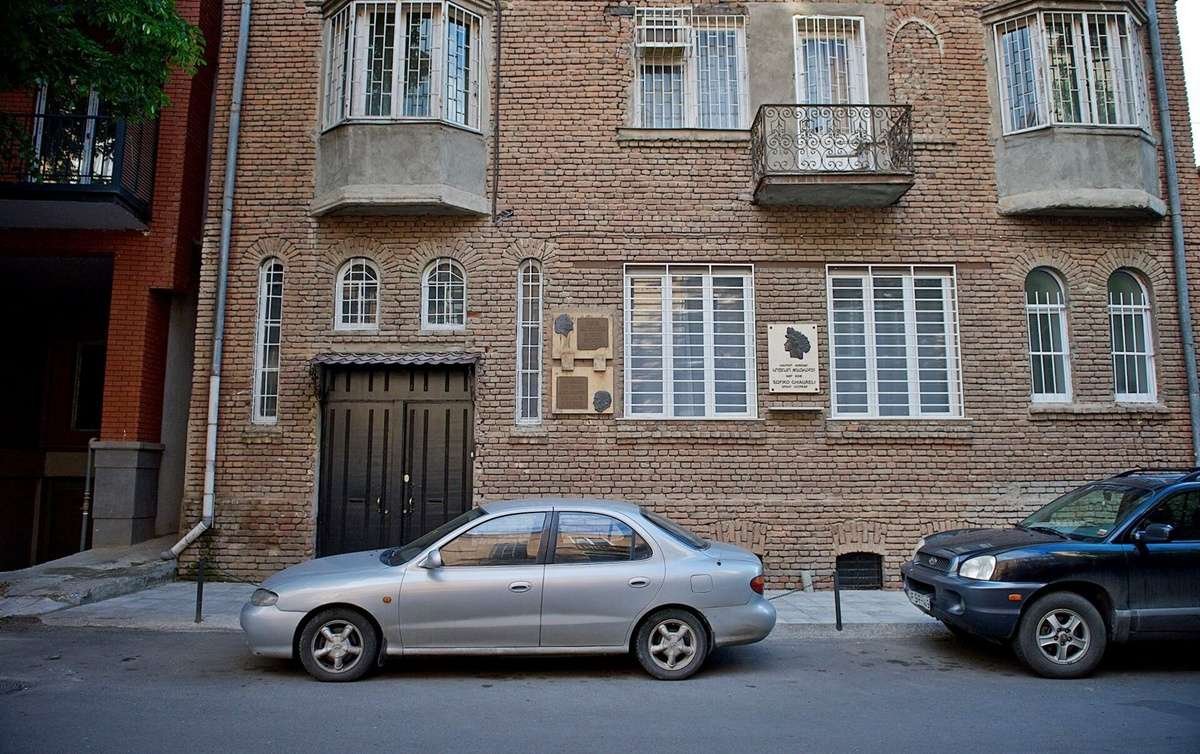
The house on the street that now bears Veriko's name was built by Mikheil himself in 1935 — on the spot where they had their first date. He created the architectural design, took part in the construction and in the fitting out of the interior. This was not a purchased house or a state apartment — it was a personal act of love.
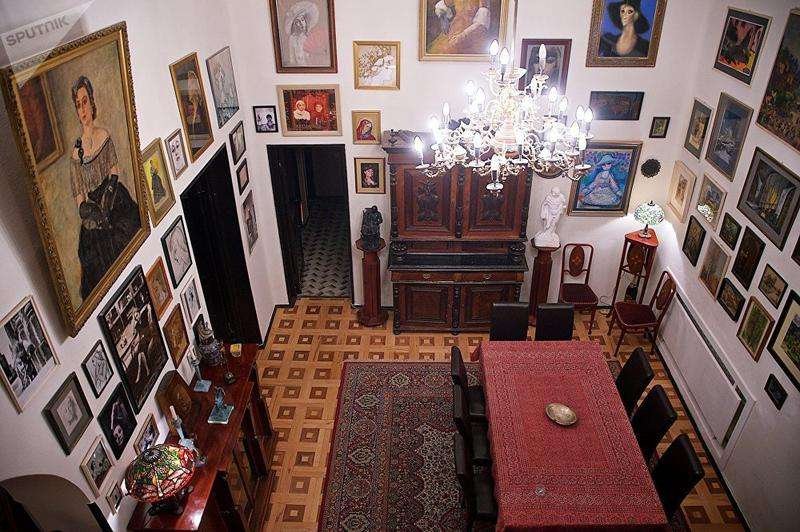
The museum holds his paintings, caricatures, sketches and sculptures — a separate body of work that often surprises those who knew Chiaureli only as a film director.
✨ Sofiko Chiaureli: Paradjanov's "animated fresco"
The daughter of Veriko and Mikheil — Sofiko Chiaureli (1937–2008) — took the family tradition further. People's Artist of both Georgia and Armenia — two national titles, which is itself rare. Seven times recognised as best actress at international competitions. She appeared in more than 100 films.
It was this woman about whom Sergei Paradjanov spoke as his "muse" and "animated fresco." The artist-director and the actress who could be a living work of art — they understood each other in a way few people do.
Among her awards: the Shota Rustaveli Prize and the "Queen of the Screen" award named after Vera Kholodnaya.
🏟️ Kote Makharadze: the commentator the whole country loved
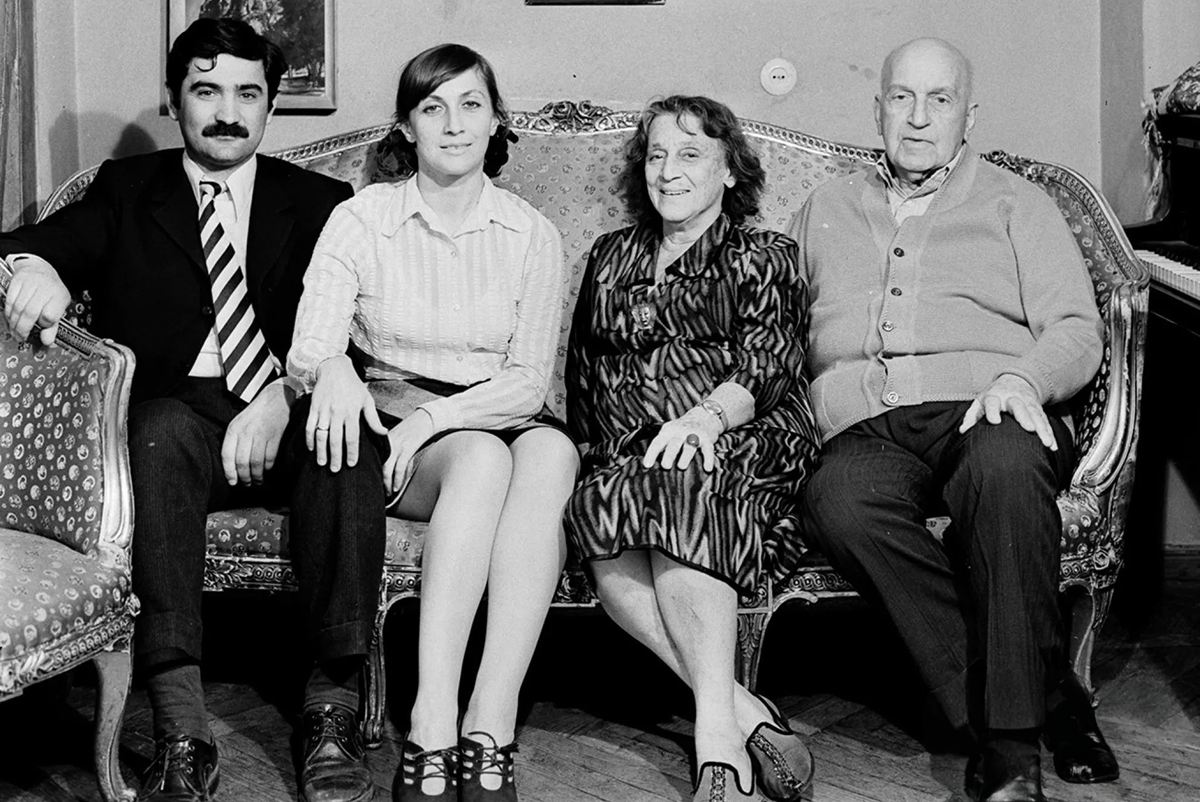
Kote Makharadze (1926–2004) — Sofiko's husband and a man Georgians knew in two completely different roles. Theatre actor — student of A. Khorava, D. Aleksidze and G. Tovstonogov, professor at the State Institute of Theatre and Cinema named after Rustaveli. And a sports commentator whose voice accompanied an entire generation.
In 1987 Kote founded the "Veriko" one-person theatre — in memory of his mother-in-law. From 1996 the theatre moved into the museum itself, taking up two of its halls. Kote and Sofiko performed there together until the end of their lives. The "Veriko" Theatre still operates today.
Find out the "Veriko" Theatre schedule in advance — if you can catch a performance, that's a separate experience from the museum itself. And look at the house as an architectural object: Mikheil Chiaureli built it himself in 1935 on the site of his first date with Veriko. This is not just a building — it's a personal story written in stone.
🗺️ How to plan your visit
1️⃣ Start outside — look at the 1935 building that Mikheil Chiaureli designed and built himself.
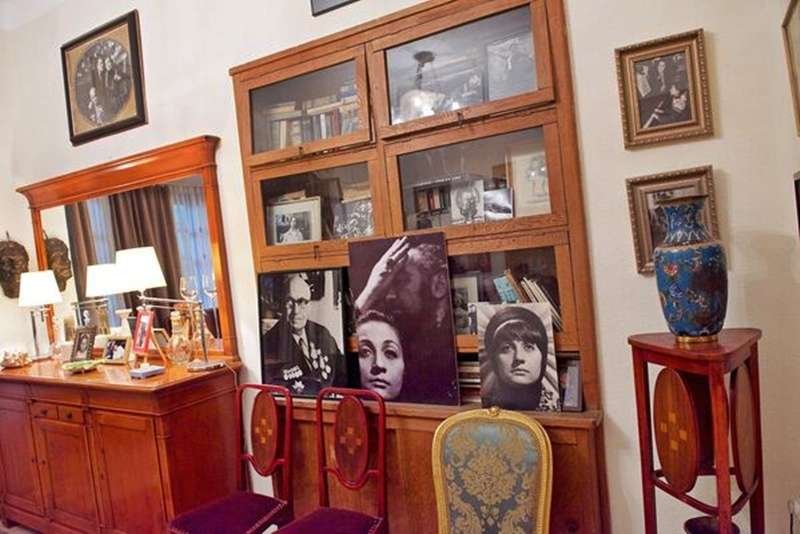
2️⃣ In the halls, begin with the Veriko Anjaparidze archive: photographs, documents, programme notes from performances — the scale of her career becomes clear only here.
3️⃣ Move to Mikheil Chiaureli's materials — film footage, manuscripts, and above all his paintings, caricatures and sculptures, which rarely get mentioned.
4️⃣ The Sofiko Chiaureli section — photographs, film recordings, materials from international festivals. Look for anything connected to Paradjanov.
5️⃣ Step into the "Veriko" Theatre — two halls where Kote and Sofiko performed together. Check the programme in advance.
💬 What visitors say
"I was struck by the atmosphere and energy of the house of a family that gave so much to the arts. The photographs and recordings of Veriko's performances impressed me most. Now I understand why Paradjanov held her in such esteem."
"The collection beautifully conveys their contribution to the arts and lets you step into their creative world. A genuine pleasure for anyone who loves cinema and theatre."
"The detail about the expedition to Turkey when Chiaureli was 17 — just a boy. That says a great deal about the kind of person he was."
🏁 Why go
Four lives that constituted Georgian theatre and cinema for almost a hundred years: a world-class actress, a founding director, their daughter who was Paradjanov's object of admiration, and a commentator-actor who kept appearing on stage at the museum until the end of his life. Over 10,000 exhibits — and a house that stands on the site of a first date. This is not just a museum, it's concentrated living history.
ℹ️ Museum opening hours and the "Veriko" Theatre schedule should be confirmed before your visit. Ticket prices may change. Information is current at the time of publication.
🏛️ Nearby attractions


Have you been to the Anjaparidze and Chiaureli house-museum? What stayed with you most — Veriko's archive, Mikheil's artworks, Sofiko's materials, or the "Veriko" Theatre? Tell us — we read every comment ❤️
❓ Questions people ask most often
💬 At 16 Veriko Anjaparidze Street, Tbilisi. The building has the status of an immovable cultural heritage monument. It was built by Mikheil Chiaureli himself in 1935.
💬 Veriko Anjaparidze (1900–1987) is a legend of Georgian theatre and cinema. The English Academy of Arts named her among the ten best actresses of the 20th century, and she was compared to Eleonora Duse and Sarah Bernhardt. Her roles included Ophelia, Desdemona, Cleopatra, Medea, Lady Macbeth and dozens more.
💬 Mikheil Chiaureli chose the location deliberately: this is where he and Veriko had their first date. In 1935 he created the architectural design himself, oversaw the construction and designed the interior.
💬 The daughter of Veriko and Mikheil. People's Artist of both Georgia and Armenia (both titles, which is rare). She appeared in more than 100 films and was seven times recognised as best actress at international competitions. Director Sergei Paradjanov called her his "muse" and "animated fresco."
💬 A one-person theatre founded by Kote Makharadze in 1987 — in memory of his mother-in-law Veriko Anjaparidze. Since 1996 it has been based in the museum itself, using two of its halls. Kote and Sofiko performed here together until the ends of their lives. The theatre still operates today.
💬 Over 10,000 items: archival materials, photographs, audio and video recordings, manuscripts and letters, memorial objects belonging to all four family members. A separate part of the collection is made up of paintings, caricatures, sketches and sculptures created by Mikheil Chiaureli himself.
💬 Kote Makharadze (1926–2004) was both a professor at the State Institute of Theatre and Cinema and a hugely popular sports commentator. His voice was associated with the country's biggest sporting moments for an entire generation — an unusual combination for a theatre actor.

34 comments
Log in to leave a comment
участвовал в экспедиции в Турцию вместе с Эквтиме Такаишвили