




Sandro Akhmeteli House Museum in Anaga: History and Exhibits
🎭 The Sandro Akhmeteli House-Museum is a hidden gem of Georgian theatre in the village of Anaga.
"If it weren't for him, Georgian theater would be completely different." That's exactly what people say about Sandro Akhmeteli—director, innovator, martyr of the Stalin era, and the man who gave Georgian theater a powerful impetus to international recognition. And where do you think his memory is preserved? In the modest village of Anaga, among vineyards and gravel roads.
The Akhmeteli House Museum is not a tourist trap, but a true place of power, where advertising banners don't lead. Everything here is authentic: manuscripts, posters from his performances, household items, and furniture—everything is imbued with the spirit of the director who changed the Georgian stage forever.
📍 And if you're looking for something vibrant and deeply personal, not a cliched itinerary, then you've come to the right place.
📝 Mini-guide: What you'll learn from this article (and what you'll definitely miss if you don't read it to the end)
- 🚗 How to get to the museum in the village of Anaga: by car, minibus, or taxi
- ⏰ Current opening hours and visiting nuances
- 🆓 Why admission is free and how to behave inside
- 🎭 Who is Sandro Akhmeteli and why everyone interested in art should know about him
- 🖼️ What you'll see inside: rare exhibits, personal belongings, ethnography, and the atmosphere of the past
- 🍷 Where to grab a bite to eat along the way, and is it possible to stay overnight nearby
- 🧳 What clothes to take, what to do in an emergency, where to exchange money
- 💬 Tourist opinions: real quotes, without embellishment
- ❓ Answers to questions you wouldn't have thought to ask—but you'll say "thank you" later!
💡 Read this and you'll plan the perfect itinerary, avoid inconveniences, and experience the real Georgia. Skip it and you'll miss out on one of the most powerful stories of the 20th century.
🧭 Tourist Memo: Everything You Need to Know Before Your Trip
📍 Address:
Anaga Village, Kakheti, Georgia
📞 Phone:
+995 555 53 10 65
🕰️ Opening Hours:
Daily from 10:00 to 18:00
Days off: Sunday and Monday
🎟️ Admission:
Free
🗺️ Coordinates:
41.857703, 45.664994
🛣️ How to Get There:
- 🚗 By car from Tbilisi — ~2.5 hours
- 🚌 Marshrutka to Telavi + taxi
- 🚕 Taxi/Bolt — ~90–120 GEL
💳 Payment:
There are no ATMs — bring cash
🌐 Connection:
No Wi-Fi, mobile signal is unstable
🚻 Facilities:
There is a toilet in the museum. In the village — limited
🆘 Medical Help:
The nearest pharmacy is in Telavi (~15 km). In an emergency, call 112
🎭 Who is Sandro Akhmeteli – and why should his name remain in memory?
"He turned the theatre into a temple of thought and action" - Georgian actor, 1933.
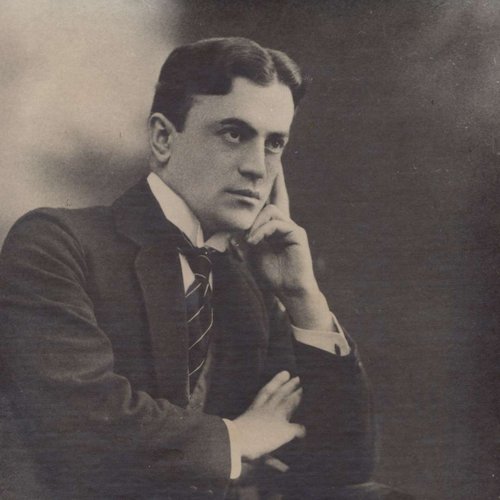
Sandro Akhmeteli (1886–1937) was one of the most prominent figures of 20th-century Georgian culture, who died tragically. He was more than just a director—he became a revolutionary of the stage, transforming theater into a powerful instrument of social and artistic transformation.
He was born in the village of Anaga, where his museum is located today. He studied in St. Petersburg and Germany, inspired by European modernism. Returning to Georgia, he headed the Rustaveli Drama Theater in Tbilisi and transformed it into a veritable laboratory of ideas and emotions.
Akhmeteli introduced rhythm, symbolism, contrasts, and large-scale mise-en-scènes into theatrical practice. His productions were discussed throughout Europe, and in Georgia, they became cultural events of the era. He mentored an entire generation of actors and directors and is still considered a key figure in the history of Georgian theater.
🎬 Today, his home in Anaga is not just a museum, but a place where you can feel the power of the artist's voice, who was not afraid to speak the truth and create at the limits of human freedom.
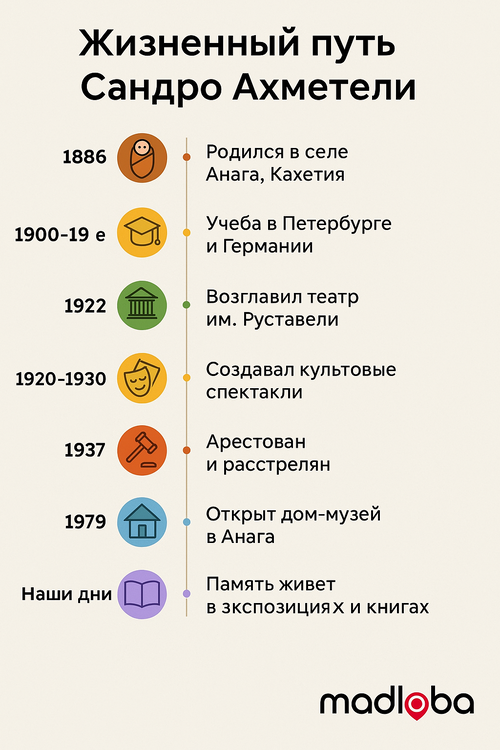
📊 Now, take a look at the key milestones in the life of this remarkable man:
🕊️ A Fate Broken by an Era — and Restored Through Memory
⚖️ Repression
In 1937, Sandro Akhmeteli was arrested and executed on charges of conspiring against Soviet power.
📜 Rehabilitation
The director’s name was officially rehabilitated. His contribution was recognized at the state level and in theatrical circles.
🏛️ Memory
Streets and theaters were named in Akhmeteli’s honor, and his family home in the village of Anaga became a memorial museum with an exhibition.
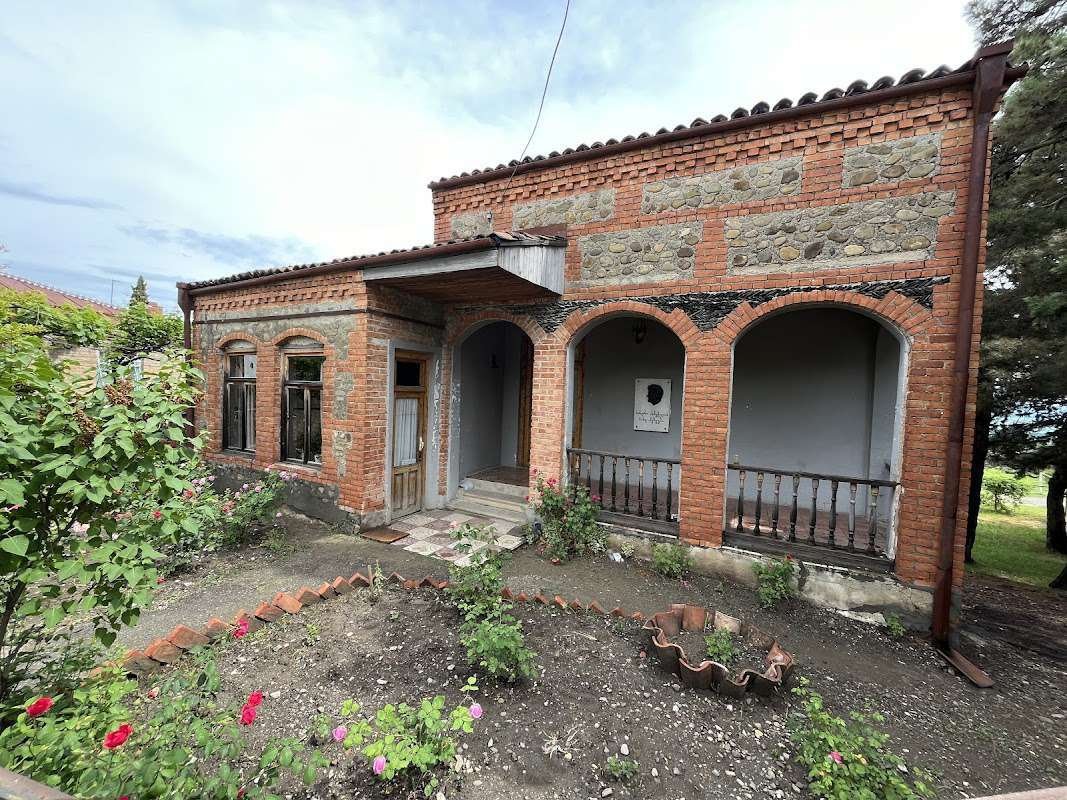
🏡 A house that has become a museum of memory: what awaits you inside
📅 The museum opened in 1979 in the village of Anaga, in the childhood home of Sandro Akhmeteli, the legendary Georgian director whose life reflected the era: his meteoric rise, theatrical reforms, and tragic death in 1937.
This place is not just an exhibition, but a veritable stage where the memory of a man who changed theater forever comes to life.
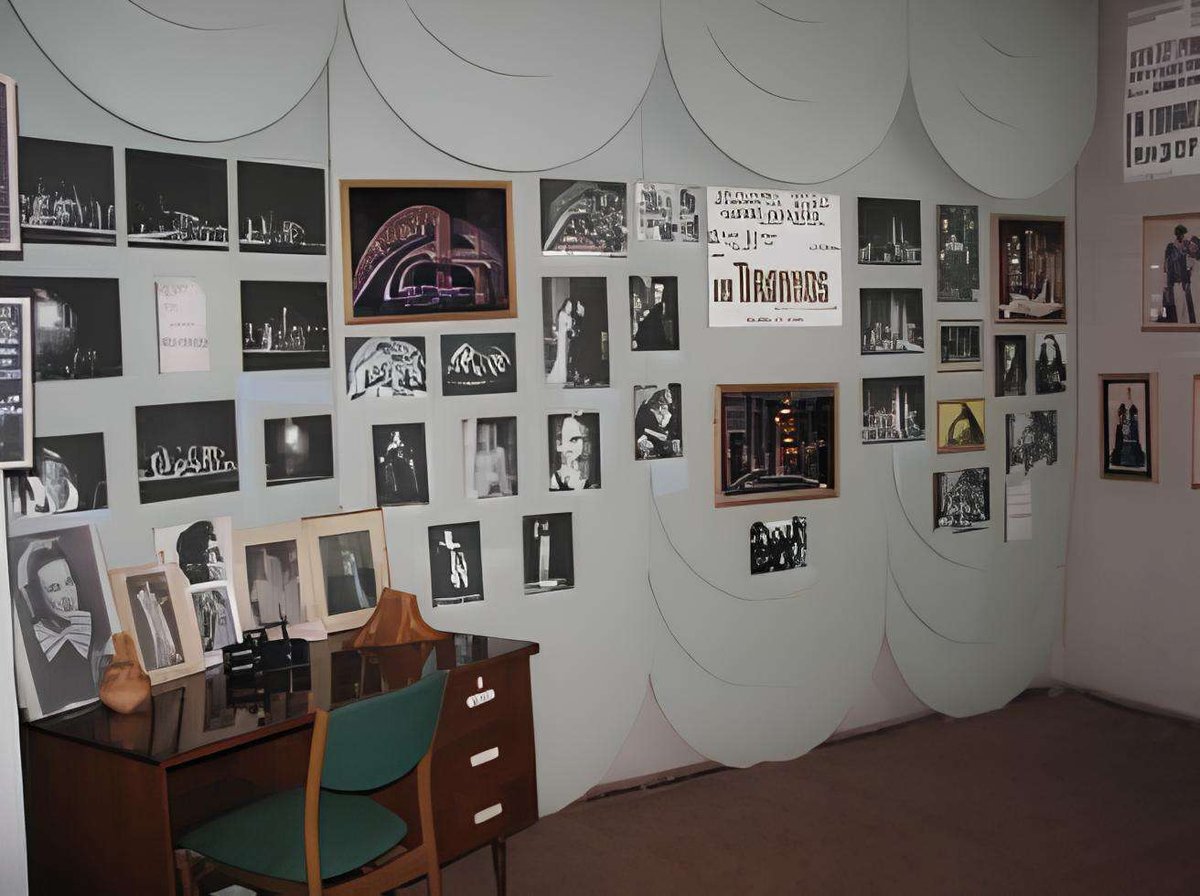
🖼️ What you can see in the museum:
- 🎭 The director's personal belongings: clothing, household items, letters, photographs
- 🖋️ Manuscripts, drafts, posters, and materials from the repertoire of his productions
- 🖌️ Artworks and sketches created by Akhmeteli himself
- 🧵 The ethnographic collection contains approximately 1,000 exhibits related to the everyday life of Kakhetians in the early 20th century
🧳 Among the exhibits, the director's travel suitcase containing his manuscripts and letters stands out in particular—it was kept in the family for more than 40 years before being donated to the museum.
🏺Every object here is like a quote from the book of life. The house has been recreated with respect for the era: wooden beams, furniture, antique carpets, the scent of old papers—everything is in its place.
You can take photos freely, but please don't touch the exhibits—many items are unique and fragile.
💬 What Do Tourists Say?
— Alexey, Saint Petersburg
— Tamara, Tbilisi
— David, Batumi
— Olga, Kyiv
— Natalia, Kazan
— Zhanna, Odesa
📣 Are there excursions and is it worth arranging in advance?
Yes, tours are available—both individual and for small groups. However, it's best to call in advance, especially if you'd like a guide in Russian or English. The guide will share hidden facts and stories you won't find in a guidebook.
📞 It's best to call 1-2 days before your visit—this is especially important during the off-season, when the museum may be closed for breaks or maintenance.
💬 If you know reliable and experienced tour guides who lead you around this museum, please contact us, and we'll be happy to add their contact information to this article.
🗺️ How to Get to the Museum
📍 GPS coordinates: 41.9643, 45.7946
🚗 By car
From Tbilisi — ~115 km (~2 hr 10 min). Go via Telavi or Gurjaani.
- Paved road all the way to Anaga
- Parking available near the museum
🚌 By marshrutka
From Tbilisi to Telavi (from Samgori or Ortachala): 7–10 GEL
- They run every 30–60 minutes
- From Telavi to Anaga — by taxi (~10 GEL)
🚕 By taxi or Bolt
From Tbilisi — 90–110 GEL one way.
- Bolt/Maxim operate as far as Telavi
- From Telavi — local taxi
- Mobile signal in Anaga is unstable
🧭 A practical guide to the area: food, recreation, and additional locations
🍽️ Where to eat:
If you want to try authentic Kakhetian cuisine, look for small family-run cafes—they serve khinkali, shashlik, homemade pies, and wine.
For those who prefer a quick bite, the eateries along the highway between Gurjaani and Telavi are a great place for lobiani or khachapuri.
And if you prefer a more European atmosphere, head to Telavi—there are cafes with pasta, salads, and coffee in a cozy atmosphere.
🏨 Where to stay:
For a convenient and comfortable stay, choose hotels in Telavi—just 10-15 minutes by car from the museum. You can find both premium and more affordable options here.
If you want to stay closer to the museum, the village of Anaga itself offers guesthouses with a cozy atmosphere and homemade breakfasts. Budget travelers can stay in Telavi's hostels, with prices starting from 30 lari per night, especially off-season.
🗺️ What else can you see nearby?
If you decide to stay in the region for a day or two, we recommend including a few more interesting locations in your itinerary:
- Telavi is the historic center of Kakheti, with the Batonistsikhe fortress, markets, and beautiful streets. It's perfect for strolling and wine tasting.
- Alaverdi Monastery is one of the oldest monasteries in the region, surrounded by vineyards. It's just a 30-40-minute drive away.
- The Alexander Chavchavadze Museum in Tsinandali is an estate, wine cellar, park, and the history of Georgian nobility all in one place. A wonderful place for photos and relaxation.
💡 Tip: If you're traveling without a car, check in advance if there are transfers or arrange a ride with local taxi drivers. Many locals will be happy to advise you on the best places to go and how to get there.
🌟 If you love theater, history, or simply want to feel the spirit of a great figure, the Sandro Akhmeteli House-Museum in the village of Anaga will be a revelation. Here, in the quiet of the Georgian province, an era comes to life when directing was a bold art, and the stage a place of struggle and freedom. Don't miss the opportunity to see with your own eyes where it all began. 🎭
🗣️ Leave your review and help others!
Your impressions, tips, and reviews help other travelers plan their trips better!
- 👀 Have you been to this museum?
- 💬 Want to recommend a tour guide, cafe, or route?
- 📍 Or just share your thoughts?
Leave a comment! We read every message and will be sure to add the most helpful recommendations to the article. 💛
⚠️ Information Accuracy
ℹ️ All information about the museum, routes, prices, and opening hours is accurate at the time of publication and is based on official sources, tourist reviews, and personal checks. However, everything may change, especially in small villages — we recommend confirming details before your trip by calling the museum or checking on site.
If you notice any inaccuracies, please write in the comments, and we will make sure to update everything.
❓FAQ
Yes, especially if you want a tour in Russian or English. It's best to contact the museum 1-2 days in advance to arrange a time and language preference.
Admission to the museum is free. A guide costs 5 lari. Tours in foreign languages may cost slightly more (please call to confirm).
Yes, photography is permitted. But please do not use flash or touch the exhibits with your hands—many of them are unique and fragile.
Yes, the museum is open to families. Children over 7 will be especially interested, as there are many visual exhibits and stories.
On average, it takes about 40–60 minutes. If you're planning a guided tour, it could take up to 1.5 hours.
Yes, there's free parking near the museum. However, the road to the village is narrow, and the last 500 meters are just a gravel road.
Лучше избегать поездки в сезон дождей: дорога может быть скользкой, особенно последние участки. В тёплое время добираться намного комфортнее.

25 comments
Log in to leave a comment
ისე, თუ მუზეუმში მცხოვრებ ყველა ექსპონატზე უნდა დაშორდე, ცოტა შიშით მივდივარ! დამირეკე, როცა მანდ ივლი! იქ რომ გქონდეს რამე საინტერესო, მაცნობე!