




🦎 Exotic Pets in Georgia: Import Rules and Everyday Life
Bringing an exotic pet into Georgia comes down to three stacks of paperwork: a CITES permit (if your species is listed in the convention appendices), veterinary documents from the country you are leaving, and vet control at the Georgian border. Microchips and rabies shots are only required for dogs, cats and ferrets; reptiles, birds and rodents follow a different set of rules. Readers keep asking us how to move here with a python, a parrot or a lizard, so we have broken down the rules for every category of exotic pet, from corn snakes to primates.
⚠️ Rules Change, Double-Check Before You Travel
Animal import and export requirements are updated from time to time. Before buying tickets, verify the current conditions with the National Food Agency of Georgia (nfa.gov.ge), the Revenue Service (rs.ge) and the CITES authority of your own country. This article is up to date as of August 2026.
🟢 In Short
Start by checking your species in the Species+ database (checklist.cites.org). If it is listed, obtain an export permit in your own country. Veterinary papers: from Russia that means Form No. 1 and certificate 5a. Reptiles, birds and rodents need no microchip and no rabies shot. The realistic route from Russia is by car through the Verkhny Lars crossing; airlines almost never accept exotics.
🌍 Why Exotic Pets Became a Thing in Georgia
Terrariums and unusual companions no longer surprise anyone in Tbilisi or Batumi. Some animals arrive with relocants, others are bought locally: pet shops stock iguanas, chameleons, agamas and snakes, and demand keeps growing. According to Geostat, imports of live reptiles run to hundreds of kilograms a year; the record was set in 2022 with 860 kg worth 42,300 dollars, most of it supplied by China.
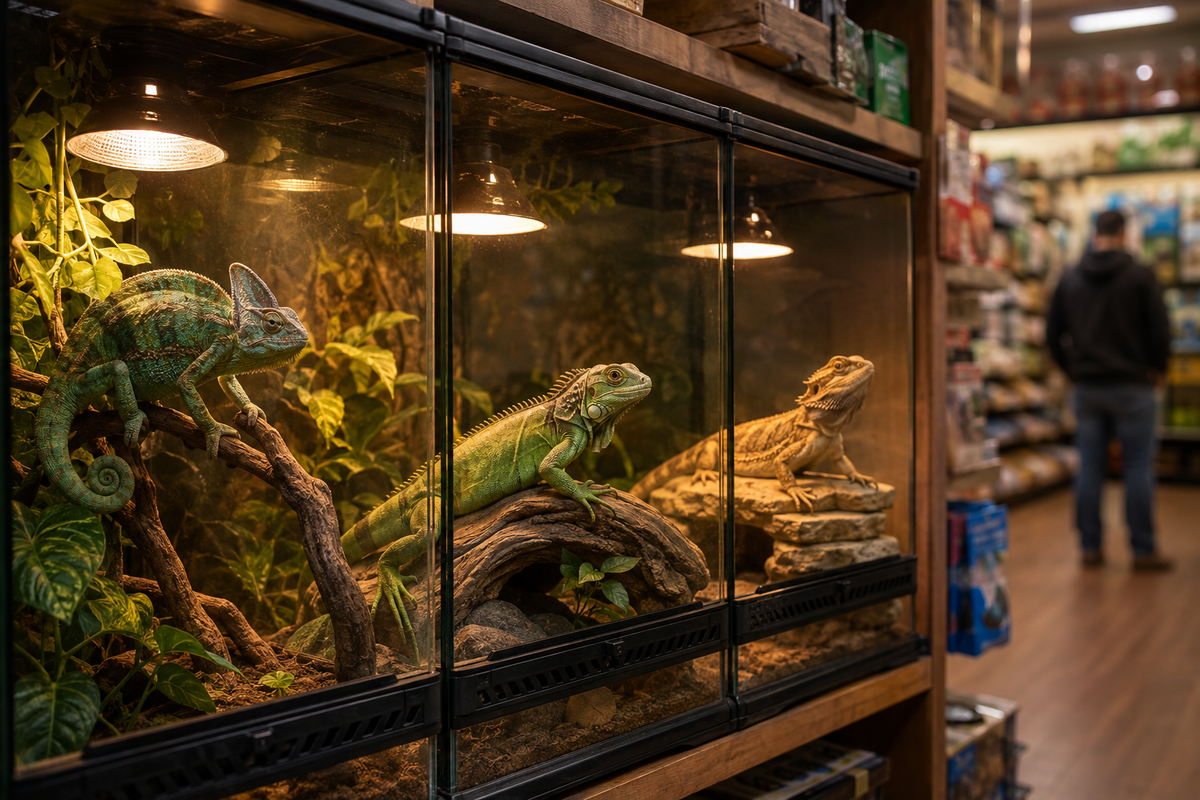
Local price benchmarks: a snake in a Tbilisi pet shop starts at roughly 850 lari, chameleons cost between 490 and 1,099 lari depending on the species. Prices float, so check with the shop before buying. Frankly, in many situations buying an animal in Georgia is easier and kinder than dragging it across two borders, and we will come back to that thought below.
💡 Fun Fact
Customs statistics count snakes and turtles in kilograms, not in heads. So Geostat reports read like "600 kg of live reptiles imported this year", and nobody knows how many animals that actually is.
📚 What Counts as an Exotic and Which Rules Apply
Georgian law has no legal term for an "exotic animal". The border works on a different logic: every animal passes through three filters at once, and the species decides which of them will bite.
| Level | Who Regulates | What Is Required |
|---|---|---|
| Conservation (CITES) | CITES authorities of the exporting and importing countries | Export permit for species listed in the convention appendices |
| Veterinary, country of departure | State veterinary service | Health check and veterinary certificate |
| Georgian rules | National Food Agency and Revenue Service, Resolution No. 551 | Identification, vet certificate, vet control in the passenger corridor |
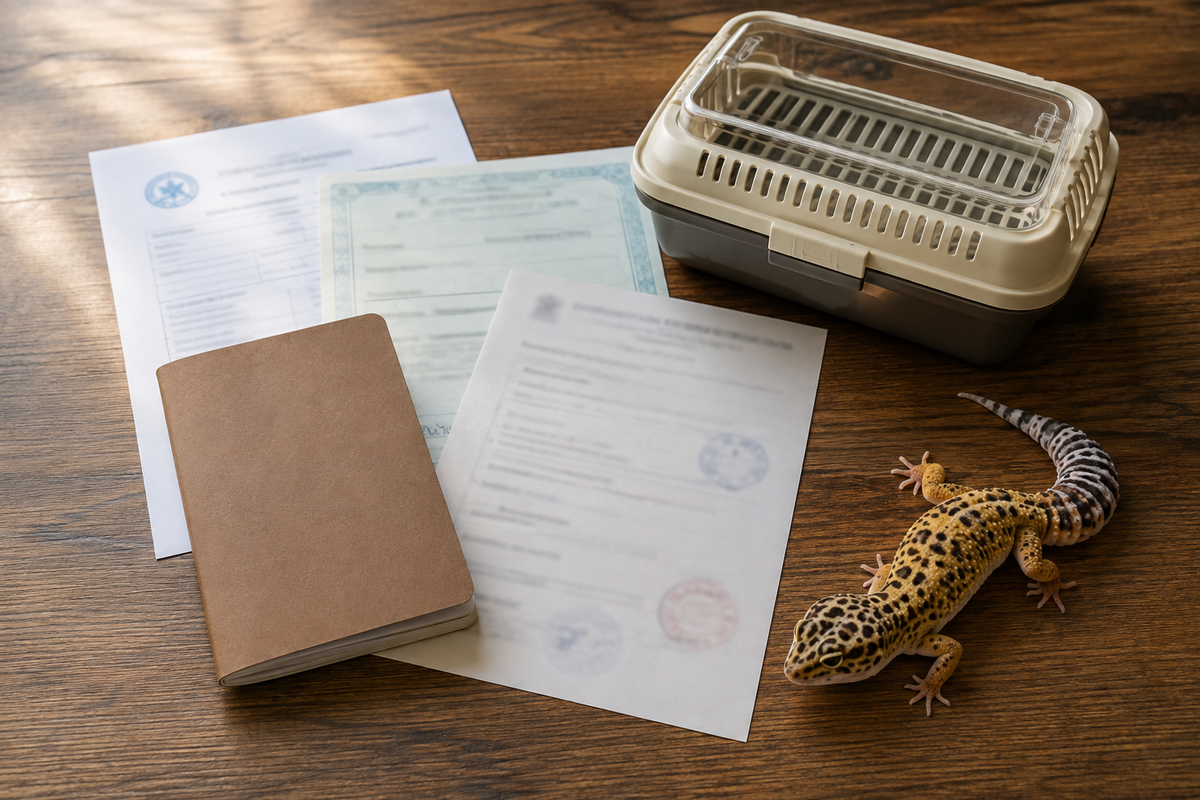
Georgian Government Resolution No. 551 on the non-commercial movement of pets splits animals into two groups. Part A: dogs, cats and ferrets. They need a microchip, a rabies vaccination, an antibody test when arriving from certain countries, and there is a limit of five animals per person. Part B: reptiles, amphibians, birds, rodents, rabbits, ornamental aquatic animals and invertebrates. Their rules are lighter: a description or identification of the animal, a veterinary certificate, disease prevention measures and entry through the passenger corridor with vet control. No microchip and no rabies shot required.
Mammals that appear in neither Part A nor Part B are a separate story. Primates, raccoons, fennec foxes, hedgehogs and meerkats fall outside the "pet" regulation altogether; their import is agreed with the National Food Agency under the general animal import rules. If you are planning to move with one of these, request the conditions from the NFA in writing well before buying tickets. We have covered dogs and cats separately; the details are in our guide to bringing pets into Georgia.
🔍 Check Your Species in Two Minutes
Open the Species+ database at checklist.cites.org, type in the Latin name of your species (for example, Python regius) and look at the Appendix column. Appendix I: movement is nearly closed. Appendix II: you need an export permit. Not in the database at all: CITES does not apply, and only the veterinary papers remain.
🐾 Which Documents Different Animals Need: Comparison Table
We have gathered the pets owners ask about most often into a single table. Still check the Latin name of your own species against Species+: the appendix lists are revised from time to time.
| Animal | CITES | Category in Georgia | Chip and Rabies | Key Documents |
|---|---|---|---|---|
| Dog, cat, ferret | No | Part A | Mandatory | Pet passport, chip, vaccine, entry certificate |
| Rabbit, hamster, chinchilla, rat | No | Part B | Not required | Pet passport, certificate 5a |
| Budgerigar, cockatiel, rose-ringed parakeet, peach-faced lovebird | Excluded from the lists | Part B | Not required | Vet papers, leg ring or chip for identification |
| African grey, macaw, cockatoo | Appendix I or II | Part B | Not required | CITES export permit, proof of origin, vet papers |
| Corn snake, bearded dragon, leopard gecko | No | Part B | Not required | Vet papers, description of the animal |
| Ball python, boa constrictor, Burmese python | Appendix II | Part B | Not required | CITES export permit, breeder contract, vet papers |
| Chameleons, monitor lizards | Appendix II, some monitors in Appendix I | Part B | Not required | CITES export permit, vet papers |
| Tortoises and turtles: Russian tortoise vs red-eared slider | Russian tortoise: Appendix II. Red-eared slider: no | Part B | Not required | CITES permit for the tortoise, vet papers for both |
| Tarantulas, giant African snails, axolotl | Mostly no; the genus Brachypelma is in Appendix II | Part B | Not required | Vet papers, CITES permit for Brachypelma |
| Primates (marmosets, capuchins, lemurs and others) | Appendix II at minimum, many species in Appendix I | Outside Resolution 551, general import procedure | As agreed with the NFA | CITES, written approval from the NFA, vet papers |
| Raccoons, fennec foxes, hedgehogs, meerkats | Usually no (check the fennec fox in Species+) | Outside Resolution 551, general import procedure | As agreed with the NFA | Written approval from the NFA, vet papers |
📝 How to Bring an Exotic into Georgia: Step by Step
The scheme is the same for a snake, a parrot and a spider; only the amount of paperwork changes. These six steps cover the road from "we are moving" to the stamp at the border.
-
1
Check the Latin name of your species in Species+ (checklist.cites.org).
-
2
If the species is listed, apply for a CITES export permit in your country; allow a month to six weeks.
-
3
Arrange the veterinary papers of the departure country: health check and a state vet certificate.
-
4
Prepare an identification document: species, sex, age, colouring, distinctive marks, photos.
-
5
Set up a transport container for the species: ventilation, labelling, warmth or cooling.
-
6
At the border take the red channel: declaration, vet control, and show the CITES permit to customs on both sides.
🚛 Leaving Russia: CITES and Vet Paperwork
🧾 A CITES Permit from Rosprirodnadzor
Export permits for listed species are issued by the central office of Rosprirodnadzor in Moscow. The application is filed in Russian, with proof of the animal’s legal origin attached: a purchase contract, a receipt, the breeder’s papers confirming captive birth. The tidier this package, the fewer questions about whether the animal was taken from the wild. The exact timing depends on the agency’s workload; in practice allow a month to six weeks and file well in advance. The finished permit is shown to customs on the way out.
💉 Form No. 1 and Certificate 5a
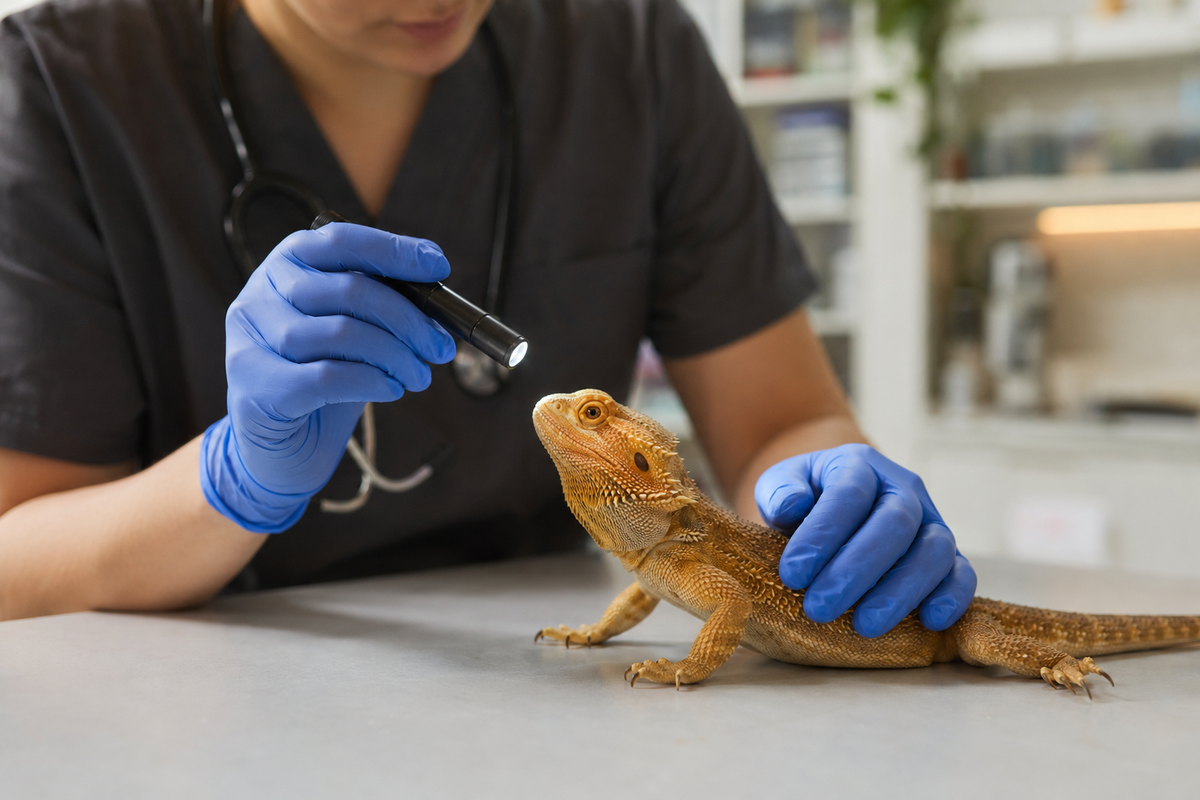
Veterinary certificate Form No. 1 is issued at a state veterinary station (SBBZh) no earlier than five days before departure, and the animal comes along for a check-up. If you fly, Form No. 1 is exchanged for the international certificate 5a right at the airport. If you drive, the exchange for 5a is done in advance at the same station. Reptiles, birds and rodents need no rabies vaccination; a clinical examination and a health note are enough.
🌐 Coming from Another Country
The logic stays the same: the CITES export permit comes from the authority of the country you are leaving, the veterinary certificate from its official vet service. National CITES contacts are listed on cites.org. Travelling from the EU, you will need a European export permit, which has its own forms.
🚗 How to Transport an Exotic Pet to Georgia
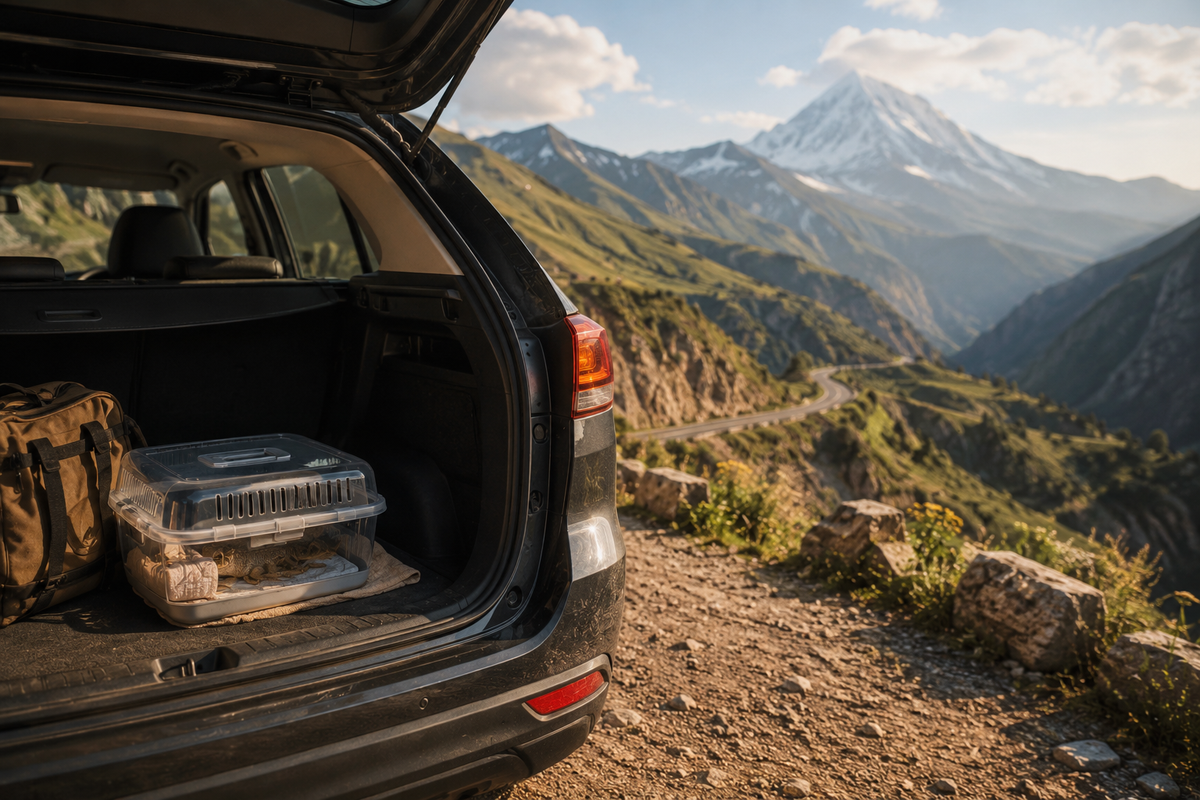
The main working route from Russia is by car through the Verkhny Lars (Dariali) checkpoint; there is no other land crossing between the two countries. We have described the checkpoint itself and its queues in our article on crossing the border at Verkhny Lars. Flying is a different story: most airlines on Georgian routes accept only cats and dogs, while snakes, lizards and spiders sit on the banned lists. Check your carrier’s rules on its website before buying a ticket, not at the airport. Two more options remain: specialised animal cargo companies (expensive, but legal and climate-controlled) and the Yerevan to Tbilisi train, where the rules are written for cats and dogs, so carrying a terrarium has to be agreed with the operator separately.
| Option | Does It Work? | What to Watch |
|---|---|---|
| Car via Verkhny Lars | Yes, the main option | Season, weather on the pass, thermal container |
| Plane, pet in cabin or hold | Almost never | Carrier stop lists, written confirmation |
| Cargo with a specialist company | Yes, but pricey | Experience with reptiles and birds, climate control |
| Yerevan to Tbilisi train | Grey area | Agreement with the operator, booking the whole compartment |
🌡️ Temperature Decides Everything
Reptiles chill fast below +15 °C. Pack a thermal container and a chemical heat pad wrapped in cloth. Do not feed a snake for 3-4 days before the trip, but keep water available. Remember: the Jvari Pass is cold at night even in summer, and in winter the road is regularly closed.
🏠 Living with an Exotic Pet in Georgia
📋 Pet Registration
In Tbilisi, animals staying in the city for more than 30 days are supposed to be registered in the municipal database, with a small fine for skipping it. In practice the requirement mostly concerns dogs: the database is checked by scanning the chip during walks. For terrarium animals the question has not really come up, but the rules in this area keep evolving, so if you are settling in for the long haul, ask the Animal Monitoring Agency directly.
🏥 Vets for Reptiles and Birds
Herpetologists and avian vets are rare in Georgia, and this is probably the biggest everyday risk for an exotic pet owner. Find a doctor before you move, not once your pet has already stopped eating. Start with our round-ups: veterinary clinics in Tbilisi, vet clinics in Batumi and the country-wide rating of vet clinics. Call ahead and ask plainly whether the doctor sees reptiles or large parrots. The usual clinic practice is cats and dogs, exotics by arrangement.
🍖 Food and Equipment
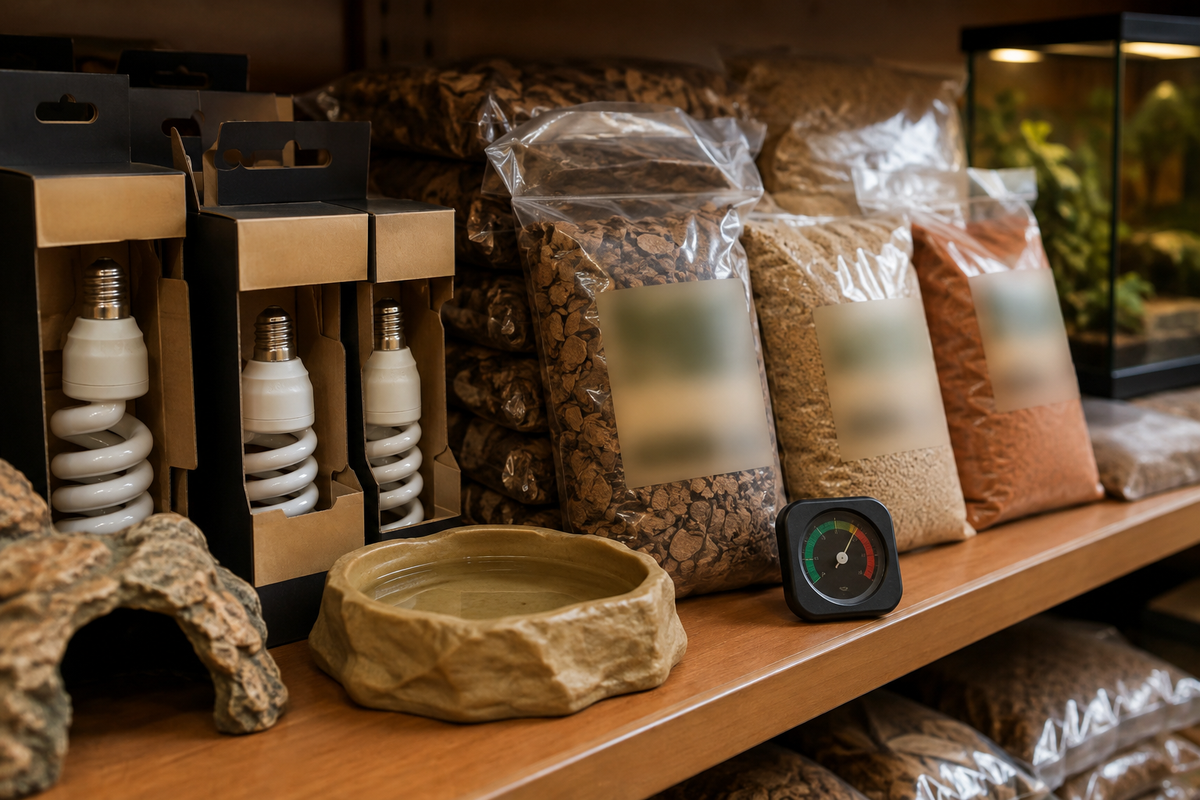
Frozen rodents for snakes, feeder insects, UV lamps and terrariums can all be found in Georgia, but the range depends heavily on the city: Tbilisi offers noticeably more than the regions. Stick to the bigger chains and the shops from our round-ups: pet shops in Tbilisi, pet shops in Batumi and pet shops and vet pharmacies across Georgia. Do not bother hauling a food supply from home: products of animal origin are restricted at the border, and it is easier to find a supplier locally from day one.
🌡️ Climate and the Terrarium
Batumi with its humid subtropics and Tbilisi with its hot dry summer set the terrarium different challenges. In summer the main threat is not cold but overheating: keep the tank out of direct sun and think about cooling. The second local quirk: power cuts do happen, so for species that depend on heating keep chemical heat pads or a small UPS within reach.

🛒 Buying Locally Instead of Importing
If you have not bought the animal yet, honestly weigh the option of getting it in Georgia: no two borders, no permits, no stress for the creature. Always ask the seller for proof of origin. For CITES-listed species you will need that paper the day you decide to leave the country with your pet.
✈️ Taking Your Exotic Out of Georgia
To leave with an animal you obtain a certificate at a National Food Agency office: in Tbilisi at 6 Marshal Gelovani Avenue, in Batumi at 18 Baku Street, with offices also in Kutaisi, Zugdidi and Mtskheta. At the time of publication the certificate costs 304 lari and is valid for 72 hours to exit the country. If your species is CITES-listed, you will additionally need an export permit from the Georgian CITES authority, which works in the same building complex as the NFA in Tbilisi. Rabies antibody tests are not required for reptiles; that requirement applies to dogs and cats heading to Europe.
⚠️ What Happens If You Travel Without Papers
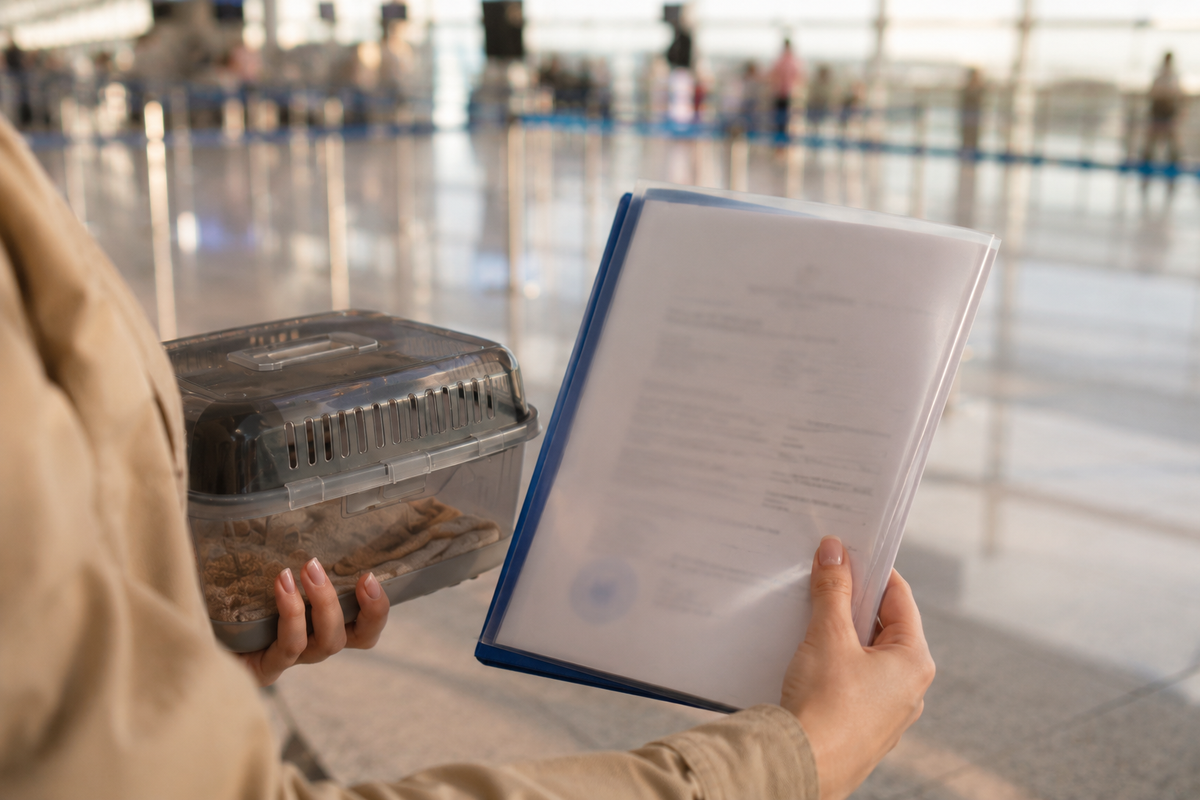
The Georgian regulation answers this question harshly. An animal that fails the checks is sent back to the country of departure or isolated under supervision, and when neither is possible, it is put down. All costs fall on the owner, with no compensation. For CITES-listed species, moving without a permit qualifies as smuggling of specimens: the animal is seized and the owner faces liability under customs law. A python in a backpack is a lottery where the stake is the animal’s life, so a month spent on paperwork is the better deal.
🚫 Without Papers, the Animal Risks Its Life
Return, isolation or euthanasia at the owner’s expense: that is how the regulation describes the fate of an animal that fails the checks. Seizure at the border means stress, cold and uncertainty for a creature that did nothing wrong. Sort the paperwork out in advance.
❓ FAQ: Bringing Exotic Animals into Georgia
💬 No. Microchips and rabies vaccinations are only required for dogs, cats and ferrets. For a reptile, a veterinary certificate and a description of the animal for identification are enough.
💬 Open the Species+ database at checklist.cites.org and type in the Latin name of the species. The Appendix column shows the listing. If the species is not in the database, no CITES permit is needed.
💬 For Appendix II species no Georgian import permit is issued; the CITES export document from the country of departure is enough. Georgia requires an import permit only for wild-taken specimens of Appendix I species.
💬 Allow a month to six weeks. The permit is issued by Rosprirodnadzor, and the application needs proof of the animal’s legal origin: a breeder contract, a receipt, papers confirming captive birth.
💬 On passenger flights to Georgia reptiles are almost never accepted: standard rules allow only cats and dogs. The workable options are a car through Verkhny Lars or specialised animal cargo.
💬 Yes, this is the main route from Russia. Carry the full package: a CITES permit for listed species, a veterinary certificate and a description of the animal. Take the red channel at the border.
💬 For dogs, cats and ferrets the limit is five animals per person. For reptiles, birds and rodents the regulation sets no explicit cap, but a large batch stops counting as non-commercial. Agree bigger shipments with the NFA in advance.
💬 Few clinics work with exotics, and appointments are usually by arrangement. Start with the rating of veterinary clinics in Tbilisi and confirm by phone that the doctor sees your species.
💬 In the larger pet shops of Tbilisi and Batumi. Addresses and stock are in our round-up of pet shops and vet pharmacies in Georgia. Outside the big cities the range is modest, and rare feed is ordered in advance.
💬 Yes. You will need the NFA exit certificate (304 lari at the time of publication) and, for listed species, an export permit from the Georgian CITES authority. Check the requirements of the specific EU country separately before the trip.
✅ The Short Version
An exotic pet enters Georgia along three paper trails: CITES for listed species, a veterinary certificate from the country of departure and Georgian vet control at the border. Reptiles, birds and rodents skip the microchip and the rabies shot, while primates and other unusual mammals have to be cleared with the NFA separately. From Russia there is one realistic route: a car through Verkhny Lars with a thermal container. Prepare the papers six to eight weeks ahead, line up a vet and a food supplier before the move, and if the animal is not bought yet, run the numbers on buying it in Georgia instead.
💬 Now It Is Your Turn
Which route did you take with your exotic, and what did they ask at the border? Have you found a vet in Georgia for a reptile or a bird? What is missing from the pet shops in your city? Or are you weighing importing against buying locally right now? Tell us in the comments: your experience will save other owners weeks of preparation.

4 comments
Log in to leave a comment